Risposta breve: Non classificare le maschere facciali a LED in base al numero di colori, il numero di LED pubblicizzato, o il numero di irradianza più alto. Per prima cosa definisci cosa vuoi affrontare. Quindi verificare qualsiasi U.S. FDA 510(k) distanza rispetto al dispositivo o modello esatto e all'uso previsto. Controllare se gli emettitori interessati coprono l'area target, chiedi come vengono contati i led, confrontare l'irradianza solo nelle condizioni di prova descritte, e controllarne l'adattamento e l'assemblaggio. Un numero diventa utile solo quando sai cosa è stato misurato, Dove, e per quale protocollo.
Ambito: Questa guida confronta i prodotti. Non diagnostica una condizione della pelle né sostituisce l'etichettatura e le avvertenze per il tuo dispositivo specifico. Se una condizione, farmaco, o il trattamento potrebbe influire sull'adeguatezza della luce domestica per te, leggere il confine medico al punto 6 prima di confrontare i dispositivi.
Perché "Altro" è il punto di partenza sbagliato
La maggior parte degli acquirenti per la prima volta confronta tre cose: quante bande di lunghezze d'onda elenca una maschera, quanti LED afferma di contenere, e quanto sembra essere alta la sua irradianza. Il presupposto naturale è che più colori, più LED, e più potenza deve produrre una maschera migliore.
Questa scorciatoia fallisce perché i tre numeri rispondono a domande diverse:
- Una lunghezza d'onda ti dice quale luce viene emessa, non se la modalità corrisponde al tuo obiettivo o ha prove per quel modello.
- Un conteggio dei LED dice qualcosa sulla progettazione fisica solo dopo che sono noti il metodo di conteggio e l'area della maschera.
- L'irraggiamento descrive la potenza luminosa per unità di area in particolari condizioni di misurazione, non la dose completa o il risultato atteso.
Dal nostro punto di vista produttivo, una prima domanda migliore non è “Quale maschera ha i numeri più grandi?" È:
Posso risalire allo scopo dichiarato di questo dispositivo a un modello verificabile, posizionamento della luce pertinente, dati di output riproducibili, e un design che posso utilizzare come indicato?
I sei controlli seguenti trasformano questa domanda in un processo di acquisto pratico.
1. Definire l'obiettivo prima di confrontare le funzionalità
Inizia con la preoccupazione che desideri che il dispositivo affronti, perché l'obiettivo determina quale prova, modalità, e la questione dell'area target. Una maschera con sette colori etichettati non è automaticamente una scelta migliore di una con due modalità ben documentate.
Per esempio, le indicazioni della FDA per una famiglia denominata di maschere LED OTC di seguito 510(k) K250830 distinguere tra il rosso, giallo, rosso-più-infrarosso, blu, e modalità miste. Anche le destinazioni d'uso elencate sono specifiche: rughe su tutto il viso o acne infiammatoria da lieve a moderata, a seconda della modalità. Questo record non prova che ogni maschera che utilizza la stessa parola colorata abbia lo stesso scopo.
Annota quattro cose prima di aprire le schede di confronto:
- la preoccupazione principale che vuoi affrontare;
- l'area del viso che conta di più;
- sia che tu stia scegliendo un prodotto per il benessere generale o un dispositivo con una specifica destinazione d'uso regolamentata nel tuo mercato; E
- l'orario e la frequenza che puoi realisticamente seguire seguendo le istruzioni del dispositivo.
Se non sei sicuro di quale sia il problema, se rientra nello scopo indicato sull'etichetta del dispositivo, o se la luce è adatta a te, il passo successivo è la valutazione qualificata, non la selezione di un colore da una tabella di prodotto.
Per uno sguardo più attento a ciò che le etichette di colore e modalità ti dicono e cosa non ti dicono, è da Wakelife 7-confronto tra maschere LED a colori e rosse e blu.
2. Verificare il dispositivo esatto quando viene richiesta o può essere richiesta l'autorizzazione FDA
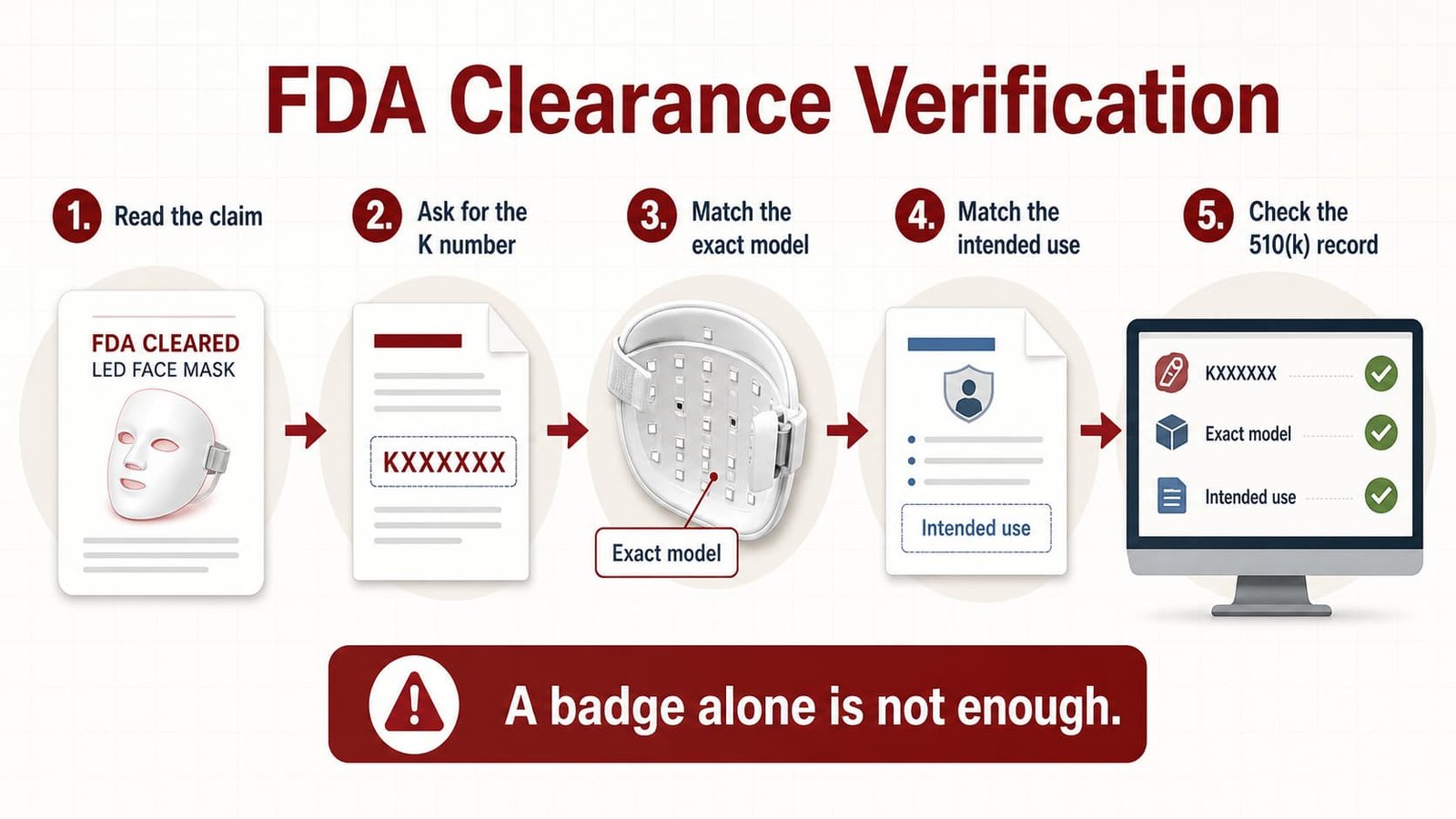
Quando gli Stati Uniti. sia richiesta o richiesta l'autorizzazione per il dispositivo medico, cercare "autorizzato dalla FDA".," ottenere il 510(k) numero, e abbinare il record al dispositivo, modello, e destinazione d'uso. Il logo, una registrazione dello stabilimento, oppure una dichiarazione vaga come "certificato FDA" non completa tale controllo.
La FDA spiega che a 510(k) è una presentazione pre-mercato utilizzata per dimostrare sostanziale equivalenza con un dispositivo legalmente commercializzato. Una decisione sostanzialmente equivalente consente la commercializzazione del dispositivo omologato per l'ambito dichiarato. È significativo, soglia verificabile; non è un premio per la maschera “migliore”., una garanzia di risultato per ogni utente, o l'approvazione di ogni affermazione di marketing fatta su una pagina di vendita.
Utilizza questo controllo in quattro passaggi quando un venditore presenta una richiesta di liquidazione:
La pagina di un venditore non deve necessariamente visualizzare il numero K affinché il prodotto sia legittimo; molti no. Ma quando il venditore richiede l'autorizzazione della FDA, rifiuto di fornire il numero, un record FDA mancante, oppure una discrepanza tra modello e destinazione d'uso costituisce un valido motivo per fermarsi e indagare ulteriormente.
Segna questo controllo not applicable solo quando il prodotto non esce negli Stati Uniti. dichiarazione sulla destinazione d'uso o sul trattamento del dispositivo medico E la classificazione e le regole applicabili del dispositivo non richiedono a 510(k). Il silenzio del venditore sull’autorizzazione non è sufficiente. Se il venditore presenta una richiesta medica o terapeutica ma omette il suo stato di autorizzazione, determinare innanzitutto se l'uso previsto richiede l'autorizzazione pre-commercializzazione e verificare la documentazione FDA applicabile; non contrassegnare l'assegno not applicable semplicemente perché la pagina del prodotto evita la parola “cancellato”.
I nomi dei marchi privati richiedono un'altra domanda: chiedere al venditore di documentare in che modo il modello di vendita al dettaglio corrisponde a un modello nella liquidazione e nell'etichettatura. Non dare per scontato che un guscio dall'aspetto simile o l'autorizzazione non correlata di un produttore copra automaticamente il prodotto nel carrello.
Per una spiegazione a livello di consumatore del processo di database, utilizzare quelli della FDA guida per sapere se un dispositivo medico è stato autorizzato alla commercializzazione.
3. Abbina la lunghezza d'onda all'obiettivo e controlla il posizionamento
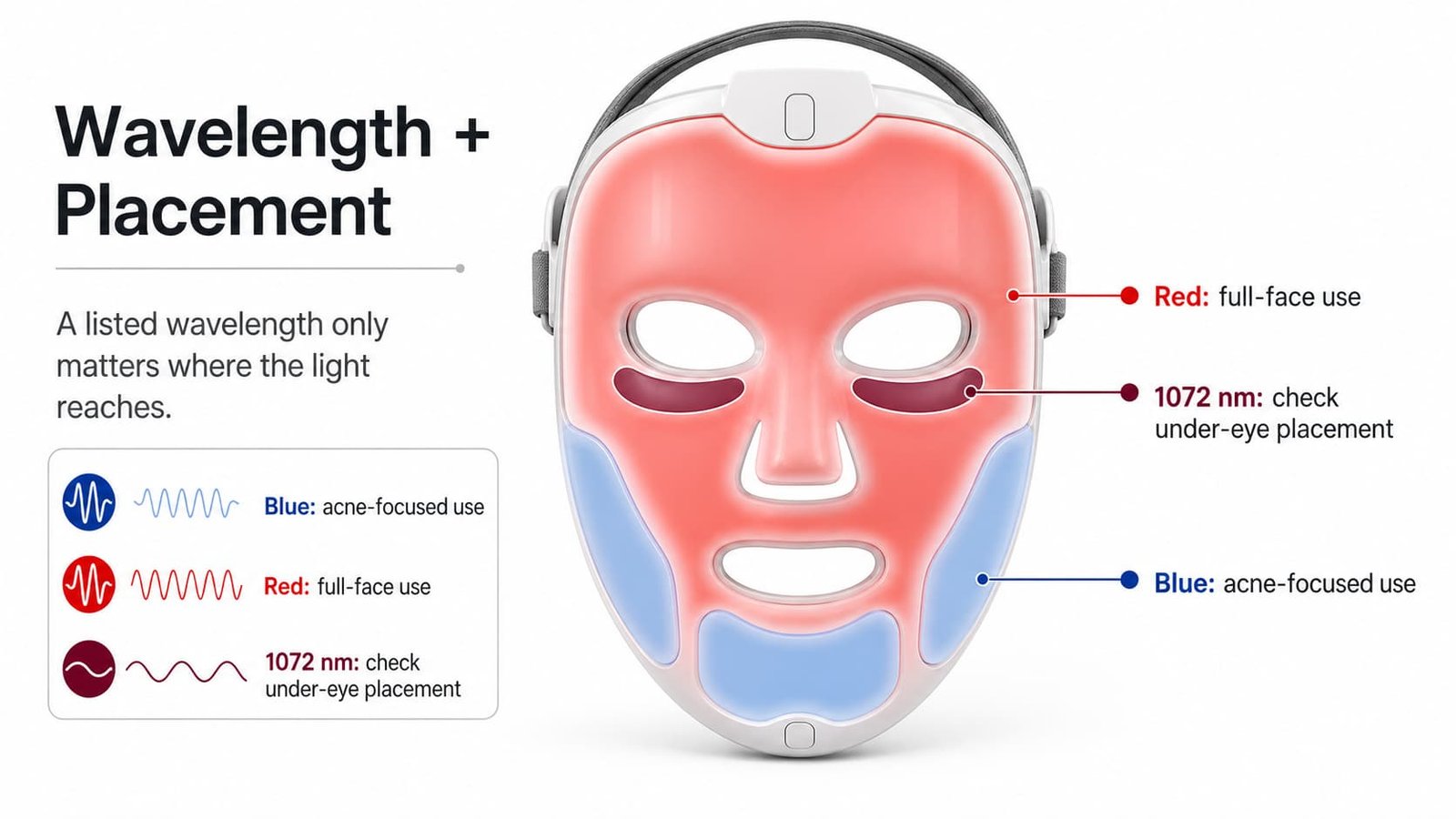
Una lunghezza d'onda utile deve essere attiva nella modalità selezionata e posizionata dove si trova effettivamente l'area target. Una scheda tecnica può elencare una lunghezza d'onda anche quando è presente solo un numero limitato di emettitori o posizionati lontano dall'area che ti interessa.
La luce blu fornisce un semplice esempio. Alcuni dispositivi specifici sono approvati per l'acne infiammatoria da lieve a moderata utilizzando modalità blu o miste, ma ciò non rende ogni impostazione blu appropriata per ogni tipo di acne. Rosso, giallo, e le combinazioni a infrarossi possono avere usi previsti diversi su dispositivi specifici. Inizia con l’etichettatura esatta del modello piuttosto che con una tabella universale dei vantaggi colore.
Il posizionamento diventa particolarmente importante per le preoccupazioni localizzate. UN randomizzato, in doppio cieco, studio controllato con placebo ma auto-segnalato testato 1072 nm intorno agli occhi per sei-otto settimane e hanno riportato cambiamenti percepiti nelle linee sottili, rughe, e borse sotto gli occhi. Era più vecchio, protocollo ristretto, non prova che alcun elenco di maschere 1072 nm produrrà lo stesso risultato. Se 1072 nm è una caratteristica decisiva per l'uso sotto gli occhi, vorremmo porre due domande separate:
- Quanti 1072 i chip nm sono attivi nella modalità pertinente?
- Questi emettitori sono fisicamente distribuiti sotto e attorno alla zona degli occhi?, soggetto alle istruzioni sulla sicurezza degli occhi del dispositivo?
Applicare la stessa logica a ogni modalità:
- 01 obiettivo
- 02 lunghezza d'onda
- 03 emettitori attivi
- 04 posizionamento
- 05 istruzioni e prove precise sul dispositivo
4. Contare i pacchetti LED fisici prima di contare i chip
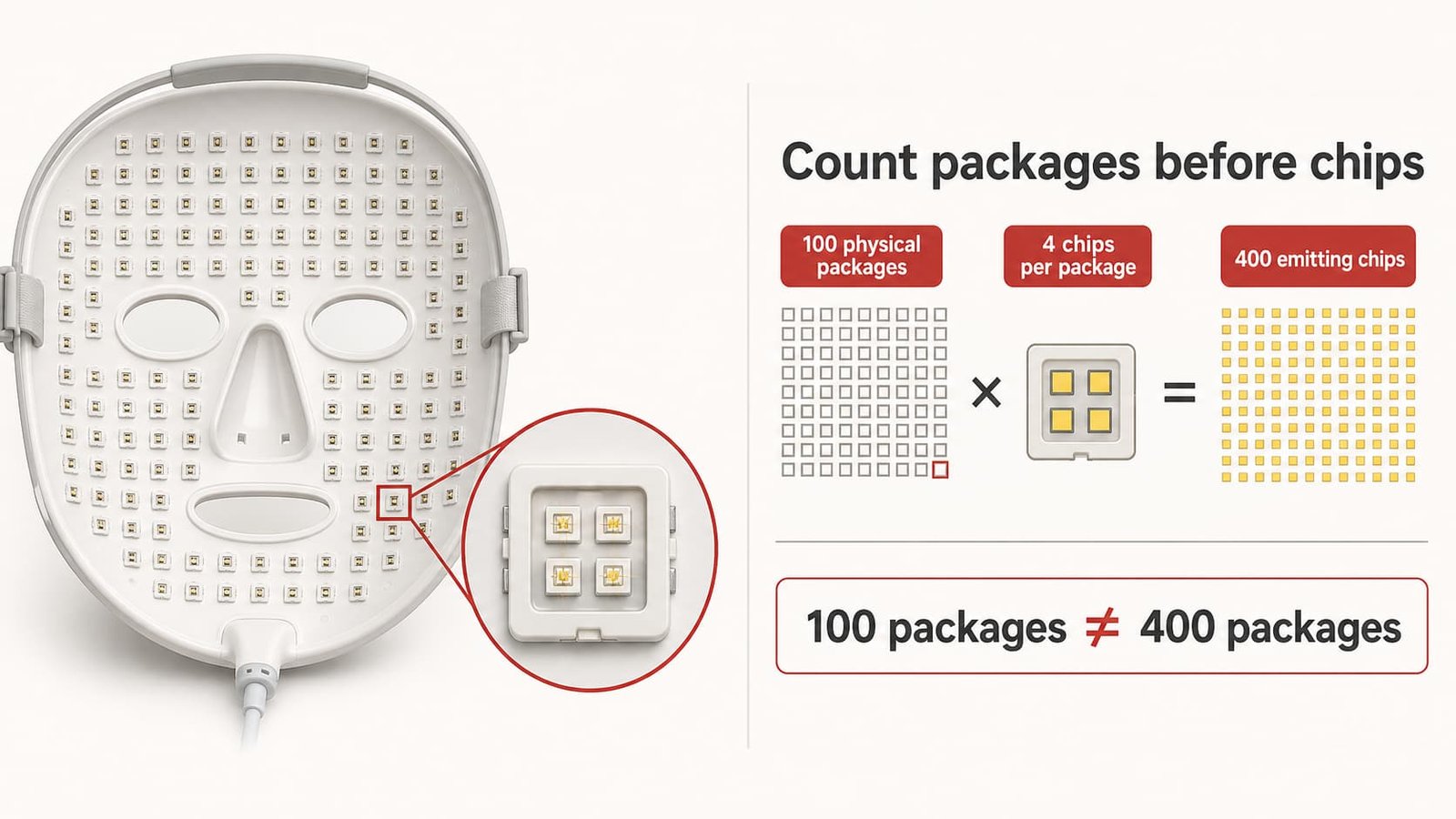
Chiedi se il numero pubblicizzato si riferisce ai pacchetti LED fisici o ai chip che emettono al loro interno. Senza quella definizione, due prodotti possono utilizzare metodi di conteggio diversi e apparire comparabili quando non lo sono.
La nostra regola di conteggio è semplice:
Una maschera con 100 i pacchetti LED fisici hanno ancora 100 LED nel senso del conteggio dei pacchetti, anche se ogni confezione contiene quattro chip emittenti. Il produttore può dichiarare con precisione 400 emettendo chip, ma non dovrebbe presentarli come 400 pacchetti LED fisici.
Richiedi tre campi separati:
| Campo | Esempio | Perché è importante |
|---|---|---|
| Pacchetti LED fisici | 100 pacchetti | Mostra il numero e la possibile densità delle posizioni fisiche delle sorgenti luminose |
| Patatine per confezione | 4 patatine | Mostra se un pacchetto può contenere più lunghezze d'onda o emettitori |
| Chip assegnati a ciascuna lunghezza d'onda | PER ESEMPIO., una ripartizione specifica del modello | Mostra se la lunghezza d'onda del titolo è ampiamente distribuita o presente solo in poche località |
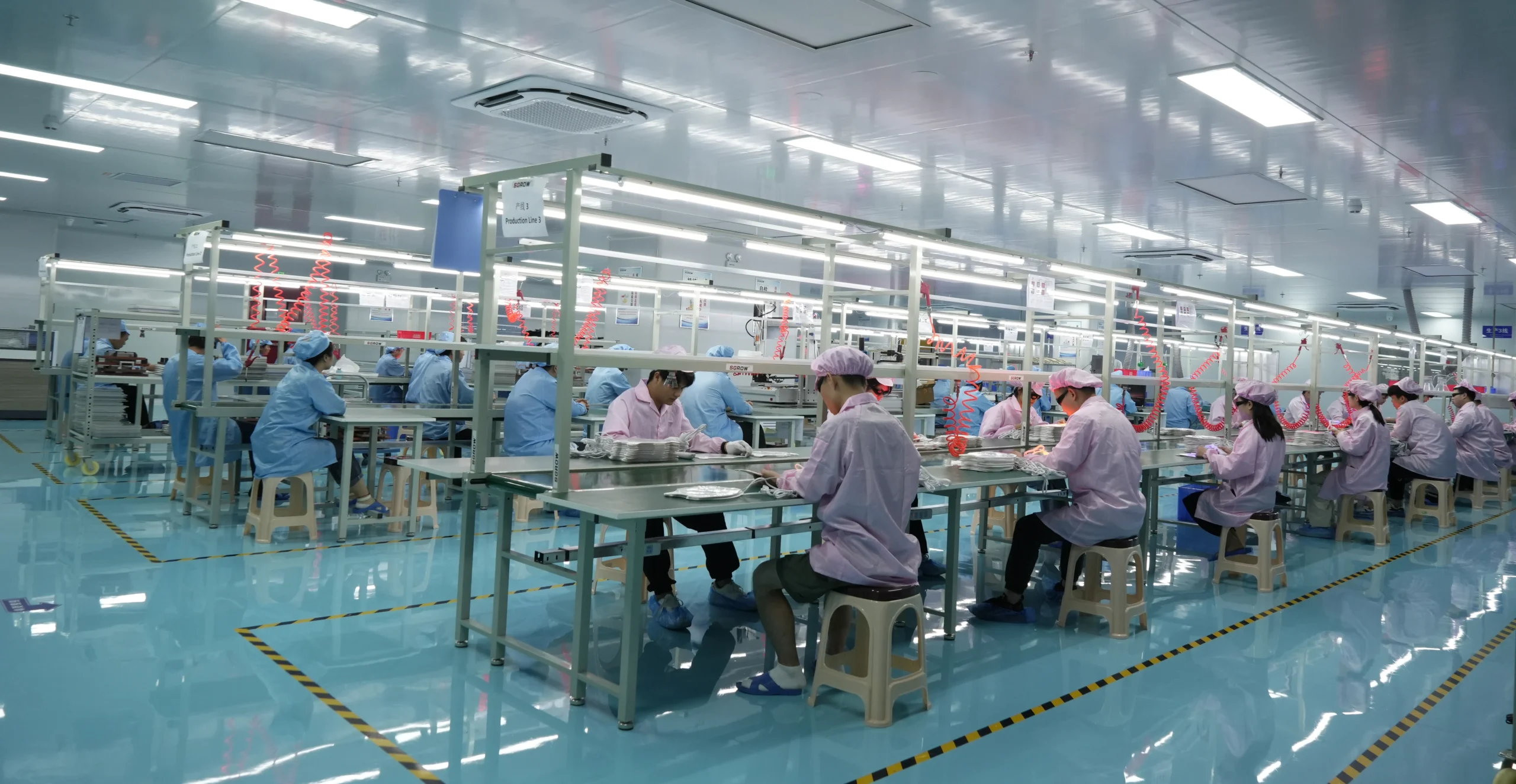
Il conteggio dei LED non è privo di significato. Nell'esperienza di segmentazione del prodotto di Wakelife, maschere con 200 o più pacchetti LED fisici di solito si trovano in uno spazio denso, livello di progettazione di fascia alta, mentre i prodotti di seguito 80 i pacchetti più spesso si collocano in un livello di valore. Si tratta di osservazioni interne sulla progettazione del prodotto, non cliniche, normativo, o soglie di settore.
Non classificare le mascherine solo in base al numero di pacchi. Confrontalo con l'area della maschera, posizionamento dell'emettitore, angolo del fascio o design ottico, lunghezze d'onda, condizioni di guida, irraggiamento, e uniformità. Duecento emettitori scarsamente distribuiti non battono automaticamente 100 emettitori ben documentati che coprano uniformemente l'area prevista.
5. Confrontare l'irraggiamento con le condizioni di prova e l'uniformità
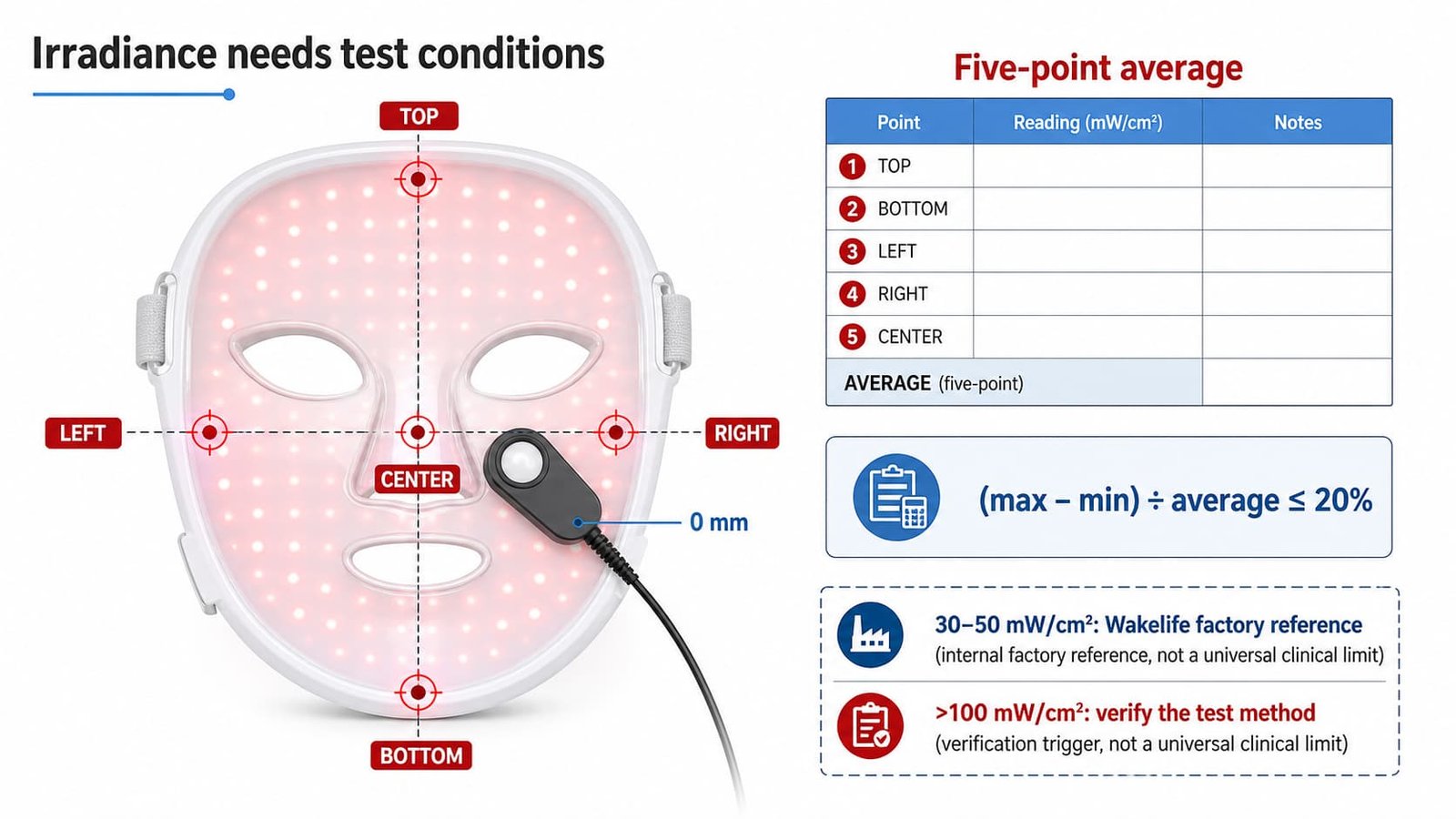
Non confrontare due numeri di irradianza finché il venditore non ti dice come è stato misurato ciascuno di essi. Irraggiamento, solitamente riportato in mW/cm², è la potenza luminosa erogata per unità di superficie. Anche il tempo della sessione è importante: l'irradiazione non è la stessa cosa dell'esposizione radiante totale o di un protocollo di trattamento completo.
Dal nostro lavoro in fabbrica, 30–50 mW/cm² è un intervallo di lavoro comune per le maschere LED domestiche aderenti che incontriamo. Non è un range clinico universalmente validato. Trattiamo anche un reclamo relativo alla maschera facciale sopra 100 mW/cm² come indicatore di verifica forte, non come prova automatica di fabbricazione, ma un numero che non accetteremmo senza il rapporto grezzo, metodo, e condizioni operative.
Richiedi tutto quanto segue:
- distanza di misurazione o condizione di contatto;
- misuratore o rilevatore utilizzato;
- modalità attiva e lunghezze d'onda;
- funzionamento continuo o pulsato;
- se il numero pubblicato è un picco, un unico punto, o una media multipunto;
- posizioni di test e valori grezzi;
- l'ora della sessione e il protocollo etichettato del dispositivo; E
- le condizioni in cui è stato calcolato qualsiasi valore di esposizione radiante.
L’attuale metodo di confronto di Wakelife misura a 0 mm in cinque posizioni: in alto, metter il fondo a, Sinistra, Giusto, e centro: quindi calcola la media. Esaminiamo anche lo spread invece di nasconderlo all'interno di una media:
IL 20% la figura è il nostro giudizio interno sulla qualità, non un CEI, FDA, clinico, o limite superato/fallito a livello di settore. È utile perché una media da sola può nascondere un punto caldo luminoso e un'area buia. Richiedi le cinque misurazioni grezze quando possibile.
IL 0 Anche il metodo mm è una convenzione di confronto, non una copia perfetta dell'uso reale. Forma del viso, lacune, inclinare, pressione, e la distanza dai singoli emettitori può cambiare ciò che raggiunge le diverse aree della pelle.
Più alto non è automaticamente migliore. UN revisione peer-reviewed della letteratura sulla fotobiomodulazione descrive una risposta alla dose bifasica frequentemente osservata in cui esposizioni inferiori possono produrre una risposta più favorevole rispetto a esposizioni più elevate nelle condizioni studiate. Gli autori sottolineano anche quella lunghezza d'onda, densità di potenza, fluenza, tempistica, e altri parametri complicano il confronto. Ciò supporta la cautela riguardo alle “vincite più alte”; non crea un massimo universale per ogni maschera facciale.
I rapporti sulla sicurezza ottica rispondono a una domanda diversa. IEC 62471 specifica i limiti di esposizione, tecniche di misurazione, e un approccio di classificazione per i rischi fotobiologici derivanti da lampade e sistemi di lampade, compresi i LED. Tali test possono supportare una valutazione della sicurezza, ma ciò non dimostra che il dispositivo otterrà il risultato estetico dichiarato.
6. Ispezionare Adattamento, Copertura, e qualità costruttiva
Termina con le parti che puoi ispezionare: se la maschera mantiene gli emettitori previsti in una posizione ripetibile e se la sua costruzione supporta un uso regolare. La lavorazione visibile non può dimostrare l'efficacia o lo stato normativo, ma può rivelare i motivi per rimuovere un prodotto dalla tua lista.
Controllare la maschera nella normale posizione di indossamento, non solo piatto su un tavolo:
- Le finestre e le lenti dei LED sono posizionate e allineate in modo coerente??
- Ci sono lacune irregolari?, rivestimento allentato, spigoli vivi, adesivo esposto, o evidente asimmetria?
- Le cinghie e i punti di attacco sostengono la maschera senza spostare le aree target?
- Ci sono punti di pressione attorno al naso, templi, e la zona degli occhi che rendono difficile il completamento della sessione etichettata?
- Effettuare le uscite dei cavi, connessioni del controller, e le aree antistrappo si sentono sicure?
- L'adattamento crea distanze ampie o incoerenti tra gli emettitori e le aree importanti del viso?
- È possibile pulire le superfici a contatto con la pelle utilizzando il metodo indicato dal produttore senza danneggiarle?
Una maschera morbida non è automaticamente migliore di una rigida. Un guscio rigido può preservare la geometria dell'emettitore ma adattarsi male ad alcuni volti; una maschera flessibile può conformarsi più strettamente ma piegare o spostare la geometria. La domanda utile è se il design specifico offre una copertura stabile al tuo viso, pressione tollerabile, e posizionamento ripetibile.
Rivedi anche la routine effettiva prima di acquistare. Se le istruzioni del dispositivo, durata della sessione, processo di pulizia, guida oculare, o un accordo di addebito non è pratico per te, le sue specifiche teoriche non compenseranno l'uso incoerente. Continua con le guide a frequenza specifica del dispositivo e durata della sessione, dove una maschera LED si inserisce in una skincare routine, E pulizia e manutenzione sicure.
Confine medico: IL L'American Academy of Dermatology consiglia di discutere l'uso della luce a casa con un dermatologo perché una condizione esistente di sensibilità alla luce, farmaco, o il trattamento può cambiare se è appropriato. Segui le avvertenze relative al tuo dispositivo specifico e cerca assistenza qualificata per sintomi preoccupanti o persistenti.
Un controllo della lista dei candidati di 10 minuti
Utilizza questa tabella prima di confrontare i prezzi o le modalità extra:
| Controllo | Risposta minima utile | Interrompere o verificare ulteriormente quando |
|---|---|---|
| Obiettivo | Una preoccupazione definita e un'area target | Il prodotto promette una modalità per ogni preoccupazione |
| NOI. Affermazione della FDA, quando richiesto o richiesto |
Numero K, richiedente, modello corrispondente, e corrispondente alla destinazione d'uso. Segno not applicable solo in entrambe le condizioni indicate nella Sezione 2: niente Stati Uniti. richiesta relativa a dispositivo medico/trattamento, e le norme applicabili non richiedono a 510(k)
|
L'autorizzazione può essere richiesta o reclamata, ma viene mostrato solo un badge, il percorso di autorizzazione non è spiegato, manca la registrazione, o il modello/uso non corrisponde |
| Lunghezza d'onda e posizionamento | Lunghezze d'onda esatte, chip attivi per modalità, e distribuzione nell'area target | Vengono forniti solo i nomi dei colori o il conteggio totale della lunghezza d'onda |
| Conteggio LED | Pacchetti fisici, patatine per confezione, e chip per lunghezza d'onda | Il conteggio dei chip viene presentato come conteggio dei pacchetti senza spiegazione |
| Irraggiamento | Valori multipunto grezzi con distanza, modalità, metro, e il contesto della sessione | Viene visualizzato solo il numero di picco; nello screening interno di Wakelife, una richiesta di maschera facciale di cui sopra 100 mW/cm² attiva una verifica più efficace del rapporto |
| Adatta e costruisci | Copertura stabile, pressione tollerabile, componenti allineati, e pulizia/uso realizzabile | Lacune, spostamento, pressione, assemblaggio scadente, o istruzioni poco pratiche compromettono l’uso ripetibile |
Superare questo controllo non dimostra che una maschera sia la scelta migliore né garantisce un risultato. Significa che il prodotto ha fornito informazioni sufficientemente coerenti da meritare una considerazione più approfondita.
La linea di fondo
Scegli la maschera che puoi verificare, non quello con i numeri più grandi nei titoli dei giornali. Definire prima l'obiettivo. Quando gli Stati Uniti. sia richiesta o richiesta l'autorizzazione per il dispositivo medico, verificare l'esatto dispositivo e l'uso previsto; non trattare l'autorizzazione come un trofeo di qualità universale. Abbina le lunghezze d'onda all'obiettivo e al loro posizionamento fisico. Pacchetti LED separati dai chip interni. Confrontare l'irradianza solo con le condizioni di prova descritte, distribuzione multipunto, e il contesto della sessione; Il metodo in cinque punti di Wakelife è un approccio di confronto interno, non uno standard universale. Quindi decidere se l'adattamento e la costruzione sono corretti, uso ripetibile realistico.
La nostra regola pratica più forte è semplice:
Più colori, LED, o l’irradiazione dovrebbe creare più domande, non un posizionamento più alto automatico.
Continua con la guida alla maschera facciale LED destra
Una volta che una maschera supera il primo confronto, scegli la guida successiva in base alla domanda a cui devi rispondere:
- Confronta modalità e colori: capire cosa significano i colori delle maschere LED, quindi confrontare a 7-maschera colorata con una maschera rossa e blu.
- Costruisci una routine praticabile: decidere dove la maschera si inserisce nella tua routine di cura della pelle, controllo compatibilità con crema idratante e siero, seguire frequenza specifica del dispositivo e guida alla sessione, e imparare come pulire e mantenere la maschera.
- Giudicare i progressi in modo realistico: utilizzare il cronologia dei risultati e guida alla rivalutazione, o rivedi il prove e limiti per le linee sottili e le rughe.
Per marchi e team di prodotto
La fiducia dei consumatori migliora quando la pagina del prodotto e la scheda tecnica utilizzano le stesse definizioni. Indicare il numero di pacchetti LED fisici, patatine per confezione, chip per lunghezza d'onda e modalità, metodo di prova dell'irradianza, valori multipunto grezzi, destinazione d'uso, ambito normativo basato sul modello esatto, e istruzioni per la pulizia e l'uso. Evitare di utilizzare un numero grande per nascondere un metodo di conteggio o misurazione.
Dopo aver definito l'utente di destinazione e l'ambito dell'attestazione, i team di prodotto possono esplorare Wakelife Piattaforme per maschere facciali a LED E Funzionalità OEM e ODM.
Riferimenti
Fonti normative e standard
| NO. | Fonte ufficiale |
|---|---|
| 1 | NOI. Food and Drug Administration. Notifica pre-mercato 510(k). Accesso luglio 22, 2026. |
| 2 | NOI. Food and Drug Administration. K250830 510(k) Record del database delle notifiche pre-mercato. Data della decisione giugno 9, 2025. Accesso luglio 22, 2026. |
| 3 | Commissione Elettrotecnica Internazionale. IEC 62471:2006—Sicurezza fotobiologica delle lampade e dei sistemi di lampade. Accesso luglio 22, 2026. |
Orientamento professionale e ricerca sottoposta a revisione paritaria
| NO. | Fonte ufficiale |
|---|---|
| 4 | Accademia americana di dermatologia. La terapia con luce rossa è adatta alla tua pelle? Ultimo aggiornamento settembre 13, 2024. Accesso luglio 22, 2026. |
| 5 | Huang YY, Chen ACH, Carroll JD, Hamblin, il signor. Risposta bifasica alla dose nella terapia della luce a basso livello. Dose-risposta. 2009;7(4):358–383. doi:10.2203/dose-risposta.09-027.Hamblin. |
| 6 | Stirling RJ, Haslam J.D. Uno studio clinico auto-riportato indaga l'efficacia di 1072 nm Light come agente anti-età. Giornale di cosmetica e terapia laser. 2007;9(4):226–230. doi:10.1080/14764170701400085. |