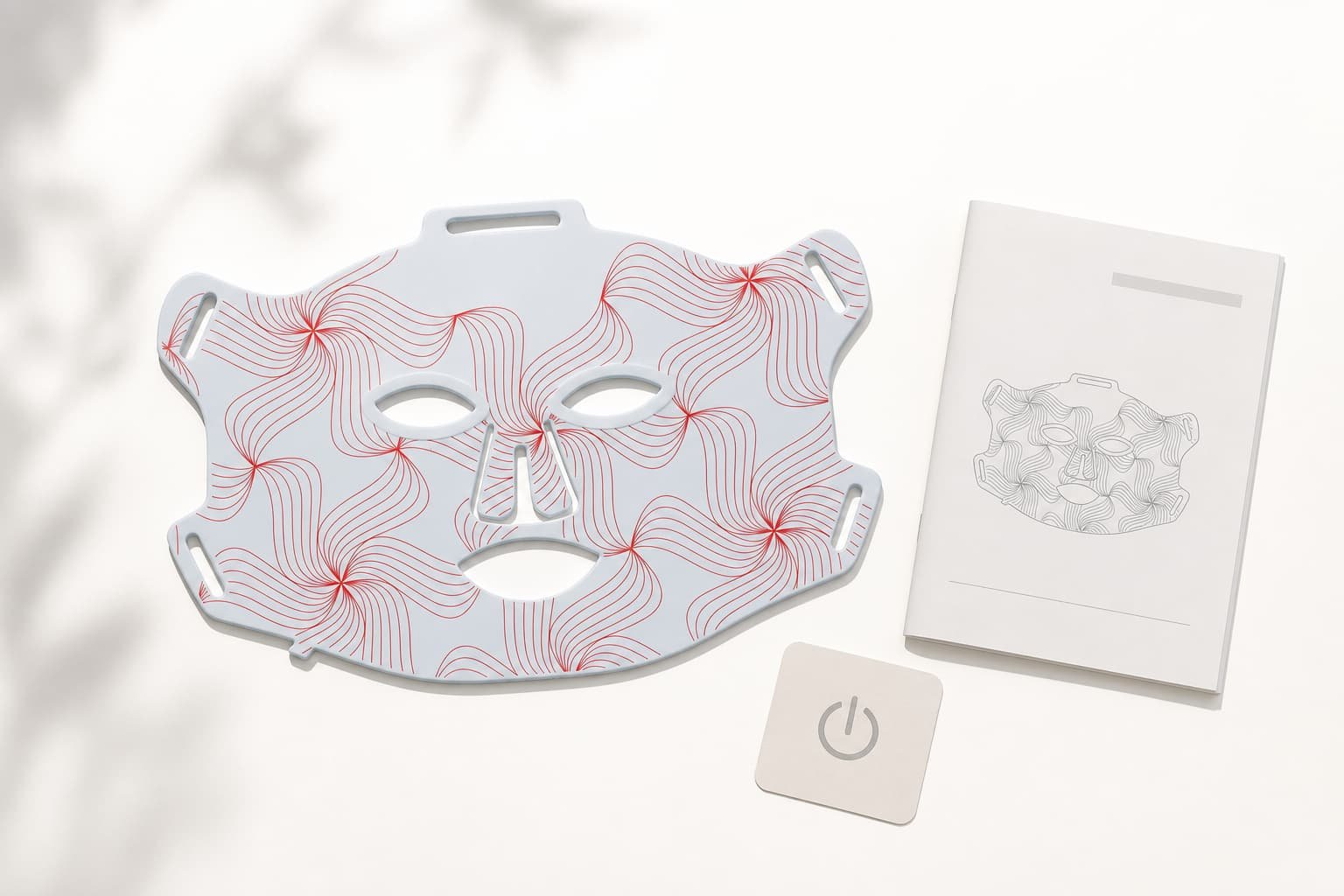
Risposta breve: Spegni la maschera facciale LED e scollegala dalla ricarica o dall'alimentazione. Quindi utilizza solo il metodo di pulizia elencato per il tuo modello esatto e la parte specifica che stai pulendo. Alcune maschere consentono una salvietta imbevuta di alcol su una superficie; altri vietano l'alcol o richiedono una salvietta a base d'acqua o un detergente specifico. Lasciare asciugare completamente la maschera prima dell'uso, ricarica, o deposito. Se le istruzioni non sono chiare o sono presenti umidità o danni, fermati e contatta il team di supporto del marchio.
Come controllare le istruzioni per la pulizia in cinque passaggi?
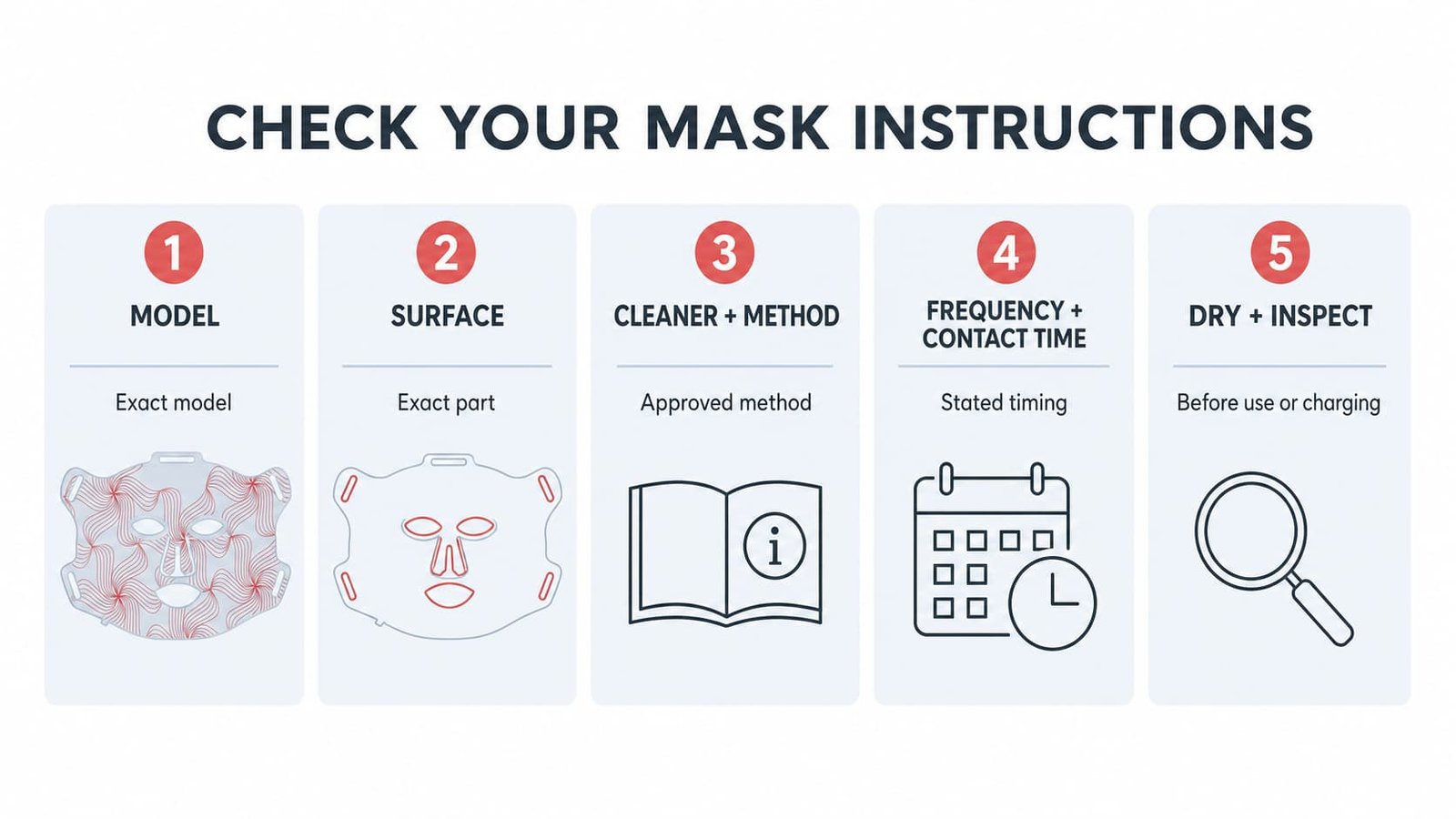
Trasforma il "controllo del manuale" in cinque controlli specifici prima che un panno o un detergente tocchino la maschera. Questo ti dà un'azione anche quando Internet offre consigli contrastanti.
- Identificare il modello esatto. Controlla l'etichetta sulla maschera, controllore, scatola, o record dell'ordine. Un marchio può vendere diverse maschere con materiali e istruzioni per la cura diversi.
- Spegnilo e disconnettilo. Rimuovilo dalla ricarica o da un'altra fonte di alimentazione a meno che le istruzioni per quel modello esatto non indichino chiaramente diversamente.
- Identifica la parte che stai pulendo. Il lato a contatto con il viso, guscio esterno, superficie luminosa flessibile, inserti oculari rimovibili, cinghie, controllore, cavo, e la porta di ricarica potrebbero non condividere una regola.
- Trova il metodo completo. Cerca il detergente o il panno approvato, concentrazione, se indicata, dove applicarlo, quanto può essere bagnato il panno, qualsiasi momento di contatto, frequenza di pulizia, e istruzioni per l'asciugatura.
- Pulire solo come indicato, quindi ispezionare. Prima di utilizzare o ricaricare nuovamente la maschera, verificare che sia completamente asciutto e privo di liquidi, peeling, screpolature, connessione allentata, odore insolito, o sono presenti altri danni.
Utilizza questa lista di controllo mentre leggi la sezione sulla cura:
| Cosa trovare | La domanda a cui risponde | Cosa non dare per scontato |
|---|---|---|
| Detergente o panno approvato | Cosa può toccare la superficie specificata | “Gentile,” “naturale," o "sicuro per l'elettronica" significa compatibile |
| Superficie o componente con nome | Dove può essere utilizzato questo metodo | Il permesso per l'interno copre anche l'esterno, cinghie, o porto |
| Metodo di applicazione | Se pulire, inumidire un panno, oppure utilizzare uno spray con nome | È possibile spruzzare un liquido direttamente sul dispositivo |
| Concentrazione e tempo di contatto | Se il metodo è la pulizia ordinaria o una fase di disinfezione definita | Qualsiasi salvietta imbevuta di alcol ha la concentrazione o il tempo di esposizione corretti |
| Frequenza | Se è necessaria la pulizia prima dell'uso, dopo l'uso, o ad un altro intervallo | Ogni maschera necessita di una pulizia quotidiana e di una "pulizia profonda" settimanale |
| Asciugatura e ispezione | Quando è possibile utilizzare la maschera, addebitato, o memorizzati nuovamente | Una superficie che sembra asciutta significa che non è entrata umidità in un'apertura |
Se il manuale stampato e l'attuale pagina di supporto ufficiale non sono d'accordo, non combinare i due metodi. Contatta il team di supporto del marchio con il modello e la versione delle istruzioni e chiedi quale si applica al tuo dispositivo.
Perché non esiste un detergente per ogni maschera facciale LED?
Perché il metodo approvato può cambiare sia in base al modello che alla parte del dispositivo che stai pulendo. Un detergente consentito su una maschera, o anche su un lato della maschera, potrebbe danneggiare una finitura diversa, superficie siliconica, cinghia, controllore, o zona di ricarica.
Le istruzioni ufficiali mostrano la differenza:
- IL Pagina di supporto DRx SpectraLite FaceWare Pro dice che l'interno può essere pulito con una salvietta imbevuta di alcol o un panno umido, mentre sui pannelli metallici esterni non devono essere utilizzati detergenti chimici o a base alcolica.
- IL Guida rapida di Omnilux Contour specifica una salvietta a base d'acqua o un panno pulito umido e dice di non pulire il dispositivo mentre è in carica.
- IL Domande frequenti Domande frequenti sulla Svizzera 202 manuale, ospitato sul sito web di FOREO, chiama il suo spray detergente al silicone e un panno privo di lanugine inumidito con acqua calda, ma vieta esplicitamente i prodotti per la pulizia contenenti alcol, benzina, o acetone.
Questi sono esempi di dispositivi esatti, non approvazioni e non istruzioni per ogni maschera LED. Il loro valore è il contrasto: La “maschera facciale a LED” non è un’informazione sufficiente per approvare l’alcol, acqua, sapone, o una salvietta disinfettante.
IL Lista di controllo della FDA per i dispositivi medici sanitari a domicilio fornisce un principio di cura utile: tenere a disposizione le Istruzioni per l'uso, seguiteli come dati, e prenditi cura del dispositivo secondo le indicazioni del produttore, comprese le istruzioni per la pulizia. Citare questa lista di controllo non significa che ogni maschera LED di consumo abbia lo stesso status normativo.
Puoi usare l'alcol, Salviette disinfettanti, Sapone, o Acqua?
Solo quando le istruzioni per il tuo modello esatto lo consentono, concentrazione, metodo di applicazione, e superficie. Non esiste un sì universale per l’alcol e non esiste una regola universale secondo cui un panno umido è sempre sicuro.
| Cosa vuoi usare | Decisione predefinita | Ciò che conta come permesso |
|---|---|---|
| 70% alcool isopropilico o una salvietta imbevuta di alcol | Non utilizzarlo basandosi solo sui consigli per un'altra maschera | Le istruzioni del tuo modello indicano la concentrazione o la pulizia e la superficie esatta |
| Salvietta disinfettante per la casa | Non sostituirlo con una fase di pulizia o disinfezione specifica del modello | Le istruzioni del dispositivo consentono quel tipo di prodotto e spiegano il tempo di contatto e l'asciugatura richiesti |
| Panno a base d'acqua o panno umido | Non dare per scontato che "a base d'acqua" significhi sicuro attorno a ogni strato, cucitura, GUIDATO, controllore, o porto | Le istruzioni indicano il metodo con la salvietta o il panno e la parte da pulire |
| Sapone o detergente delicato | Non creare una "pulizia profonda" settimanale con acqua e sapone a meno che non sia specificato | La sezione relativa alla cura esatta identifica il detersivo, diluizione, applicazione, rimozione dei residui, e fasi di asciugatura |
| Uno spray detergente di marca o al silicone | Non trasferire lo spray di una marca su un altro dispositivo | Le istruzioni esatte del dispositivo nominano quel prodotto o ne definiscono un equivalente |
| Candeggina, ammoniaca, acetone, benzina, abrasivi, o solventi | Non improvvisare con loro | Non usarli a meno che le istruzioni esatte non menzionino specificamente la sostanza, superficie, e metodo; l'idoneità domestica ordinaria non è un permesso |
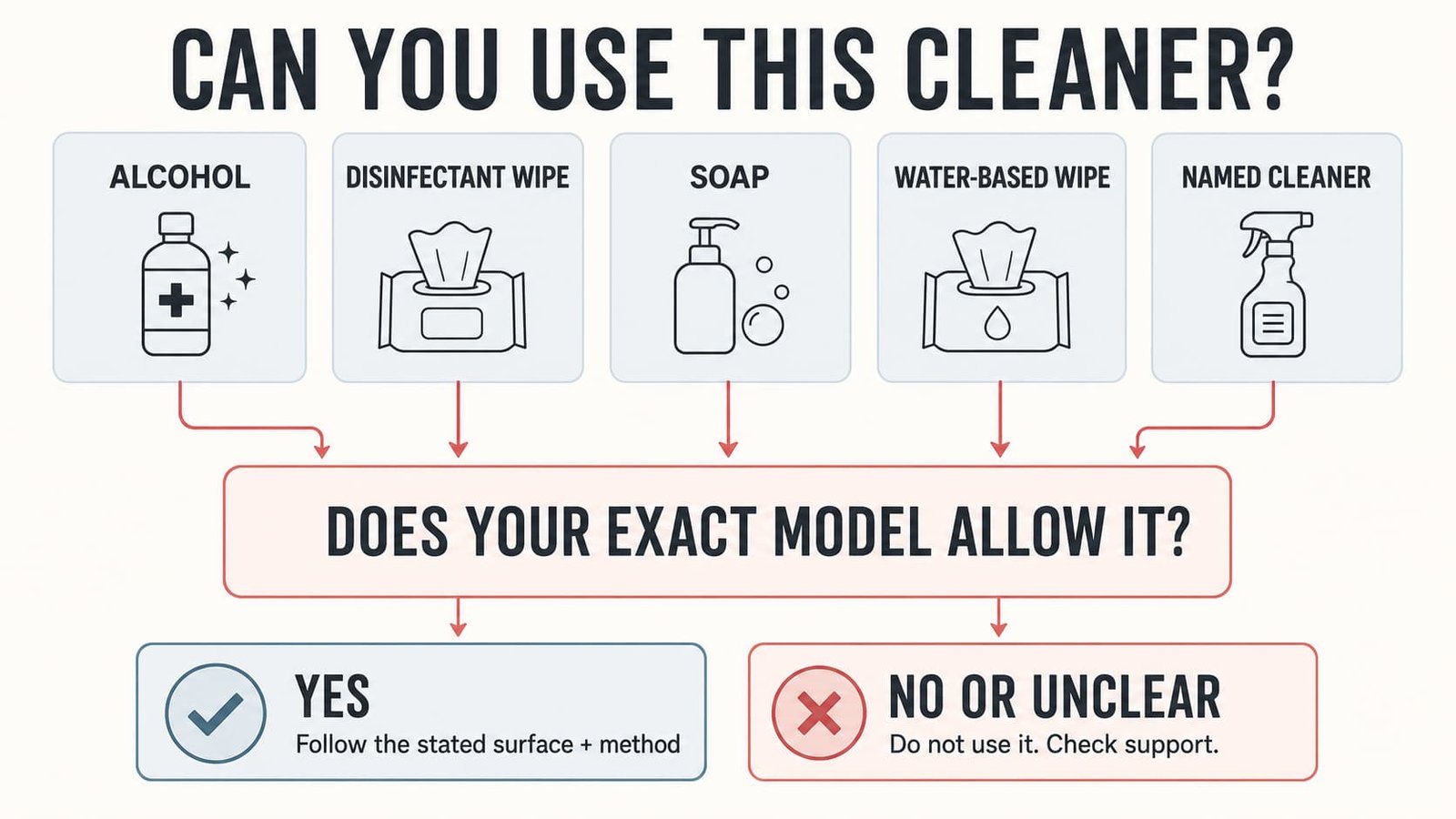
“Sicuro per l’elettronica” non è sufficiente. Una maschera LED può combinare l'elettronica con le superfici ottiche, rivestimenti, finiture stampate, adesivi, silicone, tessuto, porti, e parti rimovibili. Un'etichetta generale più pulita non può dirti come sono state convalidate tutte quelle parti.
Lo stesso vale per la spruzzatura diretta. Un modello esatto può nominare uno spray particolare e spiegare come rimuovere i residui; ciò non crea il permesso di appannare un'altra maschera, i suoi LED, cuciture, controllore, o porta di ricarica.
Se hai già utilizzato un detergente non elencato nelle istruzioni, non aggiungere un'altra sostanza chimica o risciacquare la maschera per "annullarla".. Smettila di usare quel detergente, tenere il dispositivo spento, e registrare il nome del prodotto, concentrazione, quantità, e la superficie che ha toccato. Segui qualsiasi indicazione sul contatto con i liquidi nel manuale e chiedi al team di supporto del marchio se il dispositivo necessita di ispezione. Non caricarlo né testarlo se del liquido potrebbe essere entrato in un'apertura o in uno strato interno.
Quanto spesso dovresti pulire una maschera facciale a LED?
Utilizza la frequenza indicata per il tuo modello esatto anziché un programma giornaliero o settimanale universale. Alcune istruzioni ufficiali della maschera richiedono la pulizia dopo ogni utilizzo, ma tale dicitura comune non sostituisce comunque le istruzioni fornite con il dispositivo.
La frequenza della pulizia può dipendere da ciò che è stato convalidato dal produttore del dispositivo, quali parti entrano in contatto con la pelle, se viene utilizzato un argomento con nome, e se la maschera è condivisa. Un programma rigido come "pulizia dopo ogni sessione e pulizia profonda settimanale" diventa inaffidabile quando l'addetto alle pulizie e il significato di "pulizia profonda" non sono stati definiti per quel modello.
Se le istruzioni dicono "dopo ogni utilizzo,"Segui il metodo completo, non solo la frequenza. Se non danno frequenza, controlla l'attuale pagina di assistenza ufficiale o chiedi al team di supporto del marchio. Non compensare le istruzioni mancanti utilizzando più liquido, una sostanza chimica più forte, o una routine di disinfezione più frequente.
Per la questione separata su quanto spesso eseguire una sessione LED, utilizzare il Guida alla frequenza della maschera LED per dispositivo esatto. La frequenza del trattamento e la frequenza della pulizia del dispositivo sono istruzioni diverse.
Pulire è uguale a disinfettare?
NO. La pulizia rimuove residui e impurità; la disinfezione è un processo chimico separato destinato a uccidere i germi rimanenti. Una pulizia rapida non è automaticamente una fase di disinfezione convalidata.
IL CDC distingue la pulizia, igienizzante, e disinfettante e rileva che le superfici vengono pulite prima di igienizzare o disinfettare. Questa distinzione tra sanità pubblica aiuta a spiegare i termini, ma non ti dice quale sostanza chimica è compatibile con una maschera LED. La compatibilità del dispositivo deriva comunque dalle esatte istruzioni della maschera.
Una procedura di disinfezione esatta del dispositivo utilizzabile dovrebbe identificare più di un nome di prodotto. Controlla:
- la sostanza chimica e la concentrazione approvate;
- l'esatta superficie o parte rimovibile;
- se i residui visibili devono essere rimossi prima;
- la quantità o l'umidità richiesta;
- l'orario di contatto e il numero di candidature, se indicato;
- fasi di rimozione dei residui e di asciugatura completa.
Se questi campi sono assenti, non chiamare “disinfezione” un normale detergente né affermare che uccida una percentuale di batteri. Se una maschera viene condivisa da più persone o utilizzata in una clinica, terme, o un altro ambiente professionale: l'organizzazione necessita di un protocollo documentato compatibile con il dispositivo esatto. Un blog generale dei consumatori non può sostituire tale protocollo.
Quando dovresti smettere di pulire e smettere di usare la maschera?
Interrompere quando il problema non è più un normale residuo superficiale. Una maggiore pulizia non può risolvere l'ingresso di liquidi, materiali danneggiati, un guasto elettrico, o istruzioni per la cura poco chiare.
| Quello che noti | Cosa fare dopo |
|---|---|
| Il liquido potrebbe essere entrato in una cucitura, strato leggero, controllore, collegamento via cavo, o porta di ricarica | Tenere il dispositivo spento e disconnesso. Non caricarlo né testarlo. Segui le istruzioni per il contatto con l'acqua o contatta il team di supporto del marchio |
| Cracking, peeling, strati che si separano, cablaggio esposto, un connettore allentato, o un cavo danneggiato | Smettere di utilizzare il dispositivo e non applicare il nastro, colla, richiudere, o smontarlo da solo |
| Nuovo odore di bruciato, calore insolito, sfarfallio, comportamento di errore, o mancata ricarica normalmente | Scollegarlo quando è sicuro farlo e contattare l'assistenza; non considerare la pulizia come una riparazione |
| Appiccicosità persistente, scolorimento, annebbiamento, o rifinire i danni dopo l'uso di un detergente | Smetti di applicare quel prodotto e chiedi al marchio come valutare la superficie interessata |
| Il manuale manca o non indica mai un metodo di pulizia approvato | Non copiare la procedura di un altro modello; richiedi le istruzioni attuali per il tuo modello esatto |
Non provare ad asciugare forzatamente la maschera con un asciugacapelli, spolverino ad aria compressa, stufa, o luce solare diretta a meno che le istruzioni esatte non consentano specificamente questo metodo. Un articolo generale non può stabilire che l'asciugatura forzata sia compatibile o che una maschera sia elettricamente sicura dopo l'ingresso di liquidi.
Come si asciuga e si conserva la maschera dopo la pulizia?
Completare la fase di asciugatura indicata e ispezionare il dispositivo prima dell'uso, ricarica, o memorizzarlo. La pulizia non è terminata se rimangono umidità o residui di detergente.
Posizionare la maschera nella posizione di asciugatura descritta nelle sue istruzioni e tenerla scollegata per il periodo indicato, se ne viene dato uno. Non piegare, premere, Calore, o appendere una maschera flessibile in un modo non approvato dal produttore. Controllare la superficie di contatto con il viso, cuciture, collegamento del controllore, cavo, e la porta di ricarica prima del prossimo utilizzo.
Una volta completamente asciutto, riporre la maschera utilizzando la custodia in dotazione, borsa, o altro metodo approvato. Seguire eventuali limiti del modello esatto per la temperatura, umidità, luce solare diretta, movimentazione dei cavi, o pieghevole. “Utilizzare la scatola originale” e “conservare al fresco, luogo asciutto” può essere ragionevole per alcuni prodotti, ma non dovrebbero sovrascrivere istruzioni più specifiche.
Se i residui di prodotti per la cura della pelle vengono trasferiti ripetutamente sul dispositivo, rivedi dove il LED si inserisce nella tua routine. IL Guida alla routine di cura della pelle con maschera LED spiega il punto di partenza per una pelle pulita e quando applicare i prodotti senza risciacquo.
La semplice regola da ricordare
Il metodo di pulizia più sicuro non è il detergente più potente o la salvietta più diffusa. È il metodo completo convalidato per la tua maschera esatta e per l'esatta superficie che stai toccando:
Abbina il modello, abbinare la superficie, utilizzare solo il metodo indicato, e non riprendere l'uso o la ricarica finché il dispositivo non sarà completamente asciutto e non danneggiato.
Se le istruzioni non identificano un addetto alle pulizie o ti lasciano dubbi sull'alcol, salviette disinfettanti, sapone, acqua, spruzzatura diretta, o ingresso di liquidi, smetti di indovinare e contatta il team di supporto del marchio. Le istruzioni mancanti rappresentano un problema di supporto, non il permesso di copiare un altro dispositivo.
La mancanza di una guida alla pulizia fa parte di un problema di documentazione più ampio, è da Wakelife Guida alla selezione della maschera facciale LED in sei punti per verificare il modello esatto, specifiche, adatto, e qualità dell'insegnamento.
Per i marchi, Cliniche, e team di prodotto
Le domande dei consumatori sulle salviette imbevute di alcol e sulla “pulizia profonda” spesso mettono in luce una lacuna nelle istruzioni piuttosto che una mancanza di impegno da parte dell’utente. Le informazioni sulla cura dovrebbero identificare ciascuna superficie rilevante, agente e concentrazione approvati, metodo di applicazione, orario di contatto, se applicabile, frequenza di pulizia, requisito di asciugatura, sostituzioni vietate, e risposta all'ingresso di liquidi o al danneggiamento.
I team di prodotto dovrebbero convalidare questi campi per la costruzione esatta e renderli facili da trovare nel manuale, guida rapida, pagina di supporto ufficiale, e flusso di lavoro post-vendita. Se stai sviluppando una maschera o rivedendo le sue istruzioni per la cura, esplora Wakelife Piattaforme per maschere facciali a LED E Funzionalità OEM e ODM.
Guida alla sicurezza
Questo articolo fornisce un'educazione generale del consumatore, pulizia non specifica del dispositivo, disinfezione, riparazione, o istruzioni per il controllo delle infezioni. Le maschere LED variano nei materiali, costruzione, resistenza all'acqua, detergenti approvati, avvertimenti, e destinazione d'uso. Segui l'etichettatura del tuo dispositivo esatto.
Se la maschera potrebbe essere bagnata internamente, risulta danneggiato, si comporta in modo anomalo, o mancano istruzioni chiare per la cura, smetti di usarlo e caricarlo e contatta il team di supporto del marchio. Le impostazioni professionali o di uso condiviso dovrebbero seguire le procedure operative e di controllo delle infezioni specifiche del dispositivo.
Riferimenti
Fonti Indipendenti e Autorevoli
| NO. | Fonte ufficiale |
|---|---|
| 1 | NOI. Food and Drug Administration. Dispositivi medici per l'assistenza domiciliare: Una lista di controllo. Contenuto aggiornato a giugno 12, 2024. Accesso luglio 20, 2026. |
| 2 | Centri per il controllo e la prevenzione delle malattie. Pulizia e disinfezione. Aggiornato giugno 3, 2025. Accesso luglio 20, 2026. |
Esempi di istruzioni specifiche del dispositivo
Queste origini documentano solo il dispositivo denominato e le regole di superficie. Non vengono utilizzati come autorità clinica generale o a livello di categoria.
| NO. | Fonte ufficiale |
|---|---|
| 3 | Dr. Dennis Gross Cura della pelle. Supporto del dispositivo DRx SpectraLite FaceWare Pro. Istruzioni per la pulizia specifiche del dispositivo. Accesso luglio 20, 2026. |
| 4 | OmniluxLED. Guida rapida per Omnilux Contour. Istruzioni per la pulizia specifiche del dispositivo. Accesso luglio 20, 2026. |
| 5 | Domande frequenti svizzero / FOREO. Domande frequenti Domande frequenti sulla Svizzera 202 Manuale. Istruzioni per la pulizia e la cura specifiche del dispositivo. Accesso luglio 20, 2026. |