Um cenário que todo proprietário de marca eventualmente enfrenta
É uma manhã de terça-feira. Um cliente da Amazon acaba de registrar uma reclamação alegando que sua máscara facial de LED “parou de funcionar após três usos”. A listagem tem uma classificação de 4,6 estrelas e 8,000 comentários. Dentro de horas, O sistema automatizado da Amazon sinaliza o produto. Espera-se que você responda prontamente – geralmente em questão de dias úteis – com evidências documentadas, ou arriscar uma suspensão temporária da listagem.
Você encaminha a reclamação ao seu fabricante. A resposta volta na manhã seguinte:
“Podemos identificar o lote de produção a partir da data do pedido do cliente. Havia aproximadamente 3,200 unidades nesse lote. Nós investigaremos.”
Essa resposta, tecnicamente, não está errado. Mas para uma marca que opera no varejo regulamentado, é um falha - porque não pode dizer se 1 unidade está com defeito ou 3,200 são.
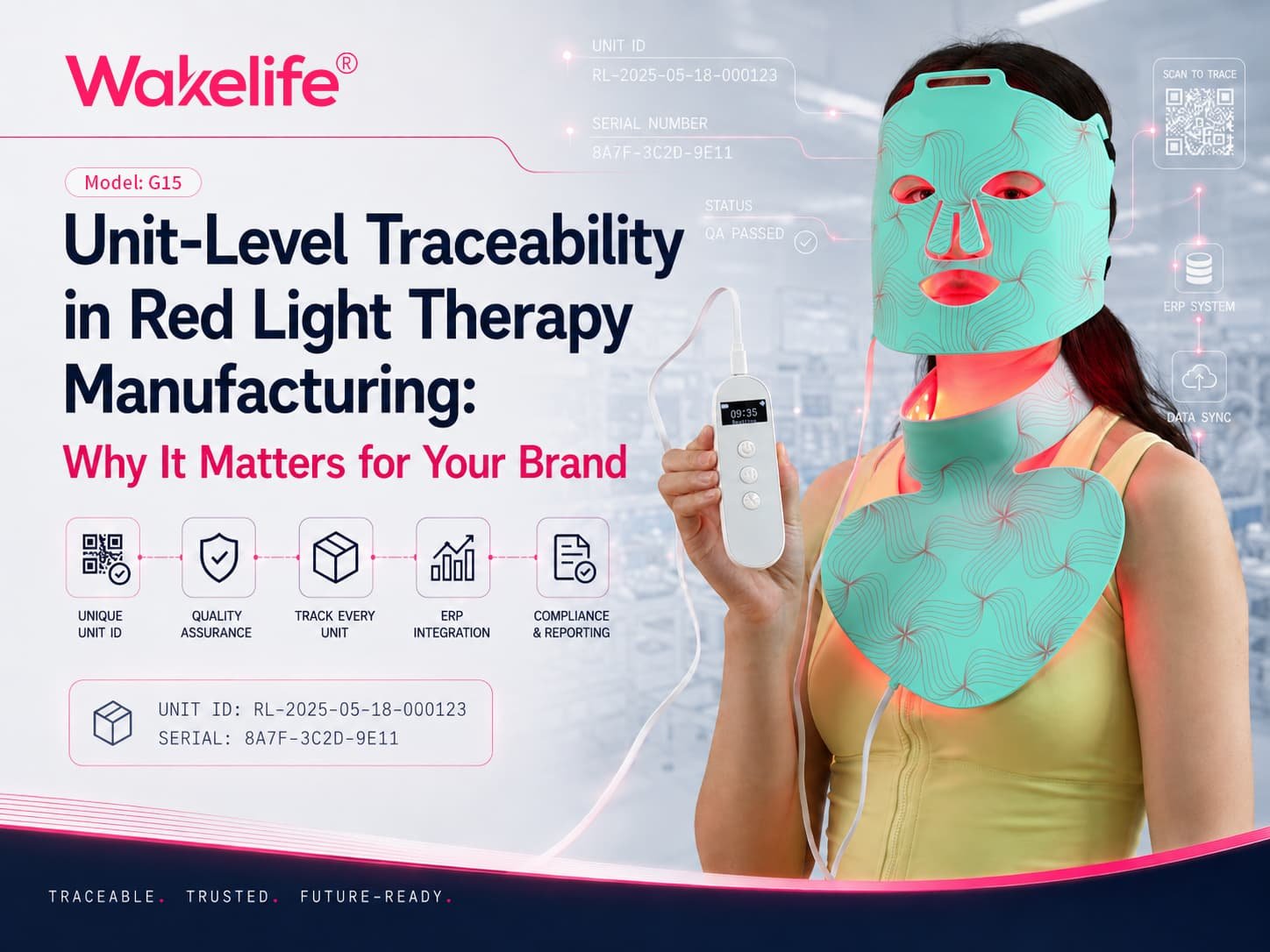
Esta é a lacuna que separa a rastreabilidade em nível de lote da rastreabilidade em nível de unidade – e é um dos fatores menos discutidos na aquisição de dispositivos de terapia de luz vermelha para mercados sérios.
O que “rastreabilidade” realmente significa na fabricação de dispositivos médicos
Sob ISO 13485:2016 — Dispositivos médicos: Sistemas de gestão da qualidade — o padrão de gestão de qualidade reconhecido internacionalmente para projeto e fabricação de dispositivos médicos — a rastreabilidade é uma capacidade documentada para vincular um produto acabado ao:
- Suas fontes de matéria-prima e componentes
- O pessoal e os equipamentos utilizados na sua produção
- Os registros de validação do processo realizados nele
- Sua embalagem, distribuição, e histórico de remessa
O padrão faz não prescrever se a rastreabilidade deve operar em nível de lote ou em nível de unidade. Essa distinção é deixada ao design do sistema de qualidade do fabricante – e é precisamente onde a maioria das fábricas de terapia de luz LED escolhe silenciosamente a opção mais barata..
Nível de lote vs.. Rastreabilidade em nível de unidade
| Métrica de Rastreabilidade | Nível de lote | Nível de Unidade |
|---|---|---|
| O que identifica | Um lote de produção (frequentemente 500–5.000 unidades) | Um único dispositivo |
| Quanto custa implementar | Baixo — um número de lote impresso | Superior – marcação a laser, Integração ERP, Ligação MES |
| O que isso diz quando algo falha | “Está em algum lugar deste lote” | “É exatamente este dispositivo, feito nesta linha, por esta operadora, Neste momento" |
| O que isso permite | Grandes recalls, suposições para todo o lote | Análise direcionada da causa raiz, contenção com escopo |
| Aceitável para | Eletrônicos de consumo em geral | Dispositivos médicos, Produtos regulamentados pela FDA, marcas premium |
Para uma marca que vende na Amazon, em farmácias, ou através de canais médicos, a diferença não é acadêmica. Ele determina diretamente se uma única reclamação se torna uma única substituição – ou um recall de 3.200 unidades que destrói seu estoque e sua listagem.
Por que a maioria das fábricas de terapia de luz vermelha não oferece rastreabilidade em nível de unidade
Três razões, em ordem de frequência:
1. A infraestrutura é cara. A rastreabilidade em nível de unidade requer equipamento de marcação a laser em linha, um sistema ERP capaz de vincular IDs exclusivos a registros de produção em tempo real, e um Sistema de Execução de Fabricação (MES) que captura dados de processo por unidade e não por turno. Para uma fábrica construída em torno de rotatividade rápida e OEM com margens baixas, este não é um investimento natural.
2. Expõe responsabilidade. Uma fábrica com verdadeira rastreabilidade em nível de unidade não pode esconder inconsistências de fabricação por trás das médias dos lotes. Teste de comprimento de onda de cada unidade, ciclo de envelhecimento, e a aprovação do CQ torna-se individualmente consultável. Isto é desconfortável para instalações que não operam em disciplina de nível médico.
3. A maioria dos clientes não pergunta. Os proprietários de marcas que lançam um produto de bem-estar raramente perguntam sobre a arquitetura de rastreabilidade durante o fornecimento. No momento em que a pergunta é importante – durante uma reclamação, uma auditoria, ou um recall – o fornecedor já foi escolhido.
É por isso que a rastreabilidade deve ser avaliada antes o contrato OEM é assinado, não depois.
O que um sistema real de rastreabilidade em nível de unidade registra
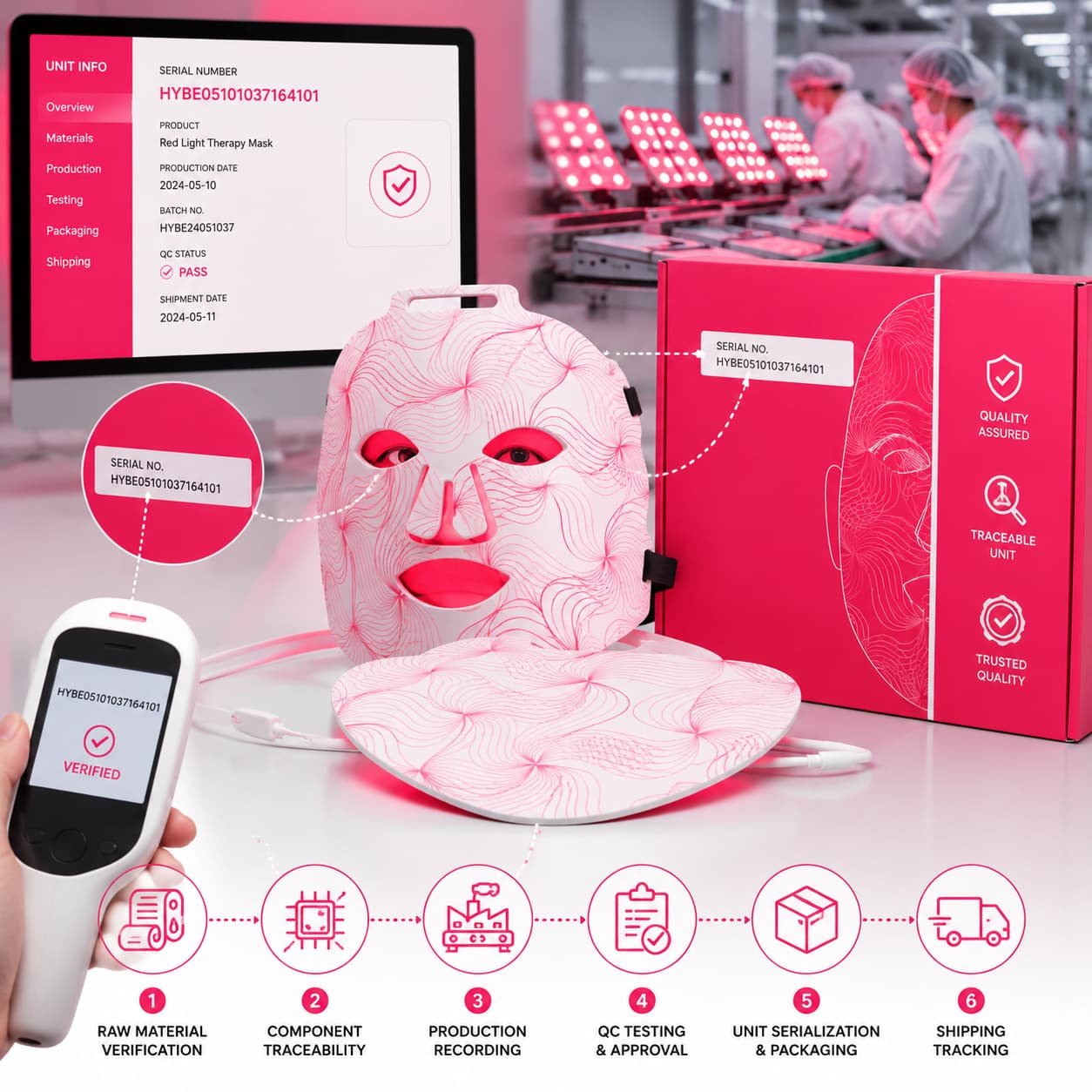
Quando uma unidade em uma instalação devidamente equipada sai da linha de produção, seu ID de unidade marcado a laser está vinculado - em tempo real - ao seguinte conjunto de dados:
1. Proveniência Material
- Número de lote e fornecedor do chip LED
- Lote de driver IC e PCB
- Lote de silicone ou material de invólucro
- Resultados de inspeção recebidos para cada componente
2. Condições da linha de produção
- Linha de montagem e estação
- Grupo de operadores e turno
- Carimbos de data e hora para cada etapa do processo
3. Validação de Processo
- Verificação de comprimento de onda (usando análise espectral de esfera integradora, Tolerância de ±5nm)
- Medição de irradiação
- Resultados do ciclo de envelhecimento
- Status de amostragem de teste de queda (quando aplicável)
- Inspeção funcional final
4. Aprovação do Controle de Qualidade
- ID do inspetor de CQ
- Status de aprovação/reprovação com anomalias documentadas
- Referência CAPA (se alguma não conformidade foi levantada no lote)
5. Logística de Saída
- Número da caixa e ID do palete
- Lote de remessa e mercado de destino
- Referência da declaração aduaneira
Quando todas as cinco camadas estão vinculadas por meio de execução de ERP em circuito fechado — o que significa que os registros são gerados durante produção em vez de reconstrução posterior - você tem um sistema que pode resistir tanto ao escrutínio regulatório quanto às reclamações dos clientes.
Quatro cenários do mundo real onde é importante
Cenário 1: A reclamação da Amazon
Um cliente afirma que seu dispositivo causou irritação na pele. Com rastreabilidade em nível de unidade, seu fabricante pode obter o registro de teste de comprimento de onda desse dispositivo específico, confirme que estava dentro das especificações liberadas, e fornecer documentação à Amazon dentro 24 horas. Resultado: reclamação resolvida como erro do usuário, listagem protegida.
Sem isso: você fornece um certificado de lote que não aborda a unidade específica, e a Amazon aumenta.
Cenário 2: O inquérito da FDA
O FDA Programa de relatórios de segurança MedWatch recebeu relatos de eventos adversos para dispositivos de terapia de luz LED nos últimos anos, incluindo casos envolvendo lesões térmicas e exposição ocular não intencional. Quando o FDA abre uma consulta, eles esperam que o fabricante produza registros específicos do dispositivo - não resumos em lote.
Para FDA da Wakelife 510(k) máscara de terapia de luz LED limpa (K250830, verificável no público do FDA 510(k) banco de dados), o arquivo técnico submetido ao FDA depende explicitamente da validação de produção por unidade como parte do sistema de qualidade do projeto aprovado. A rastreabilidade em nível de unidade não é um recurso de marketing – é um compromisso regulatório embutido na própria folga.
Cenário 3: A auditoria do varejista
Os grandes retalhistas — especialmente na UE sob o Regulamento de Dispositivos Médicos (UE) 2017/745, e em canais regulamentados entre compradores premium de varejo e farmácias – exigem cada vez mais auditorias de fornecedores antes de embarcar em um novo dispositivo de beleza. Os auditores perguntarão: “Mostre-me uma unidade selecionada aleatoriamente, e produzir seu registro de produção completo.” Uma fábrica que opera apenas em lote não pode responder a esta pergunta. Uma pergunta. Falha na auditoria.
Cenário 4: O recall direcionado
O Banco de dados de recall de dispositivos médicos da FDA inclui produtos de terapia LED que foram retirados por problemas que afetam apenas um subconjunto da produção. Com base em padrões documentados da indústria, os fabricantes com rastreabilidade em nível de unidade são capazes de definir o escopo da ação corretiva apenas para as unidades afetadas. Os fabricantes que possuem apenas dados em nível de lote enfrentam uma contenção muito mais ampla – multiplicando o impacto financeiro e de reputação por ordens de magnitude.
Para proprietários de marcas, a matemática é simples: granularidade de rastreabilidade é seguro contra os piores cenários que você espera que nunca aconteçam, mas para o qual o custo de não estar preparado é assimétrico.
A caixa K250830: O que a autorização da FDA revela sobre a disciplina de fabricação
Em 2025, Máscara de terapia de luz LED da Wakelife recebeu FDA 510(k) liberação sob número de referência K250830, classificando-o como um dispositivo médico de Classe II. Essa folga é verificável publicamente através do oficial do FDA 510(k) banco de dados.
O que é menos visível – mas mais importante operacionalmente – é o que 510(k) autorização demandas de um fabricante sob 21 Parte CFR 820 — Regulamento do Sistema de Gestão da Qualidade:
- Um arquivo de histórico de projeto documentado (FHD) vinculando todas as decisões de design a resultados validados
- Um registro mestre do dispositivo (DMR) definindo como cada unidade liberada deve ser produzida
- Um registro do histórico do dispositivo (DHR) para cada unidade individual produzida sob autorização — o que significa que os registros de produção em nível de unidade não são opcionais; eles são um requisito regulatório
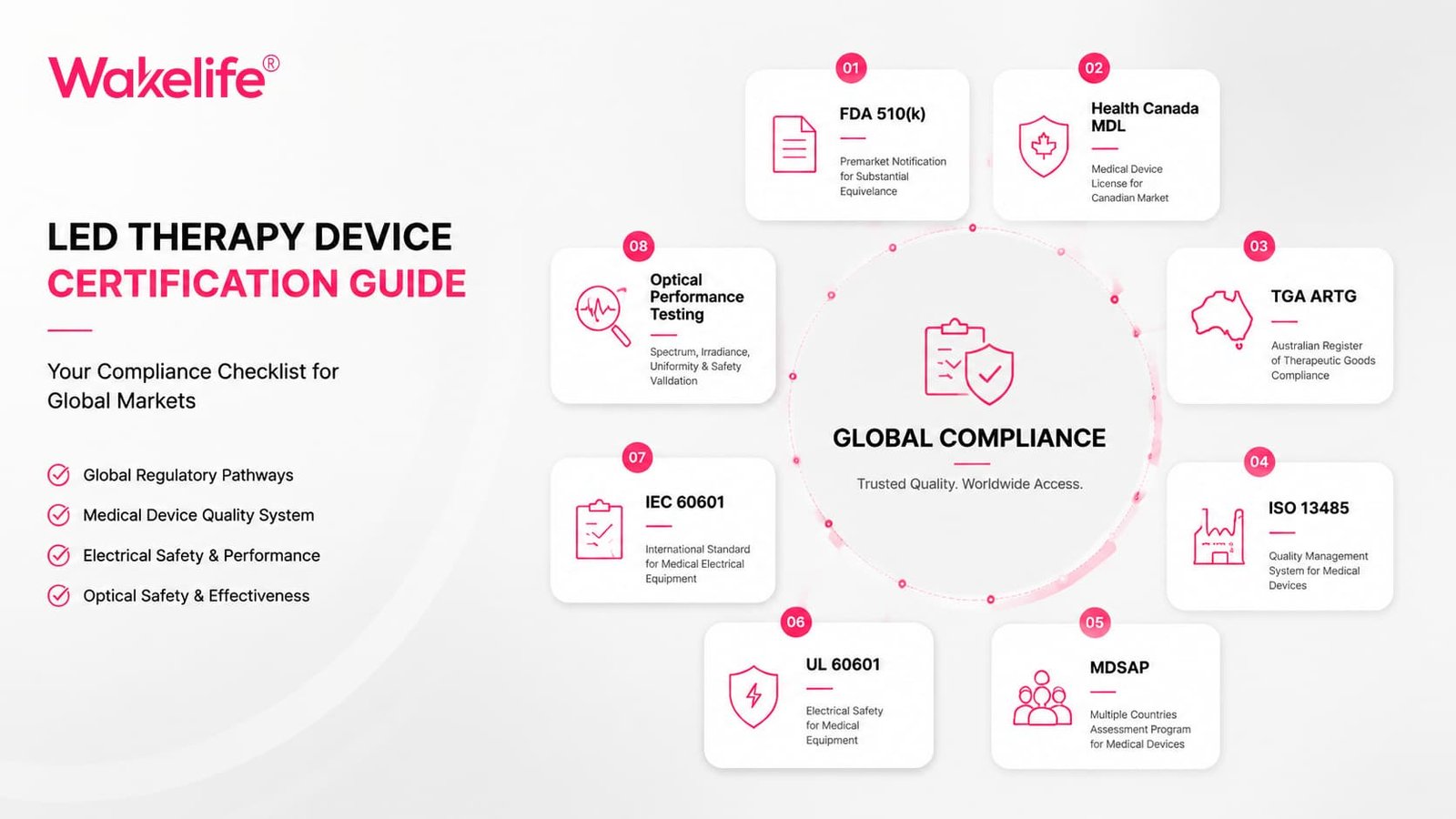
- Alinhamento contínuo com ISO 13485 e, no caso de Wakelife, MDSAP (Programa de auditoria única de dispositivos médicos), reconhecido pela FDA, Saúde Canadá, ANVISA, MHLW/PMDA, e TGA
Em outras palavras: um fabricante que autorizou 510(k) e opera sob o MDSAP é estruturalmente incapaz de executar com rastreabilidade somente em lote. Os requisitos do sistema forçam a disciplina por unidade.
É por isso que a autorização da FDA, quando adquirido através de um fabricante devidamente controlado, funciona como um proxy para maturidade de rastreabilidade.
O que perguntar ao seu fabricante antes de assinar um contrato OEM
Se você está avaliando um parceiro OEM de terapia de luz vermelha, as seguintes perguntas atravessam a linguagem de marketing mais rápido do que qualquer visita à fábrica:
“Cada unidade acabada recebe um identificador exclusivo, ou apenas o lote de produção?” (Resposta aceitável: cada unidade, através de marcação a laser em linha.)
“Se eu lhe der um ID de unidade de um dispositivo devolvido, quais dados de produção você pode recuperar, e quanto tempo leva?” (Resposta aceitável: DHR completo dentro 24 horas.)
“Seus registros de produção são gerados em tempo real através de ERP/MES, ou compilado no final de um turno?” (Resposta aceitável: em tempo real, ERP de circuito fechado.)
“Posso ver um exemplo de DHR redigido para um produto existente?” (Resposta aceitável: sim - eles os têm prontos.)
“Qual é o seu tempo de resposta de rastreabilidade durante um FDA, TGA, ou inquérito MDR?” (Resposta aceitável: SLA definido, normalmente 24–72 horas.)
Um fabricante que hesita em qualquer uma dessas questões está sinalizando — claramente — que a rastreabilidade não está incorporada em seu sistema operacional.
O Princípio Subjacente
Rastreabilidade não é um recurso. É o evidência física que existe um sistema de qualidade.
Uma fábrica pode reivindicar ISO 13485 certificação, Reconhecimento MDSAP, Autorização da FDA, e conformidade CE - mas se uma única unidade devolvida não puder produzir seu próprio registro de produção, essas certificações são decorações e não uma realidade operacional.
Para proprietários de marcas que estão construindo uma posição de longo prazo na terapia da luz vermelha, a questão não é se os certificados do seu fabricante parecem confiáveis em um site. A questão é se os seus sistema pode responder a um específico, pergunta urgente sobre um assunto específico, dia difícil.
É para isso que serve a rastreabilidade em nível de unidade.
Perguntas frequentes
A rastreabilidade em nível unitário aumenta significativamente o custo do produto??
Em escala, não. O custo incremental por unidade é modesto quando a marcação a laser e a integração do ERP são projetadas na linha de produção desde o início. A modernização de uma linha existente é mais cara – e é por isso que as fábricas sem ela tendem a não adicioná-la posteriormente.
A rastreabilidade em nível de unidade é necessária para vender na Amazon??
Não é explicitamente exigido pelas políticas da Amazon, mas é cada vez mais necessário na prática – especialmente para produtos nas categorias regulamentadas da Amazon (bem-estar, médico, e saúde sem receita). Os vendedores sem ele têm maior probabilidade de enfrentar suspensões de listagem durante investigações de reclamações.
Qual a diferença entre a rastreabilidade em nível de unidade e um número de série??
Um número de série é uma etiqueta. A rastreabilidade em nível de unidade é um sistema - o número de série (ou ID da unidade) é apenas o ponto de entrada. O que importa é a quais registros o ID está vinculado, como esses registros são gerados, e com que rapidez eles podem ser recuperados.
Um fabricante pode falsificar a rastreabilidade em nível de unidade?
Os registros reconstruídos após o fato são detectáveis durante as auditorias do MDSAP ou da FDA, onde os auditores testam especificamente a integridade temporal dos dados de produção. Os registros de circuito fechado gerados pelo ERP carregam carimbos de data e hora e assinaturas do sistema que não podem ser adaptados.
Como o sistema de rastreabilidade da Wakelife se alinha com os requisitos regulamentares?
Wakelife opera sob ISO 13485 e MDSAP, com FDA 510(k) autorização (K250830), TGA, Mdl, CE, Ul, e certificações UKCA. A rastreabilidade em nível de unidade é integrada ao fluxo de trabalho de fabricação como um requisito estrutural desses sistemas — e não como um complemento opcional.
Avance com um fabricante que pode provar seu sistema
Se a sua marca está se preparando para entrar em canais de varejo regulamentados – ou se você já está lá e sentiu o atrito de registros incompletos de fornecedores – o próximo passo é simples: verifique o sistema de rastreabilidade antes de se comprometer.
Qualidade Wakelife & Documentação de conformidade, incluindo a estrutura da nossa estrutura de rastreabilidade em nível de unidade, está disponível para revisão por parceiros OEM/ODM qualificados.