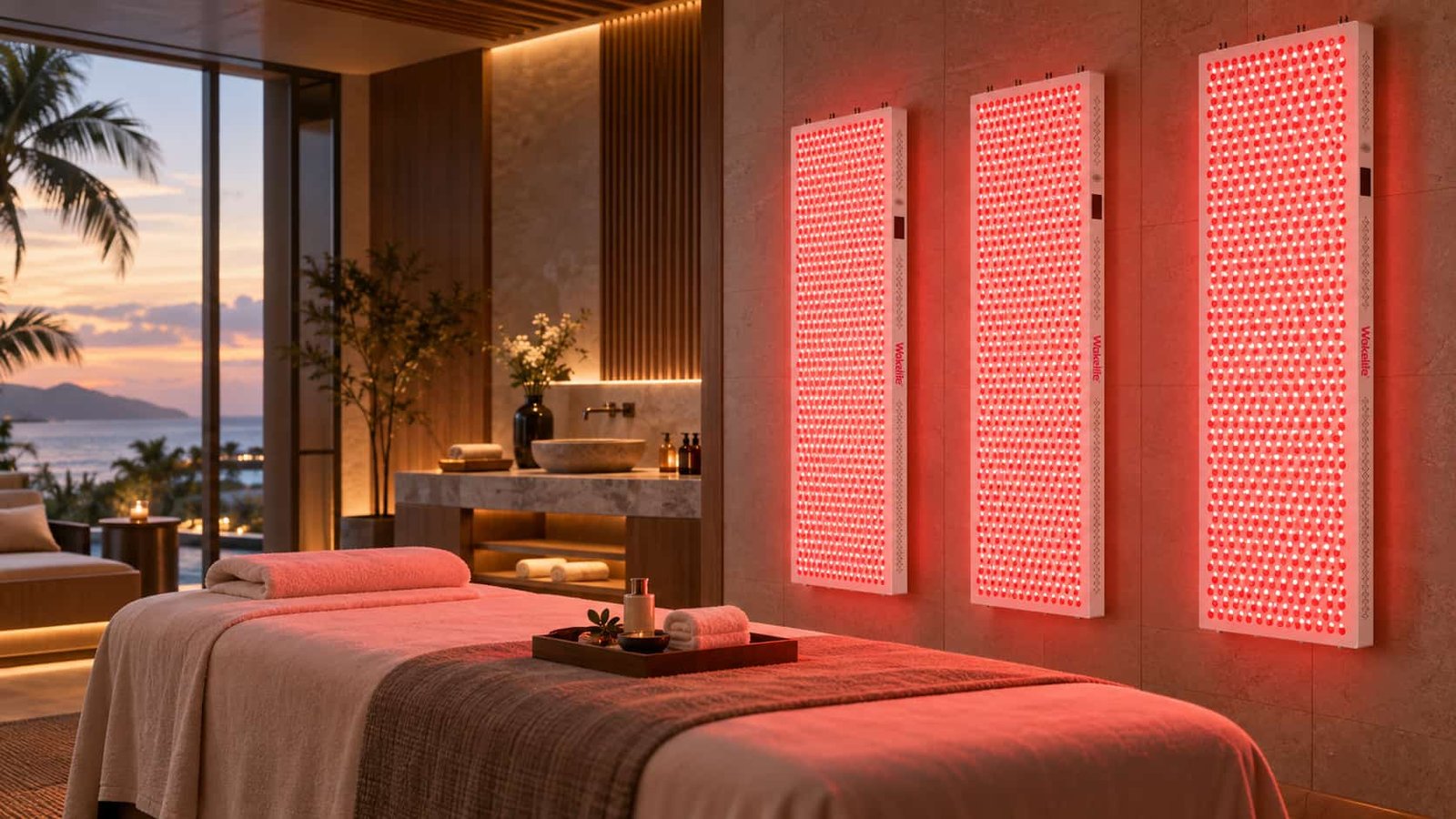
Escolher um painel de terapia de luz vermelha para sua marca envolve mais do que comparar contagens de LED e preço. Os seis critérios que determinam o sucesso do produto a longo prazo são:
- Configuração de comprimento de onda - vai além do 660nm básico + 850nm?
- Transparência de dados de irradiação — o fornecedor fornece medições multidistâncias?
- Sistema de controle e experiência do usuário - tela sensível ao toque, APLICATIVO, escurecimento, e flexibilidade de modo
- Profundidade de personalização — marca própria apenas com logotipo vs.. desenvolvimento completo de OEM/ODM
- Cobertura da certificação por mercado — correspondente ao seu país e canal de destino
- Capacidade de fábrica e estrutura de processo — EVT/TVP/PVT, revisão multifuncional, gerenciamento de mudanças
Cada critério é abordado em detalhes abaixo, com perguntas específicas para pedir aos fornecedores e sinais de alerta para observar.
Introdução: Por que a maioria das comparações de painéis começa no lugar errado
Participe de qualquer conversa sobre fornecimento de painéis de terapia de luz vermelha, e a primeira pergunta é quase sempre a mesma:
“Quantos LEDs ele tem?”
A contagem de LEDs está visível. É fácil comparar. Ele se encaixa perfeitamente em uma tabela de especificações.
O problema é que a contagem de LED não prevê se o seu produto terá sucesso no mercado. Não informa se o design do comprimento de onda apoiará o posicionamento da sua marca. Não informa se os dados de irradiância serão válidos quando um distribuidor solicitar provas. Não informa se o fornecedor pode realmente personalizar o produto para combinar com a identidade da sua marca, os requisitos de conformidade do seu mercado-alvo, ou as expectativas de seus clientes em relação a um produto inteligente, dispositivo premium.
A maioria dos painéis de terapia de luz vermelha no mercado hoje parecem muito semelhantes em uma folha de especificações. Muitos oferecem os mesmos dois ou três comprimentos de onda, contagens de LED semelhantes, classificações de potência semelhantes, e faixas de preços semelhantes. Para marcas que tentam construir uma linha de produtos diferenciada, isso cria um verdadeiro desafio.
A questão não é qual painel tem mais LEDs. A questão é qual painel – e qual fabricante – dá à sua marca a base mais sólida para o sucesso do produto a longo prazo.
Na Wakelife Beauty, depois 10+ anos de fabricação de dispositivos de terapia de luz LED de nível médico para 1,000+ parceiros de marca globais nos EUA, UE, Reino Unido, Austrália, e Japão, vimos um padrão consistente: as marcas bem-sucedidas tomam decisões de fornecimento com base em critérios que vão além da especificação superficial. As marcas que enfrentam dificuldades geralmente se concentram no preço e na contagem de LED – e descobrem os outros fatores mais tarde, a um custo muito mais elevado.
Este artigo aborda os seis critérios que recomendamos avaliar antes de escolher um painel de terapia de luz vermelha para sua marca, com perguntas específicas para fazer aos fornecedores em cada etapa.
Critério 1 — Configuração de comprimento de onda
Por que isso é mais importante do que a contagem de LEDs
O comprimento de onda é o parâmetro técnico central de qualquer produto de terapia de luz vermelha. Determina o tipo de luz que o dispositivo emite, como a luz interage com o tecido em diferentes profundidades, e - fundamentalmente para as marcas - que história de produto você pode contar com credibilidade.
A maioria dos painéis básicos e intermediários são construídos em torno de dois comprimentos de onda: 660luz vermelha nm e luz infravermelha próxima de 850 nm. Esta combinação é amplamente utilizada, bem documentado, e comercialmente comprovado. É também a configuração que quase todos os concorrentes oferecem.
Para marcas lançadas em 2025 e além, um 660nm + 850O painel nm é um ponto de partida - não um diferenciador.
As três camadas de configuração de comprimento de onda
Configuração básica: 660nm + 850nm O padrão de mercado. Fácil de obter, fácil de explicar, fácil de comparar – e, portanto, difícil de diferenciar. Se a sua estratégia principal é a concorrência de preços ou o volume do mercado, esta configuração é suficiente. Se sua estratégia envolve posicionamento premium, credibilidade clínica, ou expansão da linha de produtos, você provavelmente atingirá suas limitações rapidamente.
Configuração intermediária: 630nm + 660nm + 810nm + 830nm + 850nm Adicionando comprimentos de onda vermelhos mais curtos (630nm) e comprimentos de onda NIR adicionais (810nm, 830nm) dá ao produto um espectro de luz mais amplo e mais flexibilidade para diferentes cenários de uso. Esta configuração suporta uma história técnica mais forte sem exigir um grande aumento de custo, e dá às marcas mais dimensões para explicar nas páginas dos produtos, conteúdo educacional do usuário, e materiais de distribuição.
Configuração avançada: 630nm + 660nm + 810nm + 830nm + 850nm + 1060nm A adição do infravermelho próximo profundo de 1060 nm é o diferenciador mais significativo disponível nos produtos de painel atuais. 1060nm está posicionado na extremidade mais profunda do espectro NIR, e a sua inclusão permite que as marcas comuniquem uma arquitetura de produto significativamente diferente – e não apenas uma variação da mesma fórmula básica.
Para marcas que buscam bem-estar premium, profissional, ou mercados clínicos adjacentes, 1060nm é uma das poucas adições de comprimento de onda que cria uma separação técnica genuína dos painéis padrão.
Perguntas a serem feitas ao seu fornecedor
- Qual é o comprimento de onda exato para cada tipo de LED, e qual é a tolerância ao descarte (Por exemplo, ±3nm versus. ±10–15nm)?
- A configuração do comprimento de onda pode ser personalizada para projetos OEM/ODM?
- 1060nm está disponível como configuração padrão, ou requer fornecimento de LED personalizado?
- Como as combinações de comprimento de onda são organizadas nos canais de dimerização?
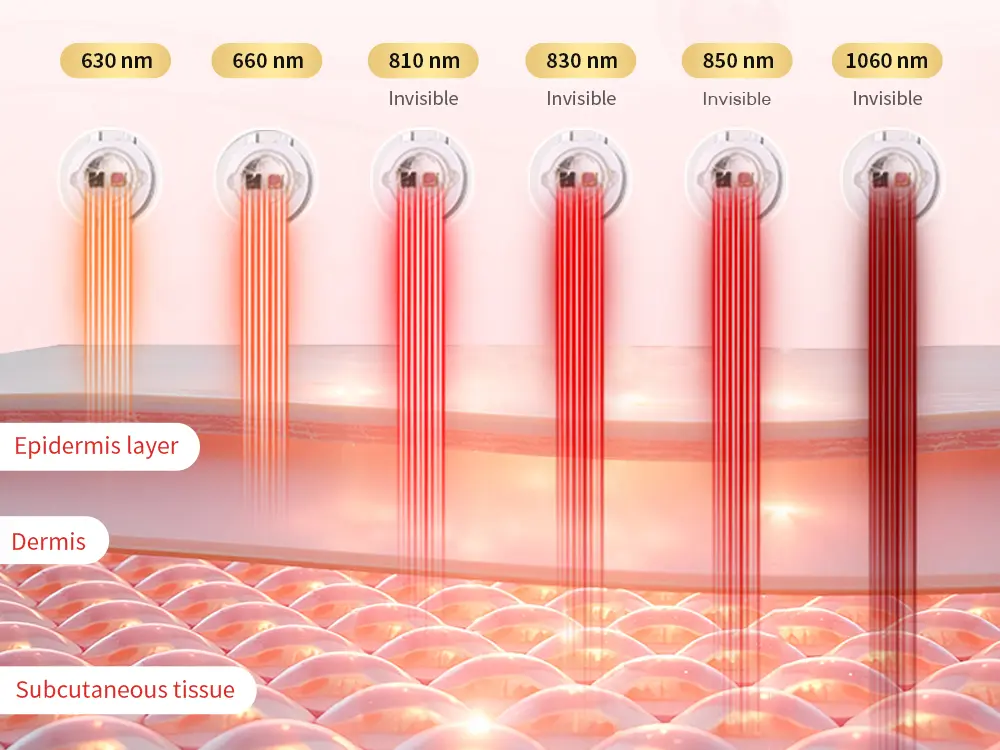
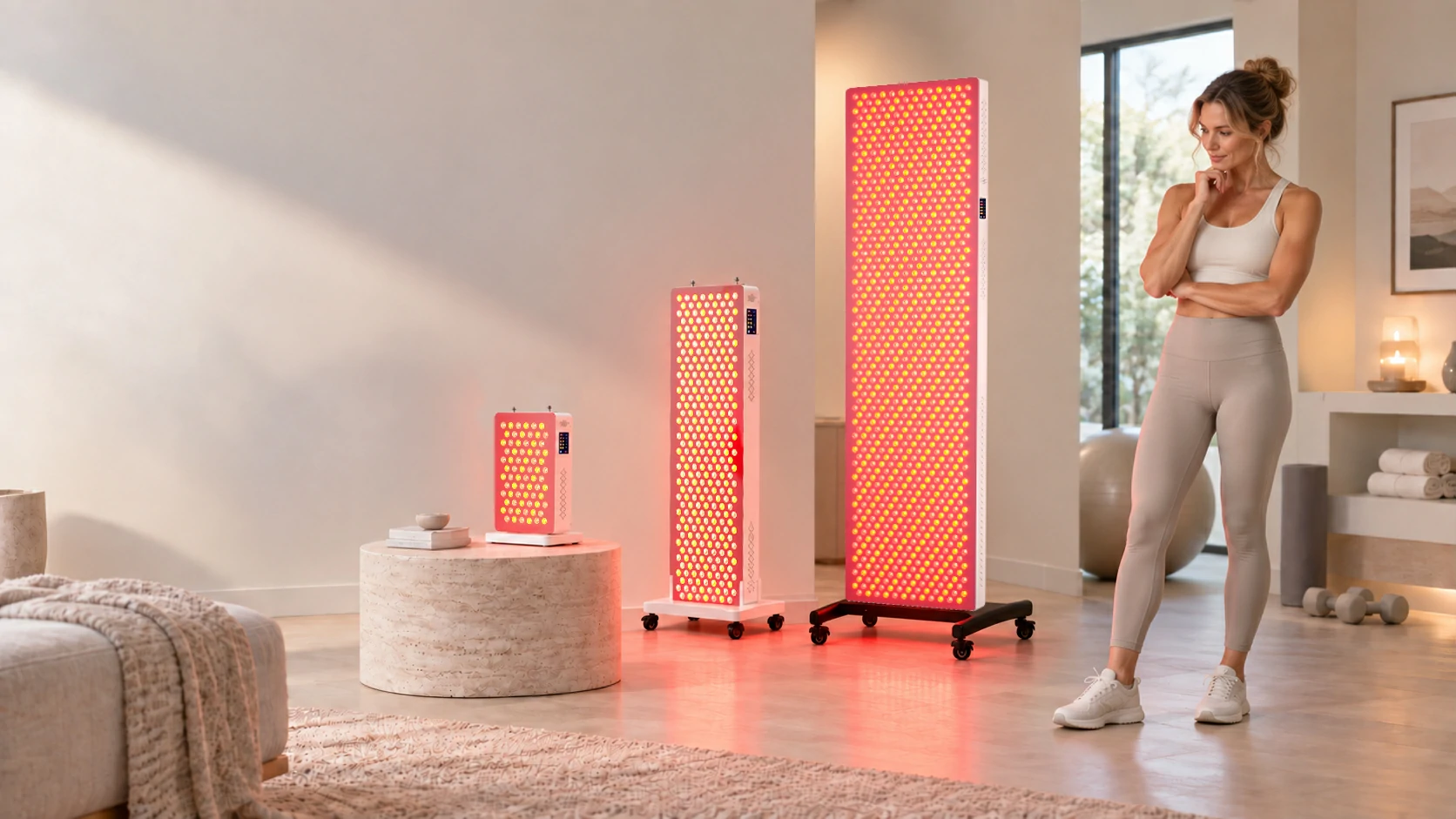
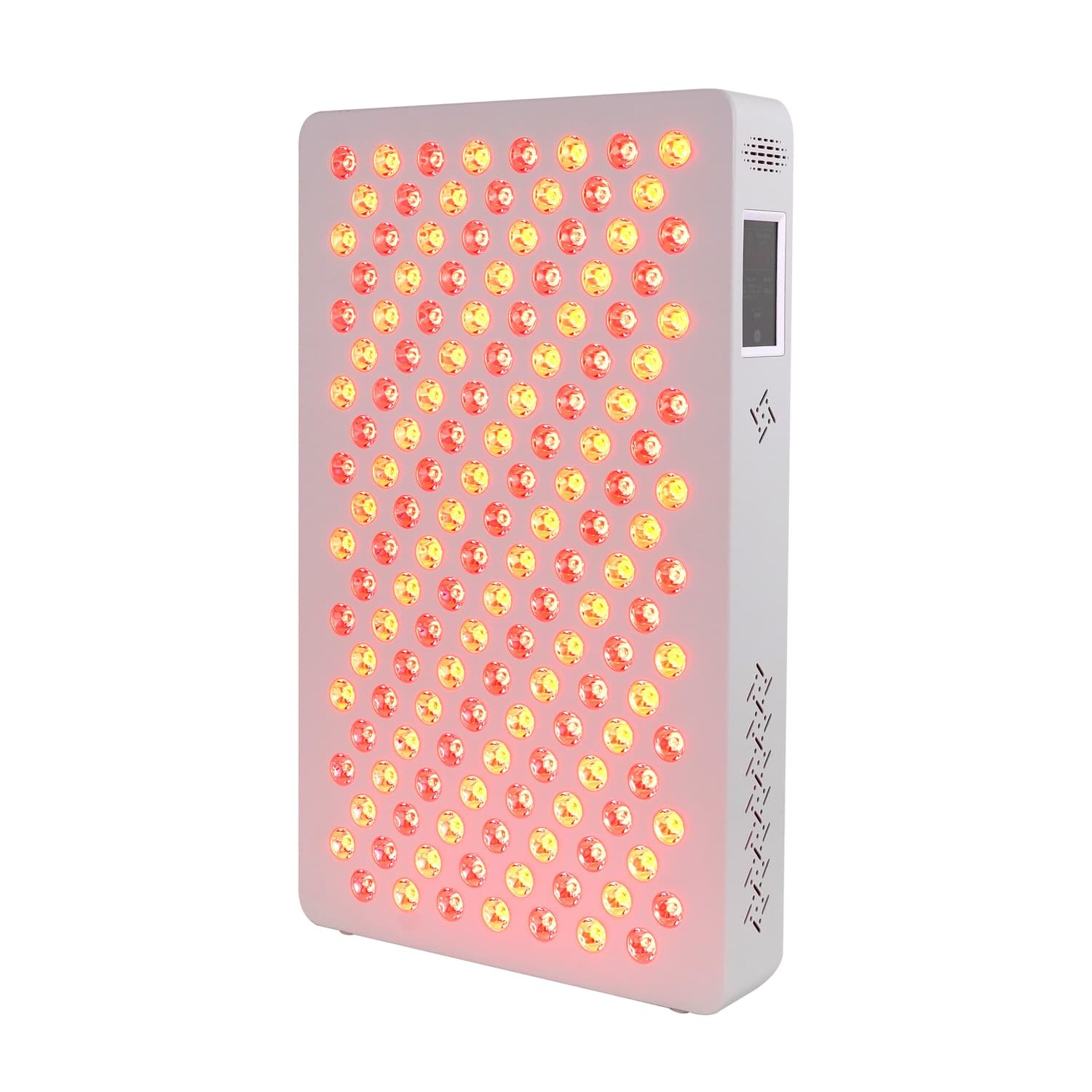
Painel ESPLUS750 da Wakelife Beauty usa uma configuração de seis comprimentos de onda: 630nm / 660nm / 810nm / 830nm / 850nm / 1060nm, entregue através 150 LEDs de chip duplo. Essa configuração oferece aos parceiros da marca OEM/ODM uma base técnica que suporta o posicionamento de produtos premium em produtos de beleza, bem-estar, recuperação, e mercados de equipamentos profissionais — e uma história de produto que vai significativamente além dos painéis padrão de dois comprimentos de onda.
Critério 2 — Dados de Irradiância e Transparência
Por que a contagem de LEDs não é uma métrica de desempenho
A quantidade de LED aparece em quase todas as folhas de especificações do painel de terapia de luz vermelha. É também um dos números menos significativos para prever o desempenho da emissão de luz no mundo real..
Irradiância – a energia luminosa real fornecida à área de tratamento, medido em miliwatts por centímetro quadrado (MW/cm²) - é o que importa. E a irradiância não depende apenas da contagem de LEDs, mas na qualidade do chip LED, ângulo da lente óptica, estabilidade do circuito do driver, gerenciamento térmico, e metodologia de medição.
Um painel com 300 Os LEDs e o mau gerenciamento térmico podem fornecer menor irradiância sustentada do que um painel bem projetado com 150 LEDs e um circuito de driver estável.
Para marcas, isso importa de duas maneiras. Primeiro, afeta o desempenho real do produto que seus clientes recebem. Segundo, isso afeta sua capacidade de tornar confiável, reivindicações defensáveis na página do seu produto, em materiais de distribuição, e em qualquer documentação regulatória que você possa precisar para seu mercado-alvo.
Como devem ser os dados de irradiância
Um fornecedor transparente deve fornecer medições de irradiância em múltiplas distâncias – e não apenas um único valor de “pico” medido no ponto mais próximo possível.
Para um painel de tamanho médio como ESPLUS750, dados úteis de irradiância incluem:
- Medição em 3 polegadas (de perto, uso de maior intensidade)
- Medição em 9 polegadas (distância padrão de uso doméstico)
- Medição em 12 polegadas (cobertura mais ampla, menor intensidade)
Isso fornece às marcas informações precisas para o posicionamento do produto, e dá aos compradores uma imagem realista do que o dispositivo oferece nas distâncias que seus clientes realmente usarão.
Bandeiras vermelhas a serem observadas
- Valores de irradiância fornecidos sem especificação da distância de medição
- Somente medições de ponto único (geralmente a distância mais próxima possível)
- Nenhum equipamento ou metodologia de teste divulgado
- Números que não podem ser verificados de forma independente
Perguntas a serem feitas ao seu fornecedor
- Você pode fornecer medições de irradiância em 3 polegadas, 9 polegadas, e 12 polegadas?
- Qual equipamento de teste e metodologia são usados para medição de irradiância?
- A irradiância é consistente em toda a superfície do painel?, ou varia significativamente entre o centro e as bordas?
- Como a irradiância se mantém em sessões de uso prolongado (estabilidade térmica)?
O exemplo ESPLUS750
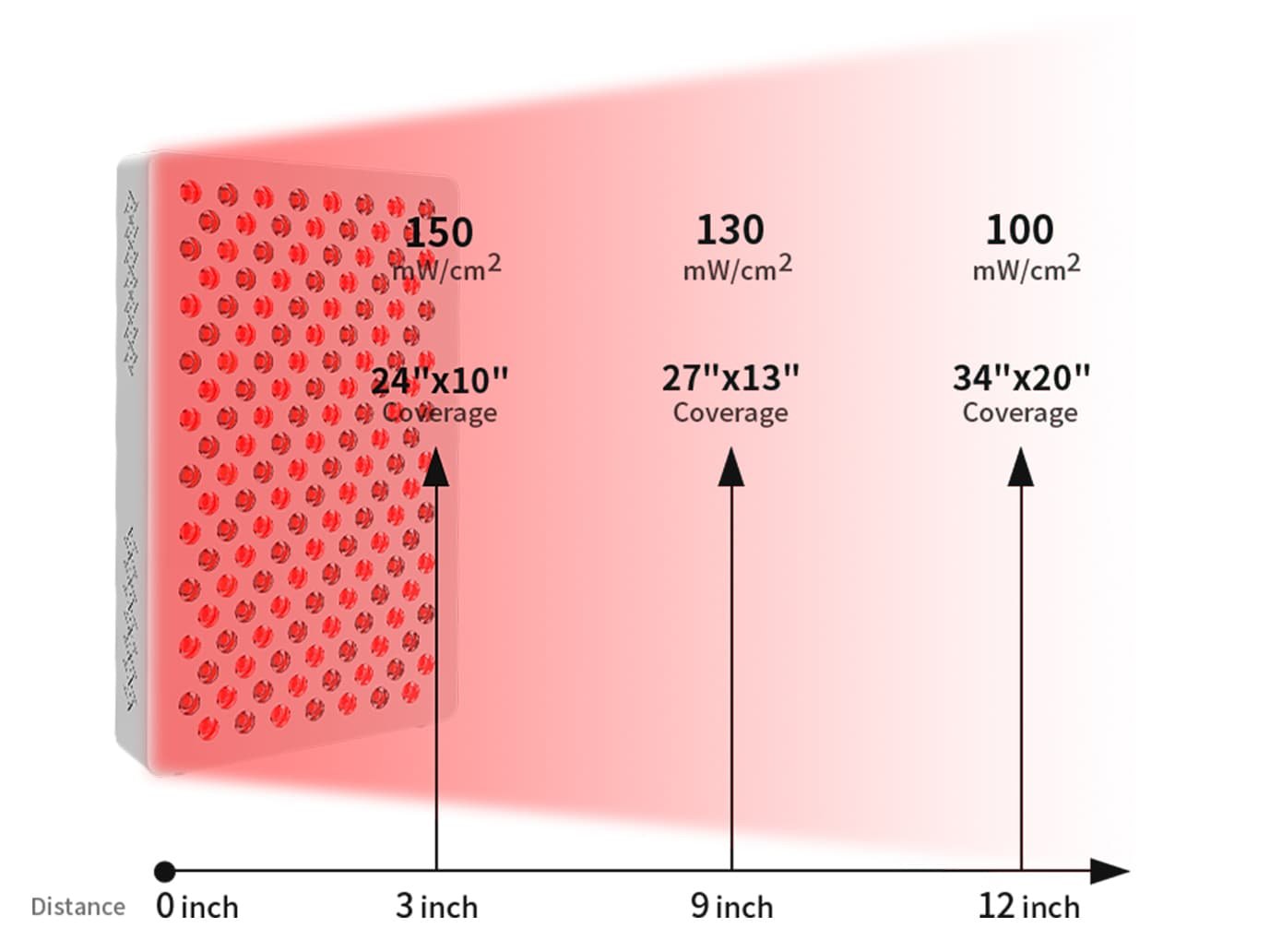
ESPLUS750 fornece irradiância medida de 150em mW/cm² 3 polegadas, 130em mW/cm² 9 polegadas, e 100em mW/cm² 12 polegadas. Esses números multi-distâncias dão aos parceiros da marca uma visão clara, dados de desempenho utilizáveis para páginas de produtos, materiais de comparação do comprador, e avaliação interna de fornecimento — sem a necessidade de testes adicionais de terceiros antes que uma decisão de fornecimento possa ser tomada.
Critério 3 — Sistema de controle e experiência do usuário
Por que o controle inteligente é agora uma expectativa básica
As expectativas dos consumidores em relação aos dispositivos de bem-estar mudaram significativamente. Um produto que liga e desliga – e não faz mais nada – é cada vez mais difícil de posicionar a um preço premium, mesmo com fortes especificações de comprimento de onda e dados de irradiância.
Os usuários modernos esperam:
- Intuitivo, operação fácil sem ler um manual
- Configurações personalizadas que podem ser salvas e recuperadas
- Tempo flexível e controle de brilho
- Uma experiência que parece premium em relação ao preço
Para marcas que visam o bem-estar doméstico, cuidados de beleza, estúdio profissional, ou qualquer segmento de mercado acima do nível de entrada, o sistema de controle é uma parte significativa da proposta de valor do produto – não um detalhe secundário.
O espectro do sistema de controle
Básico: Somente controle remoto, ou painel de botões simples. Adequado para faixas de preço básicas. Envolvimento limitado do usuário e nenhuma integração com dispositivos inteligentes.
Intermediário: Tela sensível ao toque com controle direto no dispositivo. Melhora a usabilidade e a qualidade percebida do produto sem exigir conectividade de aplicativos.
Avançado: Controle de aplicativos + tela sensível ao toque, com escurecimento, seleção de modo, configurações personalizadas, e gerenciamento de vários dispositivos. Esta configuração cria uma experiência de usuário significativamente mais premium e abre a porta para pontos de contato digitais específicos da marca – notificações, rastreamento de uso, orientação do programa – dependendo do nível de personalização do aplicativo.
Arquitetura de modo e escurecimento
Duas características que são frequentemente subestimadas nas decisões de fornecimento:
Escurecimento multicanal permite que os usuários ajustem grupos de comprimentos de onda individuais de forma independente, em vez de controlar todos os LEDs em um único nível de brilho. Para marcas com painel de vários comprimentos de onda, este é o recurso que torna a configuração do comprimento de onda acionável – os usuários podem realmente controlar a mistura de luz, não basta ligá-lo.
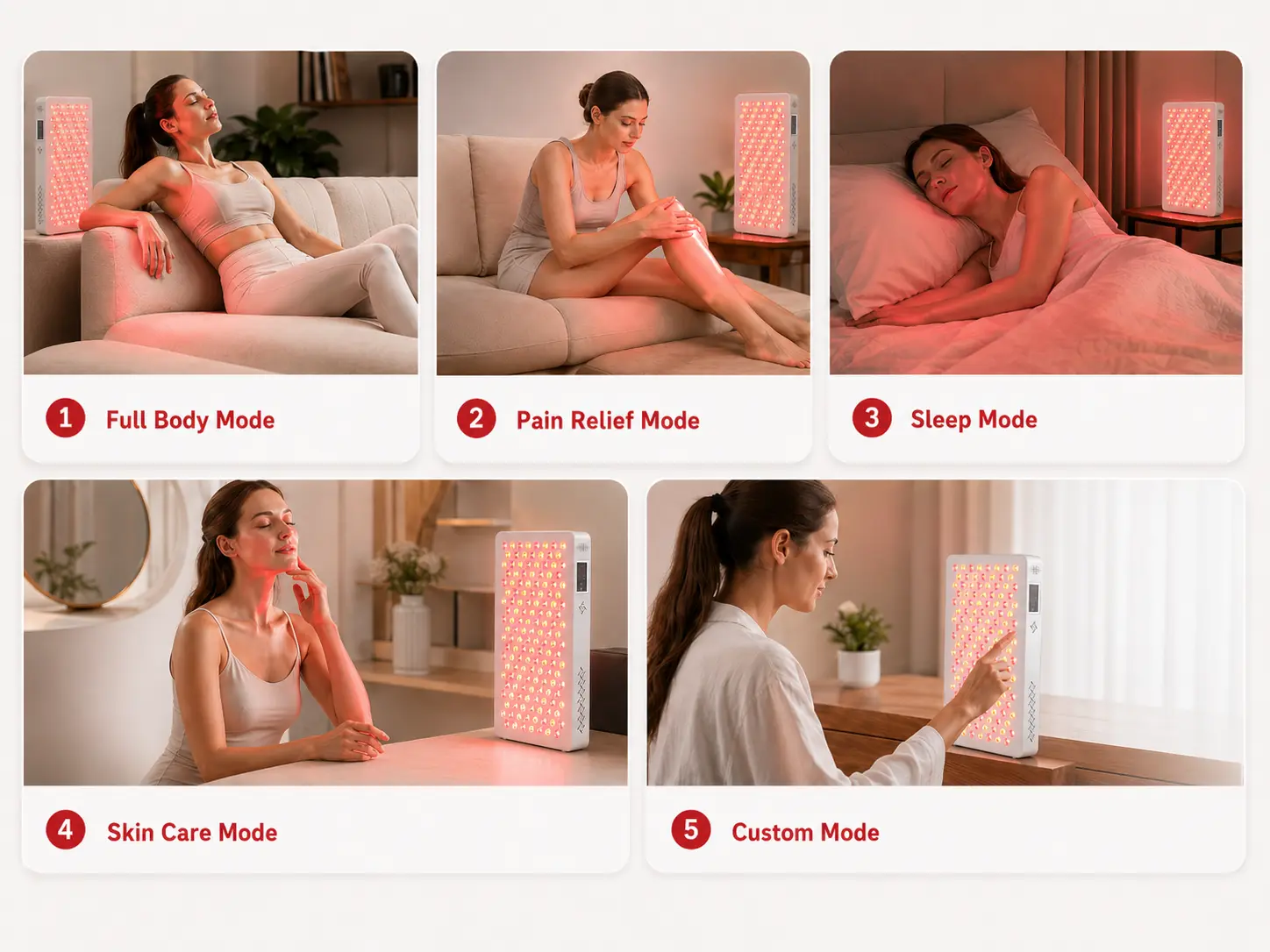
Modos predefinidos + modos personalizados atender a duas necessidades diferentes do usuário. Os modos predefinidos oferecem aos novos usuários um ponto de partida simples. Os modos personalizados oferecem aos usuários engajados um motivo para continuar usando o produto em seus próprios termos. Para retenção da marca e compra repetida, a combinação de ambos é significativamente mais poderosa do que qualquer um sozinho.
Perguntas a serem feitas ao seu fornecedor
- O painel suporta controle APP? O APP já está desenvolvido, ou precisaria ser construído?
- A interface do APP pode, nomes de modo, e sistema de cores da marca podem ser personalizados para projetos OEM?
- Quantos canais de escurecimento são suportados, e como eles são organizados em grupos de comprimentos de onda?
- Quantos modos predefinidos e personalizados estão disponíveis? Os nomes dos modos podem ser adaptados para diferentes mercados?
- O painel suporta conexão de vários dispositivos para configurações escaláveis??
O exemplo ESPLUS750
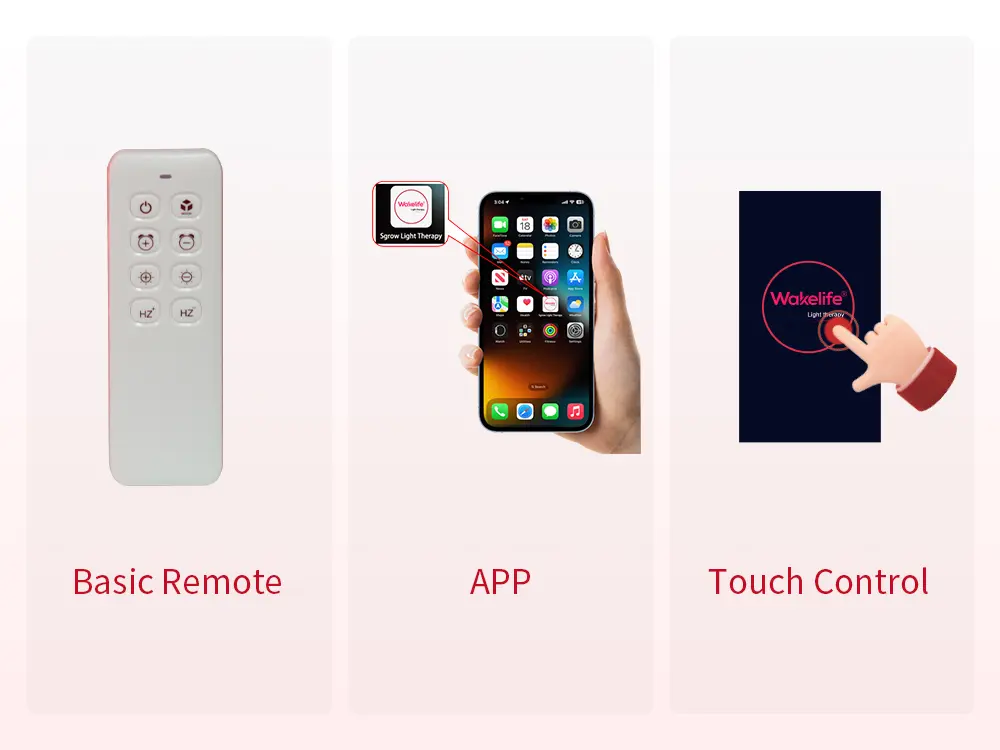
ESPLUS750 suporta ambos Controle de APP e operação com tela sensível ao toque, com 5-escurecimento do canal, 4 modos predefinidos, 2 modos personalizados, e conexão em cadeia para vários dispositivos. Para parceiros de marca OEM/ODM, Estilo de interface do APP, nomes de modo, e funções de controle selecionadas podem ser adaptadas para corresponder ao posicionamento da marca e aos requisitos do mercado-alvo.
Critério 4 – Profundidade de personalização
Um dos esclarecimentos mais importantes em qualquer conversa sobre sourcing é a diferença entre marca própria e customização OEM/ODM. Esses termos são usados de forma inconsistente entre fornecedores, e a lacuna entre eles tem um impacto direto no que sua marca pode realmente alcançar.
Marca própria normalmente significa: logotipo no produto, sua marca na embalagem, seu idioma no manual. O produto em si permanece inalterado. Você está vendendo o produto do fornecedor em seu nome.
Personalização OEM/ODM significa: mudanças significativas no próprio produto – configuração do comprimento de onda, Especificação de LED, lógica de controle, arquitetura de modo, aparência da habitação, Interface do aplicativo, e potencialmente estrutura do produto. O produto é desenvolvido com sua marca como uma contribuição significativa, não apenas um rótulo.
Para marcas em mercados competitivos, a diferença importa significativamente. Um produto de marca própria pode ser copiado por qualquer outra marca que trabalhe com o mesmo fornecedor. Um produto genuinamente personalizado é mais difícil de replicar e cria um valor de marca mais forte a longo prazo.
As três camadas de personalização
Camada superficial (disponível para a maioria dos programas de marca própria):
- Logotipo do produto
- Design de embalagem
- Idioma do manual de instruções
- Caixa de presente e caixa externa
Camada de função (disponível para programas OEM/ODM com MOQ qualificado):
- Configuração de comprimento de onda
- Especificação de LED e padrão de categorização
- Diminuindo a organização do canal
- Configurações de modo e níveis de brilho
- Parâmetros de frequência de pulso
Camada de experiência (disponível para programas OEM/ODM avançados):
- Logotipo do APP e estilo de interface
- Nomenclatura de modo e linguagem voltada ao usuário
- Sistema de cores da marca em interface digital
- Animação de inicialização e configurações de inicialização
- Conteúdo de orientação do usuário dentro do aplicativo
Correspondência do nível de personalização ao estágio da marca
Novas marcas / entrada pela primeira vez na categoria: Comece com a personalização da camada superficial para reduzir o tempo de desenvolvimento e os requisitos de MOQ. Concentre-se na seleção da plataforma base certa, em vez de mudanças profundas no produto.
Marcas em estágio de crescimento: Invista na personalização da camada de função para criar especificações de produto que os concorrentes não possam replicar facilmente. A configuração do comprimento de onda e a arquitetura de controle são os pontos de maior aproveitamento.
Marcas estabelecidas: A personalização completa da camada de experiência – incluindo integração de APP – cria um ecossistema de produtos conectado que apoia a retenção de clientes, dados de uso, e diferenciação de marca a longo prazo.
Perguntas a serem feitas ao seu fornecedor
- Qual é o MOQ para cada nível de personalização?
- Quais opções de personalização exigem novas ferramentas, e qual é o custo das ferramentas e o prazo de entrega?
- O APP pode ter etiqueta branca, e quais elementos da interface podem ser modificados?
- Qual é o cronograma de desenvolvimento e amostra para um projeto OEM/ODM completo?
- Existe um processo de admissão estruturado para definir requisitos de personalização?
O exemplo ESPLUS750
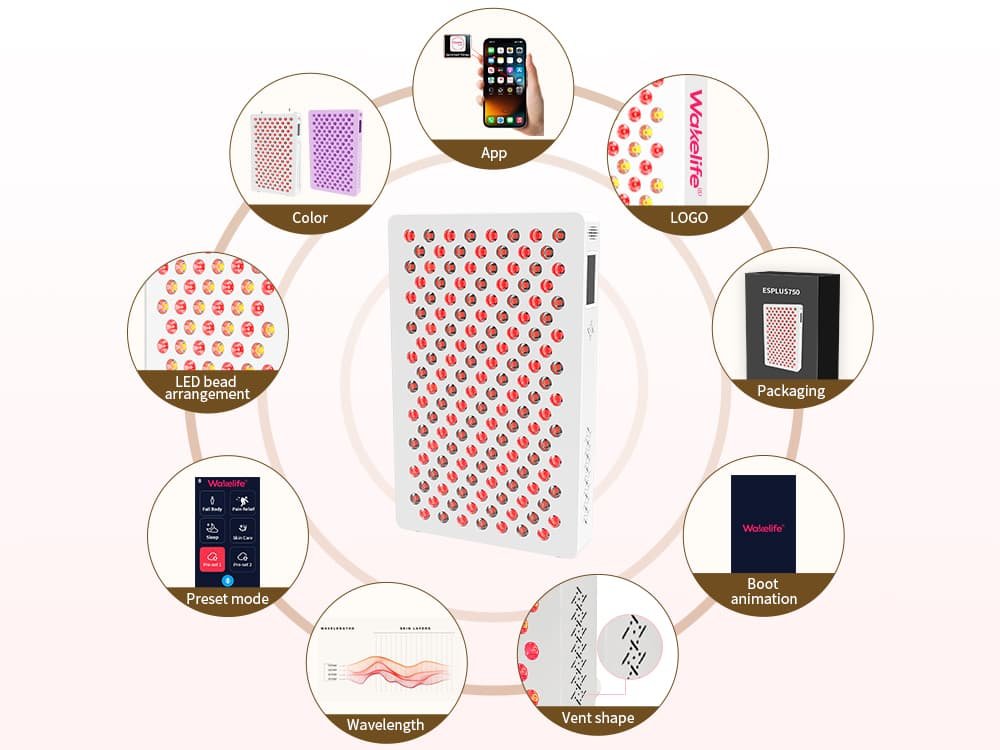
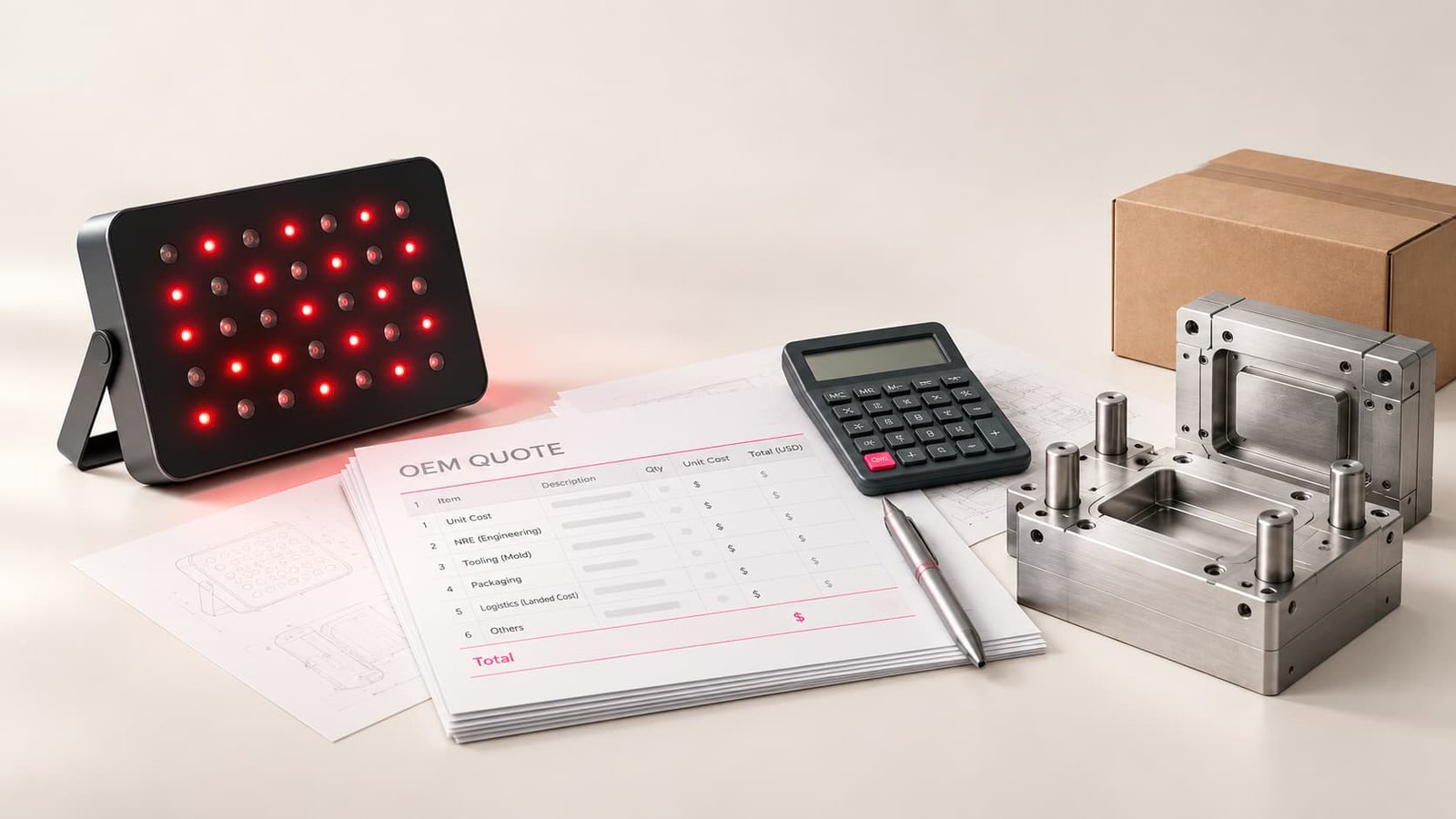
ESPLUS750 suporta personalização em todas as três camadas – desde logotipo e embalagem até configuração de comprimento de onda e lógica de controle, para interface APP e nomenclatura de modo. A equipe OEM/ODM da Wakelife Beauty trabalha com parceiros de marca por meio de um processo estruturado de recebimento de requisitos para definir o escopo de personalização apropriado com base no mercado-alvo, quantidade do pedido, e cronograma de lançamento. MOQ varia de acordo com o nível de personalização e escopo do projeto.
Por que “Temos CE e FCC” não é uma resposta completa
A certificação é uma das áreas mais incompreendidas no fornecimento de dispositivos de terapia de luz vermelha. As marcas frequentemente tomam decisões de fornecimento com base na lista geral de certificações de um fornecedor – e mais tarde descobrem que as certificações específicas necessárias para o seu mercado-alvo, canal, ou as reivindicações do produto estão incompletas ou não são aplicáveis ao modelo específico solicitado.
As duas coisas mais importantes para entender sobre as certificações nesta categoria:
Primeiro: O escopo da certificação é específico do modelo, não em toda a fábrica. Uma fábrica que possui ISO 13485 a certificação possui um sistema de gestão da qualidade que atende a esse padrão. Isso não significa que todos os produtos que fabricam possuem automaticamente todas as certificações. Certificações para modelos de produtos específicos exigem testes e documentação separados.
Segundo: Mercados diferentes exigem certificações diferentes. “Temos certificação CE e FCC” cobre partes do cenário regulatório da UE e dos EUA – mas não cobre UKCA para o mercado do Reino Unido, TGA ou SAA para Austrália, ou os requisitos específicos de registro de dispositivos médicos em mercados onde seu produto pode ser classificado de forma diferente.
Estrutura de certificação mercado a mercado
Estados Unidos:
- FCC para compatibilidade eletromagnética (eletrônicos de consumo)
- FDA 510(k) autorização para dispositivos que fazem reivindicações médicas ou são classificados como dispositivos médicos
- UL para segurança elétrica (exigido por alguns canais de varejo)
União Europeia:
- Marcação CE (cobrindo LVD, Emc, e potencialmente MDR dependendo da classificação do produto)
- RoHS para conformidade de materiais
Reino Unido:
- UKCA (equivalente pós-Brexit de CE, necessário para acesso ao mercado do Reino Unido)
Austrália:
- SAA para segurança elétrica
- Registro TGA para dispositivos médicos ou dispositivos que fazem alegações terapêuticas
Canadá:
- Licença de dispositivo médico da Health Canada (Mdl) para categorias de dispositivos regulamentados
Global:
- ISO 13485 sistema de gestão da qualidade (exigido por muitos compradores e distribuidores de mercados regulamentados)
- MDSAP (reconhecido pela FDA, TGA, Saúde Canadá, e outros)
- IEC 60601 para segurança de equipamentos elétricos médicos (relevante para canais profissionais e clínicos)
Os dois níveis de conformidade para avaliar
Certificações de segurança do produto — testes que verificam se o dispositivo é seguro para uso (elétrica, Emc, óptico). Estes são normalmente necessários para a entrada no mercado, independentemente das reivindicações do produto.
Registro ou liberação específica do mercado — etapas regulatórias adicionais necessárias quando um produto faz alegações terapêuticas, é classificado como um dispositivo médico, ou é vendido através de canais médicos ou clínicos. É aqui que muitas marcas subestimam a complexidade.
Perguntas a serem feitas ao seu fornecedor
- Quais certificações são mantidas para o modelo específico que estou adquirindo, não a fábrica em geral?
- O seu FDA 510(k) autorização se aplica a este painel, ou apenas para modelos de produtos específicos?
- Você pode fornecer suporte de documentação para UKCA, TGA, ou outros requisitos específicos do mercado?
- Qual é o seu processo para ajudar os clientes OEM/ODM a navegar pela certificação para seus mercados-alvo??
O exemplo ESPLUS750
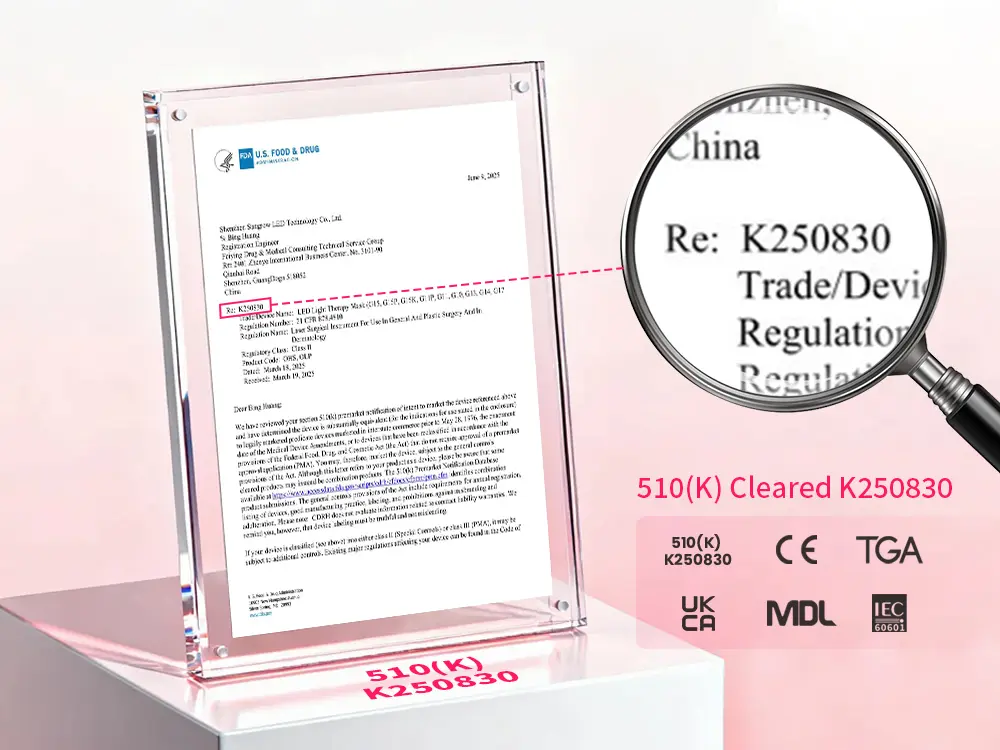
Wakelife Beauty mantém ISO 13485 e certificação MDSAP pelo seu sistema de gestão da qualidade, com certificações em nível de produto, incluindo FDA 510(k) K250830 (para modelos aplicáveis), CE, UKCA, TGA, FCC, CLIMA, Ul, IEC 60601, Rohs, e BSCI. Para projetos OEM/ODM, nossa equipe de conformidade trabalha com parceiros de marca para analisar os requisitos do mercado-alvo e preparar a documentação específica do projeto de acordo com o modelo do produto e o uso pretendido.
Critério 6 — Capacidade de fábrica e estrutura de processo
Por que a cotação mais barata raramente é a opção de menor custo
O critério final é aquele mais comumente negligenciado em uma avaliação inicial de sourcing — e aquele que tem o maior impacto no sucesso do projeto a longo prazo..
A capacidade da fábrica não se trata apenas de escala de produção ou preço. É sobre os processos que determinam se o seu produto chega no prazo, no nível de qualidade que você especificou, com a documentação que seu mercado exige, e sem os tipos de falhas que criam devoluções de garantia, disputas de distribuidor, e danos à marca.
Em dois artigos anteriores, documentamos as falhas de projeto OEM mais comuns na fabricação de dispositivos de terapia LED – e o processo de desenvolvimento que usamos para evitá-las. A descoberta consistente: falhas não começam na linha de produção. Eles começam nas decisões iniciais sobre os requisitos, validação, e gerenciamento de mudanças.
A mesma lógica se aplica à seleção de fornecedores. Uma fábrica que ignora a validação estruturada, carece de processos de revisão interfuncionais, ou não tem um sistema formal de pedido de alteração acabará por criar problemas para sua marca - independentemente de quão boa seja a amostra inicial.
O que avaliar além do preço e da qualidade da amostra
Processo de validação: A fábrica executa EVT (Teste de validação de engenharia), TVP (Teste de validação de projeto), e PVT (Teste de validação de produção) tão formal, etapas documentadas? Cada um responde a uma pergunta diferente: Isso pode funcionar? Será que vai durar? Pode escalar? Ignorar qualquer uma dessas transferências representa um risco não resolvido para sua produção em massa.
Revisão multifuncional: Existe um processo estruturado para envolver R&D, cadeia de mantimentos, qualidade, e equipes de produção na avaliação do projeto - ou uma pessoa toma todas as decisões? A propriedade de ponto único é um modelo de risco no desenvolvimento de dispositivos complexos.
Gestão de mudanças: O que acontece quando você precisa alterar uma especificação após o início do ferramental? Uma fábrica com um pedido formal de alteração de engenharia (ECO) o processo pode lidar com mudanças sistematicamente, com custo documentado e impacto no cronograma. Uma fábrica sem ela absorve as mudanças informalmente – e os custos aparecem depois, muitas vezes inesperadamente.
Capacidade de produção e estabilidade: A fábrica pode lidar com o volume atual de pedidos e o crescimento projetado?? A cadeia de fornecimento é estável o suficiente para manter a qualidade consistente dos componentes em todas as execuções de produção??
Certificação do sistema de qualidade: ISO 13485 a certificação indica um sistema de gestão de qualidade que atende aos padrões internacionais para fabricação de dispositivos médicos. Para marcas que visam mercados regulamentados, trabalhar com um fornecedor certificado pela ISO 13485 simplifica significativamente a documentação de conformidade e a qualificação do distribuidor.
Perguntas a serem feitas ao seu fornecedor
- Você dirige EVT, TVP, e PVT para programas de desenvolvimento de novos produtos? Você pode compartilhar um exemplo de relatório resumido de TVP?
- Como é o seu processo multifuncional de revisão de projetos?
- Como você lida com solicitações de mudança após autorização de produção?
- Qual é a sua capacidade de produção mensal, e como a capacidade é alocada entre os clientes?
- Quais certificações de qualidade seu sistema de fabricação possui?
O exemplo da beleza Wakelife
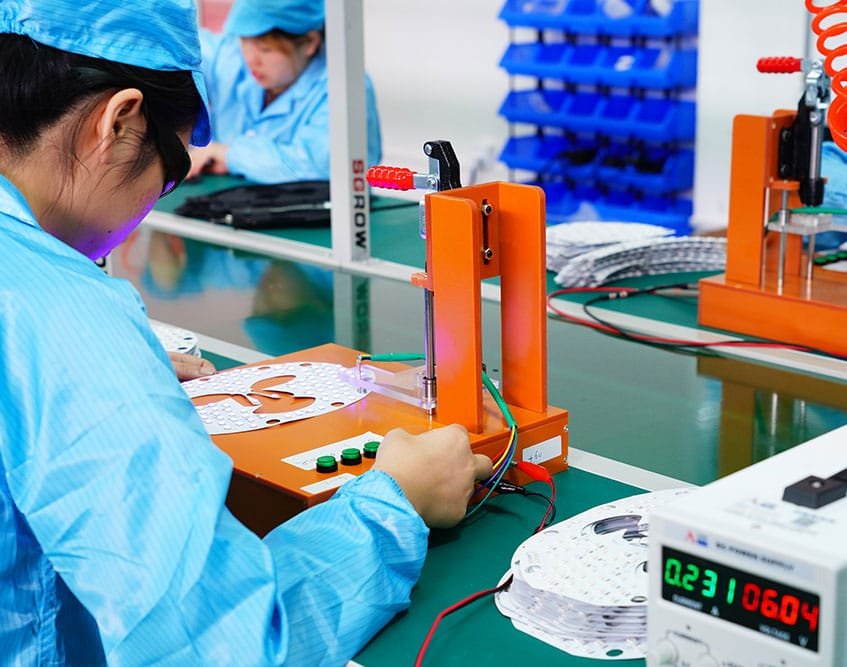
A fábrica da Wakelife Beauty em Shenzhen cobre 20.000㎡ com 12 linhas de produção e uma capacidade mensal de 180,000+ unidades. Nosso processo de desenvolvimento executa EVT obrigatório, TVP, e estágios PVT para programas de novos produtos, com revisão multifuncional envolvendo R&D, design de produto, cadeia de mantimentos, e equipes de qualidade desde o início do projeto. Todas as alterações pós-autorização seguem um processo ECO formal com custo documentado e impacto no cronograma antes da retomada do trabalho. Nosso sistema de gestão de qualidade é certificado pela ISO 13485 e MDSAP.
Para uma explicação detalhada de como esse processo funciona na prática — e as falhas reais que tornaram cada etapa necessária — consulte nosso artigo complementar: Processo de desenvolvimento de dispositivo de terapia de luz vermelha: Lições das falhas do mundo real
Como usar estes 6 Critérios para construir sua lista
Os seis critérios acima fornecem uma estrutura para avaliar fornecedores além do preço e da contagem de LED. A tabela abaixo traduz cada critério em uma pergunta específica e um método de verificação que você pode usar em conversas com fornecedores.
| Critério | Pergunta-chave | Como verificar |
|---|---|---|
| Configuração de comprimento de onda | O painel vai além de 660nm + 850nm? Que tolerância ao descarte? | Solicite especificações completas de comprimento de onda e documentação padrão de classificação |
| Dados de irradiância | As medições multidistâncias estão disponíveis? | Solicite dados de irradiância em 3", 9", e 12" com metodologia de teste |
| Sistema de controle | Suporta APP, escurecimento, e modos personalizados? | Solicite demonstração ou vídeo do produto; pergunte sobre o escopo de personalização do APP |
| Profundidade de personalização | O que realmente pode ser mudado, em que quantidade mínima? | Solicite lista de opções de personalização com MOQ e prazo de entrega por nível |
| Certificações | Quais certificados são mantidos para este modelo e mercado específico? | Solicite documentação de certificado específica do modelo para seu mercado-alvo |
| Fábrica e processo | São executados EVT/DVT/PVT? Existe um processo ECO formal? | Solicite uma visão geral do processo e exemplo de documentação de validação |
Correspondência de prioridade de critérios ao estágio da marca
Nem todos os critérios têm peso igual em todas as fases do desenvolvimento da marca. Aqui está uma estrutura simplificada:
Novas marcas entrando pela primeira vez na categoria de terapia da luz vermelha: Priorize a profundidade da personalização e a flexibilidade do MOQ. Você precisa de um fornecedor que possa apoiar um programa inicial menor sem exigir grandes investimentos no desenvolvimento de produtos. A personalização da camada superficial com uma plataforma base forte é o ponto de partida certo.
Marcas em estágio de crescimento expandindo uma linha de produtos existente: Priorize a configuração do comprimento de onda e o sistema de controle. Estas são as duas dimensões que criam a diferenciação de produto mais visível e apoiam preços premium. Uma marca que já estabeleceu presença no mercado pode investir na personalização da camada funcional para separar seus produtos da concorrência.
Marcas estabelecidas gerenciando um portfólio multi-SKU em mercados regulamentados: Priorize a cobertura da certificação e a estrutura do processo de fábrica. Nesta fase, lacunas de conformidade e inconsistências de produção criam o risco comercial mais sério. Um fornecedor com ISO 13485 certificação, processos de validação estruturados, e o gerenciamento de mudanças documentado é um parceiro de risco materialmente menor do que aquele sem esses sistemas - independentemente do preço.
Perguntas frequentes
Quais comprimentos de onda um painel de terapia de luz vermelha deve ter para diferenciação da marca?
No mínimo, um painel de terapia de luz vermelha deve incluir luz vermelha de 660 nm e infravermelho próximo de 850 nm. Para uma diferenciação de marca mais forte, configurações intermediárias adicionam 630nm, 810nm, e 830 nm. Painéis avançados incluem infravermelho próximo de 1060 nm de profundidade, que cria uma separação técnica genuína dos painéis padrão e apoia o posicionamento de produtos premium nos mercados profissionais e de bem-estar.
Qual é a diferença entre marca própria e OEM/ODM para painéis de terapia de luz vermelha?
Marca própria significa adicionar seu logotipo, embalagem, e manual para um produto existente sem alterar o próprio produto. A personalização OEM/ODM significa mudanças significativas no produto – configuração do comprimento de onda, Especificação de LED, lógica de controle, Interface do aplicativo, e aparência da habitação. Produtos de marca própria podem ser replicados por qualquer marca que trabalhe com o mesmo fornecedor. Produtos OEM/ODM genuinamente personalizados criam um valor de marca mais forte a longo prazo.
Quais certificações um painel de terapia de luz vermelha precisa para diferentes mercados?
Os requisitos de certificação variam de acordo com o mercado. Para os Estados Unidos: FCC para EMC, UL para segurança elétrica, FDA 510(k) para reclamações de dispositivos médicos. For the EU: Marcação CE e RoHS. Para o Reino Unido: UKCA. Para Austrália: SAA para segurança elétrica e TGA para dispositivos terapêuticos. ISO 13485 a certificação de gestão da qualidade é recomendada globalmente. Importante, as certificações são específicas do modelo – confirme quais certificações se aplicam ao modelo exato que você está adquirindo, não apenas a fábrica em geral.
Que capacidade de fábrica devo avaliar ao escolher um fornecedor de painel de terapia de luz vermelha?
Além do preço e da qualidade da amostra, avaliar se a fábrica executa EVT formal (Teste de validação de engenharia), TVP (Teste de validação de projeto), e PVT (Teste de validação de produção) etapas. Pergunte sobre o processo multifuncional de revisão de projetos, como eles lidam com solicitações de mudança após autorização de produção, sua capacidade de produção mensal, e se o seu sistema de gestão da qualidade é ISO 13485 certificado.
Como uma nova marca deve priorizar critérios ao escolher um painel de terapia de luz vermelha?
Novas marcas devem priorizar a profundidade da personalização e a flexibilidade do MOQ – comece com a personalização da camada superficial e uma plataforma base forte. Marcas em estágio de crescimento devem priorizar a configuração do comprimento de onda e o sistema de controle para criar diferenciação. Marcas estabelecidas em mercados regulamentados devem priorizar a cobertura da certificação e a estrutura do processo de fábrica, já que lacunas de conformidade e inconsistências de produção criam o risco comercial mais sério nessa fase.
Conclusão: Escolha uma plataforma, Não apenas um painel
O mercado de painéis de terapia de luz vermelha continuará a crescer. Também continuará a se tornar mais competitivo, mais comoditizado no nível de entrada, e mais exigentes no segmento premium – já que as marcas, distribuidores, e os compradores profissionais tornam-se mais sofisticados nos seus critérios de fornecimento.
Para marcas que estão construindo uma linha de produtos séria, a decisão de fornecimento não se trata apenas de encontrar um painel que atenda às especificações atuais pelo preço atual. Trata-se de escolher uma plataforma de produto e um parceiro de fabricação que possa apoiar o crescimento da marca ao longo do tempo – por meio da iteração do produto, expansão do mercado, evolução regulatória, e aumentando as expectativas dos clientes.
Os seis critérios deste artigo – configuração de comprimento de onda, transparência de irradiância, sistema de controle, profundidade de personalização, cobertura de certificação, e estrutura do processo de fábrica – são as dimensões que determinam se um fornecedor pode realmente cumprir esse tipo de parceria de longo prazo.
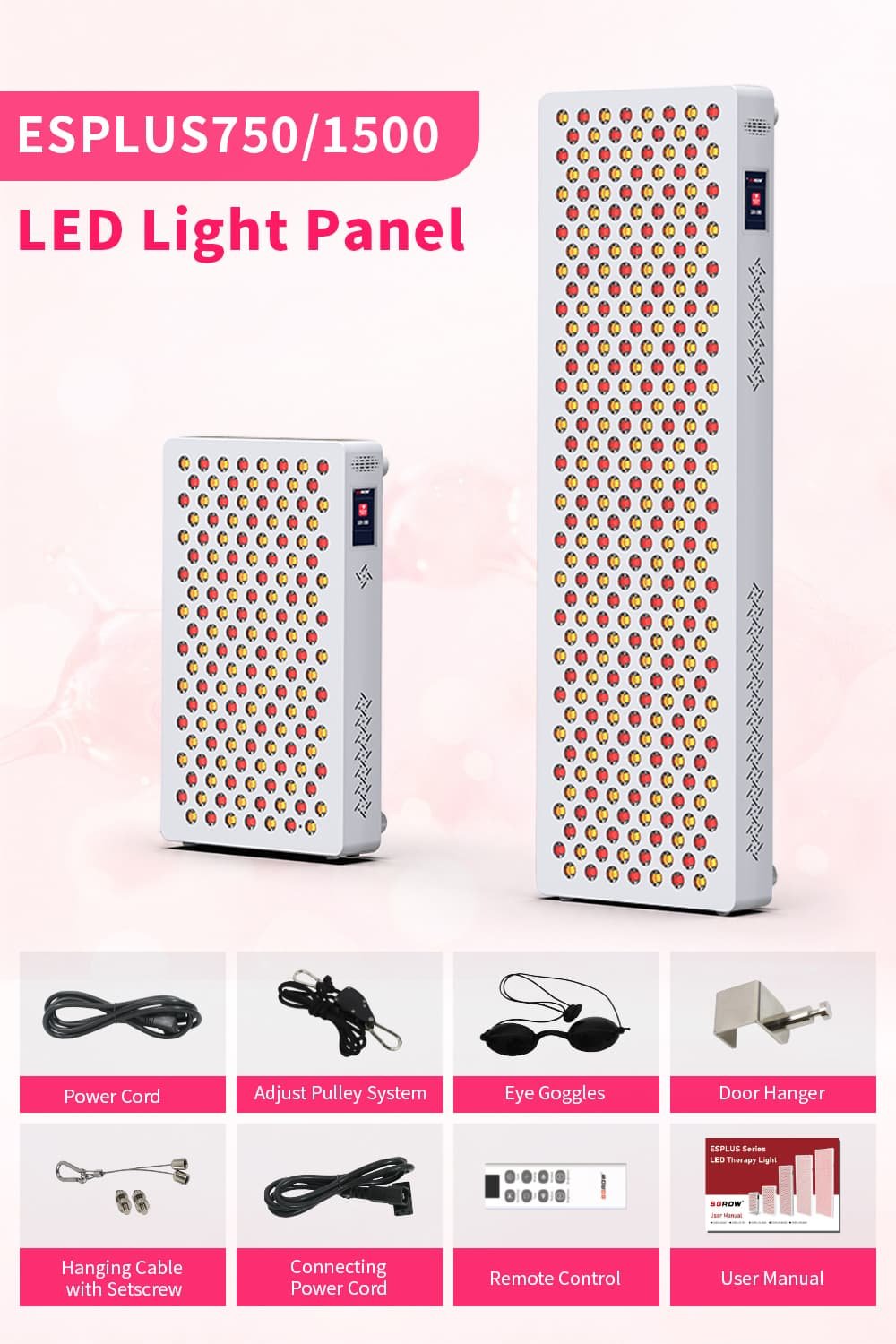
ESPLUS750 é um exemplo de plataforma de painel projetada com esses critérios em mente: seis comprimentos de onda, incluindo NIR profundo de 1060 nm, dados de irradiância multidistância, Controle de APP e operação com tela sensível ao toque, 5-escurecimento do canal, Personalização OEM/ODM em todas as três camadas, e fabricado sob ISO 13485 e sistemas de qualidade certificados pelo MDSAP com validação estruturada de EVT/DVT/PVT.
Mas os critérios se aplicam independentemente do painel que você escolher. Use-os para fazer perguntas melhores, revelar riscos ocultos mais cedo, e tome uma decisão de fornecimento com a qual sua marca ainda se sentirá confortável doze meses após o primeiro pedido.
Leitura Relacionada
- Processo de desenvolvimento de dispositivo de terapia de luz vermelha: Lições das falhas do mundo real — O processo completo de desenvolvimento OEM de 7 estágios por trás da qualidade consistente do produto
- 5 Falhas reais de OEM em dispositivos de terapia LED – e como evitá-las — Casos reais em que decisões de fornecimento criaram problemas posteriores
- 12 Fabricantes de máscaras faciais LED em Shenzhen: Um guia de fornecimento — Perfis de fornecedores avaliados para a categoria de máscara facial LED
Pronto para avaliar ESPLUS750 para sua marca?
Se você estiver adquirindo um painel de terapia de luz vermelha e quiser aplicar os seis critérios acima a um projeto específico, A equipe OEM/ODM da Wakelife Beauty pode ajudá-lo:
- Confirme qual configuração do ESPLUS corresponde ao seu mercado-alvo e posicionamento
- Revise as opções de personalização e os requisitos de MOQ para o escopo do seu programa
- Identifique os requisitos de certificação para o seu mercado-alvo
- Solicite amostras e um orçamento específico para o projeto
Para nos ajudar a dar-lhe a resposta mais útil, compartilhe o seguinte quando entrar em contato:
- Mercado-alvo e canal de vendas
- Quantidade estimada do pedido
- Requisitos de personalização
- Necessidades de certificação ou conformidade
- Cronograma de lançamento esperado
👉 Veja as especificações completas do ESPLUS750: https://wakelifebeauty.com/product/esplus750-red-light-therapy-panel/
👉 Explore nossos serviços OEM/ODM: https://wakelifebeauty.com/oem-odm/
👉 Revise nossas credenciais de qualidade e conformidade: https://wakelifebeauty.com/quality-compliance/