Introdução — A maioria das falhas de OEM não acontece na produção
Na fabricação de dispositivos de terapia de luz vermelha, muitas marcas presumem que falhas acontecem durante a produção em massa – na linha, na caixa, ou após a entrega.
Na realidade, a maioria das falhas já está bloqueada muito antes: durante a definição do requisito, projetar decisões de trade-off, e atalhos de validação tomados sob pressão de tempo ou custo.
Na Wakelife Beauty, depois 10+ anos de fabricação de dispositivos LED de nível médico e parcerias com 1,000+ marcas globais nos EUA, UE, Reino Unido, Austrália, e Japão, vimos um padrão consistente:
Falhas em projetos OEM raramente são acidentes técnicos. Eles são resultados previsíveis de decisões em estágio inicial.
Abaixo estão 5 cenários de falha do mundo real – simplificados a partir de projetos reais – e as decisões específicas que os causaram. Se você está planejando desenvolver ou adquirir um dispositivo de terapia de luz vermelha, uma máscara facial LED, um painel de terapia de luz, ou qualquer dispositivo relacionado, esses casos são diretamente relevantes para o seu projeto.
Observação: Essas falhas fazem parte de um padrão mais amplo que abordamos detalhadamente em nosso artigo complementar: Processo de desenvolvimento de dispositivo de terapia de luz vermelha: Lições das falhas do mundo real. Esse artigo aborda todo o processo estruturado de 7 etapas que usamos agora para evitar esses resultados.
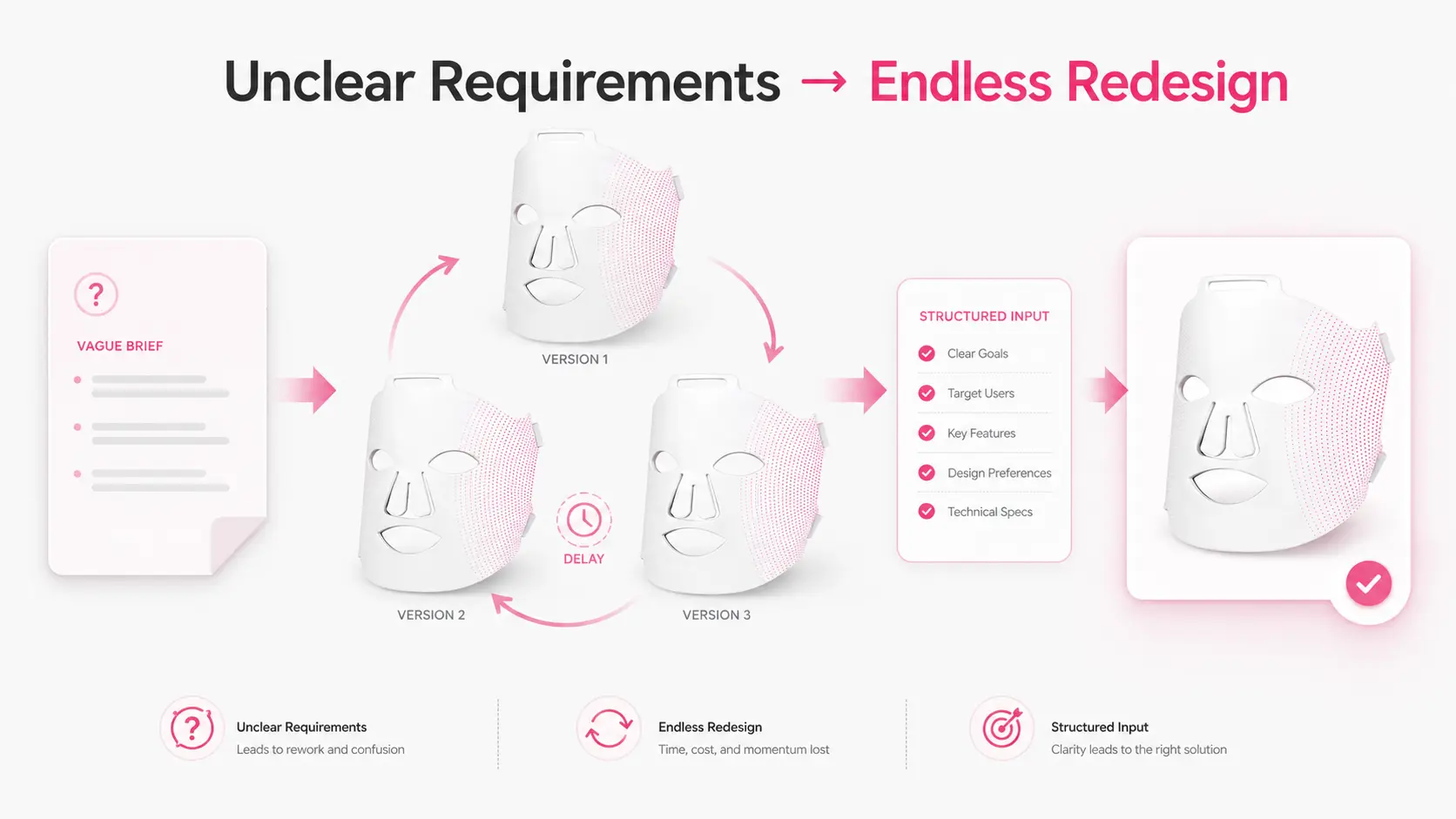
Caso 1 — Requisitos pouco claros → Redesenho sem fim
O que aconteceu
Um cliente nos abordou com um pedido simples:
“Queremos uma máscara facial LED de alta qualidade para o mercado europeu.”
Nenhum detalhe mensurável foi fornecido:
- Sem comprimento de onda alvo (630nm? 660nm? 830nm?)
- Nenhuma especificação de irradiância (MW/cm²)
- Sem preferência material (silicone de qualidade alimentar vs.. Carcaça ABS)
- Sem escopo de certificação (Somente CE? UKCA? Rohs?)
O projeto avançou de qualquer maneira - porque o pedido parecia suficientemente claro no nível superficial.
Resultado
- Design de identificação revisado 3 vezes
- Projeto estrutural revisado duas vezes
- Confirmação final do cliente atrasada por 5+ semanas
- Horas de engenharia gastas em revisões que um briefing completo teria eliminado
Causa raiz
“High-end” não é um requisito técnico. “Mercado europeu” não é um resumo de certificação. No desenvolvimento OEM, descritores genéricos não se traduzem em especificações fabricáveis.
Quanto isso realmente custa
Além do custo visível do tempo de redesenho, requisitos pouco claros criam um custo oculto: cada ciclo de revisão na fase de projeto atrasa o início do ferramental, aquisição, e validação – compactando o cronograma em cada estágio seguinte.
Como corrigimos isso
Introduzimos um processo estruturado de registro de requisitos — agora padrão em todos os projetos da Wakelife Beauty — que captura:
- Comprimento de onda (Por exemplo, 630nm / 660nm / 850nm, ou combinação)
- Alvo de irradiação (MW/cm²) e distância de medição
- Escopo da certificação: CE, UKCA, FCC, FDA 510(k), TGA, CLIMA, ou outro
- Especificação de materiais: silicone de qualidade alimentar (padrão em nossa linha de máscaras faciais LED), ABS, ou híbrido
- Modos de luz: comprimento de onda único, comprimento de onda duplo, pulso, temporizador
- Mercado-alvo e cenário de uso: lar, clínica profissional, ou médico-estético
Entrada clara = saída previsível.
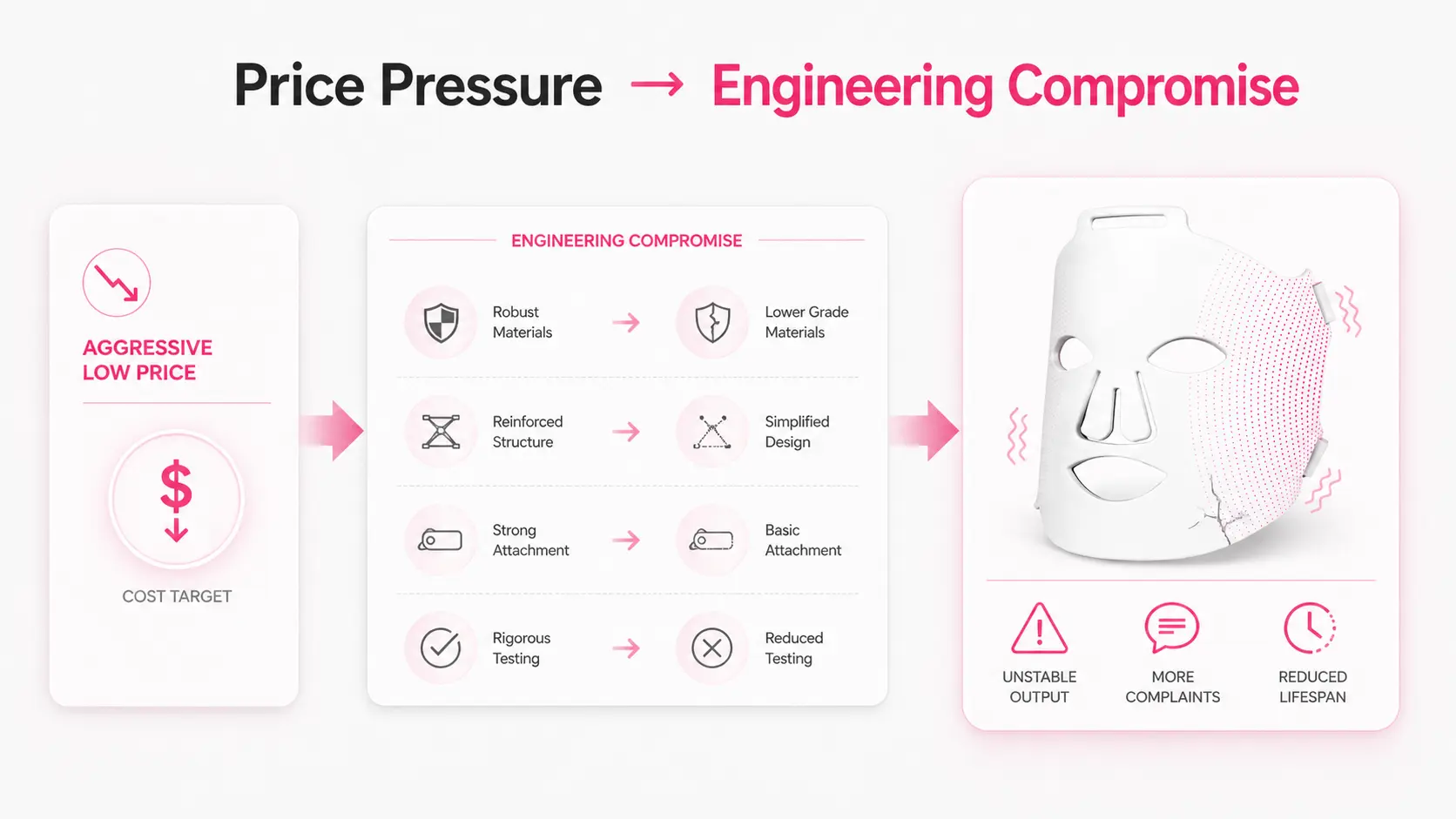
Caso 2 — Pressão de preço → Compromisso de engenharia
O que aconteceu
Um cliente definiu um teto de custo rígido no início do projeto:
“Precisamos deste dispositivo por menos de US$ 25.”
O projeto de engenharia original necessário:
- Binning LED de maior precisão (tolerância de comprimento de onda mais estreita)
- Um sistema de driver de corrente constante estável
- Uma estrutura de gerenciamento térmico para manter a produção estável durante a duração do tratamento
Para cumprir o preço-alvo, o programa foi modificado:
- LEDs de nível padrão substituídos por componentes de classificação mais alta
- PCB simplificado para reduzir o custo da placa
- Estrutura de gerenciamento de calor removida
Resultado
- Saída de luz instável durante a sessão de tratamento
- Vida útil do dispositivo mais curta do que a especificada
- Reclamações de distribuidores e usuários finais dentro 90 dias de lançamento
Causa raiz
A meta de custo foi definida antes da definição dos requisitos técnicos. Em dispositivos de terapia de luz LED, desempenho e custo estão diretamente ligados no nível do componente – eles não podem ser separados por um número definido em uma conversa comercial.
A realidade técnica
Design de dispositivo com luz vermelha e infravermelho próximo:
- Tolerância de comprimento de onda mais rigorosa (Por exemplo, ± 3 nm de armazenamento de nível médico vs.. padrão ±10–15nm) requer classificação de componentes de volumes de produção maiores – isso tem um custo unitário real
- Irradiância estável requer um circuito de driver de qualidade – não intercambiável com uma alternativa de baixo custo sem impacto no desempenho
- Durabilidade requer investimento estrutural – atalhos tornam-se retornos de garantia
Nosso 50+ R&Engenheiros D e 120+ patentes representam anos de trabalho otimizando essa relação custo-desempenho. Essa otimização tem limites que a pressão dos preços não pode ignorar.
Como corrigimos isso
Em vez de forçar um design único comprometido, agora apresentamos aos clientes opções de solução em camadas na fase de requisitos:
- Opção A: Projeto de especificação completa a um custo tecnicamente apropriado
- Opção B: Design de engenharia de valor com explícito, compensações de desempenho documentadas
Ambas as opções são apresentadas com explicações claras sobre custo versus desempenho antes de qualquer investimento em engenharia ser feito. O cliente escolhe com informações completas – não após o início da produção.
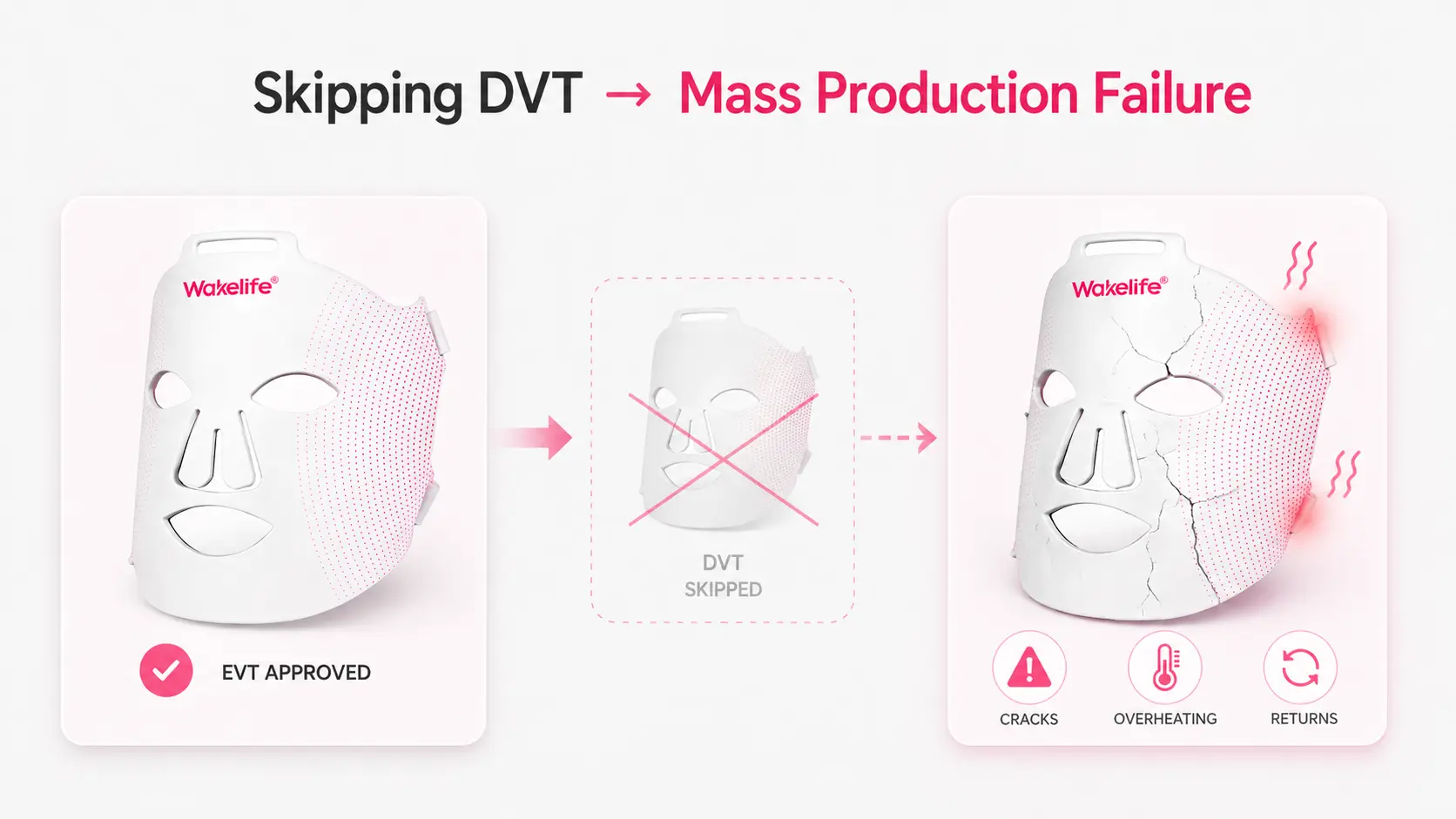
Caso 3 - Ignorando TVP → Falha na produção em massa
O que aconteceu
Uma marca em rápida evolução solicitou produção direta após EVT (Teste de validação de engenharia), ignorando totalmente a TVP:
“Vimos o protótipo. Parece bom. Vamos direto para a produção.”
DVT – o estágio de teste de validação de design – foi ignorado.
Resultado
Depois que a produção em massa foi concluída e os dispositivos foram enviados:
- A caixa do dispositivo quebrou sob condições padrão de teste de queda de 1,2 m
- Problemas térmicos apareceram após uso sustentado (20+ sessões de minutos)
- A taxa de retorno aumentou significativamente, desencadeando disputas entre distribuidores
Todos esses modos de falha foram detectáveis – e solucionáveis – na TVP. Na produção em massa, eles se tornaram passivos de garantia.
Causa raiz
EVT responde à pergunta: Isso pode funcionar? TVP responde a uma pergunta diferente: Será que vai durar?
Estas não são a mesma pergunta. Um protótipo que funcione corretamente em um ambiente controlado não prova que o projeto sobreviverá ao uso no mundo real., manuseio logístico, e variação climática nos mercados internacionais.
O que a TVP realmente testa
Em nosso Processo de desenvolvimento com certificação ISO 13485 e alinhado ao MDSAP, A TVP normalmente cobre:
- Testes de queda e impacto
- Ciclagem térmica e estabilidade térmica de uso sustentado
- Confiabilidade de montagem e durabilidade mecânica
- Testes de confiabilidade pré-certificação alinhados com CE, FCC, FDA 510(k), TGA, ou outro escopo aplicável
Ignorar a TVP não economiza tempo. Transfere riscos não resolvidos da fábrica para o mercado – onde o custo da resolução é uma ordem de grandeza maior.
Como corrigimos isso
A TVP é agora um ponto de verificação obrigatório em todos os programas de desenvolvimento de novos produtos da Wakelife Beauty. A autorização de produção não é emitida até que o fechamento da TVP seja confirmado e documentado. Para personalizações de produtos de plataforma com escopo limitado, o requisito de TVP é avaliado na fase de revisão do projeto — mas o padrão é sempre validar antes de escalar.
Para uma explicação completa de como EVT, TVP, e PVT se enquadram em nosso processo de desenvolvimento, ver: Processo de desenvolvimento de dispositivo de terapia de luz vermelha - estágio 3: Fases de validação
Caso 4 — Instabilidade de comprimento de onda → Reclamações de mercado
O que aconteceu
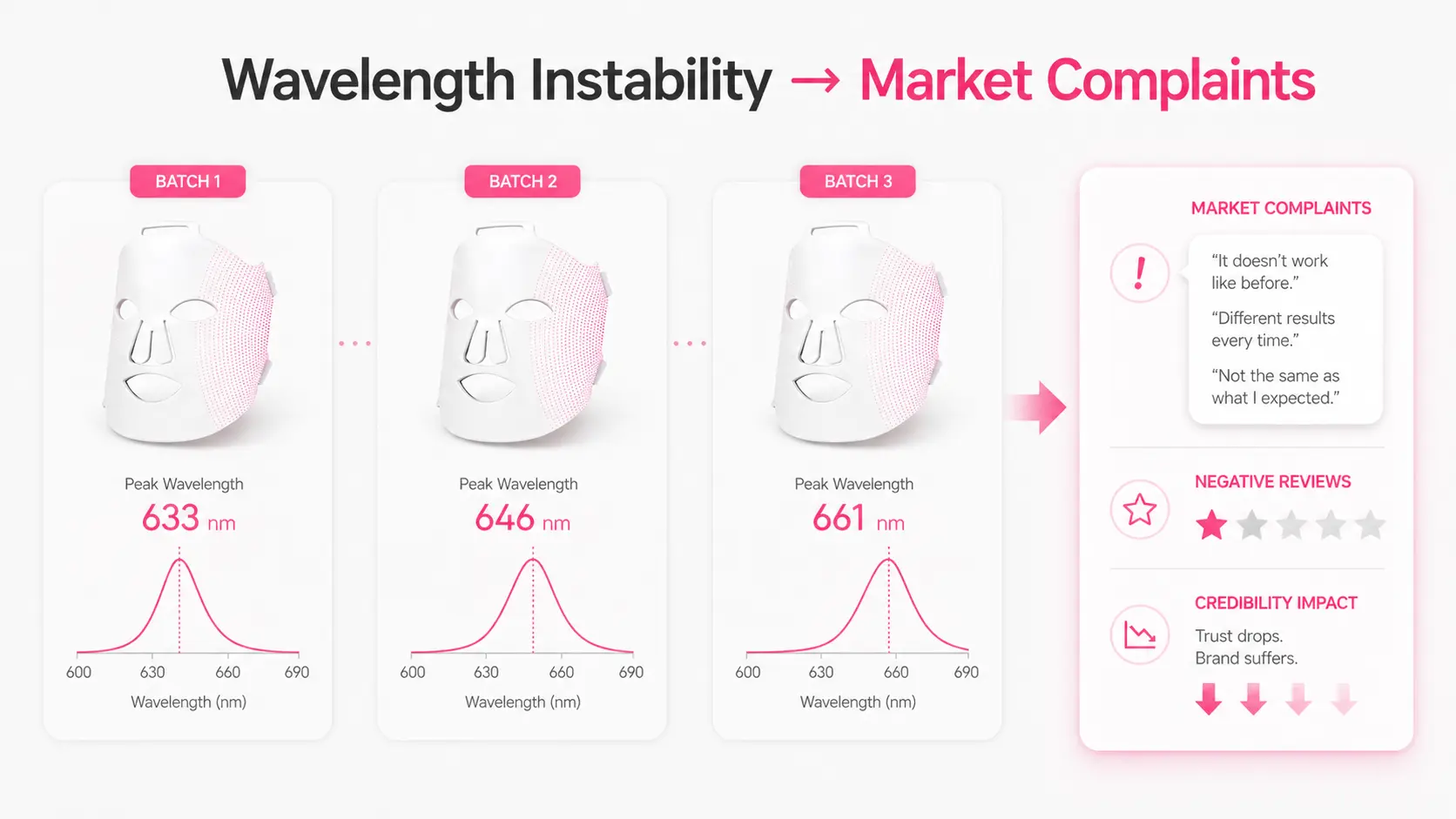
Um cliente solicitou um “dispositivo de luz vermelha de nível médico” – mas não especificou um requisito de tolerância de comprimento de onda.
O compartimento de LED padrão foi usado na produção.
Resultado
- Desvio mensurável de comprimento de onda entre lotes de produção
- Resultados inconsistentes relatados pelos usuários em todas as unidades de produtos
- Feedback negativo de distribuidores e consumidores finais
- Danos à credibilidade da marca num mercado onde o posicionamento clínico era fundamental para a história do produto
Causa raiz
“Classe médica” é uma afirmação de posicionamento. Não é, por si só, uma especificação técnica. Sem uma tolerância de comprimento de onda definida, “qualidade médica” não restringe o processo de produção de nenhuma forma significativa.
A realidade da indústria
A saída de comprimento de onda do LED não é fixa. Cada LED tem uma faixa de tolerância determinada pelo padrão de classificação aplicado durante a classificação dos componentes:
- Armazenamento comercial padrão: faixa de tolerância mais ampla (comumente ±10–15nm ou mais amplo)
- Armazenamento hermético de nível médico: tolerância mais estreita (Por exemplo, ±3–5nm), exigindo classificação adicional do fornecedor de componentes
Um agrupamento mais restrito significa que uma proporção maior de componentes é rejeitada na classificação – o que aumenta o custo do componente. Este é um verdadeiro, diferença de custo quantificável, não é uma preferência de aquisição.
Quando um produto é classificado como de qualidade médica ou clinicamente validado, a consistência do comprimento de onda entre unidades e entre lotes de produção não é opcional. É a base da alegação de eficácia.
Como corrigimos isso
Agora exigimos especificação explícita de comprimento de onda na fase de requisitos para todos os programas de posicionamento médico:
- Comprimento de onda alvo exato (Por exemplo, 660nm±3nm)
- Padrão de classificação (padrão versus. tipo apertado)
- Requisito de consistência lote a lote
- Método de medição e verificação
Esses parâmetros estão documentados na especificação do produto, incluído nos critérios de inspeção de qualidade recebidos, e verificado na DVT antes da autorização de produção.
Caso 5 — Solicitações de alteração tardias → Explosão de custos
O que aconteceu
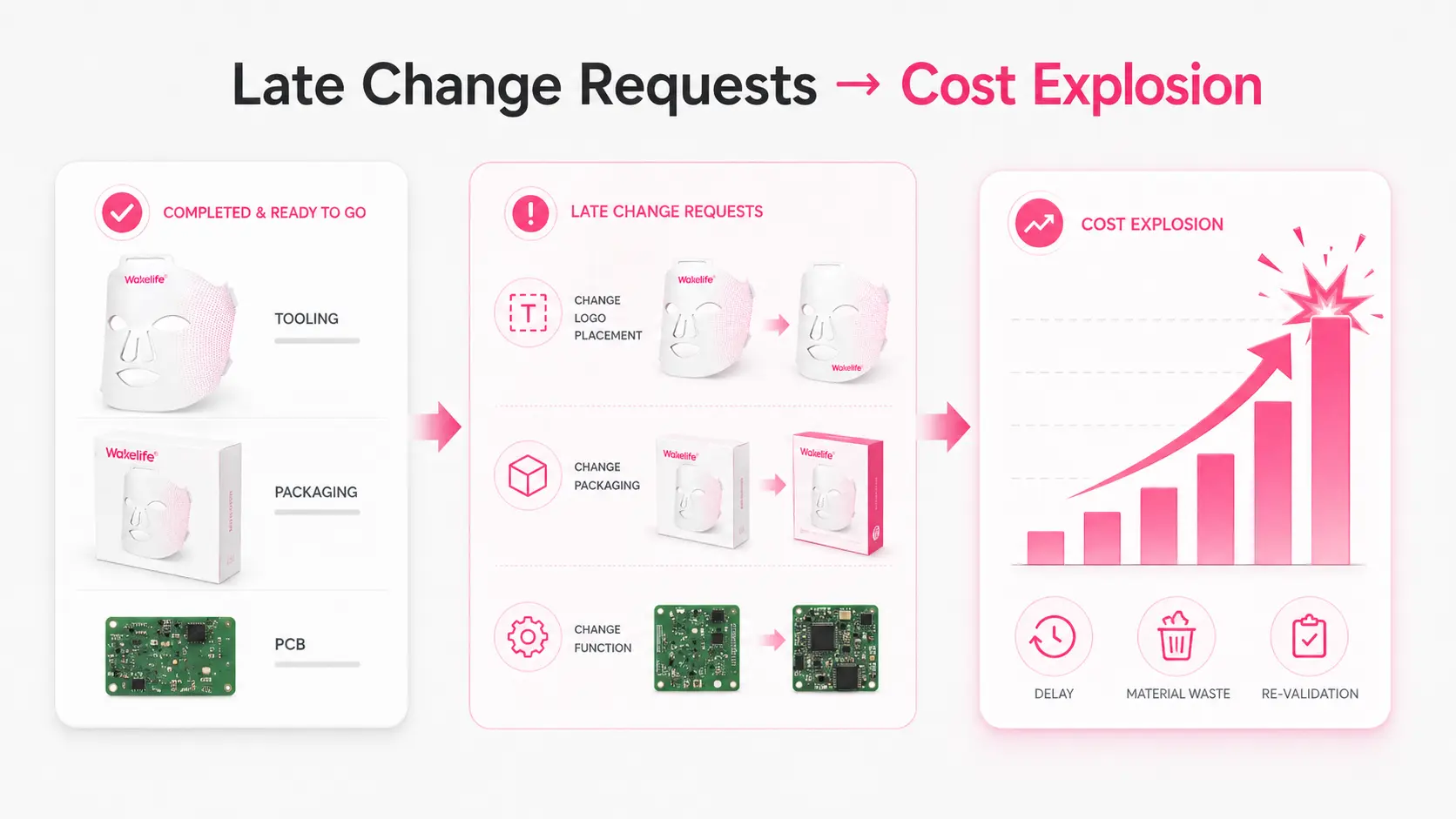
Depois que o ferramental foi concluído e os materiais foram adquiridos, um cliente enviou as seguintes solicitações de alteração:
- Colocação do novo logotipo (exigindo modificação do molde)
- Redesenho de embalagens (exigindo a reimpressão de materiais de embalagem já em produção)
- Adição de uma nova função operacional (exigindo revisão de PCB)
Cada solicitação foi enquadrada como um “pequeno ajuste”.
Resultado
- Desperdício significativo de material de embalagens já produzidas
- Custo de reequipamento para modificação do molde
- Revisão da PCB acionando um requisito de revalidação parcial
- Atraso na produção de 3+ semanas
- Impacto total no custo que excede em muito o valor das próprias mudanças
Causa raiz
As alterações introduzidas após o bloqueio do desenvolvimento não são “ajustes” – são interrupções no nível do sistema. Uma vez autorizada a produção:
- Componentes e materiais são adquiridos conforme especificação
- As ferramentas são fixas e certificadas
- Os cronogramas de produção estão comprometidos
- Em alguns casos, os envios de certificação já estão em andamento
Uma alteração em qualquer um desses elementos pode se espalhar pelos outros.
O que a maioria dos clientes não percebe
O processo de produção em Shenzhen da Wakelife Beauty instalação - 12 linhas de produção, 180,000 unidades por mês – opera em cronogramas comprometidos. Uma alteração tardia num projeto desloca a capacidade alocada para outros programas. O custo desse deslocamento não aparece no pedido de alteração – mas é real.
Como corrigimos isso
Todas as alterações pós-autorização na Wakelife Beauty agora seguem uma ordem formal de alteração de engenharia (ECO) processo:
- Avaliação de impacto de mudanças - escopo, custo, e efeitos do cronograma avaliados antes da aprovação
- Revisão de disposição de material — materiais existentes avaliados para baixa, retrabalhar, ou realocação
- Re-citação — todas as alterações com custo de material ou impacto no prazo de entrega são novamente cotadas e confirmadas por escrito antes da retomada do trabalho
- Avaliação de revalidação — mudanças que afetam a segurança, desempenho, ou conformidade regulatória são revisados para requisitos de reentrada de TVP ou PVT
Este processo protege ambas as partes. Os clientes evitam escaladas de custos inesperadas. Wakelife Beauty evita absorver custos de mudança fora do escopo original do projeto.
Principal vantagem: o sucesso do OEM é decidido antes do início da produção
Em todos os cinco casos, um padrão é consistente:
As falhas não começam na linha de produção. Eles começam em decisões tomadas antes que o desenvolvimento esteja estável.
As cinco práticas que evitam essas falhas não são complicadas:
- Defina requisitos com parâmetros mensuráveis - comprimento de onda, irradiância, material, escopo da certificação – antes do início de qualquer trabalho de design
- Alinhe as metas de custo com a realidade técnica — entenda o que impulsiona o custo no design de dispositivos LED antes de definir um preço máximo
- Nunca pule as etapas de validação – EVT, TVP, e PVT existem porque cada um responde a uma pergunta diferente sobre a prontidão do seu produto
- Especifique explicitamente os padrões de desempenho - “classificação médica” é uma afirmação, não é uma especificação. Defina os parâmetros que tornam isso verdadeiro
- Gerencie mudanças por meio de processos estruturados — toda alteração pós-autorização tem um custo. Um processo ECO formal torna esse custo visível antes de ser incorrido
Conclusão – Um processo estruturado é controle de risco
Um fabricante OEM profissional não apenas constrói produtos de acordo com as especificações.
Gerencia a incerteza. Ele revela compensações. Previne o tipo de falhas previsíveis descritas neste artigo antes de chegarem ao mercado – onde o custo da resolução é sempre superior ao custo da prevenção.
Na Wakelife Beauty, nosso processo estruturado de desenvolvimento em 7 estágios — abrangendo a Confirmação de Requisitos, Design de Produto e R&D, Validação EVT/TVP/PVT, Produção em massa e lançamento no mercado, Gestão do Ciclo de Vida, Documentação e gerenciamento de mudanças, e execução multifuncional - existe por um motivo:
Para evitar essas falhas antes que elas aconteçam.
Esse processo é explicado na íntegra em nosso artigo complementar: 👉 Processo de desenvolvimento de dispositivo de terapia de luz vermelha: Lições das falhas do mundo real
Trabalhe com um fabricante que percebeu essas falhas – e as corrigiu
Se você está planejando desenvolver ou adquirir um dispositivo de terapia de luz vermelha, uma máscara facial LED, um painel de terapia de luz, ou qualquer produto relacionado, as decisões que você toma nas primeiras duas semanas de um projeto determinam o resultado mais do que qualquer coisa que aconteça na produção.
Na Wakelife Beauty, nós podemos ajudá-lo:
- Avalie a viabilidade do seu projeto — antes de comprometer recursos de engenharia ou investimento em ferramentas
- Definir requisitos técnicos - comprimento de onda, irradiância, material, certificação, e estrutura de custos
- Identifique os riscos antes do início do desenvolvimento — usando o mesmo processo de revisão multifuncional que tem apoiado 1,000+ programas de marca globais
Nós trazemos:
- 10+ anos de experiência na fabricação de dispositivos LED de nível médico
- 50+ R&Engenheiros D e 120+ patentes
- Cobertura completa de certificação: FDA 510(k) K250830, CE, UKCA, TGA, FCC, CLIMA, Ul, ISO 13485, MDSAP, IEC 60601, Rohs
- Quantidade mínima de 10 unidades em programas selecionados; OEM / ODM de 100 unidades
- Personalização em comprimento de onda, irradiância, estrutura, tratamento de superfície, embalagem, e integração de aplicativos
👉 Explore nosso OEM / Serviços ODM: https://wakelifebeauty.com/oem-odm/
👉 Revise nossas credenciais de qualidade e conformidade: https://wakelifebeauty.com/quality-compliance/
👉 Leia o guia completo do processo de desenvolvimento: Processo de desenvolvimento de dispositivo de terapia de luz vermelha