LEDs and lasers produce therapeutically equivalent outcomes in photobiomodulation when matched for wavelength, irradiance, and dose. The primary technical difference is coherence — lasers emit coherent (in-phase) light while LEDs emit incoherent light. However, peer-reviewed research demonstrates that coherence is not required for PBM’s biological effects (de Freitas & Hamblin, 2016; PMC5215795). LEDs offer significant practical advantages: lower cost, larger treatment areas, superior eye safety, and suitability for unsupervised home use. For most photobiomodulation applications, LED technology is the preferred choice based on equivalent efficacy, simpler regulatory pathways, and cost-effectiveness.
Summary: Coherence does not determine therapeutic outcome in PBM — wavelength, irradiance, and dose do. LEDs match laser efficacy for the vast majority of applications while offering better safety profiles, lower costs, and scalability for both consumer and B2B markets. Lasers retain value only for narrow use cases requiring precise anatomical targeting or very high irradiance.
Introduction
One of the most persistent questions in photobiomodulation is: do you need a laser, or will LEDs work just as well? The answer carries direct implications for device design, clinical workflows, consumer product development, and B2B procurement decisions.
Historically, PBM began with lasers — hence the original term “low-level laser therapy” (LLLT). Over the past two decades, however, LEDs have emerged as a viable and often preferred alternative. The field itself has shifted terminology from “LLLT” to “photobiomodulation” partly to reflect this technology-neutral reality.
This article provides a comprehensive, evidence-based comparison covering:
- Fundamental technical differences between LED and laser light
- Clinical research directly comparing both technologies
- Safety profiles and regulatory classification
- Economic and practical considerations for B2B buyers
- Industry standards from WALT, NAALT, and international bodies
- A decision framework for technology selection
Fundamental Technical Differences
Coherence: The Defining Characteristic
The primary technical distinction between LEDs and lasers is coherence:
| Property | Laser | LED | Clinical Relevance |
|---|---|---|---|
| Temporal Coherence | High — waves in phase | Low — random phases | Not required for PBM |
| Spatial Coherence | High — collimated beam | Low — divergent | Affects beam delivery method |
| Monochromaticity | Very narrow bandwidth (±1–3 nm) | Broader spectrum (±10–20 nm) | Both adequate for chromophore absorption |
| Directionality | Highly directional | Wide-angle emission | Determines treatment area geometry |
Why coherence was once considered important: Early PBM researchers hypothesized that coherent light might interact with biological tissue in unique ways — through speckle patterns or interference effects at the cellular level. This led to the assumption that lasers were inherently superior.
Why modern research disagrees: De Freitas and Hamblin reviewed the proposed mechanisms of PBM and concluded that the primary photoacceptor (cytochrome c oxidase) absorbs photons based on wavelength, not coherence. The downstream biological cascade — ATP production, ROS modulation, nitric oxide release — is identical regardless of whether the photon originated from a laser or LED (de Freitas & Hamblin, 2016; PMC5215795).
Beam Characteristics
Laser beam properties:
- Collimated — beam remains narrow over distance
- High irradiance at focal point — can achieve power densities exceeding 500 mW/cm²
- Small spot size — typically 1–10 mm diameter
- Precise targeting — suited for specific anatomical structures
LED beam properties:
- Divergent — beam spreads with distance
- Lower peak irradiance — energy distributed over larger area
- Large treatment area — arrays can cover 100–1,000+ cm² simultaneously
- Uniform coverage — reduces operator dependency
Practical implication: A laser delivering 100 mW/cm² to 1 cm² and an LED array delivering 10 mW/cm² to 100 cm² output the same total power (100 mW). However, biological response depends on irradiance at the cellular level meeting the minimum threshold for photoacceptor activation, making the irradiance parameter critical regardless of source type.
OEM Relevance: For device manufacturers and B2B buyers, LED arrays provide a fundamental design advantage: large, uniform treatment areas from a single device position. This eliminates the multi-placement workflow required by lasers, reduces treatment time, and removes operator-dependent variability — all factors that improve clinical throughput and consumer usability. WakeLife’s R&D team designs LED arrays optimized for uniform irradiance distribution across treatment surfaces.
Clinical Efficacy Comparison
Research Evidence for Equivalence
Multiple peer-reviewed studies have directly compared LED and laser outcomes:
Whelan et al. (2001) — NASA Wound Healing Research NASA-funded research compared LED arrays (670 nm, 880 nm, 728 nm) for wound healing applications. Results showed significant improvement in cell proliferation and wound closure rates with LED irradiation, establishing LED technology as clinically viable for PBM applications. This landmark study helped shift the field’s view of LEDs from “inferior alternative” to “legitimate therapeutic tool” (Whelan et al., 2001; PubMed Abstract).
Dall Agnol et al. (2009) — Diabetic Wound Model Directly compared coherent (660 nm laser) and non-coherent (640 nm LED) light sources in a diabetic rat wound healing model. Both light sources significantly accelerated wound closure compared to untreated controls, with no statistically significant difference between laser and LED groups. This study provides direct in vivo evidence that coherence is not a determining factor in PBM wound healing outcomes (Dall Agnol et al., 2009; PubMed Abstract).
Barolet (2008) — Dermatology Review Comprehensive review of LED applications in dermatology. Concluded that LEDs offer equivalent efficacy to lasers with a superior safety profile, and highlighted LED advantages for large-area skin treatments including photorejuvenation and wound healing (Barolet, 2008; PubMed Abstract).
Avci et al. (2013) — Skin Applications Review Analyzed outcomes across LED and laser studies for skin conditions including wound healing, inflammation, and rejuvenation. Found no clinically significant difference in efficacy between the two technologies. Emphasized that treatment parameters (wavelength, dose, irradiance) are more important than light source type (Avci et al., 2013; PMC Free Article).
Chaves et al. (2014) — Systematic Comparison Review Systematically reviewed studies comparing laser and LED for wound healing applications. Concluded that both light sources produced comparable therapeutic effects, and that treatment parameters — not source coherence — determined clinical outcomes. Recommended that technology selection be based on practical considerations such as treatment area, cost, and safety requirements (Chaves et al., 2014; PMC Free Article).
When Lasers May Be Preferred
Despite LED equivalence for most applications, lasers retain advantages in specific clinical scenarios:
| Application | Laser Advantage | Rationale |
|---|---|---|
| Trigger point therapy | Precise targeting | Small, deep anatomical structures |
| Acupuncture point stimulation | Exact beam placement | Traditional medicine integration |
| Intraoral / gingival treatment | Fiber optic delivery | Access to confined anatomical spaces |
| Very high irradiance needs | Peak irradiance >500 mW/cm² | Overcoming significant tissue attenuation |
| Standardized research protocols | Reproducible spot size | Controlled experimental conditions |
For the majority of dermatological, aesthetic, musculoskeletal, and wellness applications, LEDs provide equivalent or superior practical outcomes.
OEM Relevance: The clinical equivalence data means B2B buyers can confidently specify LED-based devices for product lines targeting skin rejuvenation, pain management, wound healing, and general wellness — the highest-volume market segments — without sacrificing therapeutic credibility. See WakeLife’s OEM / ODM services for custom LED device development.
Safety Considerations
Eye Safety: The Critical Difference
The most significant safety distinction between LEDs and lasers is ocular hazard:
Laser eye risks:
- Collimated beam can focus to a tiny point on the retina, concentrating energy
- Class 3B and Class 4 lasers can cause permanent retinal damage or blindness
- Protective eyewear is mandatory for both operators and patients
- Accidental exposure incidents are well-documented in clinical settings
LED eye safety:
- Divergent beam does not focus sharply on the retina
- At typical PBM irradiance levels (10–100 mW/cm²), LED exposure falls within safe limits
- Dedicated eye protection is generally not required (though direct staring should be avoided)
- Suitable for unsupervised home use without specialized safety training
According to FDA laser product guidance, laser devices require specific safety labeling, warning systems, key-switch controls, and emission indicators. These requirements do not apply to LED-based devices at typical PBM power levels.
Thermal Safety
| Factor | Laser | LED |
|---|---|---|
| Heat concentration | High — energy focused on small area | Lower — distributed across array |
| Thermal runaway risk | Higher — localized heating | Lower — heat spread over large surface |
| Patient sensation | Noticeable warmth at treatment site | Usually minimal or imperceptible |
| Burn risk | Possible at high power settings | Very unlikely at standard PBM parameters |
OEM Relevance: Eye safety is the single largest factor enabling the home-use LED device market. Products designed for unsupervised consumer use must demonstrate an inherently safe risk profile. LED technology meets this requirement without the engineering complexity (interlocks, key switches, mandatory eyewear) that lasers demand — directly reducing BOM cost and regulatory burden. WakeLife’s quality and compliance framework ensures all LED devices meet applicable safety standards.
Economic, Practical, and Market Considerations
Cost Comparison
Device acquisition cost:
- Clinical-grade laser systems: typically $5,000–$50,000+
- LED systems with comparable therapeutic output: typically $200–$5,000
- LEDs are generally 80–90% less expensive at equivalent power delivery
Operational costs:
- Laser maintenance includes regular calibration, cooling system service, and tube or diode replacement
- LED maintenance is minimal — solid-state devices with 50,000+ hour rated lifespans
- LEDs consume approximately 50–70% less energy than laser systems for equivalent treatment coverage
- Lasers require operator safety certification; LEDs require minimal training
Treatment Practicality
| Metric | Laser | LED Panel |
|---|---|---|
| Typical spot size | 0.5–10 cm² | 100–1,000+ cm² |
| Full face treatment time | 15–30 minutes (multiple placements) | 10–20 minutes (single placement) |
| Large muscle group | 30–60 minutes | 15–30 minutes |
| Consistency | Operator-dependent positioning | Uniform array coverage |
| Patient workflow | Requires repositioning, supervision | Position once, treat entire area |
Market Trends and Technology Adoption
The PBM device market has shifted significantly toward LED technology. According to industry reports from Grand View Research (2024), industry analysts project continued strong growth in the global light therapy market through 2030, with LED-based devices expected to capture an increasing majority of market share due to cost advantages, safety profiles, and the rapid expansion of home-use devices.
Drivers of LED market dominance:
- Manufacturing scale has dramatically reduced LED component costs
- Home-use market growth — consumers overwhelmingly choose LED for self-administered therapy
- Clinical equivalence data has removed the “laser is better” perception barrier
- LED technology improvements in irradiance and wavelength precision continue to close any remaining performance gaps
- Regulatory simplicity accelerates time-to-market for LED devices
Current adoption patterns:
- Most dermatologists and aestheticians now use LED panels for photorejuvenation
- Physical therapists use both technologies — LEDs for broad-area treatment, lasers for trigger point therapy
- Home users almost exclusively choose LED devices
- Research protocols increasingly use LED arrays for reproducibility across large treatment areas
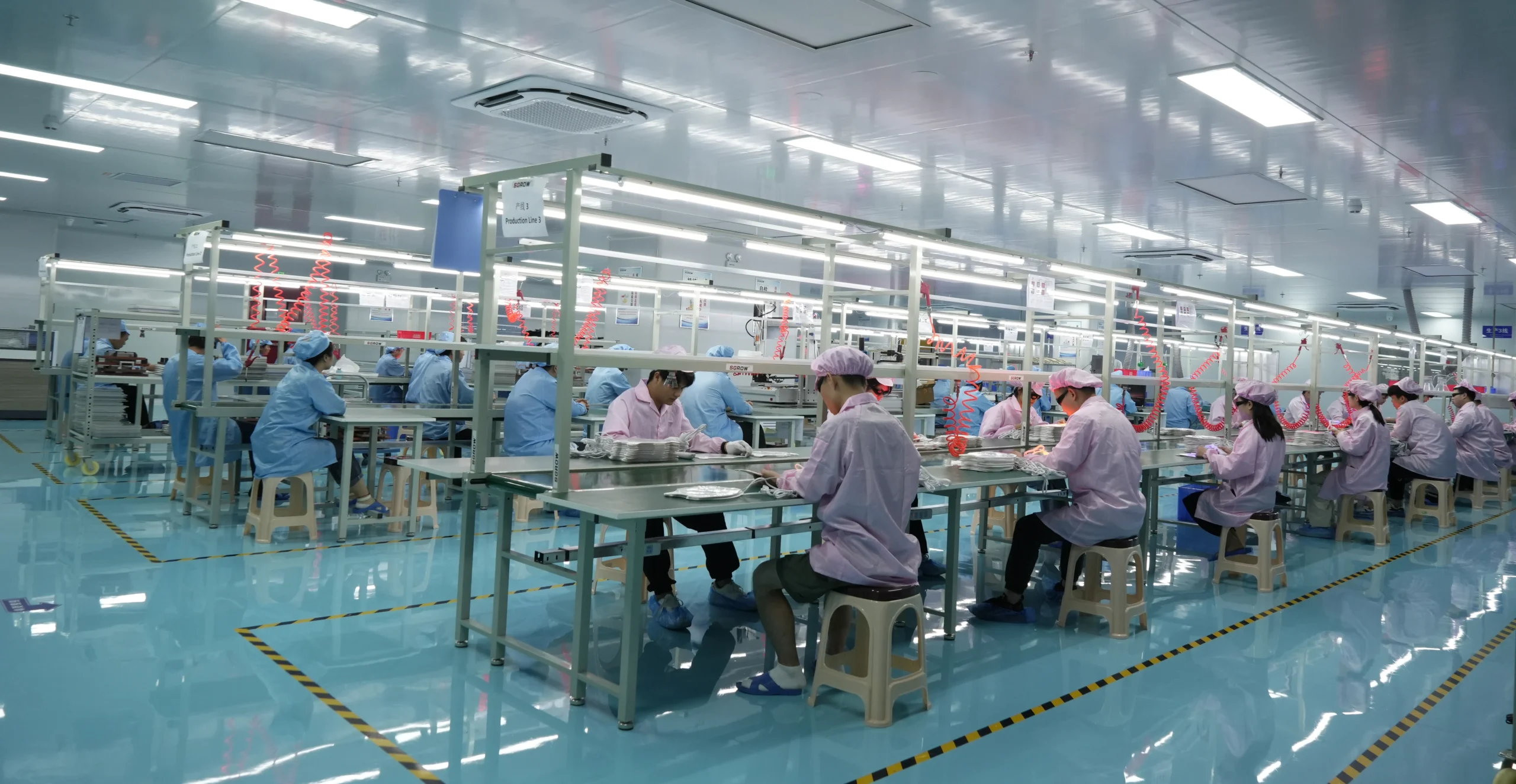
OEM Relevance: LED manufacturing offers B2B buyers significant advantages: scalable production, lower BOM costs, simpler supply chains (no optical cavity assemblies, cooling systems, or Class 3B/4 safety components), and access to the fastest-growing market segment — home-use consumer devices. WakeLife’s manufacturing facility in Shenzhen supports scalable LED device production with flexible MOQ options.
Regulatory Classification
FDA Device Classification
The FDA regulates lasers and LEDs differently based on inherent risk profiles:
Laser classification (21 CFR 1040.10):
- Class I: Exempt from most requirements (very low power)
- Class II: Performance standards and reporting required
- Class III: Significant safety regulations, mandatory safety features
- Class IV: Strictest controls, restricted to professional use
Most therapeutic lasers fall under Class II–IV, requiring safety interlocks, protective eyewear, warning labels, and documented professional training.
LED classification:
- Generally Class I (general wellness) or Class II (medical device) under FDA framework
- Significantly less stringent safety requirements
- No mandatory protective eyewear
- Suitable for home use with appropriate labeling
Both LED and laser devices can receive FDA 510(k) clearance for medical indications. LED devices often achieve clearance more efficiently due to their lower risk profile. WakeLife Beauty’s parent company, Sungrow LED, has achieved FDA 510(k) clearance (K250830) for LED phototherapy devices, demonstrating the established regulatory pathway for LED-based PBM technology.
Professional vs Home Use
| Setting | Preferred Technology | Rationale |
|---|---|---|
| Clinical / Professional | Both viable | Lasers for precision targeting; LEDs for efficiency and throughput |
| Home / Consumer | LED dominant | Safety, cost, ease of use, no supervision required |
| Research | Both | Depends on protocol — LEDs increasingly common |
| Sports / Mobile | LED preferred | Portability, durability, battery operation |
OEM Relevance: The regulatory pathway difference has direct commercial impact. LED devices targeting the home-use market face simpler classification requirements, lower testing costs, and faster clearance timelines. For companies entering regulated markets (US, EU, Australia, Canada), this translates to shorter time-to-revenue and lower regulatory investment. WakeLife’s manufacturing facility holds ISO 13485, IEC 60601, MDSAP, and multiple market-specific certifications — see Quality & Compliance Leadership for full details.
Industry Standards and Guidelines
World Association for Laser Therapy (WALT)
WALT guidelines acknowledge both LED and laser technologies for PBM:
- Therapeutic dose recommendations apply to both source types, with specific ranges varying by clinical indication
- The same therapeutic wavelengths are effective regardless of coherence
- Dosing parameters are determined by clinical indication, not by whether the source is coherent
- Clinical outcomes are considered equivalent when treatment parameters are matched
North American Association for Photobiomodulation Therapy (NAALT)
Professional organizations including NAALT have recognized that both coherent (laser) and incoherent (LED) light sources can achieve therapeutic effects when appropriate parameters are applied. Their guidance emphasizes that technology selection should be based on clinical indication, treatment area, and practical considerations rather than an assumed inherent superiority of either source.
Medical Device Standards
IEC 60601-1 (Medical Electrical Equipment — General Safety):
- Applies to both laser and LED therapeutic devices
- Covers electrical safety, thermal hazards, and mechanical risks
- Both technologies must comply for medical device classification
IEC 60825-1 (Safety of Laser Products):
- Applies specifically to laser devices
- Defines classification, labeling, and safety requirements
- Does not apply to LED devices
This standards asymmetry further simplifies the compliance pathway for LED-based products.
Selection Guide
Choose LED when:
- ✓ Treating large areas (face, back, limbs, full body)
- ✓ Designing for home use or patient self-administration
- ✓ Cost-effectiveness is a priority
- ✓ Safety training resources are limited
- ✓ General wellness, aesthetic, or cosmetic applications
- ✓ Muscle recovery and sports performance
- ✓ Scalable manufacturing for B2B product lines
Choose Laser when:
- ✓ Precise anatomical targeting is required (trigger points, acupuncture)
- ✓ Intraoral or confined-space access is needed
- ✓ Very high irradiance is necessary (>500 mW/cm²)
- ✓ Research protocols require a standardized, reproducible beam
- ✓ Specific clinical guidelines mandate laser use
- ✓ Fiber optic delivery is advantageous
Hybrid Approaches
Some advanced clinical settings use both technologies in combination:
- LED panels for broad-area treatment (photorejuvenation, large muscle groups)
- Laser probes for targeted, high-intensity applications (trigger points, dental)
- Sequential protocols combining both for multi-indication treatment
FAQ
Are LEDs as effective as lasers for red light therapy?
Yes. When wavelength, irradiance, and dose are matched, multiple studies demonstrate equivalent clinical outcomes. Coherence is not required for PBM’s biological mechanism of action (de Freitas & Hamblin, 2016; Avci et al., 2013).
Why are lasers more expensive than LEDs?
Lasers require complex optical cavities, precise alignment, active cooling systems, and multiple safety components (interlocks, key switches). LEDs are solid-state semiconductor devices with fundamentally simpler manufacturing requirements.
Can I use laser devices at home?
While technically possible, laser devices require safety training, mandatory protective eyewear, and careful handling to avoid accidental eye exposure. LEDs are generally safer and more practical for unsupervised home use.
Do LEDs penetrate tissue as deeply as lasers?
Penetration depth is determined by wavelength and tissue optical properties, not by coherence. A 660 nm LED and a 660 nm laser penetrate to the same depth. However, lasers can achieve higher irradiance at the focal point, which may deliver more energy to deep target tissues.
Why do some clinics still prefer lasers?
Lasers remain valuable for specific applications requiring precise targeting (trigger points, acupuncture points), confined-space access (intraoral), or very high irradiance. For large-area treatments, most clinics now prefer LED panels.
What are SLEDs (Superluminous LEDs)?
SLEDs bridge the gap between standard LEDs and lasers — they offer higher irradiance than conventional LEDs with a broader spectrum than lasers. Some applications use SLEDs for enhanced penetration depth without the cost and safety complexity of laser devices.
How should I evaluate LED vs laser device specifications?
Focus on: (1) Wavelength — must match target chromophores, (2) Irradiance — sufficient to exceed cellular activation thresholds, (3) Treatment area — appropriate for the indication, (4) Safety certifications — FDA, CE, IEC compliance, (5) Clinical evidence supporting the specific device parameters. Coherence is far less important than these practical specifications.
How are LED devices manufactured for quality and consistency?
Medical-grade LED devices require manufacturing under ISO 13485 quality management systems, with compliance to IEC 60601 electrical safety standards. Regulatory clearances such as FDA 510(k), CE marking, and MDSAP certification provide additional assurance of device safety and performance. When evaluating LED devices or OEM partners, these certifications are key indicators of manufacturing quality. See WakeLife’s quality and compliance certifications for reference.
Conclusion
The LED vs laser debate in photobiomodulation has been substantially resolved by two decades of comparative research: when treatment parameters are matched, both technologies produce equivalent therapeutic outcomes. The biological effects of PBM depend on wavelength, dose, and irradiance — not on whether the light source is coherent.
This evidence-based conclusion has clear implications:
For the industry: LED technology has democratized access to photobiomodulation. Manufacturing scalability, component cost reductions, and solid-state reliability have made LED the dominant platform for both clinical and consumer devices.
For clinicians: Technology selection should be based on clinical indication and practical requirements — not on an outdated assumption of laser superiority. LED panels maximize treatment efficiency for large-area applications; lasers remain useful for narrow, precision-targeting scenarios.
For consumers: Home LED devices now offer parameters within the therapeutic range established by clinical research. The inherent safety advantages of LEDs make self-administered PBM practical and accessible.
For B2B buyers: LED manufacturing offers scalability, lower costs, simpler regulatory pathways, and access to the fastest-growing market segments. The technology maturity of LED PBM reduces development risk while the growing body of clinical evidence provides marketing and regulatory support. For partnership inquiries, wholesale purchasing, or OEM / ODM development, visit the WakeLife contact page.
The shift from laser to LED dominance in PBM reflects evidence-based optimization, not technological compromise. For most applications, the question is no longer “laser or LED?” but rather “which LED parameters will optimize outcomes for this specific indication?”
Related Topics
References
de Freitas, L. F., & Hamblin, M. R. (2016). Proposed mechanisms of photobiomodulation or low-level light therapy. IEEE Journal of Selected Topics in Quantum Electronics, 22(3), 7000417. PMC Free Article
Whelan, H. T., Smits, R. L., Buchman, E. V., et al. (2001). Effect of NASA light-emitting diode irradiation on wound healing. Journal of Clinical Laser Medicine & Surgery, 19(6), 305–314. PubMed Abstract
Dall Agnol, M. A., Nicolau, R. A., de Lima, C. J., et al. (2009). Comparative analysis of coherent light action (laser) versus non-coherent light (light-emitting diode) for tissue repair in diabetic rats. Lasers in Medical Science, 24(6), 909–916. PubMed Abstract
Barolet, D. (2008). Light-emitting diodes (LEDs) in dermatology. Seminars in Cutaneous Medicine and Surgery, 27(4), 227–238. PubMed Abstract
Avci, P., Gupta, A., Sadasivam, M., et al. (2013). Low-level laser (light) therapy (LLLT) in skin: stimulating, healing, restoring. Seminars in Cutaneous Medicine and Surgery, 32(1), 41–52. PMC Free Article
Chaves, M. E., Araújo, A. R., Piancastelli, A. C., & Pinotti, M. (2014). Effects of low-power light therapy on wound healing: LASER x LED. Anais Brasileiros de Dermatologia, 89(4), 616–623. PMC Free Article
Grand View Research. (2024). Light Therapy Market Size, Share & Trends Analysis Report, 2024–2030. Industry Report
- Food and Drug Administration. Laser Products and Instruments. FDA Medical Devices Information Page. FDA Website
World Association for Laser Therapy. (2023). Consensus Guidelines for Photobiomodulation Therapy. WALT
North American Association for Photobiomodulation Therapy. (2024). Professional Guidelines on PBM Light Sources. NAALT
FDA 510(k) Premarket Notification Database. (2025). K250830 — LED Phototherapy Device. FDA 510(k) Database