
Red Light Therapy Wavelengths: How to Choose 660 nm vs. 830 nm by Tissue Depth
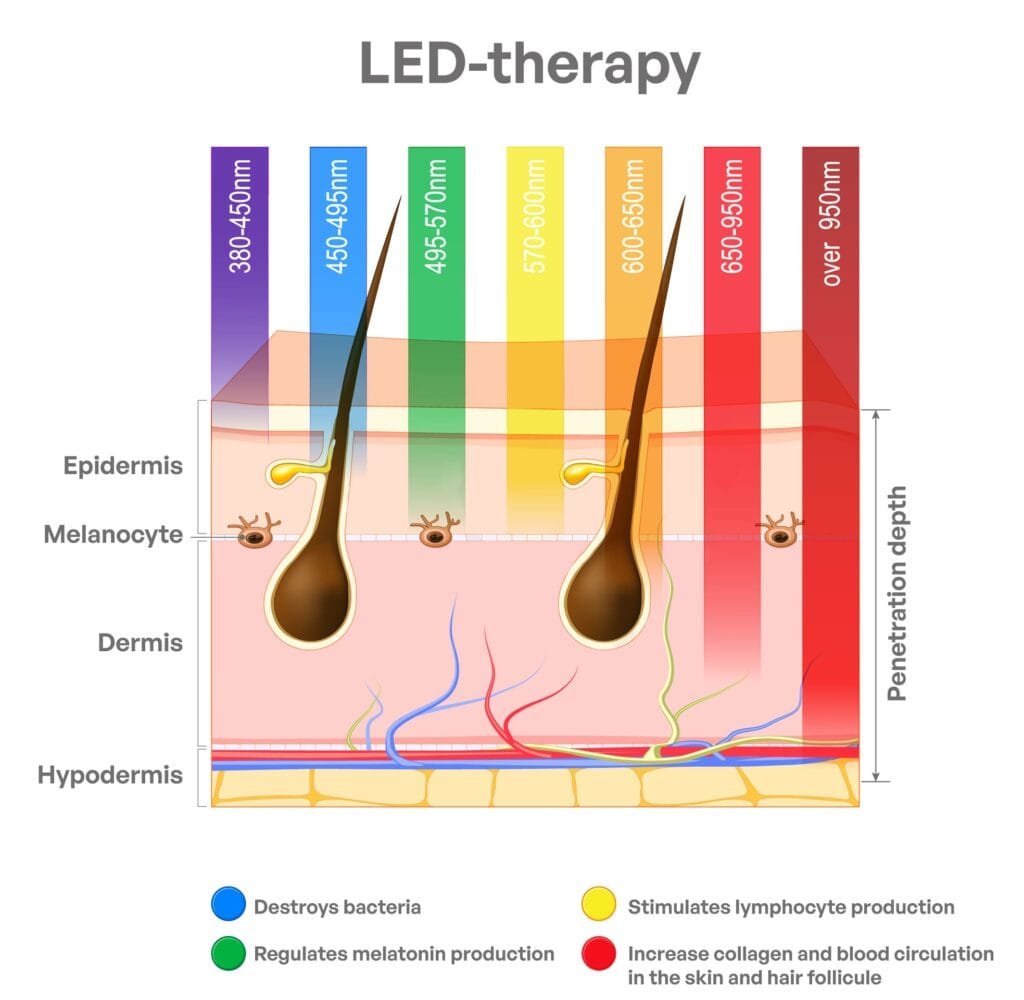
Wavelength determines whether photons reach their target tissue or get absorbed along the way. Red light (630–660 nm) penetrates 1–5 mm, making it ideal for skin, wounds, and hair follicles. Near-infrared (810–850 nm) penetrates 10–50 mm, reaching muscle, joints, and even transcranial targets. Both wavelengths activate cytochrome c oxidase (CcO) but at different absorption sites — the heme center […]
LED vs. Laser in Photobiomodulation: Performance, Safety & Device Selection Guide
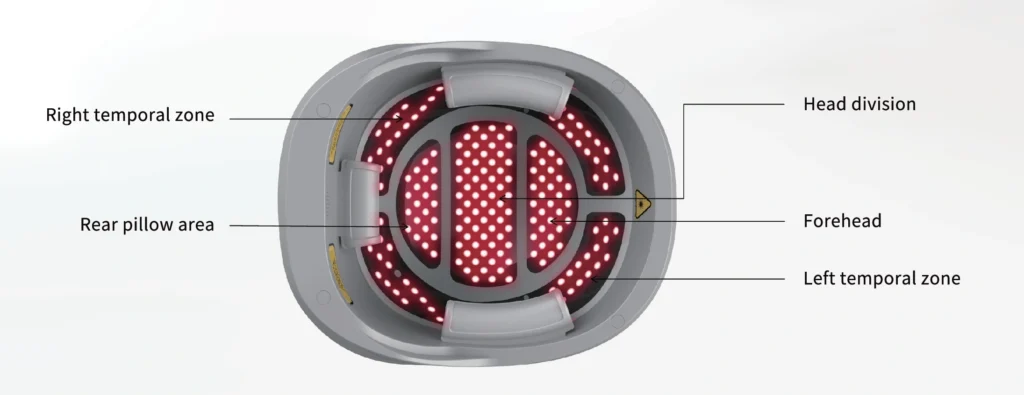
LEDs and lasers produce therapeutically equivalent outcomes in photobiomodulation when matched for wavelength, irradiance, and dose. The primary technical difference is coherence — lasers emit coherent (in-phase) light while LEDs emit incoherent light. However, peer-reviewed research demonstrates that coherence is not required for PBM’s biological effects (de Freitas & Hamblin, 2016; PMC5215795). LEDs offer significant […]
Downstream Biological Effects of Photobiomodulation: What Happens Inside Your Cells

Red light therapy works by delivering specific wavelengths of light — 630–660 nm (red) and 810–850 nm (near-infrared) — into the skin and underlying tissue, where the photons are absorbed by an enzyme called cytochrome c oxidase (CcO) inside the mitochondria. This absorption restores mitochondrial electron transport, increases ATP (cellular energy) production, releases nitric oxide […]
Biphasic Dose Response in PBM: Why More Light Is Not Always Better
Biphasic dose response means that photobiomodulation (PBM) follows a characteristic curve where low doses stimulate, moderate doses produce optimal effects, and high doses inhibit cellular function. This phenomenon — described by the Arndt-Schulz principle and validated extensively in PBM research (Huang et al., 2009) — explains why more light is not always better. However, the specific optimal dose depends […]
Cytochrome c Oxidase: The Primary Photoacceptor in Red Light Therapy
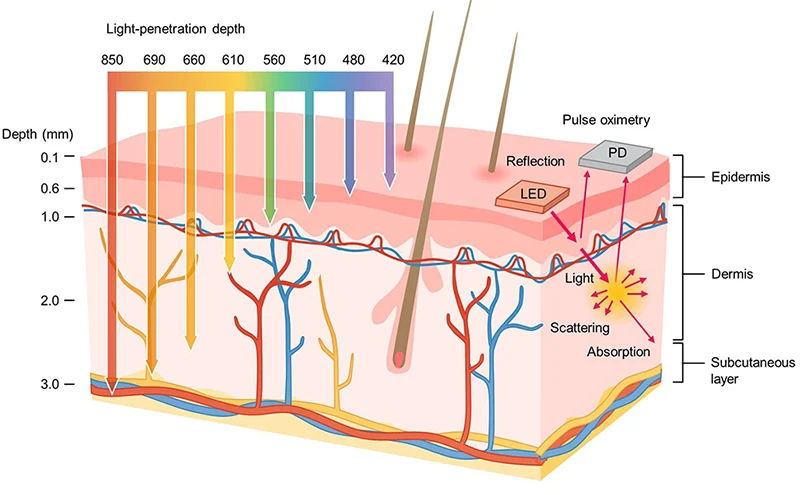
Cytochrome c oxidase (CcO) — also known as Complex IV of the mitochondrial electron transport chain — is the primary photoacceptor in red and near-infrared light therapy. When photons in the 600–900 nm range reach the mitochondria, CcO absorbs them, triggering three key responses: increased ATP (cellular energy) production, release of nitric oxide (a vasodilator that improves blood flow), […]
What Is Photobiomodulation? Definition, History & How It Works

Photobiomodulation (PBM) is a non-invasive therapy that uses specific wavelengths of red and near-infrared light (typically 600–1000 nm) to stimulate cellular energy production and promote tissue repair. Light photons are absorbed by an enzyme called cytochrome c oxidase in the mitochondria, boosting ATP synthesis and triggering anti-inflammatory, regenerative, and neuroprotective responses. You may know it by […]