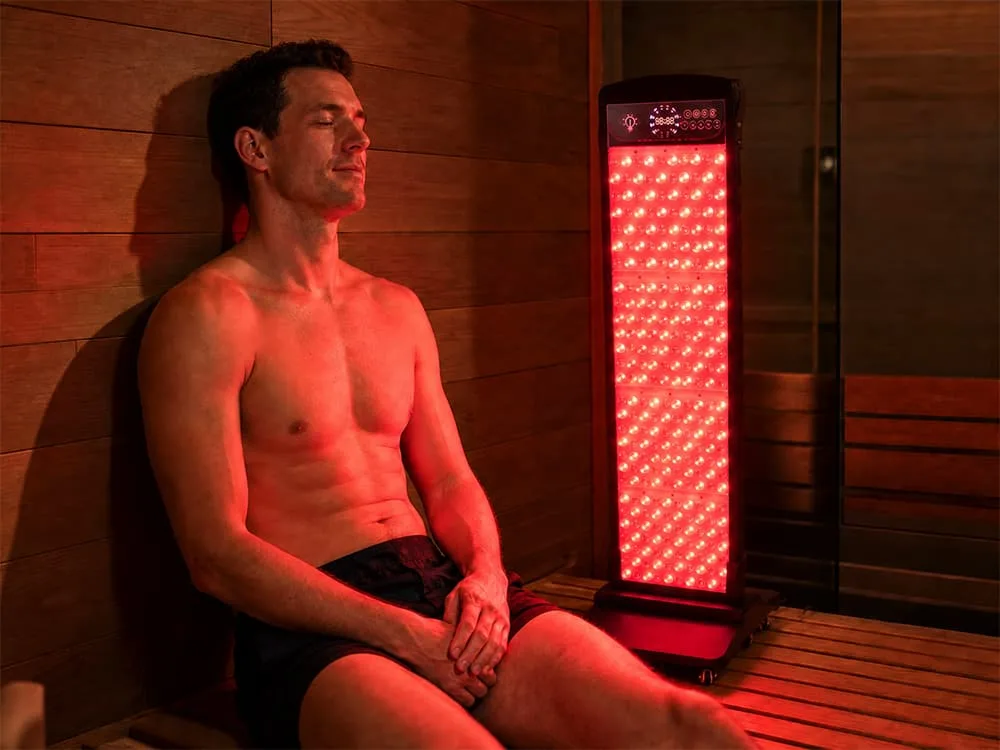
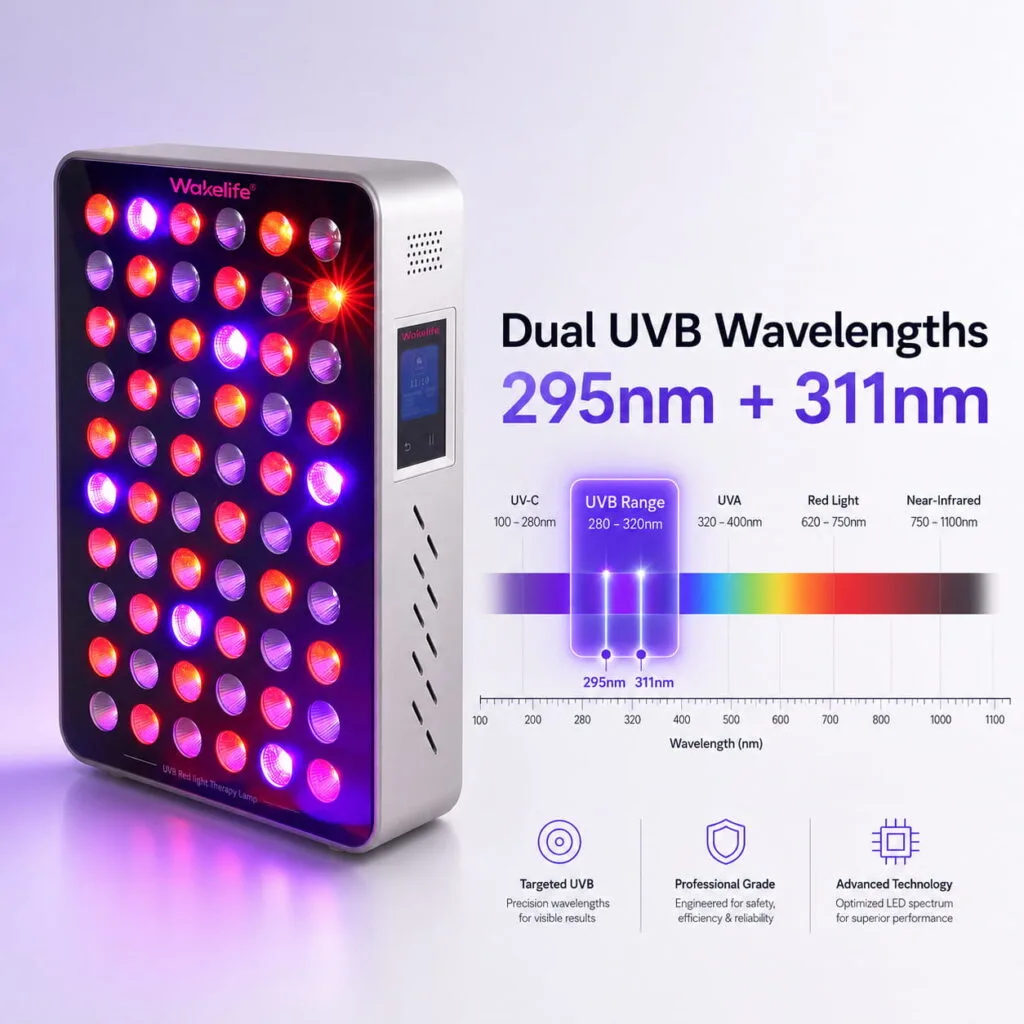
TL;DR (para compradores) BK300 es un bronceado compacto UVB de consumo & panel de exposición a la luz, no es un dispositivo médico. Su ventaja no es su número de 60 LED. Es que BK300 toma la única parte del espectro que la mayoría de los paneles evitan: UVB (295Nuevo Méjico + 311Nuevo Méjico) - y lo diseña en un producto que es mensurable, controlado a distancia, y honestamente explicable a su cliente final. Para ti, Esa es una historia que los competidores no pueden copiar rápidamente., además de un motor de contenido listo para usar: 9 longitudes de onda y 7 modos.
1. Seamos claros sobre qué es y qué no es este dispositivo
BK300 es un bronceador UVB de consumo / panel de exposición a la luz. No diagnostica, tratar, curar, o prevenir cualquier enfermedad, y nunca debería comercializarse de esa manera.
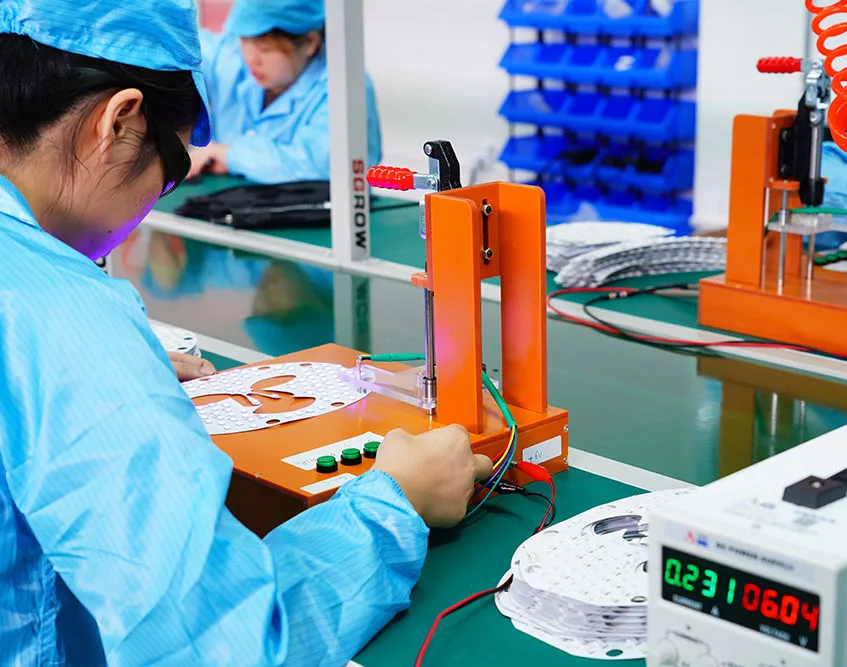
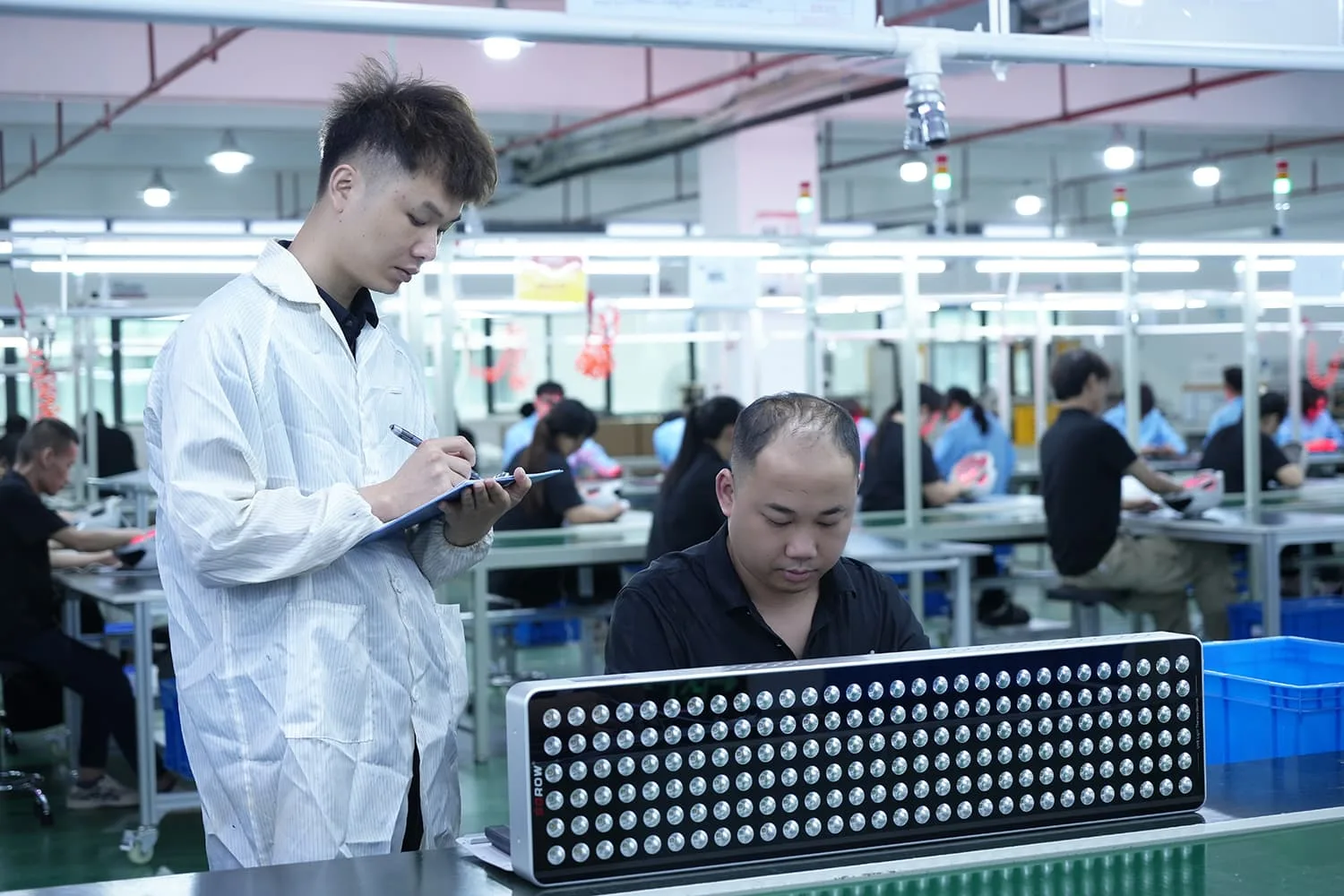
Su estado de cumplimiento: el La serie BK ha pasado la CE, FCC, y pruebas RoHS, está fabricado bajo ISO 13485 + Mdsap sistemas, y BK300 está incluido en la información de listado de dispositivos de la FDA de un establecimiento registrado por la FDA.
Una distinción que no borraremos, y tú tampoco deberías: a listado de dispositivos es el registro del dispositivo con la FDA. Es no una “autorización” o “aprobación” de la FDA. La propia FDA es explícita en este punto; consulte la propia guía de la FDA sobre Registro y listado de dispositivos y 510(k) Notificación previa a la comercialización. (Nuestras instalaciones tienen un 510(k) autorización - K250830 - pero esa autorización pertenece a un específico máscara facial LED, no hasta BK300. Puede verificar cualquier autorización usted mismo ante el público de la FDA. 510(k) base de datos. No dejaremos que esos dos se mezclen, y le recomendamos que también los mantenga separados en sus propias páginas.)
¿Por qué abrir con esto?? Porque hemos visto a compradores pegar una hoja de especificaciones inflada en Amazon o en una tienda DTC y encontrarse directamente con un problema de cumplimiento de la plataforma.. Preferimos decir una frase menos antes de que usted sea responsable de nuestra redacción..
2. La verdadera historia detrás de los 311 nm: Tomar prestado el conocimiento, No el respaldo
311nm (UVB de banda estrecha) tiene una larga, historia documentada en dermatología, donde las unidades UVB de banda estrecha están reguladas como dispositivos médicos. Esto no es folklore de marketing; es literatura clínica bien indexada. El Descripción general de la fototerapia de la Academia Estadounidense de Dermatología es un punto de partida útil; para profundidad, una revisión sistemática revisada por pares, como Almutawa et al., “Eficacia de la fototerapia localizada y la terapia fotodinámica para la psoriasis” (PubMed PMC3047947) — ilustra cuán extensamente se ha estudiado esta longitud de onda en entornos clínicos controlados.
La distinción honesta: lo que se aclara son esos dispositivos médicos específicos, no “la longitud de onda de 311 nm”. BK300 emite 311 nm, pero lo hace no heredar la autorización de cualquier dispositivo médico. Citamos estos antecedentes por una razón.: para mostrar que 311nm es un profundamente estudiado, longitud de onda predecible – es por eso que confiamos en incorporarlo a un producto de consumo. Es no una afirmación de que BK300 tiene efectos terapéuticos.
El valor para ti: Honestamente, puede decirles a los clientes que se trata de “una longitud de onda que ha sido investigada seriamente”, una opción creíble., historia basada en evidencia que nunca necesita exageración de eficacia para aterrizar.
3. Usted gana el derecho a decir "foso" sólo después de haber sido honesto acerca del riesgo
La mayoría de los paneles evitan los rayos UVB porque, sin control, quema, y la sobreexposición crónica conlleva un riesgo real de cáncer de piel. No fingiremos lo contrario. IARC (la agencia de investigación del cáncer de la OMS) clasifica los dispositivos de bronceado que emiten rayos UV como Grupo 1 carcinógenos — la categoría de mayor riesgo — documentada en Monografías IARC Volumen 100D: Radiación. El Q de la radiación ultravioleta de la OMS&A dice esto claramente para el público general.
nuestra lógica: El riesgo no se elimina evitandolo, sino mediante el control de ingeniería.. Como una radiografía médica: dañino incontrolado, una herramienta de rutina cuando se controla. La línea es siempre revisado vs. sin control.
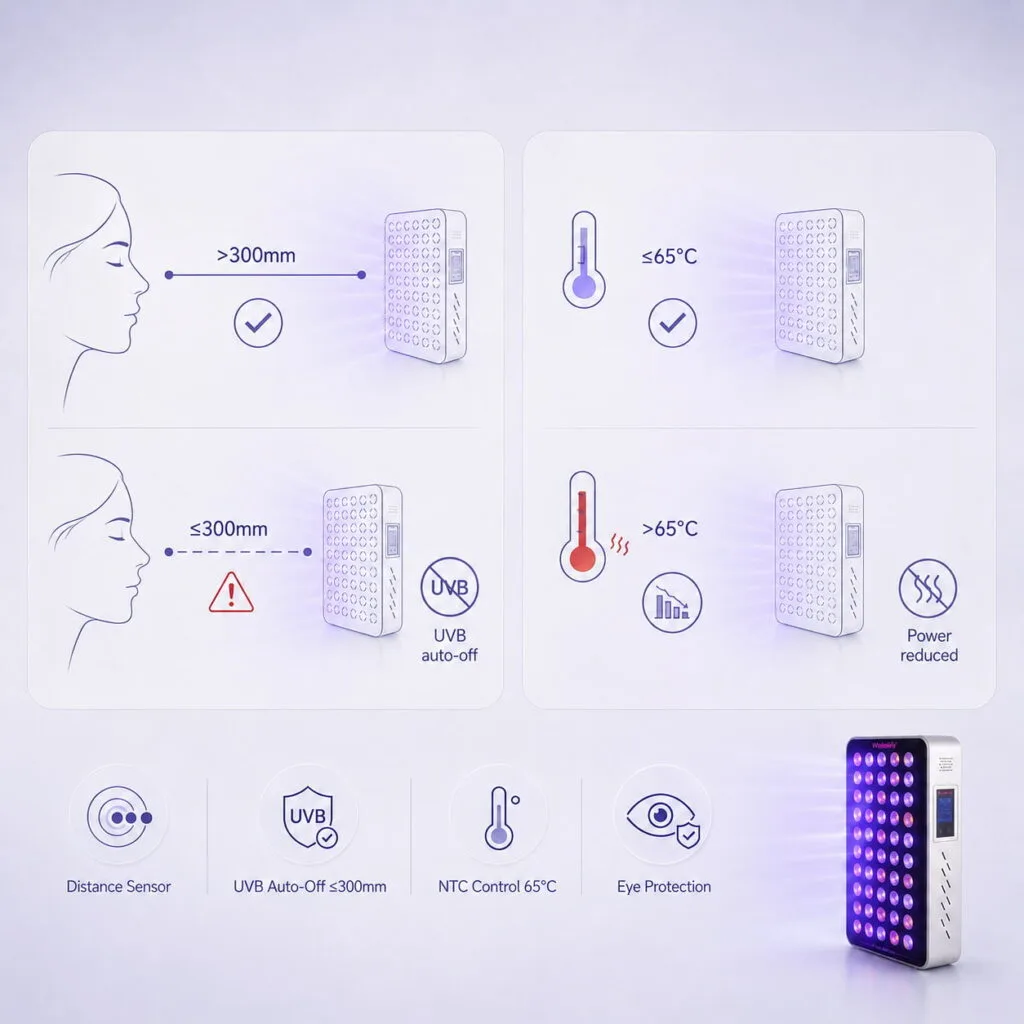
Pero “controlado” no puede ser un eslogan, así es exactamente como BK300 lo aplica:
- sensor de distancia + apagado automático de UVB: si el usuario está dentro ≤300 mm (30centímetro), suena un timbre y el canal UVB se apaga automáticamente. Los rayos UVB solo superan el umbral de seguridad.
- Control de temperatura NTC: arriba 65°C, el dispositivo reduce automáticamente la energía.
- Gafas protectoras incluidas. — coherente con los principios de seguridad fotobiológica descritos en Directrices de la ICNIRP sobre límites de exposición a la radiación ultravioleta, la referencia de libre acceso reconocida internacionalmente para los límites de exposición a los rayos UV.
Esto es lo que realmente significa “la ingeniería lleva el control, no el manual de instrucciones”.
4. Una nota sobre cómo leer honestamente la tabla de irradiancia
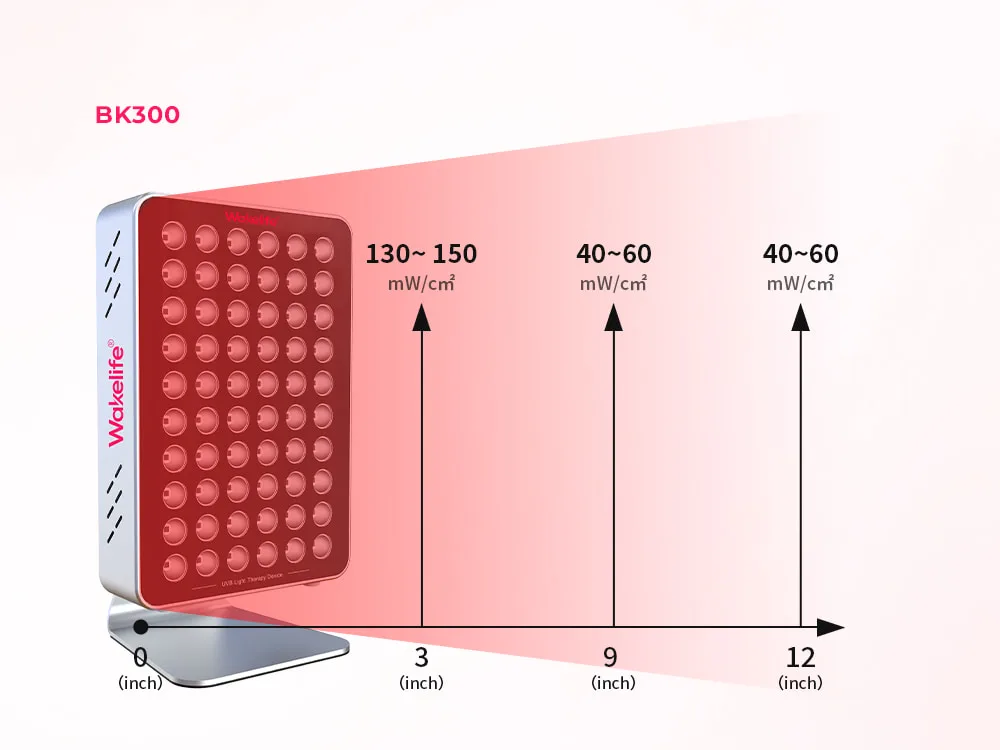
| Distancia | Irradiancia |
|---|---|
| 3 pulgada (~76mm) | 130–150 mW/cm² |
| 9 pulgada (~230 mm) | 40–60 mW/cm² |
| 12 pulgada (~300 mm) | 40–60 mW/cm² |
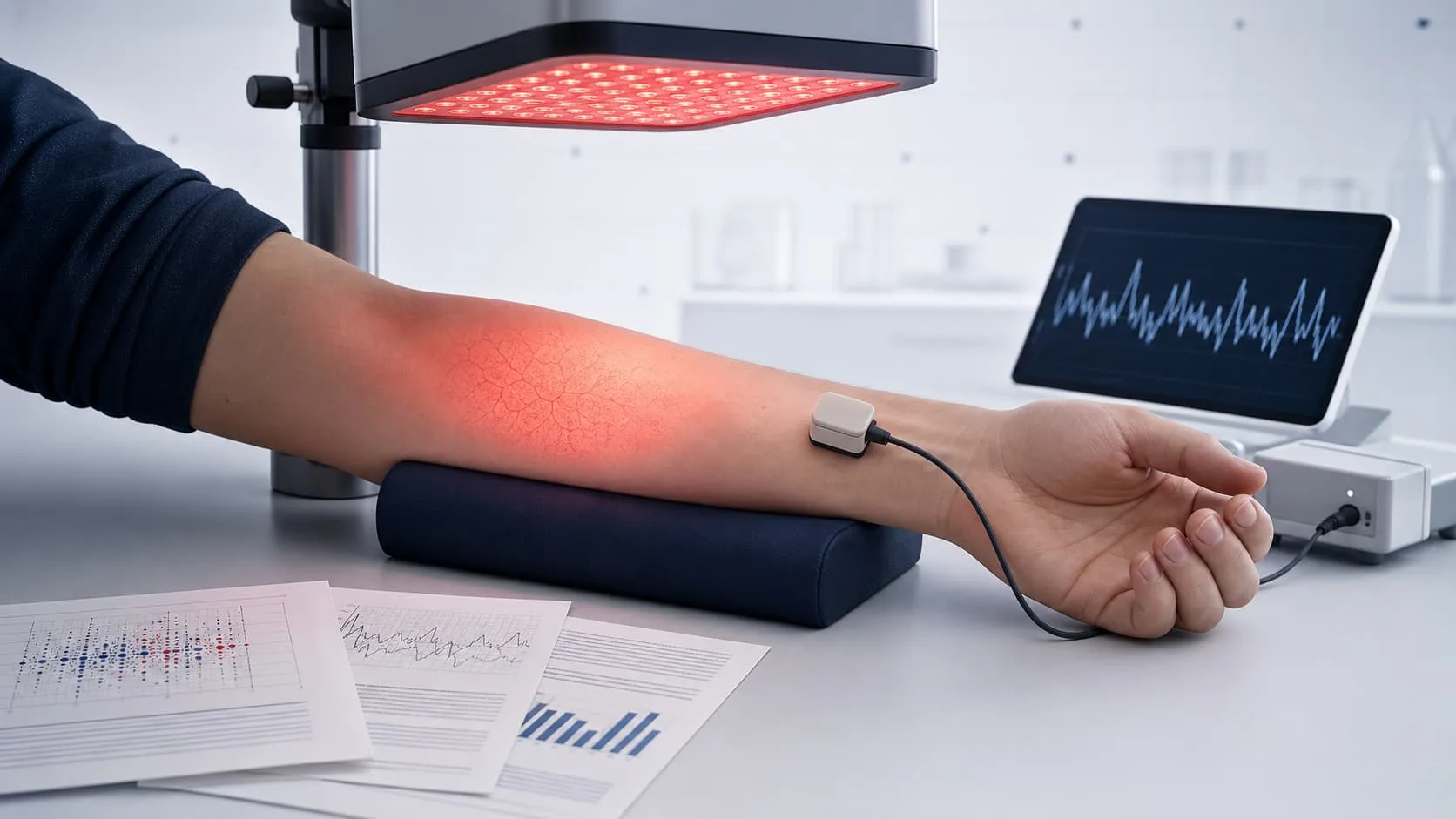
Aquí hay un punto que la mayoría de las copias de fábrica ocultarían, y te lo mostraremos: la cifra de 3 pulgadas es una referencia de medición, no es una recomendación de uso de UVB. Porque el sensor de distancia corta los rayos UVB a ≤300 mm, El uso real del bronceado UVB ocurre en el rango de 30 cm o más. - es decir., la zona de 40–60 mW/cm². Si el marketing de un comprador implica “mantenerse 3 pulgadas de distancia para un bronceado rápido,” que contradice la propia lógica de seguridad del dispositivo. Informe a sus usuarios finales la distancia de uso seguro, y la dosimetría se mantiene honesta.
5. 9 Longitudes de onda = múltiples narrativas; 7 Modos = un calendario de contenido
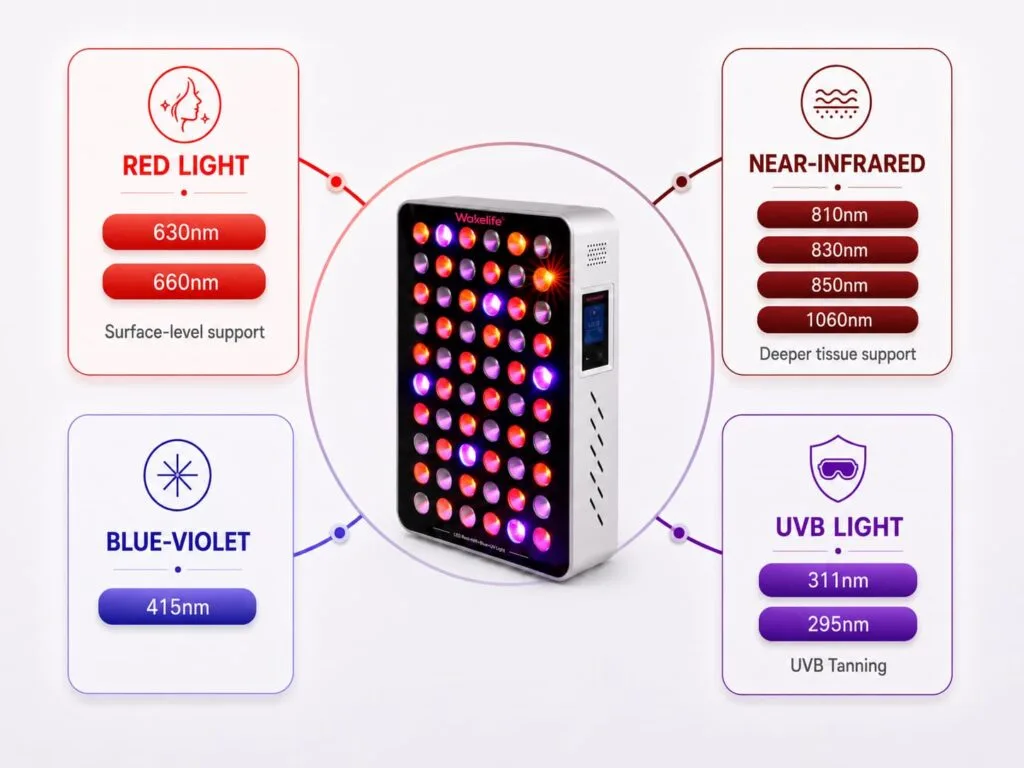
BK300 9 longitudes de onda son 9 ángulos de contenido independientes; es 6 programar + 1 modos personalizados son un ritmo editorial ya hecho. "No queda nada que publicar" después del lanzamiento es un verdadero temor de DTC: hemos almacenado las municiones.
Una corrección que vale la pena hacer en tus mensajes.: El bronceado del BK300 no contiene rayos UVA. El 9 las longitudes de onda son 295/311 nm (UVB), 415Nuevo Méjico (azul-violeta), 630/660Nuevo Méjico (rojo), y 810/830/850/1060 nm (NIR/IR) — no UVA. Esto es importante porque los rayos UVA son la banda más fuertemente asociada con el fotoenvejecimiento y el daño del ADN., como lo detalla el Explicador de UVA/UVB de la Skin Cancer Foundation. Entonces “impulsado por UVB, Libre de UVA” es en realidad un limpiador diferenciador de las típicas camas de bronceado. No lo diluyas implicando UVA..
En el modo de denominación, una recomendación honesta: la lista preestablecida actual incluye “Salud ósea M6” (295+311Nuevo Méjico) y “Disminución de M4”. La cadena de UVB → vitamina D → calcio → hueso tiene varios pasos y depende de cada individuo; comprimirlo en un modo llamado “Salud ósea” hace una promesa fisiológica que ni usted ni nosotros podemos cumplir, y viaja río abajo como su riesgo de cumplimiento. sugerimos neutral, descriptivo nombres:
| Modo | Longitudes de onda | Nombre neutro sugerido | Qué evitar reclamar |
|---|---|---|---|
| M1 | 295/311 + 630/660 + 810/830/850/1060 | "Curtido (impulsado por UVB)" | “bronceado seguro, riesgo cero” |
| M2 | 630/660 | "Piel / Rutina de colágeno” | “revierte el envejecimiento” |
| M3 | 810/830/850/1060 | "Recuperación / Rutina NIR” | “trata las lesiones musculares” |
| M4 | 630/660 + 295 | “Rutina de luz relajante” | “reduce la inflamación” (cambiar el nombre de "Disminuir") |
| M5 | 630/660 + 415 | “Rutina de cuidado de imperfecciones” | “trata el acné” |
| M6 | 295/311 | “Rutina de exposición a los rayos UVB” | “Salud ósea” |
| M7 | Costumbre | "Costumbre (OEM / ODM)" | — |
Mismos modos, Mismo poder de venta, simplemente pisando terreno honesto..
6. Sobre el “bronceado” y la “vitamina D”," Afirmamos sólo lo que respalda la evidencia
Curtido: La melanogénesis inducida por UVB es una fotobiología establecida. La vía bioquímica (la absorción de UVB que desencadena la síntesis de melanina) está documentada en literatura revisada por pares.; ver Brennero & Audiencia, "El papel protector de la melanina contra el daño de los rayos UV en la piel humana" (PubMed PMC2671032). tan bronceado como una función es legítimo hacer publicidad. Pero los resultados varían según el tipo de piel., distancia, y duración de la sesión, razón por la cual la imagen de antes/después está correctamente etiquetada como "solo como referencia visual".; Los resultados pueden variar”. Mantenga ese descargo de responsabilidad; está haciendo un trabajo real.
vitamina d: La banda UVB alrededor de 290-315 nm es la porción del espectro solar responsable de la síntesis cutánea de vitamina D., según lo documentado por el Hoja informativa sobre la vitamina D de la Oficina de Suplementos Dietéticos de los NIH. Pero tenga en cuenta el límite: “esta banda de longitud de onda impulsa la síntesis en principio" es no "Este dispositivo produce una cantidad significativa de vitamina D a una distancia y duración seguras". Por eso nuestro texto es "ofrece exposición en banda de 295 nm," no "Complementa la vitamina D". La diferencia de una palabra es una diferencia de orden de magnitud en el riesgo de cumplimiento.
7. Referencia rápida de especificaciones
| Artículo | Bk300 |
|---|---|
| Tipo | Panel de bronceado compacto UVB (cuerpo objetivo) |
| LED | 60 pcs (SMD 3535) |
| Longitudes de onda | 295, 311, 415, 630, 660, 810, 830, 850, 1060Nuevo Méjico (libre de rayos UVA) |
| Modos | 6 programar + 1 costumbre |
| Mostrar | 3.0″ LCD TFT táctil |
| Brillo / Legumbres / Minutero | 0–100% / 0–40Hz / 5–20 minutos |
| Irradiancia | 130-150 @ 3 pulgadas; 40–60 @ 9–12 pulgadas (MW/cm²) |
| Seguridad | sensor de distancia (Apagado automático UVB ≤300 mm), NTC≤65°C, gafas incluidas |
| Tamaño | 320 × 220 × 65 mm |
| Voltaje / IP | 100–240 VCA / IP20 |
| Cumplimiento | Ceñudo, FCC, ROHS; ISO 13485 + Mdsap; Dispositivo FDA listado |
8. Lo compacto es una compensación y le diremos cuánto cuesta
El formato compacto del BK300 significa menor carga, MOQ más amigable, y una barrera de prueba baja, buena para abrir mercados y realizar pruebas de demanda..
Pero la compensación, Dicho claramente para que un comprador astuto no pueda sorprenderlo.: BK300 cubre un área específica del cuerpo, y su irradiancia es inferior a BK900 (130–150 contra 160–180 mW/cm² a 3 pulgadas; 40–60 contra 60–80 @ 9–12 pulgadas; 60 vs 180 LED; 320 vs 890mm alto). Si su cliente necesita cobertura de medio cuerpo o posicionamiento de nivel de estudio, BK300 no es la respuesta, BK900 sí lo es. El ajuste preciso del BK300: nivel de entrada, uso de zona única, espacios más pequeños, y canales sensibles al precio y la logística.
9. Siguiente paso para los compradores
Cuéntanos tres cosas: tu mercado objetivo, el posicionamiento que deseas (belleza? curtido? bienestar de estilo de vida?), y tu volumen esperado. Encontraremos el modelo BK correcto, dar orientación sobre cumplimiento, y entregarle un marco de contenido desplegable. Respondemos dentro 24 horas.
Lista de referencias
- A NOSOTROS. FDA— Registro y listado de dispositivos
- A NOSOTROS. FDA— Notificación previa a la comercialización 510(k)
- A NOSOTROS. FDA— 510(k) Base de datos de notificaciones previas a la comercialización
- Academia Estadounidense de Dermatología - Descripción general de la fototerapia
- Almutawa et al.. — Eficacia de la fototerapia localizada para la psoriasis, PMC3047947
- CIIC— Monografías Volumen 100D: Radiación (Dispositivos de bronceado UV, Grupo 1)
- OMS - Radiación UV Q&A
- ICNIRP— Directrices sobre límites de exposición a la radiación ultravioleta
- Fundación contra el cáncer de piel — Radiación ultravioleta (UVA/UVB)
- Brennero & Audiencia - Papel protector de la melanina contra el daño de los rayos UV, PMC2671032
- Oficina de Suplementos Dietéticos de los NIH — vitamina d (Hoja informativa para profesionales de la salud)