Para marcas e compradores atacadistas que entram na categoria de terapia de luz vermelha para animais de estimação, as especificações que determinam a qualidade do produto, posicionamento de mercado, e diferenciação OEM são:
- Arquitetura LED - LEDs Tri-Chip (3 chips por LED) oferecem densidade de chip terapêutico significativamente maior do que alternativas de chip único no mesmo espaço do dispositivo
- Configuração de comprimento de onda - 660nm vermelho + 850nm infravermelho próximo é o padrão de comprimento de onda duplo clinicamente estabelecido para fotobiomodulação de animais de companhia (PBM); a proporção entre eles é importante
- Design sem fio e sem fio — os animais não podem ser amarrados a uma tomada durante o tratamento; a operação sem fio genuína é um requisito funcional, não é um recurso premium
- Flexível, materiais seguros para animais de estimação — painéis rígidos não estão em conformidade com a anatomia animal; construção de tecido flexível com segurança, materiais não tóxicos são essenciais para uso de animais de companhia
- Tamanho e cobertura — a almofada deve ser de tamanho adequado para o animal alvo; um dispositivo dimensionado para humanos não serve nem cães nem gatos de forma eficaz
- Profundidade de personalização OEM - logotipo, embalagem, comprimento de onda, interface do controlador, e configuração de acessórios
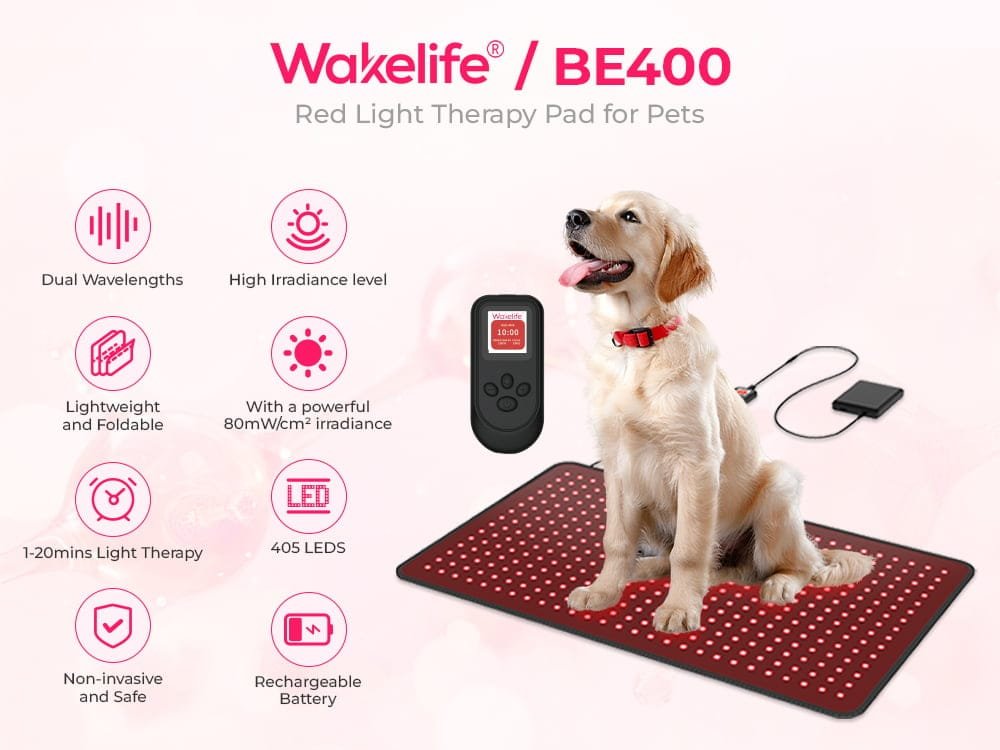
O BE400 - 405 LEDs tri-chip (1,215 chips terapêuticos), 660nm + 850comprimento de onda duplo nm, totalmente sem fio com banco de potência USB-C, construção de tecido flexível, 1–Temporizador programável de 20 minutos, Certificação CE/FCC/RoHS — projetada como uma plataforma OEM/ODM para marcas de bem-estar para animais de estimação voltadas para cães, gatos, e pequenos animais de companhia.
Introdução: Por que a terapia da luz vermelha para animais de estimação é uma categoria séria de B2B
O mercado de bem-estar para animais de estimação passou por uma mudança estrutural nos últimos cinco anos. Os cuidados com animais de estimação não são mais apenas uma compra de mercadorias – tornaram-se uma categoria de estilo de vida premium, com os proprietários buscando cada vez mais soluções de bem-estar de nível profissional para seus animais que correspondam ao que procuram para si próprios.
Esta mudança é apoiada por dados mais amplos da indústria pet. O Associação Americana de produtos para animais de estimação (APPA) informou que os EUA. gastos com animais de estimação alcançados $158 bilhão em 2024, com $165 bilhões projetados para 2026. Pesquisa Grand View também estimou o mercado global de cuidados para animais de estimação em dólares 181.91 bilhão em 2025 e projetou que chegaria a USD 283.67 bilhão por 2033, crescendo em um 5.9% CAGR. Para compradores B2B, isso é importante porque o bem-estar dos animais de estimação não é um nicho isolado – é parte de um grande, valorizando a economia de cuidados com animais de estimação.
Terapia de luz vermelha – fotobiomodulação (PBM) - seguiu essa trajetória. O que começou como uma ferramenta clínica usada por especialistas em reabilitação veterinária se expandiu para uma categoria de produtos profissionais e de consumo com oportunidades significativas de B2B: Vendedores da Amazon, marcas especializadas em bem-estar para animais de estimação, distribuidores de suprimentos veterinários, fornecedores de equipamentos para salões de beleza, e profissionais de terapia móvel para animais de estimação representam segmentos de compradores distintos com diferentes requisitos de produto.
UM 2023 revisão veterinária indexada em PubMed descreve a terapia de fotobiomodulação como o uso de luz vermelha e infravermelha próxima e observa que ela é cada vez mais utilizada na reabilitação veterinária, medicina esportiva, e clínica geral como adjuvante, modalidade não invasiva. A mesma revisão também observa que a evidência é mais forte para algumas condições e mista ou limitada para outras. Para conteúdo de marca, isso apoia uma estratégia de posicionamento cuidadosa: explicar os princípios do PBM, projeto do dispositivo, e apoio ao bem-estar sem fazer alegações não comprovadas de tratamento de doenças.
No Wakelife Beauty, depois de apoiar 1,000+ parceiros de marca globais nos EUA, UE, Reino Unido, Austrália, e Japão, começamos a receber solicitações consistentes de produtos de terapia de luz vermelha específicos para animais de estimação de duas direções simultaneamente: marcas de bem-estar para animais de estimação que buscam um produto diferenciado para agregar ao seu portfólio, e marcas existentes de fototerapia que desejam se expandir para a categoria de animais de estimação.
O BE400 foi desenvolvido especificamente como uma plataforma OEM/ODM para esses compradores. Este artigo explica quais especificações são importantes em uma almofada de terapia de luz vermelha para animais de estimação, por que eles são importantes de maneira diferente dos dispositivos de uso humano, e o que as marcas precisam avaliar antes de se comprometerem com um produto e fornecedor.
Papel 1 – O mercado de terapia de luz vermelha para animais de estimação: Oportunidade B2B por segmento
Antes de avaliar as especificações do produto, vale a pena ser preciso sobre qual segmento de comprador sua marca ou programa de distribuição está almejando - porque os quatro segmentos comerciais principais têm requisitos e necessidades de posicionamento significativamente diferentes.
A lógica comercial também é consistente com a forma como os gastos com animais de estimação são distribuídos. APPA separa EUA. despesas com animais de estimação em alimentos e guloseimas para animais de estimação, suprimentos/animais vivos/medicamentos OTC, cuidados veterinários/vendas de produtos, e outros serviços. A Grand View Research identifica a América do Norte como o maior mercado regional de cuidados para animais de estimação e o segmento de produtos como o segmento líder. É por isso que uma almofada de terapia de luz vermelha para animais de estimação pode ser posicionada em vários canais B2B - não apenas como um produto de consumo para marcas de animais de estimação D2C, mas também como plataforma de dispositivos para abastecimento veterinário, serviço de tosa, e programas móveis de cuidados com animais de estimação.
Segmento 1: Marcas de consumo de bem-estar para animais de estimação (D2C e mercado)
O maior segmento B2B em volume. Vendedores da Amazon, Marcas do Shopify, e empresas especializadas em bem-estar para animais de estimação que criam linhas de produtos direto ao consumidor. Requisitos:
- História forte do produto - um diferencial técnico (como arquitetura LED Tri-Chip) que pode ser comunicado claramente no título de um anúncio, marcadores, e conteúdo A+
- Embalagem de varejo atraente - caixa de presente pronta, fotografável, experiência de desembalagem premium
- Arquitetura de preços acessível — o produto precisa suportar um preço de varejo que seja competitivo no mercado de bem-estar para animais de estimação direto ao consumidor
- Flexibilidade de marca própria - logotipo, embalagem, e personalização de cores em MOQ acessível
- Conformidade CE/FCC — obrigatório para listagens nos mercados da UE e da América do Norte
Segmento 2: Clínica Veterinária e Abastecimento Hospitalar Animal
Um segmento menor, mas de alto valor. Distribuidores de suprimentos veterinários e programas de aquisição de clínicas. Requisitos:
- Irradiância clínica — densidade de fótons terapêutica profissional que suporta protocolos clínicos de PBM
- Durabilidade para uso diário em vários pacientes - 50,000+ A vida útil do LED por hora é importante em uma clínica onde o dispositivo realiza várias sessões por dia
- Documentação de certificação verificável - CE, FCC, e a documentação RoHS deve ser completa e verificável
- Posicionamento profissional - o produto deve ter a aparência de um equipamento profissional, não é um item de bem-estar do consumidor
Segmento 3: Fornecedores de equipamentos para salões de beleza para animais de estimação
Os salões de beleza oferecem cada vez mais terapia de luz como um serviço complementar, particularmente para tratamento de doenças da pele e saúde da pelagem. Requisitos:
- Facilidade de uso para operadores não especializados - a equipe de preparação não é profissional veterinária; o dispositivo deve ser intuitivo para operar
- Posicionamento flexível — o dispositivo precisa funcionar com animais em posições de preparação, não apenas deitado
- Operação sem fio — o uso sem fio é importante em um ambiente de salão onde as tomadas podem não estar convenientemente localizadas em relação à estação de tosa
Segmento 4: Praticantes móveis de terapia e reabilitação de animais de estimação
Terapeutas móveis para animais de estimação, especialistas em reabilitação canina, e prestadores de serviços veterinários domiciliares. Requisitos:
- Portabilidade - leve, compactar, com uma configuração de transporte adequada para uso móvel
- Operação sem fio baseada em bateria - o uso externo e em visitas domiciliares não pode depender da energia da parede
- Aparência profissional - o dispositivo deve ser apresentado de forma confiável aos clientes proprietários de animais de estimação que estão tomando uma decisão de compra com base parcialmente no equipamento que está sendo usado
Compreender qual segmento – ou combinação de segmentos – sua marca está almejando determina quais especificações de produto devem ser priorizadas em sua avaliação de fornecimento.
Papel 2 – Por que os dispositivos para animais de estimação não são dispositivos humanos com um rótulo diferente
O erro mais comum que as marcas cometem ao entrar na categoria de terapia de luz vermelha para animais de estimação é presumir que um painel ou tapete para uso humano pode ser reposicionado para uso em animais de estimação com pequenas modificações.
Esta suposição falha em múltiplas dimensões.
Geometria de tamanho e cobertura
Os painéis de terapia de luz vermelha humana são projetados para uma pessoa em pé ou deitada na frente deles a uma distância fixa. Animais de companhia – cães e gatos – têm uma geometria corporal fundamentalmente diferente: menor área de superfície total, formato corporal variável entre raças, e uma tendência natural para se mover ou reposicionar durante o tratamento.
Um dispositivo projetado para um torso humano de 70kg não cabe em um gato de 5kg. Um painel vertical rígido que funciona para uma pessoa em pé não pode se adaptar a um cachorro deitado de lado. O formato físico do dispositivo deve corresponder à anatomia do animal alvo e à posição típica de tratamento.
Segurança de Materiais
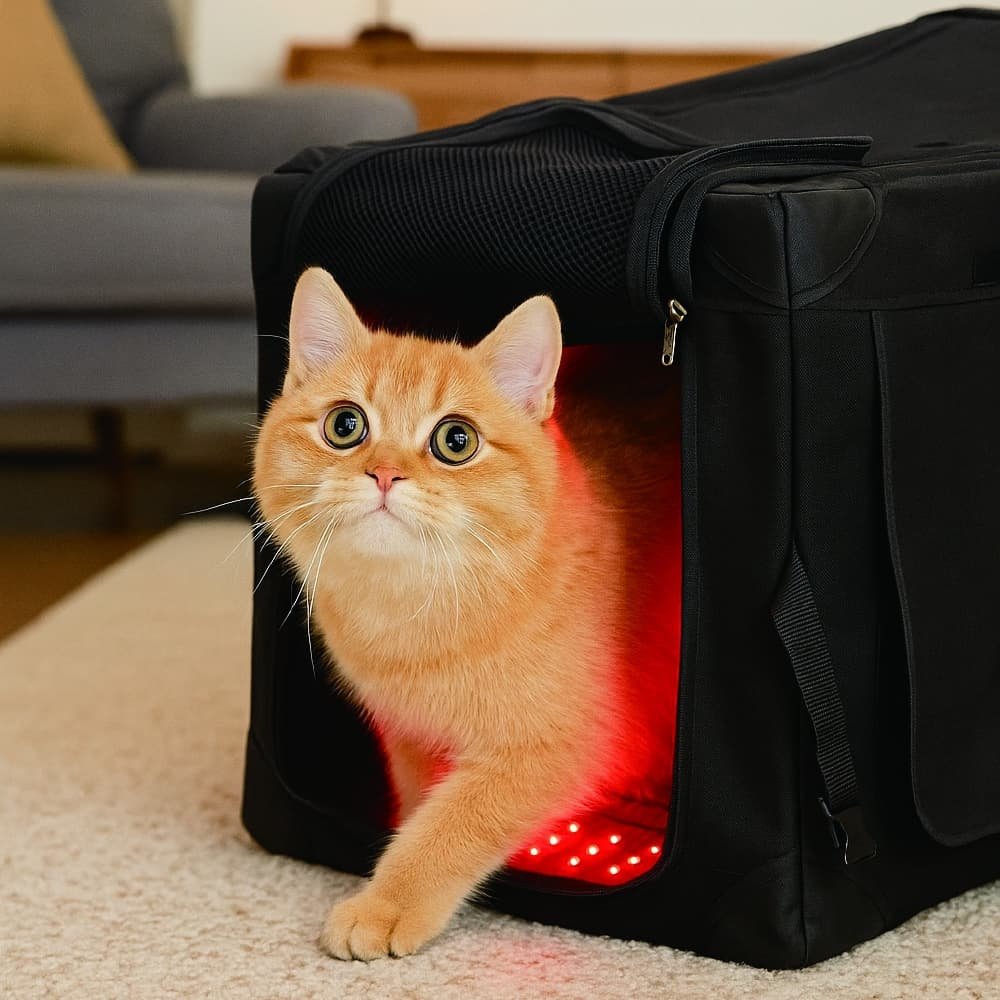
Os dispositivos de bem-estar humano são projetados tendo em mente o contato com a pele humana. Animais – principalmente gatos – lambem e mastigam as superfícies com as quais entram em contato. Materiais que são seguros para contato acidental com a pele humana podem não ser apropriados para contato oral repetido por animais. Almofadas de terapia de luz vermelha para animais de estimação devem ser fabricados com materiais não tóxicos, durável sob contato com animais, e seguro se o animal interagir com a superfície do dispositivo.
O BE400 usa tecido + TPU + PC + Construção em ABS – uma pilha de materiais projetada especificamente para contato seguro com animais de companhia.
A operação sem fio não é negociável
Um usuário de bem-estar humano pode ficar parado em frente a um painel conectado por uma sessão de 10 minutos. Um cão ou gato não pode ser tratado de forma confiável com um cordão saindo do dispositivo de tratamento. Qualquer cabo cria um risco de segurança (emaranhado de animais) e um problema prático (o movimento do animal puxa o dispositivo para fora da posição).
Sem fio genuíno, a operação sem fio – alimentada por um banco de energia recarregável em vez de um adaptador de parede – é um requisito funcional para dispositivos de terapia de luz vermelha para animais de estimação, não é uma atualização opcional.
Duração da sessão e desligamento automático
Os usuários humanos podem autogerenciar a duração da sessão. Os animais não podem. Um dispositivo de terapia de luz vermelha para animais de estimação precisa de um temporizador programável integrado com desligamento automático – o operador define a duração da sessão e o dispositivo para automaticamente, evitando o tratamento excessivo, mesmo que o animal se afaste da almofada.
O BE400 suporta sessões de 1 a 20 minutos em incrementos de 1 minuto com desligamento automático — projetado especificamente para a atenção variável de animais de companhia e o fluxo de trabalho de profissionais de cuidados com animais de estimação.
Isto também é importante do ponto de vista do controle de dose de PBM. Porque a duração e a repetição do tratamento fazem parte do conjunto de parâmetros de luz descrito na literatura de PBM, o tempo programável ajuda as marcas a oferecer uma experiência de usuário mais controlada e repetível, em vez de deixar a duração da sessão inteiramente para adivinhações.
Papel 3 — Arquitetura LED Tri-Chip: O diferencial técnico que as marcas podem possuir
O diferencial técnico mais significativo na especificação do BE400 é sua arquitetura Tri-Chip LED. Compreender o que isso significa – e por que é importante tanto para o desempenho do produto quanto para a narrativa da marca – é essencial para as marcas que avaliam esta plataforma.
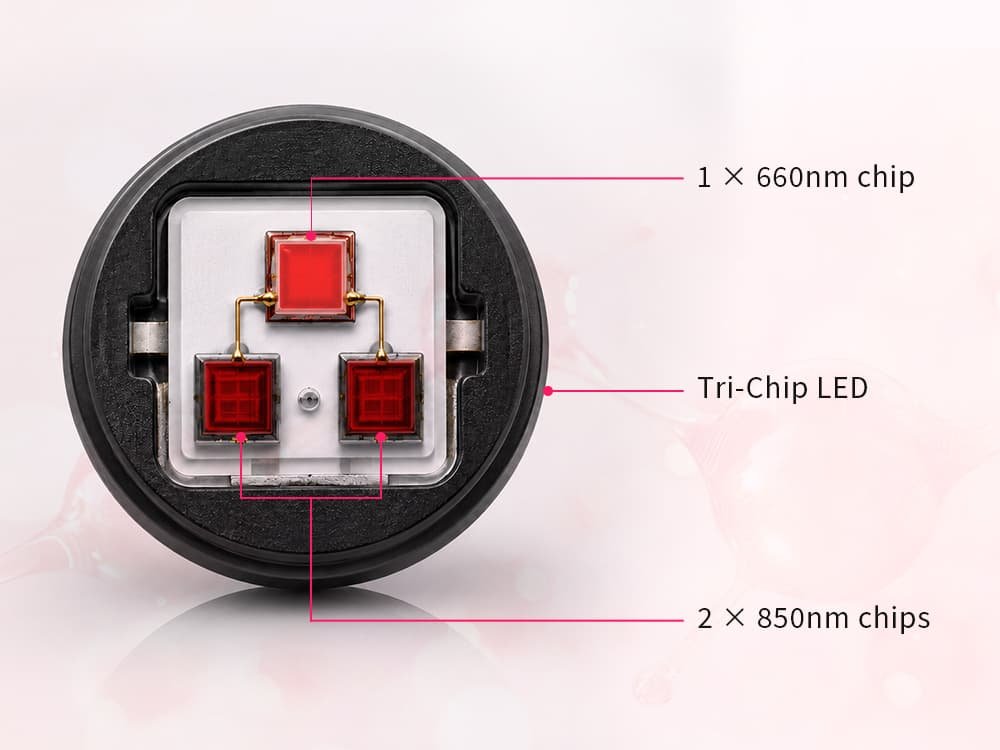
O que é um LED Tri-Chip?
Um LED de terapia de luz vermelha padrão contém um único chip que emite um comprimento de onda. A maioria dos produtos de terapia de luz vermelha para animais de estimação no mercado usa LEDs de chip único – um chip por caixa de LED.
O BE400 usa um design proprietário de LED Tri-Chip: três chips terapêuticos independentes embalados em cada caixa de LED.
Por LED:
- 1 × chip de 660nm (luz vermelha)
- 2 × chips de 850nm (infravermelho próximo)
Por dispositivo (405 LEDs):
- 405 × 3 fichas = 1,215 chips terapêuticos ativos total
Isso significa que o BE400 oferece 3x a densidade de chip terapêutico de um dispositivo comparável de chip único com a mesma contagem de LEDs — no mesmo formato compacto, pegada flexível.
Por que o 1:2 A proporção vermelho para NIR é importante
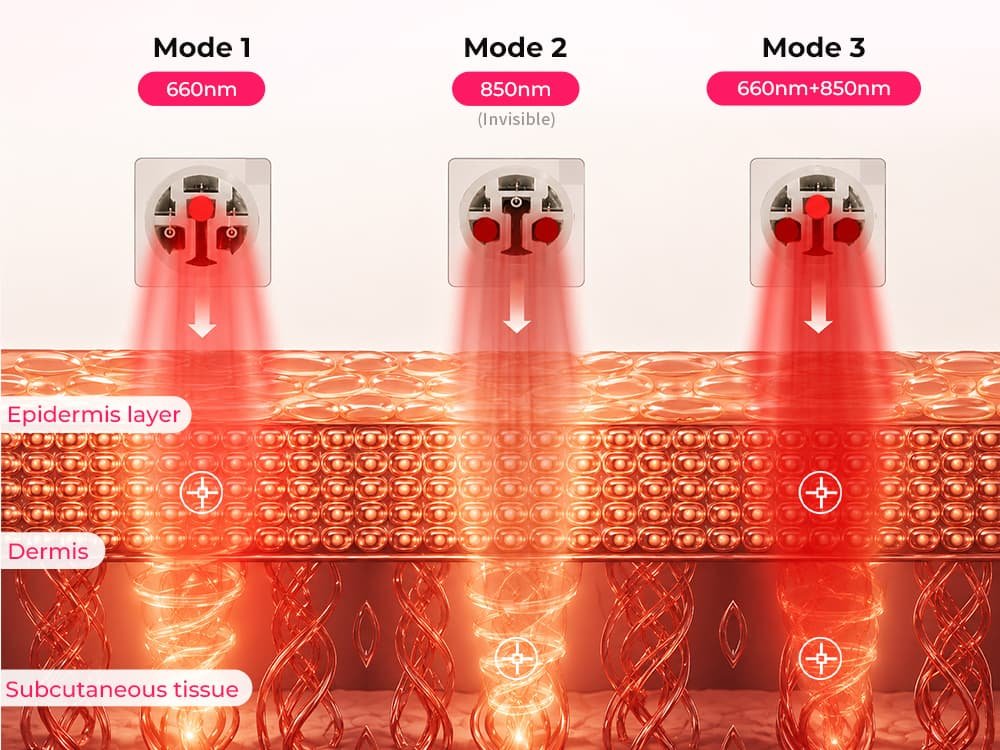
A arquitetura Tri-Chip do BE400 produz um built-in 1:2 relação entre luz vermelha e luz infravermelha próxima – um chip de 660 nm e dois chips de 850 nm por LED.
Esta proporção não é arbitrária. A abordagem clinicamente estabelecida para PBM de animais de companhia para condições que afetam tanto o tecido superficial (pele, casaco, folículos capilares) e tecido mais profundo (músculos, articulações, tecido conjuntivo) envolve a combinação de comprimentos de onda vermelhos que penetram na superfície com comprimentos de onda do infravermelho próximo que penetram mais profundamente. O 1:2 proporciona mais saída de infravermelho próximo – apropriada para alcançar os músculos e articulações de animais de pequeno a médio porte – enquanto mantém o componente de 660 nm para aplicações de superfície.
Para marcas, esta proporção integrada fornece um específico, reivindicação técnica defensável: o dispositivo foi projetado para os requisitos combinados de superfície e tecidos profundos de PBM de animais de companhia, não apenas configurado com dois comprimentos de onda para fins de marketing.
Valor da narrativa da marca
A arquitetura LED Tri-Chip oferece às marcas uma história técnica precisa e diferenciadora:
- Na cópia da listagem: “405 LEDs × 3 fichas terapêuticas = 1,215 chips ativos – 3× a densidade de chips dos dispositivos padrão de terapia de luz para animais de estimação”
- Na educação de produto: O 1:2 A proporção NIR/vermelho suporta aplicações superficiais e profundas em tecidos em uma única sessão
- Em apresentações de distribuidores: Uma arquitetura técnica verificável que os concorrentes não podem simplesmente reivindicar sem o mesmo design de componente subjacente
Este é exatamente o tipo de diferencial técnico que suporta preços premium, sobrevive ao escrutínio do comprador, e cria uma separação significativa dos concorrentes de especificações mais baixas.
Papel 4 — Design de comprimento de onda duplo: O que 660 nm e 850 nm fazem para cães e gatos
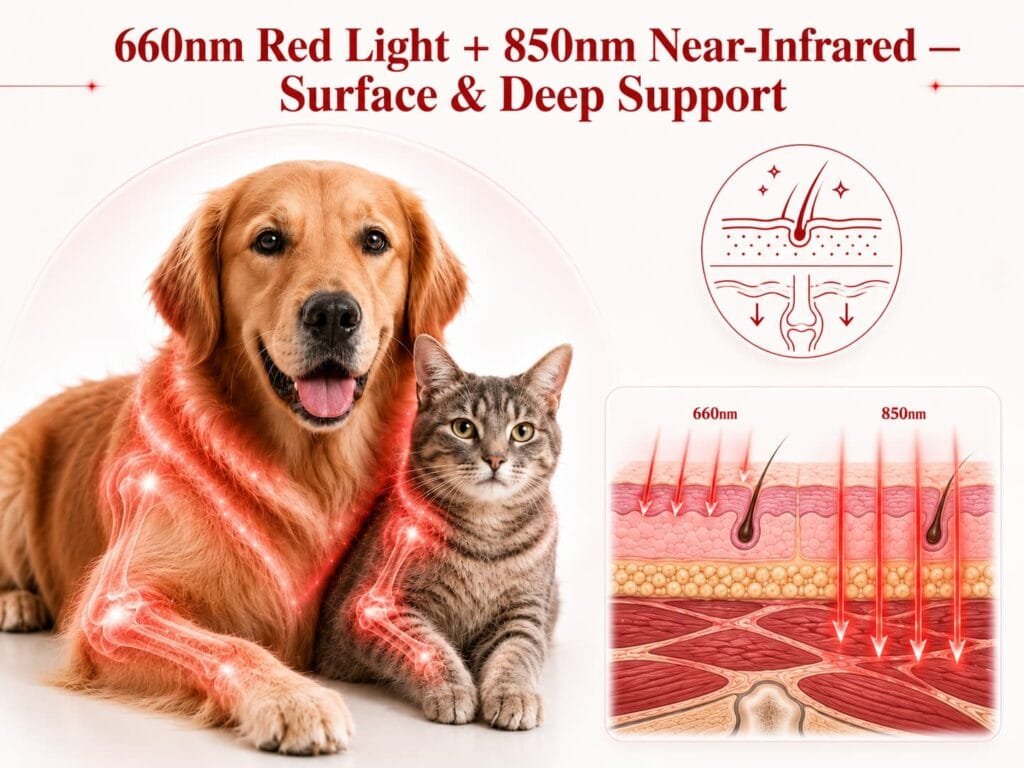
A configuração de comprimento de onda duplo do BE400 – vermelho de 660 nm e infravermelho próximo de 850 nm – aborda duas camadas de tecido distintas em animais de companhia.
Do ponto de vista da comunicação científica, esta seção deve ser lida como uma justificativa para o comprimento de onda, e não como uma afirmação médica. O 2023 a revisão veterinária do PBM acima apóia a relevância do PBM vermelho e infravermelho próximo em contextos veterinários, enquanto um 2018 revisão no Jornal de Óptica Biomédica enfatiza que os resultados do PBM dependem de vários parâmetros - incluindo comprimento de onda, energia, fluência, poder, irradiância, modo de pulso, duração do tratamento, e repetição - não apenas comprimento de onda. Para compradores OEM, isso significa que a seleção do comprimento de onda deve ser avaliada juntamente com o layout do LED, irradiância, tempo da sessão, controle térmico, e operação repetível do dispositivo.
660nm Luz Vermelha: Aplicações de superfície
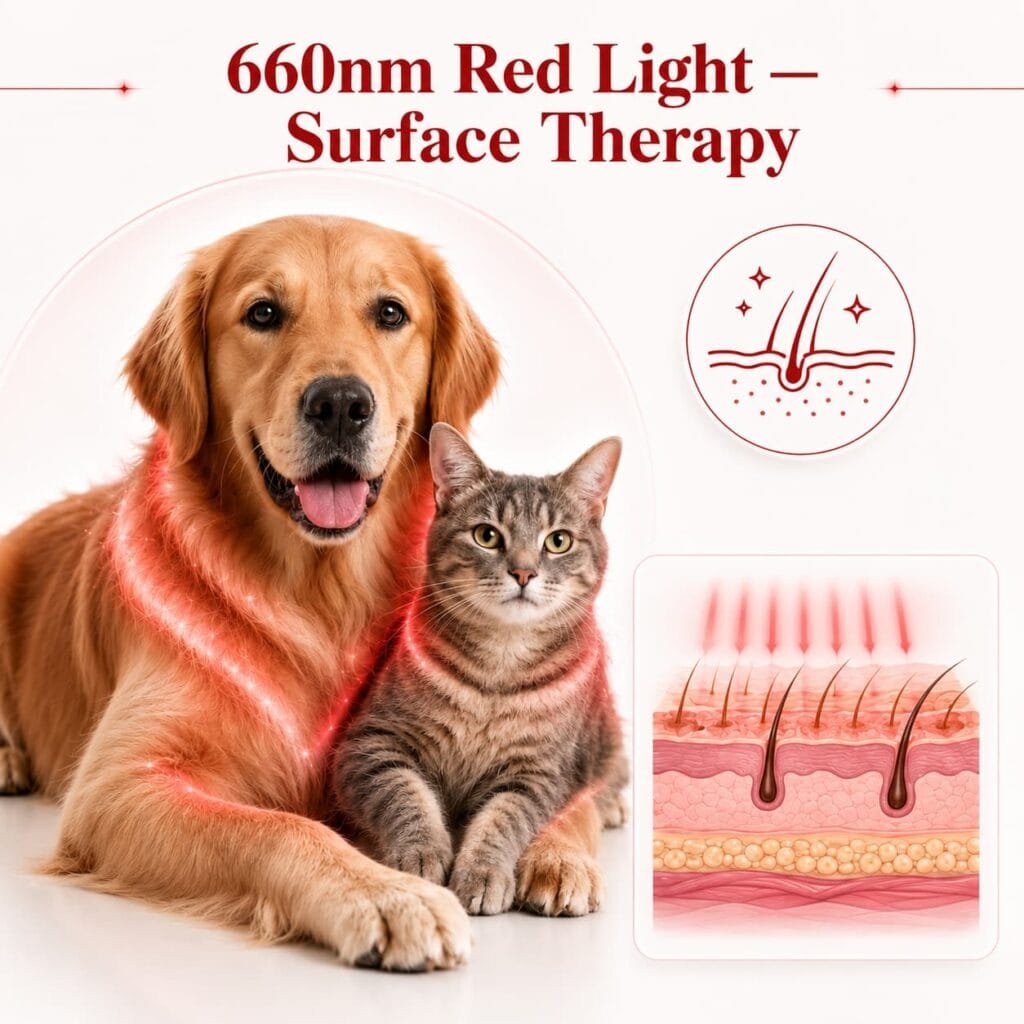
A luz vermelha a 660 nm é absorvida principalmente nas camadas superficiais dos tecidos – pele, folículos capilares, e a derme. Para cães e gatos, este comprimento de onda é particularmente relevante porque:
- Cães e gatos têm pele mais fina que a dos humanos, tornando a terapia de luz de nível superficial mais eficiente em profundidades rasas
- Pelagens densas em muitas raças criam condições no nível da superfície que respondem a 660nm – pontos quentes, dermatite, e ressecamento da pele são problemas comuns no mercado de animais de companhia
- A cicatrização de feridas e a recuperação de abrasões são aplicações frequentes tanto em contextos de cuidados domésticos de animais de estimação como de clínicas veterinárias
Para marcas de bem-estar para animais de estimação que posicionam um produto para a saúde da pele, condição do casaco, e recuperação ao nível da superfície, 660nm é o comprimento de onda com relevância de aplicação mais direta.
850nm infravermelho próximo: Aplicações em tecidos profundos
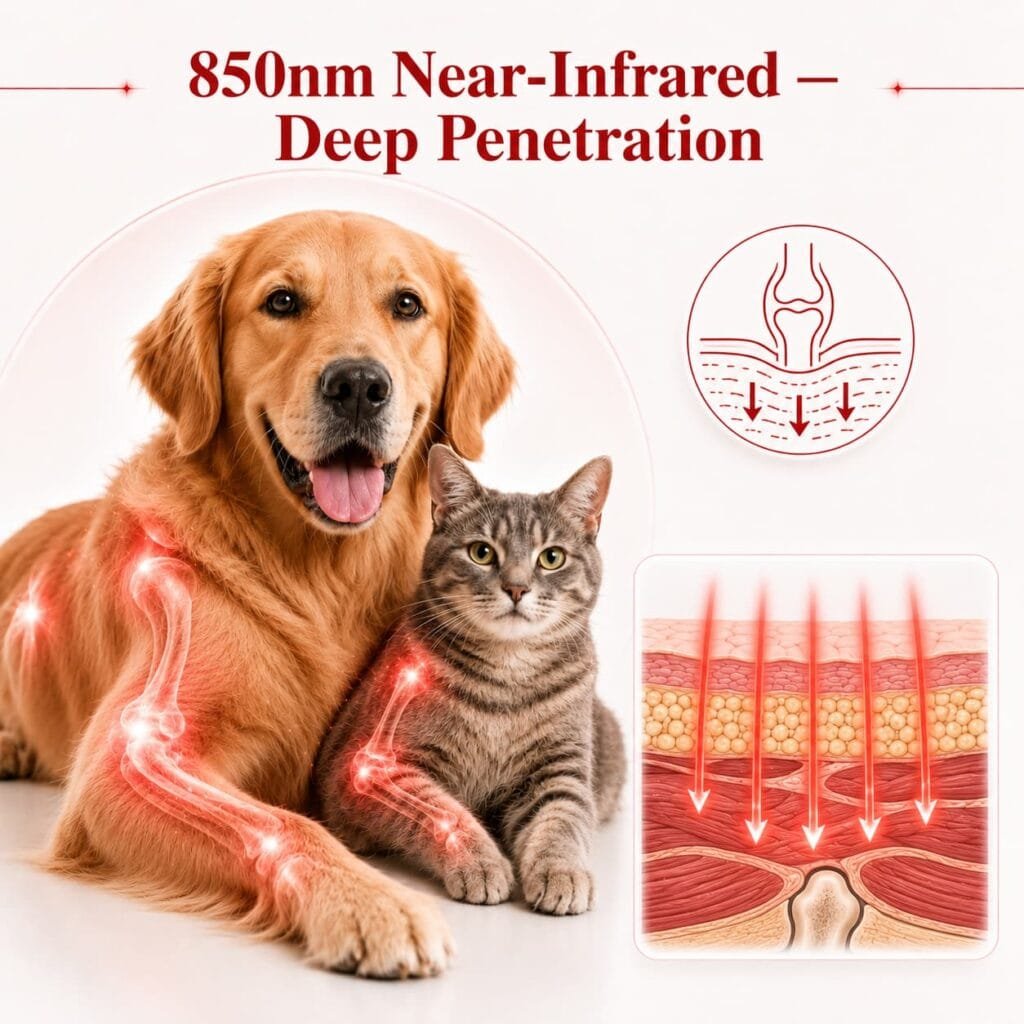
O infravermelho próximo a 850 nm penetra 2–3 cm no tecido – atingindo os músculos, articulações, e tecido conjuntivo abaixo da superfície da pele. Para animais de companhia, este comprimento de onda aborda:
- Mobilidade articular e conforto – displasia da anca, displasia do cotovelo, e problemas nas articulações do joelho são comuns em raças de médio a grande porte; 850nm atinge as estruturas articulares envolvidas
- Recuperação muscular – cães ativos (raças de trabalho, cães de esporte, cães de agilidade) experimentar fadiga muscular que responde ao PBM do infravermelho próximo
- Reabilitação pós-cirúrgica — a recuperação de tecidos moles após procedimentos ortopédicos é uma aplicação veterinária estabelecida de PBM
- Gerenciamento de conforto de animais de estimação sênior — o desconforto crônico em cães e gatos idosos é uma das maiores necessidades não atendidas no mercado de bem-estar de animais de companhia
Com dois chips de 850 nm por LED — o 1:2 proporção discutida acima – o BE400 oferece saída concentrada de infravermelho próximo que suporta aplicações de tecidos profundos sem a necessidade de um dispositivo ou protocolo separado.
Personalização de comprimento de onda para programas OEM
Para marcas com requisitos de posicionamento específicos, a configuração do comprimento de onda BE400 pode ser personalizada. As opções de comprimento de onda disponíveis incluem: 415nm, 460nm, 590nm, 633nm, 660nm, 810nm, 830nm, 850nm, 1064nm, e 1072 nm.
A personalização do comprimento de onda permite que as marcas criem uma especificação de produto que corresponda à sua aplicação alvo – por exemplo, uma marca com foco na saúde da pele e da pelagem pode priorizar 630nm + 660nm, enquanto uma marca focada em aplicações articulares e musculares pode solicitar uma densidade maior de 850 nm.
Papel 5 – Projeto sem fio: Por que a operação sem fio é uma especificação essencial, Não é um recurso bônus
O BE400 é alimentado por um banco de energia recarregável externo (15,000Mah), carregado via USB-C, sem cabo de parede durante a operação.
Este design não é uma atualização premium. É uma necessidade funcional que decorre diretamente dos requisitos do uso de animais de companhia..
O caso de segurança
Um cabo de alimentação saindo de um dispositivo de tratamento cria um risco genuíno de segurança quando usado com cães ou gatos. Os animais podem mastigar o cordão, ficar enredado nele, ou puxe-o de forma que danifique o dispositivo ou a conexão. Para usuários profissionais em clínicas veterinárias e salões de beleza — onde o dispositivo pode ser usado com vários animais ao longo do dia — o gerenciamento do cordão cria problemas operacionais e de segurança.
Um dispositivo totalmente sem fio elimina totalmente esta categoria de risco.
O caso da flexibilidade
Cães e gatos não cooperam com posições fixas de tratamento. A capacidade de colocar a almofada BE400 em qualquer lugar — em uma mesa de tratamento, no chão, enrolado em um membro, ou posicionado em um animal em repouso - sem ser limitado pelo comprimento do cabo ou localização da saída é essencial para uso prático em contextos domésticos e profissionais.
Para praticantes de terapia móvel com animais de estimação, operação sem fio significa que o dispositivo pode ser usado em qualquer ambiente: a casa do cliente, uma clínica veterinária, um salão de beleza, um evento ao ar livre, ou um local de competição.
Tempo de execução do banco de potência
O banco de potência de 15.000 mAh do BE400 suporta múltiplas sessões completas de tratamento por carga – normalmente de 8 a 12 sessões de 10 a 15 minutos, dependendo das configurações de brilho. Para usuários profissionais que executam várias sessões de cliente por dia, isso significa que o dispositivo pode operar durante um dia inteiro de trabalho sem exigir recarga entre clientes.
Papel 6 – Opções de personalização OEM para marcas de bem-estar para animais de estimação
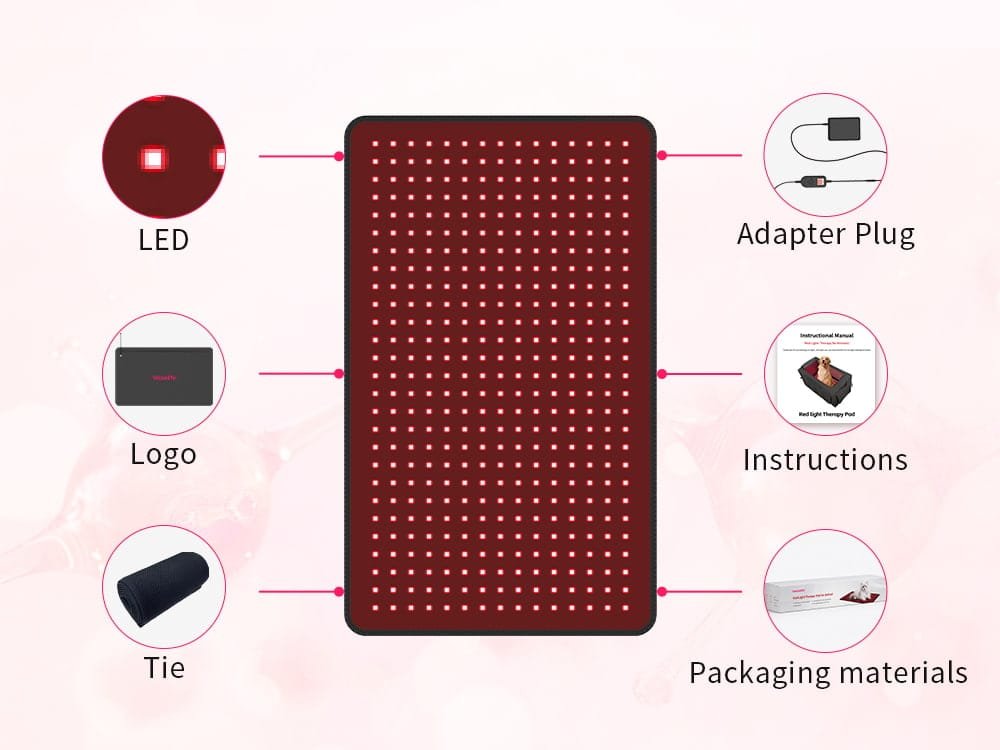
O BE400 foi projetado como uma plataforma pronta para OEM/ODM – não um produto acabado ao qual as marcas adicionam um logotipo, mas uma plataforma configurável que suporta diferenciação genuína da marca.
Personalização da marca
Disponível para todos os programas OEM com MOQ qualificado:
- Logotipo personalizado (serigrafia, gravação a laser, ou impresso)
- Cor e material personalizados (Tecidos e acabamentos combinados com Pantone)
- Embalagem de varejo personalizada (design de caixa de cores, inserções, conjuntos de presentes)
- Manual do usuário personalizado e guia de início rápido
- Bolsa de transporte personalizada ou bolsa de armazenamento de marca
Personalização Funcional
Para marcas que exigem diferenciação de produtos além da marca:
- Dimensões de almofada personalizadas (para tamanhos de animais específicos ou mercados-alvo)
- Contagem de LED personalizada e densidade de layout
- Configuração de comprimento de onda personalizada (das opções de espectro disponíveis)
- UI do controlador personalizado (modos, níveis de intensidade, configurações do temporizador)
- Configuração de pacote de acessórios personalizado
Integração de aplicativos
Para marcas que estão construindo um ecossistema conectado de produtos de bem-estar para animais de estimação, BE400 suporta integração opcional de aplicativos – permitindo o controle do smartphone, registro de sessão, e experiência digital de marca como parte do produto.
Suporte à documentação de conformidade
BE400 carrega CE, FCC, e certificações RoHS. Para parceiros OEM que visam mercados específicos, A equipe de conformidade da Wakelife Beauty apoia a preparação de documentação para requisitos específicos do mercado.
Papel 7 — BE400 x BE700: Escolhendo a plataforma certa para o seu mercado-alvo
O BE400 e o BE700 são construídos com base na mesma arquitetura LED Tri-Chip e filosofia de design de comprimento de onda duplo - mas atendem segmentos de mercado fundamentalmente diferentes.
- Seus animais-alvo são cães de pequeno a médio porte (sob 25 kg), gatos de todos os tamanhos, e pequenos animais de companhia (coelhos, furões)
- Seu canal principal é Bem-estar para animais de estimação D2C, venda no mercado, ou fornecimento de clínica veterinária para animais de companhia
- Seu produto precisa ser amigável para uso doméstico — acessível a donos de animais de estimação sem formação profissional
- O posicionamento da sua marca está no bem-estar dos animais de companhia segmento em vez de veterinário profissional de equinos ou animais de grande porte
- Seus animais-alvo são cavalos, cães grandes (sobre 25 kg), raças de trabalho, e raças gigantes
- Seus alvos de canal equoterapia, reabilitação de cavalos esportivos, clínicas veterinárias de grandes animais, ou reabilitação canina profissional
- Você precisa 920 × Cobertura de 520 mm — a área de superfície necessária para tratar grupos musculares equinos em uma única sessão
- Sua marca está posicionada no mercado profissional de bem-estar veterinário ou equino em vez de consumidor de animais de companhia
Para marcas com capacidade para transportar ambos os produtos, BE400 e BE700 formam uma linha de produtos naturais: a plataforma para animais de companhia e a plataforma profissional para animais de grande porte, cobrindo toda a gama do mercado de terapia de luz vermelha para animais de estimação, desde uso doméstico até clínica equina.
Conclusão: A categoria Pet Red Light Therapy está pronta para marcas sérias
O mercado de bem-estar para animais de estimação atingiu o estágio em que produtos premium, produtos tecnicamente diferenciados superam consistentemente as alternativas genéricas – tanto nas vendas no varejo quanto nos canais de fornecimento profissional que impulsionam o valor da marca no longo prazo.
UM dispositivo de terapia de luz vermelha para animais de estimação com uma história técnica confiável - arquitetura Tri-Chip LED que oferece 1,215 chips terapêuticos, 1:2 Proporção NIR/vermelho para terapia combinada de superfície e tecidos profundos, operação sem fio genuína, construção flexível e segura para animais de companhia - dá à marca a base para competir em um posicionamento premium, em vez de commodity.
O BE400 foi projetado para ser essa base – com profundidade de personalização OEM que permite às marcas construir uma identidade de produto que vai muito além de um logotipo em um dispositivo genérico.
Leitura Relacionada
- Terapia de luz vermelha profissional para cães e equinos BE700: Um guia de fornecimento para marcas veterinárias e equinas — A plataforma profissional de animais de grande porte para equoterapia e aplicações veterinárias de grandes raças
- Como escolher um painel de terapia de luz vermelha para sua marca: 6 Critérios que realmente importam — A estrutura completa de sourcing B2B para produtos de painel de uso humano
- Processo de desenvolvimento de dispositivo de terapia de luz vermelha: Lições das falhas do mundo real — Como o desenvolvimento estruturado de OEM protege seu investimento em produtos
Comece seu programa OEM BE400
Se você estiver construindo ou expandindo uma linha de produtos de terapia de luz vermelha para animais de estimação, A equipe OEM da Wakelife Beauty pode ajudá-lo:
- Confirme se BE400 ou BE700 é a plataforma certa para seu animal-alvo e segmento de mercado
- Revise as opções de personalização de comprimento de onda para o posicionamento do seu produto
- Discuta a marca, embalagem, e personalização funcional para seu programa OEM
- Fornece CE, FCC, e documentação RoHS para o seu mercado-alvo
- Solicite amostras e um orçamento específico do programa
Compartilhe o seguinte quando entrar em contato:
- Animal alvo (cães / gatos / pequenos animais / misturado)
- Canal alvo (D2C / mercado / veterinário / asseio / terapia móvel)
- Mercado-alvo e requisitos de conformidade
- Volume estimado do programa
- Requisitos de personalização
👉 Veja as especificações completas do BE400 e consultas do OEM: https://wakelifebeauty.com/product/be400-pet-red-light-therapy/
👉 Veja BE700 para animais de grande porte e equinos: https://wakelifebeauty.com/product/be700-pet-red-light-therapy/
👉 Explore nossa linha de terapia de luz vermelha para animais de estimação: https://wakelifebeauty.com/pet-red-light-therapy/