TL;DR para compradores
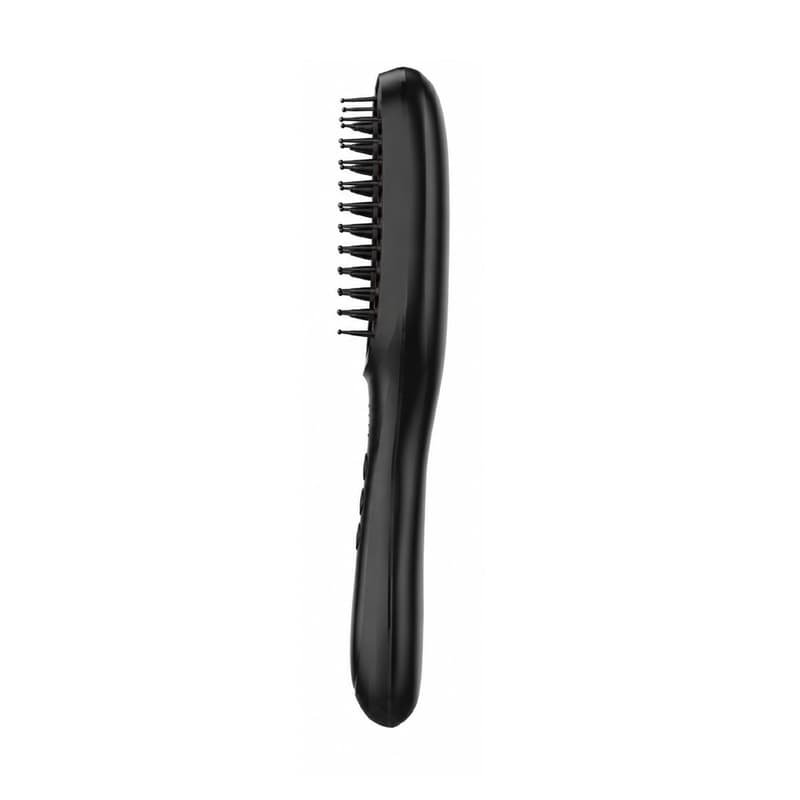
- O HT01 é mais adequado para marcas que desejam um portátil, SKU demonstrável de cuidados com o cabelo e couro cabeludo - não um dispositivo mãos-livres para couro cabeludo inteiro. Seu formato de pente portátil suporta a colocação seção por seção, mas exige que o usuário o mova pelo cabelo.
- A configuração padrão combina 14 × nominal 655 laser emissor de superfície de cavidade vertical nm (VCSEL) chips, 14 × 660 nm LEDs vermelhos e 14 × 460 LEDs azuis nm em 14 módulos tri-chip, mais EMS de três níveis, vibração fixa e um aplicador de soro removível.
- O 5 O valor de mW é a potência de saída óptica por chip VCSEL. Não é irradiância, fluência, dose total do couro cabeludo ou uma classificação de laser de dispositivo acabado.
- Pesquisa publicada sobre outros 655 dispositivos de pente a laser e capacete nm fornecem contexto de categoria, mas não estabelece o desempenho clínico específico do HT01 nem justifica a cópia do protocolo de outro dispositivo.
- The comb category splits into two design schools—pure-laser (laser diodes only) and multi-function (laser + LIDERADO + EMS/serum). School choice is a positioning and verification decision, not a proven efficacy ranking.
- Antes de aprovar uma amostra ou declaração de marketing, solicite as condições exatas de teste óptico da configuração, classificação a laser de produto acabado, rótulos, instruções e documentos do mercado-alvo.
O que é HT01 – e o que não é?
HT01 é uma plataforma portátil OEM/ODM para cuidados com o cabelo e couro cabeludo que combina luz, EMS, vibração e aplicação de soro em um único dispositivo. A página do produto atual não identifica um HT01 510(k) numerar ou publicar resultados clínicos específicos do HT01, irradiância do dispositivo acabado ou um relatório de classificação do laser. Os compradores devem tratar cada item como não verificado até que o registro ou relatório do modelo exato seja fornecido.
Essa distinção é importante porque um comprador está tomando duas decisões ao mesmo tempo:
- Será que o formato de pente e conjunto de recursos adequar-se à linha de produtos planejada?
- Será que o configuração e documentação finalizadas exatas apoiar o mercado-alvo e reivindicações planejadas?
A primeira decisão pode ser tomada a partir das especificações do produto e do manuseio da amostra. A segunda exige relatórios específicos do modelo e revisão regulatória. Um comprimento de onda, um ponto de dados de componente ou pesquisa em outro dispositivo não pode preencher essa lacuna.
O actual Página do produto HT01 posiciona o dispositivo para beleza, bem-estar do cabelo, cuidado do couro cabeludo, canais de distribuição e de marca própria. Este guia usa a frase de categoria de mercado “pente de crescimento de cabelo a laser” para contexto de fornecimento; não é uma afirmação de que o HT01 tenha uma indicação autorizada de crescimento capilar. Nos Estados Unidos, o registro OAP da FDA define o laser, comb, hair categoria sobre a promoção do crescimento do cabelo na alopecia androgênica. Um nome de produto, um rótulo ou anúncio que use a finalidade pretendida precisa, portanto, de um modelo exato de via regulatória e de revisão de reivindicações – e não apenas de uma palavra-chave de categoria ou de uma declaração do fornecedor.
Publicado 655 nm Pesquisa de crescimento capilar prova que HT01 funciona?
Não. Publicado 655 A pesquisa nm apoia a categoria mais ampla de dispositivos, mas não prova o desempenho de um modelo exato não testado.
UM 2021 revisão sistemática e meta-análise de dispositivos LLLT de uso doméstico reuniram sete ensaios clínicos randomizados duplo-cegos e encontraram maior melhoria na densidade do cabelo com os dispositivos estudados do que com o tratamento simulado. A revisão avaliou produtos nomeados para uso doméstico selecionados pelos EUA. Status de mercado da FDA – não uma categoria de comprimento de onda intercambiável – portanto, os resultados permanecem vinculados às configurações estudadas. Incluía formatos de pente e capacete, mas também relatou heterogeneidade significativa, curtos períodos de acompanhamento e nenhuma comparação direta entre dispositivos.
Um separado multicêntrico, randomizado, estudo controlado por simulação avaliaram modelos LaserComb específicos usando 655 nm ou combinado 635/655 feixes de laser nm. Suporta um ponto mais estreito: dispositivos de laser vermelho em formato de pente foram estudados em pessoas com queda de cabelo padrão. Não mostra que qualquer produto com comprimento de onda semelhante, a classificação do diodo ou o formato do pente reproduzirão esses resultados. O artigo relata que o fabricante financiou parcialmente o estudo e forneceu dispositivos e equipamentos ativos/simulados, incluindo o sistema de imagem digital. Também divulga honorários, honorários de consultoria ou participação envolvendo dois autores e uma bolsa para um departamento universitário para parte do estudo.
Para uma decisão de fornecimento, use a pesquisa desta forma:
| Camada de evidências | O que isso pode dizer a um comprador | O que não pode dizer a um comprador |
|---|---|---|
| Pesquisa de categoria publicada | Alguns dispositivos específicos de luz vermelha/laser de baixo nível e formatos de pente têm evidências humanas | HT01 tem a mesma eficácia, dose ou perfil de segurança |
| Especificações do produto HT01 | Quais componentes, comprimentos de onda, modos e recursos do usuário estão na configuração padrão | Quanta luz atinge o couro cabeludo ou que resultado clínico se segue |
| Relatórios de dispositivos finalizados HT01 | Irradiância, emissão acessível, classificação e configuração testada - se fornecido | Autorização automática para cada mercado ou reivindicação de marketing |
| Autorização de mercado de modelo exato | Qual é o modelo nomeado, titular e o uso pretendido podem apoiar nesse mercado | Outros modelos, configurações modificadas ou reivindicações mais amplas |
Regra do comprador: comprimento de onda semelhante é uma razão para investigar um produto, não é um substituto para evidências de dispositivos exatos.
Pure-Laser or Multi-Function: Which Comb Design School Fits Your Brand?
The laser comb category has two distinct design schools: combs built around laser diodes only, and comb platforms that combine lasers with LEDs and add functions such as EMS or serum application. The split is a positioning and verification decision—published evidence does not rank one school above the other.
| Pure-laser school | Multi-function school | |
|---|---|---|
| Light sources | Laser diodes only; LEDs excluded by design | Laser (or VCSEL) combined with red/blue LEDs, often in shared modules |
| Added functions | Combing action only | May add EMS, vibração, serum/liquid application and selectable light modes |
| Story the brand buys | A single-technology “100% laser” claim and a simple component narrative | A scalp-care routine: modos, sensory features and bundle potential |
| Category anchor | HairMax (marketed Ultima and Actonis lines) | HT01, the device reviewed in this guide |
The pure-laser school states its exclusion of LEDs explicitly. HairMax’s ULTIMA 12 página do produto lists “12 medical grade lasers (No LEDs),” describes an eight-minute session three days per week, and its FAQ explains: “We use 100% laser light technology for maximum follicle stimulation (unlike brands that mix in LEDs).” The same brand describes itself as “the first FDA-cleared laser hair growth brand.” These are the manufacturer’s own marketing statements, quoted here as category positioning—not as an endorsement and not as evidence for any other device.
FDA records add a verification lesson for anyone repeating such statements: marketing names and FDA record names diverge. HairMax devices appear in the FDA 510(k) banco de dados under product code OAP with record names such as “HAIRMAX LASERCOMB” (K060305) and “HAIRMAX DUAL 12” (K111714)—neither matches the model names on the current product pages. The sample-verification matrix later in this guide is what pins a marketing model to an exact record before any clearance claim is repeated.
The multi-function school trades that single-technology story for routine breadth. HT01 is an example: 14 tri-chip modules pairing a 655 nm VCSEL with 660 nm vermelho e 460 LEDs azuis nm, três modos de luz selecionáveis, EMS, vibration and a detachable serum applicator. That architecture supports scalp-care positioning, in-store demonstration and feature-tiered product lines—while every added subsystem carries its own verification burden. Note that the comb-format clinical evidence reviewed earlier in this guide studied specific HairMax LaserComb models—laser-only devices—so the existing human-comb literature maps more directly onto the pure-laser school’s design.
How the school changes what a buyer verifies:
| Verify first | Pure-laser school | Multi-function school |
|---|---|---|
| Light sources | Laser diode count, per-diode output and finished-device laser class | Each subsystem separately: laser/VCSEL output plus every LED wavelength and mode |
| Design claims | Any “no LED” / “100% laser” statement matched against the BOM and labeling | Mode names and combination claims matched to tested configurations |
| Extra subsystems | None expected—confirm no hidden LED modes | EMS electrical parameters, vibration and liquid/serum compatibility and cleaning |
| Document scope | Classificação a laser, labels and market records | All of the laser items plus LED, EMS and applicator documentation |
Which school fits which project: a pure-laser design suits brands whose claims plan follows the established laser-comb category precedents and whose channel sells a focused “laser comb” message. A multi-function design suits brands building scalp-care routines for beauty and wellness channels, needing retail differentiation or laddering a product line—with the capacity to verify each added subsystem.
Two boundaries keep this comparison honest. No published head-to-head study compares the two schools’ hair-growth outcomes. And a design school is not a regulatory status: “pure laser” does not mean cleared, and “multi-function” does not mean unproven—each exact model still needs its own records.
O que realmente significa “5 mW por chip VCSEL”?
Significa a potência nominal de saída óptica de um emissor VCSEL; não descreve a exposição recebida por um centímetro quadrado de couro cabeludo.
Esses quatro termos devem permanecer separados em uma RFQ e em uma cópia voltada para o consumidor:
| Métrica | O que isso significa | Status do HT01 conforme documentado atualmente |
|---|---|---|
| Potência de saída óptica (mW) | Potência luminosa emitida por uma fonte individual ou conjunto definido | 5 mW por chip VCSEL |
| Irradiância (MW/cm²) | Potência chegando por unidade de área sob uma distância determinada, modo e método de medição | Não fornecido |
| Exposição radiante / fluência (J/cm²) | Energia entregue por unidade de área durante um tempo de exposição determinado | Não pode ser calculado a partir das informações atuais |
| Aula de laser | Classificação de perigo do produto acabado com base nas emissões acessíveis e nas condições de teste especificadas | Deve ser confirmado por um relatório específico do modelo e revisão de rotulagem |
Não reetiquete 5 mW como 5 mW/cm². Não multiplique 14 × 5 mW e chame o resultado de “potência do couro cabeludo” ou “dose”. As fontes operam dentro de módulos e modos, enquanto a geometria do feixe, ciclo de trabalho, distância, obstrução capilar, o movimento e a abertura de medição afetam o que um instrumento de teste – ou o couro cabeludo – recebe.
A classificação do laser também é uma questão de produto acabado. O Visão geral da segurança do laser da FDA explica que os produtos a laser estão sujeitos a controles de engenharia baseados em classe e comunicação de risco. IEC 60825-1 fornece a estrutura de classificação de equipamentos para produtos a laser. A classificação do componente por si só não estabelece a classe de produto HT01.
Para um EUA. projeto, controles de radiação de produtos a laser e liberação de dispositivos médicos são verificações separadas. O FDA Perguntas frequentes sobre o mercado de produtos emissores de radiação explica que os relatórios de produtos aplicáveis devem ser enviados antes dos EUA. comércio; um número de acesso confirma o recebimento, mas não é uma aprovação. Afirma também que os importadores de produtos sujeitos a um padrão de desempenho da FDA enviam o Formulário FDA 2877 e pode fornecer o número de acesso de um produto relatado anteriormente. Sob Aviso de laser 56, A FDA declara que não pretende impor certos requisitos em 21 CFR 1040.10 e 1040.11 para fabricantes que certificam a IEC relevante 60825-1 Edição 3 e IEC 60601-2-22 Edição 3.1 disposições identificadas no aviso. Nenhum desses registros substitui um documento aplicável 510(k), e um 510(k) não substitui os controles de radiação de produtos a laser.
O que solicitar:
- o relatório óptico do dispositivo acabado e o relatório de emissão/classificação acessível;
- se 5 mW é medido no emissor ou após a óptica, incluindo corrente operacional, temperatura e tolerância;
- o modo ativo, instrumento, método, abertura, distância entre o emissor e o plano de medição e irradiância em um plano de uso definido, como a ponta do dente/plano de contato, quando aplicável;
- rótulos finais, controles e avisos de exposição ocular, instruções do usuário e registros de relatórios do mercado-alvo para a configuração cotada.
O que os três modos de luz HT01 adicionam?
Os três modos adicionam hardware configurável e opções de história do produto, mas cada canal precisa de seu próprio limite de evidência.
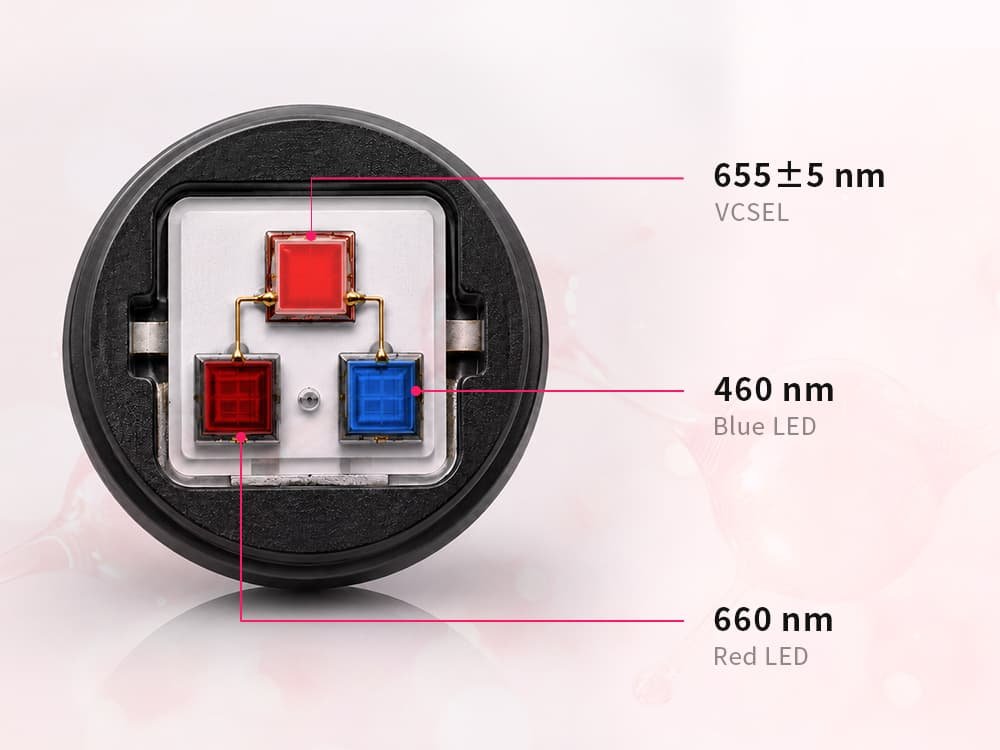
A configuração padrão do HT01 usa 14 módulos compactos de três chips, para 42 chips emissores de luz no total:
| Modo | Fontes de luz ativas | Descrição defensável do produto | Evite sem evidências diretas |
|---|---|---|---|
| Modo 1 | 655 nm VCSEL + 660 nm LED vermelho | Modo combinado VCSEL e LED vermelho | Combinação clinicamente otimizada; crescimento do cabelo mais rápido ou mais profundo |
| Modo 2 | 660 nm LED vermelho | Modo de cuidado do couro cabeludo com LED vermelho | Dose ou resultado comprovado do tratamento HT01 |
| Modo 3 | 460 nm LED azul | Modo de cuidado do couro cabeludo com LED azul | Antibacteriano, anticaspa, alegações de tratamento de acne ou crescimento de cabelo |
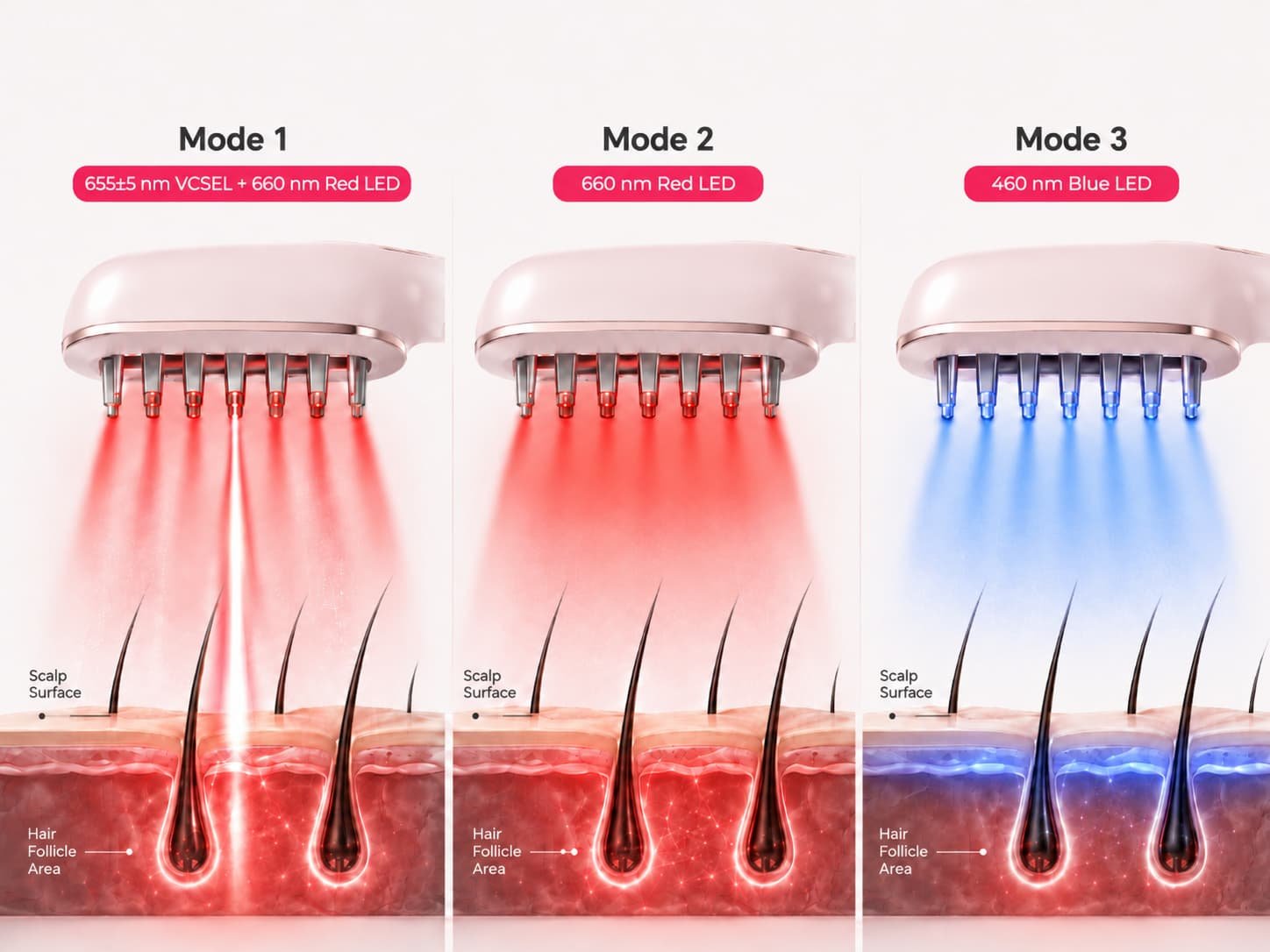
O 655 o valor nm é o comprimento de onda nominal do VCSEL; a especificação técnica do produto indica 655±5nm. O LED vermelho está 660 nm, e o LED azul é 460 nm. Os três tipos de chips estão presentes em um 1:1:1 razão.
A luz azul merece uma contenção especial. UM 2017 estudo laboratorial do folículo capilar humano relatou que 453 nm luz azul em 3.2 Anágeno prolongado J/cm² em folículos isolados ex vivo. Esta é uma evidência mecanicista inicial – não um ensaio clínico em humanos – e o comprimento de onda, dose e protocolo de exposição não são um estudo de validação HT01. Até que existam evidências diretas, o 460 O modo nm deve ser descrito como uma opção de hardware, em vez de uma função comprovada de crescimento capilar ou tratamento do couro cabeludo.
Para os canais de LED vermelho e azul, uma avaliação de segurança fotobiológica aplicável pode usar IEC 62471, que abrange fontes incoerentes, incluindo LEDs, mas exclui lasers. Os compradores devem confirmar o padrão de produto aplicável, edição, modos testados, condições de exposição e modelo exato com o laboratório, em vez de tratar um certificado genérico de LED como prova.
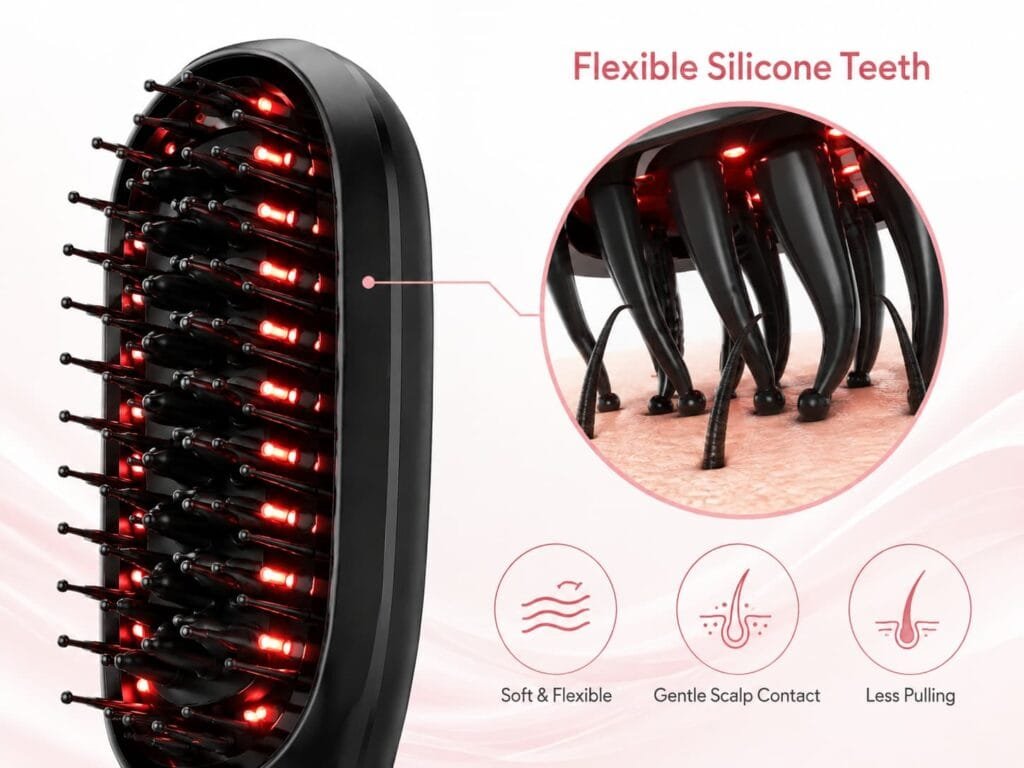
A mesma disciplina se aplica ao EMS, vibração e uso de soro. HT01 fornece três níveis de intensidade EMS com um estado desligado independente, uma frequência declarada de 5–10 kHz, uma função de vibração de intensidade fixa e um aplicador magnético destacável. Esses são recursos de experiência do usuário e agrupamento de produtos. Eles não devem ser traduzidos em melhor absorção, resultados de circulação ou crescimento capilar sem testes diretos. A frequência por si só não define a saída elétrica: solicitar se é uma frequência portadora ou de repetição de pulso, junto com a forma de onda, limites de tensão/corrente, configuração eletrodo/contato, avaliação de risco e as advertências e contra-indicações apoiadas pelo projeto final.
Quando um formato de pente se adapta à linha de produtos de uma marca?
Escolha um pente quando for portabilidade, o corte manual e uma rotina demonstrável são mais importantes do que a cobertura total do couro cabeludo com as mãos livres.
Ao contrário de um boné ou capacete, um pente portátil não fixa as fontes de luz em todo o couro cabeludo durante toda a sessão. O usuário controla o posicionamento, velocidade, sobreposição e contato. Isso cria uma vantagem comercial e uma questão de engenharia.
Um pente é uma solução prática quando:
- a marca quer um SKU compacto e mais fácil de exibir, demonstrar e enviar do que um capacete;
- a rotina pretendida utiliza seccionamento manual ou atenção a áreas selecionadas do couro cabeludo;
- a linha de produtos já inclui líquidos ou rotinas compatíveis para o cuidado do couro cabeludo;
- EMS ajustável, vibração e uma experiência tátil de pentear adicionam uma diferenciação significativa;
- a marca pode dar movimento claro, contato, instruções de limpeza e compatibilidade com líquidos.
Um pente pode ter o formato errado quando:
- o conceito do produto depende de passiva, viva-voz, cobertura simultânea de todo o couro cabeludo;
- a marca precisa de uma geometria de exposição bloqueada com variação mínima no movimento do usuário;
- o lançamento requer um protocolo clínico de modelo exato existente ou autorização da FDA;
- o canal não suporta instruções detalhadas, etiquetas de advertência ou educação do cliente;
- o soro planejado ou líquido para couro cabeludo não foi verificado quanto à compatibilidade e limpeza do aplicador.
Marcas que ainda comparam formatos podem usar Wakelife guia de fornecimento de boné versus capacete como uma referência de formato mais ampla. ParaHT01, a adição importante é o movimento manual: uma avaliação de amostra deve testar não apenas o conforto, mas também se os usuários podem seguir uma rotina de corte repetível.
Quais são as especificações atuais do padrão HT01?
Os valores a seguir descrevem a configuração padrão atual; projetos personalizados exigem uma nova revisão de configuração.
| Especificação | Configuração padrão HT01 |
|---|---|
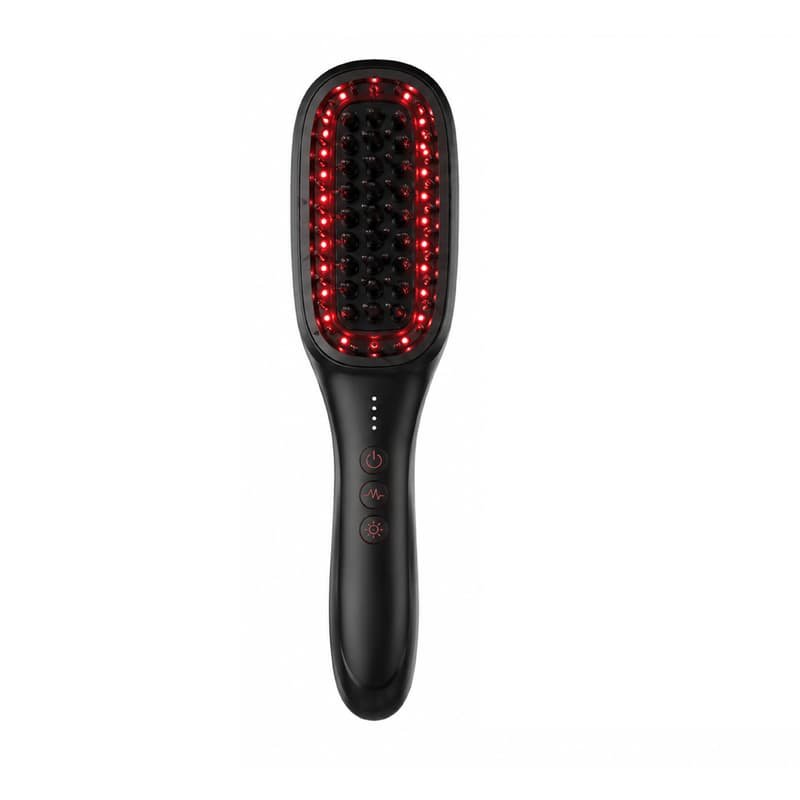
| Tipo de produto | Pente portátil para cuidados com o cabelo e couro cabeludo a laser VCSEL |
| Módulos de luz | 14 × 3030 módulos tri-chip |
| Total de chips emissores de luz | 42 |
| Proporção fonte de luz | 14 VCSEL : 14 LED vermelho : 14 LED azul (1:1:1) |
| Comprimentos de onda | 655±5nm VCSEL + 660 nm LED vermelho + 460 nm LED azul |
| Saída óptica VCSEL | 5 mW por chip VCSEL |
| Intensidade de luz | Fixo |
| Modos de luz | VCSEL + LED vermelho; LED vermelho; LED azul |
| EMS | Desligado + três níveis ajustáveis; 5–10kHz |
| Vibração | Intensidade fixa |
| Dentes de pente | Silicone condutor flexível |
| Aplicador de soro | Design magnético destacável |
| Timer | 10 minutos com desligamento automático |
| Indicadores | Indicadores LED; sem tela de exibição |
| Bateria | 1300 Mah |
| Tempo de operação | ≥60 minutos |
| Tempo de carregamento | ≤2,5 horas |
| Dimensões do produto | L249,8 × L63,44 × T27,45 mm; Tolerância de ±0,5 mm |
Esta tabela é uma linha de base de compras, não é um protocolo clínico. Em particular, o cronômetro de 10 minutos informa ao comprador como funciona a lógica de controle atual; não estabelece por si só uma frequência ou dose de tratamento baseada em evidências. A disponibilidade da amostra e o MOQ permanecem termos comerciais que dependem do escopo do projeto e não das especificações técnicas.
O que os compradores devem verificar antes de aprovar uma amostra HT01?
Aprovar a amostra somente após a unidade física, revisão de especificação, registros ópticos/de segurança e reclamações planejadas referem-se todos à mesma configuração.
Use esta matriz durante a revisão do fornecedor:
| Item de verificação | Pedir | Uma resposta satisfatória deve mostrar | Bandeira vermelha |
|---|---|---|---|
| Controle de configuração | Especificação datada, Identificador de BOM/configuração e folha de dados ou desenho do módulo | A amostra e a cotação usam a mesma contagem de módulos, arquitetura de pacote, comprimentos de onda, modos e lógica do controlador | A planilha de vendas e a amostra descrevem diferentes níveis ou comprimentos de onda do EMS |
| Saída óptica | Relatório com instrumento, método, modo ativo, plano/distância de medição, condições de operação e tolerância | A saída por fonte no local indicado é separada da irradiância do dispositivo acabado em um plano de uso definido | Um único valor de `5 mW` é apresentado como dose ou mW/cm² |
| Distribuição óptica | Mapa de irradiância espacial ou variação módulo a módulo em um plano de uso definido e modo ativo | A variação da cobertura e a tolerância de aceitação são visíveis em vez de serem reduzidas a uma leitura de pico | Apenas o ponto mais alto ou um emissor é relatado para o conjunto de 14 módulos |
| Comportamento térmico e de controle | Registro de aumento de temperatura para dentes/áreas de contato e alojamento no pior caso, modo ativo durante o ciclo completo de 10 minutos, mais temporizador/desligamento automático, verificações de operação repetida e carregamento | Condições de teste, locais, limites e critérios de aprovação/reprovação correspondem à amostra final | A temperatura da superfície ou o comportamento de controle são assumidos a partir dos dados do componente |
| Segurança a laser | Relatório de classificação de dispositivos acabados, controles de engenharia, avisos de exposição ocular, rótulos e registros de mercado aplicáveis | O modelo/configuração exatos e as fontes de laser aplicáveis e as condições de uso estão dentro do escopo | Em vez disso, é oferecida uma folha de dados do componente ou um relatório de outro produto |
| Segurança fotobiológica LED | Avaliação aplicável, como IEC 62471 quando apropriado, e configuração testada | Canais vermelho e azul, modos de operação e condições de exposição são identificáveis | Um certificado LED genérico sem escopo de modelo/configuração |
| Saída EMS | Forma de onda, limites de tensão/corrente, definição de frequência, design de contato e documentação de risco | Todos os três níveis e o estado desligado correspondem ao controlador final e ao manual | `5–10 kHz` é a única informação de saída elétrica fornecida |
| Instruções | Manual do usuário atual, avisos baseados em risco, contra-indicações e restrições de limpeza/líquidos | Movimento, contato, temporizador, EMS, carregando, avisos e manutenção são consistentes | As promessas de marketing excedem as instruções ou o uso indevido previsível é omitido |
| Mercado e reivindicações | Registros exatos ou um plano regulatório escrito para o país alvo | Modelo, titular, uso pretendido, reivindicações planejadas, deveres de produtos de radiação e relacionamento de marca própria se alinham | Cadastro, um número de acesso ou um certificado de fábrica é usado como liberação do produto |
| Líquido e invólucro | Materiais, evidência de compatibilidade líquida, método de limpeza e qualquer classificação de proteção contra entrada reivindicada | Aplicador, dentes, as áreas de alojamento e carregamento são avaliadas quanto aos líquidos e limpeza pretendidos | “Uso com soro” é reivindicado sem compatibilidade ou revisão de ingresso |
| Impacto da personalização | Plano de controle de alterações e revalidação | As alterações de cor/embalagem são separadas do comprimento de onda, controlar, mudanças estruturais e de segurança | Mudanças técnicas profundas são prometidas sem testes ou impacto documental |
Nos Estados Unidos, o banco de dados de classificação genérica da FDA inclui um laser, comb, hair categoria em código do produto OAP. O registro associa a categoria com 21 CFR 890.5500, um relatório de produto de segurança contra radiação exigido e os padrões de laser em 21 CFR 1040.10 e 1040.11. É uma rota de pesquisa útil, mas não há evidência de que HT01 tenha um 510(k) ou que um relatório de produto de radiação HT01 foi arquivado. O FDA também alerta que registro de estabelecimento e listagem de dispositivos não significam aprovação, liberação ou autorização. Solicite cada registro exato e verifique o modelo, fabricante de relatórios, titular, uso pretendido e escopo de rotulagem você mesmo.
O que deve constar em uma RFQ HT01?
Uma RFQ útil define o mercado, reivindicações e configuração antes de perguntar o preço. Copie esta lista de verificação na consulta:
- Países-alvo e canais de vendas planejados.
- Posicionamento pretendido: beleza/cuidados com o couro cabeludo, bem-estar do cabelo ou uma reivindicação regulamentada de crescimento do cabelo.
- Configuração de amostra necessária e identificador de revisão.
- Comprimentos de onda padrão ou personalizados, arquitetura de módulo/pacote, modos e lógica do controlador.
- Dados ópticos de dispositivos acabados, incluindo local de saída, condições de operação, tolerância, plano/distância de medição, modo ativo e um mapa espacial ou resultado de variação de módulo.
- Forma de onda EMS, limites de tensão/corrente, portadora versus frequência de repetição de pulso e design de contato.
- Classificação a laser, controles/avisos de exposição ocular, Segurança fotobiológica LED, Emc, bateria, segurança elétrica, térmico, temporizador/desligamento automático, carregando, rótulo e documentos manuais necessários para revisão.
- Para os EUA. projetos, relatório/adesão de produto laser aplicável, etiquetas de certificação e identificação, status do relatório anual, FDA 2877 responsabilidade e qualquer 510(k) caminho.
- Líquidos planejados ou pacote de soro, incluindo compatibilidade de materiais, método de limpeza e evidência de proteção contra entrada.
- Interface/entrada de carregamento, peso do produto, materiais de alojamento e dente, requisitos de garantia e acessórios de substituição.
- Logotipo, cor, embalagem, linguagem, código de barras, acessórios, quantidade de amostra, previsão de volume e mercado de entrega.
- Quais mudanças requerem nova validação, relatórios suplementares, ferramentas ou revisão regulatória.
As respostas devem determinar se o projeto é de estoque neutro, marca própria, OEM leve ou ODM mais profundo. Eles também devem determinar quais documentos podem permanecer válidos e quais devem ser atualizados após a customização.
Decisão final do comprador
O HT01 é um candidato confiável quando o objetivo comercial é compacto, dispositivo multifuncional para cuidado do couro cabeludo e a marca está preparada para validar a configuração final antes de fazer reivindicações regulatórias ou de desempenho. A sua mais forte diferenciação atual é tangível: para tri-chip 655/660/460 arquitetura de luz nm, três modos de luz selecionáveis, EMS de três níveis, dentes condutores flexíveis, vibração e um aplicador destacável.
Não é o atalho certo para um projeto que precisa de evidências clínicas HT01 prontas, um protocolo transferível ou uma autorização presumida da FDA. Essas são perguntas exatas sobre o dispositivo, não benefícios que chegam automaticamente com um comprimento de onda ou componente.
For the broader manufacturer-selection, sample-approval and RFQ workflow across helmets, caps and combs, use o Fabricante de dispositivos de crescimento capilar & Guia OEM/ODM.
Para avaliar a configuração padrão, visite o Página do produto HT01 ou revise o mais amplo do Wakelife linha de dispositivos para crescimento capilar a laser e LED. Ao solicitar um orçamento, incluir o mercado-alvo, reivindicações planejadas, canal e escopo de personalização para que a amostra e a revisão do documento comecem no mesmo briefing.
Perguntas frequentes
Faz 5 mW significa que a irradiância HT01 é 5 MW/cm²?
Não. O 5 A especificação mW é a potência de saída óptica por chip VCSEL. A irradiância requer uma medição de área unitária sob geometria e condições operacionais declaradas.
O HT01 foi liberado pela FDA?
Não HT01 510(k) o número é identificado na página do produto atual. Trate qualquer solicitação de liberação futura como não verificada até que o modelo exato, titular, o uso pretendido e a rotulagem são comparados no banco de dados público da FDA; registro de fábrica, um número de acesso ou autorização de outro modelo não é um substituto.
Se um EUA. lançamento evita alegações de crescimento de cabelo, as obrigações dos produtos a laser desaparecem?
Não. Os controles de radiação de produtos eletrônicos da FDA são uma camada separada da reivindicação de dispositivos médicos e 510(k) análise. O relatório de produto aplicável, rotulagem de certificação/identificação, o padrão de desempenho e os direitos de importação ainda precisam ser determinados para o produto a laser exato; evitar uma reclamação médica não os isenta, por si só.
Uma marca pode afirmar que o 460 modo nm faz o cabelo crescer?
Não a partir das evidências revisadas aqui. O estudo relevante mais próximo utilizado 453 luz azul nm em folículos capilares humanos isolados ex vivo, não é um ensaio clínico humano HT01.
Os comprimentos de onda ou configurações de EMS podem ser personalizados??
Eles podem ser avaliados como um projeto OEM/ODM, mas mudanças técnicas podem alterar o desempenho óptico, testes de segurança, rotulagem e requisitos regulamentares. Confirme a viabilidade e o plano de revalidação antes de aprovar a especificação final.
Referências
- 1
-
2
Lueangarun S., e outros. Uma revisão sistemática e meta-análise de ensaios clínicos randomizados aprovados pela Food and Drug Administration dos Estados Unidos, Uso doméstico, Dispositivos de terapia com luz/laser de baixo nível para queda de cabelo padrão: Design e tecnologia de dispositivos
J Clin Aesthet Dermatol. 2021;14(11):E64–E75. -
3
Jiménez JJ, e outros. Eficácia e segurança de um dispositivo a laser de baixa intensidade no tratamento da queda de cabelo de padrão masculino e feminino: Um multicêntrico, Randomizado, Sham controlado por dispositivo, Estudo duplo-cego
Am J Clin Dermatol. 2014;15(2):115–127. -
4
Buscone S., e outros. Um novo caminho na definição de parâmetros de luz para o crescimento do cabelo: Descoberta e modulação de fotorreceptores no folículo capilar humano
Lasers Surg Med. 2017;49(7):705–718. - 5
- 6
-
7
NÓS. FDA. Produtos e instrumentos a laser
- 8
- 9
- 10
- 11
-
12
HairMax. ULTIMA 12 LaserComb product page
Manufacturer marketing statements quoted for category-positioning illustration only. -
13
NÓS. FDA. 510(k) Banco de dados
HairMax laser-comb records under product code OAP include K060305 (“HAIRMAX LASERCOMB”) and K111714 (“HAIRMAX DUAL 12”).