TL;DR voor kopers
- Kies een fabrikant van haargroeiapparaten niet alleen op basis van de golflengte of het aantal zenders. Stem eerst de vormfactor af op de gebruikersworkflow en het verkoopkanaal; Controleer vervolgens de exacte optische uitvoer van het model, veiligheidscontroles, bruikbaarheid en doelmarktdocumenten.
- Stevige helmen en geïntegreerde petten ondersteunen handsfree gebruik, modulaire doppen ondersteunen het verhaal van een lifestyleproduct, en kammen ondersteunen draagbare plaatsing per sectie. Geen van deze formaten is automatisch effectiever.
- Geleid, conventionele laserdiode- en VCSEL-platforms vereisen verschillende technische en veiligheidsvragen. De bronnaam op zichzelf bepaalt niet de geleverde blootstelling, dekking van de hoofdhuid, klinische prestaties of wettelijke status.
- Gepubliceerd lichttherapieonderzoek op laag niveau ondersteunt specifiek bestudeerde apparaten voor patroonhaarverlies. Het bewijst niet dat een nieuw geciteerd apparaat de resultaten of het protocol van een ander product zal reproduceren.
- Voordat u een monster goedkeurt, de doelmarkt vergrendelen, beoogde gebruiker, geplande claims en exacte configuratie. Vraag dan een gecontroleerde specificatie aan, modelspecifieke rapporten, etikettering, instructies en een schriftelijke wijzigingslijst.
Wat moet een merk beslissen voordat het fabrikanten vergelijkt??
Definieer de markt, gebruikersworkflow en claimgrens voordat specificaties worden vergeleken. Anders, een leverancier kan een aantrekkelijk apparaat citeren, terwijl de koper nog niet zeker weet welke taak dat apparaat moet vervullen.
Begin met deze projectbeschrijving:
| Beslissing | Wat u vóór de offerteaanvraag moet definiëren | Waarom het de productkeuze verandert |
|---|---|---|
| Doelklant | Thuisgebruiker, haarverzorging klant, kliniek patiënt, salonklant- of distributeursportfolio | Wijzigt de acceptabele workflow, instructielast- en ondersteuningsmodel |
| Doelmarkt | Verenigde Staten, Europese Unie, Canada, Australië of een andere genoemde markt | Verandert de regelgeving, vragen over etikettering en importeurdocumenten |
| Geplande claims | Positionering van de hoofdhuid, algemene welzijnstaal of een specifiek beoogd gebruik voor haargroei/alopecia | Verandert het bewijs- en markttraject; formulering kan niet worden gescheiden van het beoogde gebruik |
| Gebruikersworkflow | Handsfree dragen tijdens een volledige sessie, draagbare gerichte plaatsing of integratie met een andere haarverzorgingsroutine | Bepaalt of helm, pet of kam is praktisch |
| Commerciële rol | Toegangs-SKU, premium hero-product, kliniekondersteuningsapparaat of portfolio met meerdere SKU's | Wijzigt de doelkosten, verpakking, garantie, training en lanceringscomplexiteit |
| Aanpassing | Alleen logo en verpakking, wijzigingen in firmware/instellingen, optische veranderingen of een nieuw industrieel ontwerp | Wijzigingen testen, documentatie en reikwijdte van wijzigingsbeheer |
Een handige standaardregel is: kies eerst de workflow; verifieer het exacte apparaat als tweede. Een product dat technisch indrukwekkend maar onhandig is voor de beoogde klant, is nog steeds het verkeerde product. Een product dat past bij de klant, maar niet over het vereiste exacte modelbewijs beschikt, is ook niet klaar voor goedkeuring.
Deze gids gebruikt markttermen zoals ‘haargroeiapparaat’ om de categorie te beschrijven waarnaar kopers zoeken. Deze zinnen bewijzen niet dat elk product waarnaar wordt verwezen een medisch hulpmiddel is, een goedgekeurde haargroei-indicatie heeft of goedgekeurd is voor een bepaalde markt. De classificatie is afhankelijk van het exacte product, bedoeld gebruik, claims en jurisdictie.
Is Your Haircare Brand Ready for Its First Light-Based Scalp Device?
A haircare brand is ready to evaluate its first light-based scalp device when it has a traceable customer or channel need, a defined job for the SKU and named owners for the decisions that follow. You do not need to choose every technical specification before speaking with a manufacturer, but you should know what the first evaluation is meant to prove.
Use this readiness check before comparing helmets, caps or combs:
| Readiness check | Question for your team | Minimum output before moving forward |
|---|---|---|
| Customer or channel evidence | Who has asked for a device, and what problem or product format did they describe? Is the signal from customer inquiries, retailer or distributor conversations, ondersteuning vragen, or an internal hypothesis? | Record one traceable demand signal. Label an untested assumption as an assumption rather than treating it as forecast demand. |
| Role of the first SKU | What is the device expected to do within the current range: create an entry point, serve as a premium product, extend a scalp-care routine, or support a particular sales channel? | Choose one primary role. Do not assume that sharing a hair-care theme means the device and a cosmetic formula have proven combined effects. |
| Ownership and support | Who owns product decisions, evidence and labeling questions, customer education, retourneert, warranty issues and escalation after launch? | Assign an owner to each open responsibility and record what must be confirmed with the manufacturing partner. |
| Evaluation plan | What must a sample or limited channel evaluation answer: fit and usability, verpakking, customer understanding, channel interest or likely support burden? | Set the questions, evidence to collect, review owner and decision date before requesting major customization. |
If all four areas are clear, proceed to platform and sample evaluation. If the product role is clear but evidence or support ownership is incomplete, close those gaps first. If the idea is based mainly on category attention and no team owns the customer or support problem, pause or narrow the concept before committing to custom engineering.
Once this internal brief is ready, use the form-factor matrix below to shortlist a helmet, geïntegreerde dop, modular cap or comb. Then use the RFQ checklist later in this guide to tell the manufacturer which decision the proposal must support.
Moet u een helm kiezen, Siliconen dop, Modulaire dop of kam?
Kies de vormfactor waardoor de beoogde routine het gemakkelijkst kan worden herhaald en het gemakkelijkst door uw team kan worden gevalideerd. De vier hoofdformaten lossen verschillende producttaken op.
| Vormfactor | Beste pasvorm wanneer | Belangrijkste afweging | Wat het monster moet bewijzen | Slechte eerste keuze wanneer |
|---|---|---|---|---|
| Stevige helm | Een premie, handsfree product heeft een gedefinieerde interne geometrie en positionering van het volledige hoofd nodig | Groter pakket, hoger verzendvolume, opslag, gewicht en pasdruk | Hoofdgroottebereik, druk punten, beweging, thermisch gedrag, array-to-head-geometrie, bedieningselementen en sensorstoringsstatussen | Het merk heeft behoefte aan een discrete lifestyle-uitstraling of een zeer compacte logistiek |
| Geïntegreerde siliconen dop | Een draagbaar product heeft een zachte uitstraling nodig, Opvouwbare behuizing met een geïntegreerde lichtarray | Flexibele geometrie kan de pasvorm veranderen, afstand en schoonmaakstress | Herhaalbare pasvorm, flexibel leven, spanning van de connector, schoonmaak grenzen, oppervlaktetemperatuur en ruimtelijke output onder de gedefinieerde opstelling | Het project vereist een rigide vaste geometrie of textielstijl die per seizoen verandert |
| Modulaire stoffen kap | Een lifestylemerk wil een verwijderbaar lichtinzetstuk dat met verschillende petconcepten kan werken | Plaatsing van inzetstukken en stofintegratie kunnen variëren per gebruik | Uitlijning, behoud, herhaalbare plaatsing, compatibiliteit met stoffen, oplaadindeling en scheiding van elektronische en wasbare onderdelen | De claims of het testplan zijn afhankelijk van een strak vastgelegde emitter-tot-hoofdhuidgeometrie |
| Handkam | Een draagbaar of instapproduct moet per sectie worden geplaatst en kan een actieve gebruikersroutine ondersteunen | Bewegingen en secties van gebruikers zorgen voor meer variatie in de workflow dan handsfree dragen | Tand-/contactgeometrie, bewegingsinstructies, bereik door het haar, reiniging en eventueel serum, EMS- of trillingscompatibiliteit | De klant verwacht passief, handsfree, gelijktijdig gebruik van de volledige hoofdhuid |
De tabel vergelijkt productworkflow, niet de effectiviteit van de behandeling. Gepubliceerde onderzoeken gebruiken specifieke apparaten en protocollen; ze vormen geen universele klinische rangorde onder helmen, cap- en kam-formaten.
Gebruik de matrix om een shortlist te maken, Test vervolgens de commerciële fit. Een premium handsfreelijn kan beginnen met een stijve helm of een geïntegreerde pet; een lifestylelijn kan beginnen met een modulaire pet; een draagbare hoofdhuidverzorgingsbundel kan beginnen met een kam. Een kliniek is op zichzelf geen vormfactor: de beslissing hangt nog steeds af van wie het apparaat bedient, hoe het wordt schoongemaakt, welke claims er gepland zijn en welk exacte bewijsmateriaal de workflow ondersteunt. Een distributeur kan in plaats daarvan een formatladder met toegang bouwen, lifestyle en premium SKU's.
Voor een diepere vergelijking van draagbare positionering, logistiek en merkfit, zie Wakelife's gids voor het kopen van petten versus helmen. Gebruik die gids na de shortlist, kom dan hier terug om het geselecteerde formaat te verbinden met bewijs van de fabrikant, monstergoedkeuring en offerteaanvraagontwerp.
Moet een merk voor LED kiezen?, Laser of VCSEL?
Kies LED, conventionele laserdiode of VCSEL als een technische en marktbeslissing – niet als een sluiproute naar een werkzaamheidsclaim. De belangrijkste vraag is wat het uiteindelijke apparaat oplevert en hoe die output wordt geregeld, getest en gedocumenteerd.
| Bronarchitectuur | Waarom een merk dit zou kunnen overwegen | Wat te vragen | Ga er niet van uit |
|---|---|---|---|
| Geleid | Integratie met meerdere golflengten, flexibele indelingen, breed leveranciersecosysteem en niet-laserproductarchitectuur | Spectrale gegevens, stralingskaart, modi/werkcyclus, thermische stabiliteit, toepasselijk fotobiologisch veiligheidsrapport en exact geteste configuratie | Lagere of hogere klinische prestaties uitsluitend omdat het LED is |
| Conventionele laserdiode | Smalbandlaserbron en een volwassen apparaatcategorie in sommige haargroeiproducten | Uitgang per emitter, balk profiel, ruimtelijke kaart, laserclassificatie van eindproducten, toegankelijke emissie, etiketten, instructies en toepasselijke marktgegevens | Een per-diode mW-waarde is gelijk aan de bestraling van de hoofdhuid, invloed of oogveiligheid |
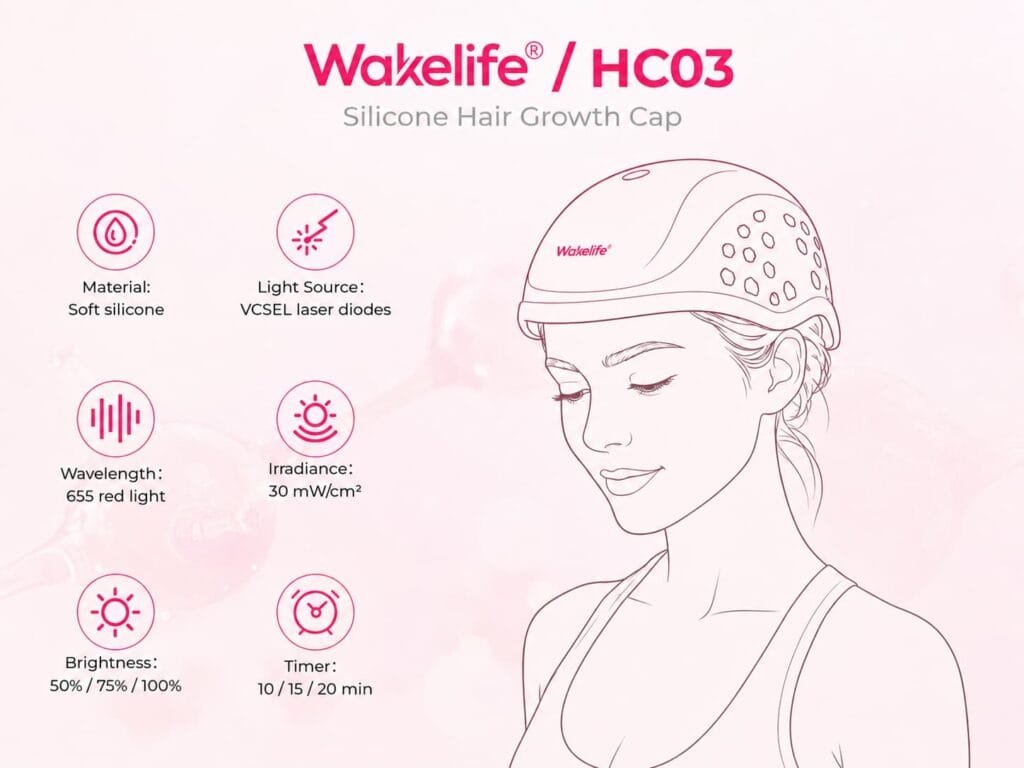
| VCSEL-array | Compacte laser-array-integratie en een alternatieve emitterarchitectuur voor doppen, helmen en kammen | Exacte onderdeelidentificatie, spectrum, uitvoer per emitter, divergentie/bundelprofiel, uniformiteit van de array, thermische drift, laserclassificatie van eindproducten en fouttesten | Diepere penetratie, meer precisie, betere uniformiteit of betere haarresultaten zonder directe vergelijkende gegevens |
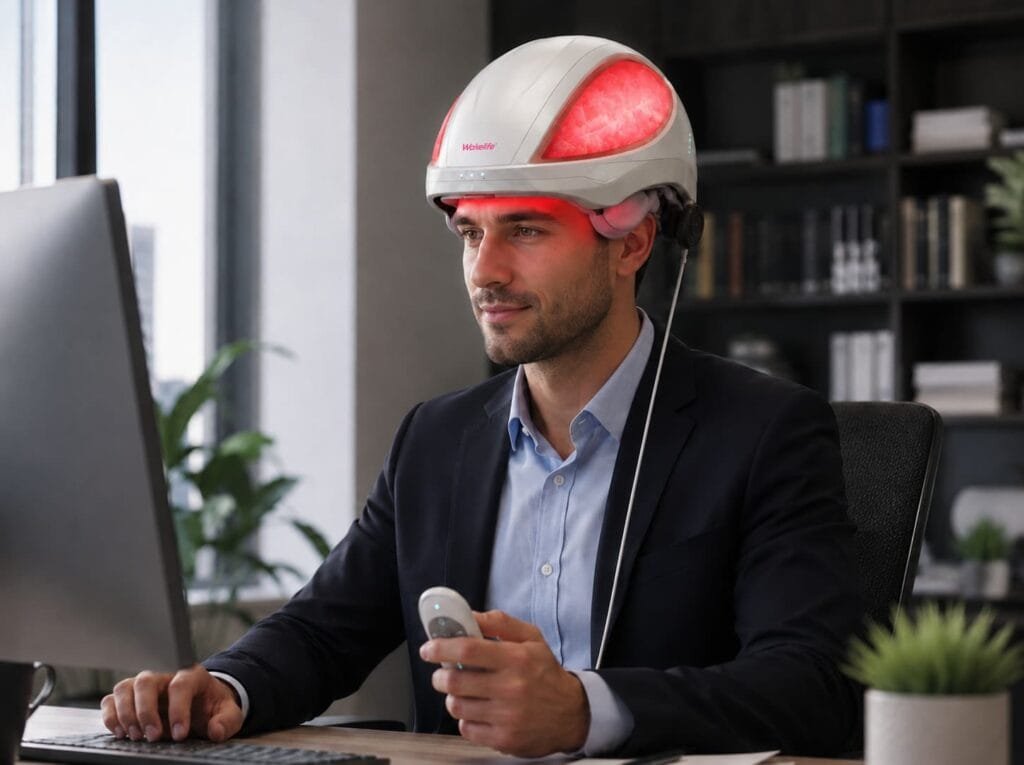
De FDA’s laserproductoverzicht onderscheidt LED's van laserdiodes en legt uit dat U.S. laserproducten zijn onderworpen aan toepasselijke eisen op het gebied van stralingsprestaties. Het stelt ook dat laserproducten die voor medische toepassingen worden gebruikt, moeten voldoen aan de toepasselijke regelgeving voor medische apparatuur. Voor een Amerikaanse. laserproject, dat zijn parallelle controles; een dossier over een medisch apparaat vervangt de laserstralingsdocumentatie van het eindproduct niet, en laserdocumentatie vervangt geen toepasselijk markttraject voor medische hulpmiddelen.
Vanuit een inkoopperspectief, VCSEL blijft een laserarchitectuur. Een leverancier mag een VCSEL-product niet in een veiligheidsbestand met alleen LED's plaatsen alleen maar omdat de emitters klein zijn of in een dichte reeks zijn gerangschikt.
Bewijst gepubliceerd LLLT-onderzoek dat een geciteerd apparaat werkt??
Nee. Gepubliceerd bewijsmateriaal kan de productcategorie ondersteunen, maar de relevantie van een onderzoek hangt af van het onderzochte apparaat, bevolking, uitgang, protocol en claim.
A 2021 systematische review en meta-analyse van apparaten voor thuisgebruik met laag niveau lichttherapie omvatte zeven dubbelblinde gerandomiseerde gecontroleerde onderzoeken met 607 deelnemers. De bestudeerde apparaten vertoonden een grotere verbetering van de haardichtheid dan schijncontroles, maar de review beschreef ook de variatie tussen apparaten en protocollen, relatief korte opvolging, en geen directe onderlinge vergelijking tussen producten.
Dat onderscheid verandert de manier waarop een merk onderzoek moet gebruiken:
| Bewijslaag | Wat het kan ondersteunen | Wat het zelf niet kan ondersteunen |
|---|---|---|
| Systematische review op categorieniveau | De bredere categorie van licht-/laserhaargroei op laag niveau heeft menselijk onderzoek | Een nieuw geciteerd model levert hetzelfde resultaat op |
| Studie van een specifiek genoemd apparaat | Bevindingen voor dat apparaat, populatie en protocol | Elk product met een vergelijkbare golflengte of vorm |
| Optische en veiligheidsrapporten van afgewerkte apparaten | Uitvoer, classificatie en geteste omstandigheden voor de genoemde configuratie | Klinische haargroeiresultaten tenzij ontworpen om deze vast te stellen |
| Bruikbaarheid en pasvormvalidatie | Of beoogde gebruikers kunnen dragen, positie, reinig en gebruik het product zoals ontworpen | Biologische werkzaamheid |
| Marktautorisatie en etikettering | Wat het genoemde apparaat en de houder mogelijk ondersteunen in de geïdentificeerde markt | Verschillende modellen, gewijzigde claims of niet-beoordeelde aangepaste configuraties |
De FTC’s richtlijnen voor naleving van gezondheidsproducten vertelt marketeers dat ze zowel expliciete als impliciete boodschappen moeten overwegen en ervoor moeten zorgen dat de ondersteuning wetenschappelijk verantwoord is en relevant voor het specifieke product en de reclameclaim. Een onderzoeksmap van een leverancier is dus niet voldoende. De koper moet elke geplande productclaim koppelen aan bewijsmateriaal dat relevant is voor de geoffreerde configuratie.
Kopersregel: vergelijkbare golflengte is een reden om een apparaat te onderzoeken, is geen vervanging voor bewijsmateriaal op basis van exacte apparaten.
Voor een vollediger overzicht van menselijk bewijsmateriaal, grenzen van de diagnose, mechanisme grenzen, golflengteaannames en formulering van claims, doorgaan met LLLT en rood licht voor haarverlies: Bewijs, Limieten en claimgrenzen.
Welke documenten moet een fabrikant van haargroeiapparaten verstrekken??
Vraag wat elk document bewijst, welk model het omvat en wat er veranderde nadat het werd uitgegeven. Een map met logo’s en certificaten is geen bruikbaar bewijspakket.
| Bewijslaag | Wat het zou moeten laten zien | Wat het niet automatisch laat zien | Koper actie |
|---|---|---|---|
| Gecontroleerde specificatie- en configuratielijst | Exact model, lichtbronnen, elektronica, batterij, adapter, firmware, accessoires en toleranties | Marktautorisatie of batchconsistentie | Zorg ervoor dat elk geciteerd artikel overeenkomt met het ondertekende monster en de aankoopspecificatie |
| Optisch prestatiebestand | Spectrum, bestralingssterkte onder de aangegeven omstandigheden, ruimtelijke verdeling, modi, stabiliteit en meetmethode | Klinisch resultaat of autorisatie | Controleer afstand/vlak, instrument, opening, min/max/gemiddeld, modus en gedrag tijdens een volledige sessie |
| Laser / fotobiologisch veiligheidsdossier | Toepasselijke beoordeling van het eindproduct, classificatie, etiketten, waarschuwingen en geteste configuratie | Werkzaamheid of dekking van latere wijzigingen | Bevestig het exacte model, alle actieve modi, accessoires, standaardeditie en rapportdatum |
| Elektrisch, EMC- en batterijbestand | Elektrische veiligheid, elektromagnetische compatibiliteit, opladen en transportbewijs, indien van toepassing | Haargroeiprestaties | Match-adapter, batterij, controleur, beoogde omgeving en behoeften van de doelgroep |
| Bewijs van het kwaliteitssysteem | Genoemde productielocatie, certificaatomvang, uitgever en geldigheid | Productgoedkeuring, speling of optische prestaties | Controleer locatie en bereik; behandel een QMS-certificaat niet als productautorisatie |
| Registratie van marktautorisatie | Houder/aanvrager, apparaatnaam, exacte modelfamilie, bedoeld gebruik en marktstatus | Andere markten, bredere claims of elke private-labelvariant | Controleer de officiële database, besluit/certificaat, IFU en modeltoewijzing |
| Etikettering en instructies | Beoogde gebruiker, opstelling, operationele limieten, waarschuwingen, contra-indicaties, reiniging en onderhoud | Dat de instructies klinisch of juridisch adequaat zijn voor elke markt | Toetsing tegen de definitieve claims, steekproef, rapporten en importeur/distributeurrechten |
| Wijzigingsverklaring | Verschillen tussen standaardmonster, geciteerde eenheid en geplande productie | Dat elke verandering aanvaardbaar is zonder hertesten of herziening door de toezichthouder | Een schriftelijke effectbeoordeling vereisen voordat optische producten worden goedgekeurd, firmware, materiaal- of claimwijzigingen |
Wat bewijst een FDA-record voor een Amerikaans bedrijf?. project?
De huidige FDA OAP-productclassificatiepagina beschrijft het generieke type “laser, kam, haar” als Klasse II met a 510(k) soort inzending. OAP is daarom een generiek classificatiestartpunt voor een Amerikaans classificatiesysteem. laserkamproject, geen goedkeuring voor enig vermeld model. Een helm- of petproject moet zelfstandig worden geclassificeerd door de toepasselijke productcode aan te vinken, exacte officiële record, bedoeld gebruik en etikettering; OAP mag niet worden overgedragen van een kam naar een andere vormfactor.
De FDA legt uit dat a 510(k) is een pre-market-inzending met substantiële gelijkwaardigheid. Het exacte beoogde gebruik, technologische kenmerken, prestatie-informatie en wijzigingen zijn belangrijk. Afzonderlijk, Dat stelt de FDA vestigingsregistratie en apparaatlijst duiden niet op goedkeuring, goedkeuring of machtiging.
Voor een stapsgewijs K-nummer, model, indicatie, etikettering en private label-controle, hij is bij Wakelife Door de FDA goedgekeurde verificatiegids voor haargroeiapparaten. Keur geen Amerikaanse goedkeuring goed. medische claim van een screenshot van een certificaat, een vestigingsnummer of een K-nummer van een ander product.
Wat is het verschil tussen private label, OEM en ODM?
Definieer de daadwerkelijke wijzigingen in plaats van te vertrouwen op het verkooplabel. Leveranciers maken gebruik van private label, OEM en ODM anders, maar toezichthouders, laboratoria en kwaliteitsteams evalueren wat er is veranderd in het eindproduct.
| Projecttype | Typische reikwijdte | Belangrijkste bewijsvraag | Praktische controle |
|---|---|---|---|
| Privélabel | Bestaande hardware met kopersbranding, verpakking en overeengekomen etikettering | Blijven het exacte apparaat en de etikettering binnen het toepasselijke geautoriseerde/geteste bereik?, en wat zijn de marktverantwoordelijkheden van de koper? | Maak een model/merk/label-toewijzing en keur het definitieve artwork goed op basis van het bewijsmateriaal |
| OEM-platformwijziging | Bestaand platform met geselecteerde hardware, firmware, optisch, accessoire- of industriële ontwerpwijzigingen | Welke rapporten, risicocontroles, labels of marktrecords worden beïnvloed? | Een wijzigingslijst en een schriftelijke test/regelgevingseffectbeoordeling vereisen voordat het monster wordt goedgekeurd |
| ODM-ontwikkeling | Nieuwe of substantieel opnieuw ontworpen hardware, optiek, controles, firmware of het beoogde gebruik | Wat een nieuw ontwerp, verificatie, validatie en marktwerk zijn vereist? | Ontwerpingangen vergrendelen, bewijsplan, eigendom, mijlpalen en wijzigingsbeheer vóór tooling |
Die van de FDA 510(k) overzicht vermeldt verschillende verantwoordelijkheden voor fabrikanten, specificatie ontwikkelaars, herverpakkers en herlabelers, en legt uit dat veranderingen van invloed zijn op de veiligheid, effectiviteit of het beoogde gebruik kan een nieuwe vereisen 510(k). Dat levert niet één universeel antwoord op voor elk private label-arrangement. Het betekent dat de partijen de exacte rol moeten documenteren, apparaat, etikettering en wijzigingen en zorg voor gekwalificeerde controle door de toezichthouder als de beslissing niet duidelijk is.
Drie vragen voorkomen de meeste verwarring over de reikwijdte:
- Wat verandert er fysiek of digitaal?? Inclusief lichtbron, indeling, uitgang, timer, firmware, controleur, batterij, adapter, materialen, accessoires en app-gedrag.
- Wat verandert er in het beoogde gebruik of de claim? Productnaam vermelden, verpakking, website kopiëren, instructies, kanaal en doelgroep.
- Welk bestaand bewijsmateriaal benoemt of dekt de uiteindelijke configuratie? Vereist een exacte modeltoewijzing in plaats van een mondelinge belofte dat het project ‘hetzelfde certificaat gebruikt’.
Hoe moet een koper een voorbeeld van een haargroeiapparaat goedkeuren??
Een monster dat wordt ingeschakeld, is geen goedgekeurd monster. Keur het pas goed na de fysieke eenheid, gecontroleerde specificatie, testbewijs en geplande etikettering beschrijven dezelfde configuratie.
Gebruik deze tiendelige scorekaart:
| Voorbeeldcontrole | Wat op te nemen | Houd het project vast wanneer |
|---|---|---|
| 1. Identiteit | Model, herziening, serie-/monsternummer, firmware en accessoires | De leverancier kan het monster niet aan een gecontroleerde specificatie koppelen |
| 2. Pasvorm en plaatsing | Hoofdgroottebereik, druk punten, beweging, kambereik of uitlijning van het inzetstuk | Beoogde gebruikers kunnen het product niet herhaaldelijk positioneren |
| 3. Lichte configuratie | Brontelling, golflengte kanalen, actieve modi en controlegedrag | Het voorbeeld wijkt af van de offerte, rapport of UI-beschrijving |
| 4. Optische uitgang | Meetmethode, gedefinieerd vlak/afstand, ruimtelijke kaart en sessiestabiliteit | Er wordt zonder voorwaarden alleen een piek- of per-emittergetal opgegeven |
| 5. Veiligheidscontroles | Vergrendelingen, slijtage detectie, timer, fout reactie, etiketten en waarschuwingen | Een marketingzin als ‘oogveilig’ vervangt het rapport en het foutbewijs |
| 6. Thermisch gedrag | Huidcontact en behuizingstemperatuur tijdens gebruik in het slechtste geval | Warmte verandert de output, comfort of componentgedrag buiten de afgesproken limiet |
| 7. Voedingssysteem | Looptijd, oplaadtijd, oplader/adapter, gedrag bij lage batterijspanning en transportbestand | De resultaten hebben geen testomstandigheden of de batterij/adapter wijkt af van het bewijsmateriaal |
| 8. Reiniging en duurzaamheid | Grens wissen/wassen, blootstelling aan zweet, Flexcycli, omgaan met spanning en vallen van de connector | Reinigingsinstructies zijn in strijd met de elektrische constructie of er is geen grens gedefinieerd |
| 9. Etikettering en instructies | Beoogd gebruik, controles, grenzen, waarschuwingen, onderhoud en marktformulering | Kopieer claims meer dan het bewijsmateriaal of de autorisatie ondersteunt |
| 10. Documentconsistentie | Exact model, herziening, accessoires, modi en datums voor alle bestanden | Rapporten, voorbeeld en definitieve offerte beschrijven verschillende configuraties |
Gebruik een eenvoudige beslisregel:
- Ga door naar piloot: het monster en de documenten komen overeen, kritische risico’s worden beheerst, en alleen de overeengekomen commerciële details blijven over.
- Uitstel: het vereiste bewijsmateriaal of de testomstandigheden ontbreken, maar de configuratie is nog steeds traceerbaar en de leverancier heeft een gedefinieerd sluitingsplan.
- Afwijzen of opnieuw beoordelen: de leverancier vervangt niet-gerelateerde certificaten, weigert exacte modeltoewijzing, zonder controle kritische specificaties wijzigt of de koper vraagt beweringen op de markt te brengen die niet door het bewijsmateriaal worden ondersteund.
Wat moet er in een offerteaanvraag voor een haargroeiapparaat staan??
Een nuttige offerteaanvraag vertelt de fabrikant welk besluit de offerte moet ondersteunen. Kopieer en vul de volgende lijst in:
- Doelland of -landen: ________
- Primair kanaal: Foutcode / detailhandel / distributeur / salon / kliniek / ander ________
- Beoogde klant en gebruiksomgeving: ________
- Geplande productpositionering en exacte claims worden overwogen: ________
- Voorkeursvormfactor: stijve helm / geïntegreerde dop / modulaire kap / kam / open voor aanbeveling
- Voorkeursbronarchitectuur: Geleid / laserdiode / VCSEL / open voor op bewijs gebaseerde aanbevelingen
- Vereiste gebruikersworkflow: handsfree / gerichte plaatsing / draagbaar / begeleid / ander ________
- Standaardplatform of aangevraagde wijzigingen: logo / verpakking / gebruikersinterface / app / timer / optische lay-out / huisvesting / accessoires ________
- Richtprijs, eerste bestelhoeveelheid en prognose voor 12 maanden: ________
- Vereiste voorbeelddatum en startvenster: ________
- Documenten die vereist zijn voor het exacte geciteerde model en de doelmarkt: ________
- Identificeer elk verschil tussen het standaardmodel, geciteerd monster en voorgestelde productieconfiguratie, en vermeld welke rapporten of marktgegevens worden beïnvloed.
Voeg een claimoverzicht van één pagina en een configuratietabel toe als het project verder gaat dan het standaard private label. Dit geeft techniek, kwaliteit, regelgevende en verkoopteams hetzelfde uitgangspunt en vermindert herwerk in de late fase.
Welk Wakelife-productpad kan een koper verkennen?
Gebruik het productpad dat overeenkomt met de workflow, voltooi vervolgens het due diligence-onderzoek volgens het exacte model vóór goedkeuring.
- Ontdek de stroming assortiment laser- en LED-haargroeiapparaten voor helm, kap- en kamopties.
- Voor een stijf helmplatform, bekijk de T01 VCSEL haargroeiapparaat, Controleer vervolgens de exacte geciteerde configuratie, rapporten over voltooide apparaten en de status van de doelmarkt.
- Voor een LED-kapplatform met dubbele golflengte, bekijk de C01 LED-haargroeikap en bevestig de definitieve configuratie, testomstandigheden en beoogde positionering voor de bestemmingsmarkt.
- Voor een flexibele geïntegreerde laserkap, bekijk de HC03-productpagina en zijn handleiding voor het verkrijgen van voorbeelden en documenten.
- Voor een draagbaar handheld-platform, bekijk de HT01 productpagina en zijn optisch, handleiding voor veiligheid en offerteaanvragen.
- Voor de VS. claims en documentverificatie, volg de Door de FDA goedgekeurde verificatiegids voor haargroeiapparaten voordat u het K-nummer goedkeurt, etikettering of private-label bereik.
Als de huidige standaardplatforms niet aansluiten bij de opdracht, de doelgroep sturen, kanaal, gebruikerswerkstroom, beweringen, voorkeursvormfactor, aanpassingslijst en voorspelling voor Wakelife. Die informatie is voldoende voor een eerste platformaanbeveling en beoordeling van de tekortkomingen; een koper hoeft niet elke optische specificatie af te ronden voordat hij de discussie start.
Veelgestelde vragen
Is een hoger aantal emitters altijd beter??
Nee. Het aantal emitters bepaalt op zichzelf niet de dekking van de hoofdhuid, bestraling, invloed, uniformiteit of klinische prestaties. Vergelijk de arraygeometrie, actieve modi, meetvlak, ruimtelijke kaart, stabiliteit en pasvorm voor de gebruiker. Vraag een rapport over het voltooide apparaat aan in plaats van producten te rangschikken op basis van het grootste aantal op een productpagina.
Is VCSEL beter dan LED voor een haargroeiapparaat??
Er is geen universeel antwoord op basis van het bronlabel alleen. VCSEL is een laserarchitectuur en verandert de engineering- en veiligheidsvragen, maar superioriteit in penetratie, dekking of haarresultaten vereisen direct vergelijkend bewijs. Kies op basis van het exacte ontwerp, uitgang, veiligheidsdossier, claims en commerciële briefing.
Betekent dezelfde golflengte dat twee apparaten hetzelfde bewijsmateriaal kunnen gebruiken??
Nee. Golflengte is slechts een deel van de belichting. Brontype, uitgang, balk profiel, array-geometrie, afstand, dekking, sessie tijd, controles, populatie en protocol kunnen allemaal verschillen. Behandel een vergelijkbare golflengte als categoriecontext, niet productequivalentie.
Kan een huismerkmerk vertrouwen op dat van een fabrikant? 510(k)?
Mogelijk in een goed gestructureerde ongewijzigde inrichting, maar “private label” alleen beantwoordt de vraag niet. Controleer de 510(k) houder, exacte model, bedoeld gebruik, etikettering, fabrikant/importeurrollen en elke geplande verandering. Escaleer nieuwe claims, hardware-/firmwarewijzigingen of onduidelijke modeltoewijzing aan gekwalificeerde toezichthoudende beoordeling.
Welke vormfactor is het beste voor een kliniek?
De workflow van de kliniek bepaalt het formaat. Evalueer wie het apparaat bedient, of het gebruik onder toezicht staat, schoonmaken tussen gebruikers, passend bereik, sessiebeheer, instructies, bewijsmateriaal en doelmarktstatus. Een op de consument lijkende pet kan nog steeds een veeleisende bewijslast met zich meebrengen, terwijl een stijve helm niet automatisch een professioneel apparaat is.
Welke informatie moet een koper als eerste meesturen??
Stuur de doelmarkt, kanaal, beoogde gebruiker, geplande claims, voorkeurswerkwijze, vereiste veranderingen, richtprijs, bestelhoeveelheid en lanceringstijdstip. Met deze input kan de fabrikant een platform aanbevelen en lacunes in het bewijs identificeren voordat de koper tijd besteedt aan het kiezen van emitteraantallen of cosmetische details.
Definitieve beslissing van de koper
Kies de fabrikant die vier dingen op één lijn kan houden: de beoogde gebruiker, het exacte product, het bewijspakket en de definitieve claims. De meest indrukwekkende hardwarelijst is niet waardevol als de vormfactor niet bij de klant past of als de documenten niet overeenkomen met de productieconfiguratie.
Begin met de nulkostenstap: kopieer de bovenstaande offerteaanvraaglijst en voltooi de doelmarkt, kanaal, claims en voorkeursworkflow. Vergelijk vervolgens een of twee vormfactoren via een gecontroleerde steekproef- en bewijsbeoordeling. Wanneer de projectopdracht klaar is, neem contact op met het OEM/ODM-team van Wakelife om een standaardplatform te bespreken, private-label programma of ontwikkelingstraject op maat.
Referenties
-
1
Lueangarun S, et al. Een systematische review en meta-analyse van gerandomiseerde gecontroleerde onderzoeken naar door de Amerikaanse Food and Drug Administration goedgekeurde onderzoeken, Thuisgebruik, Apparaten voor licht-/lasertherapie op laag niveau voor patroonhaarverlies. Tijdschrift voor klinische en esthetische dermatologie. 2021.
-
2
ONS. Food and Drug Administration. Productclassificatie: OAP, laser, kam, haar.
-
3
ONS. Food and Drug Administration. Premarket-melding 510(k).
-
4
ONS. Food and Drug Administration. Zijn er “FDA-geregistreerde” of “FDA-gecertificeerde” medische hulpmiddelen?.
-
5
ONS. Food and Drug Administration. Laserproducten en -instrumenten.
-
6
ONS. Federale Handelscommissie. Richtlijnen voor naleving van gezondheidsproducten.
-
7
Wakelife. Assortiment laser- en LED-haargroeiapparaten.
- 8
-
9
Wakelife. T01 VCSEL Haargroeiapparaat.
-
10
Wakelife. C01 LED-haargroeikap met dubbele golflengte.
-
11
Wakelife. HC03 Siliconen VCSEL Laser Haargroeikap.
- 12
- 13
-
14
Wakelife. Gids voor laserhaargroeikammen voor merken.
- 15