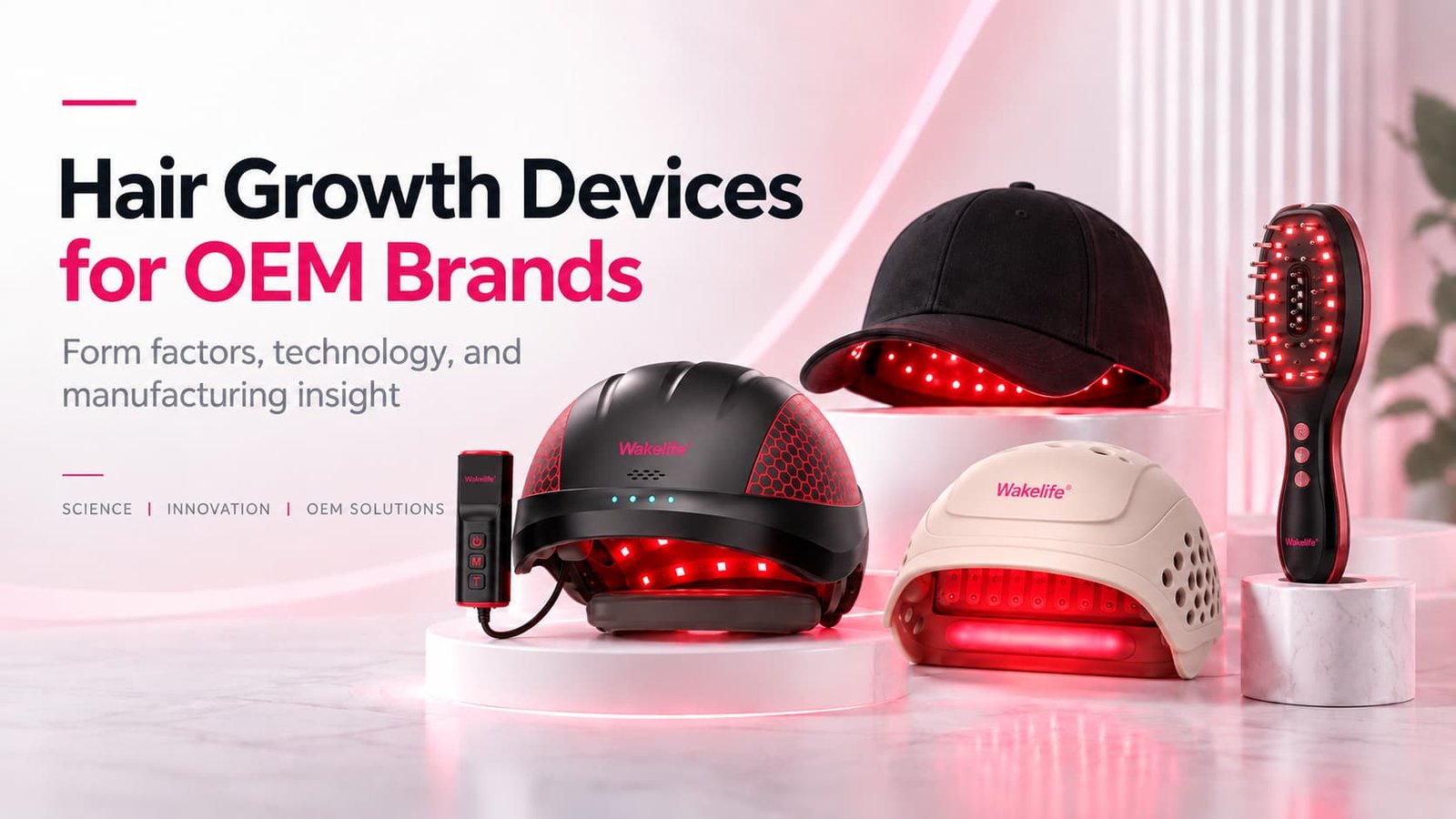
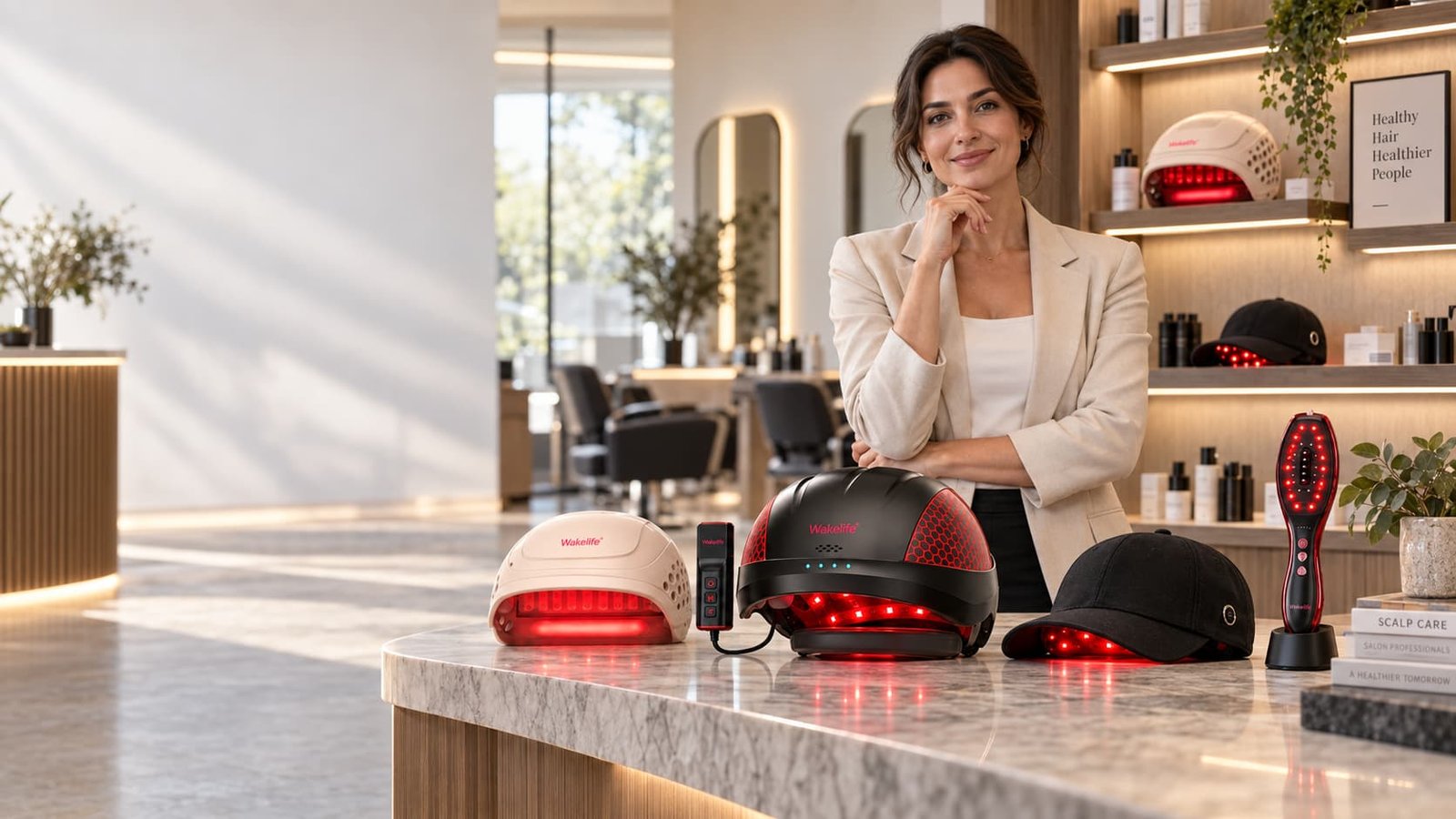
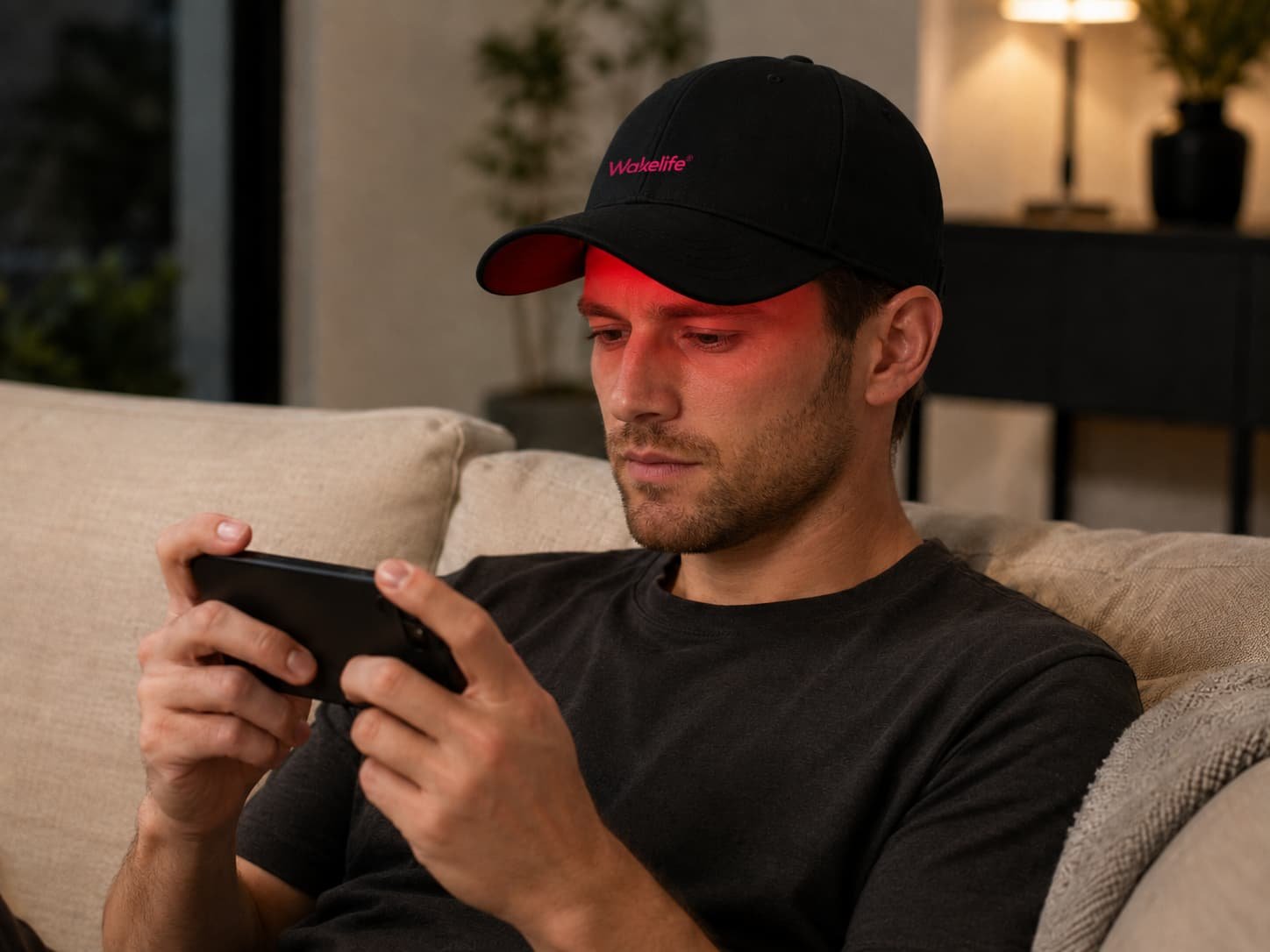
No form factor is universally best. Choose a cap, helmet or comb by the routine your customer can follow and the product your team can validate—not by shape, emitter count or a borrowed clinical claim.
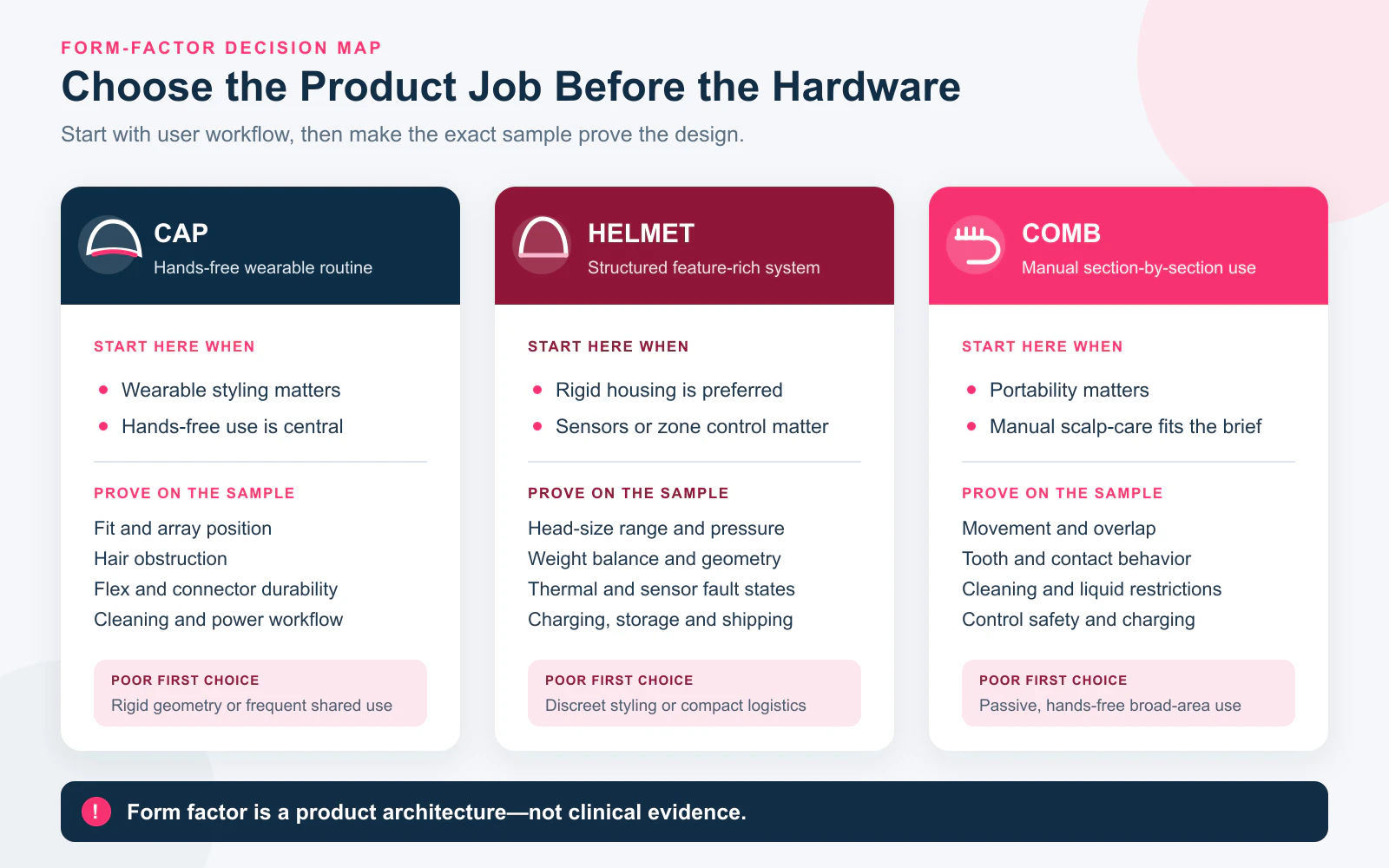
A cap and a helmet can both support hands-free use, but they create different fit, verpakking, control and positioning questions. A comb makes placement manual and section-by-section, which can suit a portable scalp-care routine but adds movement as a user variable. None of these differences establishes that one format produces better hair-growth outcomes.
For a first shortlist:
- Start with a cap when wearable styling, hands-free use and a relatively compact product story matter more than rigid geometry.
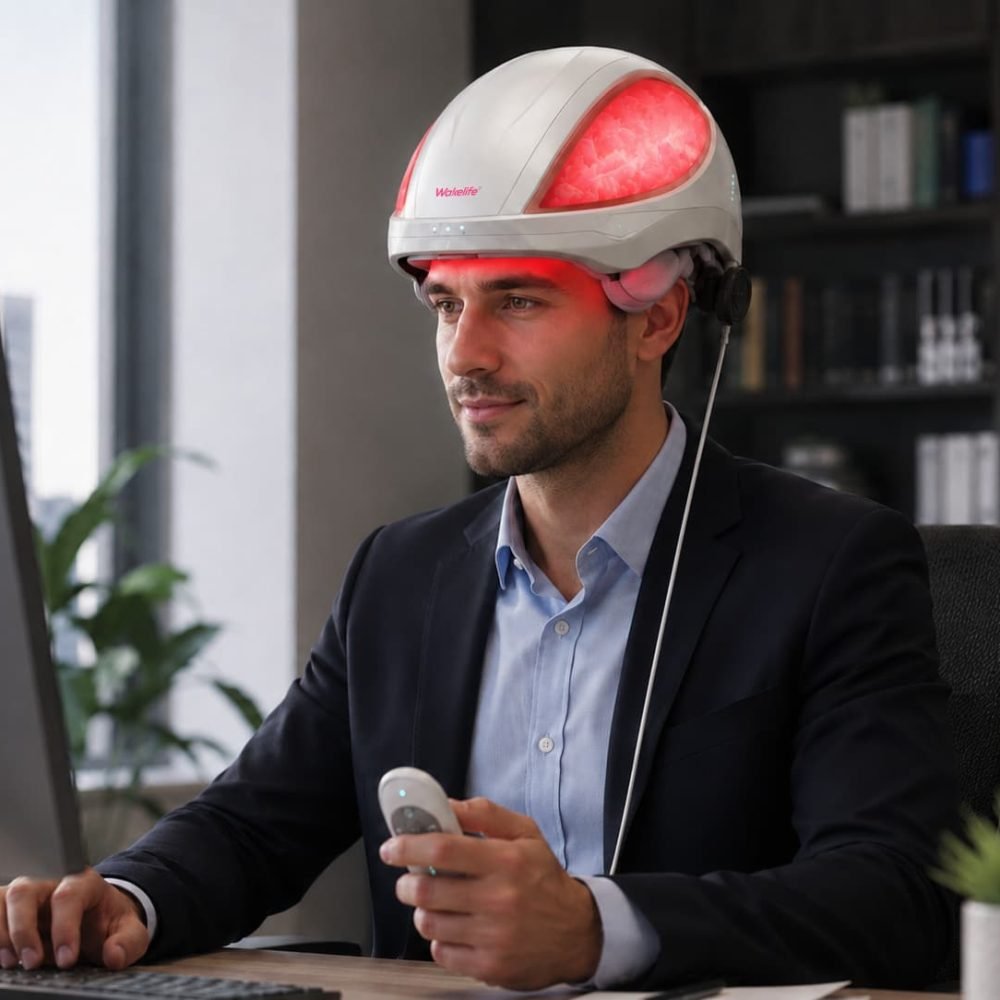
- Start with a helmet when the brief favors a structured premium device, a rigid internal layout, rechargeable operation, sensors or zone controls.
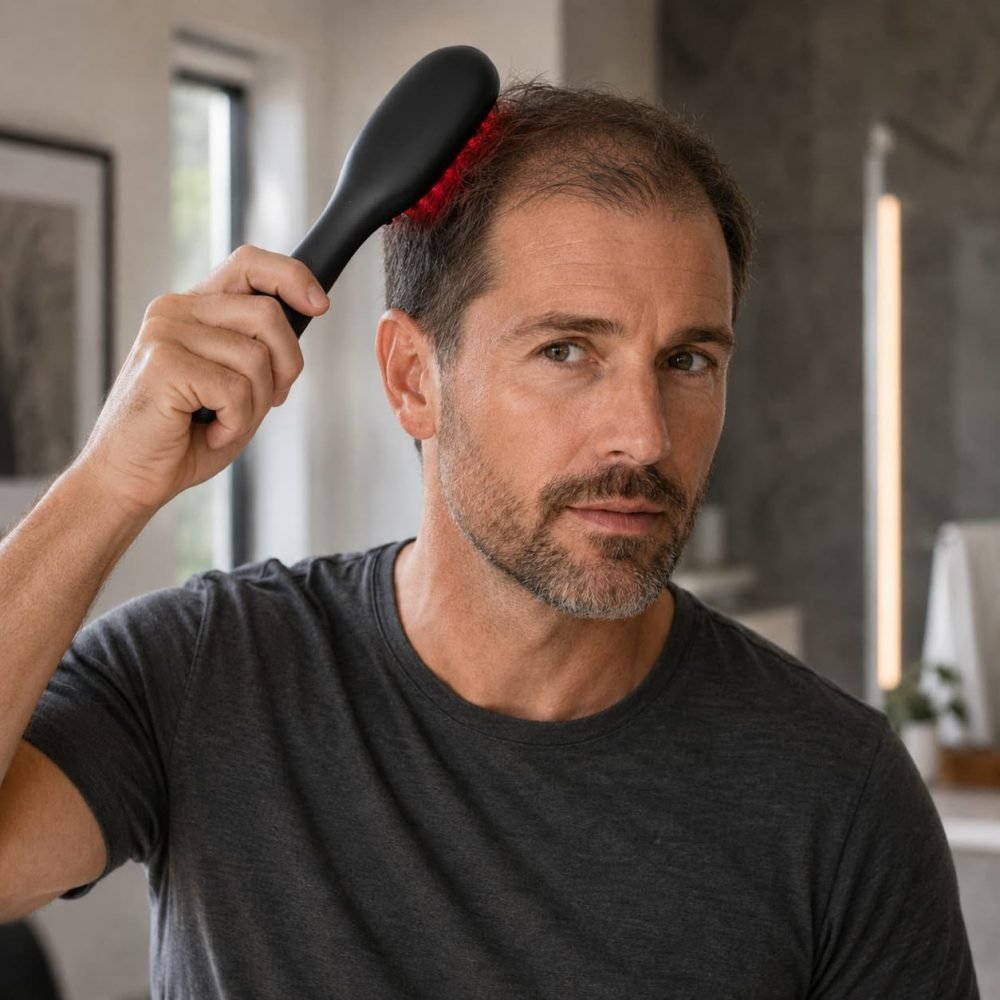
- Start with a comb when the product is meant to be handheld, portable and used section by section, or combined with a broader scalp-care routine.
Then test the exact sample. A form factor is a product architecture, not clinical evidence.
Which Hair-Growth Device Form Factor Should You Shortlist First?
Shortlist the format that best matches the intended user action, then use the sample to prove whether the design actually delivers that workflow.
| Vormfactor | Zet het eerst op de shortlist wanneer | Wat het monster moet bewijzen | Slechte eerste keuze wanneer |
|---|---|---|---|
| Kap | The brand wants a hands-free, wearable product with a lifestyle or hair-care presentation | Fit across the stated head-size range, array position, haar obstructie, flex or connector durability, schoonmaak grenzen, power workflow and spatial optical output | The project requires a rigidly controlled internal geometry, extensive onboard controls or frequent shared use |
| Helm | The range needs a structured, premium device with a rigid housing, defined array layout, sensoren, zone control or rechargeable operation | Hoofdgroottebereik, druk punten, weight balance, array-to-head position, thermisch gedrag, sensor fault states, opladen, storage and shipping volume | Discreet styling, compact logistics or a soft wearable experience is the main priority |
| Kam | The product should be handheld, portable and moved through selected scalp sections, possibly as part of a serum or scalp-care routine | Movement instructions, tooth/contact behavior, coverage repeatability, cleaning and liquid restrictions, control safety, charging and finished-product optical classification | The user expects passive, handsfree, broad-area exposure with minimal placement decisions |
The last column is deliberately as important as the first. A useful sourcing comparison should help a buyer reject the wrong format before paying for tooling, packaging and market documents.
What Actually Changes Between a Cap, Helmet and Comb?
The largest change is who controls the light-source position: the product geometry, the user’s hand, of een combinatie van beide.
Kap: wearable geometry with fit and material variables
A cap places the array inside a wearable structure. That can support a familiar consumer routine and hands-free use, but the word “cap” does not guarantee a fixed distance, uniform contact or repeatable scalp coverage. The answer depends on whether the array is integrated or removable, how the body flexes, how the product sits on different heads, and how hair changes the light path.
Voor een merk, the useful questions are physical: Does the array stay in the intended position? What happens after repeated flexing and cleaning? Does a power cable or external controller change the routine? If the cap body or textile styling changes, which fit, thermisch, optical and durability checks must be repeated?
Helm: rigid geometry with more system-level checks
A rigid helmet can make the source layout and housing geometry more defined, but “rigid” is not the same as “uniform exposure.” Head size, hair volume, internal clearance, source angle and local pressure still affect use. The benefit of a structured shell must therefore be demonstrated with an output map and fit testing, not assumed from the silhouette.
Helmet projects also tend to bring more system questions when they include a battery, display, sensors or independently controlled zones. Those features can improve product feedback and error handling, but they also expand firmware, opladen, thermisch, fault-state, labeling and after-sales review.
Kam: manual placement becomes part of the protocol
A comb parts or moves through the hair while the user positions the active area. This makes the format compact and suitable for section-by-section use, but speed, overlappen, contact and route across the scalp become part of repeatability.
An FDA summary for the exact HairMax LaserComb cleared under K060305 illustrates the point: that device uses comb teeth to part the hair and an audible cue telling the user when to move to another section. It is a useful workflow example, not a universal comb schedule and not evidence for a different model.
How Should a Brand Choose Between Cap, Helmet and Comb?
Choose the product job before choosing the hardware. A target retail price or a preferred wavelength is not enough to define that job.
Use five commercial questions:
- What must the customer do? Decide whether the intended routine is passive and hands-free, manually guided, draagbaar, supervised or combined with a scalp-care product.
- Where will the product be sold? Foutcode, detailhandel, distributeur, salon and clinic channels create different needs for demonstration, opleiding, opslag, returns and document review.
- What does the price band need to carry? Do not assume comb means entry price or helmet means premium. Bronarchitectuur, controles, batterijen, materialen, testen, documents, packaging and order volume all affect the achievable cost structure.
- What can the brand honestly claim? A scalp-care positioning and a hair-growth medical-device claim do not have the same evidence or market pathway. Freeze the planned language before using it to select a platform.
- How much configuration change is planned? A logo or color change is different from changing the optical layout, bron, modi, controleur, structuur, firmware of het beoogde gebruik. The deeper the change, the less safely the project can rely on an existing test or document package without a new scope review.
This sequence prevents a common sourcing error: choosing the most impressive sample first and trying to invent the user, channel and claim strategy afterward.
Which Form Factor Fits a Clinic?
A helmet is not automatically clinic-grade, and a cap is not automatically consumer-only. The clinic workflow decides whether any format fits.
Before shortlisting a device for a clinic, document:
- whether it is used by one customer at home, loaned out, or shared between users;
- who positions and operates it, and how staff confirm correct use;
- the cleaning method, compatible agents, material limits and turnaround time;
- the supported head-size range and how fit is checked;
- how sessions, opladen, accessories and fault states are managed;
- what instructions, warnings and contraindications accompany the exact configuration;
- which intended use, evidence and target-market status support the proposed service and claims.
A rigid shell may be easier to place consistently in one workflow, while a handheld comb may allow staff to work through selected sections. Those are operational possibilities, geen klinische ranglijsten. A clinic should approve the process and the exact device together.
Why Can’t Emitter Count or One Output Number Decide the Winner?
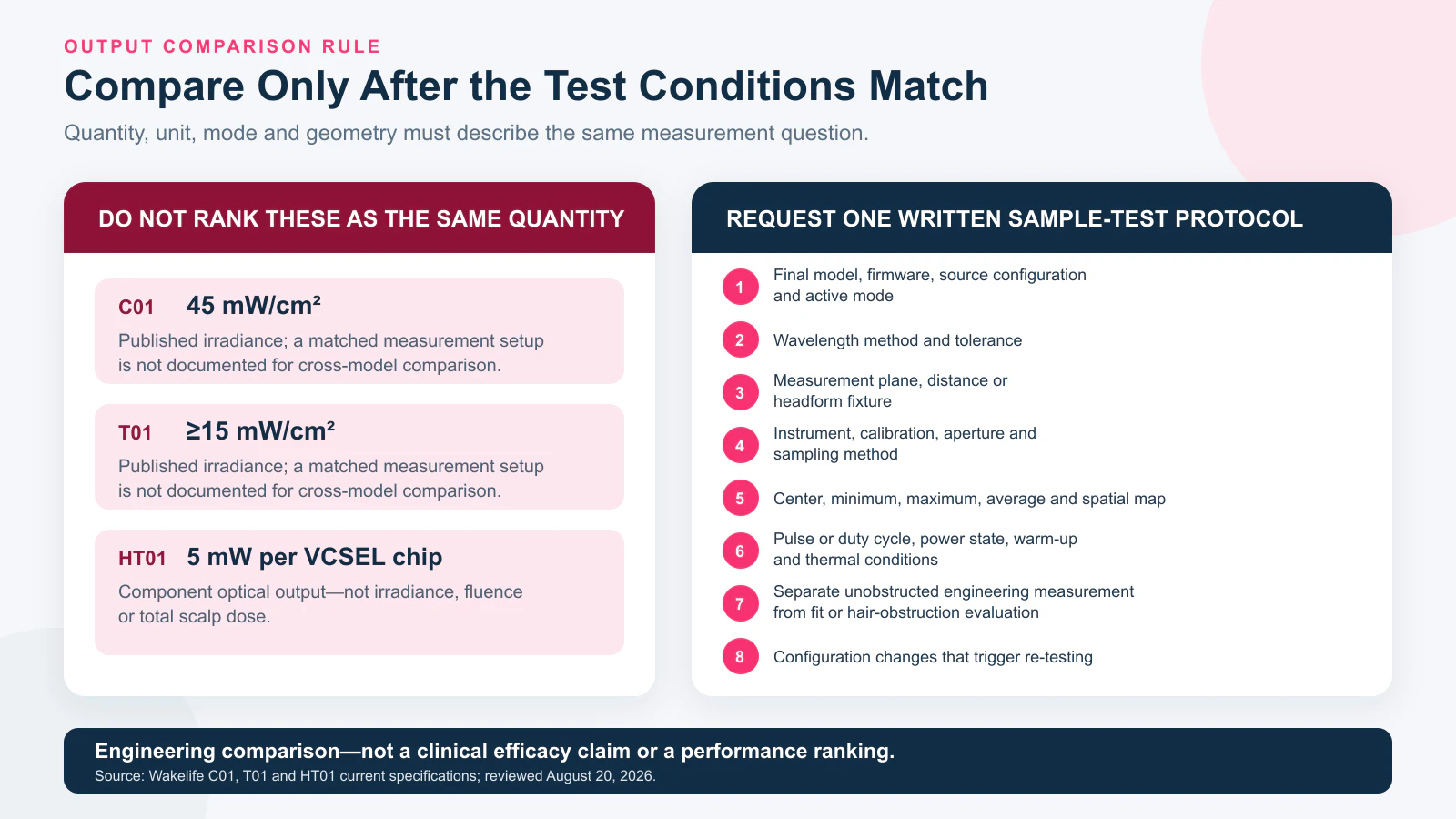
Emitter count and output specifications only become comparable after the source, eenheid, mode and measurement geometry are matched.
Bijvoorbeeld, an optical-output figure stated per laser or VCSEL chip is not irradiance. Irradiance is not fluence unless exposure time and operating behavior are defined. Two irradiance values still cannot be fairly ranked if the measurement plane, afstand, fixture, instrument, actieve modus, duty cycle and spatial sampling differ.
That is why the current Wakelife platforms should not be placed in a simple “highest number wins” table. HT01’s 5 mW specification is optical output per VCSEL chip, not mW/cm² or a total scalp dose. Cap and helmet irradiance data also require a matching measurement setup before being used for a cross-model decision.
Ask a supplier to test shortlisted samples under one written protocol:
- identify the final model, firmware, source configuration and active mode;
- state the wavelength measurement method and tolerance;
- define the measurement plane, distance or headform fixture;
- name the instrument, kalibratiestatus, aperture and sampling method;
- provide center, minimum, maximaal, average and spatial-map results where applicable;
- record pulse or duty-cycle behavior, battery or power state, opwarming en thermische omstandigheden;
- separate an unobstructed engineering measurement from any fit or hair-obstruction evaluation;
- state which changes would require re-testing.
This package is more useful to product, quality and compliance teams than a larger emitter count with no measurement context.
Does Clinical Evidence Show That a Cap, Helmet or Comb Works Better?
No current source in this review establishes a universal clinical winner among cap, helmet and comb formats.
A 2021 systematic review and meta-analysis of home-use low-level light/laser devices omvatte zeven dubbelblinde gerandomiseerde gecontroleerde onderzoeken met 607 deelnemers. The studied devices showed a hair-density signal versus sham in people with pattern hair loss, but the devices and protocols varied, follow-up was relatively short, and the authors called for comparisons between devices and energy sources.
Een aparte 2021 meta-analysis of photobiomodulation for androgenetic alopecia reported no statistically significant subgroup difference between comb-style and helmet/hat-style devices (p = 0.08). That was an across-study subgroup analysis—not a direct, same-protocol comparison. A non-significant subgroup difference does not prove that the formats are equivalent.
The practical rule is narrower: research on a named cap, helmet or comb can provide category context, but it does not validate an unstudied product with a similar shape, wavelength or emitter count. For the full evidence and marketing-language boundary, hij is bij Wakelife LLLT and red light evidence guide.
How Do Regulatory and Claims Requirements Affect the Form-Factor Choice?
Regulatory status follows the exact device, bedoeld gebruik, configuration and record—not the general shape.
De FDA legt uit dat a 510(k) is a premarket submission used to demonstrate substantial equivalence. A K number for another comb, cap or helmet does not clear a new model, and establishment registration, device listing or an accession number should not be presented as an exact-model clearance.
Laser and VCSEL designs add a separate finished-product safety question. Die van de FDA laser-product overview En IEC 60825-1 address laser classification and controls. A component name or per-chip power figure does not establish the class or eye-safety status of the finished product.
Voor een Amerikaanse. project, use official records to verify the applicant or holder, apparaatnaam, the model or model family identified in the record, bedoeld gebruik, decision and cleared labeling. Then use controlled project documents to establish how the quoted model, private label merk, fabrikant, holder and distributor or relabeler roles connect. Wakelife's Door de FDA goedgekeurde verificatiegids voor haargroeiapparaten provides the step-by-step check.
Which Wakelife Platform Matches Each Product Brief?
Use the three current platforms as different starting architectures, then verify the final project rather than transferring claims between them.
- C01 LED Hair & Hoofdhuidverzorging dop: an integrated, handsfree 660 nm en 850 nm LED cap with selectable brightness, timer options and an external power workflow. It is a candidate for a wearable hair/scalp-care brief; do not treat the page as C01-specific clinical or FDA-clearance evidence.
- T01 VCSEL Hair Growth Helmet: a rigid rechargeable 655±5 nm VCSEL helmet with zone control, wear sensors, selectable time and intensity, and a separate controller.
- HT01 VCSEL-laserhaar & Kam voor hoofdhuidverzorging: a handheld platform combining VCSEL, red LED and blue LED sources with selectable light modes, EMS, vibration and a detachable liquid applicator. It fits a manual scalp-care product concept; the detailed HT01 sourcing guide explains its optical, laser-safety and RFQ boundaries.
If the question is broader than form factor—supplier evidence, manufacturing scope, change control and RFQ design—return to the Fabrikant van haargroeiapparaten & OEM/ODM-gids.
What Should Go Into a One-Page Form-Factor Decision Brief?
Geef beheer, quality and the supplier the same nine answers before requesting a final quotation.
- Target country or region and planned launch date.
- Primair kanaal: Foutcode, detailhandel, distributeur, salon, clinic or another route.
- Intended user and use environment, including shared versus single-user operation.
- Required routine: handsfree, manually guided, draagbaar, supervised or combined with a scalp-care product.
- Target retail- en landed-cost-bereik, voorspelling, first-order quantity and packaging constraints.
- Planned product positioning and the exact claims currently under consideration.
- Preferred form factor and source architecture, with the reason for each preference.
- Requested changes to optical layout, modi, controles, huisvesting, firmware, accessoires, packaging and labeling.
- Sample acceptance tests and required clinical, regelgevend, optisch, veiligheid, quality and manufacturing records.
This one-page brief gives the buyer personal cover, gives quality and compliance a review path, and gives management a visible link between the SKU and the product-line strategy. It also lets a supplier identify gaps before quoting a configuration that cannot support the intended launch.
De onderste regel
Choose a cap, helmet or comb by the behavior and operating system you want to build—not by an assumed form-factor advantage. A cap can support a wearable hands-free routine, a helmet can support a structured feature-rich platform, and a comb can support portable manual sectioning. Each format also creates different fit, meting, schoonmaak, opleiding, logistics and validation work.
Complete the one-page decision brief first. If a Wakelife platform appears to fit, de doelgroep sturen, kanaal, intended user workflow, geplande claims, required price band, customization list and document requirements. Wakelife can then map the brief to C01, T01, HT01 or a different development path and return the configuration gaps that must be closed before sample approval.
Referenties
-
1
Lueangarun S, et al. Een systematische review en meta-analyse van gerandomiseerde gecontroleerde onderzoeken naar door de Amerikaanse Food and Drug Administration goedgekeurde onderzoeken, Thuisgebruik, Apparaten voor licht-/lasertherapie op laag niveau voor patroonhaarverlies: Apparaatontwerp en technologie. J Clin Aesthet Dermatol. 2021;14(11):E64–E75.
-
2
Gupta AK, et al. Meta-analysis of photobiomodulation for the treatment of androgenetic alopecia. J Dermatolog Treat. 2021;32(6):643–647.
- 3
-
4
ONS. FDA. Premarket-melding 510(k).
-
5
ONS. FDA. Laserproducten en -instrumenten.
-
6
Internationale Elektrotechnische Commissie. IEC 60825-1:2014—Safety of laser products, Deel 1.