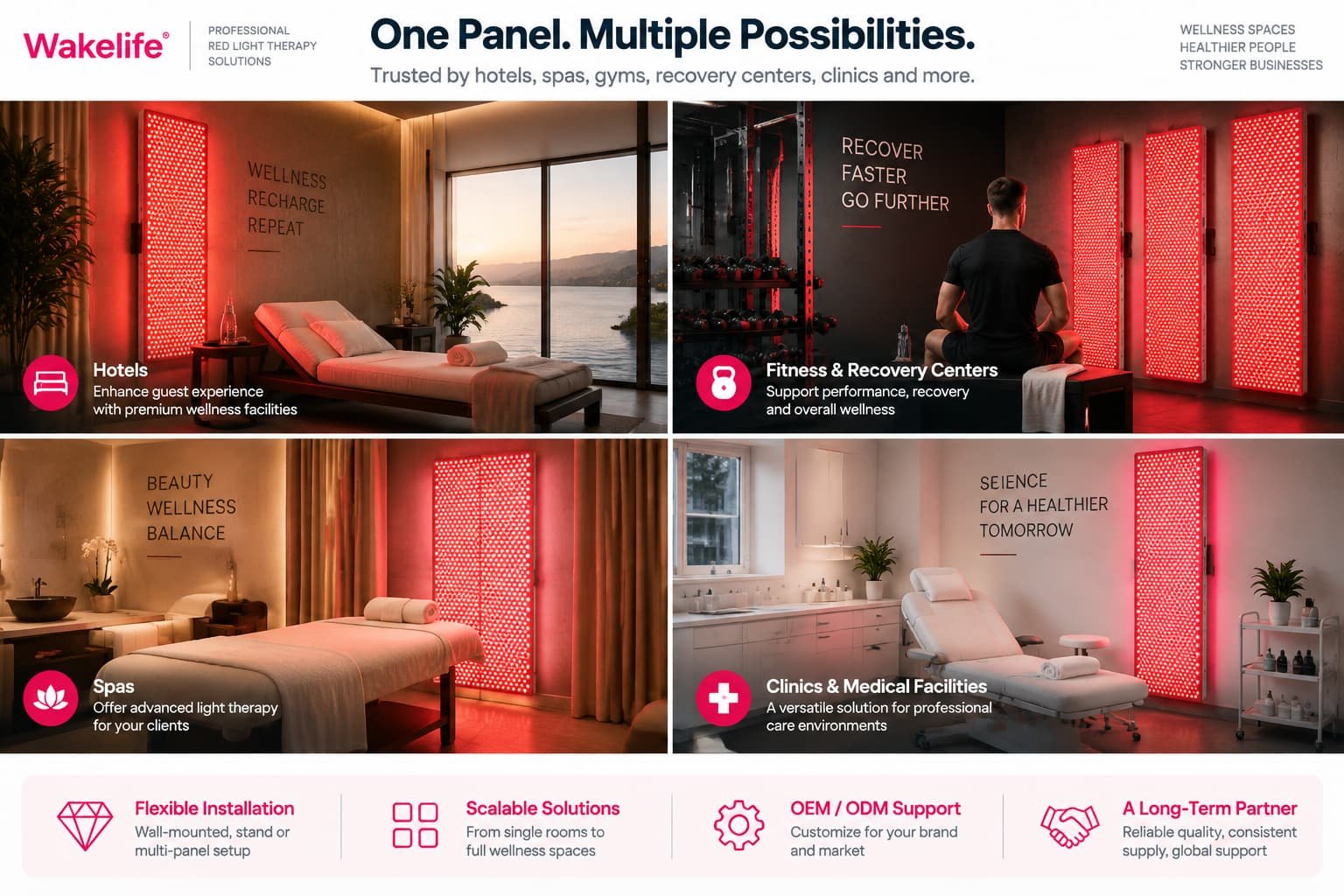
TL;DR (per gli acquirenti) BK900 è un abbronzatura UVB per il consumo di metà corpo & pannello di esposizione alla luce: non è un dispositivo medico. Non diagnostica, trattare, cura, o prevenire qualsiasi malattia. 180 LED. 9 lunghezze d'onda, Senza raggi UVA. 7 Modalità. Costruito secondo ISO 13485 + MDSAP in una struttura registrata dalla FDA. Per i marchi che hanno già convalidato la categoria UVB e sono pronti a diventare premium o per studi e spazi benessere che necessitano di una copertura per metà corpo con risultati misurabili e un posizionamento di conformità onesto.
1. Cerchiamo di essere chiari su cosa è questo dispositivo e cosa non lo è
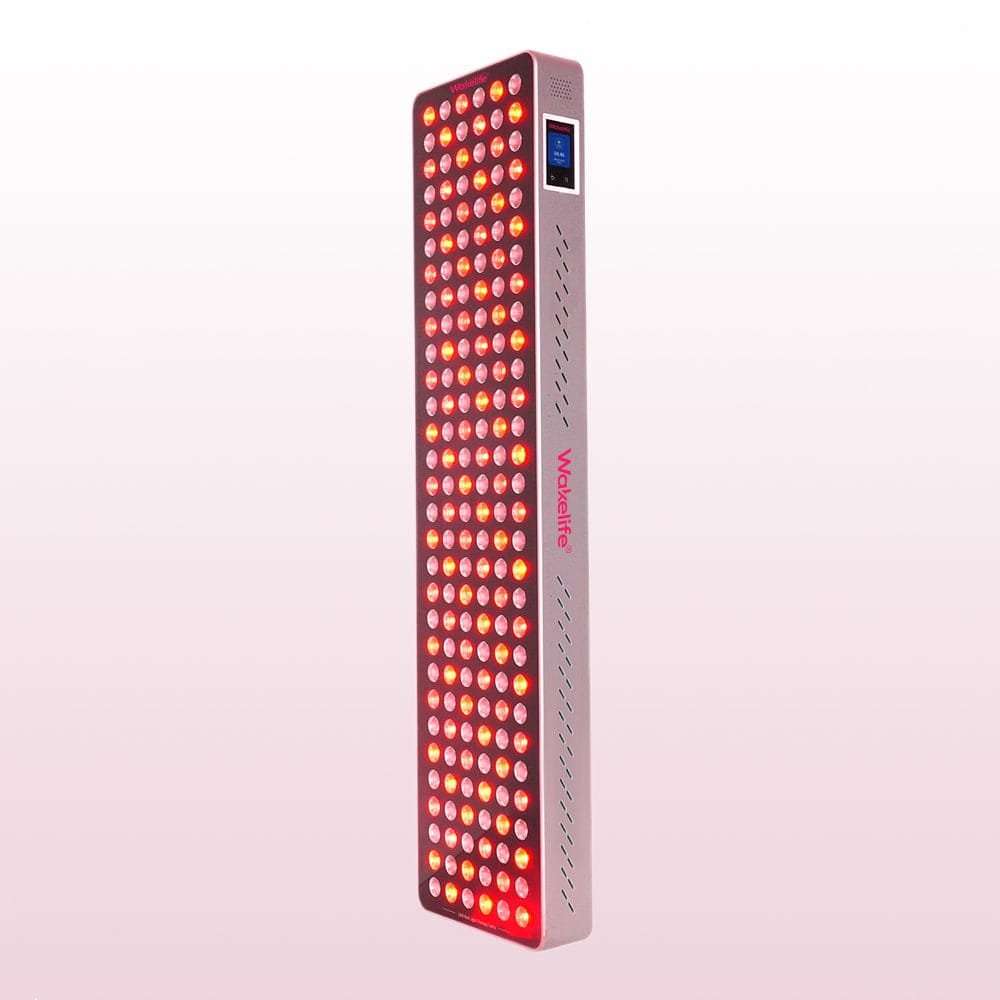
BK900 è un abbronzante UVB di livello consumer / pannello di esposizione alla luce. Non diagnostica, trattare, cura, o prevenire qualsiasi malattia, e non dovrebbe mai essere commercializzato in questo modo.
Il suo stato di conformità: IL La serie BK ha superato il CE, FCC, e test RoHS, è prodotto sotto Iso 13485 + MDSAP sistemi in una struttura registrata dalla FDA, E BK900 è incluso nelle informazioni sull'elenco dei dispositivi FDA.
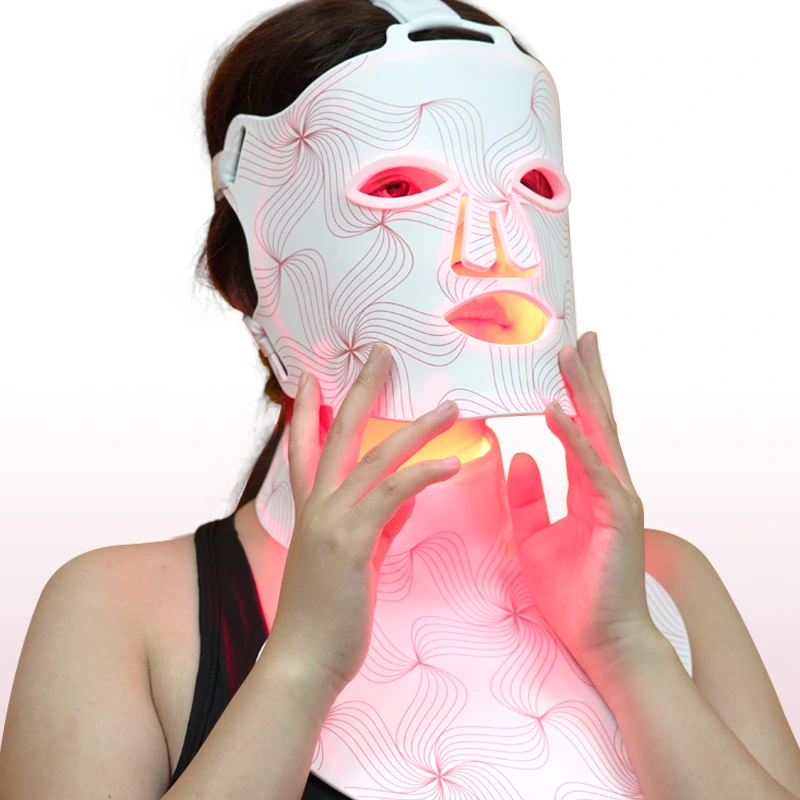
Una distinzione che non tralasceremo, e nemmeno tu dovresti: UN elenco dei dispositivi è la registrazione del dispositivo presso la FDA. È non una “autorizzazione” o “approvazione” della FDA. La stessa FDA è esplicita su questo punto – vedi Registrazione ed elenco dei dispositivi E 510(k) Notifica pre-mercato. La nostra struttura detiene un separato 510(k) spazio (K250830), ma quell'autorizzazione appartiene a uno specifico Maschera facciale LED, non a BK900. Puoi verificarlo tu stesso nel file FDA 510(k) banca dati. Non lasceremo che questi due vengano confusi, e ti consigliamo di tenerli separati anche sulle tue pagine.
Perché aprire con questo? Perché abbiamo visto acquirenti incollare una scheda tecnica gonfiata in un negozio DTC e riscontrare un problema di conformità della piattaforma. Preferiamo dire una frase in meno piuttosto che farti assumere la responsabilità delle nostre parole. Tutto ciò che segue presuppone che tu abbia assorbito questa distinzione.
Se sei completamente nuovo nella categoria UVB e desideri il quadro completo sul Gruppo IARC 1 classificazione, 311background clinico nm, e la filosofia del controllo ingegneristico: ne parleremo in modo approfondito nel Scrittura BK300. Tutto ciò vale anche per BK900. Questa pagina si concentra su ciò che è diverso: energia, copertura, e adattamento del canale.
2. Un pannello a metà corpo che rimane pratico
Quando i marchi del benessere valutano un pannello di esposizione alla luce per la produzione a marchio del distributore, due domande di solito vengono prima: È costruito secondo un vero standard di qualità? E La scheda tecnica è effettivamente valida?? BK900 è stato progettato pensando ad entrambi.
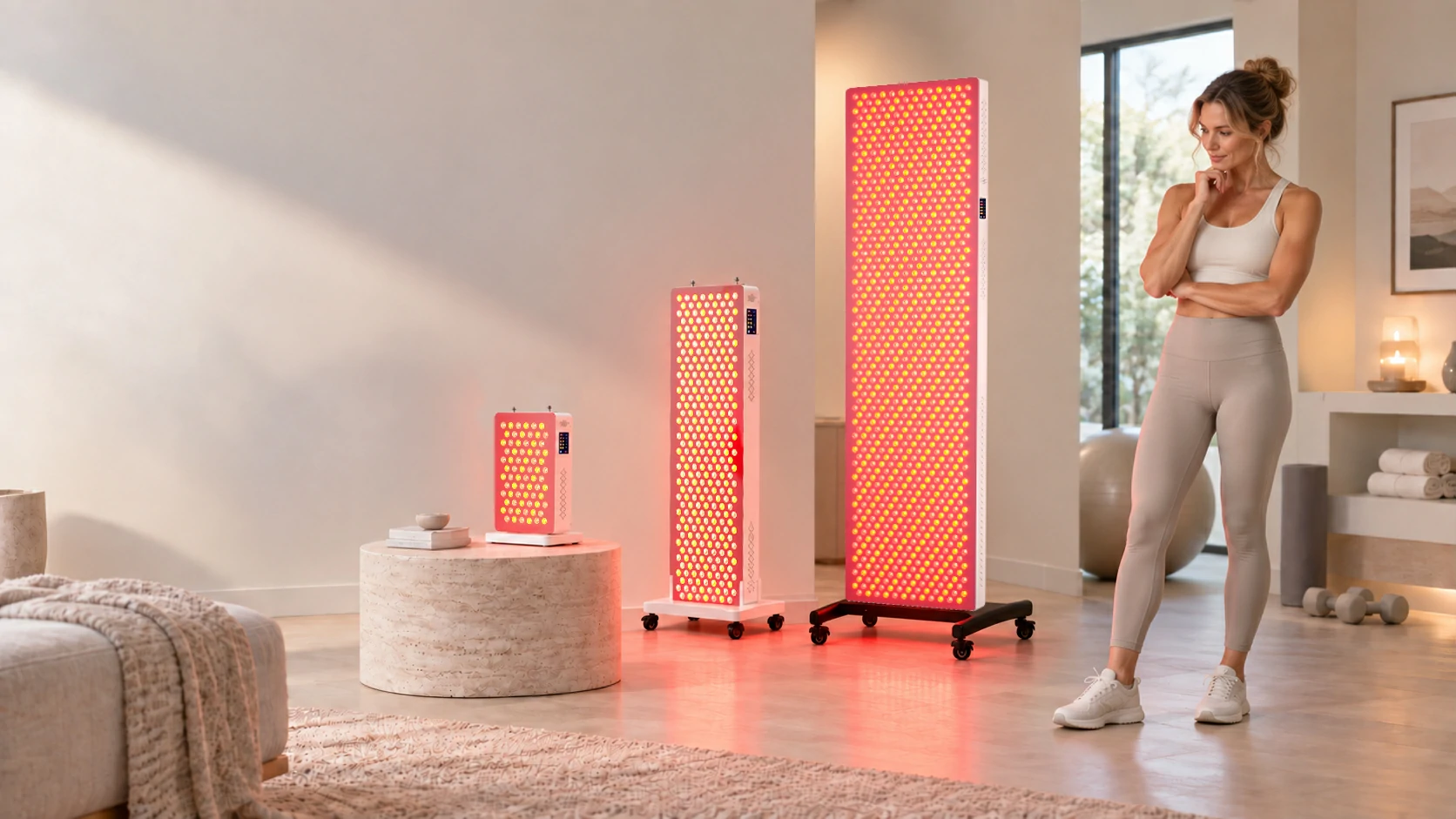
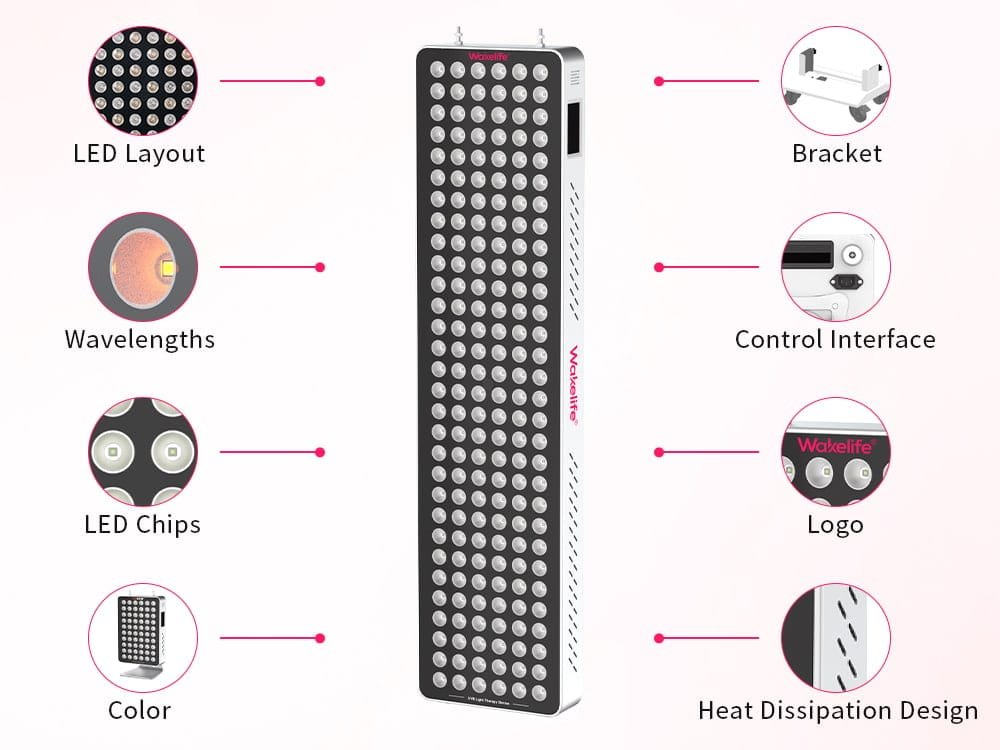
A 890 × 220 × 65 mm, il BK900 è costruito attorno alla copertura di metà corpo. La lunghezza di 890 mm consente agli utenti di rivolgersi al busto, Indietro, o gambe attraverso un arco significativo, mentre la larghezza di 220 mm mantiene il pannello leggero, facile da montare, e semplice da spedire. L'alloggiamento utilizza a Copertura anteriore e posteriore in acciaio laminato a freddo con un Telaio in alluminio AL6063 - rifinito in argento anodizzato brillante, con opzioni di colore personalizzate disponibili per i partner OEM.
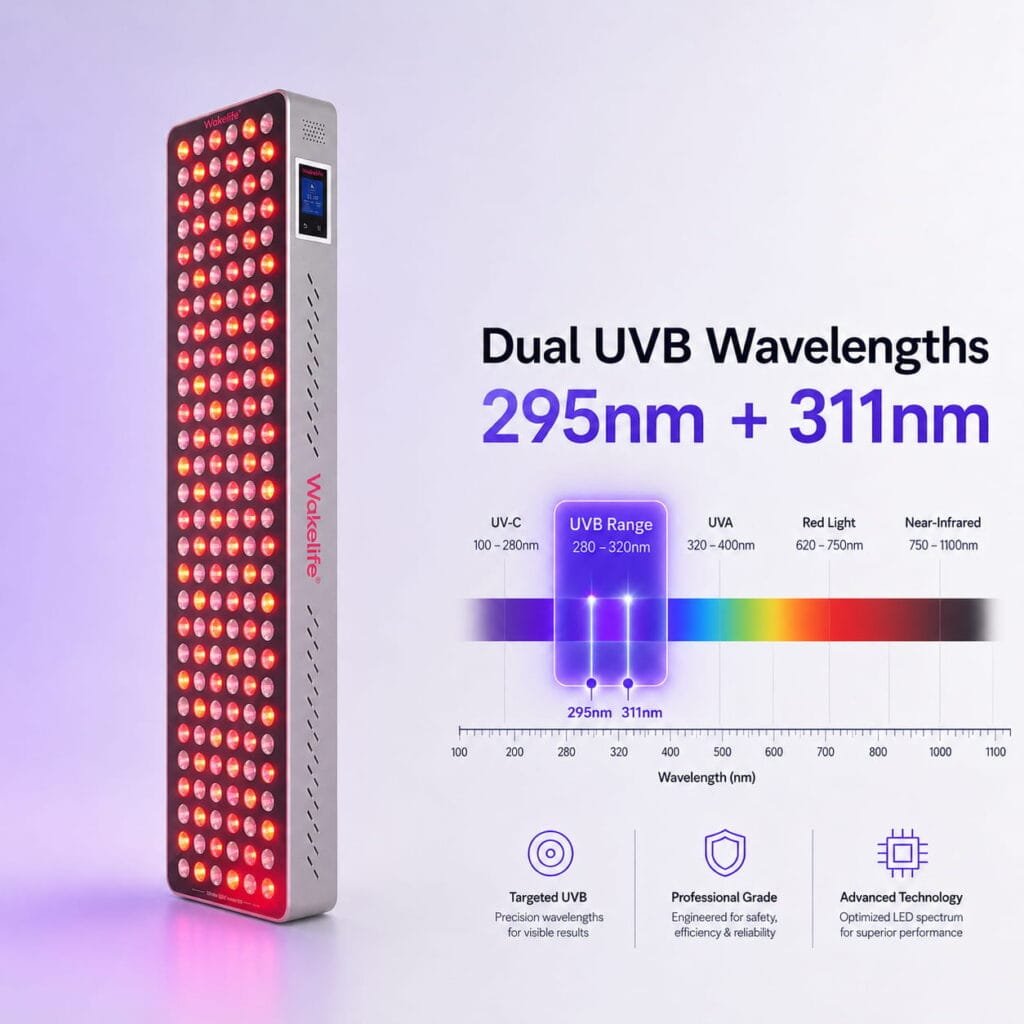
Dietro il diffusore sedersi 180 SMD 3535 LED, combinando chip a tre core a tre colori insieme a chip single-core a colore singolo. Questa architettura consente al dispositivo di fornire nove lunghezze d'onda distinte da un singolo pannello senza sacrificare la densità di uscita. Quattro categorie di luci in un unico alloggiamento:
- UVB (295nm + 311nm) — modalità di abbronzatura e di esposizione ai raggi UVB, regolato da un sensore di distanza integrato
- Blu-Viola (415nm) — routine mirate per la cura della pelle
- Rosso (630nm + 660nm) — routine cutanee a livello superficiale
- Nir & E (810nm + 830nm + 850nm + 1060nm) - più profondo, routine orientate al recupero
L'uscita è completamente regolabile: la luminosità è compresa tra 0 e 100%, frequenza degli impulsi 0–40 Hz, e il timer integrato può essere impostato da 5 A 20 minuti. Il tutto controllato tramite a 3.0″Schermo tattile LCD TFT. Il pannello accetta 100–240 V CA a 50/60 Hz e ha un grado di protezione IP20.
3. Guadagni il diritto di dire “controllato” solo dopo essere stato onesto riguardo al rischio
La maggior parte dei pannelli evita i raggi UVB perché, incontrollato, brucia e la sovraesposizione cronica comporta un rischio reale di cancro alla pelle. IARC (l’agenzia di ricerca sul cancro dell’OMS) classifica i dispositivi abbronzanti che emettono raggi UV come Gruppo 1 agenti cancerogeni - la categoria a rischio più elevato - documentata Monografie IARC Volume 100D: Radiazione. IL Radiazione UV dell’OMS D&UN lo afferma chiaramente per il pubblico generale.
La nostra logica: il rischio non viene rimosso evitandolo, ma tramite il controllo tecnico. La linea è sempre controllato contro. incontrollato.
Ecco esattamente come lo applica BK900:
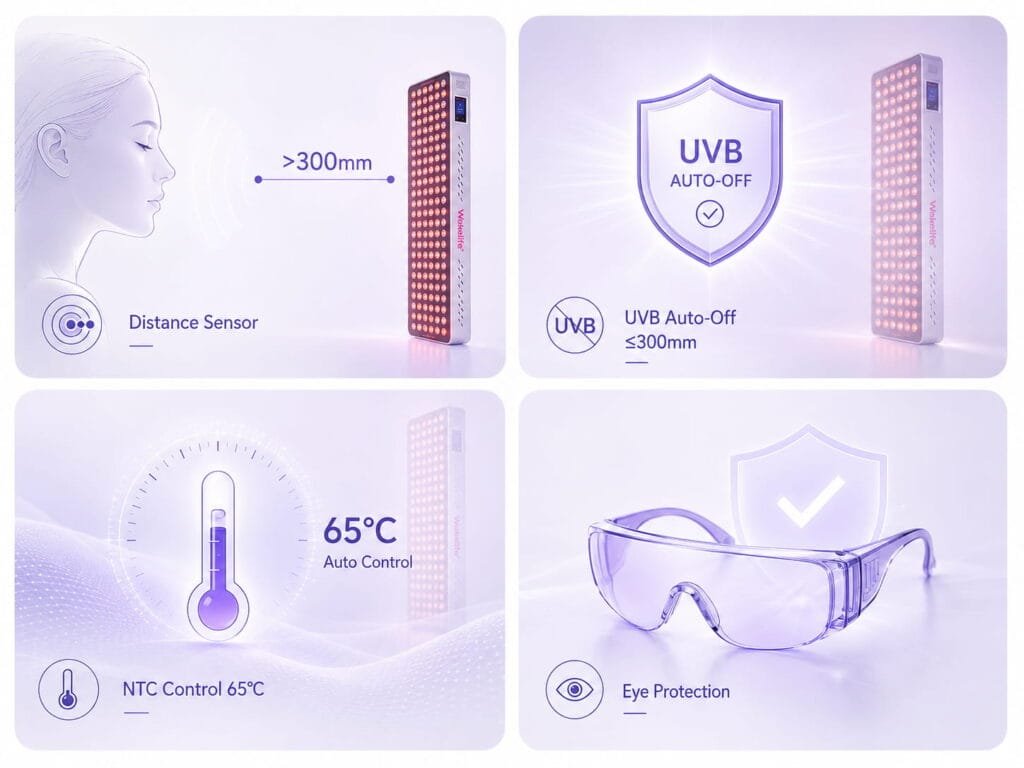
- Sensore di distanza + spegnimento automatico UVB: UVB si attiva solo quando l'utente è posizionato oltre 300mm (30cm). Se l'utente si sposta all'interno di tale soglia, il canale UVB taglia fisicamente, non una spia, una dura chiusura.
- Controllo della temperatura NTC: Sopra 65°C, il dispositivo riduce automaticamente la potenza, prima che diventi un evento di sicurezza.
- Occhiali protettivi inclusi — coerente con i principi di sicurezza fotobiologica delineati nel Linee guida ICNIRP sui limiti di esposizione alle radiazioni ultraviolette, il riferimento ad accesso libero riconosciuto a livello internazionale per i limiti di esposizione ai raggi UV. Questo requisito dovrebbe essere rafforzato sugli imballaggi, nel manuale utente, e in qualsiasi materiale di onboarding che un marchio prepara per gli utenti finali.
- Avviso cicalino a distanza di lavoro non sicura.
Questo è ciò che in realtà significa "l'ingegneria porta il controllo, non il manuale di istruzioni"..
4. 9 Lunghezze d'onda, Senza raggi UVA
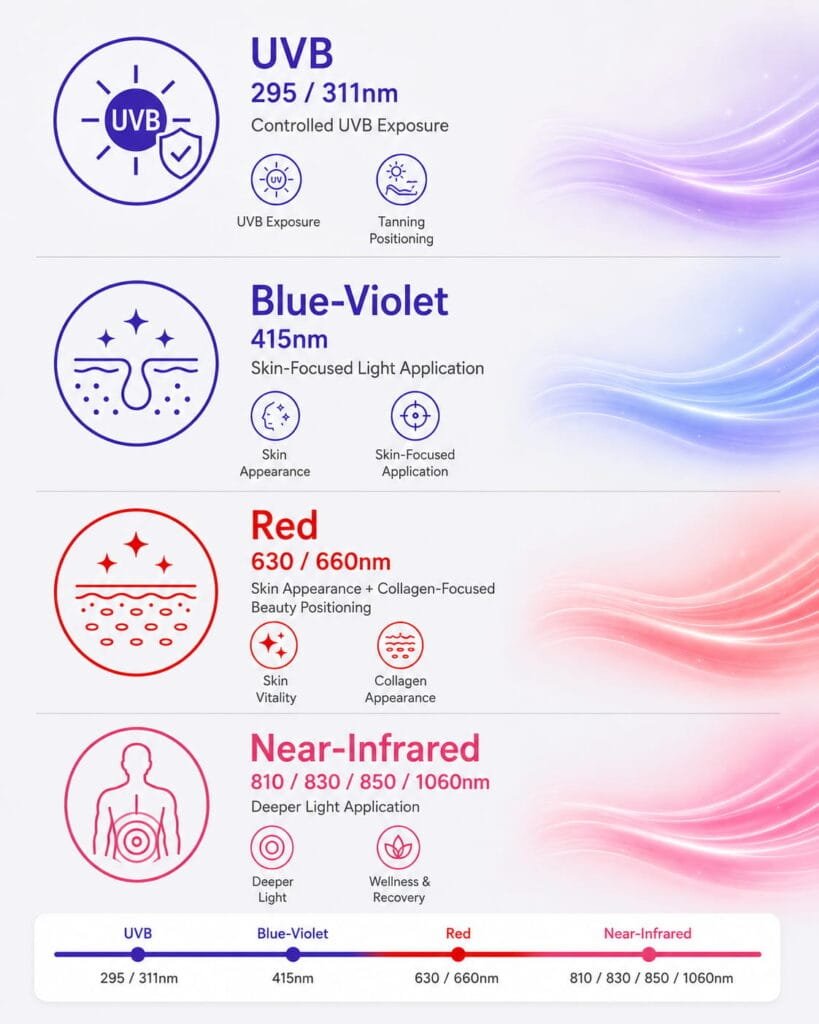
Lo spettro di BK900: 295/311nm (UVB), 415nm (blu-viola), 630/660nm (rosso), 810/830/850/1060nm (NIR/IR). Nessun UVA: la banda più associata al fotoinvecchiamento e al danno al DNA, come dettagliato dal Spiegazione UVA/UVB della Skin Cancer Foundation. “Basato sui raggi UVB, Senza UVA” è un elemento di differenziazione più pulito rispetto ai tradizionali lettini abbronzanti. Non diluirlo implicando UVA.
Le lunghezze d'onda non cambiano rispetto a BK300. Ciò che cambia è con chi conduci. Su un pannello a metà carrozzeria premium, abbronzatura (UVB) e recupero dei tessuti profondi (Nir) diventare le storie degli eroi, non il cast di supporto.
5. Sette modalità, Un display: con nomi onesti
Il BK900 offre sette modalità selezionabili attraverso il touch screen LCD TFT da 3,0 pollici integrato. I nomi visualizzati sono fissi sull'interfaccia del dispositivo; ciò che conta per la conformità è il linguaggio di posizionamento che utilizzi nel tuo marketing. Per M4 “Diminuire” e M6 “Salute delle ossa” in particolare, i nomi che possono implicare effetti per i quali il dispositivo non è stato autorizzato, utilizzano il linguaggio di posizionamento, non il nome visualizzato.
M1 · Abbronzatura — 630/660 + 810/830/850/1060 + 295/311nm
Posizionamento: “Routine abbronzante UVB.” Modalità abbronzatura UV, funziona oltre la soglia della distanza di lavoro di 300 mm imposta dal sensore di distanza. Evitare: “abbronzatura sicura, rischio zero”
M2 · Collagene della pelle — 630/660 nm
Posizionamento: “Routine di benessere della pelle.” Routine per la cura della pelle a luci rosse. Evitare: “inverte l’invecchiamento”
M3 · Recupero muscolare — 810/830/850/1060 nm
Posizionamento: “Routine di recupero e benessere del corpo.” Modalità NIR dominante per le routine post-attività. Evitare: “tratta le lesioni muscolari”
M4 · Diminuire — 630/660 + 295nm
Posizionamento: “Routine leggera e rilassante.” Modalità rilassante a bassa intensità. Evitare: “riduce l'infiammazione”
M5 · Cura dell'acne — 630/660 + 415nm
Posizionamento: “Supporto per la cura della pelle soggetta a imperfezioni.” Blu-viola (415nm) routine leggera mirata per la cura della pelle. Evitare: “tratta l'acne”
M6 · Salute delle ossa — 295/311 nm
Posizionamento: “Routine di esposizione alla luce UVB.” Modalità di esposizione UVB, funziona oltre la distanza di lavoro di 300 mm. Evitare: “sostiene la salute delle ossa”
M7 · Personalizzato — Lunghezze d'onda selezionate dall'utente, tempo, e impulso
Posizionamento: “Impostazione OEM/ODM flessibile.” Gli operatori possono configurare la propria combinazione di output, frequenza degli impulsi, e tempistica: rendendo il panel adattabile ai diversi posizionamenti del marchio e alle routine degli utenti finali.
6. Comprendere i numeri dell'irradianza: onestamente
L'irradianza è il punto in cui molti pannelli diventano vaghi. I dati del BK900 sono misurati a distanze fisse:
3 pollice (~76 mm): 160–180mW/cm² 9 pollice (~229 mm): 60–80mW/cm² 12 pollice (~305 mm): 60–80mW/cm²
Tre cose che devi sapere per leggere correttamente questi numeri:
Primo, la figura da 3 pollici è un riferimento di misurazione, non una raccomandazione sull'uso degli UVB. Perché il sensore di distanza taglia gli UVB a ≤300 mm, l'esposizione reale ai raggi UVB avviene nell'intervallo di 30 cm+, vale a dire, la zona 60–80 mW/cm². Se il tuo marketing implica “stand 3 centimetri di distanza per la massima potenza,” che contraddice la logica di sicurezza propria del dispositivo. Comunica ai tuoi utenti finali la distanza di sicurezza, e la dosimetria rimane onesta.
Secondo, l'output più elevato alla distanza di misurazione riflette ancora una reale differenza ingegneristica rispetto a. BK300. L'array da 180 LED del BK900 e la sua superficie più ampia significano che più fotoni vengono distribuiti attraverso una zona di metà corpo a una distanza di lavoro sicura. Per il proprietario di un marchio, questo supporta i prezzi premium con i dati: è la differenza tra “il nostro pannello è potente” E "il nostro pannello fornisce 60–80 mW/cm² alla distanza di lavoro: ecco la misurazione."
Terzo, L'emissione UVB non è inclusa nei valori di irradianza sopra riportati. Questi valori si riferiscono al rosso combinato + uscita nel vicino infrarosso. UVB (295nm / 311nm) si attiva solo oltre i 300 mm, controllato dal sensore di distanza integrato. Li separiamo perché la dosimetria UVB è una conversazione diversa dall'output rosso/NIR e la loro fusione crea rischi di conformità a valle.
7. Per chi è effettivamente il BK900
Lo Studio o Spazio Benessere
Hai bisogno di un dispositivo che riempia una sala di trattamento. Copertura di metà corpo. Risultati misurabili attorno ai quali il personale può costruire protocolli di servizio. Architettura di sicurezza che soddisfa le domande sulla responsabilità: spegnimento automatico del sensore di distanza, controllo della temperatura, occhiali protettivi. Una unità, sette modalità. Meno attrezzature da gestire.
Hai lanciato un pannello compatto. Funziona. Ora i tuoi distributori chiedono uno SKU premium, qualcosa che possono inserire negli account professionali a un prezzo più alto. BK900 si inserisce nella catena di fornitura esistente senza un nuovo rapporto con il fornitore. Stessa architettura della lunghezza d'onda. Stesso impianto di produzione. Stesso pacchetto di conformità. Appena confezionato per un livello diverso.
Il progetto del marchio del distributore Premium
Stai costruendo un marchio attorno all'abbronzatura professionale e all'esposizione alla luce. Hai bisogno di un prodotto eroe, qualcosa che assomigli e funzioni come un fiore all'occhiello. Formato a metà corpo. Schermo tattile. Interfaccia utente personalizzata tramite M7. Il tuo logo, il tuo colore, la lunghezza d'onda preimpostata. Commercializzalo come dispositivo da studio, costruito secondo le tue specifiche.
Non sono sicuro che BK900 sia la soluzione giusta? Se stai testando la categoria UVB per la prima volta, necessitano di un MOQ e di costi di trasporto inferiori, o si rivolgono agli utenti domestici piuttosto che ai canali professionali — BK300 è il punto di ingresso. BK900 è ciò a cui ti diplomi una volta dimostrata la categoria.
8. Riferimento rapido alle specifiche
| Articolo | BK900 |
|---|---|
| Tipo | Abbronzatura UVB metà corpo & pannello di esposizione alla luce |
| Dimensioni | 890 × 220 × 65 mm |
| Copertura | Lunghezza a metà corpo (torso, Indietro, gambe) |
| LED | 180 PC (SMD 3535, tre colori a tre conduttori + single-core singolo) |
| Lunghezze d'onda | 295, 311, 415, 630, 660, 810, 830, 850, 1060nm (Senza raggi UVA) |
| Modalità | 6 preimpostato + 1 costume |
| Display | 3.0″Schermo tattile LCD TFT |
| Luminosità / Impulso / Timer | 0–100% / 0–40Hz / 5–20 minuti |
| Irraggiamento | 160-180 @ 3 pollici; 60–80 @9–12 pollici (MW/cm²) — UVB non inclusi; L'UVB si attiva solo oltre i 300 mm |
| Sicurezza | Sensore di distanza (Spegnimento automatico UVB ≤300 mm), NTC ≤65°C, occhiali inclusi, cicalino |
| Alloggiamento | Copertura in acciaio laminato a freddo; Telaio in alluminio AL6063 |
| Fine | Argento anodizzato brillante (colori personalizzati disponibili per OEM) |
| Voltaggio / IP | 100–240v AC, 50/60Hz / IP20 |
| Conformità | Ce, FCC, Rohs; Iso 13485 + MDSAP; Dispositivo FDA elenco |
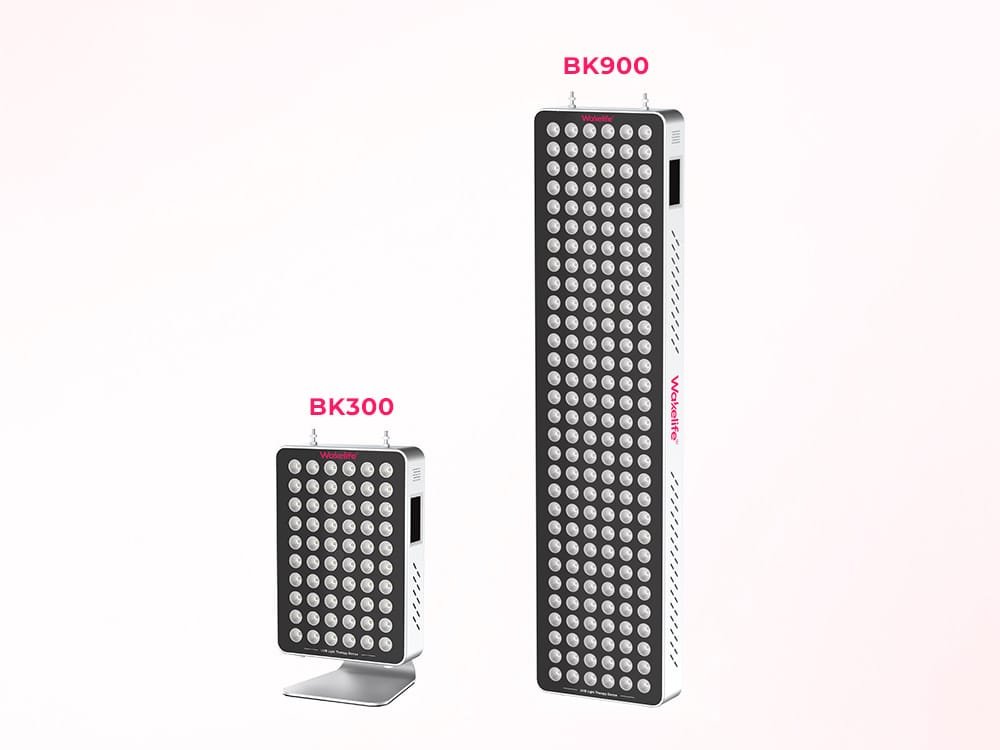
9. BK300 contro. BK900: Quale si adatta al tuo canale?
| BK300 (Compatto) | BK900 (Mezzo corpo) | |
|---|---|---|
| LED | 60 PC | 180 PC |
| Irradianza @ 3 pollici | 130–150mW/cm² | 160–180mW/cm² |
| Irradianza @ 9–12 pollici | 40–60mW/cm² | 60–80mW/cm² |
| Dimensioni | 320 × 220 × 65 mm | 890 × 220 × 65 mm |
| La migliore vestibilità | Livello base, monozona, test di mercato, canali sensibili al prezzo | Canali professionali, uso studio, SKU premium, marchi UVB affermati |
| Non per | Copertura di metà corpo, posizionamento da studio | Ingresso nel mercato con noli ridotti, richiedere test con un budget limitato |
BK300 and BK900 are not the only available formats. Buyers who also need a larger panel with selectable operating zones can compare the complete BK Series UVB panel range, tra cui BK1800.
10. Perché lo standard di produzione è importante
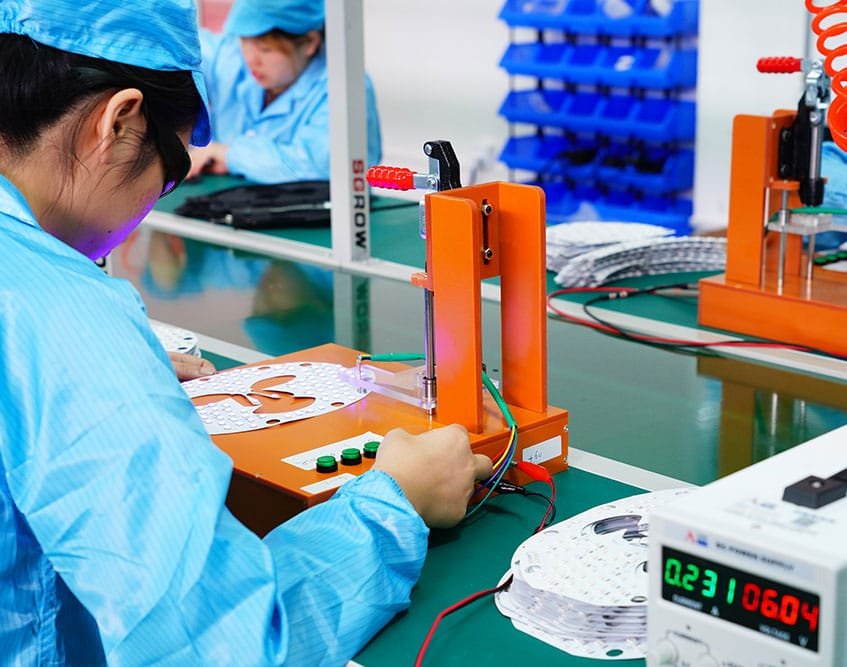
Molti fornitori possono spedire un pannello. Sono meno quelli che possono spedirne uno realizzato secondo un sistema riconosciuto dalle autorità di regolamentazione e dagli acquirenti al dettaglio seri. Il BK900 è prodotto con an Iso 13485 sistema di gestione della qualità, in una struttura che è Registrato FDA e certificato MDSAP, con il dispositivo incluso in Elenco dei dispositivi FDA.
Vale la pena essere precisi su cosa significa e cosa non significa. L'ISO 13485 / La certificazione MDSAP e la registrazione FDA descrivono il sistema di qualità e la struttura – la disciplina, tracciabilità, e il controllo del processo alla base della costruzione del BK900. Non sostituiscono l'autorizzazione specifica del dispositivo, e BK900 non è commercializzato sulla base di alcuno 510(k) spazio. Per i partner OEM/ODM, il vantaggio pratico è semplice: ti stai approvvigionando da un produttore i cui processi sono controllati secondo uno standard riconosciuto, che fa la due diligence, documentazione, e la conformità a valle è molto più semplice da gestire.
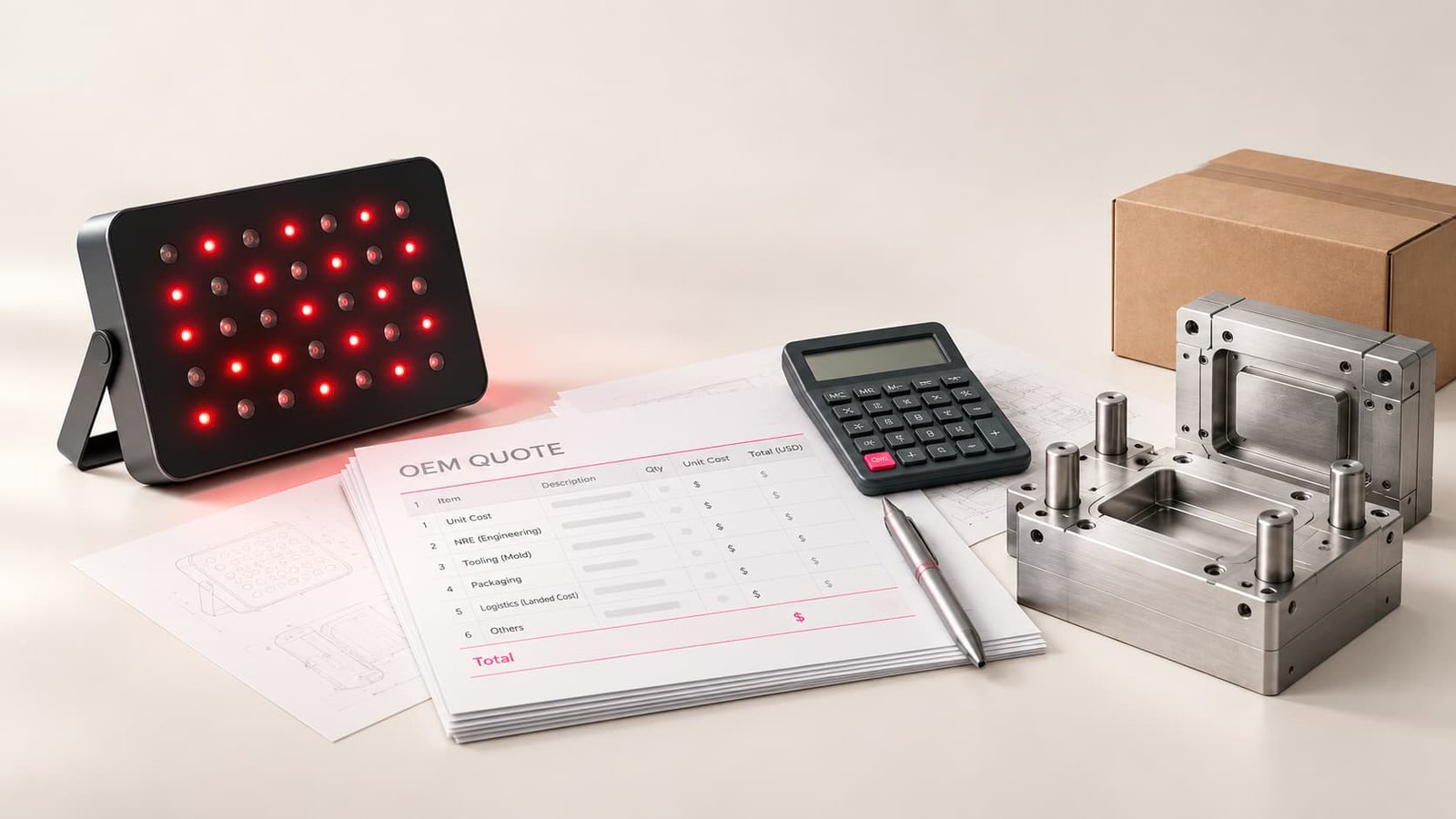
Le opzioni di personalizzazione coprono l'intero spettro OEM/ODM: logo, colore, confezione, interfaccia utente touch-screen, integrazione dell'app, e configurazione della lunghezza d'onda tramite la modalità personalizzata M7.
11. Il prossimo passo per gli acquirenti
Dicci tre cose: il tuo mercato di riferimento, i canali in cui vendi (studio? benessere? casa?), e il volume previsto. Abbineremo il giusto modello BK, fornire indicazioni sulla conformità, e fornirti una struttura di contenuti distribuibile. Rispondiamo dentro 24 ore.
Leggi il seguito
Elenco di riferimento
- NOI. FDA— Registrazione ed elenco dei dispositivi
- NOI. FDA— Notifica pre-mercato 510(k)
- NOI. FDA— 510(k) Database delle notifiche pre-mercato
- IARC— Monografie Volume 100D: Radiazione (Apparecchi abbronzanti UV, Gruppo 1)
- CHI - Radiazione UV Q&UN
- ICNIRP— Linee guida sui limiti di esposizione alle radiazioni ultraviolette
- Fondazione per il cancro della pelle — Radiazione UV (UVA/UVB)
- Accademia Americana di Dermatologia — Panoramica sulla fototerapia
- Almutawa et al. — Efficacia della fototerapia localizzata per la psoriasi, PMC3047947
- Brennero & Udito - Ruolo protettivo della melanina contro i danni UV, PMC2671032
- Ufficio degli integratori alimentari NIH - Vitamina D (Scheda informativa per gli operatori sanitari)