Risposta breve: Un elenco delle specifiche 415, 590, 633 E 850 nm identifica quattro canali di lunghezza d'onda nominali nel design del prodotto dichiarato. Non è così, da solo, dimostrare lo spettro misurato del dispositivo finito, il contributo ottico di ciascun canale, una dose uguale, un effetto sinergico, sicurezza fotobiologica, autorizzazione normativa o coerenza produttiva.
Questa distinzione è importante quando un marchio, l'importatore o il distributore sta confrontando dispositivi LED a più lunghezze d'onda. Un elenco di lunghezze d’onda è utile, ma solo al primo livello di una catena di prove.
Prima di approvare una specifica o richiedere un campione, fai tre domande:
- Cosa viene dichiarato? L'architettura LED, rapporto del canale, modalità operative e controlli utente.
- Cosa è stato misurato sul dispositivo finito? Lo spettro e l'irradianza per ciascuna modalità e impostazione rilevanti, alle condizioni stabilite.
- Quali prove separate supportano la sicurezza e le affermazioni previste? Valutazione della sicurezza ottica, documentazione specifica del mercato e prove rilevanti per l'esatto percorso del prodotto.
Questa guida mostra come tenere separate queste tre domande. È scritto per il prodotto B2B, approvvigionamento, team di qualità e conformità, non come guida al trattamento o raccomandazione di una dose terapeutica.
Cosa può effettivamente dimostrare una specifica a quattro lunghezze d'onda?
Può definire la configurazione dichiarata dal fornitore. Ogni conclusione più forte necessita di un ulteriore livello di prova.
Utilizzare questa tabella come controllo delle specifiche di primo passaggio:
| Campo delle specifiche | Cosa può stabilire | Ciò che non stabilisce da solo |
|---|---|---|
| 415, 590, 633 E 850 nm | Nella progettazione sono previsti quattro canali di lunghezza d'onda nominale | Lunghezze d'onda di picco effettive, tolleranze, larghezza spettrale, emissione o output secondario a livello di dispositivo finito |
| Pacchetto LED a quattro canali o layout del chip | L'architettura di origine pianificata, se supportato da una distinta base controllata | Uguale uscita ottica dai quattro canali |
| 1:1:1:1 rapporto | Un rapporto dichiarato solo dopo aver definito la base del rapporto | Uguale potenza radiante, irraggiamento, contributo energetico o dose a livello cutaneo |
| Modalità 1, Modalità 2, Modalità 3 e modalità 4 | La logica del controller e le combinazioni di canali previste | Che ogni canale indicato funzioni secondo le specifiche o contribuisca equamente in ciascuna modalità |
| 50%, 75% E 100% luminosità | Tre impostazioni dell'interfaccia utente | Una relazione lineare tra la percentuale visualizzata e l'uscita ottica |
| 5–Timer da 30 minuti | Controlli disponibili per la sessione | Dose erogata senza misurata, irradianza stabile per la modalità selezionata e il piano di prova |
| Irradianza a 0 cm | Un valore sulla superficie emittente, se è la sua modalità, impostazione e metodo sono indicati | Irradianza su un altro piano di lavoro, uniformità spaziale, contributo per banda o dose clinica |
| IEC 62471 rapporto | Una valutazione del rischio fotobiologico per il campione e le condizioni indicati | Efficacia clinica, autorizzazione generale all'immissione in commercio o coerenza dei lotti futuri |
La regola pratica è semplice: trattare una specifica di catalogo come a dichiarazione di progettazione, non come sostituto delle misurazioni del dispositivo finito.
Cosa fare 415, 590, 633 E 850 nm Media sulla scheda tecnica?
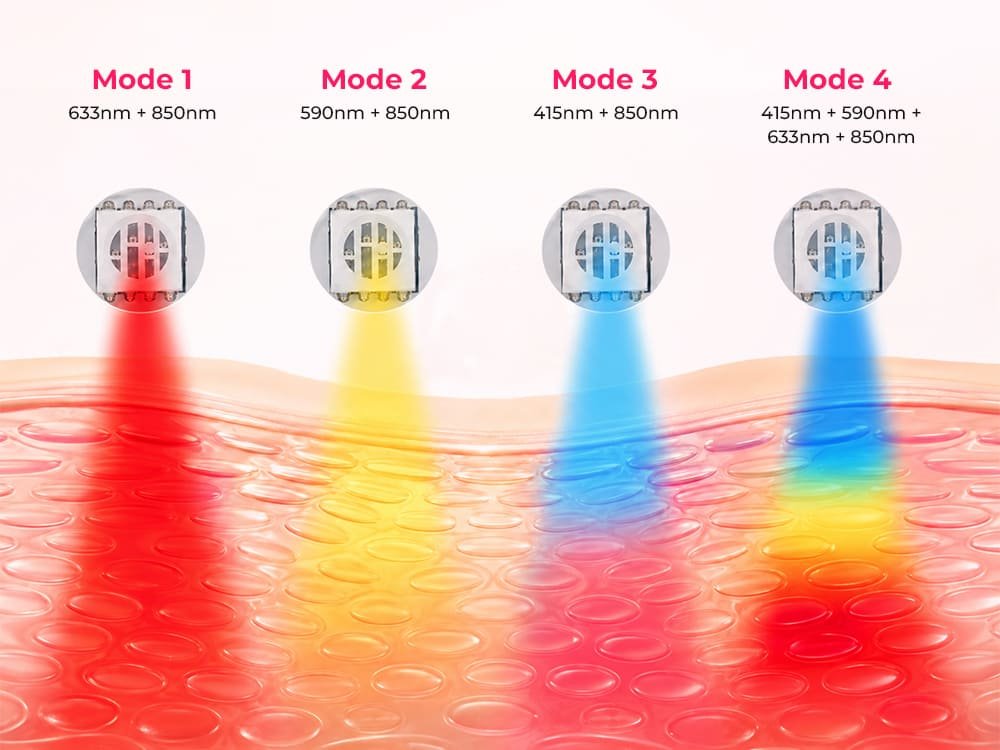
Sono identificatori di canale nominali, non una descrizione misurata dell'emissione del dispositivo finito.
Ogni numero è un identificatore di lunghezza d'onda nominale, espresso in nanometri. Aiuta i team di progettazione e approvvigionamento a distinguere i canali ottici previsti e a mapparli sulla distinta base dei LED, progettazione del driver e modalità operative.
Il numero non è una descrizione completa della luce che esce dal dispositivo finito.
I veri LED emettono su una banda spettrale anziché su una lunghezza d'onda matematicamente esatta. Una registrazione utile del dispositivo finito può quindi includere la lunghezza d'onda di picco misurata, tolleranza consentita, distribuzione spettrale e larghezza intera a metà massimo (FWHM) per ciascuna modalità applicabile. UN 2025 PLOS Uno Anche un articolo su questioni metodologiche nella ricerca sulla terapia con LED visibile avverte che una lunghezza d'onda centrale non descrive l'intera emissione spettrale di un LED (Grimes, 2025). Quel documento esaminava i dispositivi a portata visibile: la sua analisi non copriva un 850 canale infrarosso nm – ed è citato qui solo per la disciplina di misurazione e reporting; non è una prova che questo dispositivo a quattro lunghezze d'onda sia efficace o inefficace.
C’è anche un’importante trappola della visibilità. Il citato Revisione NIST di radiometria e fotometria tratta la fotometria come una misurazione pesata sull'occhio all'interno dell'intervallo visibile e fornisce tale intervallo come 360–830 nm. UN 850 Il canale nm pertanto non può essere valutato confrontando la sua luminosità con il canale 415, 590 O 633 canali nm. La luminosità visiva non è una misurazione della potenza radiometrica, anche per i canali visibili.
Per scopi di approvvigionamento, rispondono i quattro numeri quali canali nominali vengono dichiarati. Risponde una registrazione spettrale specifica per la modalità cosa ha effettivamente emesso il dispositivo assemblato durante il test.
Perché una lunghezza d'onda nominale non è uno spettro completo?
Due LED venduti con la stessa etichetta di lunghezza d'onda nominale possono differire nel picco misurato, larghezza spettrale e uscita. Il dispositivo finito può anche aggiungere variabili come la corrente di azionamento, strati ottici, costruzione del diffusore, condizioni termiche e logica di controllo del canale.
Ecco perché una revisione ottica completa separa almeno questi campi:
- lunghezza d'onda nominale nella specifica del prodotto controllato;
- codice articolo LED esatto, fornitore e regola di raggruppamento, ove applicabile;
- grafico spettrale misurato per ciascuna modalità rilevante del dispositivo finito;
- picco misurato e tolleranza concordata;
- larghezza di banda spettrale o FWHM dove è un requisito del progetto;
- identità del campione, strumento, data del test e condizioni operative.
Panoramica della spettroradiometria del NIST definisce l'irradianza spettrale in termini di potenza ottica per unità di area per intervallo di lunghezza d'onda e discute la tracciabilità della calibrazione rispetto agli standard SI. IL CIE S025/E:2015 pagina standard mostra anche perché le condizioni di misurazione normalizzate e il reporting specifico della configurazione sono importanti per misurazioni LED riproducibili.
CIE S 025 copre le lampade a LED, moduli e apparecchi per misurazioni fotometriche e colorimetriche. Non è un caso clinico, standard di sicurezza fotobiologica o di autorizzazione all'immissione in commercio per un dispositivo terapeutico, e questa guida non afferma che ogni dispositivo LED flessibile debba essere testato secondo S 025. La lezione rilevante qui è più ristretta: un risultato di misurazione necessita di una configurazione definita e di condizioni riproducibili.
Per una lista di controllo dettagliata dell'acquirente che copre lo spettro, distanza di prova, mappe di punti, strumenti, identità del campione e ambito del report, è da Wakelife IEC 62471, Guida al report sull'irradianza e sulla lunghezza d'onda. Questo articolo rimane al livello di interpretazione delle specifiche.
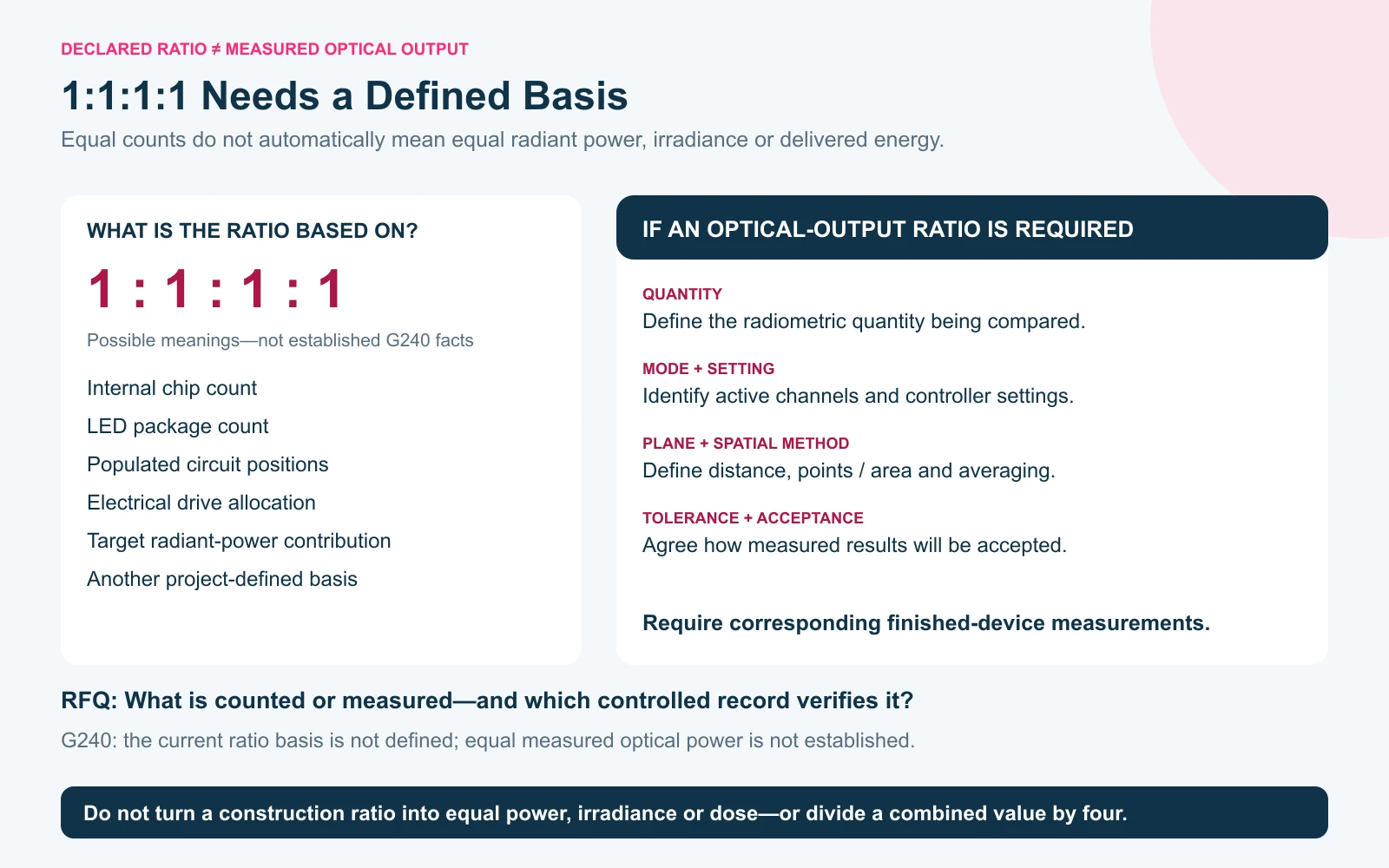
Fa a 1:1:1:1 Il rapporto della lunghezza d'onda significa un'uscita ottica uguale?
NO. Non finché il fornitore non definisce il denominatore e fornisce la misura corrispondente.
Un rapporto in quattro parti potrebbe fare riferimento a:
- conteggio dei chip interni;
- Conteggio dei pacchetti LED;
- posizioni del circuito popolato;
- assegnazione della trazione elettrica;
- un contributo di potenza radiante target;
- un'altra base specifica del progetto.
Questi significati non sono intercambiabili. Un numero uguale di chip non produce automaticamente la stessa potenza radiante a causa delle lunghezze d'onda, Il LED muore, le condizioni di guida e i percorsi ottici possono differire. La stessa potenza a livello di sorgente non significherebbe comunque automaticamente uguale irradiazione attraverso un’area di trattamento flessibile o uguale energia erogata durante ogni modalità operativa.
La domanda RFQ corretta non è “È il rapporto 1:1:1:1?" È:
Che cosa viene contato o misurato esattamente nel 1:1:1:1 rapporto, e quale documento controllato o test del dispositivo finito lo verifica?
Se la risposta è il conteggio dei chip, registrarlo come rapporto di costruzione. Se il progetto richiede un rapporto ottico-uscita, definire la quantità di misurazione, modalità, collocamento, aereo di prova, metodo spaziale, regola di tolleranza e accettazione separatamente. Non convertire silenziosamente un rapporto di costruzione in una dichiarazione di uguale potenza o uguale dose.
Cosa dimostrano le quattro modalità operative?
Dimostrano il comportamento previsto del controller, non l'output misurato in ciascuna modalità.
Una tabella delle modalità operative documenta il comportamento previsto del controller. Non sostituisce la verifica ottica specifica della modalità.
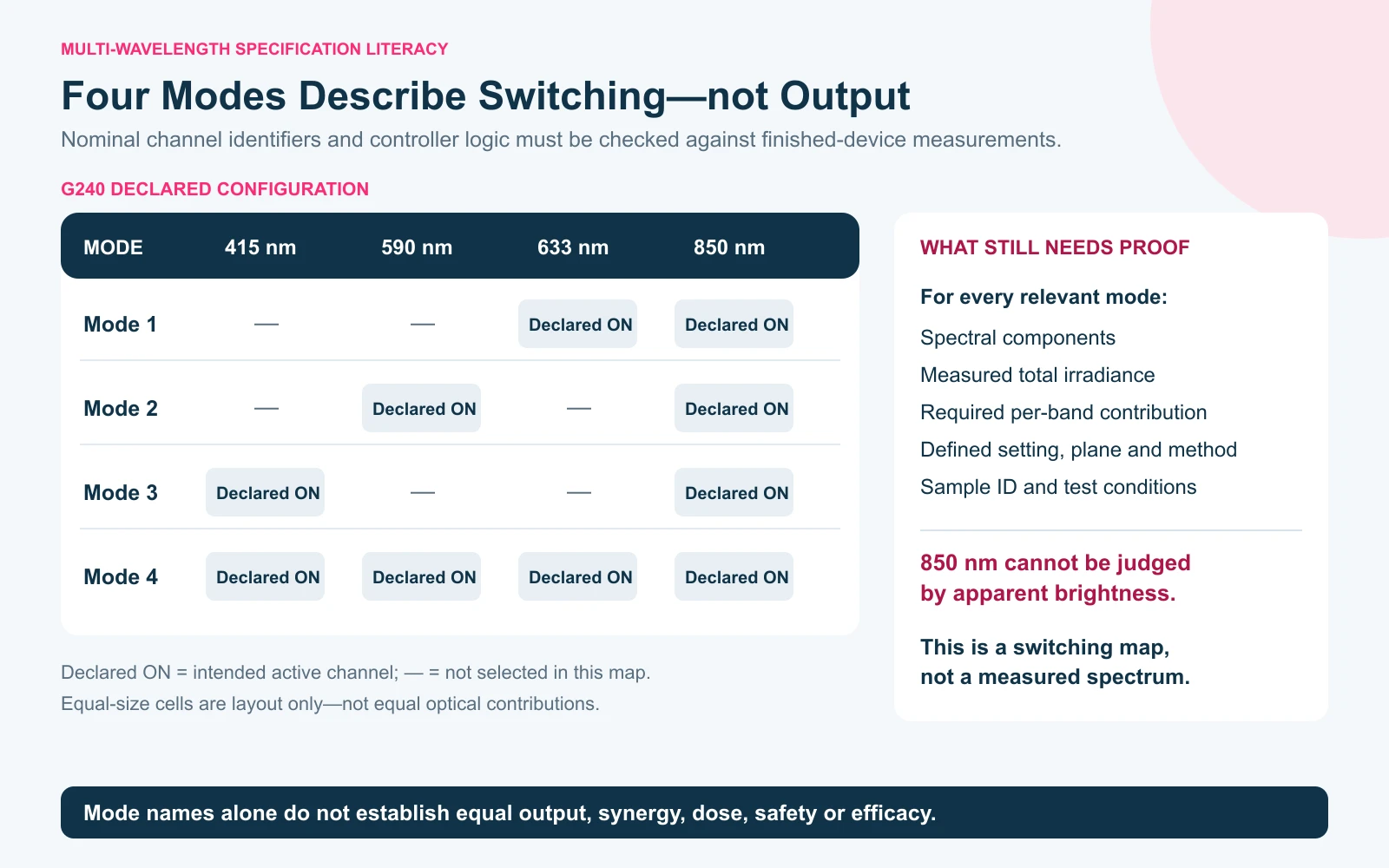
Considera questa architettura in modalità dichiarata per una piattaforma a quattro lunghezze d'onda:
| Modalità | Canali attivi dichiarati | Ciò che necessita ancora di verifica |
|---|---|---|
| Modalità 1 | 633 + 850 nm | Entrambe le componenti spettrali, l’irradianza totale e l’eventuale contributo per banda richiesto |
| Modalità 2 | 590 + 850 nm | Entrambe le componenti spettrali, l’irradianza totale e l’eventuale contributo per banda richiesto |
| Modalità 3 | 415 + 850 nm | Entrambe le componenti spettrali, l’irradianza totale e l’eventuale contributo per banda richiesto |
| Modalità 4 | 415 + 590 + 633 + 850 nm | Tutte e quattro le componenti spettrali, l’irradianza totale e l’eventuale contributo per banda richiesto |
Questa tabella mostra cosa deve essere acceso dal controller. Ciò non dimostra che la potenza misurata soddisfi le specifiche concordate, che il 850 Il contributo nm è lo stesso nelle modalità 1–4, o che la combinazione dei canali produca un risultato sinergico.
Per la revisione del campione, attivare tutte le modalità e confermare il flusso di lavoro dell'utente. Per approvazione ottica, abbinare ciascuna modalità richiesta al record spettrale del dispositivo finito e al risultato dell'irradianza. Se un reclamo dipende da un canale o da una combinazione, identificare la prova del reclamo separatamente anziché dedurla dal nome della modalità.
La stessa cautela si applica alle specifiche senza impulso. "Nessun impulso" può definire la modalità di uscita prevista, ma un acquirente ha comunque bisogno del metodo di prova concordato se il comportamento temporale della produzione è un parametro critico.
Le impostazioni di luminosità e un timer definiscono la dose erogata?
Definiscono i controlli utente, non dosare da soli.
L’esposizione radiante è comunemente espressa come energia per unità di superficie. Sotto un definito, condizione stabile, mette in relazione l'irradianza con il tempo di esposizione. Ma un calcolo significativo necessita comunque dell'irradianza corretta per la combinazione di lunghezze d'onda selezionata, impostazione della luminosità, piano di misura e metodo spaziale.
Per esempio, un valore dichiarato dal fornitore pari ad “almeno 40 a mW/cm² 0 cm”—la stessa forma di dichiarazione utilizzata nell'esempio G240 più avanti in questa guida—rimane incompleta se non afferma anche:
- la modalità attiva e l'impostazione della luminosità;
- se il valore è un singolo punto, massimo, minimo o media dell'area;
- la mappa dei punti o l'area rappresentata;
- lo strumento di misura e lo stato di calibrazione;
- tempo di funzionamento e condizioni termiche;
- identità del campione, unità e tolleranza.
Sarebbe errato dividere un numero di irradianza combinato per quattro e assegnare un quarto a ciascuna lunghezza d'onda. Sarebbe inoltre errato utilizzare un valore di superficie come valore ad un'altra distanza o attraverso una diversa condizione ottica/di contatto senza misurazione.
Gennaio della FDA 2023 bozza di linee guida per alcuni dispositivi di fotobiomodulazione tratta la lunghezza d'onda, fluenza, dimensione del punto, modalità di uscita, potenza radiante o irraggiamento, e parametri di pulsazione come caratteristiche del dispositivo separate. Questo è Bozza: non per l'implementazione, fornisce raccomandazioni non vincolanti, e si applica solo ai dispositivi medici PBM di classe II nell'ambito dichiarato. Non regola automaticamente un prodotto di bellezza o benessere non medico. Viene qui citato solo come chiaro esempio del perché la sola lunghezza d'onda non costituisce una descrizione completa del dispositivo o della dose.
Fare più lunghezze d'onda dimostra risultati o sinergie migliori?
NO. Il conteggio dei canali è una caratteristica di progettazione, non una conclusione di efficacia.
Un'architettura a più lunghezze d'onda può fornire a un team di prodotto modalità più selezionabili o supportare un particolare concetto di prodotto. Questa flessibilità commerciale non dimostra che quattro lunghezze d’onda siano migliori di una, che il funzionamento simultaneo è superiore al funzionamento separato, o che la combinazione crei un effetto biologico sinergico.
Ciascuna etichetta di lunghezza d'onda ha il proprio confine di evidenza:
- UN 415 L'etichetta nm da sola non dimostra il trattamento dell'acne.
- UN 590 L'etichetta nm da sola non dimostra la riduzione del rossore o la riparazione accelerata.
- UN 633 L’etichetta nm da sola non dimostra un aumento del collagene o una riduzione delle rughe.
- UN 850 L'etichetta nm da sola non dimostra il trattamento del dolore, condizioni infiammatorie o dei tessuti profondi.
Queste potrebbero essere indicazioni di reclamo incontrate nel mercato, ma un reclamo pubblico deve essere valutato rispetto al dispositivo esatto, destinazione d'uso, popolazione bersaglio, parametri operativi, prove e il percorso di mercato applicabile. Le quattro etichette di lunghezza d'onda nominale non sono questa prova.
Questo è anche il motivo per cui un prodotto commercializzato con un nome di categoria industriale contenente “PDT” non eredita le affermazioni della terapia fotodinamica medica. La destinazione d'uso, presenza o assenza di un farmaco fotosensibilizzante, il percorso del dispositivo e le prove a supporto devono essere valutati in modo indipendente.
Quali prove dovrebbero supportare un dispositivo LED a lunghezza d'onda multipla??
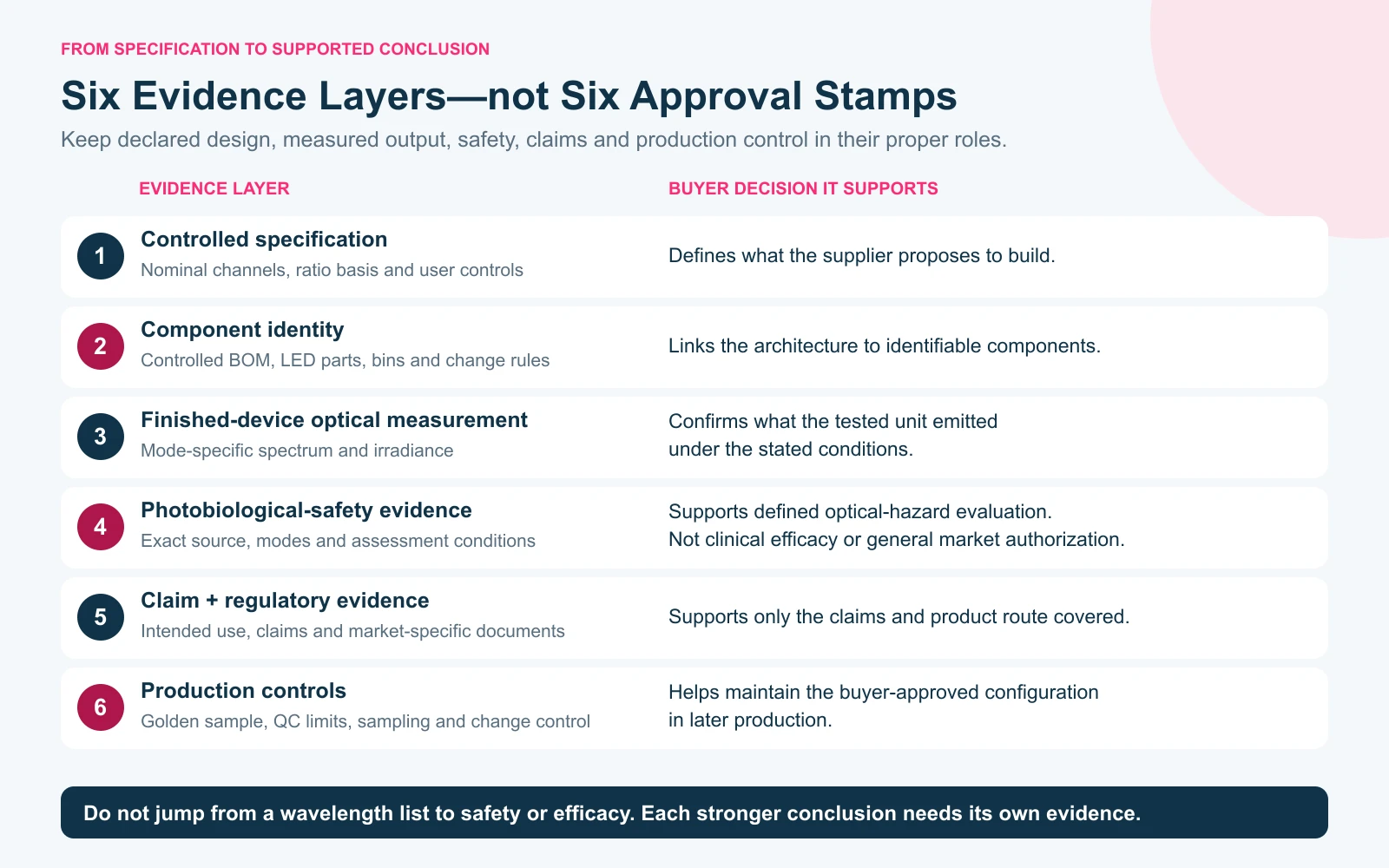
Utilizzare una scala di prove a sei livelli. Non saltare dal livello 1 ad una conclusione sulla sicurezza o sull’efficacia.
| Livello | Prova | Decisione dell'acquirente che supporta |
|---|---|---|
| 1. Specifica controllata | Lunghezze d'onda nominali, definizione del rapporto, Modalità, luminosità, timer e stato assenza di impulsi/impulsi | Conferma ciò che il fornitore propone di costruire |
| 2. Identità del componente | Distinta base controllata, Codici dei LED, controlli fornitore/contenitore e modifica delle regole | Collega l'architettura proposta a componenti identificabili |
| 3. Misurazione ottica del dispositivo finito | Spettro e irradianza specifici della modalità in condizioni definite | Conferma ciò che ha emesso l'unità assemblata testata |
| 4. Evidenze di sicurezza fotobiologica | Valutazione applicabile che copre la fonte esatta, modalità e condizioni | Supporta la valutazione definita del rischio ottico, non l'efficacia |
| 5. Reclamo e prove normative | Destinazione d'uso, documentazione rilevante per il sinistro e specifica per il mercato | Supporta solo le richieste e il percorso effettivamente coperto |
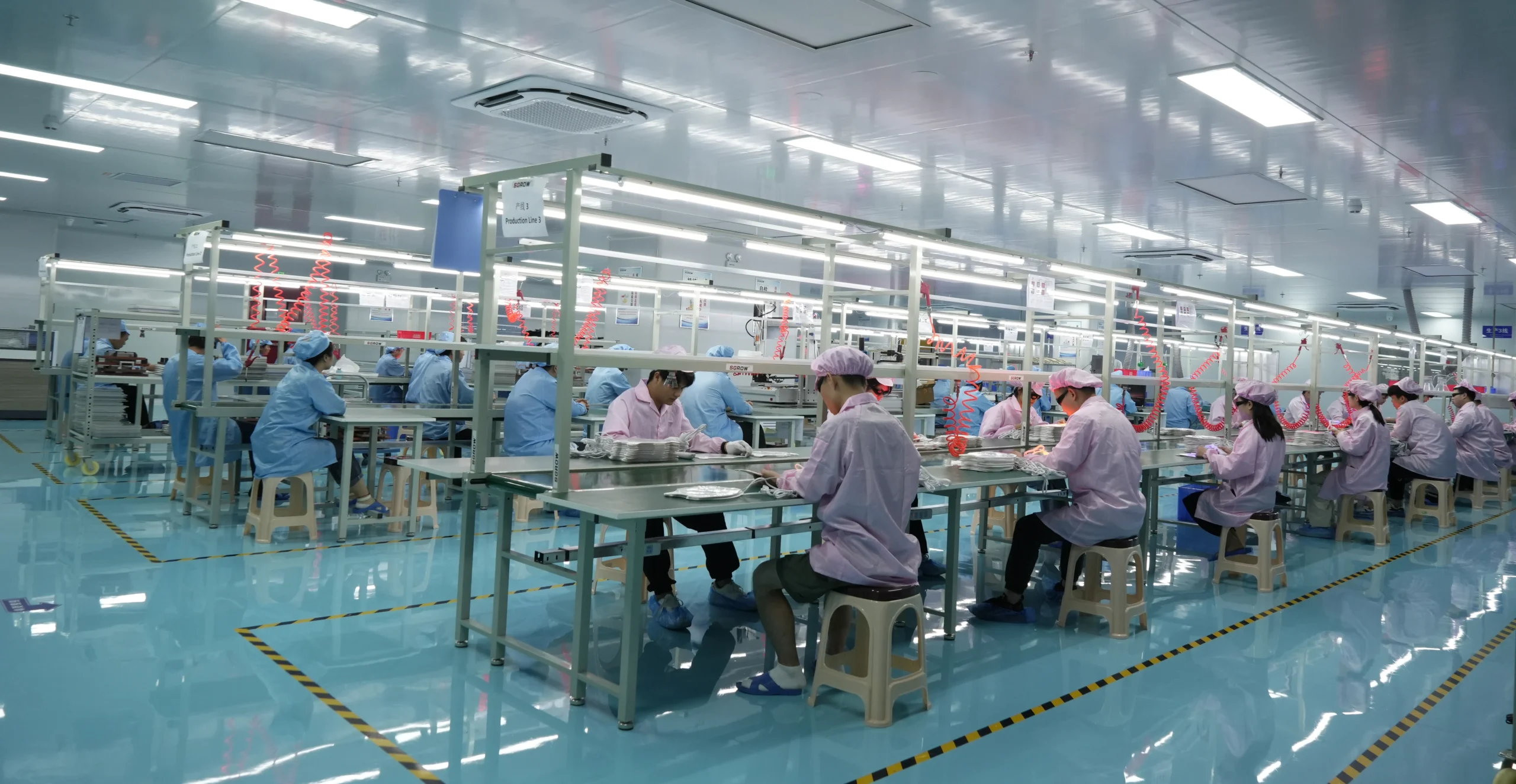
| 6. Controlli della produzione | Campione d'oro, limiti di accettazione, metodo QC calibrato, campionamento e controllo delle modifiche | Aiuta a mantenere la configurazione approvata nella produzione successiva |
IEC 62471 appartiene al livello 4: affronta i rischi fotobiologici derivanti dalle lampade e dai sistemi di lampade, comprese le sorgenti LED, in condizioni definite. Non si tratta di un certificato di efficacia clinica o di un'autorizzazione generale all'immissione in commercio. Per la più ampia distinzione tra autorizzazione del prodotto, certificati del sistema qualità, rapporti di sicurezza e registrazioni ottiche, vedere il Guida alla certificazione del dispositivo per terapia LED.
Esempio lavorato: Cosa viene dichiarato per il G240 e cosa è ancora da verificare?
L’attuale specifica G240 controllata di Wakelife fornisce un utile esempio del confine tra il progetto dichiarato e le prestazioni misurate.
| Campo | Specifica attuale dichiarata | Confine di prova |
|---|---|---|
| Costruzione della sorgente | 240 pezzi di 5050 Pacchetti LED; 960 chip interni | Dichiarazione di costruzione; uscita ottica non per banda |
| Lunghezze d'onda | 415, 590, 633 E 850 nm | Elenco canali nominali; non uno spettro misurato |
| Rapporto | Nominale 1:1:1:1 | Le attuali specifiche controllate non definiscono il denominatore o la base del rapporto e non stabiliscono la stessa potenza ottica misurata |
| Modalità | 633+850; 590+850; 415+850; tutte e quattro le lunghezze d'onda | Mappa del controller dichiarata; ciascuna modalità necessita comunque della verifica ottica concordata |
| Luminosità | 50%, 75% E 100% | Impostazioni utente; la linearità ottica non è stata stabilita dalle etichette |
| Timer | 5–30 minuti | Intervallo di controllo della sessione; non dosare da solo |
| Modalità temporale | Nessun polso | Caratteristica operativa dichiarata |
| Irraggiamento | Specificato come ≥40 mW/cm² sulla superficie emittente, 0 cm | La dichiarazione attuale non fornisce la modalità completa, griglia, strumento, media/picco, campi termici e di tolleranza necessari per il confronto indipendente o il calcolo della dose per banda |
| Percorso di reclamo previsto | Ambito non medico di bellezza e benessere | Non autorizza una dichiarazione relativa al trattamento della malattia o a un risultato clinico numerico |

Questo esempio non deve essere letto come un rapporto verificato sulle prestazioni ottiche. Grafici spettrali modalità-specifici, picchi misurati e tolleranze, FWHM o altri record di larghezza spettrale concordati, contributo per banda, comportamento di impostazione della luminosità, metodo dell’irradianza spaziale, dettagli dello strumento, le condizioni termiche e la variazione da unità a unità rimangono elementi a livello di richiesta per un progetto esatto.
Il punto è proprio questa trasparenza: un fornitore può definire una piattaforma prima che ogni pacchetto di prove specifico del progetto sia completato, finché l'acquirente e il fornitore non rappresentano i campi dichiarati come una prova più forte di quanto non siano.
Cosa cambia quando un acquirente OEM modifica la configurazione della lunghezza d'onda?
La personalizzazione della lunghezza d'onda non è solo una scelta di colore. A seconda del modello, può influenzare:
- la distinta base LED, numeri di parte, controlli dei contenitori e fornitori approvati;
- corrente del conducente, carico elettrico e comportamento termico;
- firmware del controller e mappatura delle modalità;
- distribuzione spettrale e irradianza per modo;
- prestazioni del diffusore o dello strato ottico;
- ambito di valutazione della sicurezza fotobiologica;
- etichettatura, istruzioni, Avvertimenti e rivendicazioni pubbliche;
- documentazione normativa e applicabilità dei test;
- definizione di campione d'oro, Limiti QC e controllo delle modifiche tecniche.
La revisione delle modifiche dovrebbe quindi iniziare prima che il nuovo rapporto di lunghezza d'onda venga promesso in un catalogo o nelle specifiche di acquisto. Chiedere quali record rimangono applicabili, che necessitano di un aggiornamento ingegneristico e che dovranno essere ripetuti a configurazione finita.
Cosa dovrebbero inserire gli acquirenti nella richiesta di offerta?
Per un dispositivo LED a quattro lunghezze d'onda, richiedere una scheda di prova specifica per la modalità anziché una raccolta sparsa di affermazioni sulla lunghezza d'onda.
Includi:
- Modello esatto, mercato previsto, destinazione d'uso e proposte di attestazioni pubbliche.
- Lunghezze d'onda nominali e regola di tolleranza prevista per ciascun canale.
- Definizione del rapporto delle lunghezze d'onda: ciò che viene contato o misurato.
- Mappa modalità completa, comprese le impostazioni di luminosità e il comportamento impulso/assenza di impulso.
- Campi spettrali richiesti per modalità: grafico, picco misurato, larghezza spettrale se richiesta, ID campione e strumento.
- Campi di irradianza richiesti per modalità e impostazione: aereo/distanza, mappa dei punti, definizione media/picco/minima, strumento, condizioni termiche e tolleranza.
- Sicurezza fotobiologica e ambito del documento di mercato per la configurazione esatta.
- Quantità di campione, processo del campione d'oro, limiti di accettazione della produzione e regole di notifica delle modifiche.
Se il progetto è ancora in fase di ideazione, contrassegnare i campi non verificati come da misurare. Non riempirli con valori copiati da un modello diverso, Scheda tecnica LED o lotto precedente.
Wakelife può rivedere un requisito di quattro lunghezze d'onda rispetto a quello disponibile piattaforma flessibile per terapia della luce LED PDT e identificare quali elementi sono specifiche standard rispetto alla verifica specifica del progetto. Per preparare una richiesta di offerta, inviare il mercato di riferimento, pretese previste, requisiti di lunghezza d'onda e modalità, quantità di campione e campi di prova ottica di cui il tuo team ha bisogno attraverso la pagina dei contatti.
Linea di fondo
La specifica “415, 590, 633 E 850 nm” dimostra un design dichiarato a quattro canali, non uno spettro completo, uguale rendimento, dose, sicurezza, efficacia o autorizzazione.
Per una decisione OEM, procedere in ordine tra le prove: congelare la specifica controllata, identificare i componenti, misurare il dispositivo finito in base alla modalità, rivedere la sicurezza e rivendicare le prove per il percorso previsto, quindi bloccare i controlli sulla produzione. Se un campo non ha raggiunto il suo livello di evidenza, etichettarlo come non verificato invece di consentire a quattro numeri dall'aspetto preciso di portare a una conclusione che non possono supportare.
Riferimenti
- 1
- 2
- 3
-
4
Commissione Elettrotecnica Internazionale. IEC 62471:2006 — Sicurezza fotobiologica delle lampade e dei sistemi di lampade
-
5
NOI. Food and Drug Administration. Dispositivi di fotobiomodulazione: Notifica pre-mercato [510(k)] Presentazioni (Progetto di guida)
- 6