diodo emisor de luz (CONDUJO) La fototerapia ha pasado de la dermatología clínica a la belleza profesional convencional y al cuidado de la piel en el hogar.. Pero detrás de cada mascarilla LED, panel, o dispositivo portátil se encuentra en un solo, elección de ingeniería decisiva: longitud de onda. El nanómetro (Nuevo Méjico) El valor impreso en una hoja de especificaciones no es un número de marketing: determina qué tan profundo penetra la luz., qué vías celulares activa, y si un dispositivo califica para una autorización médica como la de la FDA 510(k).
Este artículo de referencia explica las diez longitudes de onda clínicamente estudiadas que se utilizan en los dispositivos de terapia LED modernos., la evidencia revisada por pares detrás de cada, y que FDA 510(k) autorización, incluida la emitida recientemente K250830 — en realidad significa para las marcas que obtienen productos OEM/ODM.. Está escrito para gerentes de producto., equipos regulatorios, distribuidores, y profesionales de la estética que necesitan un dominio práctico de la ciencia., no afirmaciones de marketing.
1. La ciencia: Cómo interactúa la luz LED con la piel
Fototerapia LED, también conocida como fotobiomodulación (Pbm) o terapia de luz de bajo nivel (Lllt) — funciona mediante absorción de fotones no térmica. Cuando un fotón de la longitud de onda correcta es absorbido por un cromóforo dentro del tejido de la piel. (Lo más importante es la citocromo c oxidasa en la cadena respiratoria mitocondrial.), desencadena una cascada de eventos intracelulares: aumento de la síntesis de ATP, especies de oxígeno reactivo modulado (Rosa), y expresión genética alterada relacionada con la inflamación, proliferación, y remodelación de la matriz extracelular.1
Tres principios gobiernan cada decisión sobre la longitud de onda en el diseño de dispositivos LED:
- Especificidad de absorción - diferentes cromóforos (porfirinas, melanina, hemoglobina, agua, citocromo c oxidasa) absorber la luz en picos característicos.
- Profundidad de penetración — longitudes de onda más largas en el rojo y el infrarrojo cercano (Nir) El rango penetra más profundamente en la dermis y el tejido subcutáneo que las longitudes de onda azules más cortas..2
- respuesta a la dosis — los efectos biológicos siguen una curva de dosis bifásica: muy poca energía no produce ningún efecto, mientras que el exceso de energía puede inhibir la respuesta deseada.
Estos tres principios explican por qué la selección de longitud de onda no se puede improvisar. Cada rango nanométrico se adapta a un objetivo clínico específico.
2. Longitud de onda por longitud de onda: Lo que realmente muestra la evidencia
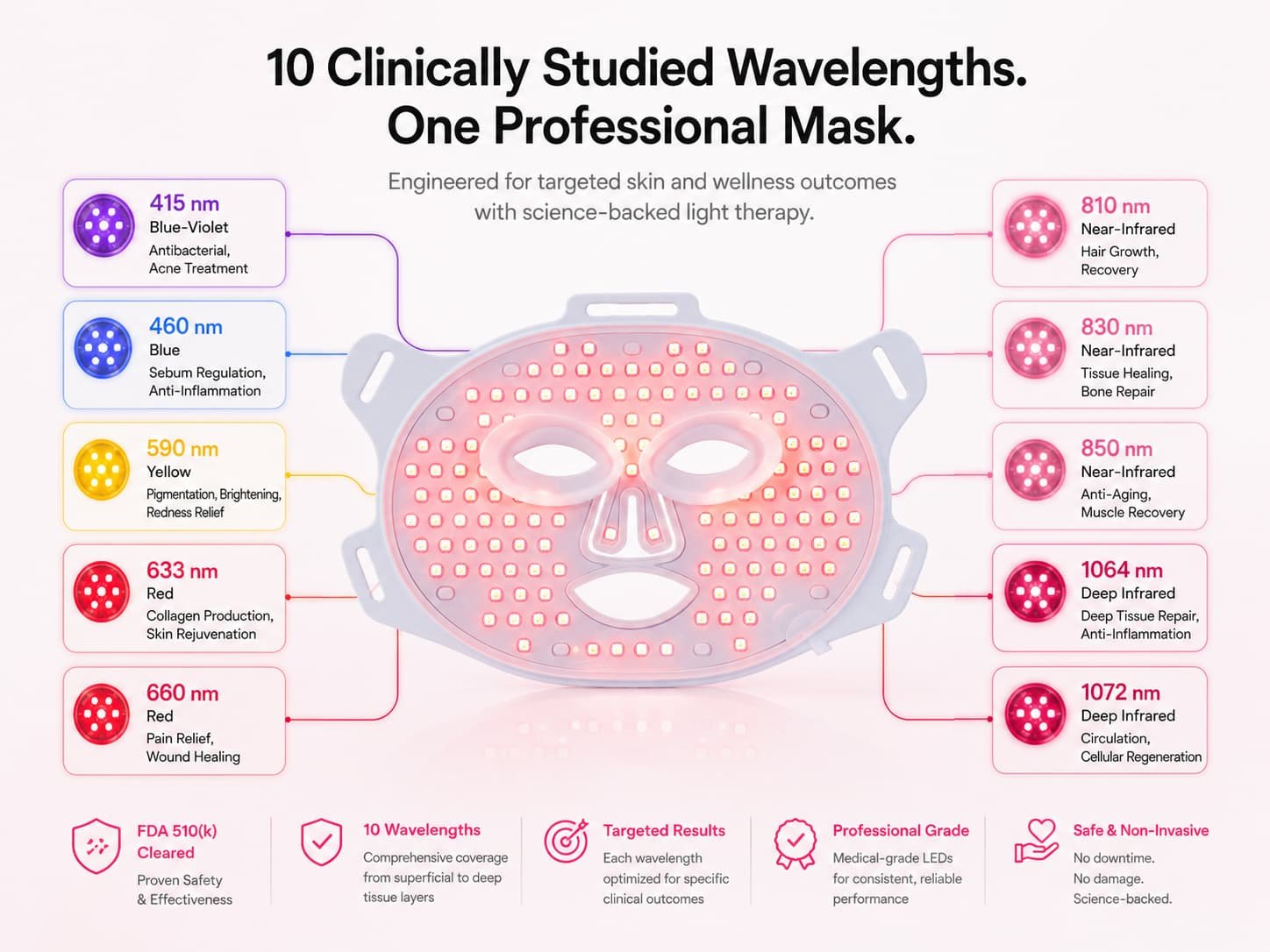
415 nm — Azul-Violeta (Antibacteriano, Acné)
El 415 La banda nm es absorbida por porfirinas endógenas. (principalmente coproporfirina III) producido por Cutibacterium acnes (antes Propionibacterium acnes). La absorción genera oxígeno singlete que altera la bacteria desde dentro., produciendo un efecto antimicrobiano no antibiótico.3 ensayos clínicos de 415 nm monoterapia y 415 Nuevo Méjico + 633 Los protocolos de combinación de nm han demostrado reducciones significativas en el recuento de lesiones inflamatorias del acné durante 4 a 12 semanas..4 5 A 2019 revisión sistemática en Anales de medicina familiar concluyó que la fototerapia con luz azul es un complemento clínicamente viable para el acné vulgar leve a moderado.6
Penetración: ~1 milímetro (Sólo epidermis y dermis papilar superior.).
460 nm — azul (Regulación del sebo, Antiinflamatorio)
Un poco más largo que 415 Nuevo Méjico, 460 nm penetra un poco más profundamente conservando propiedades antibacterianas. A menudo se utiliza para regular el sebo y como longitud de onda calmante para la piel inflamada.. porque ambos 415 nm y 460 nm caen dentro del rango azul visible, Dispositivos destinados a áreas oftálmicas adyacentes. (mascarillas, mascarillas para los ojos) debe controlar la irradiancia cuidadosamente para permanecer dentro de los umbrales de seguridad de la luz azul de la retina definidos por IEC 62471.
590 nm — amarillo (Pigmentación, Iluminar, Enrojecimiento)
Luz amarilla en 590 nm es absorbido por la hemoglobina y se usa ampliamente para reducir el eritema posinflamatorio., enrojecimiento difuso, y pequeñas irregularidades de pigmentación.. También tiene un papel documentado en calmar la piel sensibilizada después del procedimiento y con frecuencia se incorpora a la TFD. (terapia fotodinamica) Protocolos para la queratosis actínica como longitud de onda suplementaria..7
633 nm — rojo (colágeno, Rejuvenecimiento de la piel)
633 nm es la longitud de onda más estudiada en dermatología LED. Weiss y otros. demostrado que 633 La fotomodulación LED de nm regula positivamente la actividad de los fibroblastos y la síntesis de procolágeno al mismo tiempo que reduce la metaloproteinasa-1 de la matriz. (MMP-1) expresión: la enzima responsable de la degradación del colágeno.8 Este mecanismo dual es la base de casi todas las afirmaciones "antienvejecimiento" asociadas con la terapia de luz roja..9
Penetración: ~ 2–3 mm (dermis reticular).
660 nm — rojo (Alivio del dolor, Curación de heridas)
660 nm comparte muchos de 633 Los efectos del nm, pero penetra un poco más profundamente y se cita con mayor frecuencia en la literatura sobre curación de heridas y dolor musculoesquelético.. Los estudios in vitro muestran 660 nm modula la proliferación de fibroblastos e influye en la señalización de ROS en fluencias clínicamente relevantes.10 La mayoría de los dispositivos modernos de formato panel y cinturón combinan 660 nm con una longitud de onda NIR como 850 nm para abordar las capas de tejido superficial y profundo en una sola sesión.
810 nm - Infrarrojo cercano (Crecimiento del cabello, Recuperación)
810 nm penetra más allá de la dermis hasta la capa subcutánea y se usa ampliamente en la terapia con láser de baja intensidad. (Lllt) protocolos para la recuperación del trauma, modulación neuronal, y estimulación folicular. También es una de las longitudes de onda estándar para la investigación de fotobiomodulación transcraneal..
830 nm - Infrarrojo cercano (Curación de tejidos, Reparación ósea)
830 nm tiene efectos documentados sobre la actividad de los osteoblastos., drenaje linfático, y recuperación posquirúrgica. Es la longitud de onda citada con mayor frecuencia en los protocolos LED perioperatorios utilizados en clínicas de cirugía plástica para la reducción de hematomas y el cierre acelerado de heridas..
850 nm - Infrarrojo cercano (Antienvejecimiento, Recuperación Muscular)
850 nm es la longitud de onda NIR más popular en los paneles de luz roja de los consumidores debido a su equilibrio favorable entre la profundidad de penetración (~5–6 mm en el tejido subcutáneo) y eficiencia LED a nivel de chip. El ensayo controlado de Wunsch y Matuschka demostró mejoras mensurables en la rugosidad de la piel, profundidad de las arrugas, y densidad de colágeno intradérmico cuando 850 nm se combinó con longitudes de onda rojas en un protocolo policromático.11
1064 nm - Infrarrojo profundo (Pigmento, Modulación adiposa)
1064 nm alcanza la longitud de onda más profunda de cualquier LED no térmico en uso clínico y está asociado con la modulación adiposa y la focalización selectiva de pigmentos en protocolos basados en láser.. En formato LED (no coherente), 1064 nm se utiliza con una irradiancia más baja para el acondicionamiento general del tejido profundo.
1072 nm - Infrarrojo profundo (Barrera de la piel, Antiarrugas)
1072 nm tiene una huella de investigación específica en el tratamiento del herpes simple y la recuperación de la barrera cutánea. Es una de las longitudes de onda más especializadas y generalmente se configura en sistemas profesionales de múltiples longitudes de onda en lugar de dispositivos de consumo de una sola longitud de onda..
3. Por qué los dispositivos de longitudes de onda múltiples superan a los dispositivos de longitud de onda única
A 2008 Un estudio realizado por Sadick demostró que la combinación de longitudes de onda rojas e infrarrojas produce mejoras considerablemente mayores en las líneas finas y la textura de la piel que cualquiera de las longitudes de onda solas..12 Esto es consistente con la literatura más amplia sobre fotobiomodulación.: diferentes longitudes de onda alcanzan diferentes profundidades de tejido y activan diferentes cromóforos, por lo que un protocolo policromático cubre más terreno biológico por sesión.13
Sin embargo, “Más longitudes de onda” no es automáticamente mejor. Se aplican tres compensaciones de ingeniería:
- La irradiancia total debe permanecer dentro de rangos seguros y efectivos. — normalmente 30–100 mW/cm² en la superficie de la piel.
- Cada longitud de onda debe administrar una dosis clínicamente significativa. — agregar una cantidad simbólica de LED en una longitud de onda “adicional” rara vez produce la dosis requerida para el efecto biológico.
- La arquitectura térmica y del controlador debe admitir la configuración. — los dispositivos de múltiples longitudes de onda requieren control de canal independiente para evitar mezclar longitudes de onda en promedios ineficaces.
Esta es la razón por la que dos dispositivos comercializados con etiquetas de longitud de onda idénticas pueden producir resultados clínicos muy diferentes. La paridad de la hoja de especificaciones no es lo mismo que la paridad de rendimiento.
4. Profundidad de penetración: Una referencia práctica
| Longitud de onda | Profundidad de penetración aproximada | Capa objetivo principal |
|---|---|---|
| 415 Nuevo Méjico | ~1 milímetro | Epidermis |
| 460 Nuevo Méjico | ~1–1,5 mm | Epidermis |
| 590 Nuevo Méjico | ~1,5–2 mm | dermis papilar |
| 633 Nuevo Méjico | ~ 2–3 mm | dermis reticular |
| 660 Nuevo Méjico | ~3mm | dermis reticular |
| 810 Nuevo Méjico | ~4–5 mm | Subcutáneo |
| 830 Nuevo Méjico | ~5mm | Subcutáneo |
| 850 Nuevo Méjico | ~5–6 mm | Subcutáneo |
| 1064 Nuevo Méjico | ~6–8 mm | subcutáneo profundo |
| 1072 Nuevo Méjico | ~6–8 mm | subcutáneo profundo |
Los valores de penetración son aproximados y dependen del tipo de piel., hidratación, irradiancia, y geometría de la viga.2
5. Irradiancia, Dosis, y la curva bifásica
La longitud de onda por sí sola no determina el resultado. Dos parámetros adicionales tienen el mismo peso:
- Irradiancia (MW/cm²) — la densidad de potencia en la superficie de la piel. La mayoría de los protocolos LED clínicos operan entre 30 y 100 MW/cm². Las principales mascarillas faciales LED de Wakelife ofrecen resultados 60+ mW/cm² en la superficie que mira a la piel, medido a una distancia de trabajo calibrada.
- Fluencia (J/cm²) — la energía total entregada por unidad de área, calculado como irradiancia × tiempo. La mayoría de los protocolos publicados se agrupan entre 3 y 60 J/cm² dependiendo de la indicación y la profundidad del objetivo.
El respuesta a la dosis bifásica descrito por Hamblin y otros significa que duplicar el tiempo de exposición no duplica el resultado.14 Más allá de una ventana óptima, la exposición adicional puede suprimir la misma vía que el tratamiento pretende activar. Esta es la razón por la que el diseño responsable de dispositivos incluye temporizadores incorporados y techos de irradiancia en lugar de controles abiertos de "más es mejor"..
6. Indicaciones clínicas y lógica de selección de longitud de onda
| Indicación | Longitud de onda primaria | Longitud de onda adjunta |
|---|---|---|
| Acné inflamatorio | 415 Nuevo Méjico | 633 Nuevo Méjico |
| Quebradizo / lineas finas | 633 Nuevo Méjico | 850 Nuevo Méjico |
| Eritema posprocedimiento | 590 Nuevo Méjico | 633 Nuevo Méjico |
| Irregularidades de pigmentación. | 590 Nuevo Méjico | 633 Nuevo Méjico |
| Cicatrización de heridas | 660 Nuevo Méjico | 830 Nuevo Méjico |
| El crecimiento del cabello | 650 Nuevo Méjico | 850 Nuevo Méjico |
| Recuperación articular y muscular | 660 Nuevo Méjico | 850 Nuevo Méjico |
| Líneas finas periorbitarias | 633 Nuevo Méjico | 850 Nuevo Méjico |
Esta matriz no es un protocolo de tratamiento: es un mapa de longitud de onda a indicación para la planificación de productos.. Los protocolos clínicos finales siempre deben validarse con la evidencia publicada y, donde se aplica, alcance de autorización regulatoria.
7. ¿Qué FDA 510(k) Liquidación realmente significa
FDA 510(k) La autorización es una presentación previa a la comercialización que demuestra que un dispositivo es sustancialmente equivalente a un dispositivo predicado comercializado legalmente. No es una prueba de eficacia en el sentido coloquial: es una conclusión reglamentaria de que el dispositivo es tan seguro y eficaz como su predecesor para la indicación autorizada..
Para dispositivos de fototerapia LED, las indicaciones aclaradas bajo 510(k) normalmente se encuentran dentro del código de producto NHN (lámpara de infrarrojos para uso médico) o ILY (instrumento quirúrgico láser alimentado por luz), dependiendo de la clasificación del dispositivo.
Una autorización reciente representativa: FDA 510(k) K250830 — ilustra la estructura de una presentación de máscara facial LED: longitudes de onda definidas, rangos de irradiancia definidos, duraciones de tratamiento definidas, y una indicación etiquetada consistente con el predicado. Las marcas que obtienen productos OEM/ODM deben verificar tres puntos antes de confiar en una autorización.:
- El titular de la autorización registrado — el fabricante legal mencionado en el 510(k) es la entidad que la FDA considera responsable. Los clientes OEM reciben una relación de suministro estructurada por separado que debe documentarse.
- La indicación de uso autorizada. — las afirmaciones comerciales deben permanecer dentro de la indicación autorizada. Reclamaciones no autorizadas (P.EJ., “trata la rosácea” cuando solo se eliminaron las “condiciones dermatológicas generales”) crear exposición regulatoria.
- La configuración probada — recuento de longitudes de onda, recuento de LED, irradiancia, y tiempo de tratamiento presentado en el 510(k) definir el dispositivo borrado. Los cambios materiales pueden requerir una nueva 510(k) bajo la FDA 2017 guía.16 17
También vale la pena señalar que a partir de febrero 2026, Reglamento del sistema de gestión de calidad de la FDA (QMSR) reemplazará el legado 21 Parte CFR 820, armonizar los requisitos de EE. UU. con la ISO 13485.15 Los fabricantes que ya operan bajo ISO 13485 (Wakelife incluido) están estructuralmente posicionados para esta transición.
8. De la especificación a la producción: Qué marcas deben verificar
Antes de aprobar un Proyecto OEM/ODM para la producción, Las marcas deben solicitar y revisar la siguiente documentación.:
- Informes de medidas espectrales — longitud de onda máxima, ancho completo a la mitad del máximo (FWHM), y pureza espectral por contenedor de LED.
- Informes fotométricos — irradiancia a la distancia de trabajo, uniformidad en toda la superficie de tratamiento, y ángulo del haz.
- Informes de seguridad fotobiológica. — CEI 62471 clasificación de grupos de riesgo, particularmente para dispositivos de longitud de onda azul.
- Informes de EMC y seguridad eléctrica — CEI 60601-1 e iec 60601-1-2 para dispositivos de grado médico, IEC 62368-1 para dispositivos de consumo.
- Informes de biocompatibilidad -ISO 10993 para cualquier material en contacto con la piel, especialmente mascarillas de silicona.
- Documentación del sistema de calidad. -ISO 13485 alcance de la certificación y cobertura MDSAP aplicable.
Wakelife proporciona cada uno de estos informes como entregables estándar para los socios OEM/ODM., junto al propio dispositivo. Esta es la capa de documentación que distingue a un socio fabricante regulado de un proveedor genérico..
9. Resumen: Un marco de trabajo para las decisiones sobre longitudes de onda
Al evaluar un Producto de terapia LED — si se busca una marca, especificando para una clínica, o diseñar un nuevo dispositivo: aplique este marco de cinco pasos:
- Defina primero el objetivo clínico. La longitud de onda sigue la indicación., no al revés.
- Seleccione longitudes de onda con evidencia revisada por pares en la profundidad del tejido objetivo. La profundidad de penetración debe coincidir con la capa donde vive el cromóforo..
- Verificar la irradiancia y la fluencia en la superficie que mira a la piel.. El “número de LED” por sí solo no es una métrica de rendimiento.
- Confirmar que el alcance regulatorio coincide con las afirmaciones de marketing. Indicación borrada, copia no aspiracional, define lo que legalmente se puede decir.
- Requerir documentación completa del fabricante.. Espectral, fotométrico, fotobiológico, EMC, y los informes de biocompatibilidad no son negociables.
Aplicado consistentemente, Este marco separa los productos basados en evidencia de los productos de grado de marketing y protege tanto a los usuarios finales como a las marcas que les sirven..
10. Acerca de Wakelife
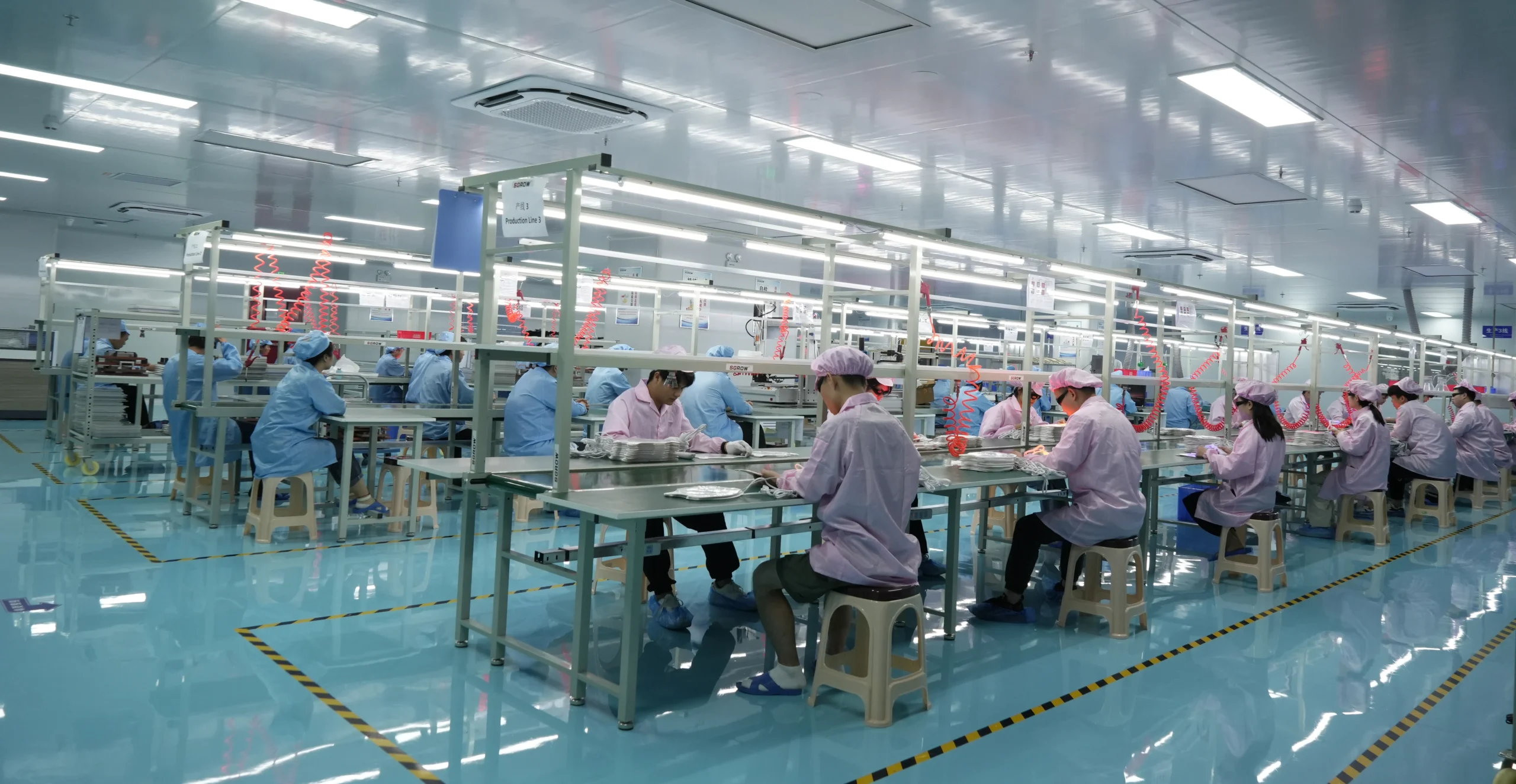
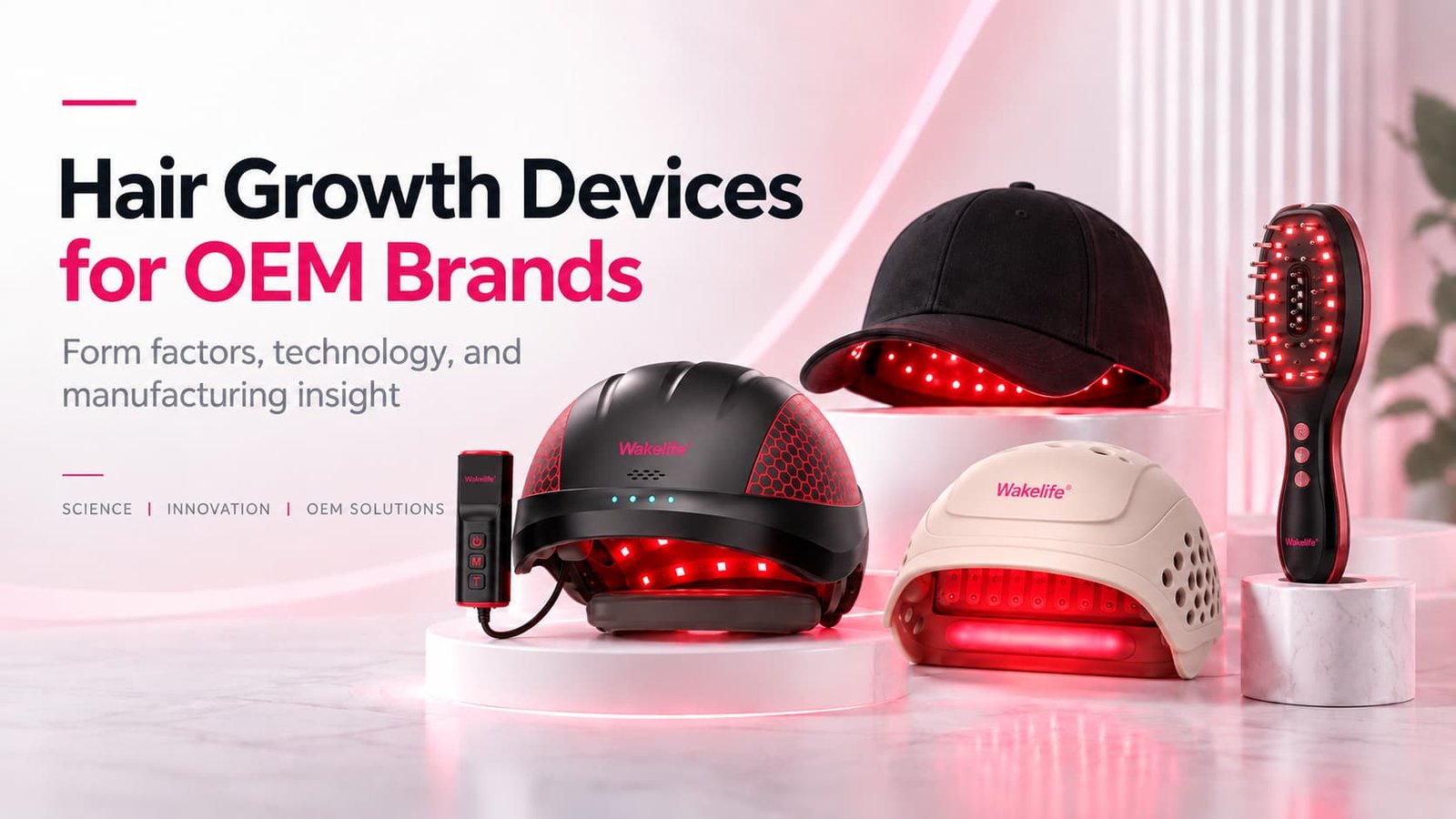
Wakelife es la división de belleza profesional de Shenzhen Sungrow LED Technology Co., Limitado., un fabricante dedicado a la terapia de luz roja fundado en 2015. Operando desde dos ISO 13485 e instalaciones certificadas por MDSAP por un total 20,000 m² en Shénzhen, Wakelife desarrolla y produce máscaras faciales LED, paneles de luz roja, sistemas PDT, mascarillas para los ojos, dispositivos para el crecimiento del cabello, dispositivos de atención dirigida, Dispositivos de terapia de luz roja y cinturones terapéuticos para marcas de belleza profesionales en más de 100 países.
Para especificaciones técnicas, informes fotométricos, o consultas OEM/ODM, ver nuestro fabricación y R&capacidades D o póngase en contacto con nuestro equipo de ingeniería directamente. Información adicional sobre el producto Wakelife en todos 9 Las líneas de productos de terapia LED están disponibles en nuestro página de descripción general del producto.
Referencias
1. Karu T.I.. Señalización mitocondrial en células de mamíferos activada por radiación roja e infrarroja cercana. Fotoquímica Fotobiol. 2008;84(5):1091-1099.
2. Ceniza C, Dubec M, Donne K., Bashford T.. Efecto de la longitud de onda y el ancho del haz sobre la penetración en la interacción luz-tejido utilizando métodos computacionales. Láseres Medicina Ciencia. 2017;32(8):1909-1918.
3. Ashkenazi H., Malik Z., Harth Y, Nitzan Y. Erradicación de Propionibacterium acnes por sus porfirinas endógenas tras iluminación con luz azul de alta intensidad. FEMS Immunol Med Microbiol. 2003;35(1):17-24.
4. DJ Goldberg, Russell BA. combinación azul (415 Nuevo Méjico) y rojo (633 Nuevo Méjico) Fototerapia LED en el tratamiento del acné vulgar de leve a grave. J Cosmet Laser Ther. 2006;8(2):71-75.
5. Lee SY, usted CE, Parque MI. Fototerapia LED con combinación de luz azul y roja para el acné vulgar en pacientes con fototipo de piel IV. Cirugía Láser Médica. 2007;39(2):180-188.
6. Scott AM, Stehlik P., Clark J., et al. Terapia de luz azul para el acné vulgar: una revisión sistemática y un metanálisis. Ann Fam Med. 2019;17(6):545-553.
7. Opel DR, Hagstrom E., ritmo y, et al. Diodos emisores de luz: Una breve reseña y experiencia clínica.. J Clin Aesthet Dermatol. 2015;8(6):36-44.
8. Weiss RA, McDaniel DH, Geronemus RG, Weiss MA. Experiencia clínica con diodos emisores de luz. (CONDUJO) fotomodulación. Cirugía dermatológica. 2005;31(9 punto 2):1199-1205.
9. Barolet D.. Diodos emisores de luz (LED) en dermatología. Cirugía media semicortada. 2008;27(4):227-238.
10. Lev-Tov H., Mamíferos A, Brody N., Sello D, Jagdeo J. Inhibición de la proliferación de fibroblastos in vitro utilizando diodos emisores de luz roja.. Cirugía dermatológica. 2013;39(8):1167-1170.
11. deseo un, Matuschka K.. Un ensayo controlado para determinar la eficacia del tratamiento con luz roja e infrarroja cercana en la satisfacción del paciente, reducción de líneas finas, arrugas, rugosidad de la piel, y aumento de la densidad del colágeno intradérmico. Cirugía Láser Fotomed. 2014;32(2):93-100.
12. Sadick NS. Un estudio para determinar la eficacia de un novedoso dispositivo portátil de diodos emisores de luz en el tratamiento de la piel fotoenvejecida. J Cosmet Dermatol. 2008;7(4):263-267.
13. Avci P, Gupta A., Sadasivam M, et al. Láser de bajo nivel (luz) terapia (Lllt) en la piel: estimulante, cicatrización, restaurando. Cirugía media semicortada. 2013;32(1):41-52.
14. Hamblin Sr.. Mecanismos y aplicaciones de los efectos antiinflamatorios de la fotobiomodulación.. OBJETIVOS Biophys. 2017;4(3):337-361.
15. A NOSOTROS. Administración de Alimentos y Medicamentos. Dispositivos médicos; Modificaciones al Reglamento del Sistema de Calidad (Regla final QMSR), 89 FR 7496. A partir de febrero 2, 2026.
16. A NOSOTROS. Administración de Alimentos y Medicamentos. Decidir cuándo enviar una 510(k) para realizar un cambio en un dispositivo existente: guía para la industria y el personal de la FDA. Octubre 25, 2017.
17. A NOSOTROS. Administración de Alimentos y Medicamentos. Decidir cuándo enviar una 510(k) para un cambio de software en un dispositivo existente: guía para la industria y el personal de la FDA. Octubre 25, 2017.