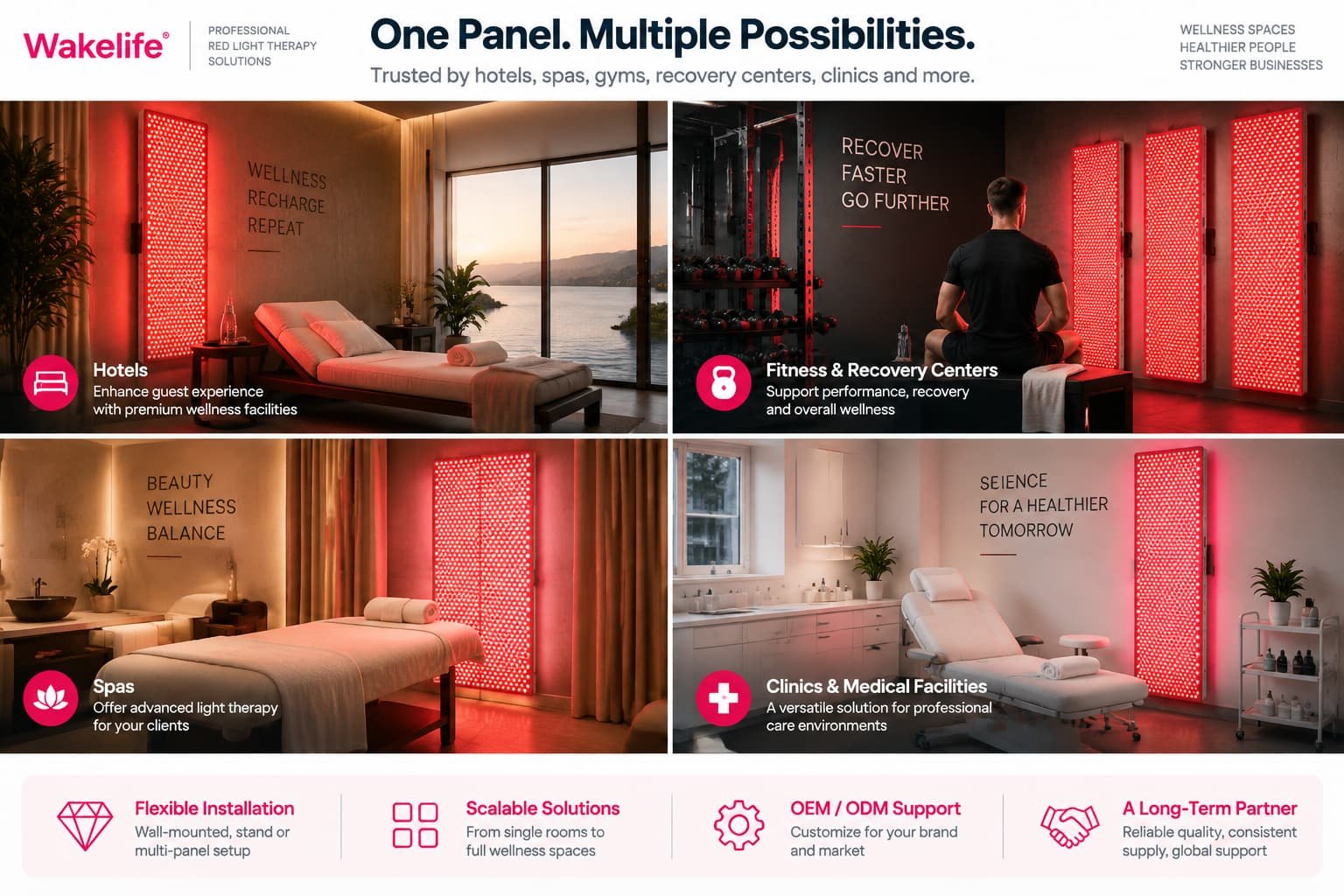
Para marcas e compradores atacadistas que avaliam painéis de terapia de luz vermelha de corpo inteiro como uma categoria de produto, as principais variáveis que determinam o posicionamento, faixa de preço, e diferenciação de mercado são:
- Tamanho do painel e cobertura do tratamento — as dimensões físicas determinam se o produto oferece cobertura genuína de corpo inteiro ou apenas tratamento parcial do corpo
- Irradiância à distância de tratamento - não é pico de irradiância, mas produção sustentada nas distâncias que os clientes realmente utilizam (9–12 polegadas)
- Arquitetura de comprimento de onda — se o painel vai além dos 660nm básicos + 850nm, e se o NIR profundo de 1060 nm está incluído
- Sistema de controle - Controle de APP, tela sensível ao toque, escurecimento multicanal, e os modos predefinidos afetam diretamente o preço máximo do produto e a qualidade da experiência do usuário
- Profundidade de personalização OEM/ODM — marca própria apenas com logotipo vs.. comprimento de onda completo, APLICATIVO, e personalização de aparência
- Certificação e conformidade - compatível com o mercado-alvo: NÓS, UE, Reino Unido, Austrália, ou outros mercados regulamentados
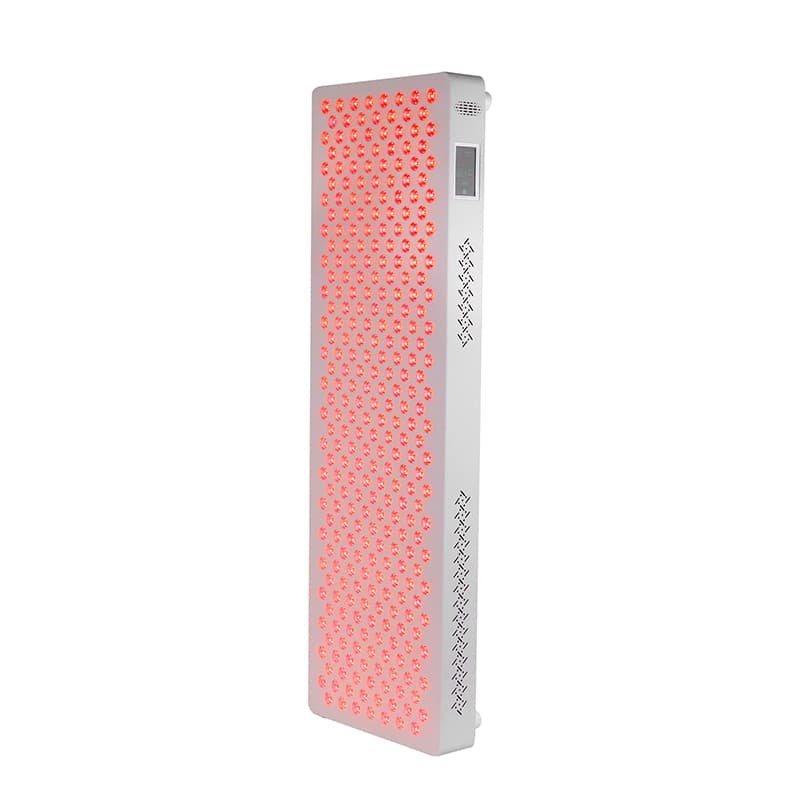
O ESPLUS1500 — 300 LEDs de chip duplo, 6 comprimentos de onda incluindo 1060nm, 920formato de corpo inteiro com mm de altura, Controle de aplicativos, 5-escurecimento do canal, e irradiância de 150mW/cm² em 3 polegadas – foi projetado especificamente como uma plataforma OEM/ODM para marcas que visam o segmento premium de corpo inteiro.
Análise completa abaixo.
Introdução: Por que corpo inteiro é o foco certo da categoria no momento
O mercado de painéis de terapia de luz vermelha expandiu significativamente nos últimos três anos. Painéis básicos – 660 nm básicos + 850nm, controle limitado, cobertura parcial do corpo – agora estão amplamente disponíveis e cada vez mais comoditizadas. As margens dos painéis básicos estão sob pressão, e a diferenciação da marca no nível de entrada é difícil de sustentar.
A oportunidade de crescimento está subindo: em direção à cobertura de corpo inteiro, sistemas de controle mais inteligentes, configurações de comprimento de onda mais amplas, e produtos que apoiam um posicionamento de bem-estar mais premium.
Para marcas e distribuidores que avaliam sua linha de produtos, isso cria uma questão estratégica clara:
O seu produto de painel atual está posicionado onde o mercado está indo – ou onde estava há três anos??
Na Wakelife Beauty, depois de trabalhar com 1,000+ parceiros de marca globais nos EUA, UE, Reino Unido, Austrália, e Japão, vemos um padrão consistente: as marcas que estão construindo posições de mercado duráveis são aquelas que investem em produtos de painel de corpo inteiro com especificações mais fortes, controle mais inteligente, e personalização mais profunda de OEM/ODM — sem competir em preço no nível de entrada.
Este artigo explica como as especificações do painel de corpo inteiro se traduzem no posicionamento da marca, o que diferencia um painel premium de corpo inteiro de um básico, e como avaliar qual configuração de produto se adapta ao estágio atual e ao mercado-alvo da sua marca.
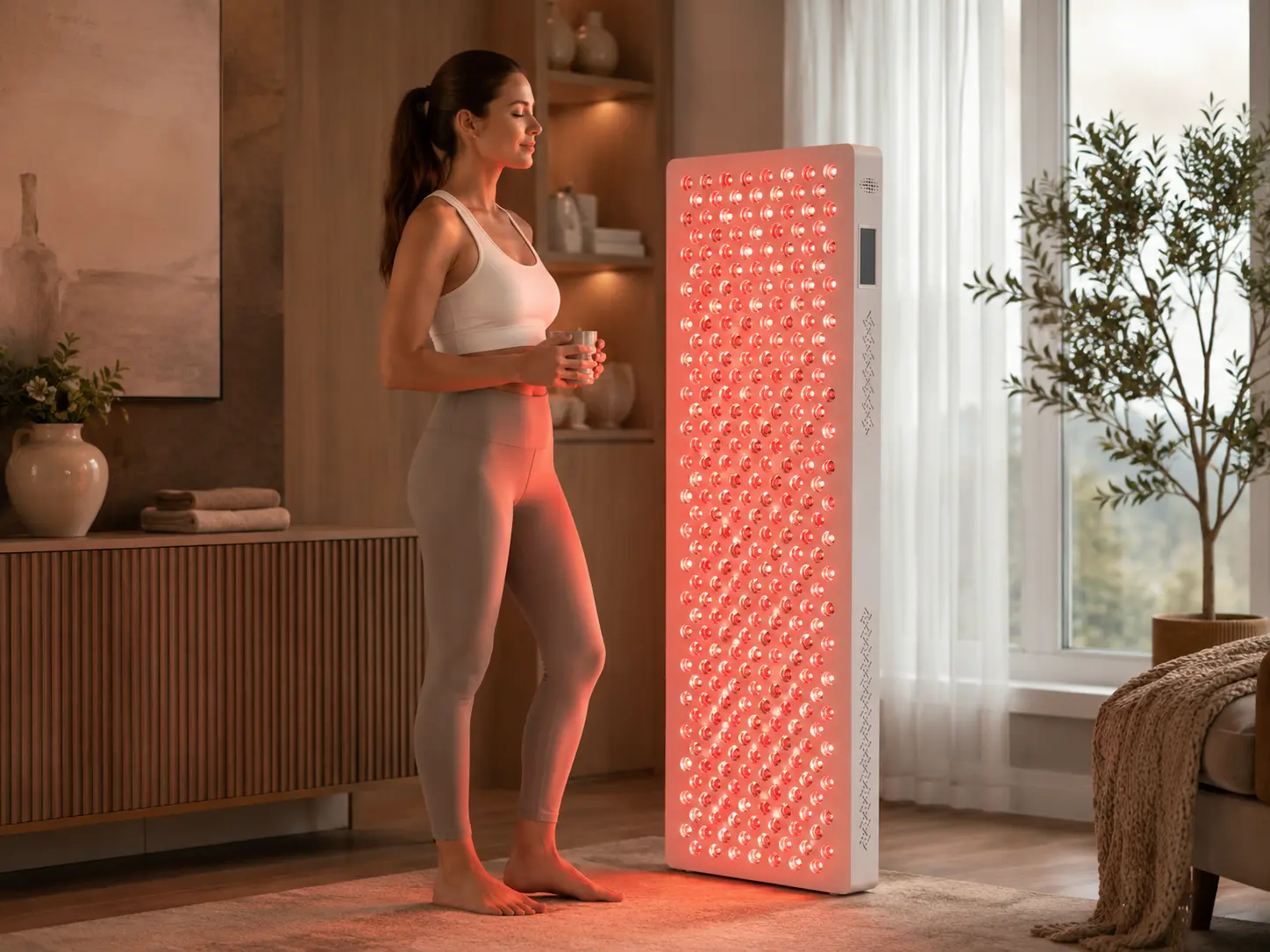
Papel 1 — Tamanho do painel e cobertura do tratamento: A base do posicionamento de corpo inteiro
Por que as dimensões físicas são mais importantes do que a contagem de LEDs
O erro mais comum que as marcas cometem ao avaliar os painéis de terapia de luz vermelha é focar na contagem de LED como especificação principal. A contagem de LEDs é visível e fácil de comparar – mas não informa se o painel realmente oferece uma cobertura significativa de corpo inteiro.
As dimensões físicas de um painel determinam sua área de cobertura em qualquer distância de tratamento. Esta é a especificação que determina se o seu produto pode ser posicionado de forma confiável como um dispositivo de corpo inteiro – ou se é realmente um grande painel parcial de corpo comercializado com linguagem de corpo inteiro..
Para que um painel forneça uma cobertura genuína de corpo inteiro no tronco e na parte superior das pernas – a área que a maioria dos usuários visa em uma sessão de corpo inteiro em pé ou sentado – o painel precisa ser alto o suficiente para cobrir essa faixa sem exigir que o usuário se reposicione no meio da sessão.
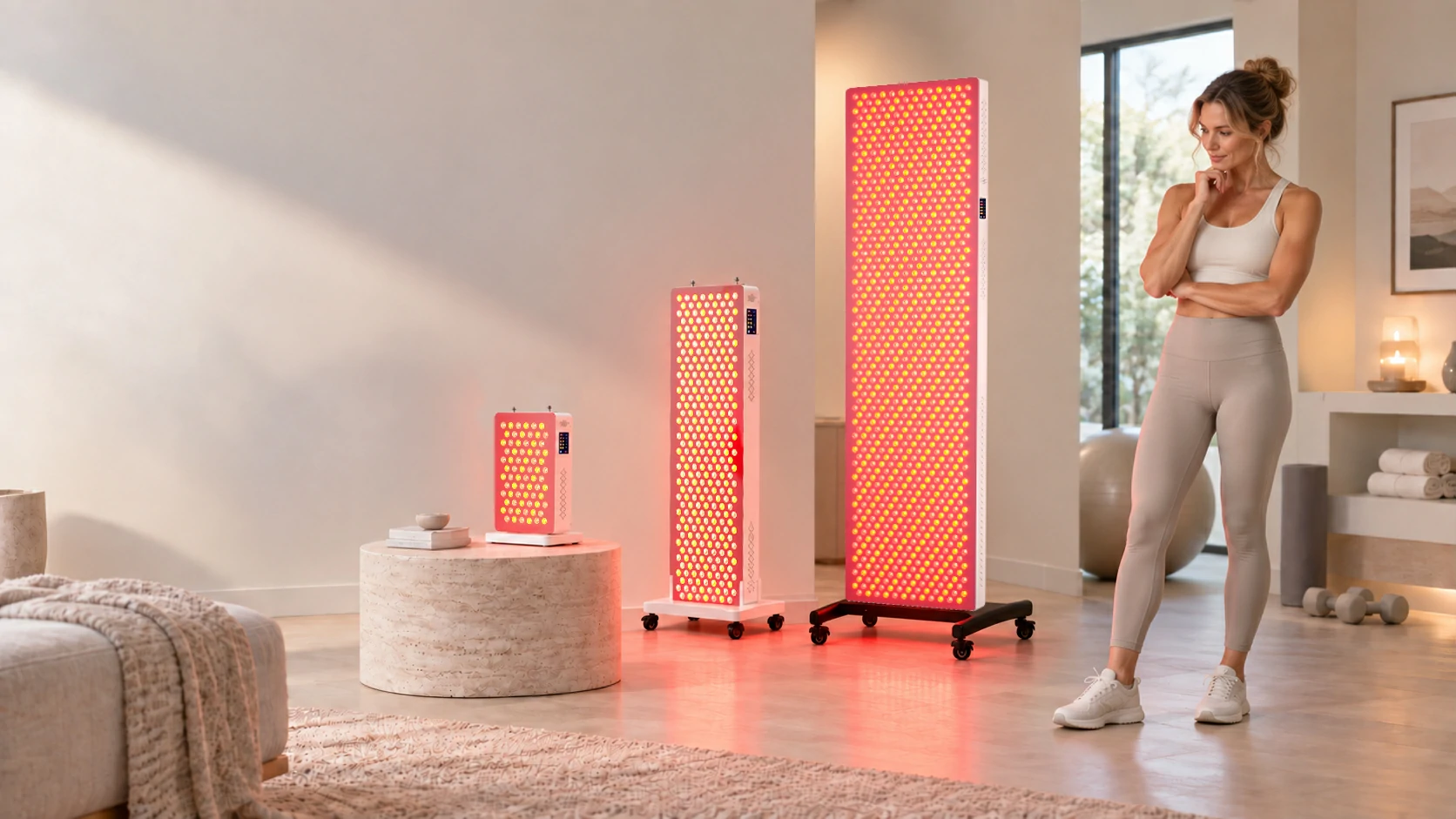
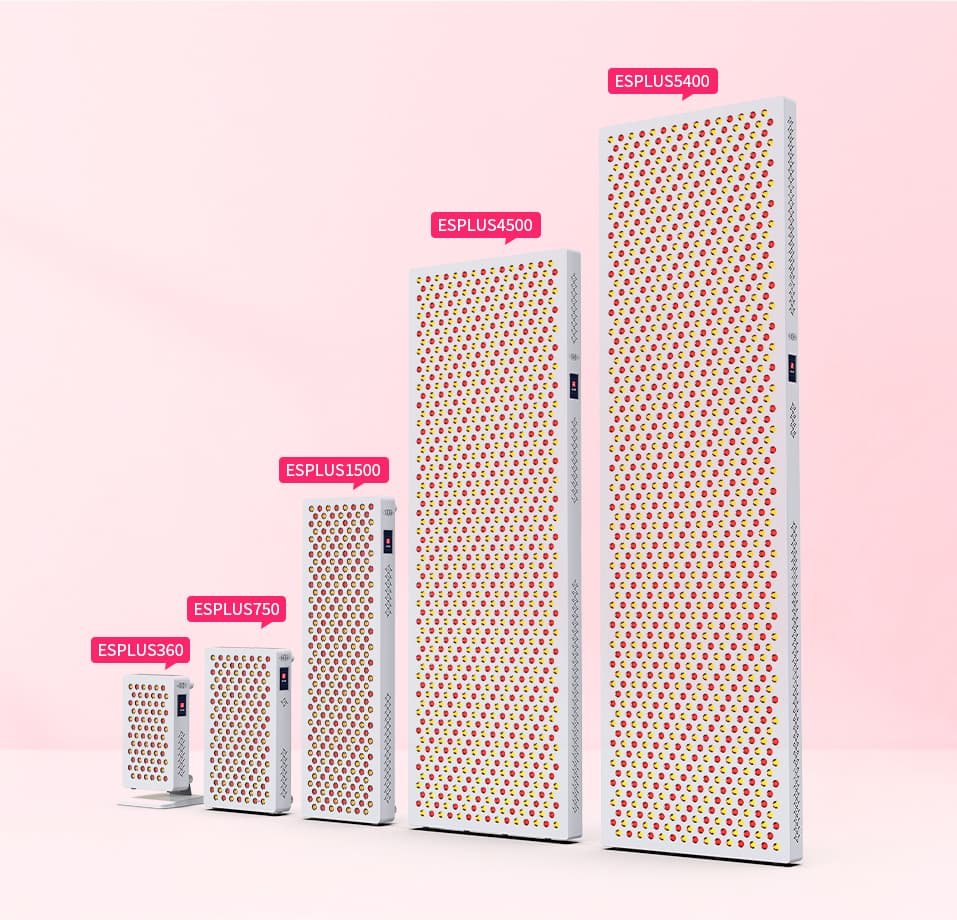
A comparação de cobertura da série ESPLUS
| Modelo | Dimensões | Quantidade LED | Uso primário |
|---|---|---|---|
| ESPLUS360 | 350 × 230 × 66 mm | 72 PCs | Tratamento direcionado |
| ESPLUS750 | 480 × 300 × 66 mm | 150 PCs | Iniciante de corpo inteiro |
| ESPLUS1500 | 920 × 300 × 66 mm | 300 PCs | Carro-chefe premium de corpo inteiro |
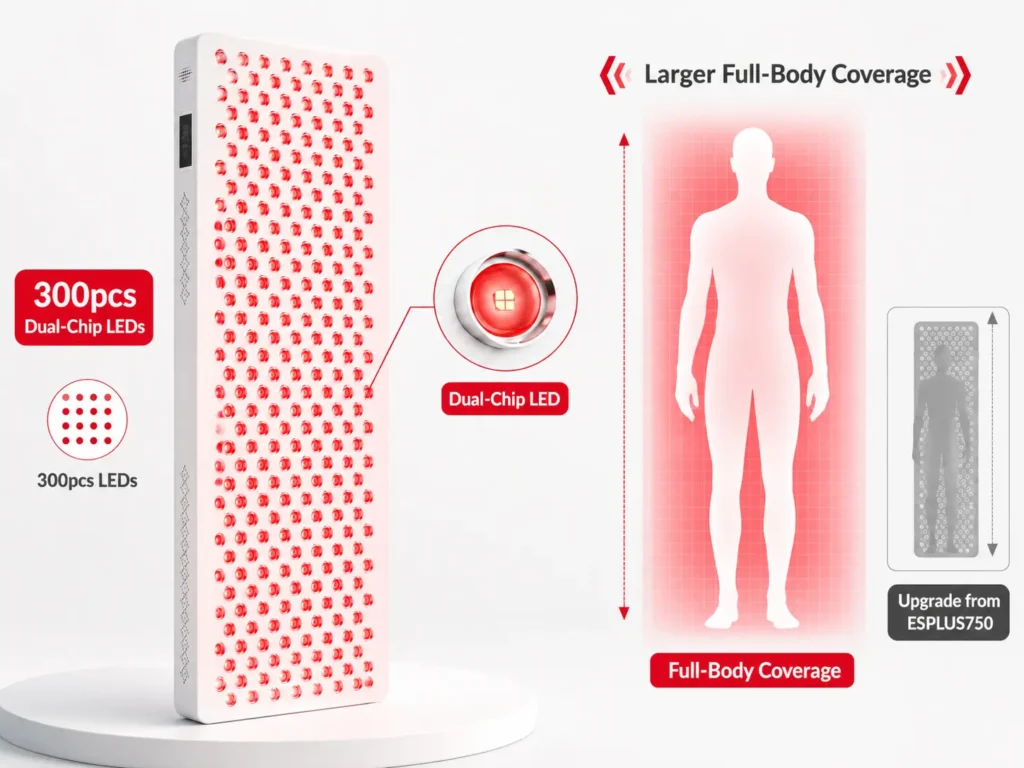
ESPLUS750 com 480 mm de altura é adequado como painel inicial de corpo inteiro - cobre uma área de tratamento significativa e funciona bem para marcas que entram na categoria de corpo inteiro ou que testam o mercado antes de um investimento maior.
ESPLUS1500 com 920 mm de altura – quase o dobro da altura – proporciona uma área de tratamento materialmente maior. No 9 polegadas de distância de tratamento, ESPLUS1500 cobre 40″ × 15″, em comparação com 27″ × 13″ para ESPLUS750. Esta não é uma diferença marginal. É a diferença entre um produto que cobre todo o tronco em uma única sessão e outro que requer reposicionamento para cobertura completa.
Para marcas que visam o bem-estar doméstico premium, Equipamento de SPA, recuperação, ou canais profissionais de bem-estar, esta diferença de cobertura é diretamente relevante para o posicionamento do produto e a satisfação do cliente.
O que isso significa para a estratégia da marca
- ESPLUS750 é o ponto de partida certo para marcas que entram na categoria de corpo inteiro, testando um novo mercado, ou construir uma linha de produtos onde o modelo inicial leva a um caminho de atualização
- ESPLUS1500 é a plataforma certa para marcas que posicionam um produto carro-chefe de corpo inteiro - onde a cobertura, especificações, e a faixa de preço precisam apoiar uma reivindicação de mercado premium
Ambos podem ser vendidos simultaneamente como uma linha de produtos: o 750 como ponto de entrada acessível, o 1500 como a atualização. Essa estrutura em camadas é uma das arquiteturas de linha de produtos mais eficazes na categoria de dispositivos de bem-estar.
Papel 2 — Irradiância à distância de tratamento: O número que realmente importa
Por que o pico de irradiância é a métrica errada
Quase todas as folhas de especificações do painel de terapia de luz vermelha listam um único valor de irradiância – geralmente medido na distância mais próxima possível, às vezes tão próximo quanto 0–2 polegadas da superfície do painel.
Esse número quase nunca é a distância em que os clientes realmente usam o produto. Uma sessão realista de tratamento de corpo inteiro ocorre a 23 a 30 centímetros do painel, onde o usuário possa ficar de pé confortavelmente e obter cobertura total da área de tratamento.
A irradiância de 9 a 12 polegadas é o número que determina a dose terapêutica real que seus clientes recebem. É também o número que determina se as reivindicações do seu produto resistirão ao escrutínio dos distribuidores., compradores de varejo, e consumidores informados.
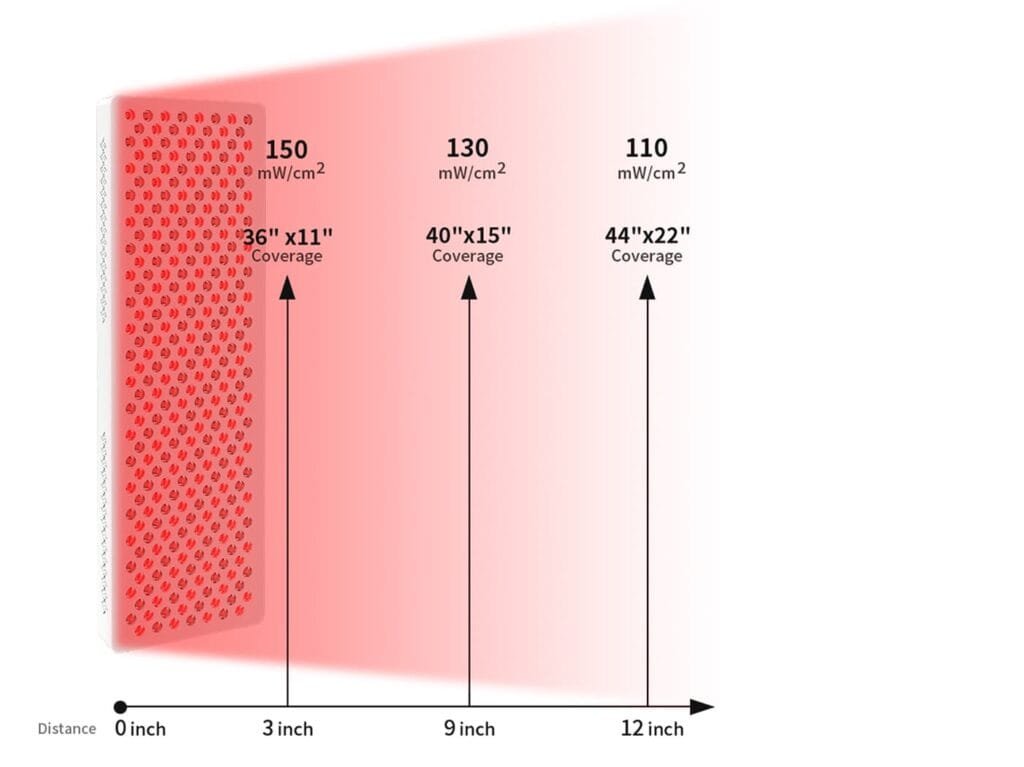
ESPLUS1500 fornece medições de irradiância verificadas em múltiplas distâncias:
| Distância | Irradiância | Área de Cobertura |
|---|---|---|
| 3 polegadas | 150 MW/cm² | 36″ × 11″ |
| 9 polegadas | 130 MW/cm² | 40″ × 15″ |
| 12 polegadas | 110 MW/cm² | 44″ × 22″ |
Três pontos merecem destaque para o posicionamento da marca:
Primeiro: A curva de irradiância é relativamente plana desde 3 para 12 polegadas - caindo de 150 para 110 mW/cm² em uma faixa de 9 polegadas. Esta é uma característica de sistemas ópticos e de driver bem projetados, e significa que o produto oferece resultados significativos nas distâncias que os clientes realmente usam.
Segundo: A área de cobertura aumenta à medida que a distância aumenta — de 36″ × 11″ no 3 polegadas para 44″ × 22″ no 12 polegadas. No 12 polegadas, ESPLUS1500 cobre uma área de tratamento ampla o suficiente para cobrir o tronco da maioria dos adultos em uma única sessão em pé.
Terceiro: Ter dados de irradiância multidistância dá às marcas algo concreto para colocar nas páginas dos produtos, em materiais de distribuição, e nas apresentações aos compradores - em vez de um único valor máximo que os compradores sofisticados questionarão imediatamente.
Em nossos testes comparativos internos, ESPLUS1500 supera painéis de corpo inteiro comparáveis de outros fabricantes em 9 e distâncias de 12 polegadas – as distâncias que importam para o uso real de corpo inteiro.
Para marcas OEM: Por que esses dados são importantes
Se você está construindo um produto premium de painel de corpo inteiro, a página do seu produto precisa de dados de irradiância que possam resistir ao escrutínio. Um único valor de pico em 0 polegadas não suporta posicionamento premium. Dados multidistâncias com áreas de cobertura não.
Wakelife Beauty fornece documentação de irradiância verificada para parceiros OEM/ODM, incluindo metodologia de teste e detalhes de equipamentos de medição — o tipo de documentação que apoia a qualificação do distribuidor e decisões informadas do comprador.
Papel 3 - Arquitetura de comprimento de onda: Construindo uma história de produto mais forte
O problema com 660nm básico + 850nm Posicionamento
A maioria dos painéis de corpo inteiro no mercado são construídos em torno de dois comprimentos de onda: 660nm vermelho e 850nm infravermelho próximo. Esta combinação está clinicamente bem documentada e comercialmente comprovada. Também é, agora, a especificação que quase todos os concorrentes oferecem – o que significa que não oferece diferenciação.
Para marcas que criam um produto premium de corpo inteiro, um 660nm + 850configuração nm cria um problema de posicionamento: seu produto parece idêntico a dezenas de alternativas em uma folha de comparação de especificações. O preço se torna o principal diferenciador, que não é onde as marcas premium querem competir.
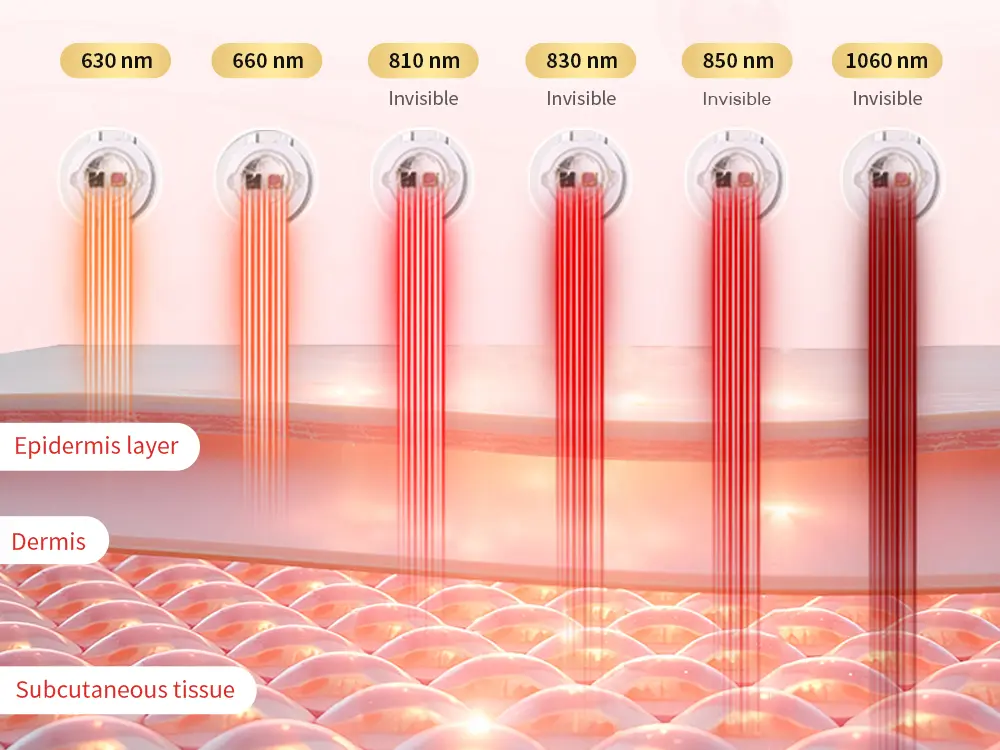
ESPLUS1500 usa uma configuração de seis comprimentos de onda em 300 LEDs de chip duplo:
630nm + 660nm + 810nm + 830nm + 850nm + 1060nm
A distribuição de LED entre ESPLUS1500 300 LEDs:
- 630nm: 75 PCs
- 660nm: 75 PCs
- 850nm: 50 PCs
- 830nm: 50 PCs
- 810nm: 41 PCs
- 1060nm: 9 PCs
Cada adição de comprimento de onda serve a um propósito específico na história técnica do produto:
630nm — Comprimento de onda vermelho mais curto, maior absorção ao nível da superfície da pele. Apoia a saúde da pele e o posicionamento relacionado ao colágeno.
660nm — Comprimento de onda vermelho do núcleo, o mais estudado na pesquisa de fotobiomodulação. Essencial para qualquer produto de terapia da luz vermelha.
810nm + 830nm — Comprimentos de onda NIR adicionais que ampliam a cobertura do infravermelho próximo além do ponto único padrão de 850 nm.
850nm — Comprimento de onda NIR central, padrão na categoria.
1060nm - Infravermelho próximo profundo, o diferencial mais significativo no mercado atual. 1060nm fica na extremidade mais profunda do espectro NIR e está cada vez mais associado ao posicionamento de produtos premium.
O que 1060 nm faz para o posicionamento da marca
Para marcas, o valor de 1060 nm não se refere principalmente a qualquer reivindicação terapêutica específica. Trata-se de diferenciação de produtos.
Um painel que inclui 1060 nm junto com a pilha de comprimento de onda padrão oferece às marcas uma história técnica que vai significativamente além de “660 nm e 850 nm como todos os outros”. Ele suporta:
- Uma narrativa de arquitetura de comprimento de onda mais avançada
- Posicionamento premium em relação aos painéis padrão
- Uma história técnica mais forte para apresentações de distribuidores e comparação de compradores
- Distância clara dos concorrentes de nível básico
Para marcas OEM/ODM, a configuração do comprimento de onda também pode ser ajustada como parte do programa de personalização – permitindo que as marcas ajustem a combinação de LED com base em seu mercado-alvo, posicionamento do produto, e requisitos de conformidade.
Papel 4 - Controle Inteligente: Como o sistema de controle afeta seu preço máximo
Por que o sistema de controle é uma decisão de marca, Não é um detalhe técnico
O sistema de controle de um painel de terapia de luz vermelha é frequentemente tratado como uma especificação secundária – algo que vem depois do comprimento de onda e da irradiância no processo de avaliação. Para marcas, isso é um erro.
O sistema de controle determina diretamente o preço máximo do seu produto. Um painel com um controle remoto básico e sem conectividade de aplicativo não pode ser posicionado acima de um determinado preço – independentemente de quão boa seja sua configuração de comprimento de onda ou dados de irradiância. Um painel com controle APP, uma tela sensível ao toque de alta resolução, escurecimento multicanal, e modos predefinidos criam as condições para preços premium.
Não se trata da tecnologia por si só. Trata-se do que o sistema de controle comunica ao comprador final sobre a qualidade e sofisticação do produto..
Arquitetura de controle ESPLUS1500
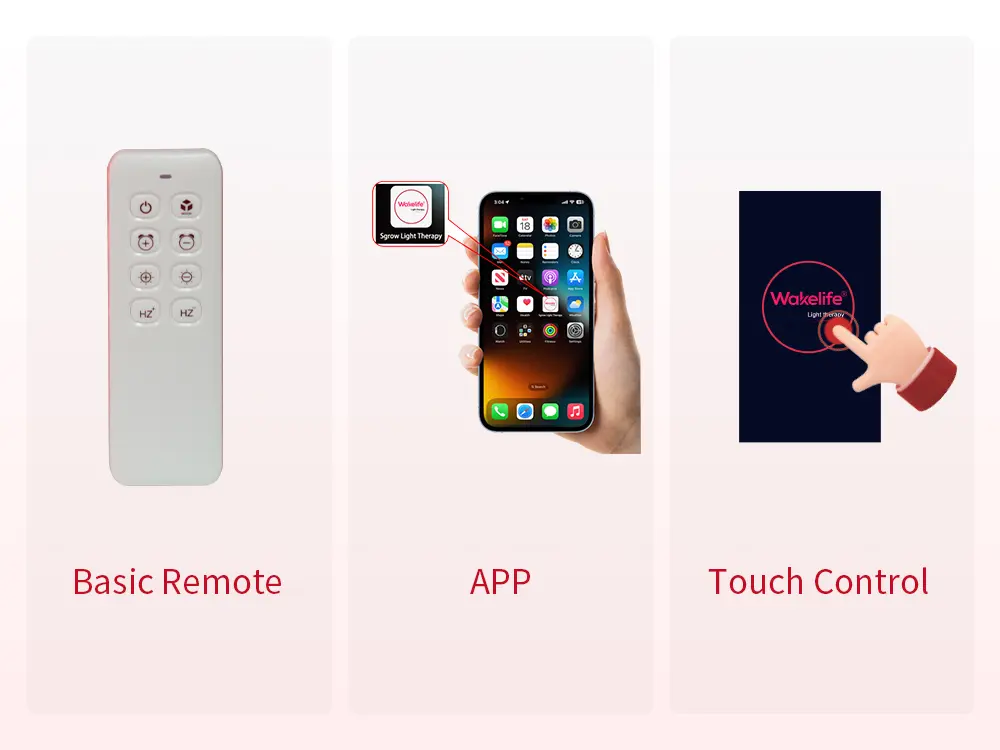
ESPLUS1500 inclui:
Tela sensível ao toque - Alta resolução, LCD de alta atualização com resposta sensível ao toque. Qualidade visual e usabilidade significativamente melhores do que as telas LCD básicas usadas em painéis padrão.
Controle de aplicativos — Controle sem fio total via smartphone, incluindo todas as funções disponíveis na tela sensível ao toque: tempo, brilho, seleção de modo, ajuste de canal de comprimento de onda, e configurações personalizadas.
5-escurecimento do canal — Controle de brilho independente em cinco grupos de canais de comprimento de onda (633nm, 660nm, 830nm, 850nm, 810/1060nm). Os usuários podem ajustar a combinação exata de comprimentos de onda em sua sessão, não apenas o brilho geral.
4 modos predefinidos:
- Modo Corpo Inteiro: Todos os comprimentos de onda em 100% brilho, 10Pulso Hz, 10-temporizador de minutos
- Modo de alívio da dor: Vermelho em 50%, NIR em 100%, 10Pulso Hz, 10-temporizador de minutos
- Modo de suspensão: Vermelho em 1%, NIR em 100%, sem pulso, 20-temporizador de minutos
- Modo Cuidados com a Pele: 633nm + 660nm em 100%, 830nm + 1060nm em 100%, sem pulso, 10-temporizador de minutos
2 modos personalizados - Totalmente ajustável: seleção de comprimento de onda, brilho (1–100%), frequência de pulso (1–1000Hz), temporizador (5–30 minutos). Configurações salvas e acessíveis através do menu Predefinições.
Conexão em cadeia para vários dispositivos — Um dispositivo principal controla até 6 dispositivos secundários conectados. Permite configurações escalonáveis, desde uso doméstico com painel único até instalações profissionais com vários painéis.
Para marcas OEM: Opções de personalização de APP
Para marcas com programas de produtos inteligentes, a interface do APP pode ser personalizada:
- Logotipo e marca do APP
- Estilo de interface e sistema de cores
- Nomes de modo e linguagem voltada ao usuário
- Funções de controle e conteúdo de orientação do usuário
- Animação de inicialização e configurações de inicialização
Isso significa que seu produto de marca pode ter sua própria identidade APP — e não uma interface genérica do fabricante com seu logotipo adicionado — o que é um diferencial significativo para marcas premium e cada vez mais esperado por compradores de varejo sofisticados..
Papel 5 - ESPLUS750 vs. ESPLUS1500: Escolhendo a plataforma certa para o estágio da sua marca
Uma das perguntas mais comuns dos parceiros da marca OEM/ODM que avaliam a série ESPLUS é: qual modelo deve ancorar minha linha de produtos?
A resposta depende do estágio da sua marca, mercado-alvo, e estratégia de linha de produtos.
Quando ESPLUS750 é a escolha certa
ESPLUS750 (480 × 300 mm, 150 LEDs, 150em mW/cm² 3 polegadas) é a plataforma certa quando:
- Você é entrando na categoria de painel de corpo inteiro pela primeira vez e deseja testar o mercado antes de se comprometer com um investimento maior no produto
- Seu preço alvo está posicionado na faixa premium acessível, em vez do nível principal
- Seu principal canal de vendas é mercado (Amazônia, Shopify) onde o volume e os preços competitivos são mais importantes do que o posicionamento principal
- Você quer um ponto de partida que pode ser atualizado para ESPLUS1500 à medida que sua marca cresce - proporcionando uma arquitetura de linha de produtos natural desde o primeiro dia
ESPLUS750 oferece um painel de corpo inteiro genuinamente forte com a mesma configuração de 6 comprimentos de onda, Controle de aplicativos, 5-escurecimento do canal, e opções de personalização OEM/ODM como ESPLUS1500 — com um custo inicial mais baixo e com opções de MOQ mais flexíveis.
Quando ESPLUS1500 é a escolha certa
ESPLUS1500 (920 × 300 mm, 300 LEDs, maior irradiância, maior cobertura) é a plataforma certa quando:
- Você é construindo um produto carro-chefe que precisa competir no segmento premium do mercado
- Seu canais alvo incluem alta qualidade direta ao consumidor, Fornecimento de equipamentos SPA, marcas de recuperação, estúdios profissionais de bem-estar, ou varejo premium
- Seu posicionamento da marca requer uma história de produto que vai além do que os painéis padrão podem oferecer - em cobertura, especificações, e controle a sofisticação
- Você é atualizando uma linha de produtos existente e precisa de um novo carro-chefe para gerar valores médios de pedidos mais elevados e apoiar o reposicionamento de marcas premium
- Seu Programa OEM/ODM envolve uma personalização mais profunda - interface do APP, configuração de comprimento de onda, aparência – onde a plataforma maior oferece mais espaço para construir diferenciação
A estratégia da linha de dois produtos
Para marcas com capacidade de gerenciar dois SKUs, a arquitetura de linha de produtos mais eficaz é:
ESPLUS750 como carro-chefe de entrada - preço acessível, conjunto completo de recursos, posiciona a marca na categoria de corpo inteiro inteligente
ESPLUS1500 como atualização premium - maior cobertura, especificações mais altas, oferece suporte a preços premium e posicionamento de marca principal
Essa estrutura em camadas fornece à sua marca uma lógica de atualização clara, suporta valor médio de pedido mais alto por meio de upsell, e posiciona a linha de produtos em uma ampla gama de segmentos de clientes e faixas de preço.
Papel 6 — Personalização OEM/ODM para produtos de painel de corpo inteiro
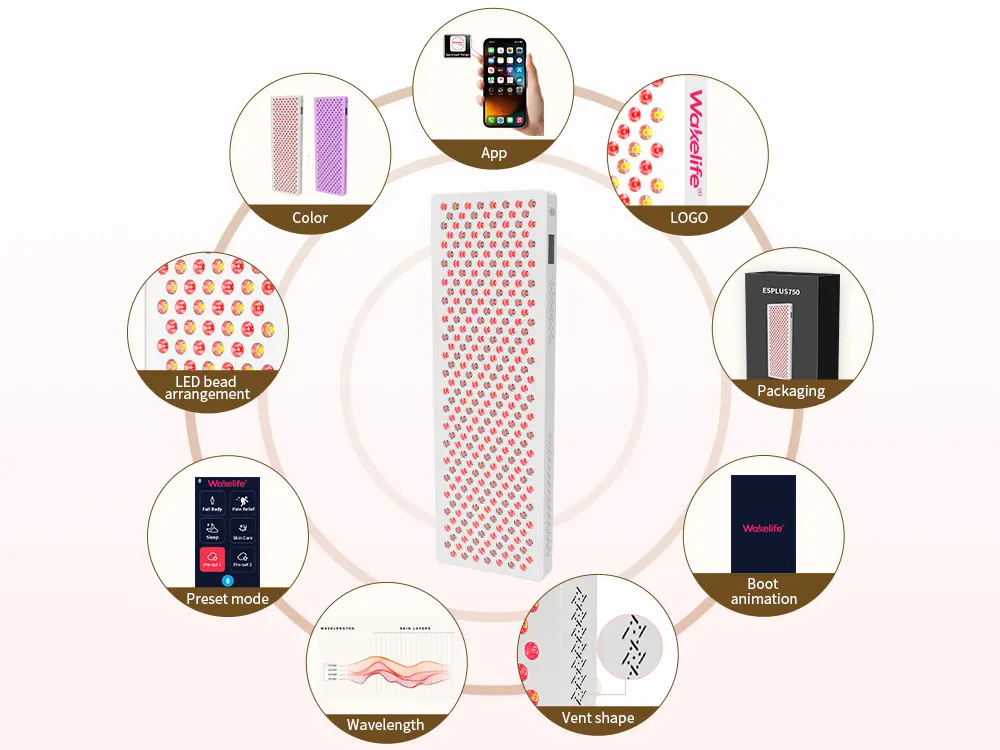
ESPLUS1500 suporta personalização em quatro camadas:
Camada de marca (disponível para todos os programas OEM):
- Colocação do logotipo do produto
- Design de etiqueta de produto
- Embalagem (caixa de presente, caixa externa)
- Idioma e conteúdo do manual do usuário
- Suporte de imagem e vídeo de marketing
Camada de aparência (disponível para programas qualificados):
- Cor da caixa
- Design de padrão de ventilação lateral
- Formato de ventilação do ventilador (rebaixado ou elevado)
- Padrão de arranjo de LED
- Design de suporte de mesa
- Acabamento de superfície
Camada óptica e funcional (disponível para programas OEM/ODM):
- Ajuste de configuração de comprimento de onda
- Arranjo e proporção de LED
- Configurações de brilho
- Parâmetros de frequência de pulso
- Configuração do modo predefinido
- Parâmetros do modo personalizado
- Lógica de controle multicanal
APP e camada digital (disponível para programas de produtos inteligentes):
- Logotipo e marca do APP
- Estilo de interface e sistema de cores
- Nomes de modo e idioma da interface
- Funções de controle
- Conteúdo de orientação ao usuário
- Animação de inicialização
Opções de acessórios e instalação
ESPLUS1500 suporta múltiplas configurações de acessórios dependendo do cenário de uso alvo:
- Sistema de cabide de porta (padrão, incluído)
- Sistema de polias ajustáveis (padrão, incluído)
- Cabo suspenso com parafuso de fixação (padrão, incluído)
- Suporte de chão (opcional, para uso em SPA e estúdio)
- Solução de montagem em parede (opcional, para instalação profissional)
- Conectando o cabo de alimentação para configuração de vários dispositivos (padrão, incluído)
Para marcas que visam SPA, salão, ou canais profissionais de bem-estar, a configuração do suporte de chão expande significativamente o apelo comercial do produto e permite o posicionamento como um equipamento profissional em vez de um dispositivo doméstico.
Papel 7 — Conformidade e certificação para produtos de painel de corpo inteiro
Requisitos Específicos do Mercado
Para marcas que lançam um painel de terapia de luz vermelha para todo o corpo em mercados regulamentados, os requisitos de certificação variam de acordo com o mercado e o canal:
Estados Unidos: FCC para conformidade com EMC; UL para segurança elétrica (exigido por alguns canais de varejo); FDA 510(k) para dispositivos que fazem alegações médicas ou terapêuticas
União Europeia: Marcação CE (LVD, Emc, e potencialmente MDR dependendo da classificação do produto); RoHS para conformidade de materiais
Reino Unido: UKCA (equivalente CE pós-Brexit)
Austrália: SAA para segurança elétrica; TGA para registro de dispositivos terapêuticos
Canadá: Health Canada MDL para categorias de dispositivos regulamentados
Sistemas globais de qualidade: ISO 13485 para gestão de qualidade; MDSAP (reconhecido pela FDA, TGA, Saúde Canadá)
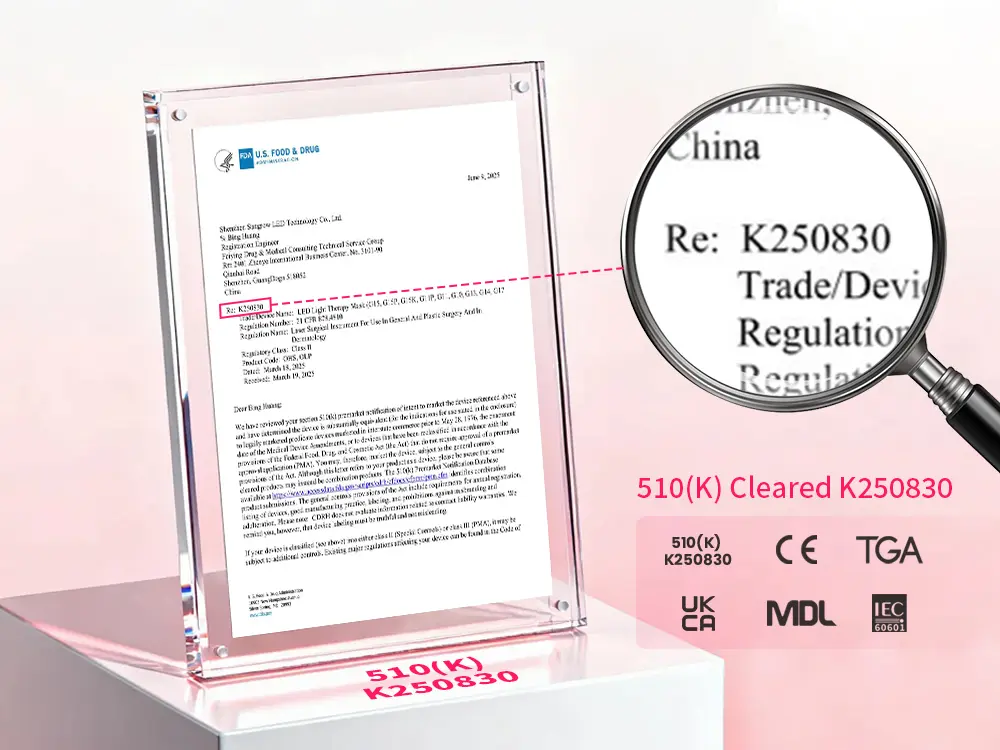
Wakelife Beauty possui certificações, incluindo ISO 13485, MDSAP, CE, UKCA, FCC, CLIMA, Ul, IEC 60601, Rohs, e BSCI. Nosso FDA 510(k) autorização (K250830) aplica-se a modelos de produtos qualificados.
Para projetos OEM/ODM, nossa equipe de conformidade trabalha com parceiros de marca para revisar os requisitos do mercado-alvo e preparar documentação específica do projeto. O escopo da certificação deve sempre ser confirmado por modelo e mercado-alvo — uma certificação realizada para um produto não se aplica automaticamente a um modelo diferente.
Para marcas que visam vários mercados simultaneamente, planejamento de conformidade em estágio inicial – começando no estágio de confirmação de requisitos, não depois do ferramental — reduz significativamente o custo e o cronograma de entrada no mercado.
Conclusão: Corpo inteiro é para onde o mercado está indo – a questão é em qual plataforma você constrói
O painel de terapia de luz vermelha categoria não vai desaparecer. Está crescendo, cada vez mais sofisticado, e subindo em especificação e preço à medida que o mercado amadurece.
Para marcas que estão construindo uma posição duradoura nesta categoria, as decisões tomadas agora sobre a plataforma do produto, especificações, sistema de controle, e o parceiro OEM/ODM determinarão se essa posição será construída sobre uma base que possa ser escalonada - ou uma que seja eliminada pela concorrência à medida que o mercado se comoditizar no nível de entrada.
ESPLUS1500 foi projetado como uma plataforma de painel de corpo inteiro para marcas que desejam construir produtos premium: 300 LEDs de chip duplo, 920mm cobertura de corpo inteiro, seis comprimentos de onda, incluindo 1060nm, Controle por APP e tela sensível ao toque, 5-escurecimento do canal, conexão de vários dispositivos, e personalização OEM/ODM em toda a marca, aparência, configuração óptica, e interface de aplicativo.
ESPLUS750 é o ponto de entrada certo para marcas que estão construindo essa posição – ou testando a categoria de corpo inteiro antes de se comprometerem com um investimento principal.
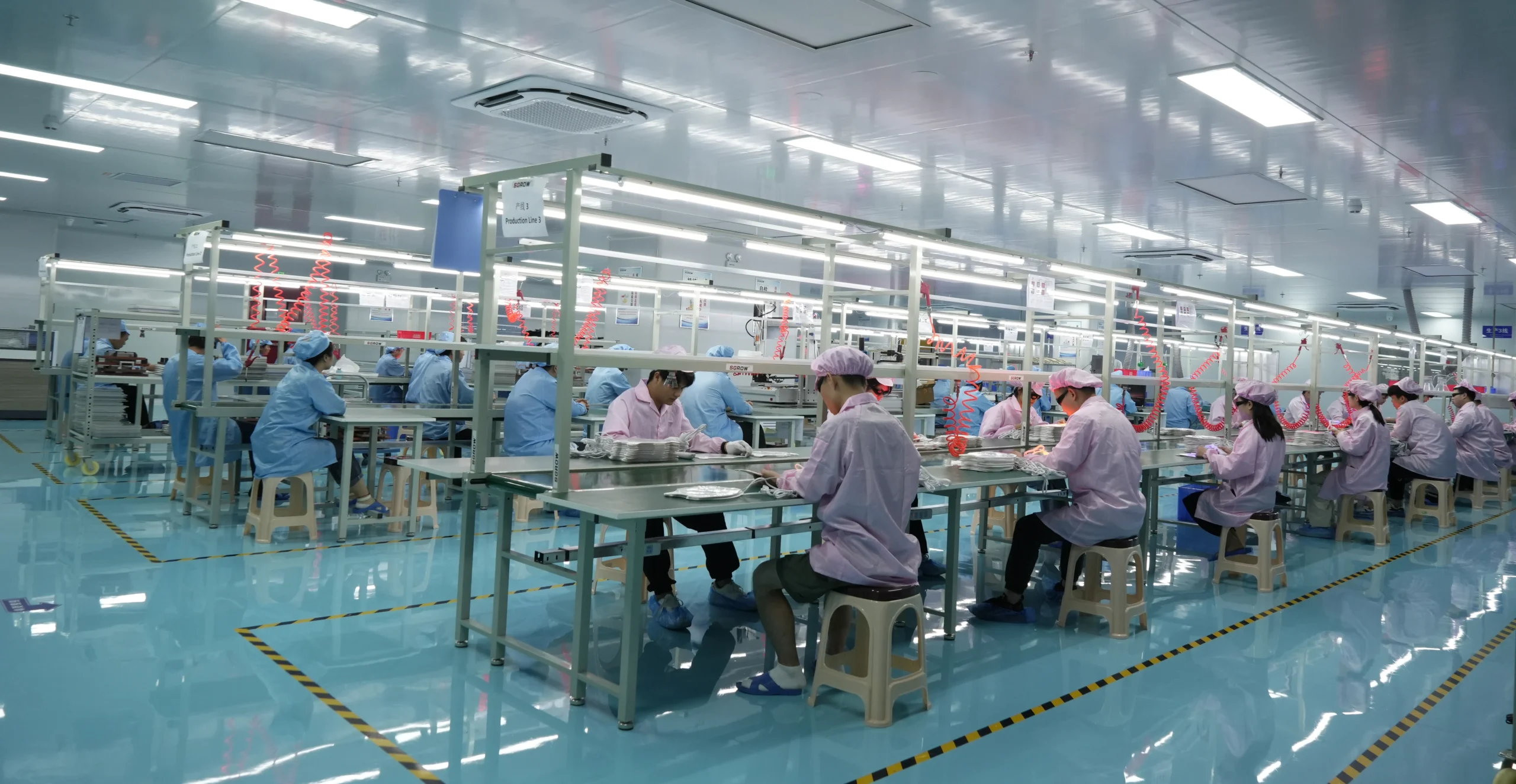
Ambos são fabricados sob a ISO da Wakelife Beauty 13485 e sistema de gestão de qualidade certificado pelo MDSAP, com validação estruturada de EVT/DVT/PVT, gerenciamento formal de mudanças, e suporte à documentação de conformidade para entrada no mercado global.
Leitura Relacionada
- Como escolher um painel de terapia de luz vermelha para sua marca: 6 Critérios que realmente importam — A estrutura completa de sourcing para compradores de painéis B2B
- Processo de desenvolvimento de dispositivo de terapia de luz vermelha: Lições das falhas do mundo real — Como o processo de desenvolvimento estruturado da Wakelife protege seu investimento OEM
- 5 Falhas reais de OEM em dispositivos de terapia LED – e como evitá-las — As decisões que determinam o sucesso do projeto antes do início da produção
Comece seu projeto ESPLUS1500 OEM/ODM
Se você está avaliando o ESPLUS1500 como a plataforma para sua linha de produtos de terapia de luz vermelha de corpo inteiro, A equipe OEM/ODM da Wakelife Beauty pode ajudá-lo:
- Confirme qual configuração do ESPLUS corresponde ao seu mercado-alvo e posicionamento da marca
- Revise as opções de personalização e os requisitos de MOQ para o escopo do seu programa
- Identifique os requisitos de certificação para o seu mercado-alvo
- Forneça documentação de irradiância e especificações do produto para avaliação do comprador
- Solicite amostras e um orçamento específico para o projeto
Para nos ajudar a dar-lhe a resposta mais útil, compartilhe o seguinte quando entrar em contato:
- Mercado-alvo e canal de vendas
- Quantidade estimada do pedido
- Requisitos de personalização (marca / aparência / óptico / APLICATIVO)
- Necessidades de certificação ou conformidade
- Cronograma de lançamento esperado
👉 Veja as especificações completas do ESPLUS1500: https://wakelifebeauty.com/product/esplus1500-oem-odm-premium-full-body-red-light-therapy-panel/
👉 Veja as especificações do ESPLUS750: https://wakelifebeauty.com/product/esplus750-red-light-therapy-panel/
👉 Explore nossos serviços OEM/ODM: https://wakelifebeauty.com/oem-odm/
👉 Revise nossas credenciais de qualidade e conformidade: https://wakelifebeauty.com/quality-compliance/