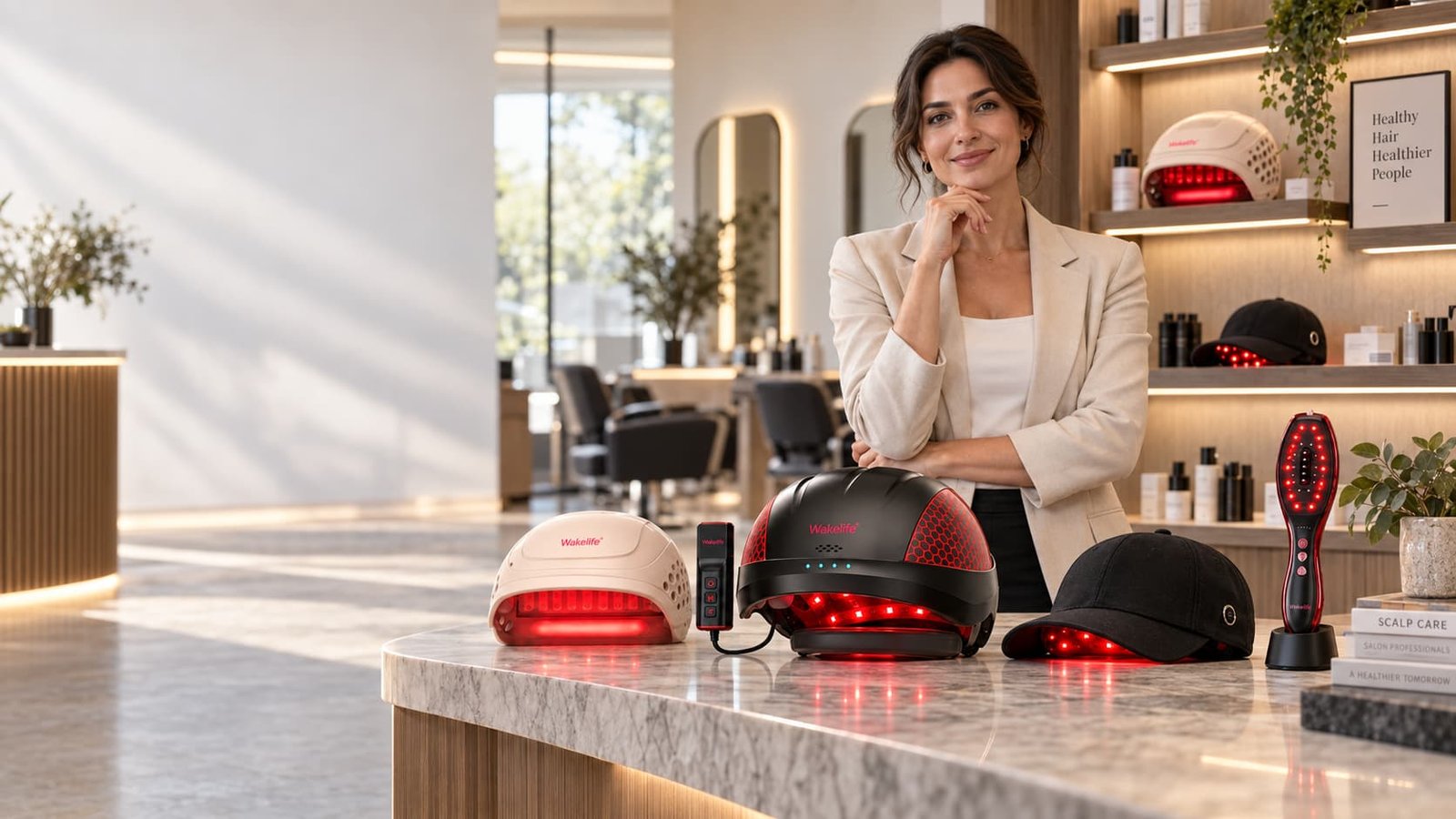
Zeven kritische specificaties de kwaliteit en werkzaamheid van het PBM-apparaat bepalen: (1) Golflengte (660 nm rood + 830 nm NIR optimaal), (2) Bestraling (30–100 mW/cm²), (3) Energiedichtheid (3–60 J/cm² weefselafhankelijk), (4) Behandelingsgebied (overeenkomen met de toepassing), (5) Leveringsmodus (CW-standaard, PW optioneel), (6) Bouw kwaliteit (certificeringen, materialen, garantie), En (7) Documentatie (specificaties, testen, naleving). Controleer claims door middel van onafhankelijke tests, certificeringen, en transparantie van de fabrikant. Rode vlaggen omvatten ontbrekende specificaties, onrealistische beweringen, en gebrek aan verificatiegegevens. Dit raamwerk maakt systematische evaluatie mogelijk voor zelfverzekerde B2B-aankoopbeslissingen.
Invoering
Als u ooit drie apparaten voor roodlichttherapie hebt vergeleken en nog meer in de war bent geraakt dan toen u begon, je bent niet de enige. Datasheets vol jargon, marketingclaims die indrukwekkend klinken maar niets betekenen, en enorm verschillende prijspunten voor schijnbaar identieke producten – het is een frustrerend landschap voor elke koper.
Hier is het goede nieuws: je hebt geen fotonicadiploma nodig om deze apparaten te evalueren. Je hebt een raamwerk nodig.
Na jaren van ontwerpen, productie, en het testen van fotobiomodulatie-apparaten bij WakeLife, waar we het evaluatieproces in hebben gedestilleerd zeven specificaties die echt effectieve apparaten scheiden van marketinggestuurde apparaten. Dit zijn dezelfde parameters als onze eigen R&D-team gebruikt tijdens de productontwikkeling – en dezelfde criteria die onze B2B-partners gebruiken bij het vergelijken van leveranciers.
Zoals gedocumenteerd in de bredere PBM-literatuur, De werkzaamheid van fotobiomodulatie hangt af van het leveren van de juiste lichtparameters aan het juiste weefsel (Chung et al., 2012). Begrijp die parameters verkeerd, en zelfs het duurste apparaat wordt een dure lamp.
Dit raamwerk valt uiteen in twee groepen:
- Prestatiespecificaties (1–5): Deze bepalen of het apparaat daadwerkelijk werkt: golflengte, bestraling, dosis, dekkingsgebied, en leveringswijze.
- Kwaliteit specificaties (6–7): Deze bepalen of het apparaat veilig is, betrouwbaar, en legaal verkoopbaar – bouwkwaliteit, certificeringen, en documentatie.
Of u nu een distributeur bent die inventaris inkoopt, een kliniekeigenaar die apparatuur evalueert, of een OEM-koper die een productiepartner selecteert, deze gids geeft u een systematische aanpak, herhaalbaar proces voor het nemen van zelfverzekerde beslissingen.
Laten we elke specificatie eens bekijken – waar we op moeten letten, wat te vermijden, en hoe claims te verifiëren.
De 7 Kritieke specificaties
Specificatie 1: Golflengte
Waarom het ertoe doet: De golflengte bepaalt welke chromoforen licht absorberen en hoe diep fotonen het weefsel binnendringen. Zoals het fundamentele onderzoek van Karu heeft aangetoond, cytochroom c-oxidase – de primaire fotoacceptor in de mitochondriën – heeft een piekabsorptie in het rood (rondom 660 nm) en bijna-infrarood (rondom 830 nm) banden (Toename, 1998). Door de verkeerde golflengte te kiezen, bereiken fotonen nooit hun biologische doel. Voor een diepe duik, zien Onderwerp 06: Golflengte selectie & Weefselpenetratiediepte.
Optimale specificaties:
| Sollicitatie | Primaire golflengte | Secundair | Reden |
|---|---|---|---|
| Huid / gezicht | 660 nm | 830 nm | Heem-absorptie + diepe dermale stimulatie |
| Lichaam / spier | 830 nm | 660 nm | CuA-centrum + diepe penetratie |
| Brein | 810 nm | — | Transcraniële optimalisatie |
| Algemeen welzijn | 660 nm + 830 nm | — | Dekking met dubbele golflengte |
Rode vlaggen:
- Eén golflengte op de markt gebracht voor alle toepassingen
- Golflengten buiten het therapeutische venster van 600–1000 nm
- Er is helemaal geen golflengtespecificatie verstrekt
- Ongebruikelijke golflengten (bijv. 450 nm, 560 nm) zonder gepubliceerd bewijs
Hoe te verifiëren:
- Vraag spectroradiometergegevens op die de piekemissiegolflengte weergeven
- Verifieer met onafhankelijke tests – vertrouw niet alleen op labelclaims
- Controleer de piekgolflengte, niet alleen “rood licht” of “infrarood”
Acceptabel bereik: 630–850 nm voor therapeutische toepassingen
Specificatie 2: Bestraling
Waarom het ertoe doet: Bestraling (MW/cm²) vertelt u hoe snel fotonen in weefsel worden afgeleverd. Te laag en u bevindt zich onder de biologische activeringsdrempel; te hoog en u riskeert thermische schade en de remmende fase van de bifasische dosisrespons (Huang et al., 2009). Voor gedetailleerde dosimetrie, zien Onderwerp 07: Bestraling, Energiedichtheid & Dosimetrie.
Optimaal bereik:
| Weefseldiepte | Minimum | Optimaal | Maximaal |
|---|---|---|---|
| Oppervlakkig (huid, oppervlakkige wonden) | 30 MW/cm² | 50 MW/cm² | 100 MW/cm² |
| Diep (spier, gewrichten) | 50 MW/cm² | 75 MW/cm² | 150 MW/cm² |
Rode vlaggen:
- Bestraling > 200 MW/cm² (thermisch risico – zie IEC 62471 fotobiologische veiligheid)
- Bestraling < 10 MW/cm² (subdrempel voor PBM)
- Vermogen vermeld in watt zonder oppervlakte op te geven (zinloos zonder ruimte)
- Geen meetafstand gespecificeerd (De instraling neemt af met de afstand)
Hoe te verifiëren:
- Vraag de bestralingskaart aan over het volledige behandelgebied
- Controleer de meetafstand (moet zich op het behandeloppervlak bevinden, typisch 0-6 inch)
- Controleer de uniformiteit over het emitterende oppervlak (±20% is acceptabel)
- Onafhankelijk testen van vermogensmeters is de gouden standaard
Sleutelformule: Bestraling (MW/cm²) = Vermogen (mW) ÷ Gebied (cm²)
Specificatie 3: Energiedichtheid (Dosis)
Waarom het ertoe doet: Energiedichtheid (J/cm²) vertegenwoordigt de totale dosis fotonen die aan het weefsel wordt afgegeven – en het is de belangrijkste variabele bij het bepalen van de therapeutische uitkomst. Onderzoek toont consequent een bifasische dosisrespons aan: te weinig doet niets, de juiste hoeveelheid stimuleert de genezing, en teveel remt het feitelijk (Huang et al., 2009). Zien Onderwerp 07 voor volledige dosimetriebegeleiding.
Optimaal bereik per weefsel:
| Weefseltype | Optimale dosis | Behandeltijd* |
|---|---|---|
| Huid (oppervlakkig) | 3–6 J/cm² | 10–15 min |
| Huid (diep dermaal) | 6–10 J/cm² | 15–20 min |
| Spier | 10–20 J/cm² | 15–30 min |
| Gewrichten | 8–15 J/cm² | 15–25 min |
| Brein (transcraniaal) | 20–60 J/cm² | 20–30 min |
*Bij 50 mW/cm² bestralingssterkte
Rode vlaggen:
- Dosis > 100 J/cm² (bifasische remmingszone)
- Dosis < 1 J/cm² (subtherapeutisch)
- Er worden geen dosisberekeningen of richtlijnen voor de behandeltijd gegeven
- Behandeltijden die niet overeenkomen met de aangegeven bestralingssterkte (doe de wiskunde zelf)
Hoe te verifiëren:
- Berekenen: Dosis (J/cm²) = Bestraling (MW/cm²) × Tijd (seconden) ÷ 1000
- Controleer de behandeltijd bij de aangegeven bestralingssterkte; de getallen moeten bij elkaar optellen
- Vergelijk het met weefselspecifieke aanbevelingen van WALT-doseringsrichtlijnen
Specificatie 4: Dekking van het behandelgebied
Waarom het ertoe doet: Het dekkingsgebied bepaalt voor welke toepassingen een apparaat kan dienen, hoe lang behandelingen duren, en de algehele gebruikerservaring. A 50 cm² handheld behandelen van een volledige rug vereist 20+ herpositioneringen — dat is niet praktisch voor een drukke kliniek. Uit ontwerpoverwegingen, zien Onderwerp 09: Dekking van het behandelgebied & Apparaatontwerp.
Dekkingscategorieën:
| Categorie | Gebied | Het beste voor | Beperkingen |
|---|---|---|---|
| Plek | 5–50 cm² | Gerichte behandeling (acne, wonden) | Tijdrovend voor grote oppervlakken |
| Gezichtsbehandeling | 200–400 cm² | Huidverjonging, anti-veroudering | Alleen gezichtsspecifiek |
| Medium | 500–2.000 cm² | Veelzijdigheid in huis | Gedeeltelijke lichaamsdekking |
| Groot | 2,000–5.000 cm² | Professioneel klinisch gebruik | Hogere kosten, ruimte nodig |
| Volledig lichaam | 5,000+ cm² | Maximale behandelefficiëntie | Premium kosten, toegewijde ruimte |
Rode vlaggen:
- Dekkingen die niet overeenkomen met de aangegeven aanvragen (bijv. “volledige lichaamsbehandeling” van a 200 cm² paneel)
- Er is helemaal geen gebiedsspecificatie
- Geen uniformiteitsgegevens over het behandelingsoppervlak
- Het berekende gebied komt niet overeen met de fysieke afmetingen
Hoe te verifiëren:
- Vraag fysieke afmetingen op en calculeer: Oppervlakte = Lengte × Breedte
- Controleer de uniformiteit van de bestraling over het gehele emitterende oppervlak
- Stem de dekking af op uw beoogde toepassingen – koop niet te veel of te weinig
Specificatie 5: Leveringsmodus
Waarom het ertoe doet: Leveringsmodus – continue golf (CW) versus. gepulseerde golf (PW) — beïnvloedt zowel het biologische mechanisme als de complexiteit van de implementatie. Terwijl gepulseerde modi soms als superieur op de markt worden gebracht, de bewijsbasis vertelt een genuanceerder verhaal (Hashmi et al., 2010). Zien Onderwerp 08: Gepulseerde versus continue golfmodi voor volledige analyse.
Samenvatting van het huidige bewijs:
| Modus | Bewijsniveau | Aanbeveling |
|---|---|---|
| Continue golf (CW) | Sterk: de meerderheid van de positieve PBM-onderzoeken maakt gebruik van CW | Standaard voor de meeste toepassingen |
| Gepulseerde golf (PW) | Beperkt – veelbelovend voor neurologische toepassingen | Optioneel; 10 Hz heeft de sterkste ondersteuning voor hersengerelateerd gebruik |
Rode vlaggen:
- Beweert dat pulsen ‘superieur’ of ‘geavanceerd’ zijn, zonder specifiek bewijsmateriaal aan te halen
- Aanzienlijke prijspremie uitsluitend voor pulserend vermogen
- Complexe pulserende protocollen zonder duidelijke biologische grondgedachte
- Geen CW-optie beschikbaar (beperkt op bewijs gebaseerde toepassingen)
Hoe te verifiëren:
- Vraag om gepubliceerd bewijsmateriaal ter ondersteuning van specifieke pulserende claims
- Vergelijk kosten versus. marginaal voordeel van pulseren
- Indien gepulseerd: controleer de frequentiespecificaties, inschakelduur, en piekstraling
- Zorg ervoor dat de CW-optie altijd beschikbaar is als op bewijs gebaseerde standaard
Specificatie 6: Bouw kwaliteit & Certificeringen
Waarom het ertoe doet: Certificeringen zijn niet alleen maar bureaucratische selectievakjes. Ze vertegenwoordigen een onafhankelijke verificatie dat een apparaat elektrisch veilig is, zendt geen schadelijke niveaus van EMF uit, maakt gebruik van geschikte materialen, en werd vervaardigd onder kwaliteitscontroleomstandigheden. Voor marktspecifieke trajecten, zien Onderwerp 13: Mondiale certificeringstrajecten.
Essentiële certificeringen per markt:
| Certificering | Regio | Wat het verifieert |
|---|---|---|
| FDA 510(k) | VS | Substantiële gelijkwaardigheid van medische hulpmiddelen |
| CE-markering (MDR 2017/745) | EU | Conformiteit met Europese medische hulpmiddelen |
| FCC | VS | Elektromagnetische compatibiliteit |
| ROHS | Globaal | Beperking van gevaarlijke stoffen |
| ISO 13485 | Globaal | Kwaliteitsmanagementsysteem voor medische hulpmiddelen |
Bouw kwaliteitsindicatoren:
- Materialen van medische kwaliteit (geen consumentenplastic)
- Professionele constructie met goede afdichting
- Actief of passief thermisch beheer
- Oogveiligheidsvoorzieningen (schilden, bril, automatische uitschakeling)
- Garantievoorwaarden: minimum 1 jaar; 2+ jaar duidt op het vertrouwen van de fabrikant
Rode vlaggen:
- Ontbrekende certificeringen voor uw doelmarkt (illegaal om te verkopen)
- Constructie van consumentenkwaliteit, op de markt gebracht voor professioneel gebruik
- Geen garantie of garantie < 1 jaar
- Geen zichtbare oplossing voor thermisch beheer
- Ontbrekende oogveiligheidsfuncties op apparaten met hoge stralingssterkte
Hoe te verifiëren:
- Vraag certificeringsdocumenten aan en verifieer de authenticiteit rechtstreeks bij de certificerende instantie
- Rekening FDA 510(k) database voor goedkeuringsregistraties
- Inspecteer fysieke monsters op bouwkwaliteit voordat u overgaat tot volume
- Controleer de garantievoorwaarden schriftelijk
Specificatie 7: Documentatie & Transparantie
Waarom het ertoe doet: De bereidheid van een fabrikant om complete producten te leveren, verifieerbare documentatie is de beste voorspeller van de productkwaliteit. Bedrijven die niets te verbergen hebben, niets verbergen.
Vereist documentatiepakket:
| Document | Doel | Indien ontbreekt → |
|---|---|---|
| Specificatieblad | Controleer alle technische claims | Kan apparaat niet evalueren |
| Testrapporten (derde partij) | Prestatieverificatie | Specificaties zijn niet-geverifieerde marketing |
| Certificeringsdocumenten | Bewijs van naleving van de regelgeving | Kan niet legaal op de doelmarkt verkopen |
| Gebruikershandleiding | Veilige gebruiksinstructies | Veiligheids- en aansprakelijkheidsrisico |
| Klinisch bewijs | Ondersteuning van de werkzaamheid | Claims worden niet ondersteund |
Transparantie-indicatoren (Groene vlaggen):
- Gedetailleerde specificaties worden proactief verstrekt, niet na herhaalde verzoeken
- Testgegevens van derden beschikbaar en verifieerbaar
- Informatie over de productiefaciliteit bekendgemaakt
- Kwaliteitscontroleprocessen gedocumenteerd
- Het technische ondersteuningsteam reageert binnen 24-48 uur
Rode vlaggen:
- Vage specificaties (“krachtig rood licht” in plaats van “50 mW/cm² bij 660 nm”)
- Weigering of vertraging bij het verstrekken van testgegevens
- Er is geen informatie over de productiefaciliteit beschikbaar
- Reageert niet op technische vragen
- Buitensporige geheimhouding vermomd als ‘eigen technologie’
Hoe te verifiëren:
- Vraag het volledige documentatiepakket aan voordat u een bestelling plaatst
- Controleer de authenticiteit van het testrapport door rechtstreeks contact op te nemen met het testlaboratorium
- Controleer de geldigheidsdata van de certificering
- Stuur specifieke technische vragen en evalueer de reactiekwaliteit en snelheid
Evaluatiemethodologie
Stapsgewijs beoordelingsproces
Dit driefasenproces weerspiegelt de manier waarop professionele inkoopteams medische en welzijnsapparatuur evalueren. Het is ontworpen om ongeschikte opties vroegtijdig te elimineren voordat u tijd investeert in gedetailleerde vergelijkingen.
Fase 1: Eerste screening (Elimineer ongeschikt)
Controleer de specificatie 7 (Documentatie)
- Vraag het volledige specificatieblad en testrapporten aan
- Indien geweigerd of materieel onvolledig → Elimineren
Controleer de specificatie 6 (Certificeringen)
- Controleer de vereiste certificeringen voor uw doelmarkt
- Als er cruciale certificeringen ontbreken (bijv. geen FDA voor de Amerikaanse markt) → Elimineren
Controleer de specificatie 1 (Golflengte)
- Controleer of de golflengten binnen het therapeutische venster van 600-1000 nm vallen
- Indien buiten dit bereik zonder gepubliceerd bewijsmateriaal → Elimineren
Fase 2: Technische evaluatie (Vergelijk gekwalificeerde opties)
Evalueer de specificatie 2 (Bestraling)
- Bereken op basis van het aangegeven vermogen en de oppervlakte
- Controleer binnen het optimale bereik voor de beoogde toepassingen
- Controleer de uniformiteit over het behandeloppervlak
Evalueer de specificatie 3 (Energiedichtheid)
- Bereken de behandelingstijd bij de aangegeven bestralingssterkte
- Controleer de dosering die geschikt is voor het weefsel
- Bevestig de naleving van bifasische dosis-responslimieten
Evalueer de specificatie 4 (Dekking)
- Stem het dekkingsgebied af op de beoogde toepassingen
- Controleer uniformiteit
- Beoordeel herpositioneringsvereisten voor praktisch gebruik
Evalueer de specificatie 5 (Leveringsmodus)
- Bevestig dat de CW-modus standaard beschikbaar is
- Evalueer PW-kosten vs. bewijsondersteund voordeel
- Controleer het bewijs voor eventuele pulserende claims
Fase 3: Kwaliteitscontrole (Bevestig vóór toezegging)
- Vraag fysieke monsters aan voor praktijkgerichte evaluatie
- Voer onafhankelijke tests uit van golflengte en straling
- Referentiecontroles met bestaande klanten
- Facilitaire audit voor aanzienlijke investeringspartnerschappen
Scorekader
Gebruik deze gewogen scorekaart om apparaten op de shortlist objectief te vergelijken:
| Specificatie | Gewicht | Scorecriteria |
|---|---|---|
| Golflengte | 20% | Optimaal dubbel (660+830): 20 punten · Enkel geschikt: 15 punten · Suboptimaal: 5 punten |
| Bestraling | 20% | Optimaal bereik: 20 punten · Acceptabel: 15 punten · Marginaal: 5 punten |
| Energiedichtheid | 15% | Geschikt voor weefsel: 15 punten · Kleine mismatch: 10 punten · Grote mismatch: 5 punten |
| Dekking | 15% | Perfecte toepassingsmatch: 15 punten · Voldoende: 10 punten · Mismatch: 0 punten |
| Leveringsmodus | 10% | CW-standaard: 10 punten · PW met bewijs: 8 punten · Alleen ongerechtvaardigde PW: 3 punten |
| Bouw kwaliteit | 10% | Volledige certificeringen: 10 punten · Gedeeltelijk: 5 punten · Ontbrekende kritiek: 0 punten |
| Documentatie | 10% | Compleet pakket: 10 punten · Gedeeltelijk: 5 punten · Slecht/geweigerd: 0 punten |
Interpretatie:
- 90–100 punten: Uitstekend – sterke inkoopkandidaat
- 70–89 punten: Goed – haalbare optie met kleine hiaten
- 50–69 punten: Marginaal: significante problemen vereisen een oplossing
- Onderstaand 50 punten: Niet aanbevolen — fundamentele tekortkomingen
Rode vlaggen: Waarschuwingssignalen die u moet vermijden
Kritieke rode vlaggen (Automatische diskwalificatie)
| Rode vlag | Risico | Actie |
|---|---|---|
| Geen golflengtespecificatie | Kan de werkzaamheid niet verifiëren | Elimineer onmiddellijk |
| Ontbrekende vereiste certificeringen | Wettelijke en regelgevende aansprakelijkheid | Elimineer onmiddellijk |
| Weigering om documentatie te verstrekken | Kan geen claims verifiëren | Elimineer onmiddellijk |
| Bestraling > 200 MW/cm² | Thermisch veiligheidsrisico per IEC 62471 | Elimineer onmiddellijk |
| Dosis > 100 J/cm² | Bifasische remmingszone | Elimineer onmiddellijk |
| Golflengten buiten 600–1000 nm | Geen gevestigd PBM-mechanisme | Elimineer onmiddellijk |
Grote zorgen (Onderzoek vereisen)
| Zorg | Risico | Actie |
|---|---|---|
| Onrealistische werkzaamheidsclaims | Marketinghype, geen wetenschap | Vraag gepubliceerd bewijsmateriaal aan |
| Geen testgegevens van derden | Niet-geverifieerde specificaties | Voer onafhankelijke tests uit |
| Slechte uniformiteit (> ±30%) | Inconsistente behandelresultaten | Controleer met instralingstoewijzing |
| Korte garantie (< 1 jaar) | Fabrikant heeft geen vertrouwen | Onderhandel over betere voorwaarden of vermijd |
| Vage specificaties | Verborgen beperkingen | Stuur een gedetailleerd technisch onderzoek |
Kleine zorgen (Onderhandelingspunten)
| Zorg | Risico | Actie |
|---|---|---|
| Alleen enkele golflengte | Beperkt toepassingsbereik | Evalueer aan de hand van uw specifieke behoeften |
| Geen pulserende optie | Ontbrekende optionele functie | Beoordeel of je het echt nodig hebt |
| Beperkte documentatie | Verificatieproblemen | Vraag extra materialen aan |
| Hogere prijs | Impact op de begroting | Voer een waarde-per-specificatie-analyse uit |
Verificatiemethoden
| Test | Methode | Geschatte kosten | Prioriteit |
|---|---|---|---|
| Golflengteverificatie | Spectroradiometermeting | $500–2.000 | Hoog |
| Bestralingssterkte in kaart brengen | Gekalibreerde vermogensmeter + meetraster | $200–500 | Hoog |
| Berekening van de energiedosis | Formuleverificatie (vrij) | $0 | Hoog |
| Testen van veiligheidsnaleving | Gecertificeerd laboratorium van derden | $2,000–5.000 | Medium |
Voorbeeld van een evaluatiechecklist
- Fysieke bouwkwaliteit – materialen, fit, finish
- LED-uniformiteit – visuele inspectie tijdens bedrijf
- Thermisch beheer — temperatuur na 20 minuten continu gebruik
- Gebruikersinterface — intuïtiviteit, timer, modusbedieningen
- Volledigheid van de documentatie: alle vereiste documenten inbegrepen
- Verpakkings- en verzendbescherming: voldoende voor internationale vracht
Referentieverificatie
Vragen om aan bestaande klanten te stellen:
- Hoe lang gebruikt u het apparaat al in uw praktijk/bedrijf??
- Laat de gemeten specificaties overeenkomen met de claims van de fabrikant?
- Heeft u kwaliteits- of betrouwbaarheidsproblemen ondervonden??
- Hoe responsief is de technische ondersteuning wanneer zich problemen voordoen?
- Zou u opnieuw bij deze fabrikant kopen?
Hoe WakeLife op iedereen scoort 7 Specificaties
| Specificatie | WakeLife-prestaties | Verificatie |
|---|---|---|
| 1. Golflengte | Dubbele golflengte 660 nm + 830 nm over productlijnen (gezichtsmaskers, panelen, oog apparaten) | Testrapporten van spectroradiometers zijn op aanvraag verkrijgbaar |
| 2. Bestraling | 50–100 mW/cm² op het behandeloppervlak (productafhankelijk) | Bestralingskarteringsrapporten van derden beschikbaar |
| 3. Energiedichtheid | Voorgeprogrammeerde protocollen die 3–10 J/cm² leveren voor huidtoepassingen; instelbare timers voor aangepaste dosering | Dosisberekeningen gedocumenteerd in gebruikershandleidingen |
| 4. Dekking | Bereik van gericht (~30 cm² oogapparaten) tot gezicht (Maskers van ~350 cm²) tot grote paneelsystemen | Dekking en afmetingen vermeld op alle specificatiebladen |
| 5. Leveringsmodus | Continuous Wave-standaard; optionele gepulseerde modi op bepaalde modellen | CW-basislijn zorgt voor op bewijs gebaseerde consistentie |
| 6. Bouw kwaliteit | FDA 510(k) (K250830) ·ISO 13485 · CE · FCC · RoHS · 2 jaar garantie | Certificaten voorzien bij elke bestelling; verifieer de FDA-goedkeuring |
| 7. Documentatie | Volledig pakket: specificatiebladen, testrapporten, certificeringen, handleidingen, klinische samenvattingen | Volledige documentatie beschikbaar vóór aankoop |
Waarom transparantie onze strategie is
Veel fabrikanten beschouwen specificaties als marketingmunitie, waardoor de cijfers worden opgeblazen, meetomstandigheden verbergen, en in de hoop dat kopers het niet zullen uitrekenen.
Wij hanteren de tegenovergestelde aanpak. Elke specificatie die wij publiceren is dat:
- Gemeten tegen aangegeven voorwaarden (afstand, omgevingstemperatuur)
- Geverifieerd door testlaboratoria van derden
- Beschikbaar voor uw onafhankelijke beoordeling vóór aankoop
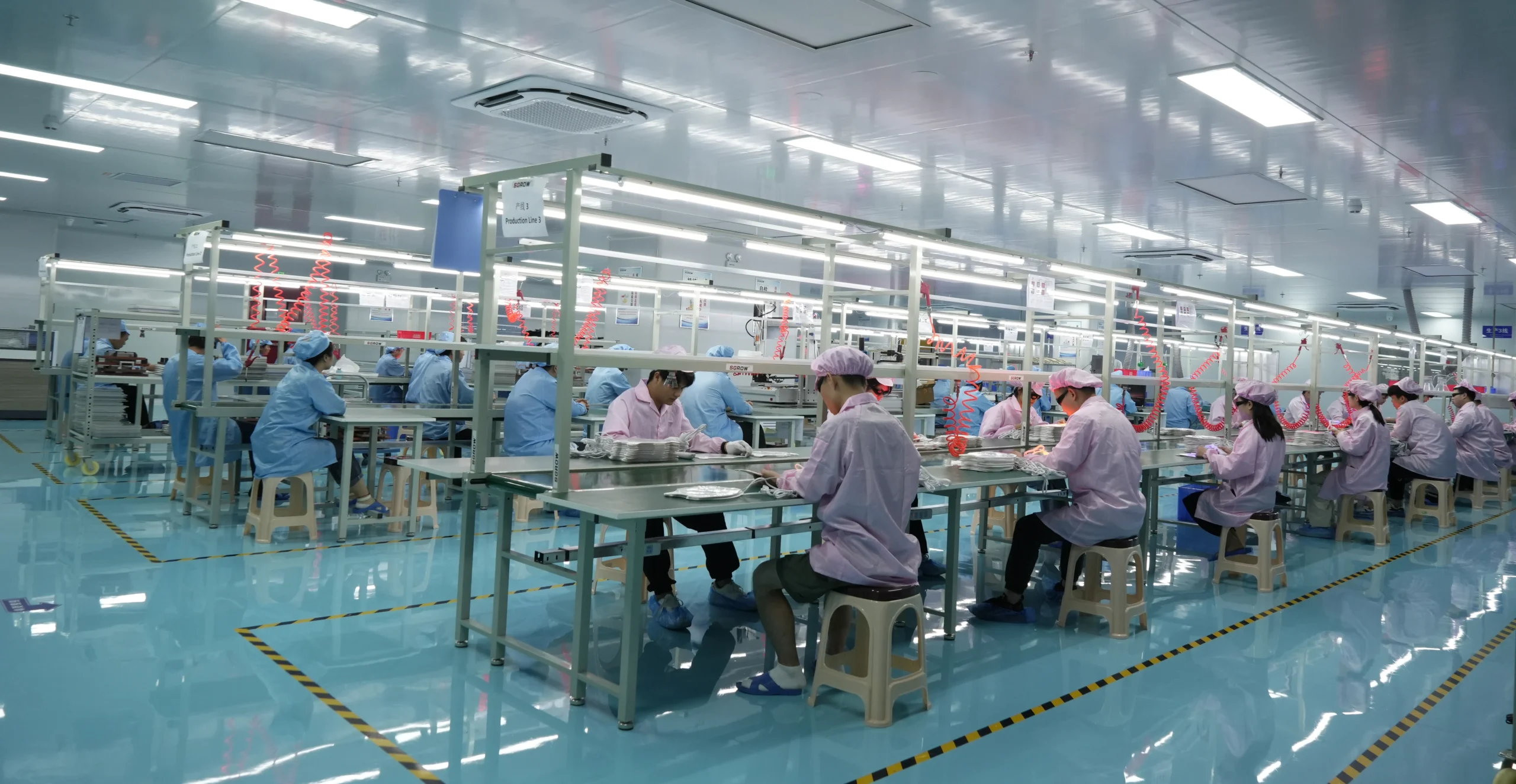
Ons moederbedrijf, Shenzhen Sungrow LED Technologie Co., Ltd., exploiteert ISO 13485-gecertificeerde productiefaciliteiten die LED-fototherapie-apparaten produceren in meerdere productcategorieën en merken. WakeLife is ons op schoonheid gerichte merk, speciaal gebouwd voor huidverjonging, anti-veroudering, en esthetische wellnesstoepassingen.
Producthoogtepunten
| Product | Categorie | Belangrijkste specificaties | Primaire toepassingen |
|---|---|---|---|
| G15K LED-gezichtsmasker | Gezichtsbehandeling (~350 cm²) | 633 + 850 + 1072 nm multigolflengte · ~45 mW/cm² oppervlaktestraling · Continue golf (CW) · Flexibele siliconenstructuur · Aanpasbare OEM/ODM | Programma's voor gezichtshuid, esthetische klinieken, premium productlijnen voor thuisgebruik |
| EP01 Ooglapje | Gericht (~30 cm²) | 660 + 830 nm dubbele golflengte · gelokaliseerde levering · warmtearm, oogveilig ontwerp · compacte vormfactor · geschikt voor private label | Periorbitale behandelingen, add-on-SKU's, nichesegmenten met hoge marges |
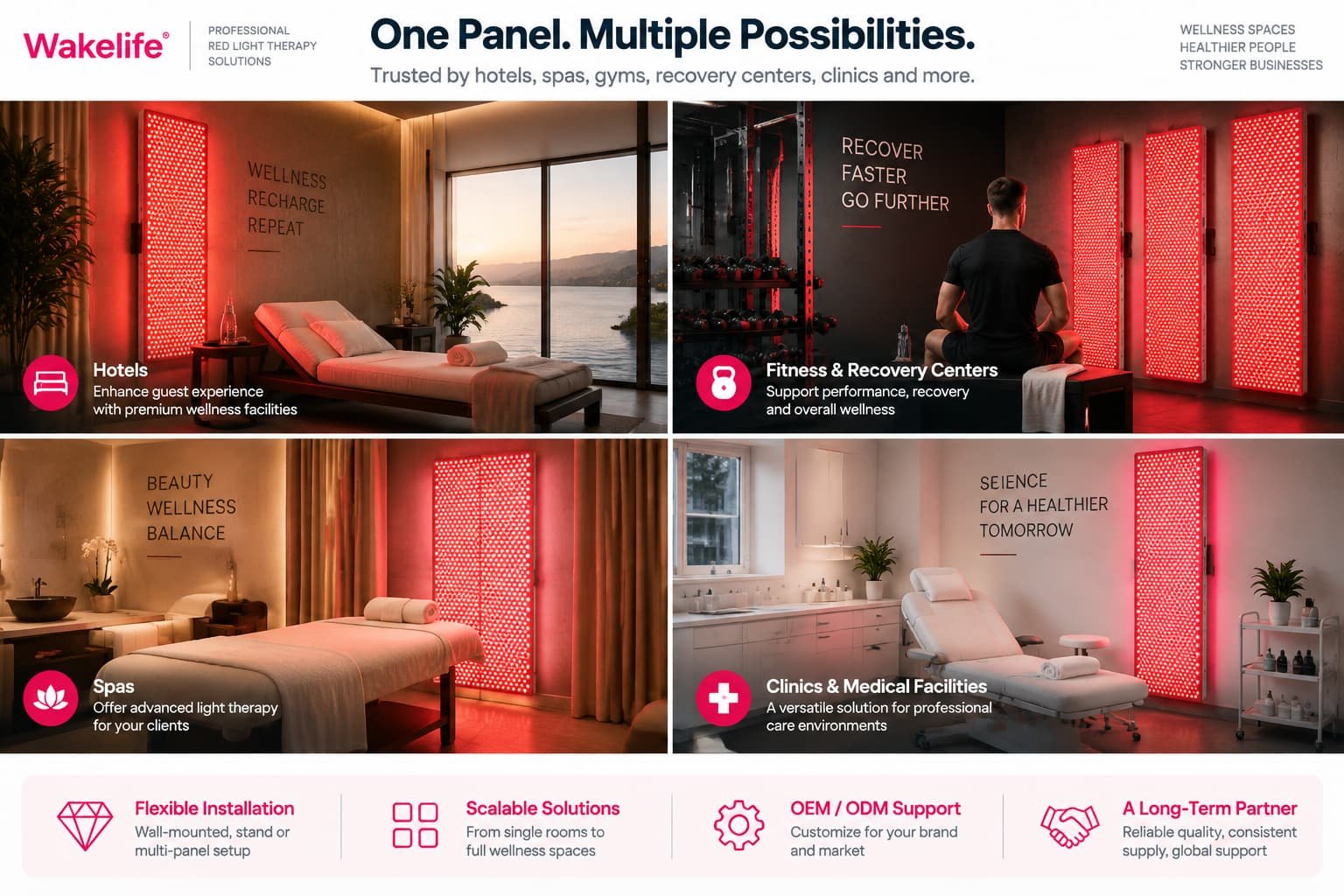
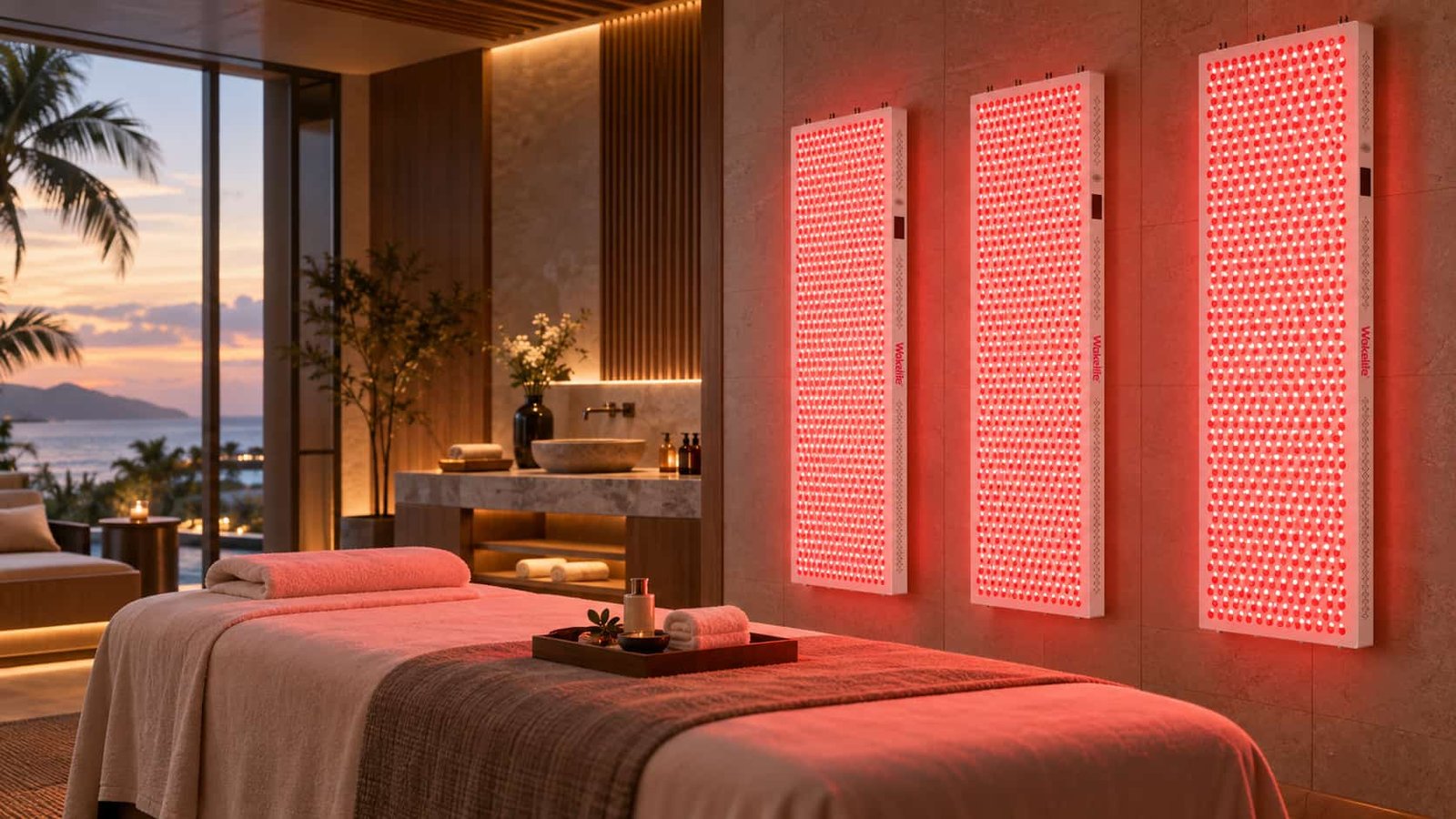
| Therapiepanelen | Middelgroot tot groot gebied | 660 + 830 nm schaalbaar systeem · hoge dekkingsopbrengst · modulaire uitbreiding · wandmontage / standintegratie · ontwerp van klinische kwaliteit | Wellness voor het hele lichaam, herstelprogramma's, professionele en commerciële omgevingen |
FAQ
Welke specificatie is het belangrijkst?
Golflengte en bestralingssterkte zijn van fundamenteel belang – als deze waarden niet geschikt zijn, niets anders doet er toe. Zoals de Cleveland Clinic's overzicht van roodlichttherapie notities, Het therapeutische effect hangt af van het leveren van de juiste golflengte met voldoende intensiteit. Energiedichtheid en dekking bepalen de geschiktheid van de toepassing, terwijl certificeringen en documentatie kwaliteit en wettelijke naleving garanderen.
Hoe verifieer ik claims van fabrikanten??
Volg een vertrouwen-maar-verifieer-aanpak: documentatie opvragen, onafhankelijke tests uitvoeren op monsters, controleer certificeringen rechtstreeks bij de uitgevende instanties (bijv. zoek in de FDA 510(k) database), en contacteer bestaande klanten als referenties. Wees sceptisch over claims die zonder verificatiegegevens worden gepresenteerd.
Wat als de specificaties dichtbij zijn, maar niet perfect??
Gebruik het bovenstaande scoreraamwerk. Kleine afwijkingen kunnen volkomen acceptabel zijn als de totaalscore hoog is. Kritieke parameters zoals golflengte en bestralingsbereik hebben minder ruimte voor compromissen dan secundaire parameters zoals leveringsmodus of exacte dekkingsafmetingen.
Moet ik altijd kiezen voor de hoogste specificaties?
Nee. Stem de specificaties af op uw werkelijke behoeften. Overspecificatie kost geld; onderspecificatie brengt de werkzaamheid in gevaar. Voor een gezichtshuidverjongingspraktijk is geen volledig lichaamspaneel nodig, en een sportherstelkliniek heeft geen behoefte aan een 30 cm² oogapparaat. Het “beste” apparaat is het apparaat dat optimaal aansluit bij uw specifieke gebruikssituatie.
Hoe belangrijk zijn certificeringen voor niet-medisch welzijnsgebruik?
Nog steeds van cruciaal belang. Certificeringen duiden op hoogwaardige productieprocessen, veiligheidstesten, en naleving van de regelgeving – ongeacht of u het apparaat als ‘medisch’ of ‘wellness’ op de markt brengt. Zelfs voor algemene wellnesstoepassingen, gecertificeerde apparaten beschermen u juridisch en geven kwaliteit door aan uw klanten.
Welke documentatie moet ik vóór aankoop aanvragen??
Minimaal: specificatieblad, testrapporten van derden, certificeringsdocumenten, gebruikershandleiding, en garantievoorwaarden. Als de fabrikant werkzaamheidsclaims maakt, het ondersteunende klinische bewijsmateriaal opvragen. Elke gerenommeerde fabrikant zou dit pakket vrijwillig moeten aanbieden.
Hoe evalueer ik een nieuwe fabrikant zonder referenties??
Vraag monsters aan voor een praktische evaluatie, onafhankelijke tests van de belangrijkste specificaties uitvoeren (golflengte + instraling minimaal), certificeringen verifiëren bij uitgevende instanties, en overweeg om met een kleine eerste bestelling te beginnen. Nieuwe fabrikanten kunnen uitstekende waarde bieden, maar ze vereisen meer due diligence vooraf.
Is het de moeite waard om meer te betalen voor premiumspecificaties??
Afhankelijk van uw markt. Professionele en medische markten rechtvaardigen premiumprijzen voor superieure specificaties, certificeringen, en documentatie. Markten voor consumentenwelzijn kunnen prioriteit geven aan kosteneffectiviteit. In beide gevallen, het scoreraamwerk helpt u te kwantificeren wat u voor uw geld krijgt.
Conclusie
We hebben deze gids geschreven omdat we te veel kopers hebben gezien – slim, ervaren professionals – neem inkoopbeslissingen op basis van onvolledige informatie, opgeblazen marketingclaims, of onderbuikgevoelens over welk apparaat ‘er professioneler uitziet’.
Er is een betere manier.
Het raamwerk met zeven specificaties transformeert apparaatevaluatie van subjectieve indruk naar systematisch, herhaalbare beoordeling. Door de golflengte methodisch te evalueren, bestraling, energiedichtheid, dekking, bezorgmodus, bouw kwaliteit, en documentatie, u kunt twee apparaten op gelijke voet vergelijken en beslissingen nemen waar u achter staat.
Vijf principes om te onthouden:
- Verifiëren, vertrouw niet. Onafhankelijke tests verslaan altijd de claims van de fabrikant. Als een leverancier geen testgegevens levert, die u alles vertelt wat u moet weten.
- Passend bij de behoefte. De “beste” specificaties zijn de specificaties die aansluiten bij uw specifieke toepassing. Koop niet te veel, koop niet te weinig.
- Geef prioriteit aan de fundamenten. Golflengte en bestralingssterkte zijn niet onderhandelbaar. Al het andere is secundair.
- Let op rode vlaggen. Ontbrekende specificaties, onrealistische beweringen, en slechte documentatie zijn waarschuwingssignalen – geen onderhandelingspunten.
- Documenteer alles. Houd gegevens bij voor naleving, kwaliteitsborging, en toekomstige referentie.
De markt voor PBM-apparaten wordt snel volwassen. Naarmate de normen strenger worden en kopers steeds geavanceerder worden, Fabrikanten die transparantie en kwaliteit omarmen, zullen langdurige partnerschappen verdienen. Degenen die afhankelijk zijn van de marketinghype zullen het steeds moeilijker vinden om te concurreren.
Bij WakeLife, Wij zijn blij met controle. Leid onze apparaten door dit raamwerk. Bekijk onze FDA-goedkeuring (K250830). Vraag onze testrapporten aan. Stel ons de moeilijke vragen. We hebben dit evaluatiesysteem gebouwd omdat we vertrouwen hebben in de antwoorden.
Klaar om WakeLife-apparaten voor uw bedrijf te evalueren?
Vraag productmonsters aan, complete documentatiepakketten, en offertes op maat.
Gerelateerde onderwerpen
- Onderwerp 05: LED versus laserlichttherapieapparaat
- Onderwerp 06: Golflengte selectie & Weefselpenetratiediepte
- Onderwerp 07: Bestraling, Energiedichtheid & Dosimetrie
- Onderwerp 12: OEM/ODM-fabrikantselectiegids
- Onderwerp 13: Mondiale certificeringstrajecten
Bekijk alles 30 onderwerpen: Volledige roodlichttherapie & Gids voor fotobiomodulatie
Referenties
- Chung, H., et al. (2012). De moeren en bouten van laser op laag niveau (licht) therapie.
Annalen van biomedische technologie, 40(2), 516–533.
Weergave - Toename, T. I. (1998). De wetenschap van lasertherapie met laag vermogen.
Weergave - Huang, Y. Y., et al. (2009). Bifasische dosisrespons bij lichttherapie op laag niveau.
Dosis-respons, 7(4), 358–383.
Weergave - Hashmi, J. T., et al. (2010). Effect van pulsen bij lichttherapie op laag niveau.
Lasers in chirurgie en geneeskunde, 42(6), 450–466.
Weergave - welke, R., et al. (2018). Beoordeling van lichtparameters en werkzaamheid van fotobiomodulatie.
Tijdschrift voor biomedische optica, 23(12), 120901.
Weergave - Heiskanen, V., & Hamblin, M. R. (2018). Fotobiomodulatie: lasers versus LED's.
Fotochemisch & Fotobiologische Wetenschappen, 17(8), 1003–1017.
Weergave - Jagdeo, J., et al. (2015). LED's in de dermatologie: een systematische review.
British Journal of Dermatologie.
Weergave - Wereldvereniging voor lasertherapie (2024). Doseringsaanbevelingen & Richtlijnen voor apparaatevaluatie.
Weergave - ONS. Voedsel & Geneesmiddelenadministratie (2024). 510(k) Database met premarket-meldingen.
Weergave - IEC (2023). IEC 62471: Fotobiologische veiligheid van lampen.
Weergave - ISO (2016). ISO 13485: Kwaliteitsmanagementsystemen voor medische apparatuur.
Weergave - Cleveland-kliniek (2024). Roodlichttherapie: Gebruik, Voordelen en risico's.
Weergave