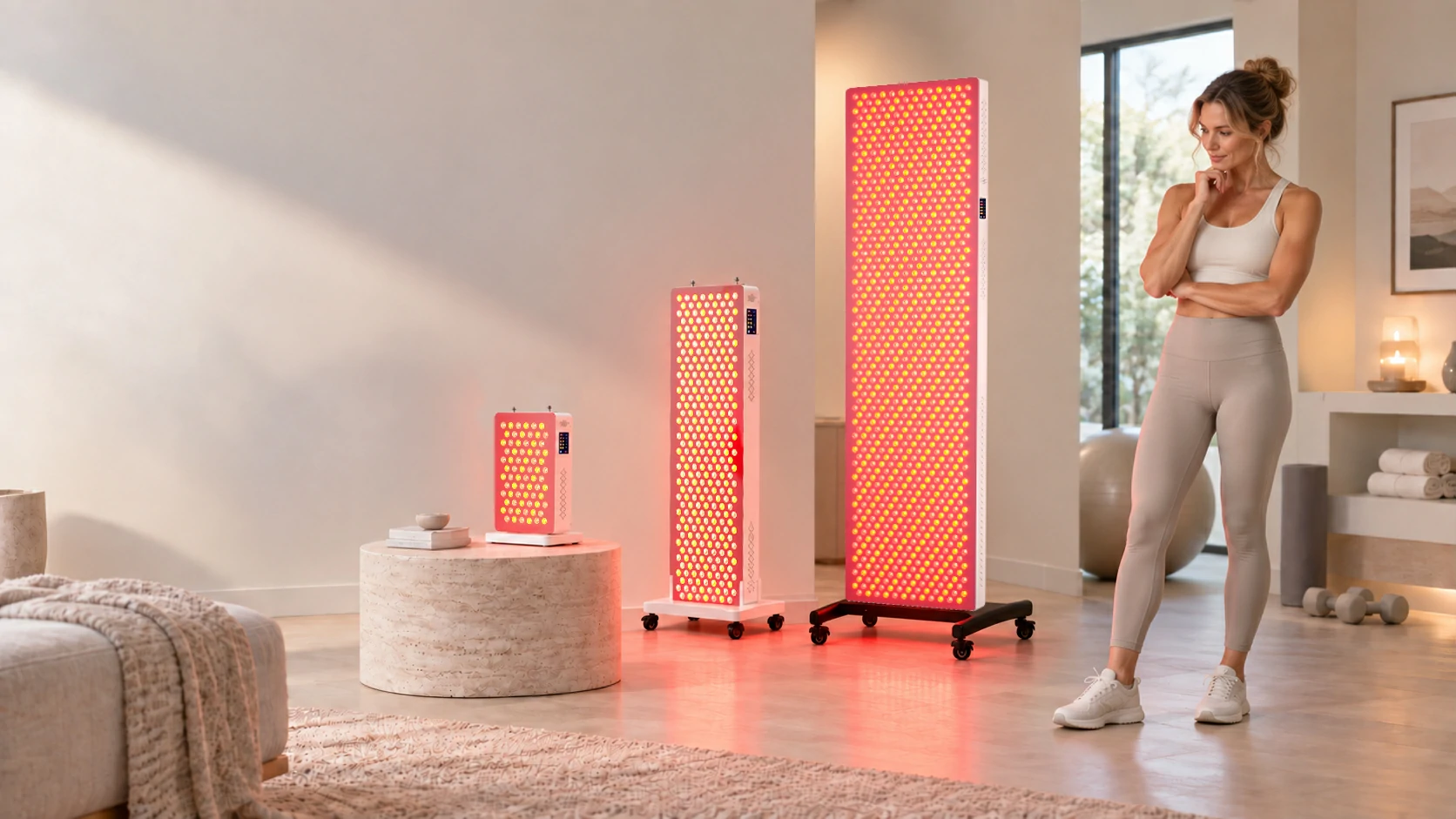
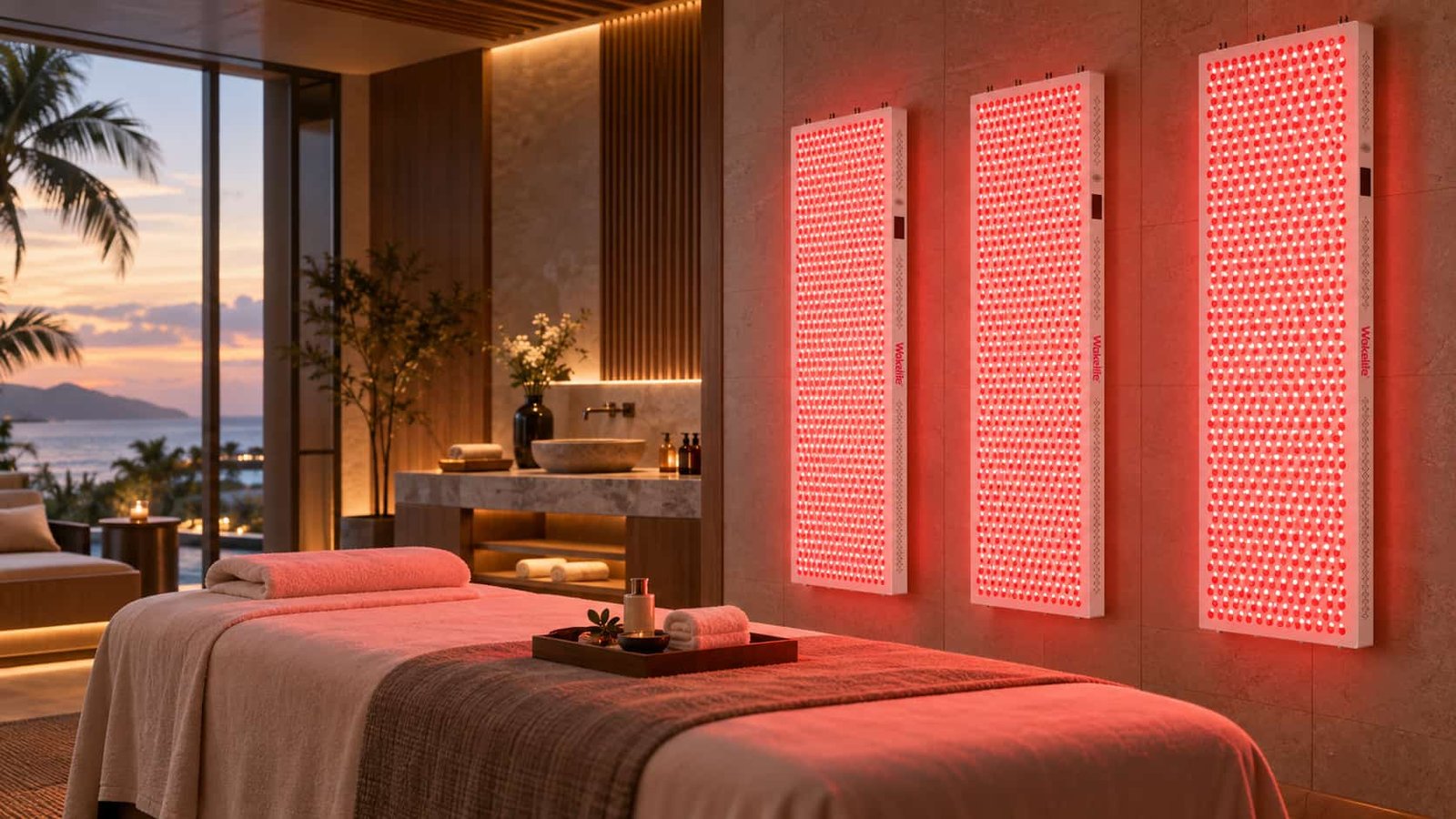
Het kiezen van een roodlichttherapiepaneel voor uw merk houdt meer in dan het vergelijken van het aantal LED's en de prijs. De zes criteria die het succes van een product op de lange termijn bepalen zijn::
- Golflengteconfiguratie - gaat het verder dan standaard 660 nm + 850nm?
- Transparantie van bestralingsgegevens — verzorgt de leverancier metingen op meerdere afstanden?
- Besturingssysteem en gebruikerservaring — aanraakscherm, APP, dimmen, en modusflexibiliteit
- Aanpassingsdiepte — private label met alleen logo vs. volledige OEM/ODM-ontwikkeling
- Certificeringsdekking per markt - afgestemd op uw doelland en kanaal
- Fabriekscapaciteit en processtructuur — EVT/DVT/PVT, cross-functionele beoordeling, verandermanagement
Hieronder wordt elk criterium in detail besproken, met specifieke vragen die u aan leveranciers kunt stellen en waarschuwingssignalen waar u op moet letten.
Invoering: Waarom de meeste panelvergelijkingen op de verkeerde plek beginnen
Loop binnen bij elk inkoopgesprek voor panelen voor roodlichttherapie, en de eerste vraag is bijna altijd hetzelfde:
“Hoeveel LED’s heeft hij??”
LED-telling is zichtbaar. Het is gemakkelijk te vergelijken. Het past netjes in een specificatietabel.
Het probleem is dat het aantal LED's niet voorspelt of uw product succesvol zal zijn op de markt. Het vertelt u niet of het golflengteontwerp uw merkpositionering zal ondersteunen. Het vertelt u niet of de instralingsgegevens stand zullen houden als een distributeur om bewijs vraagt. Het vertelt u niet of de leverancier het product daadwerkelijk kan aanpassen aan uw merkidentiteit, de nalevingsvereisten van uw doelmarkt, of de verwachtingen van uw klanten voor een smart, premium apparaat.
De meeste roodlichttherapiepanelen die tegenwoordig op de markt zijn, lijken op een specificatieblad erg op elkaar. Velen bieden dezelfde twee of drie golflengten, vergelijkbare LED-aantallen, vergelijkbare vermogens, en vergelijkbare prijsklassen. Voor merken die een gedifferentieerde productlijn proberen op te bouwen, dit zorgt voor een echte uitdaging.
De vraag is niet welk paneel de meeste LED's heeft. De vraag is welk panel – en welke fabrikant – jouw merk de sterkste basis geeft voor productsucces op de lange termijn.
Bij Wakelife Beauty, na 10+ Jarenlange productie van LED-lichttherapieapparaten van medische kwaliteit voor 1,000+ wereldwijde merkpartners in de VS, EU, Uk, Australië, en Japan, we hebben een consistent patroon gezien: de merken die daarin slagen, nemen inkoopbeslissingen op basis van criteria die verder gaan dan de oppervlaktespecificatie. De merken die het moeilijk hebben, richten zich meestal op de prijs en het aantal LED’s – en ontdekken de andere factoren later, tegen veel hogere kosten.
Dit artikel behandelt de zes criteria die we aanbevelen te evalueren voordat u een roodlichttherapiepaneel voor uw merk kiest, met specifieke vragen die u in elke fase aan leveranciers kunt stellen.
Criterium 1 — Golflengteconfiguratie
Waarom dit belangrijker is dan het aantal LED's
Golflengte is de belangrijkste technische parameter van elk product voor roodlichttherapie. Het bepaalt het soort licht dat het apparaat uitstraalt, hoe het licht interageert met weefsel op verschillende diepten, en – cruciaal voor merken – welk productverhaal je op geloofwaardige wijze kunt vertellen.
De meeste instap- en middenklassepanelen zijn gebouwd rond twee golflengten: 660nm rood licht en 850 nm nabij-infrarood licht. Deze combinatie wordt veel gebruikt, goed gedocumenteerd, en commercieel bewezen. Het is ook de configuratie die vrijwel elke concurrent aanbiedt.
Voor merken die lanceren in 2025 en verder, een 660nm + 850nm-paneel is een startpunt en geen differentiator.
De drie niveaus van golflengteconfiguratie
Basisconfiguratie: 660nm + 850nm De marktstandaard. Gemakkelijk te verkrijgen, gemakkelijk uit te leggen, gemakkelijk te vergelijken – en daarom moeilijk te onderscheiden. Als uw primaire strategie prijsconcurrentie of marktvolume is, deze configuratie is voldoende. Als uw strategie premiumpositionering impliceert, klinische geloofwaardigheid, of uitbreiding van de productlijn, je zult waarschijnlijk snel tegen de beperkingen aanlopen.
Tussenconfiguratie: 630nm + 660nm + 810nm + 830nm + 850nm Het toevoegen van kortere rode golflengten (630nm) en extra NIR-golflengten (810nm, 830nm) geeft het product een breder lichtspectrum en meer flexibiliteit voor verschillende gebruiksscenario's. Deze configuratie ondersteunt een sterker technisch verhaal zonder dat daar een grote kostenpremie voor nodig is, en geeft merken meer dimensies om uit te leggen op productpagina's, inhoud voor gebruikerseducatie, en distributiematerialen.
Geavanceerde configuratie: 630nm + 660nm + 810nm + 830nm + 850nm + 1060nm De toevoeging van 1060 nm diep nabij-infrarood is de belangrijkste onderscheidende factor die beschikbaar is in de huidige paneelproducten. 1060nm bevindt zich aan het diepere uiteinde van het NIR-spectrum, en de opname ervan stelt merken in staat een betekenisvol andere productarchitectuur te communiceren – niet slechts een variatie op dezelfde basisformule.
Voor merken die zich richten op premium welzijn, professioneel, of klinisch aangrenzende markten, 1060nm is een van de weinige golflengtetoevoegingen die een echte technische scheiding met standaardpanelen creëert.
Vragen die u aan uw leverancier kunt stellen
- Wat is de exacte golflengte voor elk LED-type, en wat is de binning-tolerantie (Bijv., ±3nm vs. ±10–15nm)?
- Kan de golflengteconfiguratie worden aangepast voor OEM/ODM-projecten?
- Is 1060 nm beschikbaar als standaardconfiguratie, of vereist het aangepaste LED-inkoop?
- Hoe zijn golflengtecombinaties georganiseerd over dimkanalen??
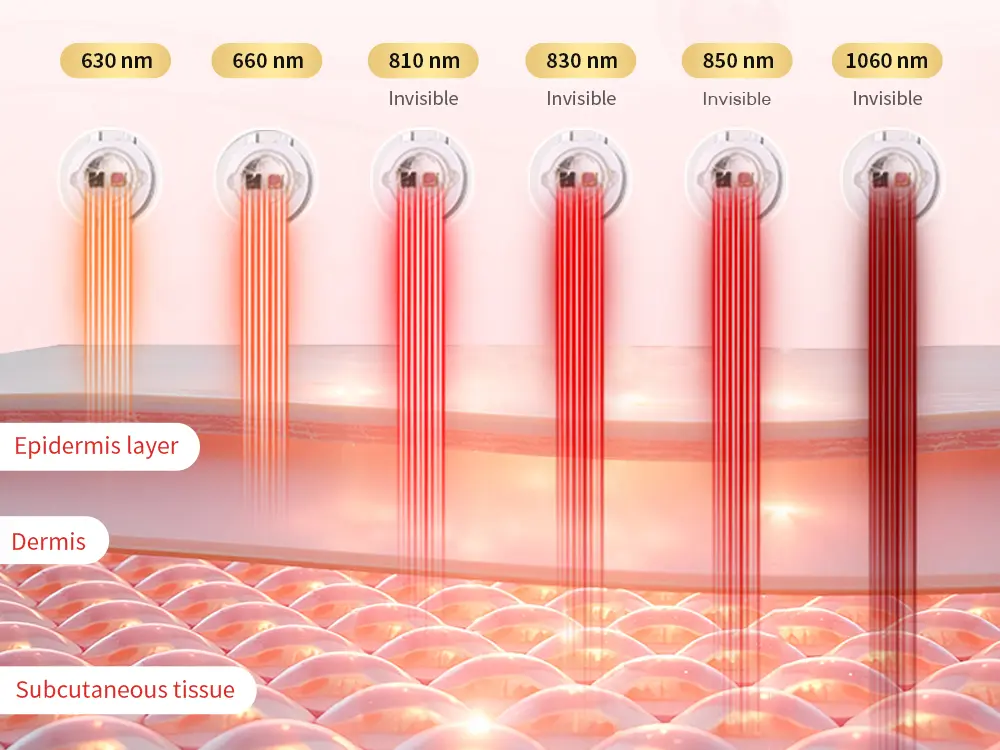
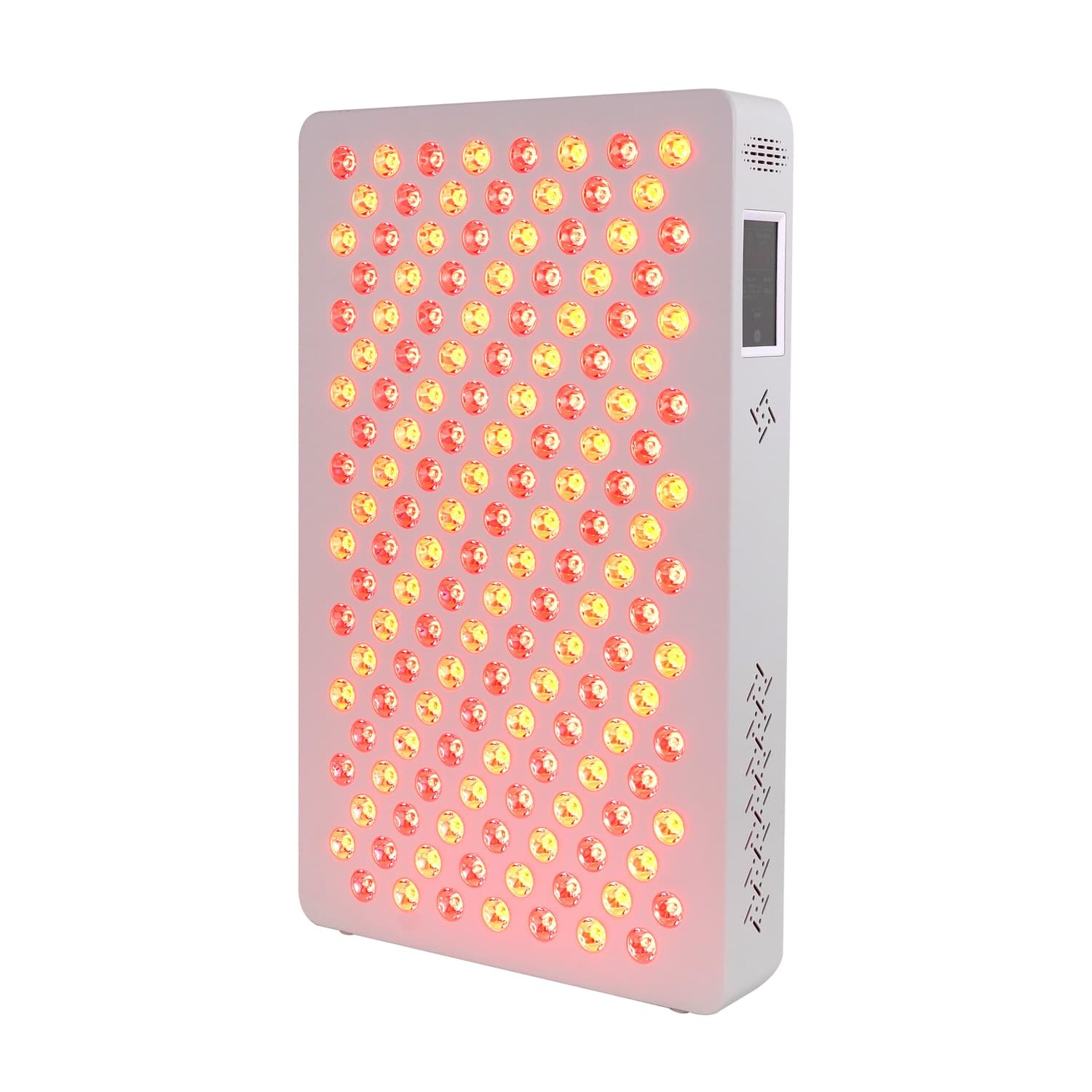
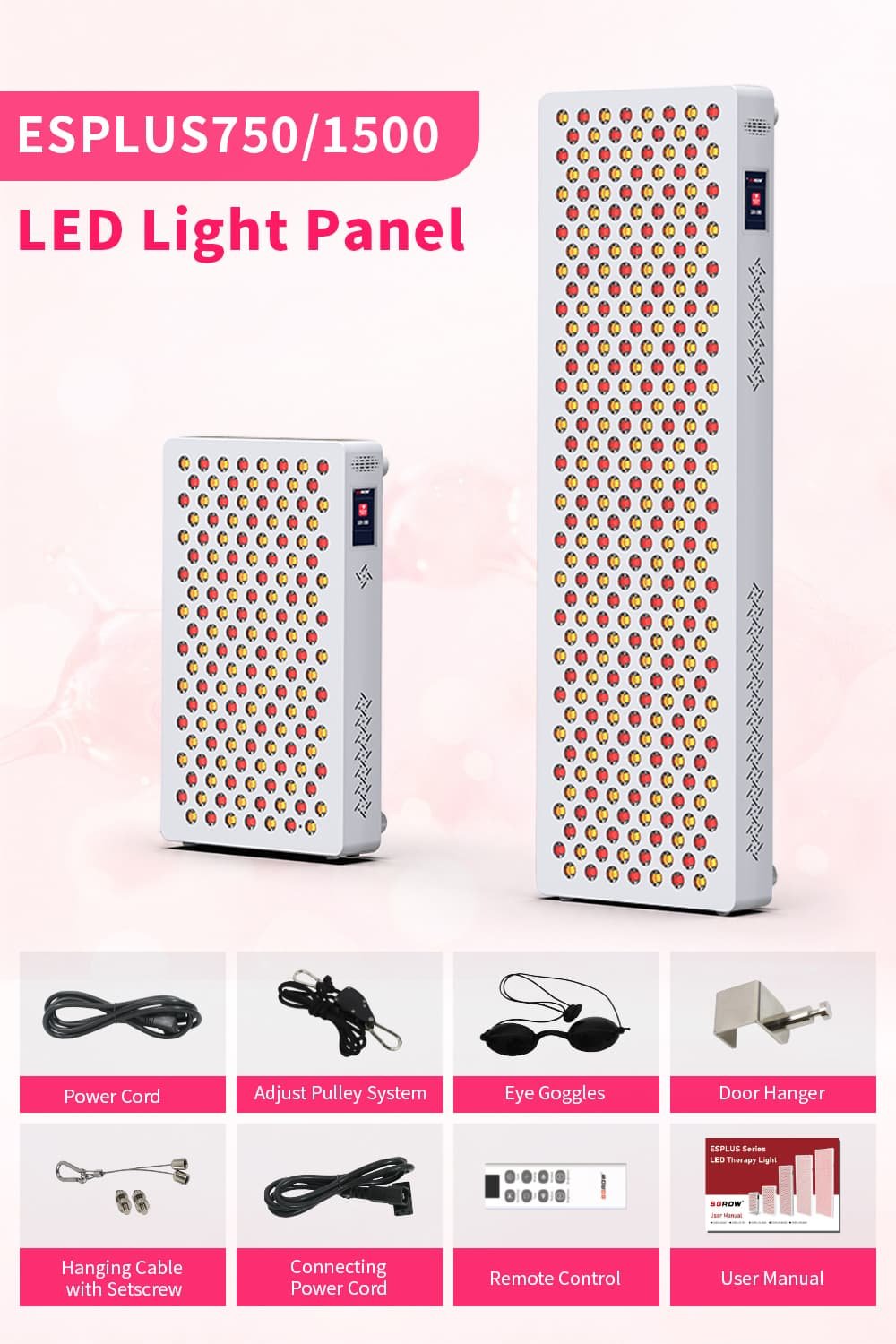
Het ESPLUS750-paneel van Wakelife Beauty maakt gebruik van een configuratie met zes golflengten: 630nm / 660nm / 810nm / 830nm / 850nm / 1060nm, afgeleverd via 150 LED's met dubbele chip. Deze configuratie geeft OEM/ODM-merkpartners een technische basis die de positionering van premiumproducten op het gebied van schoonheid ondersteunt, welzijn, herstel, en professionele apparatuurmarkten – en een productverhaal dat aanzienlijk verder gaat dan standaardpanelen met twee golflengten.
Criterium 2 — Instralingsgegevens en transparantie
Waarom het aantal LED's geen prestatiestatistiek is
Het aantal LED's staat op bijna elk specificatieblad voor roodlichttherapiepanelen. Het is ook een van de minst betekenisvolle cijfers voor het voorspellen van de lichtopbrengst in de echte wereld.
Bestralingssterkte — de daadwerkelijke lichtenergie die aan het behandelingsgebied wordt afgegeven, gemeten in milliwatt per vierkante centimeter (MW/cm²) – dat is waar het om gaat. En de bestraling hangt niet alleen af van het aantal LED's, maar op LED-chipkwaliteit, optische lenshoek, Stabiliteit van het stuurcircuit, thermisch beheer, en meetmethodiek.
Een paneel met 300 LED's en een slecht thermisch beheer kunnen een lagere aanhoudende straling opleveren dan een goed ontworpen paneel 150 LED's en een stabiel drivercircuit.
Voor merken, dit is op twee manieren van belang. Eerst, het beïnvloedt de daadwerkelijke prestaties van het product dat uw klanten ontvangen. Seconde, het beïnvloedt uw vermogen om geloofwaardig te maken, verdedigbare claims op uw productpagina, in distributiematerialen, en in alle regelgevingsdocumentatie die u mogelijk nodig heeft voor uw doelmarkt.
Hoe de bestralingsgegevens eruit zouden moeten zien
Een transparante leverancier zou stralingsmetingen op meerdere afstanden moeten leveren – niet slechts één enkel “piek”-cijfer gemeten op het dichtstbijzijnde punt.
Voor een middelgroot paneel zoals ESPLUS750, nuttige stralingsgegevens omvatten:
- Meting bij 3 inch (dichtbij, gebruik met hogere intensiteit)
- Meting bij 9 inch (standaard afstand voor thuisgebruik)
- Meting bij 12 inch (bredere dekking, lagere intensiteit)
Dit geeft merken nauwkeurige informatie voor productpositionering, en geeft kopers een realistisch beeld van wat het apparaat oplevert op de afstanden die hun klanten daadwerkelijk zullen gebruiken.
Rode vlaggen om op te letten
- Cijfers over de bestralingssterkte worden verstrekt zonder de meetafstand te specificeren
- Alleen metingen op één punt (meestal de dichtst mogelijke afstand)
- Geen testapparatuur of methodologie bekendgemaakt
- Cijfers die niet onafhankelijk kunnen worden geverifieerd
Vragen die u aan uw leverancier kunt stellen
- Kunt u stralingsmetingen uitvoeren op 3 inch, 9 inch, En 12 inch?
- Welke testapparatuur en methodologie wordt gebruikt voor het meten van de bestralingssterkte?
- Is de bestraling consistent over het gehele paneeloppervlak, of varieert het aanzienlijk tussen midden en randen?
- Hoe houdt de bestraling stand tijdens langdurige gebruikssessies? (thermische stabiliteit)?
Het ESPLUS750-voorbeeld
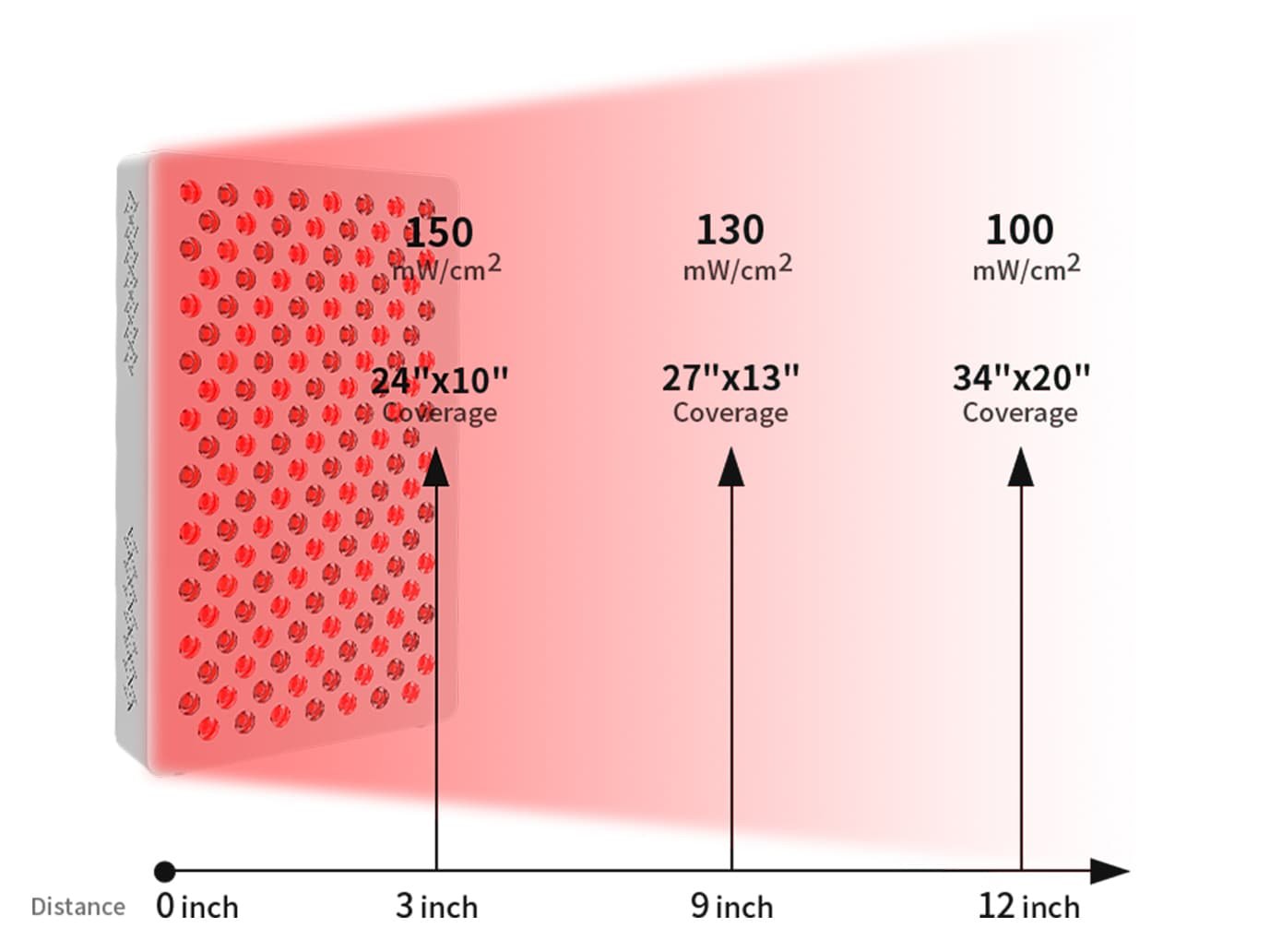
ESPLUS750 biedt gemeten instraling van 150bij mW/cm² 3 inch, 130bij mW/cm² 9 inch, En 100bij mW/cm² 12 inch. Deze cijfers over meerdere afstanden geven merkpartners duidelijkheid, bruikbare prestatiegegevens voor productpagina's, vergelijkingsmateriaal voor kopers, en interne sourcing-evaluatie – zonder dat aanvullende tests door derden nodig zijn voordat een sourcing-beslissing kan worden genomen.
Criterium 3 — Besturingssysteem en gebruikerservaring
Waarom slimme controle nu een basisverwachting is
De verwachtingen van consumenten ten aanzien van wellnessapparaten zijn aanzienlijk veranderd. Een product dat aan en uit gaat – en niets anders doet – is steeds moeilijker te positioneren tegen een premium prijs, zelfs met sterke golflengtespecificaties en bestralingsgegevens.
Moderne gebruikers verwachten:
- Intuïtief, eenvoudige bediening zonder handleiding te lezen
- Gepersonaliseerde instellingen die kunnen worden opgeslagen en opgeroepen
- Flexibele timing en helderheidsregeling
- Een ervaring die premium aanvoelt in verhouding tot de prijs
Voor merken die zich richten op welzijn thuis, schoonheidsverzorging, professionele studio, of een marktsegment boven het instapniveau, het besturingssysteem is een betekenisvol onderdeel van de productwaardepropositie – en geen secundair detail.
Het besturingssysteemspectrum
Basis: Alleen afstandsbediening, of eenvoudig knoppenpaneel. Geschikt voor instapprijzen. Beperkte gebruikersbetrokkenheid en geen integratie van slimme apparaten.
Tussenliggend: Touchscreen-display met directe bediening op het apparaat. Verbetert de bruikbaarheid en waargenomen productkwaliteit zonder app-connectiviteit te vereisen.
Geavanceerd: APP-controle + touchscreen-display, met dimmen, modus selectie, aangepaste instellingen, en beheer van meerdere apparaten. Deze configuratie zorgt voor een aanzienlijk betere gebruikerservaring en opent de deur naar merkspecifieke digitale touchpoints: meldingen, gebruik volgen, programmabegeleiding — afhankelijk van het aanpassingsniveau van de app.
Dimmen en modusarchitectuur
Twee kenmerken die vaak worden onderschat bij sourcingbeslissingen:
Meerkanaals dimmen stelt gebruikers in staat individuele golflengtegroepen onafhankelijk aan te passen, in plaats van alle LED's op één enkel helderheidsniveau te regelen. Voor merken met een paneel met meerdere golflengten, dit is de functie die de golflengteconfiguratie bruikbaar maakt: gebruikers kunnen daadwerkelijk de lichtmix regelen, niet alleen inschakelen.
Vooraf ingestelde modi + aangepaste modi dienen twee verschillende gebruikersbehoeften. Vooraf ingestelde modi bieden nieuwe gebruikers een eenvoudig startpunt. Aangepaste modi geven betrokken gebruikers een reden om het product op hun eigen voorwaarden te blijven gebruiken. Voor merkbehoud en herhaalaankopen, de combinatie van beide is aanzienlijk krachtiger dan elk afzonderlijk.
Vragen die u aan uw leverancier kunt stellen
- Ondersteunt het paneel APP-bediening? Is de APP al ontwikkeld, of zou er gebouwd moeten worden?
- Kan de APP-interface, modus namen, en merkkleursysteem kunnen worden aangepast voor OEM-projecten?
- Hoeveel dimkanalen worden ondersteund, en hoe zijn ze georganiseerd over golflengtegroepen heen?
- Hoeveel vooraf ingestelde en aangepaste modi zijn beschikbaar? Kunnen modusnamen worden aangepast voor verschillende markten?
- Ondersteunt het paneel een verbinding met meerdere apparaten voor schaalbare opstellingen??
Het ESPLUS750-voorbeeld
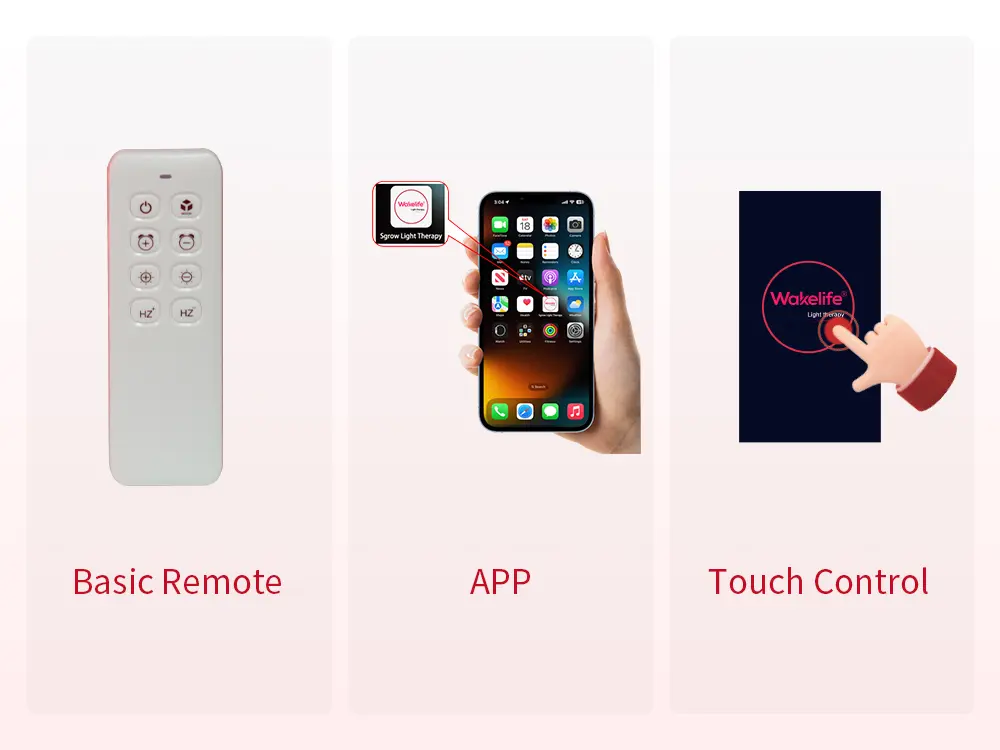
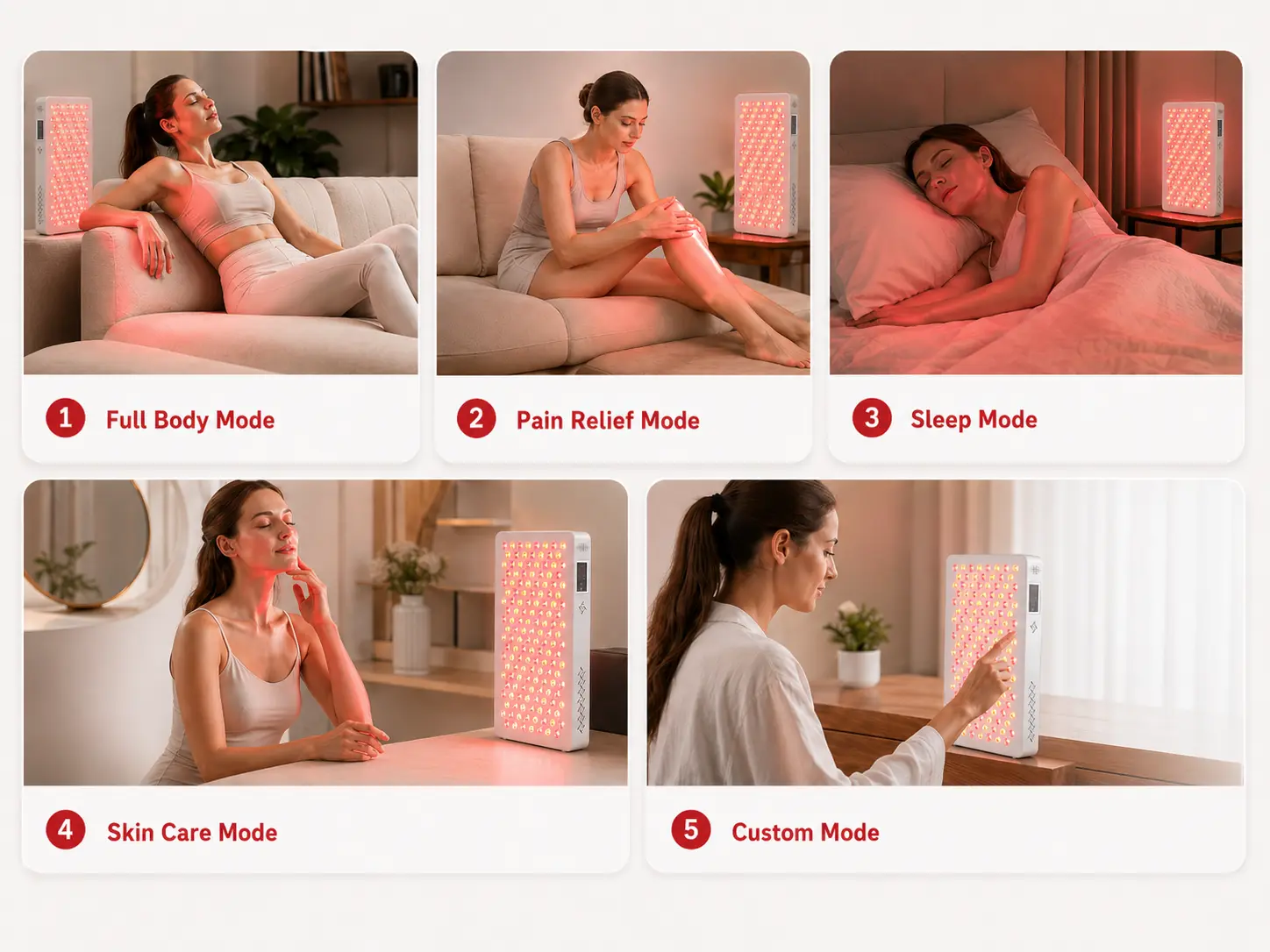
ESPLUS750 ondersteunt beide APP-bediening en touchscreen-bediening, met 5-kanaal dimmen, 4 vooraf ingestelde modi, 2 aangepaste modi, En serieschakeling van meerdere apparaten. Voor OEM/ODM-merkpartners, APP-interfacestijl, modus namen, en geselecteerde besturingsfuncties kunnen worden aangepast om te voldoen aan de merkpositionering en de vereisten van de doelgroep.
Criterium 4 - Aanpassingsdiepte
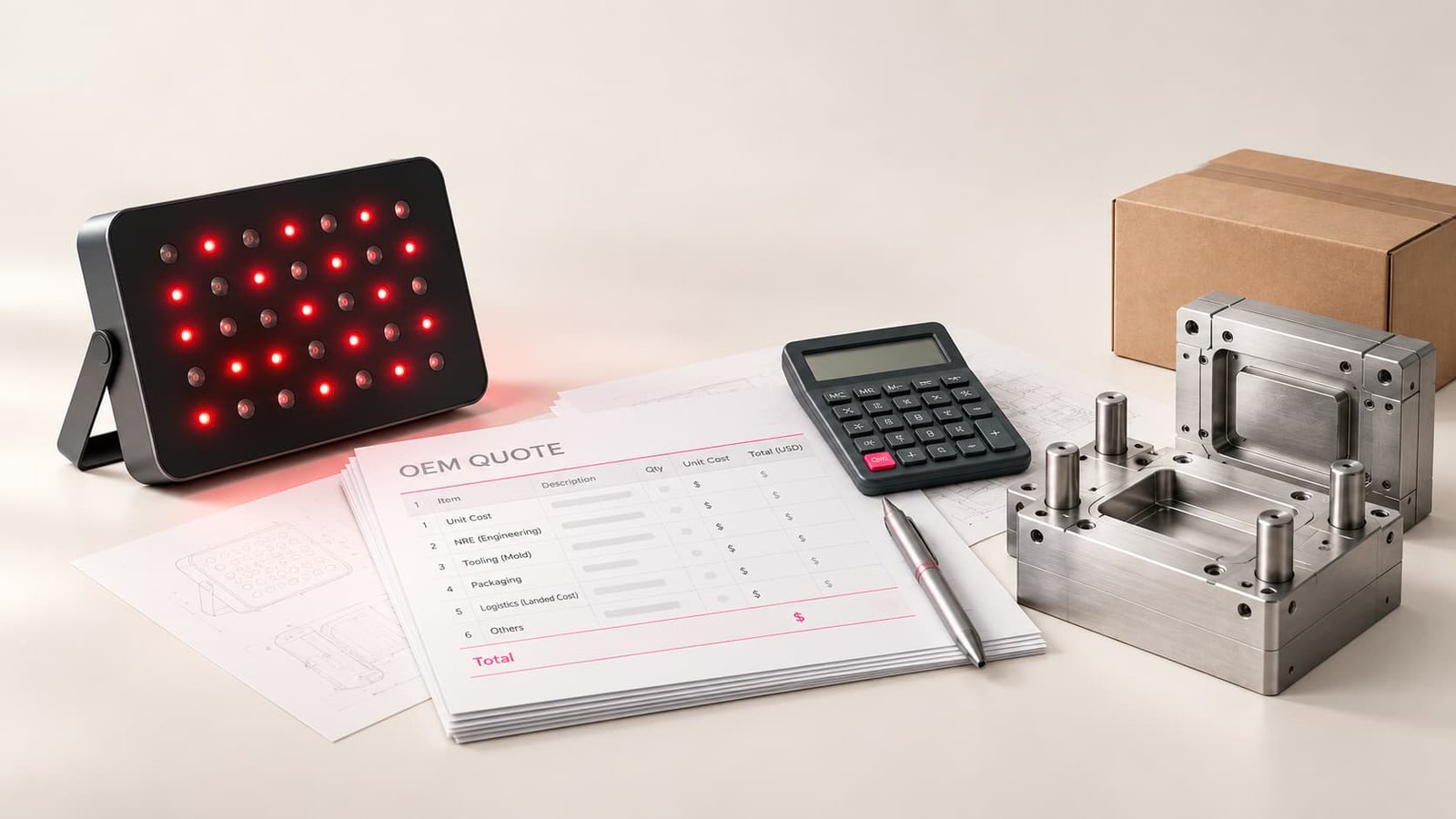
Een van de belangrijkste verduidelijkingen in elk sourcinggesprek is het verschil tussen private label en OEM/ODM-maatwerk. Deze termen worden inconsistent gebruikt door leveranciers, en de kloof daartussen heeft een directe impact op wat uw merk daadwerkelijk kan bereiken.
Privélabel betekent doorgaans: logo op het product, uw merknaam op de verpakking, uw taal in de handleiding. Het product zelf is ongewijzigd. U verkoopt het product van de leverancier onder uw naam.
OEM/ODM-aanpassing middelen: betekenisvolle veranderingen aan het product zelf: golflengteconfiguratie, LED-specificatie, controle logica, modus architectuur, uiterlijk van de behuizing, APP-interface, en mogelijke productstructuur. Het product wordt ontwikkeld met uw merk als betekenisvolle input, niet zomaar een etiket.
Voor merken in concurrerende markten, het verschil doet er aanzienlijk toe. Een private label-product kan worden gekopieerd door elk ander merk dat met dezelfde leverancier werkt. Een echt op maat gemaakt product is moeilijker te repliceren en zorgt voor een sterkere merkwaarde op de lange termijn.
De drie lagen van maatwerk
Oppervlaktelaag (beschikbaar voor de meeste private label-programma's):
- Productlogo
- Verpakkingsontwerp
- Taal van de handleiding
- Geschenkdoos en buitenverpakking
Functie laag (beschikbaar voor OEM/ODM-programma's met in aanmerking komende MOQ):
- Golflengteconfiguratie
- LED-specificatie en binning-standaard
- Dimkanaalorganisatie
- Modusinstellingen en helderheidsniveaus
- Pulsfrequentieparameters
Ervaringslaag (beschikbaar voor geavanceerde OEM/ODM-programma's):
- APP-logo en interfacestijl
- Modusnaamgeving en gebruikersgericht taalgebruik
- Brand color system in digital interface
- Opstartanimatie en opstartinstellingen
- User guidance content within the app
Matching Customization Level to Brand Stage
New brands / first-time category entry: Start with surface-layer customization to reduce development time and MOQ requirements. Focus on selecting the right base platform rather than deep product changes.
Growth-stage brands: Invest in function-layer customization to create product specifications that competitors cannot easily replicate. Wavelength configuration and control architecture are the highest-leverage points.
Established brands: Full experience-layer customization — including APP integration — creates a connected product ecosystem that supports customer retention, usage data, and long-term brand differentiation.
Vragen die u aan uw leverancier kunt stellen
- What is the MOQ for each level of customization?
- Which customization options require new tooling, and what is the tooling cost and lead time?
- Can the APP be white-labeled, and what elements of the interface can be modified?
- What is the development and sample timeline for a full OEM/ODM project?
- Is there a structured intake process for defining customization requirements?
Het ESPLUS750-voorbeeld
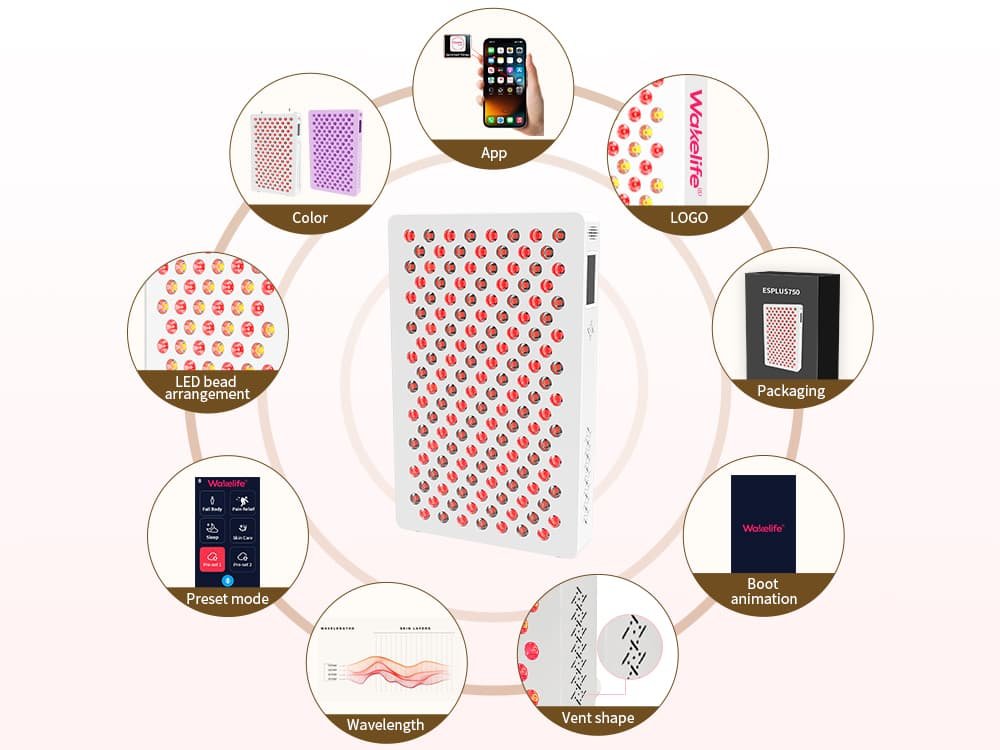
ESPLUS750 supports customization across all three layers — from logo and packaging through wavelength configuration and control logic, to APP interface and mode naming. Wakelife Beauty’s OEM/ODM team works with brand partners through a structured requirement intake process to define the appropriate customization scope based on target market, bestelhoeveelheid, en start de tijdlijn. MOQ varies by customization level and project scope.
Why “We Have CE and FCC” Is Not a Complete Answer
Certification is one of the most misunderstood areas in red light therapy device sourcing. Brands frequently make sourcing decisions based on a supplier’s general certification list — and later discover that the specific certifications needed for their target market, kanaal, or product claims are either incomplete or not applicable to the specific model they ordered.
The two most important things to understand about certifications in this category:
Eerst: Certification scope is model-specific, not factory-wide. A factory that holds ISO 13485 certification has a quality management system that meets that standard. It does not mean every product they make automatically carries every certification. Certifications for specific product models require separate testing and documentation.
Seconde: Different markets require different certifications. “We’re CE and FCC certified” covers parts of the EU and US regulatory landscape — but it does not cover UKCA for the UK market, TGA or SAA for Australia, or the specific requirements of medical device registration in markets where your product may be classified differently.
Market-by-Market Certification Framework
Verenigde Staten:
- FCC for electromagnetic compatibility (consumentenelektronica)
- FDA 510(k) clearance for devices making medical claims or classified as medical devices
- UL voor elektrische veiligheid (vereist door sommige detailhandelskanalen)
Europese Unie:
- CE-markering (covering LVD, EMC, en mogelijk MDR, afhankelijk van de productclassificatie)
- RoHS voor naleving van materialen
Verenigd Koninkrijk:
- Ukca (post-Brexit equivalent of CE, required for UK market access)
Australië:
- SAA voor elektrische veiligheid
- TGA registration for medical devices or devices making therapeutic claims
Canada:
- Health Canada Medical Device License (MDL) for regulated device categories
Globaal:
- ISO 13485 kwaliteitsmanagementsysteem (required by many regulated market buyers and distributors)
- MDSAP (erkend door de FDA, TGA, Gezondheid Canada, en anderen)
- IEC 60601 for medical electrical equipment safety (relevant for professional and clinical channels)
The Two Levels of Compliance to Evaluate
Product safety certifications — testing that verifies the device is safe for use (elektrisch, EMC, optisch). These are typically required for market entry regardless of product claims.
Market-specific registration or clearance — additional regulatory steps required when a product makes therapeutic claims, is classified as a medical device, or is sold through medical or clinical channels. This is where many brands underestimate the complexity.
Vragen die u aan uw leverancier kunt stellen
- Which certifications are held for the specific model I am sourcing, not the factory in general?
- Does your FDA 510(k) clearance apply to this panel, or only to specific product models?
- Can you provide documentation support for UKCA, TGA, or other market-specific requirements?
- What is your process for helping OEM/ODM customers navigate certification for their target markets?
Het ESPLUS750-voorbeeld
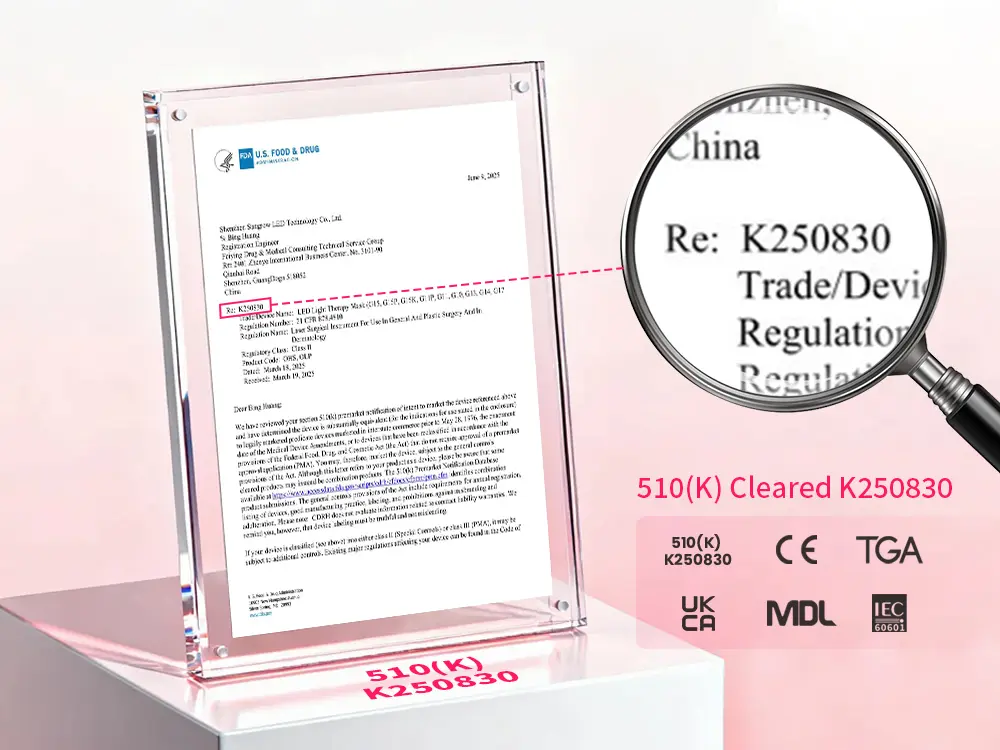
Wakelife Beauty holds ISO 13485 and MDSAP certification for its quality management system, with product-level certifications including FDA 510(k) K250830 (for applicable models), CE, Ukca, TGA, FCC, WEER, Ul, IEC 60601, ROHS, en BSCI. Voor OEM/ODM-projecten, our compliance team works with brand partners to review target market requirements and prepare project-specific documentation according to the product model and intended use.
Criterium 6 — Factory Capability and Process Structure
Why the Cheapest Quote Is Rarely the Lowest-Cost Option
The final criterion is the one most commonly overlooked in an initial sourcing evaluation — and the one that has the greatest impact on long-term project success.
Factory capability is not just about production scale or price. It is about the processes that determine whether your product arrives on time, at the quality level you specified, with the documentation your market requires, and without the kinds of failures that create warranty returns, distributor disputes, and brand damage.
In two earlier articles, we documented the most common OEM project failures in LED therapy device manufacturing — and the development process we use to prevent them. The consistent finding: failures do not start on the production line. They start in early-stage decisions about requirements, geldigmaking, en verandermanagement.
The same logic applies to supplier selection. A factory that skips structured validation, lacks cross-functional review processes, or has no formal change order system will eventually create problems for your brand — regardless of how good the initial sample looks.
What to Evaluate Beyond Price and Sample Quality
Validation process: Does the factory run EVT (Technische validatietest), DVT (Ontwerpvalidatietest), and PVT (Productievalidatietest) as formal, documented stages? Each answers a different question: Kan het werken? Zal het duren?? Kan het schalen? Skipping any of these transfers unresolved risk to your mass production run.
Cross-functional review: Is there a structured process for involving R&D, toeleveringsketen, kwaliteit, and production teams in project evaluation — or does one person make all the calls? Single-point ownership is a risk model in complex device development.
Change management: What happens when you need to change a specification after tooling has started? A factory with a formal Engineering Change Order (ECO) process can handle changes systematically, with documented cost and timeline impact. A factory without one absorbs changes informally — and the costs appear later, often unexpectedly.
Production capacity and stability: Can the factory handle your current order volume and your projected growth? Is the supply chain stable enough to maintain consistent component quality across production runs?
Quality system certification: ISO 13485 certification indicates a quality management system that meets international standards for medical device manufacturing. For brands targeting regulated markets, working with an ISO 13485-certified supplier significantly simplifies compliance documentation and distributor qualification.
Vragen die u aan uw leverancier kunt stellen
- Do you run EVT, DVT, and PVT for new product development programs? Can you share an example of a DVT summary report?
- What does your cross-functional project review process look like?
- How do you handle change requests after production authorization?
- What is your monthly production capacity, and how is capacity allocated across customers?
- What quality certifications does your manufacturing system hold?
The Wakelife Beauty Example
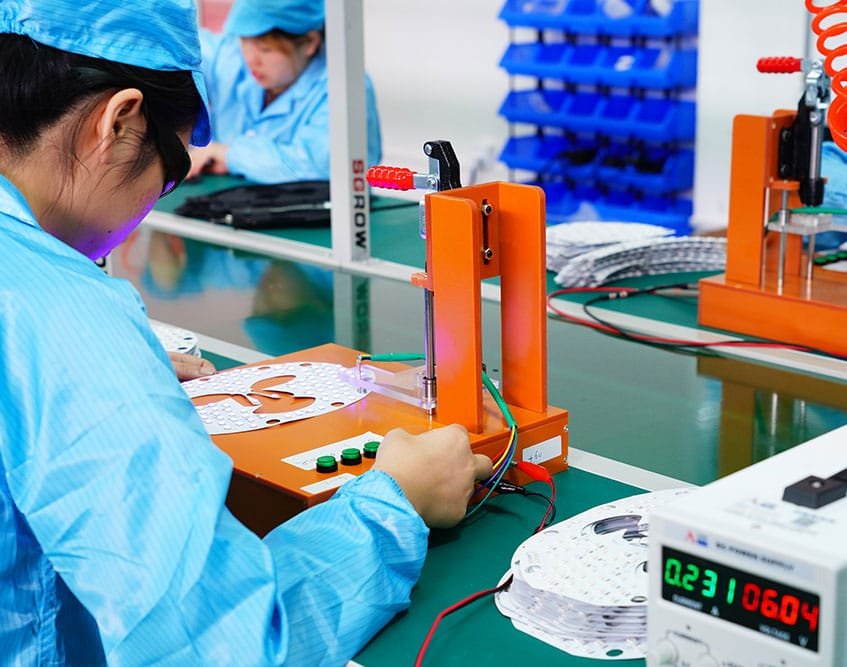
Wakelife Beauty’s manufacturing facility in Shenzhen covers 20,000㎡ with 12 productielijnen en een maandelijkse capaciteit van 180,000+ eenheden. Our development process runs mandatory EVT, DVT, and PVT stages for new product programs, with cross-functional review involving R&D, productontwerp, toeleveringsketen, and quality teams from project initiation. All post-authorization changes follow a formal ECO process with documented cost and timeline impact before work resumes. Our quality management system is certified to ISO 13485 en MDSAP.
For a detailed explanation of how this process works in practice — and the real failures that made each step necessary — see our companion article: Ontwikkelingsproces voor roodlichttherapie-apparaten: Lessen uit mislukkingen in de echte wereld
How to Use These 6 Criteria to Build Your Shortlist
The six criteria above give you a framework for evaluating suppliers beyond price and LED count. The table below translates each criterion into a specific question and a verification method you can use in supplier conversations.
| Criterium | Key Question | Hoe te verifiëren |
|---|---|---|
| Golflengteconfiguratie | Does the panel go beyond 660nm + 850nm? What binning tolerance? | Request full wavelength spec and binning standard documentation |
| Irradiance data | Are multi-distance measurements available? | Request irradiance data at 3", 9", En 12" with test methodology |
| Besturingssysteem | Does it support APP, dimmen, and custom modes? | Request product demo or video; ask about APP customization scope |
| Aanpassingsdiepte | What can actually be changed, at what MOQ? | Request customization option list with MOQ and lead time by level |
| Certificeringen | Which certs are held for this specific model and market? | Request model-specific cert documentation for your target market |
| Factory and process | Are EVT/DVT/PVT run? Is there a formal ECO process? | Request process overview and example validation documentation |
Matching Criteria Priority to Brand Stage
Not every criterion carries equal weight at every stage of brand development. Here is a simplified framework:
New brands entering the red light therapy category for the first time: Prioritize customization depth and MOQ flexibility. You need a supplier who can support a smaller initial program without requiring deep product development investment. Surface-layer customization with a strong base platform is the right starting point.
Growth-stage brands expanding an existing product line: Prioritize wavelength configuration and control system. These are the two dimensions that create the most visible product differentiation and support premium pricing. A brand that has already established market presence can invest in function-layer customization to separate its products from the competition.
Established brands managing a multi-SKU portfolio in regulated markets: Prioritize certification coverage and factory process structure. In dit stadium, compliance gaps and production inconsistencies create the most serious business risk. A supplier with ISO 13485 certificering, structured validation processes, and documented change management is a materially lower-risk partner than one without these systems — regardless of price.
Veelgestelde vragen
What wavelengths should a red light therapy panel have for brand differentiation?
Minimaal, a red light therapy panel should include 660nm red light and 850nm near-infrared. For stronger brand differentiation, intermediate configurations add 630nm, 810nm, and 830nm. Advanced panels include 1060nm deep near-infrared, which creates a genuine technical separation from standard panels and supports premium product positioning in wellness and professional markets.
What is the difference between private label and OEM/ODM for red light therapy panels?
Private label means adding your logo, verpakking, and manual to an existing product without changing the product itself. OEM/ODM customization means meaningful changes to the product — wavelength configuration, LED-specificatie, controle logica, APP-interface, and housing appearance. Private label products can be replicated by any brand working with the same supplier. Genuinely customized OEM/ODM products create stronger long-term brand equity.
What certifications does a red light therapy panel need for different markets?
Certification requirements vary by market. Voor de Verenigde Staten: FCC for EMC, UL voor elektrische veiligheid, FDA 510(k) for medical device claims. For the EU: CE marking and RoHS. For the UK: Ukca. Voor Australië: SAA for electrical safety and TGA for therapeutic devices. ISO 13485 quality management certification is recommended globally. Importantly, certifications are model-specific — confirm which certifications apply to the exact model you are sourcing, not just the factory in general.
What factory capability should I evaluate when choosing a red light therapy panel supplier?
Beyond price and sample quality, evaluate whether the factory runs formal EVT (Technische validatietest), DVT (Ontwerpvalidatietest), and PVT (Productievalidatietest) stages. Ask about their cross-functional project review process, how they handle change requests after production authorization, their monthly production capacity, and whether their quality management system is ISO 13485 gecertificeerd.
How should a new brand prioritize criteria when choosing a red light therapy panel?
New brands should prioritize customization depth and MOQ flexibility — start with surface-layer customization and a strong base platform. Growth-stage brands should prioritize wavelength configuration and control system to create differentiation. Established brands in regulated markets should prioritize certification coverage and factory process structure, as compliance gaps and production inconsistencies create the most serious business risk at that stage.
Conclusie: Choose a Platform, Not Just a Panel
The red light therapy panel market will continue to grow. It will also continue to become more competitive, more commoditized at the entry level, and more demanding at the premium end — as brands, distributeurs, and professional buyers become more sophisticated in their sourcing criteria.
For brands building a serious product line, the sourcing decision is not just about finding a panel that meets today’s specification at today’s price. It is about choosing a product platform and a manufacturing partner that can support the brand’s growth over time — through product iteration, market expansion, regulatory evolution, and increasing customer expectations.
The six criteria in this article — wavelength configuration, irradiance transparency, controlesysteem, aanpassingsdiepte, certification coverage, and factory process structure — are the dimensions that determine whether a supplier can actually deliver on that kind of long-term partnership.
ESPLUS750 is one example of a panel platform designed with these criteria in mind: six wavelengths including 1060nm deep NIR, multi-distance irradiance data, APP-bediening en touchscreen-bediening, 5-kanaal dimmen, OEM/ODM customization across all three layers, and manufactured under ISO 13485 and MDSAP-certified quality systems with structured EVT/DVT/PVT validation.
But the criteria apply regardless of which panel you ultimately choose. Use them to ask better questions, surface hidden risks earlier, and make a sourcing decision that your brand will still be comfortable with twelve months after the first order.
Gerelateerde lectuur
- Ontwikkelingsproces voor roodlichttherapie-apparaten: Lessen uit mislukkingen in de echte wereld — The full 7-stage OEM development process behind consistent product quality
- 5 Echte OEM-fouten in LED-therapieapparaten – en hoe u deze kunt vermijden — Real cases where sourcing decisions created downstream problems
- 12 Fabrikanten van LED-gezichtsmaskers in Shenzhen: A Sourcing Guide — Evaluated supplier profiles for the LED face mask category
Ready to Evaluate ESPLUS750 for Your Brand?
If you are sourcing a red light therapy panel and want to apply the six criteria above to a specific project, Het OEM/ODM-team van Wakelife Beauty kan u helpen:
- Confirm which ESPLUS configuration matches your target market and positioning
- Bekijk aanpassingsopties en MOQ-vereisten voor uw programmaomvang
- Identificeer certificeringsvereisten voor uw doelmarkt
- Vraag monsters en een projectspecifieke offerte aan
Om ons te helpen u het nuttigste antwoord te geven, deel het volgende wanneer u contact opneemt:
- Doelmarkt en verkoopkanaal
- Geschatte bestelhoeveelheid
- Aanpassingsvereisten
- Certificerings- of nalevingsbehoeften
- Verwachte lanceringstijdlijn
👉 View ESPLUS750 full specifications: https://wakelifebeauty.com/product/esplus750-red-light-therapy-panel/
👉 Ontdek onze OEM/ODM-services: https://wakelifebeauty.com/oem-odm/
👉 Bekijk onze kwaliteits- en nalevingsreferenties: https://wakelifebeauty.com/quality-compliance/