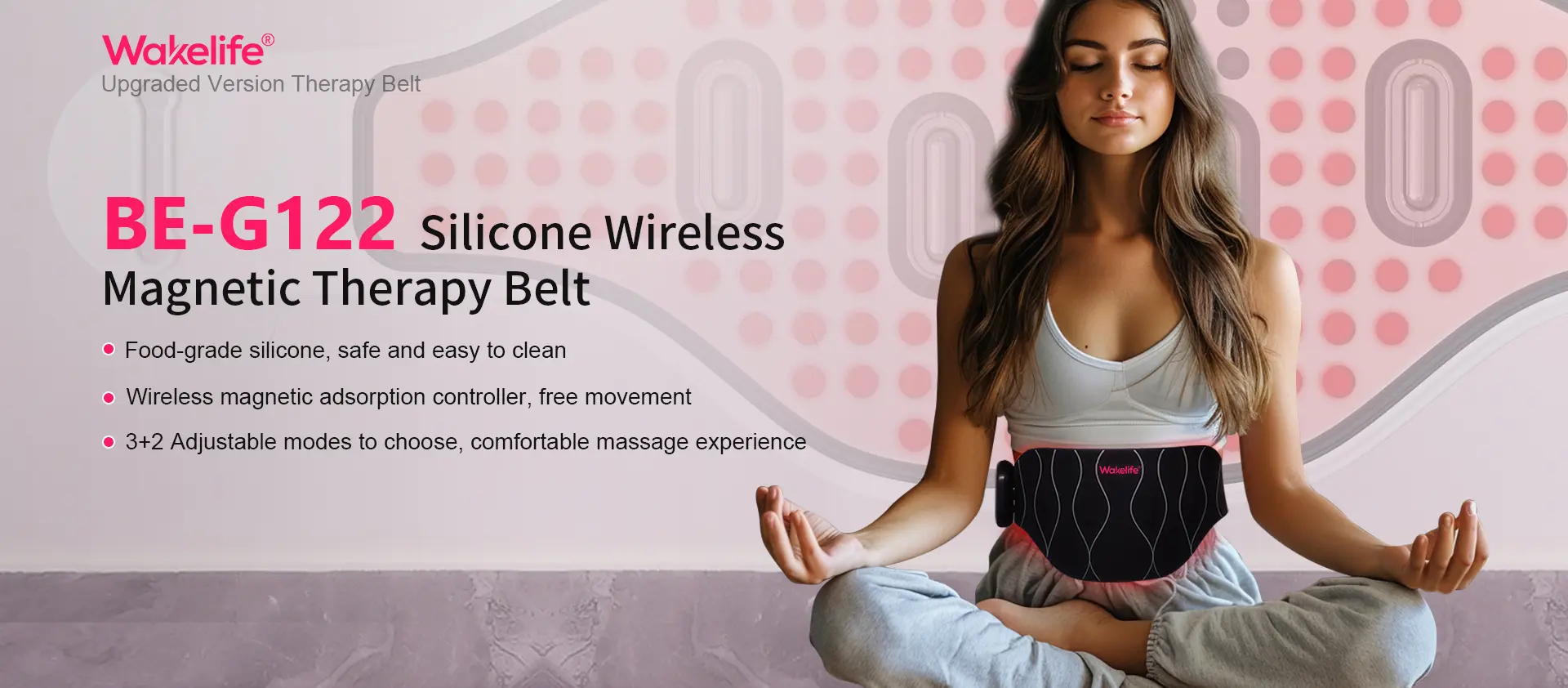
Home-use and professional PBM devices serve fundamentally different use scenarios, and this distinction drives every downstream decision—from power architecture to regulatory pathway to pricing strategy. Home-use devices (10–100 mW/cm², 10–200W total) prioritize safety for untrained consumers, compact form factors, and daily self-treatment convenience. Professional devices (50–300+ mW/cm², 100–1,500W+) prioritize clinical-grade output, multi-patient durability, and programmable protocols for trained operators. The critical trend reshaping this market is convergence: premium home-use devices now incorporate professional-grade parameters within consumer-safe designs. For B2B brand builders, choosing where to position—home, professionnel, or dual-line—is the single most consequential product strategy decision, affecting engineering requirements, regulatory pathways, manufacturing costs, and go-to-market approach.
Introduction
The PBM device market is not one market—it is at least two, with different buyers, different use environments, different regulatory expectations, and different success metrics. A facial LED mask used at home by a consumer and a multi-wavelength panel operated by a dermatologist in a medical spa share the same underlying photobiology, but almost everything else differs.
For B2B buyers—whether you are building a brand, distributing devices, or operating a clinical practice—understanding these differences is essential before committing capital. This article provides the complete framework for:
- Technical specification differences between home-use and professional devices
- Safety design requirements driven by user competence and environment
- Regulatory classification and how device category affects market access
- Market positioning strategy for brand owners choosing their segment
- OEM/ODM implications for manufacturing, coût, and partner selection
This is not a theoretical overview. Every section is written to inform concrete business and engineering decisions.
Defining the Two Categories
Home-Use Devices
Home-use PBM devices are designed for unsupervised self-treatment by consumers with no clinical training. This single fact drives every design constraint.
Defining Characteristics:
- Operated by untrained users in uncontrolled environments
- No clinical supervision during treatment
- Daily or every-other-day use by a single user
- Compact, portable, aesthetically designed
- Purchase decision driven by consumer perception and brand trust
Typical Product Forms:
- LED face masks and silicone facial devices
- Handheld targeted treatment devices
- Hair growth caps and helmets
- Wearable wraps and belts (knee, cou, dos)
- Eye masks for periorbital treatment
- Small desktop panels
Professional Devices
Professional PBM devices are designed for operator-administered treatment in clinical, medspa, or rehabilitation settings.
Defining Characteristics:
- Operated by trained clinicians, estheticians, or therapists
- Treatment supervised in a controlled environment
- Multiple patients per day, high-duty-cycle operation
- Robust construction for commercial durability
- Purchase decision driven by clinical outcomes and ROI
Typical Product Forms:
- Large multi-wavelength therapy panels
- Full-body light beds and pods
- pdt (photodynamic therapy) systèmes
- Clinical-grade targeted laser/LED devices
- Modular panel arrays with articulating arms
The Convergence Trend: Professional-Grade Home Devices
The most significant market development in PBM is the blurring boundary between these categories. A new class of devices is emerging: home-use products that deliver professional-level parameters within consumer-safe designs.
This convergence is driven by:
- Consumer demand for clinic-quality results at home
- Technology maturation enabling high output in compact form factors
- Manufacturing capability to achieve medical-grade consistency at consumer price points
- Regulatory evolution allowing higher-performance home devices under clear safety frameworks
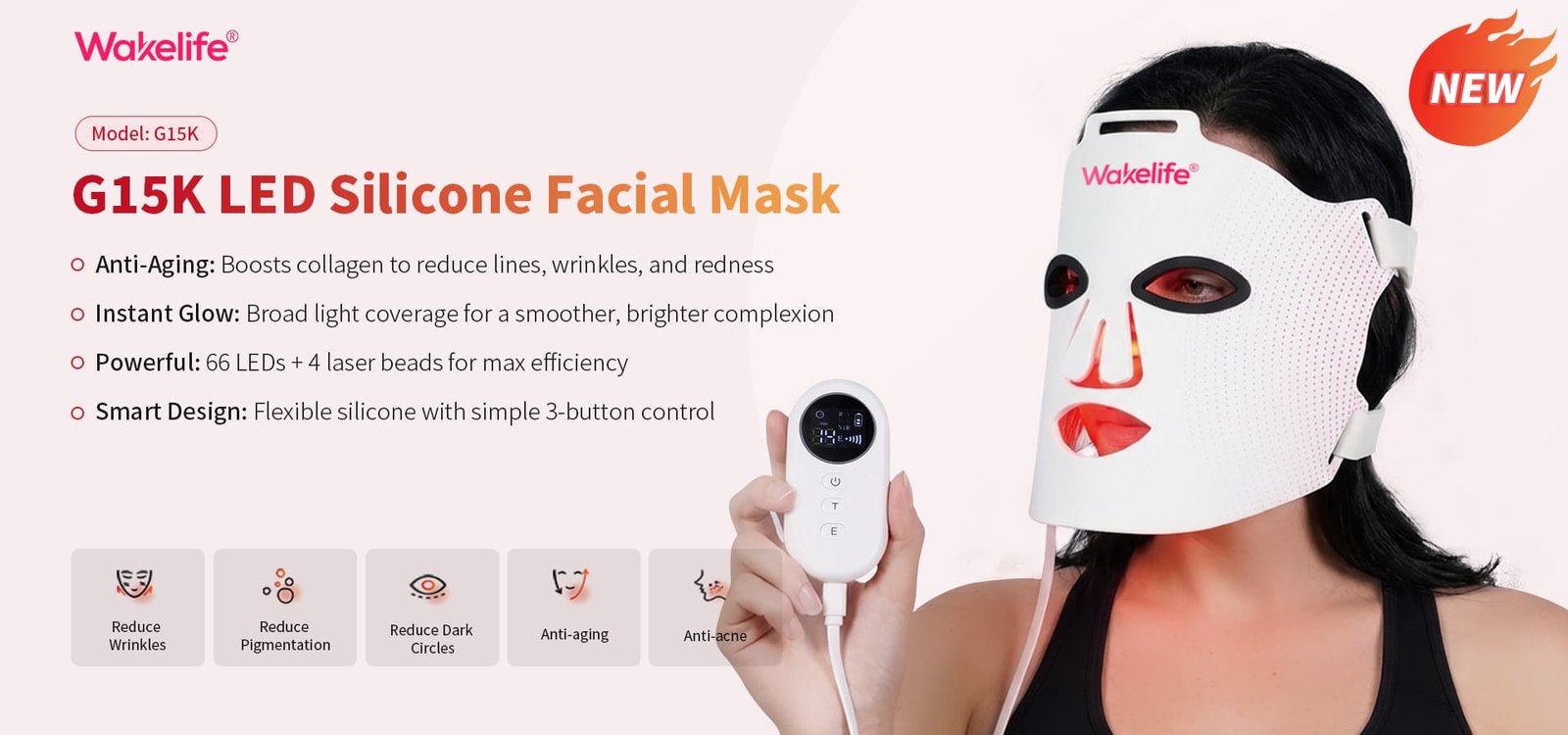
Manufacturers like WakeLife are engineering this convergence—systematically integrating medical-grade technological frameworks into home-use device development while maintaining the safety, usability, and price accessibility that consumer markets require. Products such as the G15K silicone facial mask exemplify this approach, incorporating multi-wavelength configurations (Bleu, Jaune, Rouge, Nir) et 40+ mW/cm² irradiance in an ultra-thin consumer form factor.
Understanding where your brand sits on this spectrum—pure consumer, pure professional, or convergence—shapes every subsequent decision.
Technical Specification Comparison
Power Output & Irradiance
The most fundamental technical difference between home and professional devices is power architecture.
Home-Use Devices:
- Irradiance: 10–100 mW/cm² (at treatment surface)
- Total electrical power: 10–200W
- Rationale: Lower irradiance reduces thermal risk for unsupervised use, eliminates need for active cooling in most designs, and supports battery-powered portability
Professional Devices:
- Irradiance: 50–300+ mW/cm² (at treatment distance)
- Total electrical power: 100–1,500W+
- Rationale: Higher irradiance enables shorter treatment times (critical for clinic throughput), treats deeper tissues, and supports full-body coverage
Key Consideration: Irradiance alone does not determine efficacy. As covered in Topic 07: Dosimétrie, the same energy density can be achieved through different irradiance-time combinations. A home device at 50 mW/cm² for 20 minutes delivers the same dose as a professional device at 100 mW/cm² for 10 minutes.
Zone de traitement & Form Factor
| Paramètre | Home-Use | Professionnel |
|---|---|---|
| Treatment area | 50–800 cm² | 500–20,000+ cm² |
| Form factor | Wearable, handheld, compact panel | Panel, lit, pod, modular array |
| Poids | 0.1–5 kg | 5–100+ kg |
| Portabilité | Fully portable or wearable | Stationary or semi-portable |
| Power source | Battery or AC adapter | AC mains (dedicated circuit for high-power) |
Design Trade-offs:
- Home devices sacrifice coverage area for portability and aesthetics
- Professional devices sacrifice portability for coverage and output
- The convergence category (Par exemple, premium home panels) occupies the middle ground: 800–2,000 cm², AC-powered, wall-mountable
Wavelength Configuration
Home-Use Devices:
- Typically 1–4 fixed wavelengths
- Common: 630 nm (Rouge), 660 nm (Rouge), 850 nm (Nir) [[6]][doc_6]
- Pre-set treatment modes (Par exemple, “anti-aging,” “recovery”)
- Limited or no user control over wavelength selection
Professional Devices:
- Typically 2–7+ selectable wavelengths
- Extended range: 415 nm (Bleu), 590 nm (Jaune), 630 nm, 660 nm, 810 nm, 830 nm, 850 nm, 1072 nm
- Programmable wavelength combinations per protocol
- Individual channel intensity control
WakeLife’s premium home-use lines demonstrate the convergence trend: the G15K incorporates Blue, Jaune, Rouge, and NIR wavelengths—a configuration historically limited to professional multi-channel systems—within a consumer wearable form factor [[1]][doc_1][[3]][doc_3]. Similarly, the G-series products include Deep NIR wavelengths (autour 1000 plage nm) for enhanced tissue penetration [[1]][doc_1].
Key Research: Heiskanen & Hamblin (2018) reviewed wavelength-specific effects, noting that multi-wavelength capability enables protocol versatility critical for clinical applications.
Control Systems & User Interface
This is where the home/professional divide most directly reflects the operator competence assumption.
Home-Use Interface Design:
- 1–3 physical buttons or smartphone app control [[1]][doc_1]
- Pre-programmed treatment modes with fixed parameters
- Automatic timer with mandatory shutoff [[4]][doc_4]
- Simple visual indicators (LED status lights)
- Minimal parameter adjustment capability
Professional Interface Design:
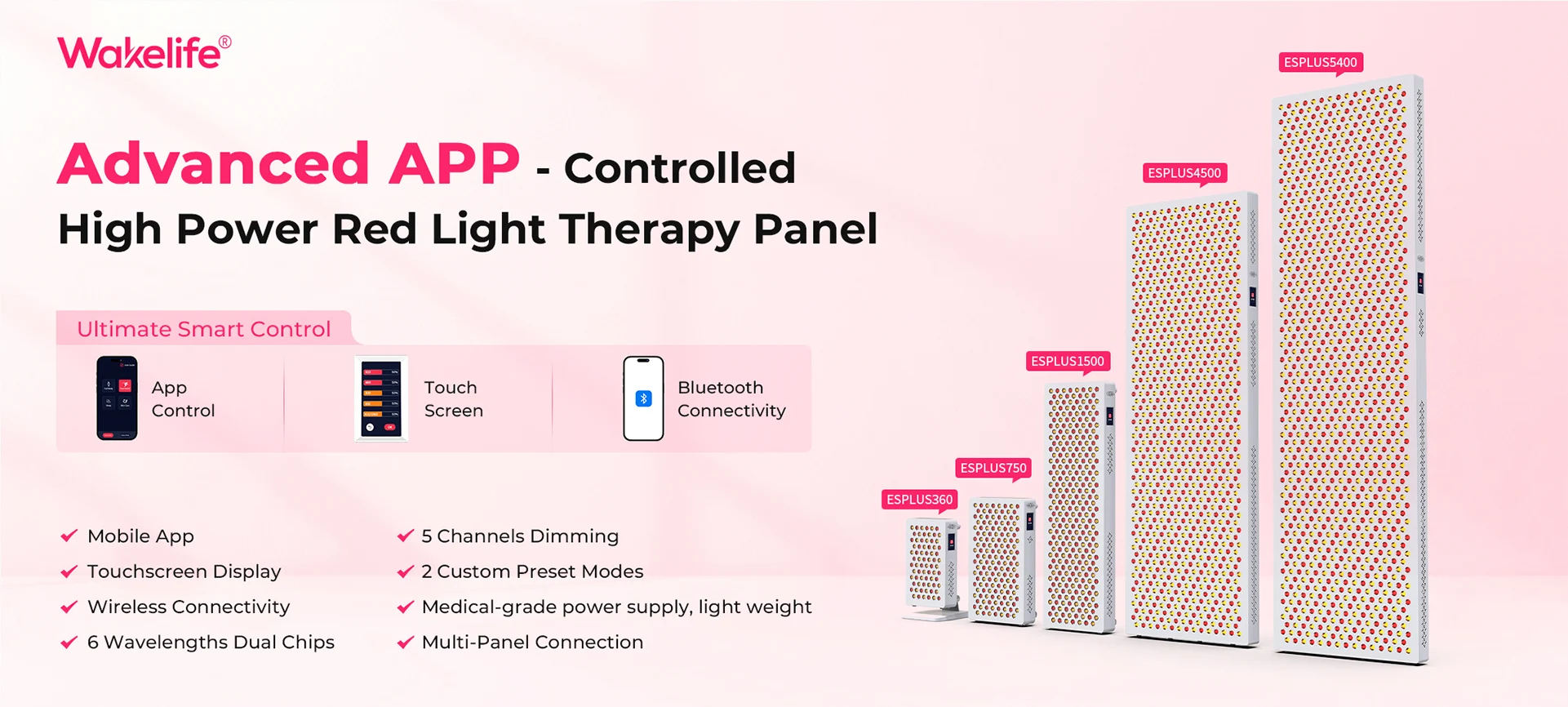
- Touchscreen with protocol library
- Adjustable parameters: longueur d'onde, irradiance, time, pulsing
- Patient records and treatment logging
- Multiple user profiles with access control
- Integration with clinic management systems
Design Principle: Home devices must be failure-proof through simplicity. If a user cannot cause harm through any combination of button presses, the interface is correctly designed. Professional devices must be capable through complexity, because trained operators need protocol flexibility.
Build Quality & Service Life
| Paramètre | Home-Use | Professionnel |
|---|---|---|
| Daily duty cycle | 1–2 sessions (20–40 min) | 8–20 sessions (4–10 hours) |
| Design life | 2–5 years | 5–10 years |
| LED rated hours | 1,000–5,000 hrs | 10,000–50,000 hrs |
| Housing material | Consumer plastics, silicone, lightweight metals [[3]][doc_3][[6]][doc_6] | Medical-grade plastics, aluminum, powder-coated steel |
| Cooling system | Passive (heat sinks) or minimal fans | Active (fans, heat pipes, thermoelectric) |
| Serviceability | Non-serviceable (replace unit) | Modular, field-serviceable components |
| Environmental rating | Indoor consumer environment | Clinical environment (cleanable surfaces, EMC compliance) |
Cost Implication: Professional devices demand higher-grade components and more robust construction, directly increasing BOM (Bill of Materials) cost by 3–10× compared to equivalent home devices.
Comprehensive Specification Comparison
| Spécification | Home-Use Devices | Professional Devices |
|---|---|---|
| Primary Setting | Maison, personal space | Clinique, medspa, rehab center |
| Operator | Consumer (untrained) | Clinician or trained staff |
| Irradiance | 10–100 mW/cm² | 50–300+ mW/cm² |
| Puissance totale | 10–200W | 100–1,500W+ |
| Zone de traitement | 50–800 cm² | 500–20,000+ cm² |
| Longueurs d'onde | 1–4 (fixed modes) | 2–7+ (programmable) |
| Treatment Time | 10–30 min | 5–30 min |
| Sessions/Day | 1–2 (personal) | 8–20 (multi-patient) |
| User Interface | Appliquer / 1–3 buttons | Écran tactile, protocol library |
| Safety Design | Auto-shutoff, thermal limit, eye shield | Operator controls, interlock, active monitoring |
| Design Life | 2–5 years | 5–10 years |
| Typical Certifications | FCC/CE (EMC), IEC 62368 ou 60601 | IEC 60601, FDA 510(k), ISO 13485 |
| FOB Unit Price | $30–$500 | $1,000–$50,000+ |
| Retail Price | $50–$2,000 | $3,000–$120,000+ |
Safety Design Requirements
Home-Use: Designing for Untrained Users
When the user has no training, the device must compensate with engineered safety margins. Home-use PBM devices should incorporate:
Mandatory Safety Features:
- Automatic timer and shutoff: Prevents accidental over-exposure [[4]][doc_4]
- Thermal management: Surface temperature limits (typically ≤41°C skin contact) with auto-cutoff
- Eye protection: Integrated shielding, opaque goggles included, or eye-safe irradiance levels
- Low-voltage operation: Battery power or ≤24V DC adapter eliminates electrical shock risk [[5]][doc_5]
- Skin contact sensors: Proximity detection to disable output when not in use position
- Clear labeling: Contre-indications, maximum use time, usage frequency on device and packaging
Design Philosophy: Assume the user will not read the manual. Every critical safety function must be automatic and non-defeatable.
Professionnel: Designing for Clinical Environments
Professional devices operate under different safety assumptions—trained operators, but higher-risk parameters and multi-patient use:
Required Safety Features:
- Emergency stop: Physical E-stop button accessible to operator
- Key or code access: Prevents unauthorized use
- Patient sensor/interlock: Detects patient position, disables output if patient moves
- Active thermal monitoring: Real-time temperature feedback with automatic derating
- Electrical safety: Full IEC 60601-1 compliance including ground fault protection
- Cleaning compatibility: Surfaces compatible with clinical disinfection protocols
- Calibration verification: Periodic output verification capability
Design Philosophy: The operator is trained but busy. Safety systems must protect against human error under time pressure and multi-patient workflow.
Key Standards Overview
| Standard | Scope | Home-Use | Professionnel |
|---|---|---|---|
| IEC 60601-1 | General medical device safety | May apply (if medical claim) | Required |
| IEC 60601-1-11 | Home healthcare equipment | Required (if medical) | N/A |
| IEC 60601-2-57 | Non-laser light therapy devices | Applies | Applies |
| IEC 62368-1 | Audio/video/IT equipment | Common for wellness devices | Rarely used |
| ISO 14971 | Risk management | Recommandé | Required |
| IEC 62471 | Photobiological safety of lamps | Applies | Applies |
Critical Note: IEC 60601-1-11 adds specific requirements for medical devices used in the home healthcare environment, y compris: simplified user interfaces, resistance to common home environmental conditions, and instructions written for lay users. This standard is often overlooked by manufacturers transitioning professional devices to home-use versions.
Regulatory Classification
FDA Framework (US Market)
The US FDA classifies light therapy devices based on intended use, which directly correlates with the home/professional distinction:
General Wellness (Lowest Burden):
- Intended use: General wellness claims (relaxation, temporary muscle relief)
- No FDA clearance required
- Must not make medical/disease claims
- Common path for mass-market home devices
Class I (Low Risk):
- Some LED light products classified as Class I exempt
- Establishment registration and device listing required
- Non 510(k) required
- Limited to low-risk intended uses
Class II – 510(k) (Moderate Risk):
- Required for medical claims (pain treatment, cicatrisation des plaies, dermatological conditions)
- Requires predicate device demonstration
- Typical path for professional devices and higher-end home medical devices
- Chronologie: 6–12 months (preparation + review)
- Relevant product codes: OLI, QMT, and others depending on indication
Implication for Brand Owners: Your choice of intended use claims determines your regulatory classification. The exact same hardware can follow different regulatory paths depending on whether you market it as “wellness” or “medical.”
CE MDR Framework (EU Market)
Under the EU Medical Device Regulation (MDR 2017/745):
- Class I: Low-risk, self-declaration possible (no Notified Body required)
- Class IIa: Most light therapy devices with therapeutic claims
- Class IIb: Higher-risk devices, more invasive claims
- Requires conformity assessment by a Notified Body (for Class IIa and above)
- Quality management system (ISO 13485) required
Key Difference from FDA: The EU MDR places greater emphasis on clinical evaluation and post-market surveillance, even for lower-risk classifications.
Impact on Product Development Timeline
| Facteur | Home-Use (Bien-être) | Home-Use (Medical) | Professionnel (Medical) |
|---|---|---|---|
| Regulatory pathway | General wellness / Class I | Class I–II / 510(k) | Class II / 510(k) |
| Development timeline | 6–12 months | 12–24 months | 18–36 months |
| Documentation burden | Low–Moderate | Haut | Very High |
| Testing requirements | EMC, basic safety | EMC, IEC 60601, biocompatibility, performance | Full IEC 60601 suite, données cliniques |
| Estimated regulatory cost | $5K–$30K | $50K–$200K | $100K–$500K+ |
| Ongoing compliance | Minimal | Modéré (MDR/FDA post-market) | Significant (QMS, CAPA, audits) |
Strategic Insight: Many brands start with wellness-positioned home devices (lower regulatory burden, faster market entry) and progressively pursue medical claims as clinical evidence and revenue accumulate. This staged approach manages regulatory cost while building market presence.
Market Positioning Strategy
Positioning Matrix
Brand owners face a two-dimensional positioning decision: market segment (consumer vs. professionnel) et price tier (mass vs. premium):
- High volume
- DTC / Amazone
- Estheticians
- Small clinics
- Brand-led, DTC
- + retail
- Hospitals
- Medspas / research
We support brands across all market segments—from mass-market home devices to medical-grade systems—through flexible OEM/ODM solutions and scalable manufacturing.
Home-Use Market Positioning
Quadrant ① – Mass-Market Home:
- Price: $50–$300
- Canaux: Amazone, marketplace platforms, mass retail
- Key success factors: Price competitiveness, visual design, ratings/reviews
- Margins: Lower per unit, volume-dependent
- Réglementaire: General wellness positioning
- Risk: Intense competition, race to bottom on price
Quadrant ② – Premium Home:
- Price: $300–$2,000
- Canaux: Brand DTC website, specialty retail, professional referral
- Key success factors: Clinical-grade specs, brand storytelling, build quality, certifications
- Margins: Higher per unit, brand-dependent
- Réglementaire: Wellness or medical positioning
- Opportunity: Fastest-growing segment; consumers want professional results without clinic visits
Professional Market Positioning
Quadrant ③ – Entry Clinical:
- Price: $2,000–$10,000
- Buyers: Independent estheticians, physiotherapists, small wellness clinics
- Key success factors: Proven efficacy, facilité d'utilisation, treatment ROI calculator, training support
- Margins: Modéré, relationship-driven
- Réglementaire: Medical device registration typically required
Quadrant ④ – Medical-Grade Systems:
- Price: $10,000–$120,000+
- Buyers: Hospitals, cliniques de dermatologie, research institutions, large medspa chains
- Key success factors: FDA clearance, published clinical data, KOL endorsement, service contracts
- Margins: Highest per unit, long sales cycle
- Réglementaire: Full medical device pathway required
Dual-Line Strategy
Some brands operate across both segments simultaneously. This approach offers diversification but introduces complexity:
Avantages:
- Revenue diversification across consumer and professional channels
- Home devices serve as brand awareness drivers for professional line
- Professional credibility enhances consumer product trust
- Shared R&D and manufacturing platform reduces per-unit development cost
Challenges:
- Channel conflict (consumer vs. professional pricing)
- Different regulatory pathways for each line
- Different marketing and sales competencies required
- Risk of brand dilution if quality perception diverges
Best Practice: Maintain clear product differentiation between lines. Use distinct sub-branding, differentiated form factors, and separate distribution channels. Ensure the professional line delivers measurably superior parameters—not just cosmetic differences.
OEM/ODM Manufacturing Considerations
Manufacturing Complexity Comparison
| Facteur | Home-Use Devices | Professional Devices |
|---|---|---|
| BOM complexity | 50–200 components | 200–1,000+ components |
| PCB layers | 2–4 layer | 4–8 layer |
| Thermal design | Passive / simple fan | Engineered thermal management |
| Housing tooling | Consumer injection mold | Medical-grade mold + secondary ops |
| Assembly process | Semi-automated line | Controlled environment, documented |
| QC requirements | AQL sampling | 100% output verification (médical) |
| Documentation | Basique (test reports) | Full DHF, DMR, risk file |
| Typical MOQ | 500–3,000 units | 50–500 units |
| Tooling investment | $15K–$80K | $50K–$300K+ |
| Lead time (first order) | 45–90 jours | 90–180 days |
Cost Structure Differences
Home-Use Cost Breakdown (typical):
- LED modules: 25–35%
- Electronics/PCB: 15–20%
- Housing/mechanical: 15–25%
- Batterie (if applicable): 10–15% [[1]][doc_1][[3]][doc_3]
- Assembly/QC: 10–15%
- Conditionnement: 5–10%
Professional Cost Breakdown (typical):
- LED modules: 20–30%
- Electronics/control system: 20–25%
- Housing/frame/cooling: 15–25%
- Power supply: 10–15%
- Assembly/QC/documentation: 15–20%
- Packaging/accessories: 5–8%
Key Difference: Professional devices have proportionally higher costs in electronics, cooling, and documentation/QC—reflecting the complexity of programmable control systems, gestion thermique, and medical device quality requirements.
Selecting the Right OEM/ODM Partner
Not all manufacturers can serve both segments equally. Key evaluation criteria:
For Home-Use Devices:
- Consumer product design capability (aesthetics, UX)
- Scalable production capacity (thousands of units per month)
- Consumer safety testing experience (IEC 62368, FCC/CE)
- Competitive pricing at volume
- E-commerce packaging and branding support
For Professional Devices:
- Medical device manufacturing experience
- ISO 13485 quality management system certification
- IEC 60601 testing and documentation capability
- Design history file (DHF) development support
- Regulatory submission support (FDA 510(k), CE MDR)
For Dual-Line:
- All of the above, plus demonstrated experience across both categories
- Ability to maintain quality system compliance while running consumer production lines
- This is the rarest capability set—manufacturers operating under ISO 13485 while maintaining consumer-grade cost efficiency represent the highest-value OEM partners [[1]][doc_1][[3]][doc_3]
For detailed OEM partner evaluation methodology, see Topic 12: OEM/ODM Manufacturer Selection Guide.
FAQ
Can the same device be sold as both home-use and professional?
Technically possible but strategically inadvisable. The safety requirements, user interface design, durability expectations, and regulatory positioning differ significantly. If you must share a hardware platform, create distinct SKUs with different firmware, accessories, labeling, and regulatory filings.
Is a home-use device with high irradiance (>100 mW/cm²) dangerous?
Not inherently, provided adequate safety controls are in place—automatic timers, thermal monitoring, eye protection, and clear usage instructions. Cependant, higher irradiance in a home device demands more robust safety engineering, which increases cost and regulatory burden.
Do I need FDA 510(k) clearance for a home-use LED device?
It depends on your intended use claims. General wellness claims (Par exemple, “promotes relaxation”) may not require 510(k). Medical claims (Par exemple, “treats acne,” “reduces pain”) typically require Class II 510(k) autorisation. Consult regulatory counsel before finalizing your marketing claims.
What is the typical ROI timeline for a professional device in a clinic?
For a $10,000–$20,000 device charging $50–$150 per session, breakeven typically occurs within 3–6 months at 3–5 sessions per day. This ROI calculation is a key sales tool for professional device brands.
Should I start with home-use or professional?
For most new brands, home-use (Quadrant ① or ②) offers lower capital requirements, faster time-to-market, and larger addressable market. Professionnel (Quadrant ③ or ④) is better suited for brands with existing clinical distribution channels and regulatory budgets.
What is the “professional-grade home device” trend?
It refers to home-use devices engineered with clinical-level parameters (irradiance, wavelength precision, output consistency) but packaged in consumer-safe, user-friendly form factors. This is the fastest-growing segment and represents the convergence of medical-grade quality with consumer accessibility.
How do I prevent channel conflict in a dual-line strategy?
Clear product differentiation (different form factors, different branding, measurably different specifications), separate distribution channels, and pricing policies that protect professional partners from consumer-channel undercutting.
What certifications should a home-use device have at minimum?
At minimum: FCC (NOUS) or CE marking (UE) for electromagnetic compatibility, safety testing to IEC 62368-1 or IEC 60601-1 depending on positioning, Et IEC 62471 photobiological safety assessment. For medical claims, add FDA registration and applicable 510(k) or CE MDR conformity.
Conclusion
The home-use vs. professional distinction is not merely a product specification question—it is a business model decision that cascades through every aspect of product development, regulatory strategy, and market execution.
For Brand Owners:
- Choose your positioning quadrant deliberately, based on distribution capability and regulatory budget
- The “professional-grade home device” convergence represents the highest-growth opportunity
- Dual-line strategies offer diversification but require substantially more organizational capability
- Your intended use claims—not your hardware—determine your regulatory pathway
For OEM/ODM Buyers:
- Specify your target segment before soliciting manufacturing quotes
- Home-use and professional devices require different manufacturing capabilities
- Verify your OEM partner’s quality system matches your regulatory requirements
- The rarest and most valuable partners are those who can deliver medical-grade quality at consumer-grade scalability
For Clinical & Retail Distributors:
- Understand which quadrant each supplier’s product occupies
- Evaluate devices against the specification ranges in this guide
- Professional devices must justify their premium through measurable parameter advantages
- Home devices entering professional channels need upgraded durability and support
The photobiomodulation industry is maturing beyond the era where “more LEDs” or “higher wattage” defined competitive advantage. Aujourd'hui, strategic positioning—understanding who your user is, where they use the device, what claims you can make, and what regulatory investment you are prepared to make—determines which products succeed and which become commodity.
Choose your position with precision, engineer to its specific requirements, and execute with consistency.
Related Topics
Références
Avci, P., et autres. (2013). Low-level laser (lumière) thérapie (Lllt) in skin: stimulating, guérison, restoring. Seminars in Cutaneous Medicine and Surgery, 32(1), 41-52. https://pubmed.ncbi.nlm.nih.gov/24049929/
Heiskanen, V., & Hamblin, M. R. (2018). Photobiomodulation: lasers vs. Diodes émettrices légères? Photochemical & Photobiological Sciences, 17(8), 1003-1017. https://pubmed.ncbi.nlm.nih.gov/30044464/
Chung, H., et autres. (2012). Les écrous et boulons du laser de bas niveau (lumière) thérapie. Annales du génie biomédical, 40(2), 516-533. https://pubmed.ncbi.nlm.nih.gov/22045511/
Hamblin, M. R. (2017). Mécanismes et applications des effets anti-inflammatoires de la photobiomodulation. AIMS Biophysics, 4(3), 337-361. https://pubmed.ncbi.nlm.nih.gov/28748217/
Wunsch, UN., & Matuschka, K. (2014). A controlled trial to determine the efficacy of red and near-infrared light treatment in patient satisfaction, reduction of fine lines, rides, rugosité de la peau, and intradermal collagen density increase. Photomédecine et chirurgie laser, 32(2), 93-100. https://pubmed.ncbi.nlm.nih.gov/24286286/
International Electrotechnical Commission. (2011). IEC 60601-2-57: Medical electrical equipment – Part 2-57: Particular requirements for the basic safety and essential performance of non-laser light source equipment. https://www.iec.ch/
International Electrotechnical Commission. (2020). IEC 60601-1-11: Medical electrical equipment – Part 1-11: General requirements for basic safety and essential performance – Collateral standard: Requirements for medical electrical equipment and medical electrical systems used in the home healthcare environment. https://www.iec.ch/
NOUS. Food and Drug Administration. (2024). Product Classification Database – Light Therapy Devices. https://www.fda.gov/medical-devices/