TL;DR für Käufer
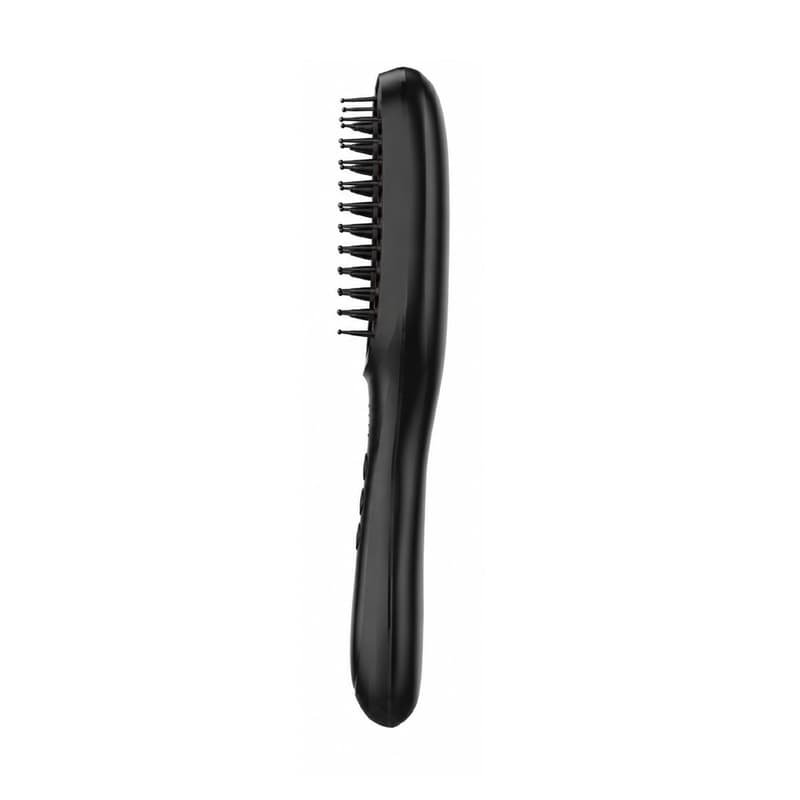
- HT01 eignet sich am besten für Marken, die ein tragbares Gerät wünschen, nachweisbare SKU für die Haar- und Kopfhautpflege – kein freihändiges Gerät für die gesamte Kopfhaut. Sein Handkammformat unterstützt die abschnittsweise Platzierung, erfordert jedoch, dass der Benutzer ihn durch das Haar bewegt.
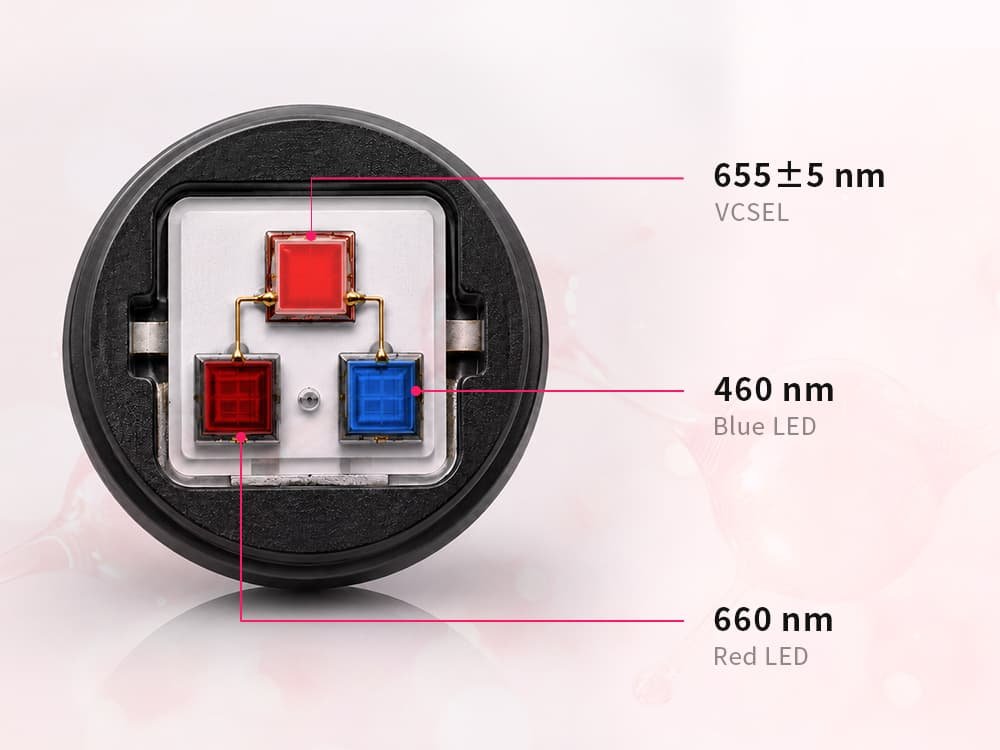
- Die Standardkonfiguration kombiniert 14 × nominal 655 oberflächenemittierender Laser mit vertikalem Resonator im nm-Bereich (VCSEL) Chips, 14 × 660 nm rote LEDs und 14 × 460 nm blaue LEDs In 14 Tri-Chip-Module, plus dreistufiges EMS, feste Vibration und ein abnehmbarer Serumapplikator.
- Der 5 Die mW-Zahl ist die optische Ausgangsleistung pro VCSEL-Chip. Es handelt sich nicht um Strahlung, Fluenz, Gesamtdosis der Kopfhaut oder eine Laserklassifizierung des fertigen Geräts.
- Veröffentlichte Forschung zu anderen 655 nm-Laserkamm- und Helmgeräte bieten Kategoriekontext, Es stellt jedoch keine HT01-spezifische klinische Leistung dar und rechtfertigt nicht das Kopieren des Protokolls eines anderen Geräts.
- The comb category splits into two design schools—pure-laser (laser diodes only) and multi-function (Laser + LED + EMS/serum). School choice is a positioning and verification decision, not a proven efficacy ranking.
- Bevor Sie ein Muster oder eine Marketingaussage genehmigen, Fordern Sie die genauen optischen Testbedingungen der Konfiguration an, Laserklassifizierung des fertigen Produkts, Etiketten, Anleitungen und Zielgruppendokumente.
Was ist HT01 – und was nicht?
HT01 ist eine tragbare OEM/ODM-Haar- und Kopfhautpflegeplattform, die Licht kombiniert, EMS, Vibration und Serumanwendung in einem Gerät. Auf der aktuellen Produktseite wird kein HT01 identifiziert 510(k) HT01-spezifische klinische Ergebnisse nummerieren oder veröffentlichen, Bestrahlungsstärke des fertigen Geräts oder ein Laser-Klassifizierungsbericht. Käufer sollten jeden Artikel als ungeprüft behandeln, bis die genaue Modellaufzeichnung oder der Bericht vorgelegt wird.
Diese Unterscheidung ist wichtig, weil ein Käufer zwei Entscheidungen gleichzeitig trifft:
- Tut das Kammformat und Funktionsumfang zur geplanten Produktlinie passen?
- Tut das genaue fertige Konfiguration und Dokumentation Unterstützung des Zielmarktes und geplanter Ansprüche?
Die erste Entscheidung kann anhand der Produktspezifikationen und der Probenhandhabung getroffen werden. Die zweite erfordert modellspezifische Berichte und behördliche Überprüfungen. Eine Wellenlänge, Ein Komponentendatenpunkt oder eine Recherche auf einem anderen Gerät kann diese Lücke nicht schließen.
Die jetzige HT01-Produktseite positioniert das Gerät für Schönheit, Haar-Wellness, Kopfhautpflege, Vertriebs- und Private-Label-Kanäle. In diesem Leitfaden wird für den Beschaffungskontext der Marktkategoriebegriff „Laser-Haarwuchskamm“ verwendet; Es wird nicht behauptet, dass HT01 eine zugelassene Haarwuchsindikation hat. In den Vereinigten Staaten, Der OAP-Datensatz der FDA definiert die laser, comb, hair Kategorie rund um die Förderung des Haarwachstums bei androgener Alopezie. Ein Produktname, Ein Etikett oder eine Werbung, die diesen beabsichtigten Zweck verwendet, erfordert daher einen genauen Muster-Regulierungspfad und eine Überprüfung der Aussage – nicht nur ein Kategorieschlüsselwort oder eine Lieferantenerklärung.
Wird veröffentlicht 655 Nanometer-Haarwuchsforschung beweist, dass HT01 funktioniert?
NEIN. Veröffentlicht 655 nm Research unterstützt die breitere Gerätekategorie, es beweist jedoch nicht die Leistung eines ungetesteten exakten Modells.
A 2021 Systematische Überprüfung und Metaanalyse von LLLT-Geräten für den Heimgebrauch fasste sieben doppelblinde, randomisierte, kontrollierte Studien zusammen und stellte fest, dass sich die Haardichte mit den untersuchten Geräten stärker verbesserte als mit einer Scheinbehandlung. Die Überprüfung bewertete benannte Produkte für den Heimgebrauch, die von ihrem US-Unternehmen ausgewählt wurden. FDA-Marktstatus – keine austauschbare Wellenlängenkategorie – daher bleiben die Ergebnisse an die untersuchten Konfigurationen gebunden. Es umfasste sowohl Kamm- als auch Helmformate, Es wurde jedoch auch eine bedeutungsvolle Heterogenität festgestellt, kurze Nachbeobachtungszeiträume und kein direkter direkter Vergleich zwischen Geräten.
Ein separates multizentrisch, randomisiert, Scheinkontrollierte Studie evaluierte spezifische LaserComb-Modelle mit 655 nm oder kombiniert 635/655 nm-Laserstrahlen. Es unterstützt einen engeren Punkt: Kammformatige Rotlasergeräte wurden bei Menschen mit musterbedingtem Haarausfall untersucht. Es wird kein Produkt mit einer ähnlichen Wellenlänge angezeigt, Diodenleistung oder Kammform reproduzieren diese Ergebnisse. Das Papier berichtet, dass der Hersteller die Studie teilweise finanzierte und aktive/Scheingeräte und -ausrüstung lieferte, einschließlich des digitalen Bildgebungssystems. Es legt auch das Honorar offen, Beratungs- oder Teilnahmegebühren für zwei Autoren und ein Zuschuss an eine Universitätsabteilung für einen Teil der Studie.
Für eine Beschaffungsentscheidung, Nutzen Sie die Forschung auf diese Weise:
| Beweisschicht | Was es einem Käufer sagen kann | Was es einem Käufer nicht sagen kann |
|---|---|---|
| Veröffentlichte Kategorierecherche | Für einige spezielle Low-Level-Rotlicht-/Lasergeräte und Kammformate gibt es menschliche Beweise | HT01 hat die gleiche Wirksamkeit, Dosis oder Sicherheitsprofil |
| HT01-Produktspezifikationen | Welche Komponenten, Wellenlängen, Modi und Benutzerfunktionen sind in der Standardkonfiguration enthalten | Wie viel Licht auf die Kopfhaut gelangt oder welches klinische Ergebnis sich daraus ergibt |
| HT01 Fertiggeräteberichte | Bestrahlung, zugängliche Emission, Klassifizierung und geprüfte Konfiguration – sofern vorhanden | Automatische Autorisierung für jeden Markt oder Marketinganspruch |
| Modellgenaue Marktzulassung | Was ist das genannte Modell?, Der Inhaber und die beabsichtigte Verwendung können diesen Markt unterstützen | Andere Modelle, modifizierte Konfigurationen oder umfassendere Ansprüche |
Käuferregel: Eine ähnliche Wellenlänge ist ein Grund, ein Produkt zu untersuchen, kein Ersatz für den exakten Gerätenachweis.
Pure-Laser or Multi-Function: Which Comb Design School Fits Your Brand?
The laser comb category has two distinct design schools: combs built around laser diodes only, and comb platforms that combine lasers with LEDs and add functions such as EMS or serum application. The split is a positioning and verification decision—published evidence does not rank one school above the other.
| Pure-laser school | Multi-function school | |
|---|---|---|
| Light sources | Laser diodes only; LEDs excluded by design | Laser (or VCSEL) combined with red/blue LEDs, often in shared modules |
| Added functions | Combing action only | May add EMS, Vibration, serum/liquid application and selectable light modes |
| Story the brand buys | A single-technology “100% laser” claim and a simple component narrative | A scalp-care routine: Modi, sensory features and bundle potential |
| Category anchor | HairMax (marketed Ultima and Actonis lines) | HT01, the device reviewed in this guide |
The pure-laser school states its exclusion of LEDs explicitly. HairMax’s ULTIMA 12 Produktseite lists “12 medical grade lasers (No LEDs),” describes an eight-minute session three days per week, and its FAQ explains: “We use 100% laser light technology for maximum follicle stimulation (unlike brands that mix in LEDs).” The same brand describes itself as “the first FDA-cleared laser hair growth brand.” These are the manufacturer’s own marketing statements, quoted here as category positioning—not as an endorsement and not as evidence for any other device.
FDA records add a verification lesson for anyone repeating such statements: marketing names and FDA record names diverge. HairMax devices appear in the FDA 510(k) Datenbank under product code OAP with record names such as “HAIRMAX LASERCOMB” (K060305) and “HAIRMAX DUAL 12” (K111714)—neither matches the model names on the current product pages. The sample-verification matrix later in this guide is what pins a marketing model to an exact record before any clearance claim is repeated.
The multi-function school trades that single-technology story for routine breadth. HT01 is an example: 14 tri-chip modules pairing a 655 nm VCSEL with 660 nm rot und 460 nm blaue LEDs, drei wählbare Lichtmodi, EMS, vibration and a detachable serum applicator. That architecture supports scalp-care positioning, in-store demonstration and feature-tiered product lines—while every added subsystem carries its own verification burden. Note that the comb-format clinical evidence reviewed earlier in this guide studied specific HairMax LaserComb models—laser-only devices—so the existing human-comb literature maps more directly onto the pure-laser school’s design.
How the school changes what a buyer verifies:
| Verify first | Pure-laser school | Multi-function school |
|---|---|---|
| Light sources | Laser diode count, per-diode output and finished-device laser class | Each subsystem separately: laser/VCSEL output plus every LED wavelength and mode |
| Design claims | Any “no LED” / “100% laser” statement matched against the BOM and labeling | Mode names and combination claims matched to tested configurations |
| Extra subsystems | None expected—confirm no hidden LED modes | EMS electrical parameters, vibration and liquid/serum compatibility and cleaning |
| Document scope | Laserklassifizierung, labels and market records | All of the laser items plus LED, EMS and applicator documentation |
Which school fits which project: a pure-laser design suits brands whose claims plan follows the established laser-comb category precedents and whose channel sells a focused “laser comb” message. A multi-function design suits brands building scalp-care routines for beauty and wellness channels, needing retail differentiation or laddering a product line—with the capacity to verify each added subsystem.
Two boundaries keep this comparison honest. No published head-to-head study compares the two schools’ hair-growth outcomes. And a design school is not a regulatory status: “pure laser” does not mean cleared, and “multi-function” does not mean unproven—each exact model still needs its own records.
Was bedeutet eigentlich „5 mW pro VCSEL-Chip“??
Damit ist die optische Nennausgangsleistung eines VCSEL-Emitters gemeint; es beschreibt nicht die Belastung, die ein Quadratzentimeter Kopfhaut erfährt.
Diese vier Begriffe sollten in einer Angebotsanfrage und in einer Kopie für den Verbraucher getrennt bleiben:
| Metrisch | Was es bedeutet | HT01-Status wie aktuell dokumentiert |
|---|---|---|
| Optische Ausgangsleistung (MW) | Lichtleistung, die von einer einzelnen Quelle oder einer definierten Baugruppe abgegeben wird | 5 mW pro VCSEL-Chip |
| Bestrahlung (MW/cm²) | Ankommende Leistung pro Flächeneinheit unter einer angegebenen Entfernung, Modus und Messmethode | Nicht bereitgestellt |
| Strahlende Belichtung / Fluenz (J/cm²) | Pro Flächeneinheit über eine angegebene Belichtungszeit abgegebene Energie | Kann aus den aktuellen Informationen nicht berechnet werden |
| Laserklasse | Gefahrenklassifizierung des fertigen Produkts basierend auf zugänglichen Emissionen und spezifizierten Testbedingungen | Muss durch einen modellspezifischen Bericht und eine Kennzeichnungsprüfung bestätigt werden |
Nicht umbenennen 5 mW als 5 mW/cm². Nicht multiplizieren 14 × 5 mW und nennen Sie das Ergebnis „Kopfhautleistung“ oder „Dosis“. Die Quellen arbeiten innerhalb von Modulen und Modi, während Strahlgeometrie, Arbeitszyklus, Distanz, Haarverstopfung, Bewegung und die Messöffnung beeinflussen, was ein Testinstrument – oder die Kopfhaut – empfängt.
Auch die Laserklassifizierung ist eine Frage des fertigen Produkts. Der Überblick über die Lasersicherheit der FDA erklärt, dass Laserprodukte klassenbasierten technischen Kontrollen und Risikokommunikation unterliegen. IEC 60825-1 stellt den Geräteklassifizierungsrahmen für Laserprodukte bereit. Eine Komponentenbewertung allein begründet noch nicht die Produktklasse HT01.
Für einen US-amerikanischen. Projekt, Die Strahlungskontrolle von Laserprodukten und die Freigabe von Medizinprodukten sind separate Kontrollen. Die FDA Häufig gestellte Fragen zum Markt für strahlungsemittierende Produkte erklärt, dass entsprechende Produktberichte vor den USA eingereicht werden müssen. Handel; Eine Zugangsnummer bestätigt den Eingang, stellt jedoch keine Genehmigung dar. Darin heißt es außerdem, dass Importeure von Produkten, die einem FDA-Leistungsstandard unterliegen, ein Formular der FDA einreichen müssen 2877 und kann die Zugangsnummer für ein zuvor gemeldetes Produkt angeben. Unter Laserhinweis 56, Die FDA gibt an, dass sie nicht die Absicht hat, bestimmte Anforderungen durchzusetzen 21 CFR 1040.10 Und 1040.11 für Hersteller, die nach der entsprechenden IEC zertifizieren 60825-1 Ausgabe 3 und IEC 60601-2-22 Ausgabe 3.1 Bestimmungen, die in der Bekanntmachung aufgeführt sind. Keine dieser Aufzeichnungen ersetzt eine anwendbare 510(k), und a 510(k) ersetzt nicht die Strahlungskontrolle von Laserprodukten.
Was Sie anfordern können:
- der optische Bericht über das fertige Gerät und der Bericht über zugängliche Emissionen/Klassifizierung;
- ob 5 mW wird am Emitter oder nach der Optik gemessen, inklusive Betriebsstrom, Temperatur und Toleranz;
- den aktiven Modus, Instrument, Verfahren, Öffnung, Abstand zwischen Emitter und Messebene und Bestrahlungsstärke auf einer definierten Nutzungsebene, wie z. B. der Zahnspitze/Kontaktebene, sofern zutreffend;
- endgültige Etiketten, Kontrollen und Warnungen zur Augenexposition, Benutzeranweisungen und Zielmarkt-Reporting-Datensätze für die angebotene Konfiguration.
Was bringen die drei HT01-Lichtmodi??
Die drei Modi fügen konfigurierbare Hardware- und Produkt-Story-Optionen hinzu, aber jeder Kanal benötigt seine eigene Beweisgrenze.
Die standardmäßige HT01-Konfiguration verwendet 14 kompakte Tri-Chip-Module, für 42 insgesamt lichtemittierende Chips:
| Modus | Aktive Lichtquellen | Vertretbare Produktbeschreibung | Ohne direkte Beweise vermeiden |
|---|---|---|---|
| Modus 1 | 655 nm VCSEL + 660 nm rote LED | Kombinierter VCSEL- und Rot-LED-Modus | Klinisch optimierte Kombination; schnelleres oder tieferes Nachwachsen der Haare |
| Modus 2 | 660 nm rote LED | Roter LED-Kopfhautpflegemodus | Nachgewiesene HT01-Behandlungsdosis oder -Ergebnis |
| Modus 3 | 460 nm blaue LED | Blauer LED-Kopfhautpflegemodus | Antibakteriell, Anti Schuppen, Behauptungen zur Aknebehandlung oder zum Nachwachsen der Haare |
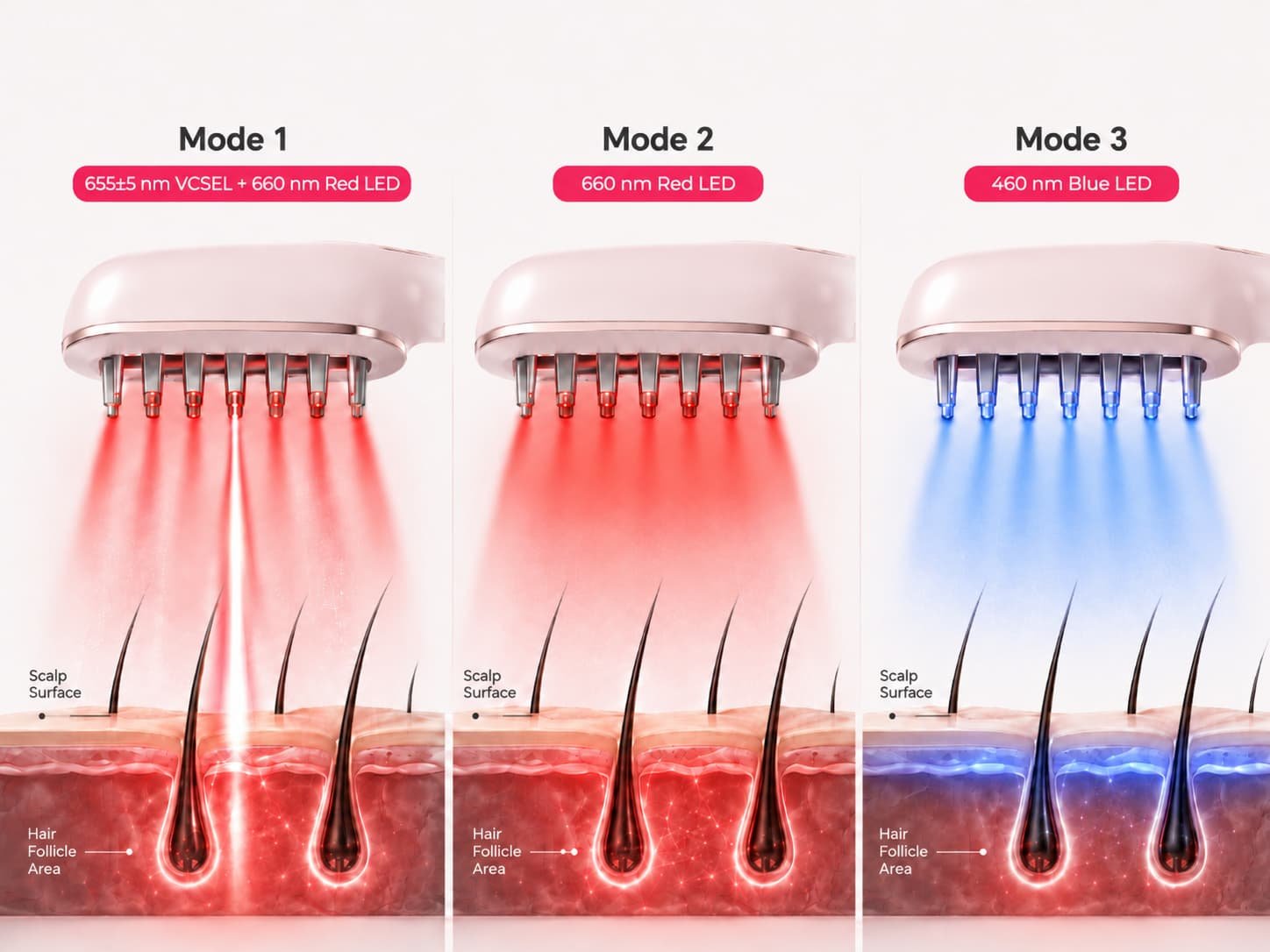
Der 655 Der nm-Wert ist die nominale VCSEL-Wellenlänge; die technische Produktspezifikation besagt 655±5 nm. Die rote LED ist 660 nm, und die blaue LED ist 460 nm. Die drei Chiptypen sind in a vorhanden 1:1:1 Verhältnis.
Blaues Licht verdient besondere Zurückhaltung. A 2017 Laborstudie an menschlichen Haarfollikeln habe das berichtet 453 nm blaues Licht bei 3.2 J/cm² verlängerte die Anagenphase in isolierten Follikeln ex vivo. Das sind frühe mechanistische Beweise – keine klinische Studie am Menschen – und die Wellenlänge, Dosis- und Expositionsprotokoll sind keine HT01-Validierungsstudie. Bis es direkte Beweise gibt, Die 460 Der nm-Modus sollte als Hardware-Option und nicht als bewährte Haarwuchs- oder Kopfhautbehandlungsfunktion beschrieben werden.
Für die roten und blauen LED-Kanäle, eine anwendbare photobiologische Sicherheitsbewertung kann verwendet werden IEC 62471, Dies deckt inkohärente Quellen einschließlich LEDs ab, schließt jedoch Laser aus. Käufer sollten den geltenden Produktstandard bestätigen, Ausgabe, getestete Modi, Belichtungsbedingungen und das genaue Modell mit dem Labor, anstatt ein generisches LED-Zertifikat als Beweis zu betrachten.
Die gleiche Disziplin gilt für EMS, Vibration und Serumgebrauch. HT01 bietet drei EMS-Intensitätsstufen mit einem unabhängigen Ausschaltzustand, eine angegebene Frequenz von 5–10 kHz, eine Vibrationsfunktion mit fester Intensität und einen abnehmbaren Magnetapplikator. Hierbei handelt es sich um Benutzererfahrungs- und Produktbündelungsfunktionen. Sie sollten nicht zu einer verbesserten Absorption führen, Durchblutungs- oder Haarwachstumsergebnisse ohne direkte Tests. Die Frequenz allein bestimmt nicht die elektrische Leistung: Abfrage, ob es sich um eine Träger- oder Pulswiederholfrequenz handelt, zusammen mit der Wellenform, Spannungs-/Stromgrenzen, Elektroden-/Kontaktkonfiguration, Risikobewertung und die Warnungen und Kontraindikationen, die durch das endgültige Design unterstützt werden.
Wann passt ein Kammformat zur Produktlinie einer Marke??
Wählen Sie beim Tragen einen Kamm, Manuelles Schneiden und eine nachweisbare Routine sind wichtiger als die freihändige Abdeckung der gesamten Kopfhaut.
Im Gegensatz zu einer Mütze oder einem Helm, Ein Handkamm fixiert die Lichtquellen nicht während der gesamten Sitzung auf der gesamten Kopfhaut. Der Benutzer steuert die Platzierung, Geschwindigkeit, Überlappung und Kontakt. Das schafft sowohl einen kommerziellen Vorteil als auch eine technische Frage.
Ein Kamm ist praktisch, wenn:
- Die Marke möchte eine kompakte SKU, die einfacher zu präsentieren ist, demonstrieren und versenden als ein Helm;
- Die vorgesehene Routine verwendet manuelle Schnitte oder die Aufmerksamkeit auf ausgewählte Kopfhautbereiche;
- Die Produktlinie umfasst bereits kompatible Kopfhautpflegeflüssigkeiten oder -routinen;
- einstellbares EMS, Vibration und ein taktiles Kämmerlebnis sorgen für eine sinnvolle Differenzierung;
- Die Marke kann klare Bewegung geben, Kontakt, Anweisungen zur Reinigung und Flüssigkeitsverträglichkeit.
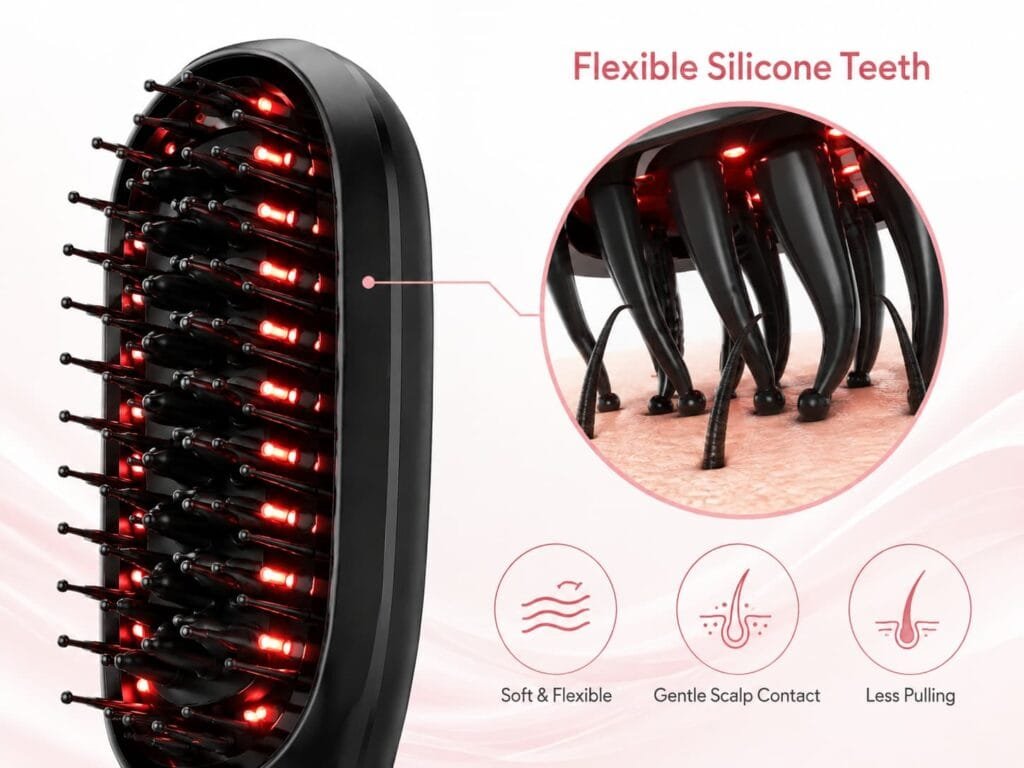
Ein Kamm hat möglicherweise das falsche Format, wenn:
- Das Produktkonzept setzt auf Passiv, freihändig, gleichzeitige Abdeckung der gesamten Kopfhaut;
- Die Marke benötigt eine gesperrte Belichtungsgeometrie mit minimalen Variationen in der Benutzerbewegung;
- Für die Markteinführung ist ein bestehendes exaktes klinisches Protokoll oder eine FDA-Zulassung erforderlich;
- Der Kanal kann keine detaillierten Anweisungen unterstützen, Warnhinweise oder Kundenaufklärung;
- Das geplante Serum bzw. die Kopfhautflüssigkeit wurde nicht auf Applikatorkompatibilität und Reinigung geprüft.
Marken, die noch Formfaktoren vergleichen, können die von Wakelife verwenden Sourcing-Leitfaden für Mützen und Helme als breitere Formatreferenz. Für HT01, Die wichtige Ergänzung ist die manuelle Bewegung: Eine Beispielbewertung sollte nicht nur den Komfort testen, sondern auch, ob Benutzer einer wiederholbaren Schnittroutine folgen können.
Was sind die aktuellen Standard-HT01-Spezifikationen??
Die folgenden Werte beschreiben die aktuelle Standardkonfiguration; Kundenspezifische Projekte erfordern eine erneute Konfigurationsüberprüfung.
| Spezifikation | HT01-Standardkonfiguration |
|---|---|
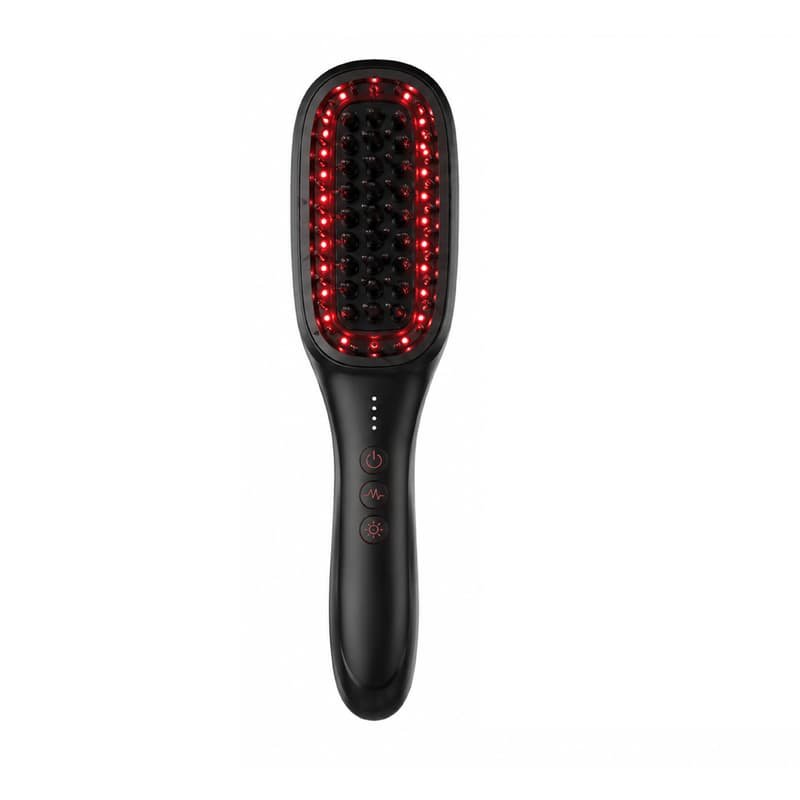
| Produkttyp | Tragbarer VCSEL-Laser-Haar- und Kopfhautpflegekamm |
| Lichtmodule | 14 × 3030 Tri-Chip-Module |
| Insgesamt lichtemittierende Chips | 42 |
| Lichtquellenverhältnis | 14 VCSEL : 14 rote LED : 14 blaue LED (1:1:1) |
| Wellenlängen | 655±5 nm VCSEL + 660 nm rote LED + 460 nm blaue LED |
| Optischer VCSEL-Ausgang | 5 mW pro VCSEL-Chip |
| Lichtintensität | Behoben |
| Lichtmodi | VCSEL + rote LED; rote LED; blaue LED |
| EMS | Aus + drei einstellbare Stufen; 5–10 kHz |
| Vibration | Feste Intensität |
| Zähne kämmen | Flexibles leitfähiges Silikon |
| Serumapplikator | Abnehmbares magnetisches Design |
| Timer | 10 Minuten mit automatischer Abschaltung |
| Indikatoren | LED-Anzeigen; kein Bildschirm |
| Batterie | 1300 Mah |
| Betriebszeit | ≥60 Minuten |
| Ladezeit | ≤2,5 Stunden |
| Produktabmessungen | L249,8 × B63,44 × T27,45 mm; ±0,5 mm Toleranz |
Diese Tabelle dient als Einkaufsgrundlage, kein klinisches Protokoll. Insbesondere, Der 10-Minuten-Timer teilt dem Käufer mit, wie die aktuelle Steuerlogik funktioniert; Sie allein legt keine evidenzbasierte Behandlungshäufigkeit oder -dosis fest. Musterverfügbarkeit und Mindestbestellmenge bleiben kommerzielle Begriffe, die eher vom Projektumfang als von technischen Spezifikationen abhängen.
Was sollten Käufer überprüfen, bevor sie ein HT01-Muster genehmigen??
Genehmigen Sie die Probe erst nach der physischen Einheit, Spezifikationsüberarbeitung, optische/sicherheitsbezogene Aufzeichnungen und geplante Ansprüche beziehen sich alle auf dieselbe Konfiguration.
Verwenden Sie diese Matrix bei der Lieferantenbewertung:
| Verifizierungselement | Fragen Sie nach | Eine zufriedenstellende Antwort sollte angezeigt werden | Rote Fahne |
|---|---|---|---|
| Konfigurationskontrolle | Datierte Spezifikation, Stücklisten-/Konfigurationskennung und Moduldatenblatt oder -zeichnung | Das Muster und das Angebot verwenden die gleiche Modulanzahl, Paketarchitektur, Wellenlängen, Modi und Controller-Logik | Verkaufsblatt und Muster beschreiben unterschiedliche EMS-Niveaus oder Wellenlängen |
| Optischer Ausgang | Bericht mit Instrument, Verfahren, Aktiver Modus, Messebene/Distanz, Betriebsbedingungen und Toleranz | Die Ausgabe pro Quelle am angegebenen Standort wird von der Bestrahlungsstärke des fertigen Geräts auf einer definierten Nutzungsebene getrennt | Ein einzelner „5 mW“-Wert wird als Dosis oder mW/cm² dargestellt |
| Optische Verteilung | Räumliche Einstrahlungskarte oder Modul-zu-Modul-Variation bei einer definierten Nutzungsebene und im aktiven Modus | Abdeckungsschwankungen und Akzeptanztoleranzen sind sichtbar, anstatt auf einen Spitzenwert reduziert zu werden | Für die 14-Modul-Baugruppe wird nur der höchste Punkt oder ein Emitter gemeldet |
| Wärme- und Regelverhalten | Temperaturanstiegsaufzeichnung für Zähne/Kontaktflächen und Gehäuse im Worst-Case-Aktivmodus über den gesamten 10-Minuten-Zyklus, plus Timer/automatische Abschaltung, Wiederholte Betriebs- und Ladekontrollen | Testbedingungen, Standorte, Grenzwerte und Pass/Fail-Kriterien stimmen mit der endgültigen Probe überein | Aus Bauteildaten wird die Oberflächentemperatur bzw. das Regelverhalten angenommen |
| Lasersicherheit | Klassifizierungsbericht für fertige Geräte, technische Steuerungen, Warnungen vor Augenexposition, Etiketten und anwendbare Marktaufzeichnungen | Das genaue Modell/die genaue Konfiguration sowie die anwendbaren Laserquellen und Nutzungsbedingungen liegen im Rahmen | Stattdessen wird ein Komponentendatenblatt oder ein anderer Produktbericht angeboten |
| Photobiologische LED-Sicherheit | Anwendbare Beurteilung, wie IEC 62471 gegebenenfalls, und getestete Konfiguration | Rote und blaue Kanäle, Betriebsmodi und Expositionsbedingungen sind erkennbar | Ein generisches LED-Zertifikat ohne Modell-/Konfigurationsbereich |
| EMS-Ausgabe | Wellenform, Spannungs-/Stromgrenzen, Frequenzdefinition, Kontaktgestaltung und Risikodokumentation | Alle drei Stufen und der Aus-Zustand stimmen mit der endgültigen Steuerung und dem Handbuch überein | „5–10 kHz“ ist die einzige angegebene elektrische Ausgangsinformation |
| Anweisungen | Aktuelle Bedienungsanleitung, risikobasierte Warnungen, Kontraindikationen und Reinigungs-/Flüssigkeitseinschränkungen | Bewegung, Kontakt, Timer, EMS, Aufladen, Warnungen und Wartung sind konsistent | Marketingversprechen gehen über die Anweisungen hinaus oder ein vorhersehbarer Missbrauch wird unterlassen |
| Markt und Ansprüche | Genaue Aufzeichnungen oder ein schriftlicher Regulierungsplan für das Zielland | Modell, Halter, Verwendungszweck, geplante Ansprüche, Strahlungsproduktpflichten und Handelsmarkenbeziehungen stimmen überein | Anmeldung, Als Produktfreigabe wird eine Zugangsnummer oder ein Werkszertifikat verwendet |
| Flüssigkeit und Gehäuse | Materialien, Nachweis der Flüssigkeitsverträglichkeit, Reinigungsmethode und jegliche beanspruchte Eindringschutzklasse | Applikator, Zähne, Wohn- und Ladebereiche werden hinsichtlich der vorgesehenen Flüssigkeiten und Reinigung beurteilt | „Verwendung mit Serum“ wird ohne Kompatibilitäts- oder Schadstoffprüfung angegeben |
| Auswirkungen der Anpassung | Änderungskontroll- und Revalidierungsplan | Farb-/Verpackungsänderungen sind unabhängig von der Wellenlänge, Kontrolle, bauliche und sicherheitstechnische Veränderungen | Es werden tiefgreifende technische Änderungen ohne Tests oder Auswirkungen auf Dokumente versprochen |
In den Vereinigten Staaten, Die generische Klassifizierungsdatenbank der FDA umfasst a laser, comb, hair Kategorie unter Produktcode OAP. Der Datensatz ordnet die Kategorie zu 21 CFR 890.5500, einen erforderlichen Strahlenschutzproduktbericht und die Laserstandards in 21 CFR 1040.10 Und 1040.11. Es ist eine nützliche Suchroute, aber es ist kein Beweis dafür, dass HT01 eine hat 510(k) oder dass ein HT01-Strahlungsproduktbericht eingereicht wurde. Davor warnt auch die FDA Betriebsregistrierung und Gerätelistung bedeuten keine Genehmigung, Freigabe oder Genehmigung. Fordern Sie jede genaue Aufzeichnung an und überprüfen Sie das Modell, meldender Hersteller, Halter, Ermitteln Sie selbst den Verwendungszweck und den Kennzeichnungsbereich.
Was sollte in eine HT01-Anfrage enthalten sein??
Eine nützliche Ausschreibung definiert den Markt, Ansprüche und Konfiguration, bevor Sie nach dem Preis fragen. Kopieren Sie diese Checkliste in die Anfrage:
- Zielländer und geplante Vertriebskanäle.
- Geplante Positionierung: Schönheits-/Kopfhautpflege, Haar-Wellness oder ein regulierter Haarwuchs-Anspruch.
- Erforderliche Beispielkonfiguration und Revisionskennung.
- Standard- oder kundenspezifische Wellenlängen, Modul-/Paketarchitektur, Modi und Controller-Logik.
- Optische Daten des fertigen Geräts, einschließlich Ausgabeort, Betriebsbedingungen, Toleranz, Messebene/Distanz, aktiven Modus und ein räumliches Karten- oder Modulvariationsergebnis.
- EMS-Wellenform, Spannungs-/Stromgrenzen, Träger versus Pulswiederholungsfrequenz und Kontaktdesign.
- Laserklassifizierung, Kontrollen/Warnungen zur Augenexposition, Photobiologische LED-Sicherheit, EMC, Batterie, elektrische Sicherheit, Thermal-, Timer/automatische Abschaltung, Aufladen, Etikett und manuelle Dokumente, die für die Überprüfung erforderlich sind.
- Für die USA. Projekte, anwendbarer Laserproduktbericht/Beitritt, Zertifizierungs- und Identifikationsetiketten, Jahresberichtsstatus, FDA 2877 Verantwortung und jede separate 510(k) Weg.
- Geplantes Flüssigkeits- oder Serumbündel, inklusive Materialverträglichkeit, Reinigungsmethode und Nachweis des Eindringschutzes.
- Ladeschnittstelle/-eingang, Produktgewicht, Gehäuse- und Zahnmaterialien, Garantie- und Ersatzzubehöranforderungen.
- Logo, Farbe, Verpackung, Sprache, Barcode, Zubehör, Probenmenge, prognostiziertes Volumen und Liefermarkt.
- Welche Änderungen erfordern eine neue Validierung?, ergänzende Berichterstattung, Werkzeugausstattung oder behördliche Überprüfung.
Die Antworten sollen bestimmen, ob es sich bei dem Projekt um einen neutralen Bestand handelt, Handelsmarktlabel, leichtes OEM oder tieferes ODM. Sie sollten auch festlegen, welche Dokumente gültig bleiben können und welche nach der Anpassung aktualisiert werden müssen.
Endgültige Käuferentscheidung
HT01 ist ein glaubwürdiger Kandidat, wenn das kommerzielle Ziel ein Kompaktfahrzeug ist, Es handelt sich um ein multifunktionales Kopfhautpflegegerät und die Marke ist bereit, die endgültige Konfiguration zu validieren, bevor Leistungs- oder Regulierungsansprüche geltend gemacht werden. Seine aktuell stärkste Differenzierung ist spürbar: zum Tri-Chip 655/660/460 nm Lichtarchitektur, drei wählbare Lichtmodi, dreistufiges EMS, flexible leitfähige Zähne, Vibration und einem abnehmbaren Applikator.
Es ist nicht die richtige Abkürzung für ein Projekt, das vorgefertigte klinische HT01-Beweise benötigt, ein übertragbares Protokoll oder eine angenommene FDA-Zulassung. Das sind exakte Gerätefragen, keine Vorteile, die automatisch mit einer Wellenlänge oder Komponente einhergehen.
Für die breitere Herstellerauswahl, Mustergenehmigungs- und RFQ-Workflow für Helme, Mützen und Kämme, Benutze die Hersteller von Haarwuchsgeräten & OEM/ODM-Leitfaden.
Zur Bewertung der Standardkonfiguration, Besuchen Sie die HT01-Produktseite oder schauen Sie sich Wakelife im weiteren Sinne an Laser- und LED-Haarwuchsgeräte-Sortiment. Wenn Sie ein Angebot anfordern, den Zielmarkt einbeziehen, geplante Ansprüche, Kanal und Anpassungsumfang, sodass die Proben- und Dokumentenprüfung mit demselben Briefing beginnen.
Häufig gestellte Fragen
Tut 5 mW bedeutet HT01-Bestrahlungsstärke 5 MW/cm²?
NEIN. Der 5 Die mW-Spezifikation ist die optische Ausgangsleistung pro VCSEL-Chip. Die Bestrahlungsstärke erfordert eine Flächeneinheitsmessung unter den angegebenen Geometrie- und Betriebsbedingungen.
Ist HT01 von der FDA zugelassen??
Nicht HT01 510(k) Die Nummer finden Sie auf der aktuellen Produktseite. Behandeln Sie jeden zukünftigen Freigabeanspruch bis zum genauen Modell als unbestätigt, Halter, Verwendungszweck und Kennzeichnung werden in der öffentlichen Datenbank der FDA abgeglichen; Werksregistrierung, Eine Zugangsnummer oder die Freigabe eines anderen Modells ist kein Ersatz.
Wenn ein U.S. Markteinführung vermeidet Behauptungen über Haarwuchs, Entfallen die Laserproduktpflichten??
NEIN. Die Strahlungskontrollen elektronischer Produkte der FDA sind eine separate Ebene von den Ansprüchen medizinischer Geräte 510(k) Rezension. Das jeweils gültige Produkt-Reporting, Zertifizierungs-/Identifikationskennzeichnung, Leistungsstandard und Einfuhrzölle müssen noch für das genaue Laserprodukt ermittelt werden; Die Vermeidung eines medizinischen Anspruchs bedeutet nicht automatisch einen Verzicht darauf.
Kann eine Marke behaupten, dass die 460 Im nm-Modus wachsen Haare?
Nicht aus den hier überprüften Beweisen. Die nächstgelegene relevante Studie wurde verwendet 453 nm blaues Licht in isolierten menschlichen Haarfollikeln ex vivo, keine klinische HT01-Studie am Menschen.
Können die Wellenlängen oder EMS-Einstellungen angepasst werden??
Sie können als OEM/ODM-Projekt bewertet werden, Allerdings können technische Änderungen die optische Leistung beeinträchtigen, Sicherheitsprüfung, Kennzeichnung und behördliche Anforderungen. Bestätigen Sie die Machbarkeit und den Revalidierungsplan, bevor Sie die endgültige Spezifikation genehmigen.
Referenzen
- 1
-
2
Lueangarun S, et al. Eine systematische Überprüfung und Metaanalyse randomisierter kontrollierter Studien mit Genehmigung der US-amerikanischen Lebensmittel- und Arzneimittelbehörde, Heimgebrauch, Low-Level-Licht-/Lasertherapiegeräte gegen musterbedingten Haarausfall: Gerätedesign und Technologie
J Clin Aesthet Dermatol. 2021;14(11):E64–E75. -
3
Jimenez JJ, et al. Wirksamkeit und Sicherheit eines Low-Level-Lasergeräts bei der Behandlung von Haarausfall bei Männern und Frauen: Ein Multicenter, Randomisiert, Scheingerätegesteuert, Doppelblindstudie
Bin J Clin Dermatol. 2014;15(2):115–127. -
4
Buscone S, et al. Ein neuer Weg zur Definition von Lichtparametern für das Haarwachstum: Entdeckung und Modulation von Photorezeptoren im menschlichen Haarfollikel
Laser Surg Med. 2017;49(7):705–718. -
5
UNS. FDA. Produktcode OAP: Laser, Kamm, Haar
- 6
-
7
UNS. FDA. Laserprodukte und -instrumente
- 8
- 9
- 10
- 11
-
12
HairMax. ULTIMA 12 LaserComb product page
Manufacturer marketing statements quoted for category-positioning illustration only. -
13
UNS. FDA. 510(k) Datenbank
HairMax laser-comb records under product code OAP include K060305 (“HAIRMAX LASERCOMB”) and K111714 (“HAIRMAX DUAL 12”).