
LED vs. Laser in Photobiomodulation: Performance, Safety & Device Selection Guide
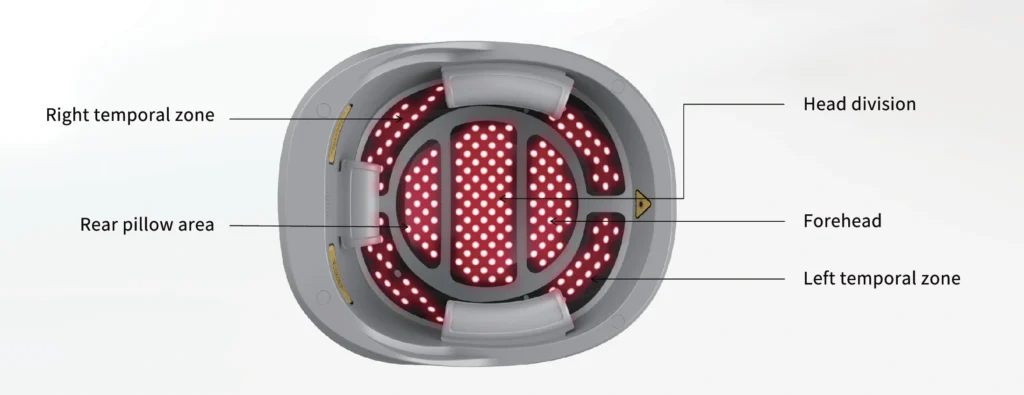
LEDs and lasers produce therapeutically equivalent outcomes in photobiomodulation when matched for wavelength, irradiance, and dose. The primary technical difference is coherence — lasers emit coherent (in-phase) light while LEDs emit incoherent light. However, peer-reviewed research demonstrates that coherence is not required for PBM’s biological effects (de Freitas & Hamblin, 2016; PMC5215795). LEDs offer significant […]
Downstream Biological Effects of Photobiomodulation: What Happens Inside Your Cells

Red light therapy works by delivering specific wavelengths of light — 630–660 nm (red) and 810–850 nm (near-infrared) — into the skin and underlying tissue, where the photons are absorbed by an enzyme called cytochrome c oxidase (CcO) inside the mitochondria. This absorption restores mitochondrial electron transport, increases ATP (cellular energy) production, releases nitric oxide […]
Biphasic Dose Response in PBM: Why More Light Is Not Always Better
Biphasic dose response means that photobiomodulation (PBM) follows a characteristic curve where low doses stimulate, moderate doses produce optimal effects, and high doses inhibit cellular function. This phenomenon — described by the Arndt-Schulz principle and validated extensively in PBM research (Huang et al., 2009) — explains why more light is not always better. However, the specific optimal dose depends […]
Cytochrome c Oxidase: The Primary Photoacceptor in Red Light Therapy
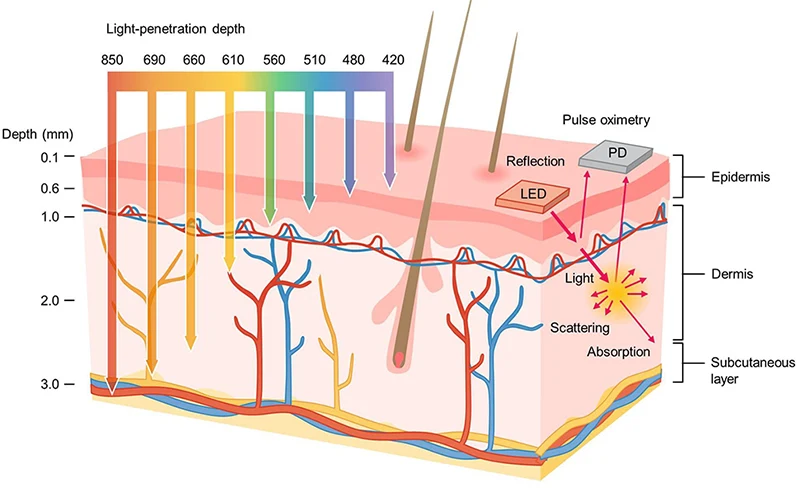
Cytochrome c oxidase (CcO) — also known as Complex IV of the mitochondrial electron transport chain — is the primary photoacceptor in red and near-infrared light therapy. When photons in the 600–900 nm range reach the mitochondria, CcO absorbs them, triggering three key responses: increased ATP (cellular energy) production, release of nitric oxide (a vasodilator that improves blood flow), […]
What Is Photobiomodulation? Definition, History & How It Works

Photobiomodulation (PBM) is a non-invasive therapy that uses specific wavelengths of red and near-infrared light (typically 600–1000 nm) to stimulate cellular energy production and promote tissue repair. Light photons are absorbed by an enzyme called cytochrome c oxidase in the mitochondria, boosting ATP synthesis and triggering anti-inflammatory, regenerative, and neuroprotective responses. You may know it by […]
Why the Wakelife BE-G122 Is Redefining Wearable Red Light Therapy Belts in 2026

Introduction: The Growing Demand for Wearable Light Therapy The global red light therapy market is experiencing unprecedented growth. Consumers are no longer satisfied with stationary panels or bulky clinical devices — they want portable, hands-free, wearable solutions that fit seamlessly into their daily routines. Whether it’s a fitness enthusiast recovering from an intense workout, an […]
ESPLUS360: The Compact 6-Wavelength Red Light Therapy Panel Built for Targeted Precision

Most Red Light Panels Give You Power. Few Give You Precision. Walk into the red light therapy market today, and you’ll find hundreds of panels that look almost identical — rows of LEDs, a power switch, and two wavelengths: 660nm and 850nm. That’s it. For years, that was considered “enough.” But the science of photobiomodulation […]
Do LED Face Masks Help Fine Lines and Wrinkles?

Some LED studies report improvement in specific fine-line measurements, but the result depends on the device, target and assessment. Learn which lines are plausible targets and what meaningful progress looks like.
G15K LED Face Mask OEM & ODM: Launch Your Own Branded Light Therapy Device

The global LED light therapy market is booming. According to Grand View Research, the light therapy device sector is projected to grow at a compound annual growth rate of over 15% through 2030, driven by rising consumer demand for non-invasive, clinic-grade skincare solutions that can be used in the comfort of home. Among all at-home […]
2026 Strategic Planning: Building a Brand-Driven Manufacturing Path at WAKELIFE

In December 2025, WAKELIFE’s management team convened a company-wide strategic planning meeting to define the priorities and execution roadmap for 2026. Rather than focusing on short-term targets, the discussion centered on a long-term shift toward brand-driven manufacturing—strengthening how WAKELIFE supports professional beauty brands through stable processes, regulated production, and sustained execution capability. This planning session […]