Введение. Большинство сбоев OEM-производителей не случаются на производстве.
В производстве устройств для терапии красным светом, многие бренды предполагают, что сбои случаются во время массового производства — на конвейере, в коробке, или после родов.
На самом деле, большинство сбоев уже зафиксированы гораздо раньше: во время определения требований, проектировать компромиссные решения, и ярлыки проверки, принятые в условиях ограниченного времени или затрат.
В Wakelife Beauty, после 10+ лет производства светодиодных устройств медицинского уровня и партнерских отношений с 1,000+ мировые бренды в США, Евросоюз, Великобритания, Австралия, и Япония, мы видели одну устойчивую закономерность:
Сбои OEM-проектов редко являются техническими авариями.. Это предсказуемые результаты решений на ранней стадии..
Ниже приведены 5 реальные сценарии сбоев (упрощенные по сравнению с реальными проектами) и конкретные решения, которые их вызвали. Если вы планируете разработать или приобрести устройство для терапии красным светом, светодиодная маска для лица, панель светотерапии, или любое связанное устройство, эти случаи имеют непосредственное отношение к вашему проекту.
Примечание: Эти сбои являются частью более широкой закономерности, которую мы подробно рассмотрим в нашей сопутствующей статье.: Процесс разработки устройства для терапии красным светом: Уроки реальных неудач. В этой статье рассматривается полный семиэтапный структурированный процесс, который мы сейчас используем для предотвращения подобных последствий..
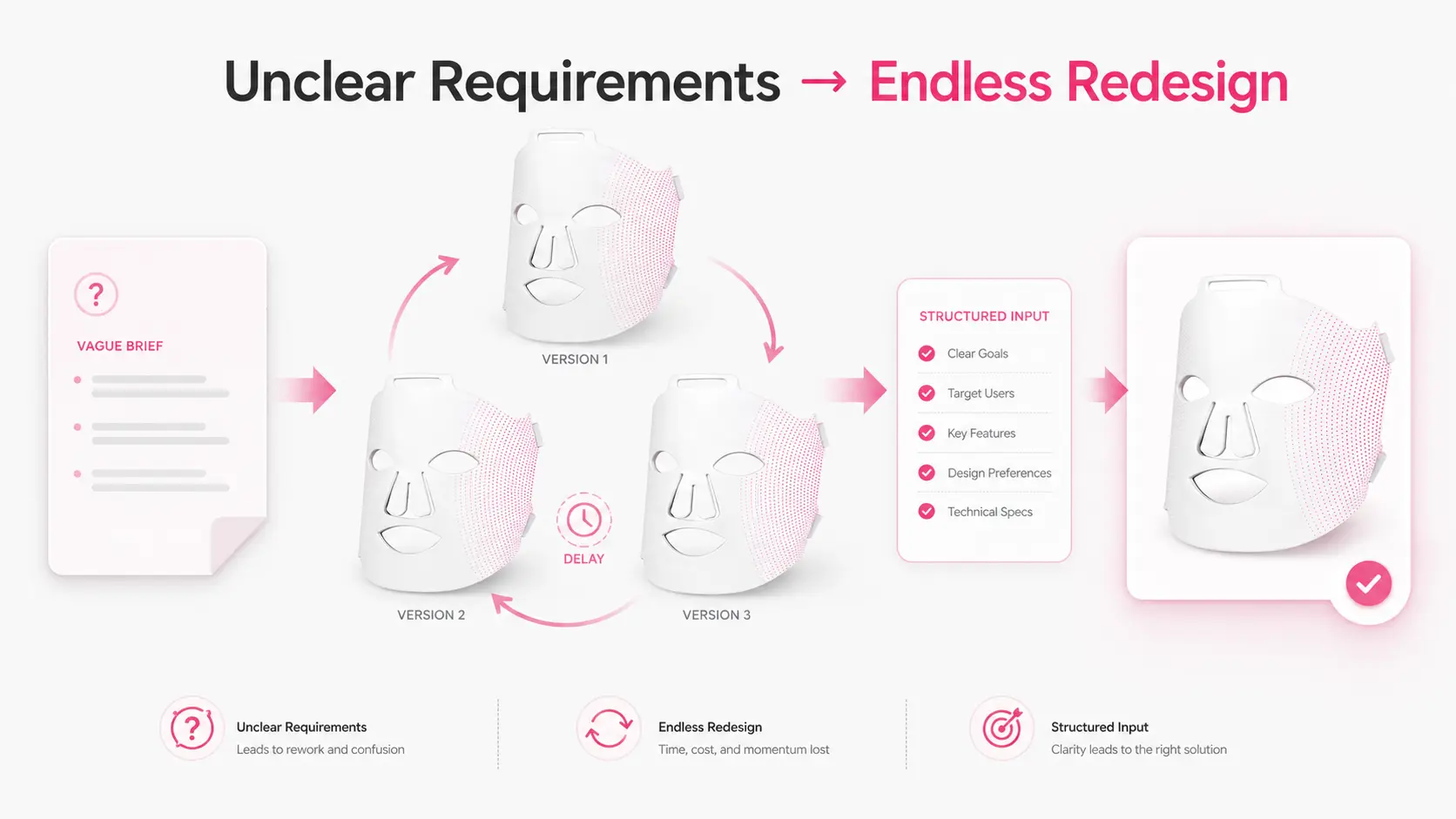
Случай 1 — Непонятные требования → Бесконечный редизайн
Что случилось
К нам обратился клиент с простой просьбой:
«Нам нужна высококачественная светодиодная маска для лица для европейского рынка».
Никаких измеримых деталей не предоставлено:
- Нет целевой длины волны (630н.м.? 660н.м.? 830н.м.?)
- Нет спецификации излучения (МВт/см²)
- Никаких материальных предпочтений (пищевой силикон против. Корпус из АБС-пластика)
- Нет области сертификации (только CE? UKCA? Rohs?)
Проект все равно продвигался вперед — потому что запрос казался достаточно ясным на поверхностном уровне..
Результат
- изменен дизайн идентификатора 3 раз
- Структурный проект пересматривался дважды
- Окончательное подтверждение клиента задерживается на 5+ недели
- Инженерные часы, затраченные на изменения, которые можно было бы исключить при полном описании
Первопричина
«Высококачественный» не является техническим требованием. «Европейский рынок» — это не сертификационное задание. В OEM-разработке, общие дескрипторы не переводятся в производственные спецификации.
Чего это на самом деле стоит
Помимо видимых затрат времени на редизайн, нечеткие требования создают скрытые затраты: каждый цикл пересмотра на этапе проектирования откладывает начало оснастки, приобретение, и проверка — сжатие графика на каждом последующем этапе.
Как мы это исправили
Мы ввели структурированный процесс сбора требований, который теперь является стандартным для каждого проекта Wakelife Beauty.:
- Длина волны (НАПРИМЕР., 630н.м. / 660н.м. / 850н.м., или комбинация)
- Цель облучения (МВт/см²) и расстояние измерения
- Область сертификации: CE, UKCA, FCC, FDA 510(k), TGA, ПОГОДА, или другой
- Спецификация материала: пищевой силикон (стандарт для нашей линейки светодиодных масок для лица), АБС, или гибрид
- Световые режимы: одна длина волны, двойная длина волны, пульс, таймер
- Целевой рынок и сценарий использования: дом, профессиональная клиника, или медико-эстетический
Четкий вход = предсказуемый результат.
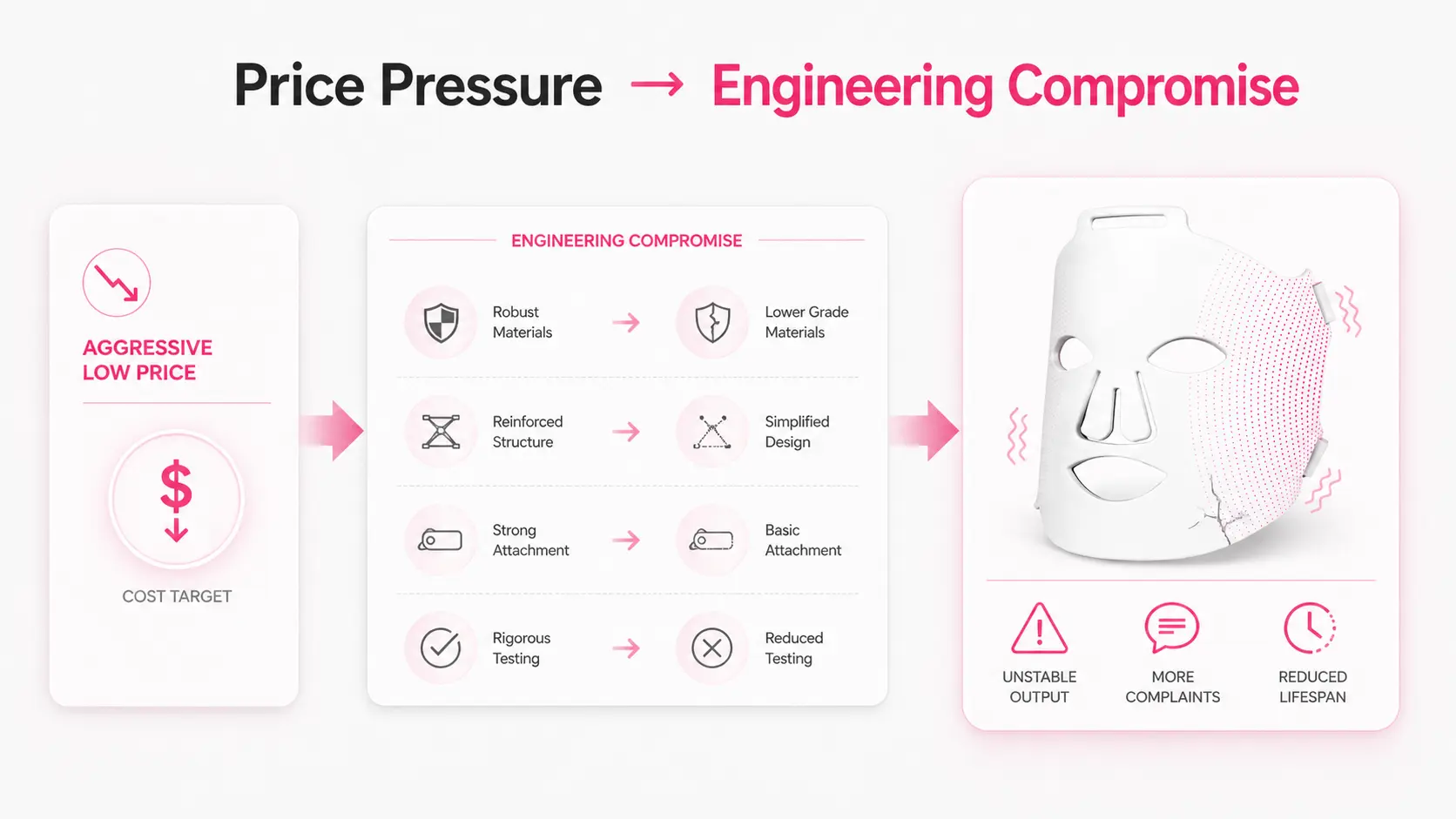
Случай 2 — Ценовое давление → Инженерный компромисс
Что случилось
Клиент установил жесткий потолок затрат при запуске проекта.:
«Нам нужно это устройство стоимостью менее 25 долларов».
Требуется оригинальный инженерный проект:
- Высокоточное биннинг светодиодов (более строгий допуск по длине волны)
- Стабильная система драйверов постоянного тока
- Структура управления температурным режимом для поддержания стабильной производительности в течение всего периода лечения.
Для достижения целевой цены, программа была изменена:
- Светодиоды стандартного класса заменены компонентами с более высоким коэффициентом объединения.
- Упрощение печатной платы для снижения стоимости платы
- Структура управления теплом удалена.
Результат
- Нестабильный световой поток во время сеанса лечения.
- Меньший срок службы устройства, чем указано
- Жалобы дистрибьюторов и конечных пользователей в 90 дни запуска
Первопричина
Целевой показатель затрат был установлен до того, как были определены технические требования.. В устройствах светодиодной светотерапии, производительность и стоимость напрямую связаны на уровне компонентов — их нельзя разделить числом, установленным в коммерческом разговоре..
Техническая реальность
Конструкция устройства в красном свете и ближнем инфракрасном диапазоне:
- Более строгий допуск по длине волны (НАПРИМЕР., Биннинг медицинского уровня ±3 нм по сравнению с. стандарт ±10–15 нм) требует сортировки компонентов из больших объемов производства — это имеет реальную себестоимость единицы продукции
- Стабильная освещенность требуется качественная схема драйвера — не взаимозаменяема более дешевой альтернативой без влияния на производительность
- Долговечность требует структурных инвестиций — ярлыки становятся гарантийным возвратом
Наш 50+ Ведущий&D Инженеры и 120+ патенты представляют собой годы работы по оптимизации соотношения затрат и производительности.. Эта оптимизация имеет пределы, которые ценовое давление не может преодолеть..
Как мы это исправили
Вместо того, чтобы навязывать компромиссный единый дизайн, теперь мы представляем клиентам варианты многоуровневого решения на этапе требований:
- Вариант А: Полная спецификация по технически приемлемой цене
- Вариант Б: Оптимизированный дизайн с четкими, документированные компромиссы в производительности
Оба варианта представлены с четкими объяснениями соотношения затрат и производительности до того, как будут сделаны какие-либо инженерные инвестиции.. Клиент выбирает при полной информации — не после запуска производства.
Случай 3 — Пропуск ТГВ → Провал массового производства
Что случилось
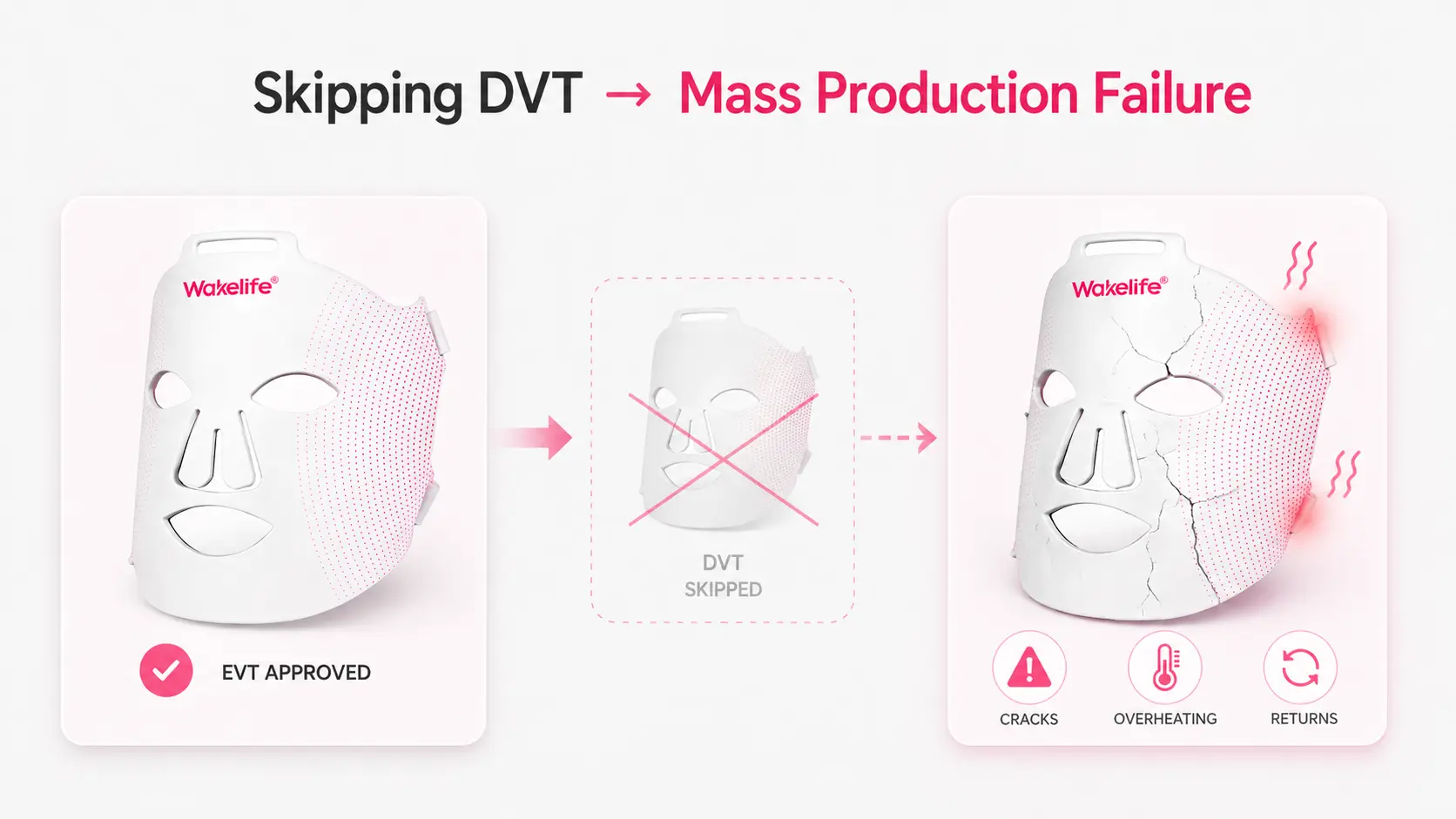
Быстро развивающийся бренд запросил прямое производство после EVT. (Инженерное проверочное испытание), полный обход ТГВ:
«Мы видели прототип. Это выглядит хорошо. Перейдем непосредственно к производству».
DVT — этап проверки проекта — был пропущен..
Результат
После завершения серийного производства и отгрузки устройств:
- Корпус устройства треснул при стандартных условиях испытания на падение с высоты 1,2 м.
- Проблемы с температурой появились после длительного использования. (20+ минутные сессии)
- Процент возвратов значительно увеличился, инициирование споров между дистрибьюторами
Все эти виды отказов можно было обнаружить и устранить при ТГВ.. При массовом производстве, они стали гарантийными обязательствами.
Первопричина
ЭВТ отвечает на вопрос: Может ли это сработать? ДВТ отвечает на другой вопрос: Будет ли это продолжаться??
Это не один и тот же вопрос. Прототип, который правильно функционирует в контролируемой среде, не доказывает, что конструкция выдержит реальное использование., логистическая обработка, и изменение климата на международных рынках.
Что на самом деле тестирует ТГВ
В нашем Процесс разработки сертифицирован по стандарту ISO 13485 и MDSAP., ТГВ обычно охватывает:
- Испытание на падение и удар
- Термоциклирование и термостабильность при длительном использовании
- Надежность сборки и механическая прочность
- Предсертификационные испытания надежности в соответствии с CE, FCC, FDA 510(k), TGA, или другая применимая область применения
Пропуск ТГВ не экономит время. Он переносит неурегулированный риск с завода на рынок, где стоимость разрешения на порядок выше..
Как мы это исправили
ТГВ теперь является обязательным контрольным пунктом в каждой программе разработки новых продуктов Wakelife Beauty.. Разрешение на производство не выдается до тех пор, пока закрытие ТГВ не будет подтверждено и документально оформлено.. Для настройки продуктов платформы с ограниченной областью применения, требование DVT оценивается на этапе рассмотрения проекта, но по умолчанию всегда выполняется проверка перед масштабированием..
Полное объяснение того, как EVT, ТГВ, и PVT вписываются в наш процесс разработки, видеть: Процесс разработки устройства для терапии красным светом — этап 3: Этапы проверки
Случай 4 — Нестабильность длины волны → Жалобы рынка
Что случилось
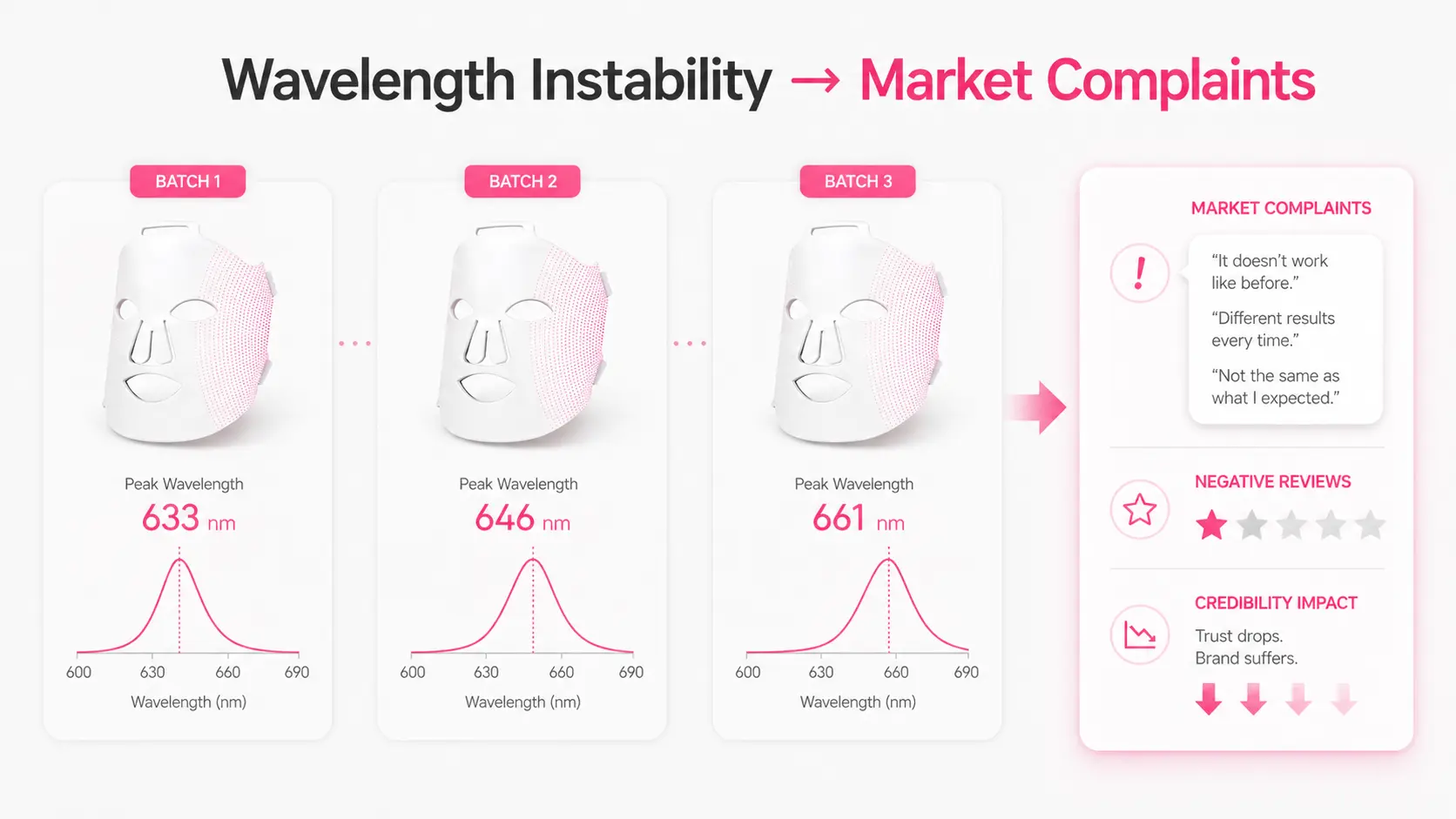
Клиент запросил «устройство красного света медицинского класса», но не указал требования к допускам по длине волны..
В производстве использовалось стандартное биннингование светодиодов..
Результат
- Измеримое отклонение длины волны между производственными партиями
- Непоследовательные результаты, сообщаемые пользователями, в разных единицах продукта
- Негативные отзывы дистрибьюторов и конечных потребителей
- Ущерб авторитету бренда на рынке, где клиническое позиционирование занимало центральное место в истории продукта.
Первопричина
«Медицинский уровень» — это заявление о позиционировании.. Это не, сам по себе, техническая спецификация. Без определенного допуска по длине волны, «Медицинский уровень» не ограничивает производственный процесс каким-либо значимым образом..
Реальность отрасли
Выходная длина волны светодиода не фиксирована. Каждый светодиод имеет диапазон допуска, определяемый стандартом группировки, применяемым во время сортировки компонентов.:
- Стандартное коммерческое группирование: более широкий диапазон допуска (обычно ±10–15 нм или шире)
- Плотный контейнер медицинского уровня: более узкий допуск (НАПРИМЕР., ±3–5 нм), требующая дополнительной сортировки от поставщика комплектующих
Более плотная сортировка означает, что более высокая доля компонентов отбраковывается при сортировке, что увеличивает стоимость компонентов.. Это настоящий, измеримая разница в стоимости, не предпочтение при закупках.
Когда продукт позиционируется как медицинский или клинически проверенный, согласованность длины волны между единицами продукции и между производственными партиями не является обязательной. Это основа заявления об эффективности..
Как мы это исправили
Теперь мы требуем четкого указания длины волны на этапе требований для всех программ медицинского позиционирования.:
- Точная целевая длина волны (НАПРИМЕР., 660нм±3 нм)
- Стандарт группирования (стандартный против. строгая сортировка)
- Требование к единообразию от партии к партии
- Метод измерения и проверки
Эти параметры документированы в спецификации продукта., включено в критерии входного контроля качества, и проверено в DVT перед разрешением производства.
Случай 5 — Поздние запросы на изменение → Взрыв стоимости
Что случилось
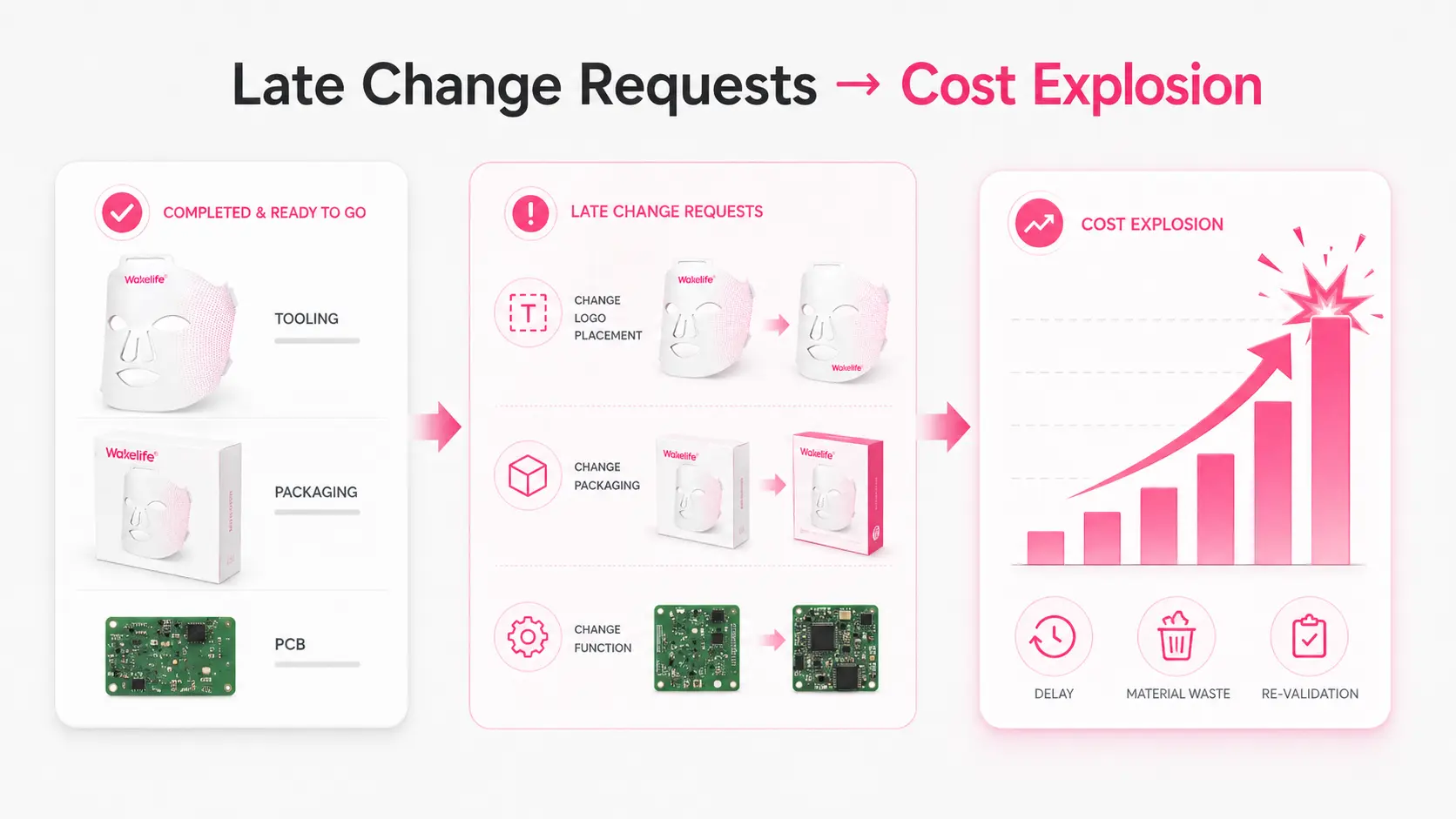
После изготовления оснастки и закупки материалов., клиент отправил следующие запросы на изменение:
- Новое размещение логотипа (требуется модификация пресс-формы)
- Редизайн упаковки (требующие перепечатки уже находящихся в производстве упаковочных материалов)
- Добавление новой функции управления (требуется доработка печатной платы)
Каждый запрос был оформлен как «небольшая корректировка».
Результат
- Значительные отходы материала из уже произведенной упаковки
- Стоимость переоснащения для модификации пресс-формы
- Ревизия печатной платы, вызывающая требование частичной повторной проверки
- Задержка производства 3+ недели
- Суммарное влияние затрат намного превышает ценность самих изменений.
Первопричина
Изменения, внесенные после блокировки разработки, не являются «корректировками» — это сбои на уровне системы.. Как только производство будет разрешено:
- Комплектующие и материалы закупаются по спецификации.
- Инструмент закреплен и сертифицирован.
- График производства согласовывается
- В некоторых случаях, подача заявок на сертификацию уже ведется
Изменение любого из этих элементов может каскадно повлиять на другие..
Чего большинство клиентов не осознают
Производственный процесс на Wakelife Beauty’s Шэньчжэнь средство - 12 Производственные линии, 180,000 единиц в месяц — работает по установленным графикам. Позднее внесение изменений в один проект приводит к смещению мощностей, выделенных на другие программы.. Стоимость этого перемещения не указана в заказе на изменение, но она реальна..
Как мы это исправили
Все изменения в Wakelife Beauty после авторизации теперь подчиняются официальному приказу о технических изменениях. (ЭКО) процесс:
- Оценка воздействия изменений - объем, расходы, и временные эффекты оцениваются до утверждения
- Обзор распределения материалов — имеющиеся материалы оценены к списанию, переделка, или перераспределение
- Повторная котировка — все изменения, влияющие на стоимость материалов или сроки выполнения работ, пересчитываются и подтверждаются в письменной форме до возобновления работ.
- Повторная оценка — изменения, влияющие на безопасность, производительность, или соответствие нормативным требованиям проверяются на предмет требований повторного входа в систему DVT или PVT.
Этот процесс защищает обе стороны. Клиенты избегают неожиданного роста затрат. Wakelife Beauty позволяет избежать затрат на изменения, выходящих за рамки первоначального объема проекта..
Ключевой вывод: успех OEM определяется еще до начала производства
Во всех пяти случаях, один шаблон соответствует:
Сбои не начинаются на производственной линии. Они начинаются с решений, принятых до того, как развитие станет стабильным..
Пять практик, которые предотвращают эти неудачи, не сложны:
- Определите требования с помощью измеримых параметров — длина волны, излучение, материал, область сертификации — до начала любых проектных работ
- Согласуйте целевые затраты с технической реальностью — понять, сколько стоят приводы в конструкции светодиодных устройств, прежде чем устанавливать потолок цены.
- Никогда не пропускайте этапы проверки — ЭВТ, ТГВ, и PVT существуют, потому что каждый из них отвечает на отдельный вопрос о готовности вашего продукта.
- Явно укажите стандарты производительности — «медицинский уровень» — это претензия, не спецификация. Определите параметры, которые делают это правдой
- Управляйте изменениями с помощью структурированных процессов — каждое изменение после авторизации имеет свою стоимость. Формальный процесс ЭКО делает эти затраты видимыми до того, как они будут понесены.
Вывод: структурированный процесс — это контроль рисков
Профессиональный производитель OEM не просто производит продукцию по спецификации.
Он управляет неопределенностью. Он выявляет компромиссы. Он предотвращает предсказуемые сбои, описанные в этой статье, до того, как они попадут на рынок, причем стоимость устранения всегда выше, чем стоимость предотвращения..
В Wakelife Beauty, наш структурированный 7-этапный процесс разработки, включающий подтверждение требований, Дизайн продукта и разработка&Д, Валидация EVT/DVT/PVT, Массовое производство и вывод на рынок, Управление жизненным циклом, Документация и управление изменениями, и межфункциональное исполнение — существует по одной причине:
Чтобы предотвратить эти сбои до того, как они произойдут.
Этот процесс полностью описан в нашей сопутствующей статье.: 👉 Процесс разработки устройства для терапии красным светом: Уроки реальных неудач
Работайте с производителем, который видел эти сбои и исправлял их.
Если вы планируете разработать или приобрести устройство для терапии красным светом, светодиодная маска для лица, панель светотерапии, или любой сопутствующий продукт, решения, которые вы принимаете в первые две недели проекта, определяют результат больше, чем все, что происходит в производстве..
В Wakelife Beauty, мы можем помочь вам:
- Оцените осуществимость вашего проекта — прежде чем вы вложите инженерные ресурсы или инструменты
- Определить технические требования — длина волны, излучение, материал, сертификация, и структура затрат
- Выявляйте риски до начала разработки — использование того же процесса межфункциональной проверки, который поддерживал 1,000+ программы глобальных брендов
Мы приносим:
- 10+ многолетний опыт производства светодиодных устройств медицинского назначения
- 50+ Ведущий&D Инженеры и 120+ патенты
- Полная сертификация: FDA 510(k) K250830, CE, UKCA, TGA, FCC, ПОГОДА, UL, Iso 13485, MDSAP, МЭК 60601, Rohs
- Минимальный заказ от 10 единиц по выбранным программам; OEM / ОДМ от 100 единицы
- Настройка по длине волны, излучение, структура, обработка поверхности, упаковка, и интеграция приложений
👉 Ознакомьтесь с нашим OEM-производителем / ОДМ-услуги: https://wakelifebeauty.com/oem-odm/
👉 Ознакомьтесь с нашими сертификатами качества и соответствия требованиям: https://wakelifebeauty.com/quality-compliance/
👉 Прочтите полное руководство по процессу разработки: Процесс разработки устройства для терапии красным светом