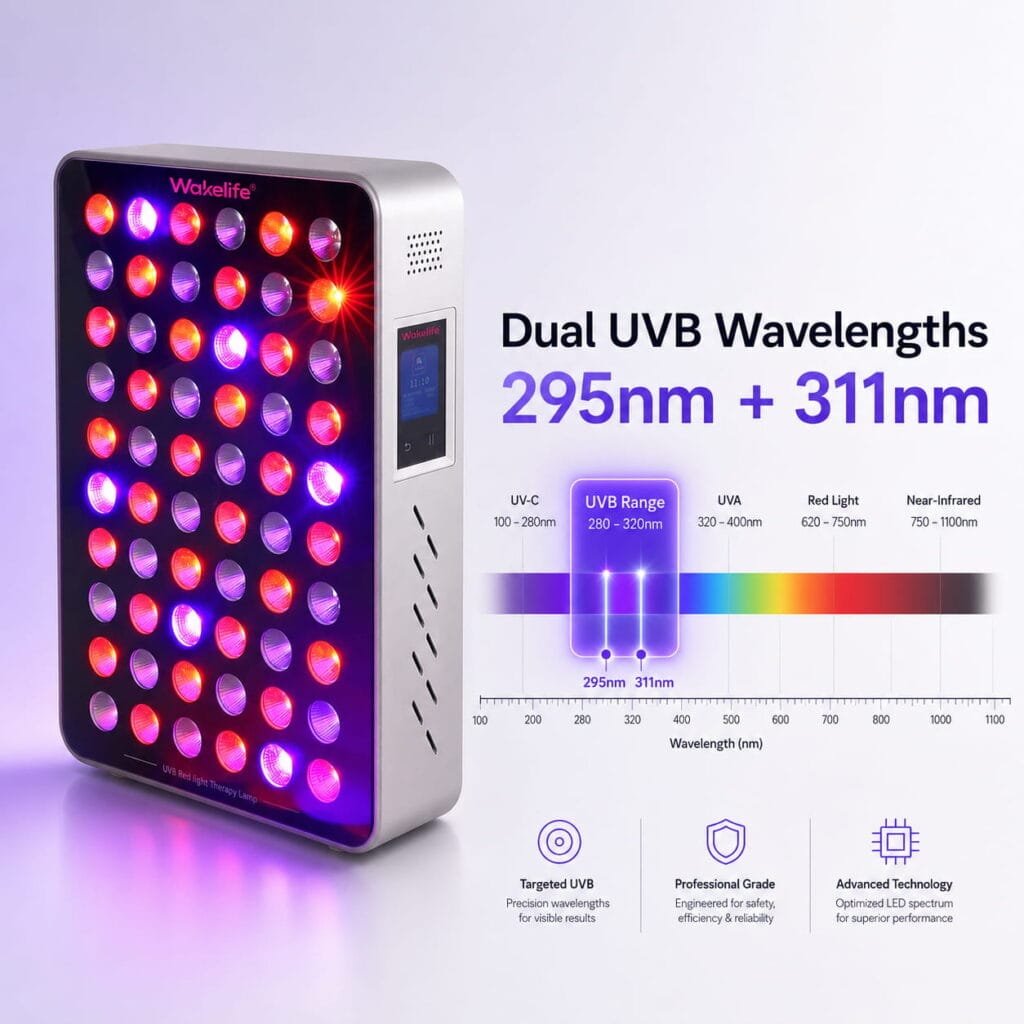
ТЛ;ДР (для покупателей) БК300 - это компактный потребительский вариант для загара UVB & светоэкспонирующая панель — не медицинский прибор. Его преимущество не в количестве 60 светодиодов.. Дело в том, что BK300 использует ту часть спектра, которую избегает большинство панелей — UVB. (295н.м. + 311н.м.) — и превращает это в продукт, который измеримый, дистанционный контроль, и честно объяснимо вашему конечному покупателю. Для тебя, это банальная история, которую конкуренты не могут быстро скопировать, плюс готовый контент-движок: 9 длины волн и 7 режимы.
1. Давайте проясним, что представляет собой это устройство, а что нет
BK300 — средство для загара UVB потребительского класса. / светоэкспозиционная панель. Он не диагностирует, обращаться, излечивать, или предотвратить любую болезнь, и никогда не должен продаваться таким образом.
Статус соответствия: а Серия BK прошла CE, FCC, и тестирование RoHS, он изготовлен под Iso 13485 + MDSAP системы, и BK300 включен в список устройств FDA. из учреждения, зарегистрированного FDA.
Одно различие, которое мы не будем размывать, и тебе тоже не следует: а список устройств регистрация устройства в FDA. Это нет «разрешение» или «одобрение» FDA. Само FDA недвусмысленно высказывается по этому вопросу — см. собственное руководство FDA по Регистрация и листинг устройств и 510(k) Предмаркетинговое уведомление. (В нашем учреждении есть отдельный 510(k) зазор — К250830 — но этот зазор принадлежит конкретному Светодиодная маска для лица, нет до BK300. Вы можете самостоятельно проверить любое разрешение в публичном доступе FDA. 510(k) база данных. Мы не позволим объединить этих двоих, и мы рекомендуем вам хранить их отдельно на своих страницах.)
Зачем начинать с этого? Потому что мы видели, как покупатели вставляли завышенные спецификации на Amazon или в магазин DTC и сразу сталкивались с проблемой соответствия платформе.. Мы предпочли бы сказать на одно предложение меньше, чем заставить вас нести ответственность за нашу формулировку..
2. Реальная история 311 нм: Заимствуйте знания, Не одобрение
311нм — узкополосный UVB — имеет длинную, документированная история в дерматологии, где узкополосные устройства UVB регулируются как медицинское оборудование. Это не маркетинговый фольклор; это хорошо индексируемая клиническая литература. А Обзор фототерапии Американской академии дерматологии это полезная отправная точка; для глубины, рецензируемый систематический обзор, такой как Almutawa et al., «Эффективность локализованной фототерапии и фотодинамической терапии при псориазе» (ПабМед PMC3047947) - иллюстрирует, насколько широко эта длина волны изучалась в контролируемых клинических условиях..
Честное различие: очищаются именно эти конкретные медицинские устройства, а не «длина волны 311 нм». BK300 излучает 311 нм, но это так нет унаследовать разрешение любого медицинского устройства. Мы цитируем этот фон по одной причине: чтобы показать это 311нм является глубоко изученным, предсказуемая длина волны — именно поэтому мы уверены, что превратим его в потребительский продукт.. Это нет утверждение о том, что BK300 оказывает терапевтический эффект.
Ценность для вас: вы можете честно сказать клиентам, что это «длина волны, которая была серьезно исследована» — заслуживающий доверия, доказательная история, которая никогда не нуждается в преувеличении эффективности, чтобы приземлиться.
3. Вы получаете право сказать «ров» только после того, как честно рассказали о риске
Большинство панелей избегают UVB, потому что, неконтролируемый, он жжется, а хроническое чрезмерное воздействие несет в себе реальный риск рака кожи. Мы не будем притворяться иначе. МАИР (агентство ВОЗ по исследованию рака) классифицирует устройства для загара, излучающие УФ-излучение, как Группа 1 канцерогены — категория наивысшего риска — документально подтверждена в Монографии МАИР, том 100D: Радиация. А УФ-излучение ВОЗ Q&А заявляет об этом ясно для широкой аудитории.
Наша логика: риск не устраняется предотвращением — он устраняется инженерным контролем. Как медицинский рентген: вредный неконтролируемый, обычный инструмент при управлении. Линия всегда контролируемый против. неконтролируемый.
Но «контролируемый» не может быть лозунгом, вот как именно это обеспечивает BK300:
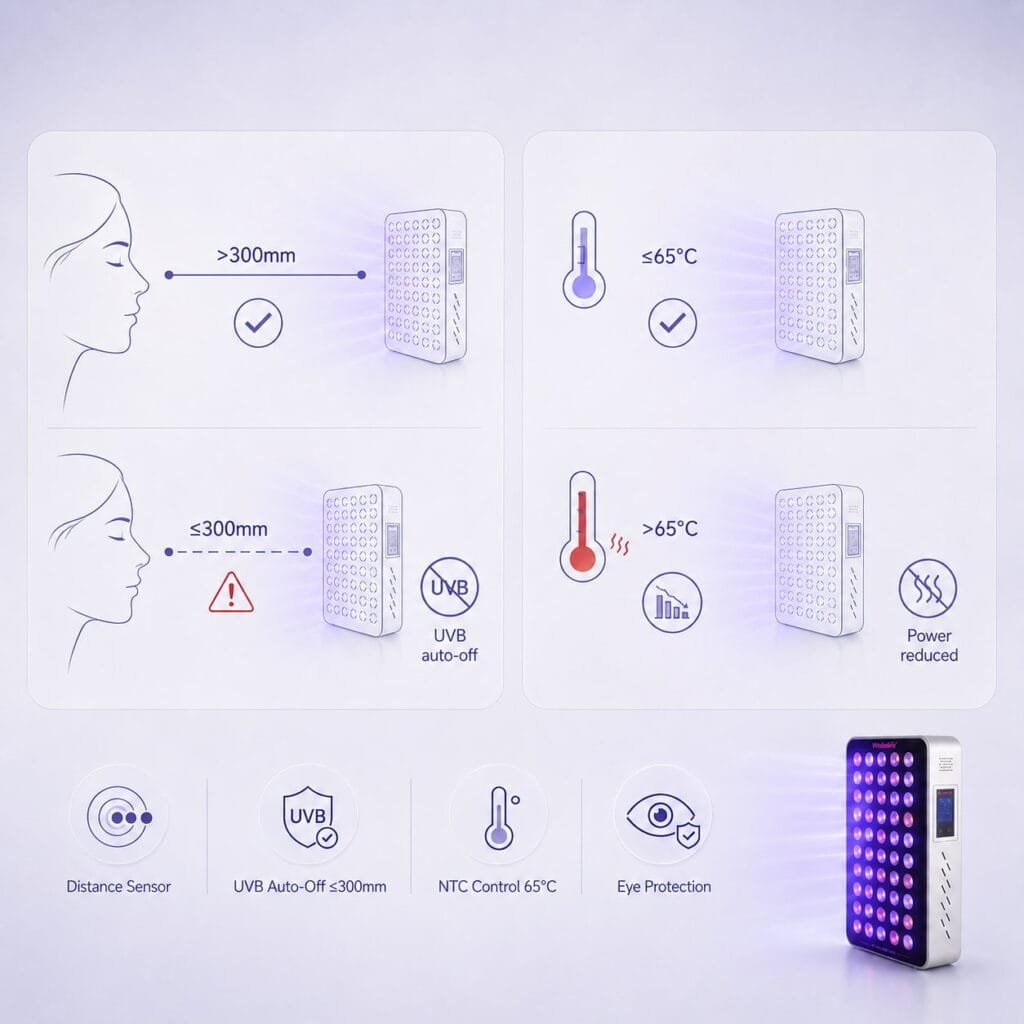
- Датчик расстояния + автоматическое отключение UVB: если пользователь находится внутри ≤300 мм (30см), звучит зуммер и канал UVB автоматически отключается. UVB выходит за пределы безопасного порога..
- Контроль температуры NTC: выше 65°С, устройство автоматически снижает мощность.
- Защитные очки в комплекте - соответствует принципам фотобиологической безопасности, изложенным в Рекомендации ICNIRP по пределам воздействия ультрафиолетового излучения, международно признанный справочник по пределам воздействия ультрафиолетового излучения, доступный в свободном доступе.
Вот что на самом деле означает фраза «инжиниринг осуществляет контроль, а не инструкция по эксплуатации»..
4. Примечание о том, как честно читать таблицу освещенности
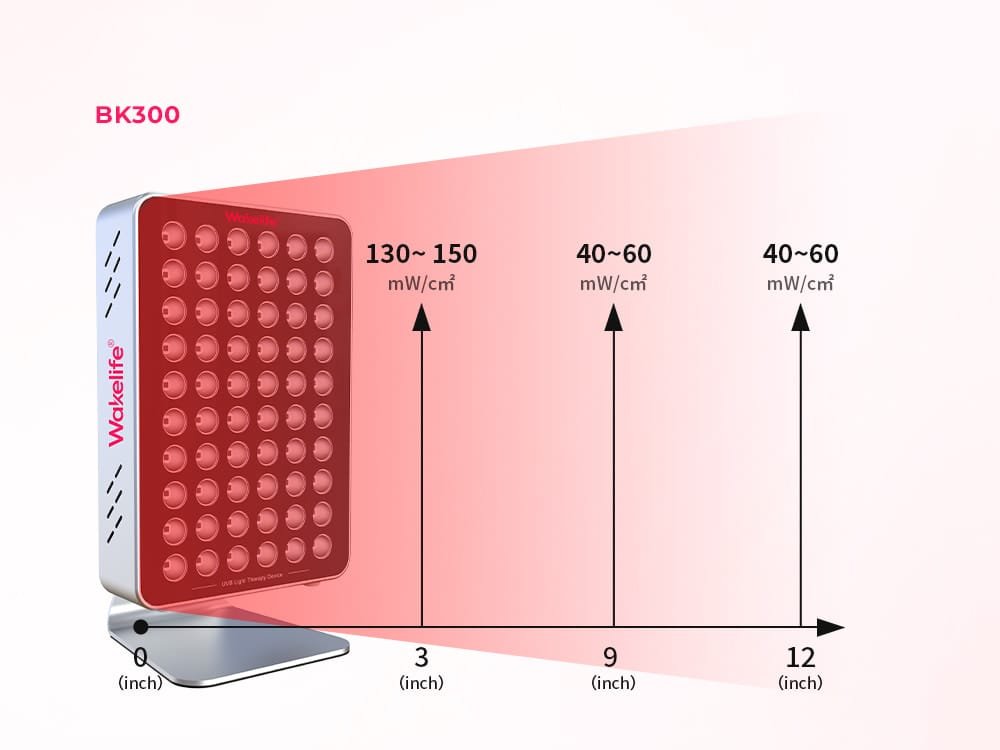
| Расстояние | Излучение |
|---|---|
| 3 дюйм (~76 мм) | 130–150 мВт/см² |
| 9 дюйм (~230 мм) | 40–60 мВт/см² |
| 12 дюйм (~300 мм) | 40–60 мВт/см² |
Вот что скрывает большинство фабричных копий, и мы раскроем это для вас: 3-дюймовая цифра является эталоном измерений, не рекомендуется использовать UVB. Потому что датчик расстояния отсекает UVB на расстоянии ≤300 мм., реальное использование загара UVB происходит на расстоянии 30 см+ - т.е., зона 40–60 мВт/см². Если маркетинг покупателя подразумевает «стой 3 в нескольких дюймах для быстрого загара,», что противоречит собственной логике безопасности устройства. Сообщите конечным пользователям безопасное расстояние использования, и дозиметрия остается честной.
5. 9 Длины волн = несколько повествований; 7 Режимы = календарь контента
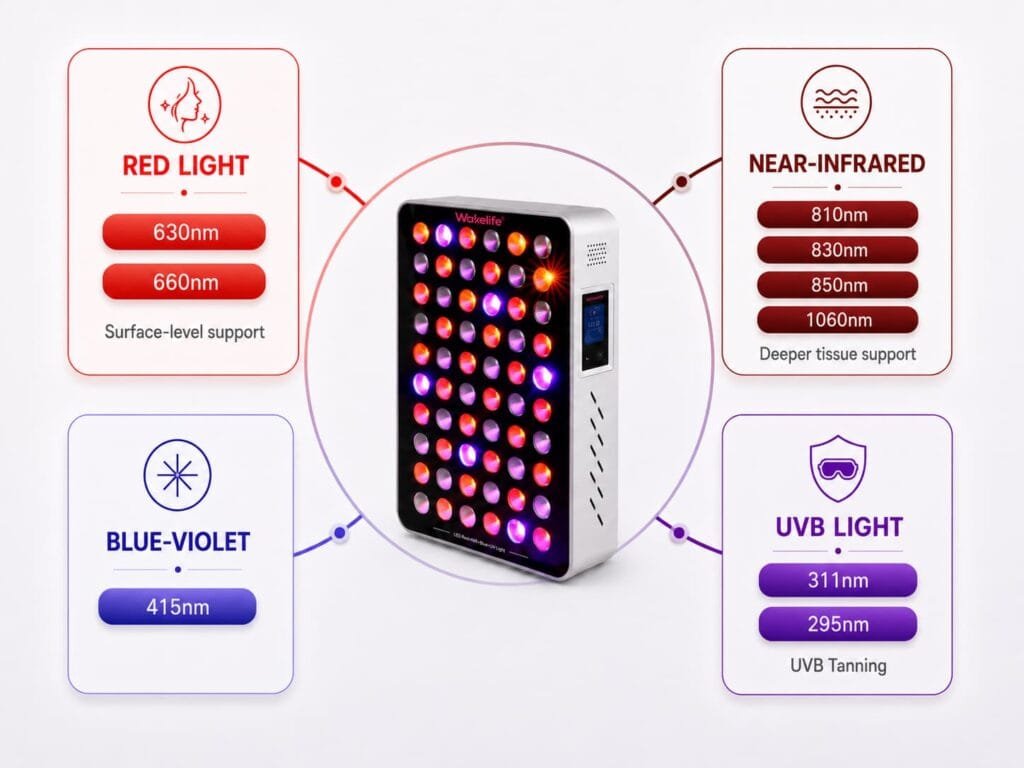
BK300 9 Длина волн являются 9 независимые ракурсы содержания; его 6 предустановка + 1 пользовательские режимы представляют собой готовый издательский ритм. «Нечего публиковать» после запуска — это настоящий страх DTC — у нас есть запасы боеприпасов..
Исправление, которое стоит внести в ваше сообщение: Загар BK300 не содержит UVA-лучей.. А 9 длины волн 295/311 нм (УФБ), 415н.м. (сине-фиолетовый), 630/660н.м. (красный), и 810/830/850/1060нм (БИК/ИК) — не УФА. Это важно, поскольку UVA — это полоса, наиболее тесно связанная с фотостарением и повреждением ДНК., как подробно описано Объяснение UVA/UVB от Skin Cancer Foundation. Итак, «УФ-излучение, Без UVA» на самом деле чище отличие от обычных соляриев. Не разбавляйте его, подразумевая UVA..
Об именовании режима, одна честная рекомендация: текущий список предустановок включает в себя «Здоровье костей M6» (295+311н.м.) и «Уменьшение М4». Цепочка УФВ → витамин D → кальций → кости многоступенчатая и индивидуально-зависимая.; сжатие его в название режима под названием «Здоровье костей» дает физиологическое обещание, которое ни вы, ни мы не можем сдержать — и оно распространяется вниз по течению, как твой комплаенс-риск. Мы бы предложили нейтральный, описательный имена:
| Режим | Длина волн | Предлагаемое нейтральное имя | Чего следует избегать |
|---|---|---|---|
| М1 | 295/311 + 630/660 + 810/830/850/1060 | «Загар (UVB-управляемый)» | «безопасный загар, нулевой риск» |
| М2 | 630/660 | "Кожа / Коллагеновая рутина» | «обратит старение вспять» |
| М3 | 810/830/850/1060 | "Восстановление / НИР-программа» | «лечит мышечные травмы» |
| М4 | 630/660 + 295 | «Успокаивающая легкая рутина» | «уменьшает воспаление» (переименовать из «Уменьшить») |
| М5 | 630/660 + 415 | «Рутина ухода за пятнами» | «лечит прыщи» |
| М6 | 295/311 | «Процедура воздействия UVB» | «Здоровье костей» |
| М7 | Обычай | "Обычай (OEM / ODM)» | — |
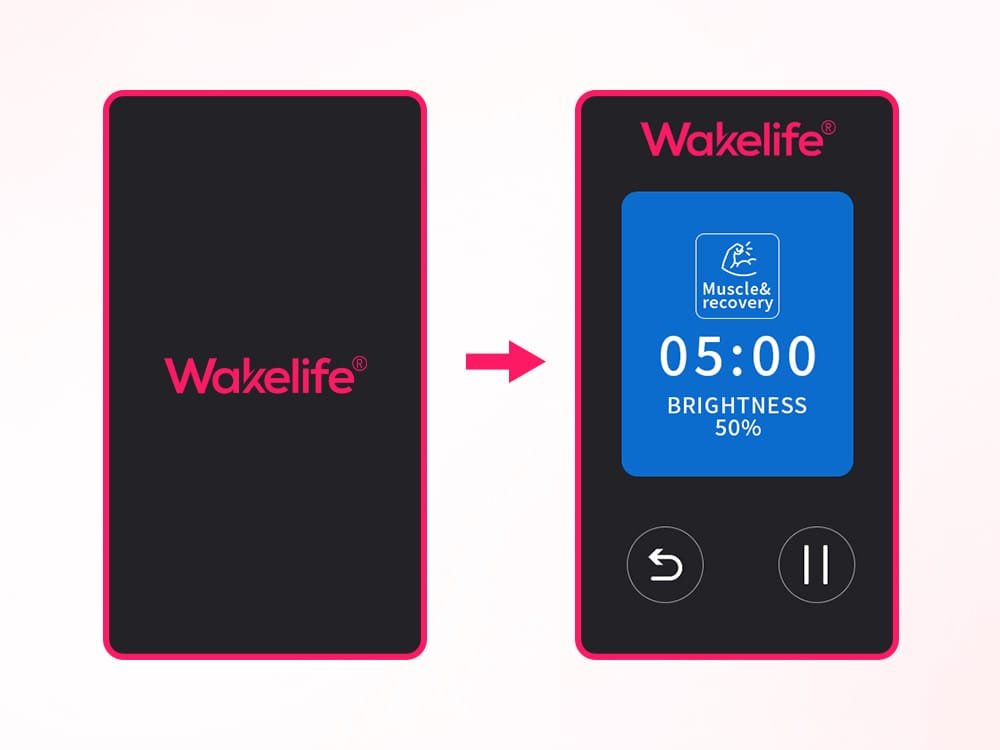
Те же режимы, та же самая сила продаж – просто стойте на честной позиции.
6. О «Загаре» и «Витамине Д»,«Мы утверждаем только то, что подтверждается доказательствами»
Загар: Меланогенез, индуцированный ультрафиолетом B, установлен фотобиологией. Биохимический путь — поглощение УФ-В, запускающее синтез меланина — описан в рецензируемой литературе.; увидеть Бреннера & Слух, «Защитная роль меланина от УФ-повреждений в коже человека» (ПабМед PMC2671032). Так загар как функция законно рекламировать. Но результаты варьируются в зависимости от типа кожи, расстояние, и продолжительность сеанса — именно поэтому визуальный элемент «до/после» правильно помечен «только для визуального ознакомления».; результаты могут отличаться». Сохраните это заявление об отказе от ответственности; он делает настоящую работу.
Витамин Д: полоса UVB около 290–315 нм — это часть солнечного спектра, ответственная за кожный синтез витамина D., как документально подтверждено Информационный бюллетень Управления пищевых добавок Национального института здравоохранения США по витамину D. Но помните о границе: «Этот диапазон длин волн стимулирует синтез в принципе" является нет «Это устройство производит значительное количество витамина D на безопасном расстоянии и в течение длительного времени». Поэтому наша формулировка такова: «обеспечивает воздействие в диапазоне 295 нм».,» нет «Дополняет витамин D». Разница в одном слове — это разница в уровне комплаенс-риска на порядок..
7. Краткий справочник технических характеристик
| Элемент | БК300 |
|---|---|
| Тип | Компактная панель для загара UVB. (целевое тело) |
| Светодиоды | 60 ПК (СМД 3535) |
| Длина волн | 295, 311, 415, 630, 660, 810, 830, 850, 1060н.м. (без UVA) |
| Режимы | 6 предустановка + 1 обычай |
| Отображать | 3.0″ Сенсорный ЖК-дисплей TFT |
| Яркость / Пульс / Таймер | 0–100% / 0–40 Гц / 5–20 мин. |
| Излучение | 130-150 @3 дюйма; 40–60 @9–12 дюймов (МВт/см²) |
| Безопасность | датчик расстояния (Автоматическое отключение UVB ≤300 мм), НТЦ ≤65°К, очки в комплекте |
| Размер | 320 × 220 × 65 мм |
| Напряжение / ИП | 100–240 В переменного тока / IP20 |
| Согласие | CE, FCC, Rohs; Iso 13485 + MDSAP; устройство FDA листинг |
8. Компактность — это компромисс, и мы скажем вам, сколько он стоит
Компактный формат BK300 означает меньшую стоимость перевозки, более дружелюбный минимальный заказ, и низкий пробный барьер — хорошо для открытия рынков и тестирования спроса.
Но компромисс, сказано прямо, чтобы проницательный покупатель не смог вас поймать: BK300 покрывает выбранную область тела., и его излучение ниже, чем у BK900 (130–150 против 160–180 мВт/см² при 3 дюймах; 40–60 против 60–80 @9–12 дюймов; 60 против 180 Светодиоды; 320 против 890мм высокий). Если вашему клиенту нужно покрытие половины тела или позиционирование студийного уровня, BK300 — это не ответ, а BK900.. Точная посадка BK300: начальный уровень, однозонное использование, меньшие помещения, и каналы, чувствительные к ценам и логистике.
Не уверен, что компактный формат BK300 является подходящей отправной точкой.? Посмотреть все панели для загара UVB серии BK для сравнения компактный, профессиональные форматы и форматы большой площади перед выбором модели.
9. Следующий шаг для покупателей
Расскажи нам три вещи: ваш целевой рынок, желаемое позиционирование (красота? загар? образ жизни?), и ожидаемый объем. Мы подберем подходящую модель BK, дать рекомендации по соблюдению требований, и предоставим вам развертываемую структуру контента. Мы отвечаем в течение 24 часы.
Список литературы
- НАС. FDA — Регистрация и листинг устройств
- НАС. FDA — Предмаркетинговое уведомление 510(k)
- НАС. FDA — 510(k) База данных предмаркетинговых уведомлений
- Американская академия дерматологии — Обзор фототерапии
- Альмутава и др.. — Эффективность локализованной фототерапии при псориазе, PMC3047947
- МАИР — Монографии Том 100D: Радиация (устройства для УФ-загара, Группа 1)
- ВОЗ - УФ-излучение Q&А
- ИКНИРП — Рекомендации по пределам воздействия ультрафиолетового излучения
- Фонд рака кожи — УФ-излучение (УФА/УФБ)
- Бреннер & Слух — Защитная роль меланина от повреждения ультрафиолетом, PMC2671032
- Управление пищевых добавок NIH — Витамин Д (Информационный бюллетень для медицинских работников)