TL;DR voor B2B-kopers
- Kies een leverancier van UVB-zonnepanelen via bedoeld gebruik, bestemmingsmarkt en exacte configuratie voordat u de output vergelijkt, prijs of MOQ.
- Een fabrieksregistratie, certificaat van kwaliteitssysteem, De CE-markering of het generieke testrapport bevestigt niet dat een voltooid model geautoriseerd of conform is in uw markt.
- Vereist een volledig spectrum, golflengte toleranties, bestralingskaarten met gedefinieerde omstandigheden, controle- en fouttests, brillen bewijs, labels en instructies – niet één mW/cm² getal.
- Behandel elke golflengte, bestuurder, firmware, sensor, huisvesting, toenemende of vooraf ingestelde verandering als mogelijke revalidatiegebeurtenis totdat de bewijsimpact is gedocumenteerd.
- Keur het project goed via drie poorten: configuratie en documentbeoordeling, monster testen, vervolgens bevriezing van de definitieve productie/bewijsmateriaal.
Begin met het beoogde gebruik en de markt, niet met de lijst met functies van een leverancier
De eerste inkoopbeslissing is wat het product zal zijn, waar het zal worden verkocht en wie het zal exploiteren. Die keuzes bepalen welk bewijsmateriaal ertoe doet en of een geciteerd platform überhaupt geschikt is voor het project.
Deze gids is voor merken, importeurs, distributeurs en professionele studio's die UVB-emitterende panelen evalueren voor commerciële bruiningsproducten of productconcepten met gecontroleerde lichtblootstelling. Het is geen persoonlijke bruiningsgids, een blootstellingsschema of een vervanging voor medisch of regelgevend advies. Ook wordt niet aangetoond dat een bruiningsproduct op de markt kan worden gebracht als smalband-UVB-fototherapieapparaat.
Voordat u een offerte aanvraagt, vul deze projectdefinitiekaart in:
| Beslissing | Definieer vóór de offerteaanvraag | Waarom het het project verandert |
|---|---|---|
| Beoogd gebruik | Commerciële zonnebank, concept van blootstelling aan licht zonder ziekte of gereguleerd medisch doel | Dezelfde golflengte kan onder verschillende bewijs- en markttrajecten vallen wanneer het beoogde gebruik verandert |
| Bestemmingsmarkt | Specifieke landen – niet ‘mondiaal’ | Classificatie, etiketten, normen, importeursrechten en -inzendingen verschillen per rechtsgebied |
| Verkoop- en gebruikskanaal | Thuisproduct, professionele studio, distributeurapparatuur of geïntegreerd systeem | Installatie, bediening door de operator, schoonmaak, de verantwoordelijkheden op het gebied van training en gebruikerstoegang veranderen |
| Exact productformaat | Compact paneel, langer paneel, gezoneerd paneel met groot oppervlak of montage op maat | Geometrie, montage, uitvoerdistributie en voorzienbaar misbruik zijn configuratiespecifiek |
| Geplande claims | Exacte website, verpakking, handleiding en de formulering van de distributeur | Claims helpen bij het definiëren van het beoogde gebruik en kunnen de regelgevingsroute veranderen |
| Verantwoordelijke partijen | Legale fabrikant, merk eigenaar, importeur, distributeur en studio-exploitant | Documenten en post-market-taken kunnen niet op basis van veronderstelling worden toegewezen |
Als een leverancier de golflengte wil bespreken, macht en prijs voordat deze zes velden zijn gedefinieerd, het citaat beschrijft hardware - niet een gecontroleerd marktproject.
Wat moet een leverancier van UVB-bruiningspanelen bewijzen??
Een gekwalificeerde leverancier moet in staat zijn zes bewijslagen te scheiden en elke laag toe te wijzen aan het product dat u koopt. Een lange certificaatlijst is minder nuttig dan een korte, traceerbare bestandsindex gekoppeld aan het uiteindelijke model en de uiteindelijke configuratie.
| Bewijslaag | Wat het kan laten zien | Wat het niet laat zien | Wat te vragen |
|---|---|---|---|
| Markttraject of autorisatie | Classificatie, dwang, aangifte of legale route voor een gedefinieerde markt en beoogd gebruik | Prestaties buiten het bereik of de autorisatie van een ander model | Officieel record, beslissing of verklaring in kaart gebracht naar het exacte model, houder en vorderingen |
| Productveiligheid, straling, elektrische en EMC-testen | Hoe een benoemde configuratie presteerde onder vastgestelde normen en acceptatiecriteria | Klinisch voordeel of automatische autorisatie op elke markt | Volledige rapporten ter identificatie van het monster, configuratie, laboratorium, methoden, data en resultaten |
| Optische testen | Spectrum, output en ruimtelijke verdeling onder gedefinieerde bedrijfsomstandigheden | Een universeel veilige dosis, blootstellingsschema of bruiningsresultaat | Spectraal rapport, stralingskaart, rauwe omstandigheden, kalibratie en onzekerheid |
| Kwaliteitsmanagementsysteem | Geauditeerde processen bij een genoemde organisatie/locatie en binnen een gedefinieerd bereik | Goedkeuring of conformiteit van het eindproduct | Huidig certificaat, houder, plaats, domein, uitgever en geldigheidsdata |
| Faciliteitregistratie en fabrieksachtergrond | Identiteit van de faciliteit of productiecapaciteit | Productgoedkeuring, goedkeuring of naleving van het exacte model | Officieel faciliteitsdossier plus afzonderlijk bewijs op productniveau |
| Verkooppagina's, badges en brochures | Wat een leverancier momenteel zegt, is beschikbaar | Onafhankelijke verificatie | Het genummerde record, rapport, verklaring of certificaat achter elke verklaring |
De standaardkoperregel is eenvoudig: als een document niet aan het definitieve model kan worden gekoppeld, configuratie, beoogde gebruik en bestemmingsmarkt, behandel het als achtergrond – en projecteer geen goedkeuringsbewijs.
Hoe vergrendelt u de exacte configuratie voordat u gaat testen??
Geef elk voorbeeld en document dezelfde configuratie-identiteit. Zonder configuratiecontrole, een technisch indrukwekkend rapport zou een andere LED-array kunnen beschrijven, controller of firmware van de eenheid die in productie gaat.
Uw gecontroleerde configuratie zou op zijn minst moeten identificeren:
- modelnaam en gedateerde specificatie of stuklijst-/configuratie-ID;
- LED-pakket arrangement, kanalen met nominale golflengte, golflengtebakken of toleranties;
- configuratie van driver en voeding;
- firmware- en gebruikersinterfacerevisie;
- vooraf ingestelde namen, selecteerbare kanalen, helderheid, pols, timer en zonelogica;
- nabijheid, temperatuur- en andere veiligheidscontrole-implementatie;
- huisvesting, koeling, stellage, hangende of aan de muur gemonteerde hardware;
- model en hoeveelheid veiligheidsbril;
- etiketten, handmatig, verpakking, talen en bestemmingsmarkten;
- private label merk, wettelijke informatie over de fabrikant en importeur, indien van toepassing.
Classificeer vervolgens elke aangevraagde wijziging:
| Type wijzigen | Voorbeeld | Minimale sourcingreactie |
|---|---|---|
| Alleen merk | Logo, kleur, kartonnen kunstwerk | Controleer de traceerbaarheid, etiketten, aangiften en verpakkingsbestanden |
| Instructie/UI | Taal, vooraf ingestelde naam, waarschuwings- of bedieningsscherm | Beoordeel het signaal voor bedoeld gebruik, bruikbaarheid, impact op software en labels |
| Optisch/elektrisch | Golflengte, LED-indeling, bestuurder, uitgang of voeding | Optisch opnieuw openen, thermisch, elektrische/EMC en beoordeling van marktdocumenten |
| Veiligheid/controle | Sensor, timer, thermische drempel, interlock- of firmwarelogica | Heropen de risicoanalyse en validatie van normale/foutcondities |
| Mechanisch | Huisvesting, stellage, muurbevestiging, koelpad of optisch venster | Mechanisch opnieuw openen, thermisch, opschoning en validatie van outputdistributie |
Maatwerk is niet automatisch een probleem. Ongedocumenteerd maatwerk is dat wel. In de offerte dient vermeld te worden welke administratie van toepassing blijft, waarvoor een wijziging of nieuwe test nodig is, wie dat werk uitvoert en welke revisie de productiebasislijn wordt.
Welke optische gegevens nuttig zijn voor een aankoopbeslissing?
Eén bestralingssterkte is niet genoeg om de UVB-output te definiëren, dekking of een bruikbaar protocol. De koper moet weten wat er is gemeten, waar, onder welke configuratie en hoeveel de output varieert binnen het beoogde gebied.
Voor elke gerapporteerde waarde, vragen:
- Is het alleen UVB-straling of een gecombineerde breedbanduitvoer van alle actieve golflengten??
- Wat laat het volledige spectrum zien, inclusief nominale pieken, toleranties en relatieve kanaaluitvoer?
- Welke modus, helderheid, pols, zone- en firmwarerevisie waren actief?
- Wat waren de afstanden, oriëntatie, meetvlak, opwarming en thermische omstandigheden?
- Welk instrument, detectoropening, kalibratie en onzekerheid werden gebruikt?
- Is het aantal een piek?, centrum, minimum of ruimtelijk gemiddelde?
- Is er een volledige kaart en een acceptatielimiet voor uniformiteit??
- Hoeveel variatie er optreedt tussen meerdere eenheden of productiebatches?
- Zijn ongewogen bestralingssterkte en eventueel van toepassing zijnd gevaar- of erytheem-gewogen waarden duidelijk gescheiden?
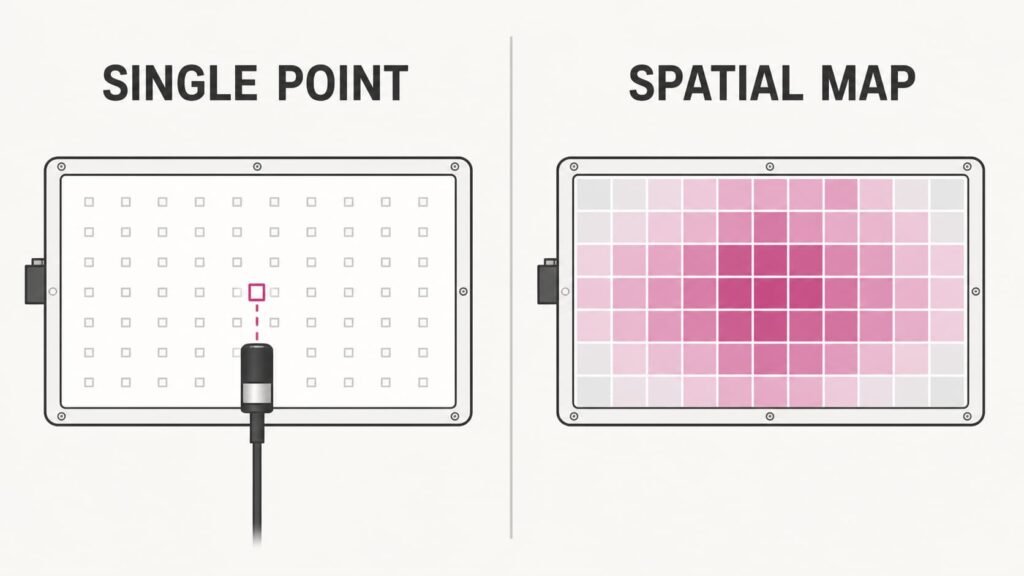
Alleen concept – geen testgegevens. Eén enkel punt kan geen ruimtelijke dekking of uniformiteit tot stand brengen; bekijk een kaart met gedefinieerde omstandigheden die is gekoppeld aan de exacte configuratie.
Nominaal elektrisch ingangsvermogen, Het aantal LED-pakketten en een breedbandwaarde in het midden bepalen de UVB-straling niet. Voor het berekenen van een UVB-dosis zou bovendien een gedefinieerde meetpositie en -configuratie nodig zijn, een passende spectrale of UVB-specifieke meting en een belichtingstijd. Dekking en uniformiteit zijn afzonderlijke vragen die een ruimtelijke mapping vereisen; deze gids biedt geen persoonlijk belichtingsschema.
Een bruikbaar optisch rapport zou daarom moeten aansluiten:
- de configuratie-ID;
- actieve kanalen en controlestatus;
- het volledige spectrum en de meetmethode;
- de ruimtelijke outputkaart en onzekerheid; En
- acceptatielimieten voor het monster en de productie.
Beperk elke conclusie tot het daadwerkelijk geleverde bewijsmateriaal. Als de voorbeeldidentiteit, methode of kalibratie is onduidelijk, Noem de waarde niet onafhankelijk geverifieerd. Een puntmeting zonder ruimtelijke kaart zorgt niet voor dekking of uniformiteit, terwijl een getest monster zonder gegevens over meerdere eenheden en productieacceptatielimieten geen productieconsistentie tot stand brengt.
Welke veiligheidscontroles een exacte modelverificatie nodig hebben?
Veiligheidsvoorzieningen hebben alleen betekenis als ze worden geactiveerd, antwoord, foutgedrag en labeling zijn getest op de voltooide configuratie. De aanwezigheid van een timer, sensor of bril vormt geen algemene veiligheidsgarantie.
| Controlegebied | Controleer op het exacte model | Gemeenschappelijke rode vlag |
|---|---|---|
| Nabijheids- of afstandscontrole | Detectieveld, reactietijd, lichaams-/objectposities, logica opnieuw opstarten, bypass- en enkelfoutgedrag | Eén afstandsdrempel verschijnt alleen in de verkoopkopie |
| Timer en handmatige stop | Nauwkeurigheid, logica voor maximale instelling, beëindiging, reset- en stroomuitvalgedrag | Instelbare minuten worden weergegeven als een belichtingsschema |
| Thermische controle | In het slechtste geval, herhaalde sessies, omgevings-/installatielimieten, sensorlocatie en foutgedrag | Er wordt één interne grenswaarde vermeld zonder testrecord |
| Beschermende brillen | Exact model, hoeveelheid, spectrale transmissie, instructies en vervangingsspecificatie | Generieke brillen hebben geen spectrale gegevens |
| Mechanische installatie | Omvallen, laden, bevestigingsmiddelen, muur substraat, ventilatie en serviceruimte | Een foto van een standaard of wandmontage geldt als installatiebewijs |
| Software en gebruikersinterface | Herziening, verificatie/validatie, gevarenanalyse, voorinstellingen en voorzienbaar misbruik | Een therapeutisch klinkende voorinstelling wordt behandeld als een bewezen resultaat |
| Reiniging en desinfectie | Materiaalcompatibiliteit, gevalideerde methode, workflow en bijlagelimieten voor gedeeld gebruik | IP20 of een veegschoonverklaring wordt een claim op waterbestendigheid |
| Etiketten en instructies | Waarschuwingen, contra-indicaties, operationele positie, schema, schoonmaak en taal van gebruiker/operator | Website, etiket en handleiding beschrijven verschillende beoogde toepassingen |
UV-uitstralende bruiningsapparatuur brengt een vastgesteld risico op categorieniveau met zich mee. De Het Internationaal Agentschap voor Kankeronderzoek classificeert UV-uitstralende bruiningsapparaten als kankerverwekkend voor de mens. Die van de Europese Commissie SCHEER-advies over zonnebanken concludeerde dat UV-straling van zonnebanken huidmelanoom en plaveiselcelcarcinoom veroorzaakt en dat er geen veilige blootstellingslimiet kan worden vastgesteld voor de kankerverwekkende effecten ervan.
Deze conclusies bewijzen niet dat elk panel een identieke output of hetzelfde risico heeft. Ze stellen wel vast waarom claims als ‘risicovrij’ worden geproduceerd,“Veilig bruinen” of “veilig omdat het een sensor heeft” zijn geen acceptabele alternatieven voor techniek, etikettering en marktonderzoek.
Wat verandert er als de doelmarkt de Verenigde Staten is??
Voor de VS. bruiningsproducten, het project moet zich zowel op de laag van medische hulpmiddelen als op de laag van elektronische straling richten. Het vermijden van ziekteclaims neemt op zichzelf de verplichtingen inzake zonnelampproducten niet weg.
De FDA definieert een zonnelampproduct als een apparaat dat bedoeld is om het menselijk lichaam te bestralen met daartussen ultraviolette straling 200 En 400 nm om bruining te veroorzaken. Zijn overzicht zonnelampen beschrijft deze producten als zowel medische apparaten als elektronische producten, inclusief draagbare huis- en tafelmodellen, niet alleen bedden en cabines.
Die van de FDA productclassificatierecord afgestemd op productcode REF identificeert het generieke type zonnebank hieronder 21 CFR 878.4635. De huidige regelgeving classificeert zonnelampproducten als Klasse II met speciale controles, en de FDA identificeert 510(k) als premarket-route voor deze categorie. De speciale controles in 21 CFR 878.4635 adresuitvoer en het testen van veiligheidsfuncties, mechanisch/software/biocompatibiliteit/elektrisch/EMC-bewijs, reinigingsinstructies en specifieke waarschuwingen.
Sectie 878.4635 wordt vertegenwoordigd door meer dan één FDA-productcode. Huidige records omvatten REF voor een zonnebank of ander platform, REH voor een tafelbladsysteem dat primair bedoeld is om het gezicht te bruinen, En SGZ voor een UV-lamp of lichtpaneel waarvan het geregistreerde beoogde gebruik de productie van vitamine D is. Deze voorbeelden classificeren geen BK-product. De toepasselijke code moet worden bepaald op basis van de uiteindelijke configuratie en het beoogde gebruik, vervolgens geverifieerd aan de hand van het exacte FDA-record; het kan niet alleen uit de paneelvorm of de golflengte worden afgeleid.
Afzonderlijk, 21 CFR 1040.20 bevat elektronische stralingsprestaties en etiketteringsvereisten die betrekking hebben op zaken als timergedrag, handmatige beëindiging, spectrale transmissie van veiligheidsbrillen, waarschuwingsetiketten, blootstellingsposities en -schema's, instructies en testomstandigheden. FDA is gescheiden stralingsemitterend elektronisch productrecord voor REF identificeert optische straling, een vereist productrapport, jaarverslaglegging en 21 CFR 1040.20 als de toepasselijke prestatienorm voor die REF-categorie. Dit illustreert het parallelle elektronische stralingsrecord; het stelt niet de juiste productcode of rapportagestatus voor een BK-model vast.
Dit levert vier praktische kopersregels op:
- Beschouw de registratie van een vestiging of de vermelding van apparaten niet als toestemming. Het zijn verschillende records met verschillende bereiken.
- Vraag naar de exacte 510(k) registratie- en model-/etiketteringsrelatie wanneer een leverancier beweert dat de VS. goedkeuring. Een K-nummer voor een andere productcategorie of model gaat niet over.
- Behandel rapporten over stralingsproducten en prestatiebewijs als een afzonderlijke verificatielaag. Ze vervangen de premarket-beoordeling niet, en evaluatie vóór het in de handel brengen vervangt niet de toepasselijke heffingen op elektronische straling.
- Beoordeel verkoopwebpagina's als onderdeel van labelwerkzaamheden. Sectie 878.4635 breidt gespecificeerde contra-indicaties en waarschuwingsverklaringen uit buiten de handleiding naar op consumenten gerichte catalogi, specificatiebladen, beschrijvende brochures en te koop aangeboden webpagina's.
Vanaf augustus 12, 2026, Wakelife bevestigt dat er geen modelspecifieke FDA is 510(k) is beschikbaar voor BK300, BK900 of BK1800. Kopers moeten het laatste FDA-record en elk geclaimd K-nummer verifiëren voordat ze op deze status vertrouwen. Deze modellen moeten daarom worden geëvalueerd als ontwikkelingsplatforms en niet worden gepresenteerd als goedgekeurde Amerikaanse modellen. bruiningsapparaten. Een Amerikaanse. project heeft vóór de lancering een schriftelijk regelgevingsplan nodig, inclusief wie eigenaar is van de inzendingen, rapporten, labels en hervalidatie na private label of technische wijzigingen.
Wat verandert er voor een EU- of EER-project??
Voor EU/EER-inkoop, reduceer het project niet tot het behalen van een ‘CE-certificaat’. Identificeer de toepasselijke wetgeving, de verantwoordelijke marktdeelnemers en de exacte technische documentatie ter ondersteuning van het eindproduct.
De Europese Commissie legt uit dat de fabrikant verantwoordelijk is voor de conformiteitsbeoordeling, het technisch dossier, de EU-conformiteitsverklaring en het aanbrengen van de CE-markering. Zijn officiële CE-markeringsrichtlijnen stelt ook dat CE-markering geen goedkeuring van de productveiligheid door de EU of een andere autoriteit is.
De Laagspanningsrichtlijn 2014/35/EU is van toepassing op elektrische apparatuur die is ontworpen voor gebruik met een nominale spanning tussen 50 En 1,000 V AC of tussen 75 En 1,500 In gelijkstroom, onderworpen aan de uitsluitingen in bijlage II. Deze reikwijdte moet worden vergeleken met het eindproduct en mag niet worden aangenomen voor elk UVB-paneel of laagspanningscomponent. Waar de richtlijn van toepassing is, de technische documentatie moet het mogelijk maken de conformiteit te beoordelen en de relevante eisen te omvatten, ontwerp/productie-informatie, normen toegepast, onderzoeken of berekeningen en testrapporten. Importeurs hebben ook de plicht om te verifiëren dat de conformiteitsprocedure en de vereiste documentatie aanwezig zijn voordat het product op de markt wordt gebracht.
Private labeling kan ook de juridische rol veranderen. Onder artikel 10, een importeur of distributeur die onder eigen naam of merk elektrische apparatuur op de markt brengt, of wijzigt deze op een manier die de conformiteit kan beïnvloeden, wordt behandeld als fabrikant voor de verplichtingen van de richtlijn. Die van de Europese Commissie richtlijnen voor importeurs en distributeurs legt dezelfde verantwoordelijkheidsgrens uit.
Voor toepasselijke bruiningsapparaten, standaarden moeten per versie en markt worden gecontroleerd:
- IEC 60335-2-27:2024 is de zevende internationale editie voor apparaten met optische stralingszenders voor blootstelling van de huid; apparaten voor medische doeleinden en ander UV-gebruik dan bruinen zijn uitgesloten.
- Zoals gecontroleerd in augustus 12, 2026, de huidige geconsolideerde record op het gebied van geharmoniseerde EU-normen lijsten NL 60335-2-27:2013 met A1:2020, A2:2020 en AC:2021-11 met een beperking.
- Uitvoeringsbesluit van de Commissie (EU) 2025/1457 beperkt de beperking tot de Noot in clausule 6.Z101 en Noot 101 in bijlage BB, clausule BB.2. Deze aantekeningen vestigen geen vermoeden van overeenstemming met de overeenkomstige veiligheidsdoelstellingen van de Laagspanningsrichtlijn; het besluit neemt het vermoeden voor de andere gedekte bepalingen van de norm als geheel niet weg.
De conclusie van de bron is niet dat één editie universeel ‘het juiste certificaat’ is. Het is dat de koper de conformiteitsroute moet aanvragen, toepasselijke wetgeving, NL/nationale edities en beperkingen gebruikt voor de exacte configuratie, samen met de DoC en het ondersteunende technische dossier. De publicatie van een nieuwere IEC-editie alleen bewijst geen nationale adoptie of exacte modelconformiteit.
Wat moet een professionele studio valideren buiten het apparaatbestand??
Een studioaankoop voegt een besturingssysteem rond het product toe. Het apparaatbewijs en de operationele controles van de locatie moeten op elkaar aansluiten.
Een professionele koper moet dit definiëren:
- vast, draagbaar, hangende of wandmontage en toegangscontrole;
- elektrische voeding, ventilatie, servicevrijstelling en montageverantwoordelijkheid;
- opleiding van het personeel, gebruikersscreening, oogbescherming en noodstopprocedure;
- reiniging of desinfectie tussen gebruikers en materiaalcompatibiliteit;
- sessie-/setuprecords, klachten, incidenten en escalatieverantwoordelijkheden;
- lokale leeftijd/toegang, faciliteit, beroeps- en verzekeringsvereisten;
- wie presets kan wijzigen, firmware, afstand, zone of andere bedrijfsparameters.
Deze sectie is geen blootstellingsprotocol. De toegestane gebruikerspopulatie, schema en bedieningsinstructies moeten afkomstig zijn van het gevalideerde exacte product en de toepasselijke markt- en faciliteitsvereisten.
Welke claims van leveranciers de beoordeling moeten stoppen of escaleren?
Gebruik rode vlaggen om tijd te besparen voordat u over de prijs onderhandelt. Stop of escaleer het project bij een leverancier:
- maakt gebruik van faciliteitsregistratie, apparaatlijst, ISO/MDSAP of een ander product 510(k) als exacte modelautorisatie;
- zegt dat een ‘niet-medisch’ label automatisch de VS verwijdert. zonnelampverplichtingen ondanks een bedoeld bruiningsgebruik;
- biedt alleen certificeringslogo's, verkooppagina's of een enkel breedbandinstralingsnummer;
- kan de stuklijst/configuratie en firmware/UI-revisie van het voorbeeld niet identificeren;
- noemt het product veilig omdat het een timer bevat, afstandssensor of bril;
- belooft golflengte, bestuurder, firmware, sensor- of behuizingswijzigingen zonder revalidatieplan;
- kan declaraties niet in kaart brengen, testrapporten, labels en instructies voor de private-label-configuratie;
- verandert vooraf ingestelde labels in ziekten, gezondheid van de botten, collageen, acne of spierherstelresultaten;
- claimt “mondiale naleving” zonder de markt te scheiden, model, beoogd gebruik en documentomvang.
Een goed antwoord van een leverancier hoeft niet te beloven dat elk bestand al bestaat. Het moet identificeren wat beschikbaar is, Wat is er vermist, wat er ontwikkeld moet worden, wie eigenaar is van elke actie en welke claims niet beschikbaar blijven totdat het werk is voltooid.
Hoe moet de goedkeuring van monsters worden beveiligd??
Gebruik drie goedkeuringspoorten, zodat een sterk uitziend monster het ontbrekende bewijsmateriaal niet kan omzeilen.
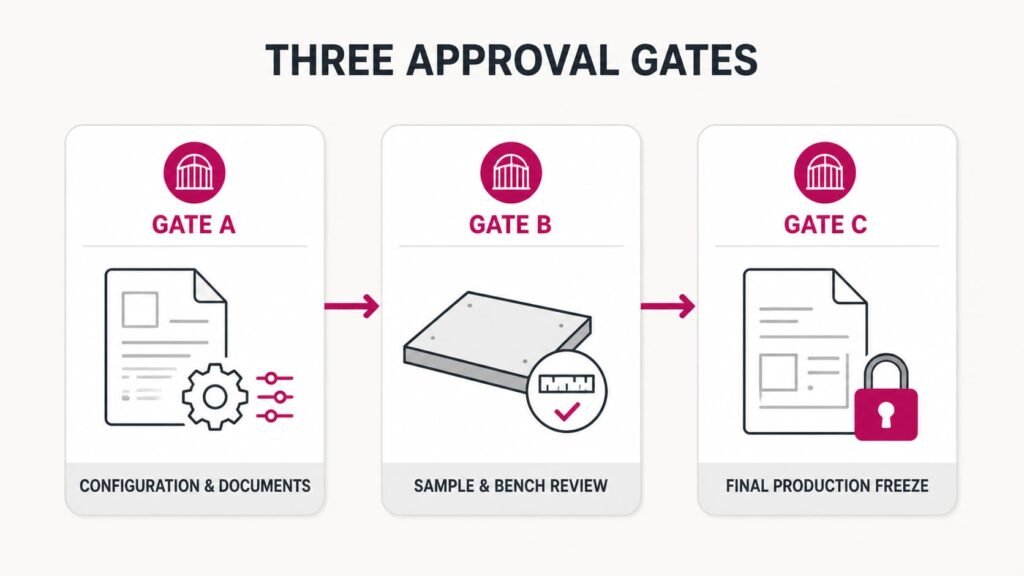
Inkoopworkflow – geen goedkeuringstraject van regelgevende instanties. Elke poort bestuurt een andere inkoopbeslissing; geen enkele regelt zelfstandig een marktvergunning.
Poort A: Voordat u het monster bestelt
Vereisen:
- het voltooide projectoverzicht;
- een gedateerde standaardconfiguratie en lijst met aangevraagde wijzigingen;
- een voorlopige bewijsindex met model-/configuratiebereik;
- een lijst met markt- en claimlacunes;
- eigendom, timing en kosten voor vereiste validatie of inzendingen.
Als u Gate A passeert, weet de koper wat het monster vertegenwoordigt. Het product wordt niet goedgekeurd voor verkoop.
Poort B: Voorbeeld- en benchbeoordeling
Rekening:
- identiteit tegen het configuratierecord;
- spectrum, uitvoertoewijzing met gedefinieerde omstandigheden en eenheidsvariatie;
- sensor, timer, handmatige stop, thermisch en softwaregedrag onder normale en voorzienbare fouten/misbruikomstandigheden;
- montage, koeling, reiniging en mechanische vereisten;
- brillen, etiketten, waarschuwingen, contra-indicaties en instructies;
- inconsistenties tussen de fysieke eenheid, rapport, verkooppagina en handleiding.
Het passeren van Gate B bevestigt of het monster voldoet aan de overeengekomen technische acceptatiecriteria. Het sluit marktspecifieke documentatie niet automatisch af.
Poort C: Vóór pilot of massaproductie
Bevriezen:
- BOM, firmware, gebruikersinterface, etiketten, handmatig, accessoires en verpakking;
- eindrapporten, verklaringen, inzendingen en onopgeloste marktacties;
- productieacceptatielimieten en batchrecords;
- wijzigingsmelding, regels voor hervalidatie en documentupdate;
- garantie, klacht, verantwoordelijkheden voor incidenten en corrigerende maatregelen.
Pas na Gate C mag een koper de opgegeven configuratie als het beoogde productieproduct beschouwen.
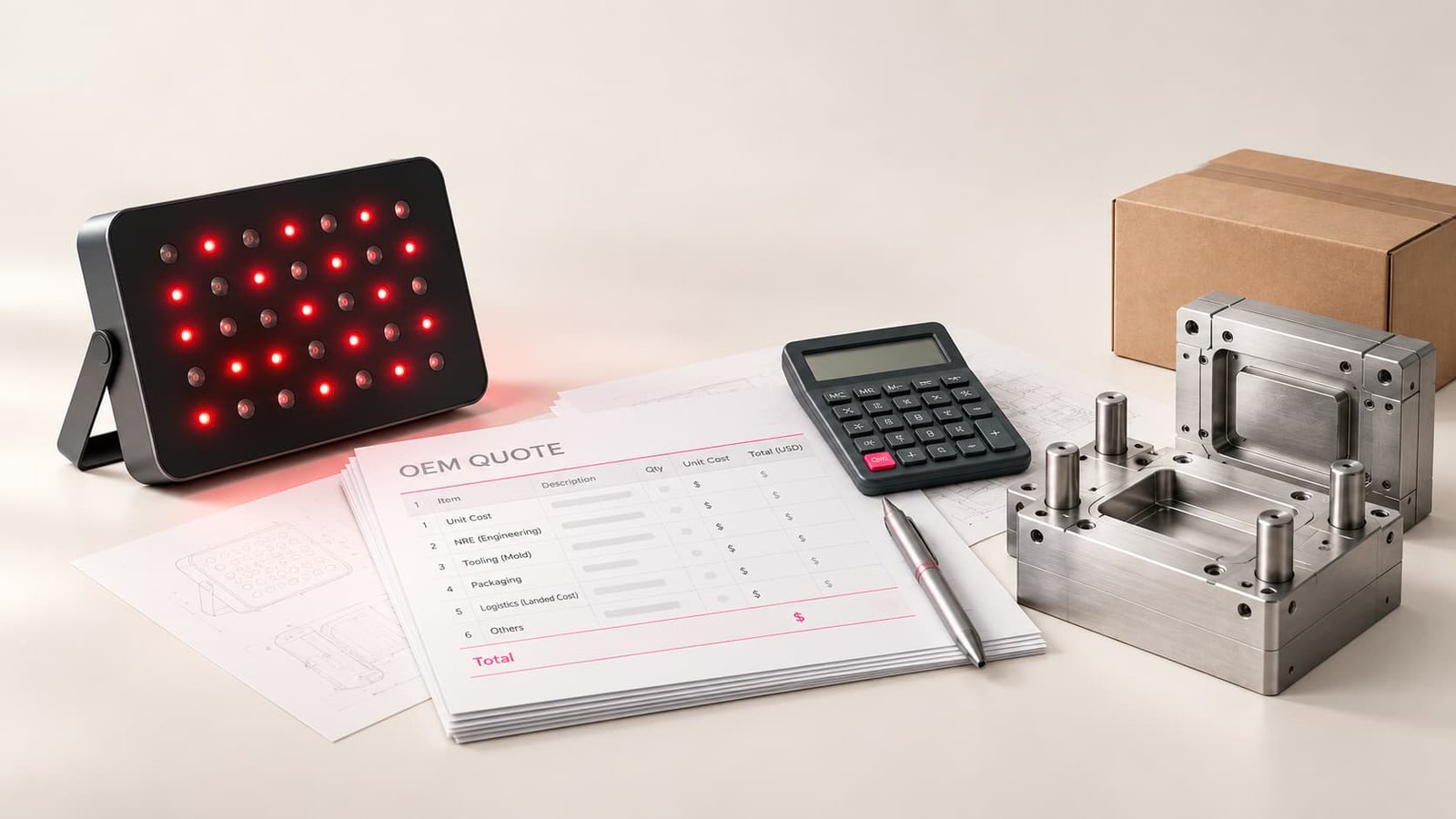
Wat moet er in een offerteaanvraag voor UVB-bruiningspanelen staan??
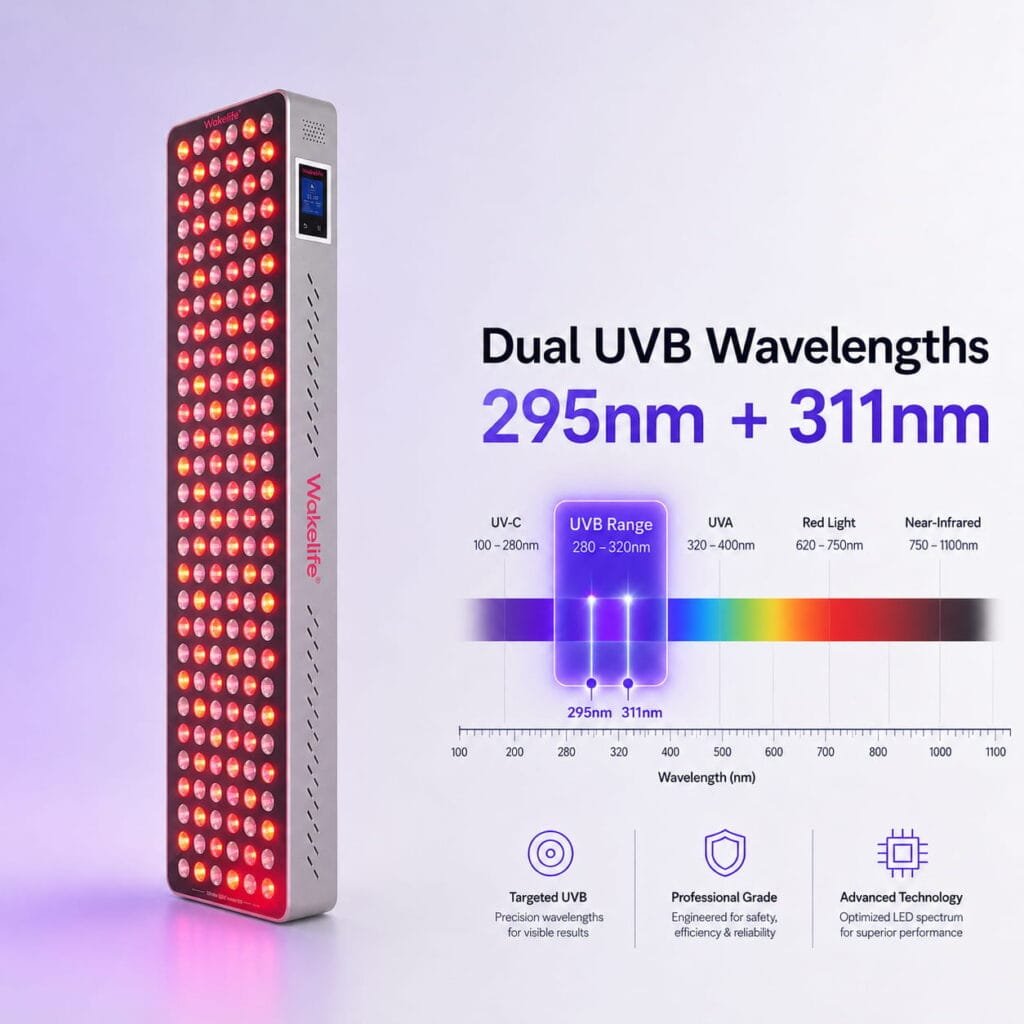
Een nuttige offerteaanvraag definieert het project voordat de commerciële aanbieding wordt aangevraagd. Kopieer deze checklist naar de aanvraag:
- Bestemmingslanden en geplande verkoopkanalen.
- Beoogd gebruik en exacte geplande claims, het scheiden van commercieel bruinen van elke gereguleerde medische route.
- Thuis, professionele studio of andere gebruiksomgeving, inclusief het operator/gebruikersmodel.
- Basismodel en gedateerde standaardconfiguratie op te geven.
- Vereiste golflengten, toleranties, kanaalverhoudingen, modi, helderheid, pols, timer en zonelogica.
- Vereist spectrum, straling in kaart brengen, meetomstandigheden, onzekerheid en productieacceptatiecriteria.
- Sensor, timer, handmatig stoppen, thermisch, software, mechanisch en fouttestbewijs.
- Model met veiligheidsbril, spectrale transmissiegegevens, hoeveelheid en vervangingsspecificatie.
- Vereiste waarschuwingen, contra-indicaties, instructies, reiniging/desinfectie en taalversies.
- Installatieroute, hardware voor standaard/ophanging/wandmontage, spanning/stekker en servicespeling.
- Exacte marktinzendingen, verklaringen, technische dossierrapporten en verantwoordelijke juridische entiteiten.
- Logo, gebruikersinterface, handmatig, verpakkingen en private-labelwijzigingen, met hun revalidatie-impact.
- Monster- en pilothoeveelheid, Moq, voorspeld volume, doorlooptijd, garantie, reserveonderdelen en after-sales vereisten.
- Acceptatie van productie, traceerbaarheid van batches, wijzigingsmelding, klachtenbehandeling en ondersteuning bij corrigerende maatregelen.
Vraag de leverancier om elk item te beantwoorden met een van de vier statussen: “Beschikbaar en in omvang,” “Beschikbaar, maar niet in omvang,” “te ontwikkelen,' of 'niet aangeboden'. Dat formaat is nuttiger bij het nemen van beslissingen dan een algemene belofte om later certificaten te verstrekken.
Hoe kan Wakelife een BK-serieproject ondersteunen??
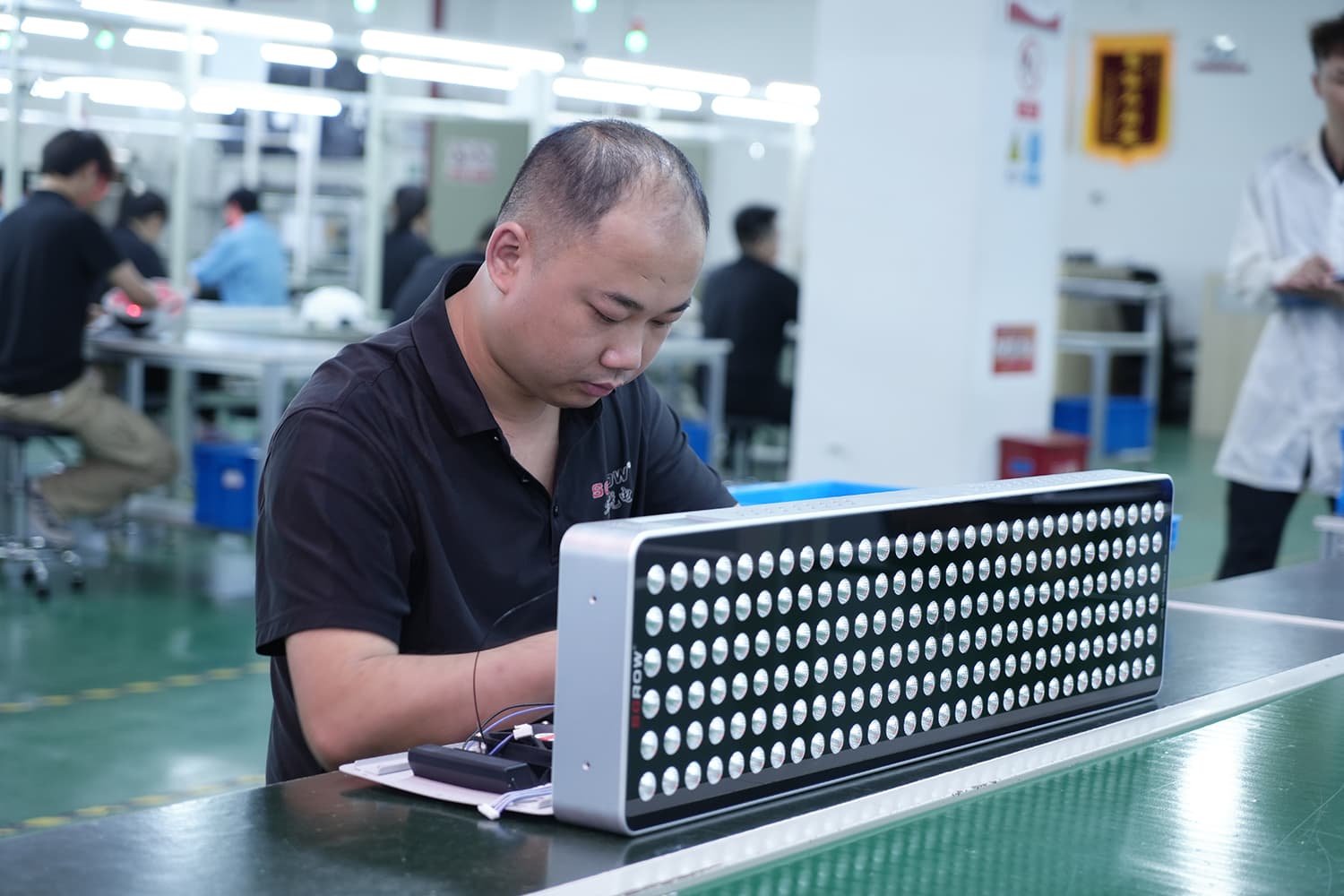
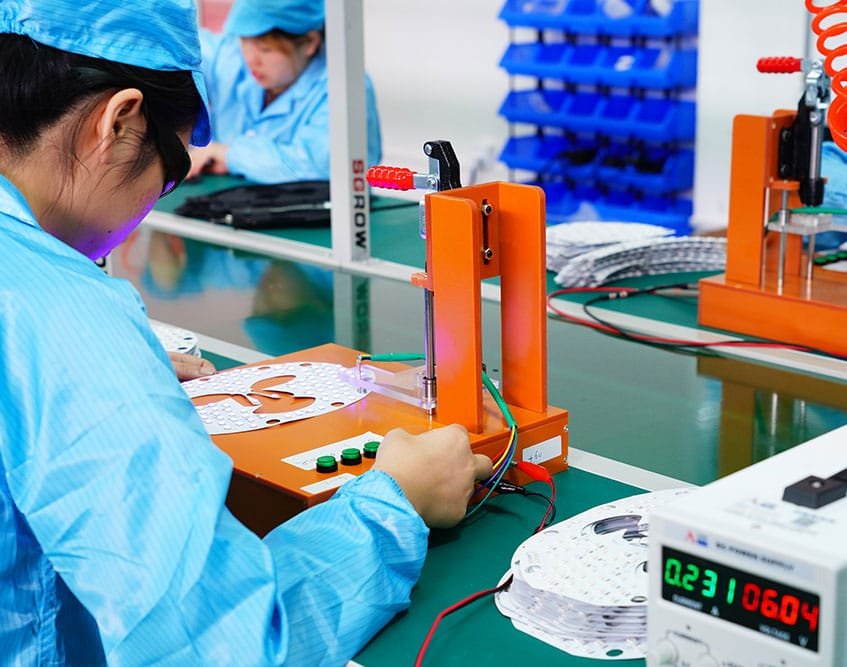
De productie-entiteit van Wakelife, Shenzhen Sungrow LED Technologie Co., Ltd., opereert onder a BSI-gecertificeerd ISO 13485:2016 kwaliteitsmanagementsysteem (certificaat MD 800872) en beschikt over het MDSAP-certificaat MDSAP 800873. BSI noemt de scope als ontwerp, productie en distributie van LED-therapielampen voor huidbehandeling en pijnverlichting, en LED-lichttherapiemaskers voor rimpels en milde tot matige acne. De directory vermeldt geen UVB-bruiningspanelen of de BK-modellen die binnen dat toepassingsgebied vallen.
Shenzhen Sungrow LED Technologie Co., Ltd. is ook de geregistreerde aanvrager voor FDA-goedkeuring 510(k) K250830, welke dekt 13 genoemde LED-lichttherapiemaskermodellen. Het FDA-dossier identificeert dit 21 CFR 878.4810 en primaire productcode OHS, met OLP als volgende code - een andere classificatieroute dan de productcode REF hieronder voor zonnelampen 21 CFR 878.4635.
Deze gegevens tonen de reikwijdte en ervaring van het kwaliteitssysteem aan bij het voltooien van een V.S. regelgevende indiening. Ze bieden geen FDA-goedkeuring, certificering op productniveau of marktautorisatie voor BK300, BK900 of BK1800. Voor elk BK-project is nog steeds de beoordeling van het exacte model en de doelmarkt nodig die in deze handleiding wordt beschreven.
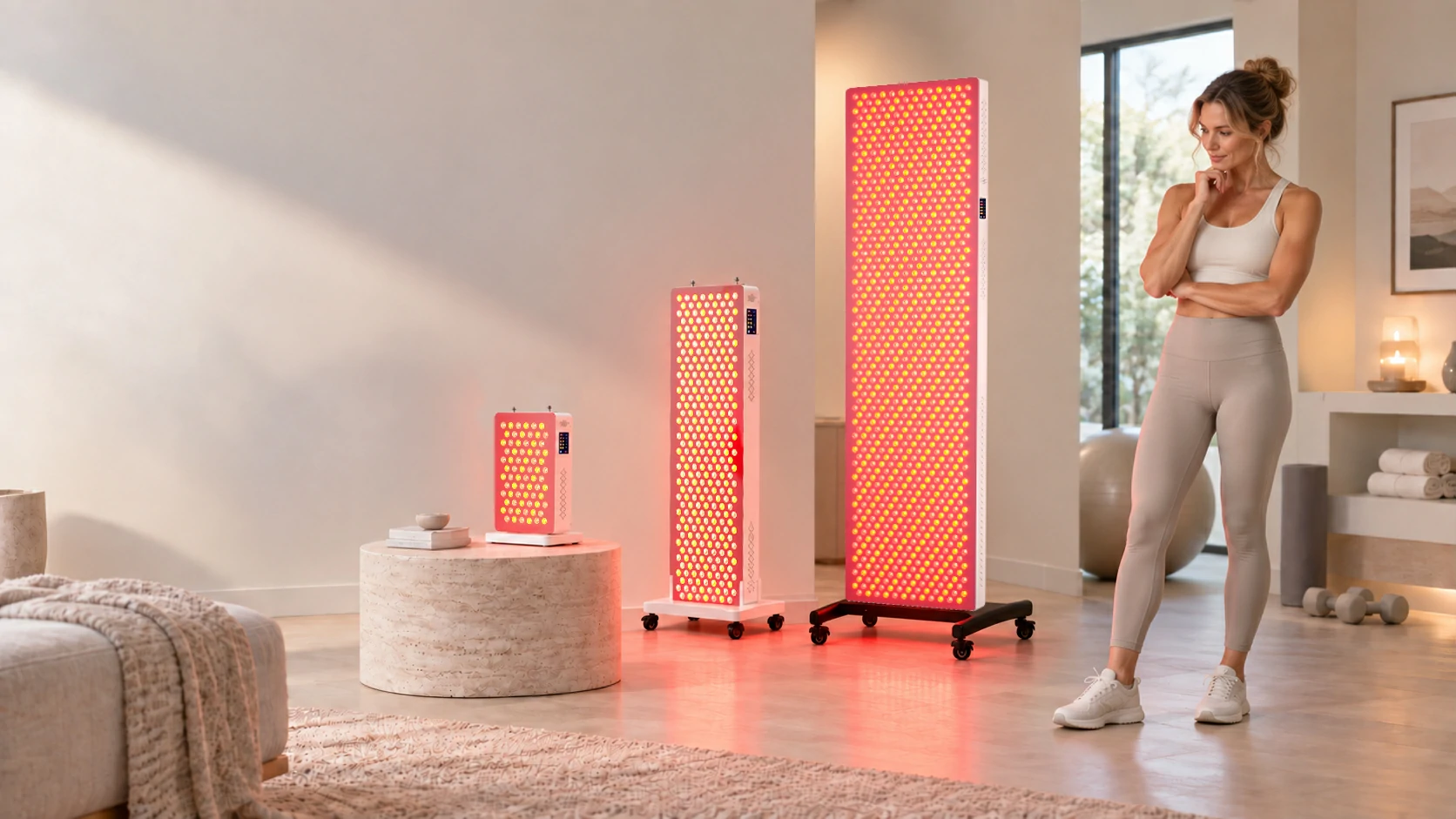
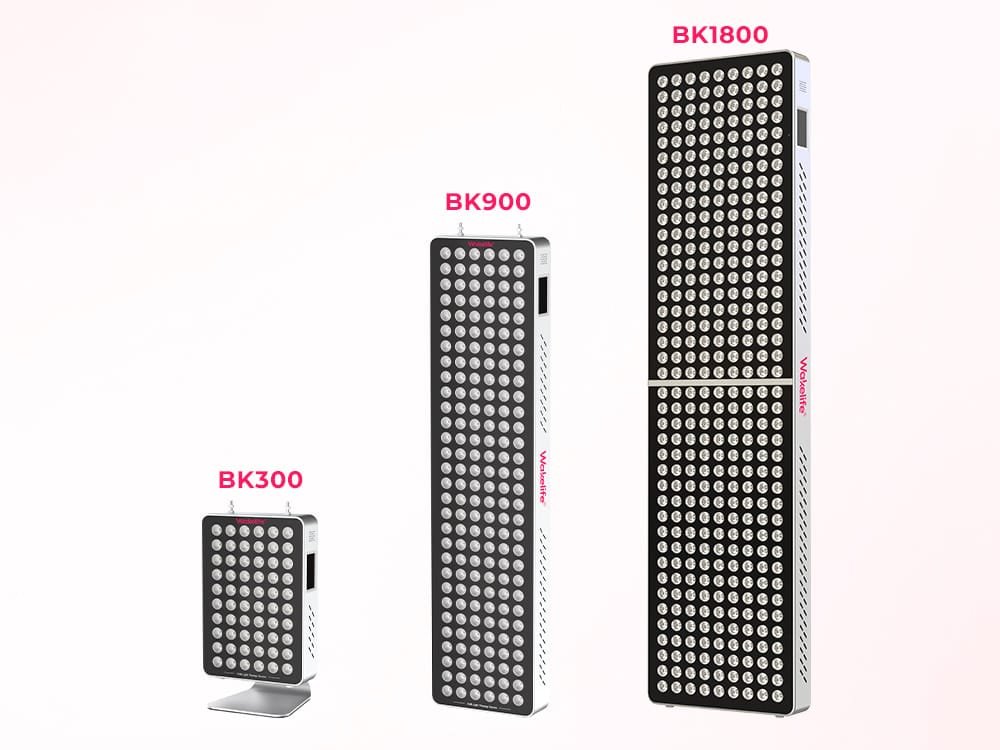
Wakelife biedt momenteel drie BK-productplatforms voor B2B-evaluatie: BK300 voor compacte productconcepten, BK900 voor een langer paneelformaat met vloerstaand of hangend gebruik, en BK1800 voor een grootformaatformaat met full-, bovenste- en selectie van lagere zones.
Om de huidige productformaten te bekijken voordat u een model op de shortlist plaatst, Ontdek het assortiment UVB-bruiningspanelen uit de Wakelife BK-serie. De categoriepagina introduceert BK300, BK900 en BK1800 per formaat, controlefuncties en projectfit.
Voor het shortlisten van modellen, lees de BK300 versus BK900 versus BK1800 Vergelijking van UVB-bruiningspanelen, die het formaat vergelijkt, verschillen in installatie- en zonecontrole zonder gepubliceerde outputcijfers te behandelen als een gecontroleerde prestatierangschikking.
Deze beschrijvingen identificeren de huidige door de leverancier aangegeven platformrollen. Het zijn geen claims van vergelijkende dosis, veiligheid, klinische prestaties of markttoelating. De volgende stap is het kiezen van een fysiek formaat, definieer de doelmarkt en claims, en vraag de exacte configuratie en documentomvang op die nodig zijn voor het project.
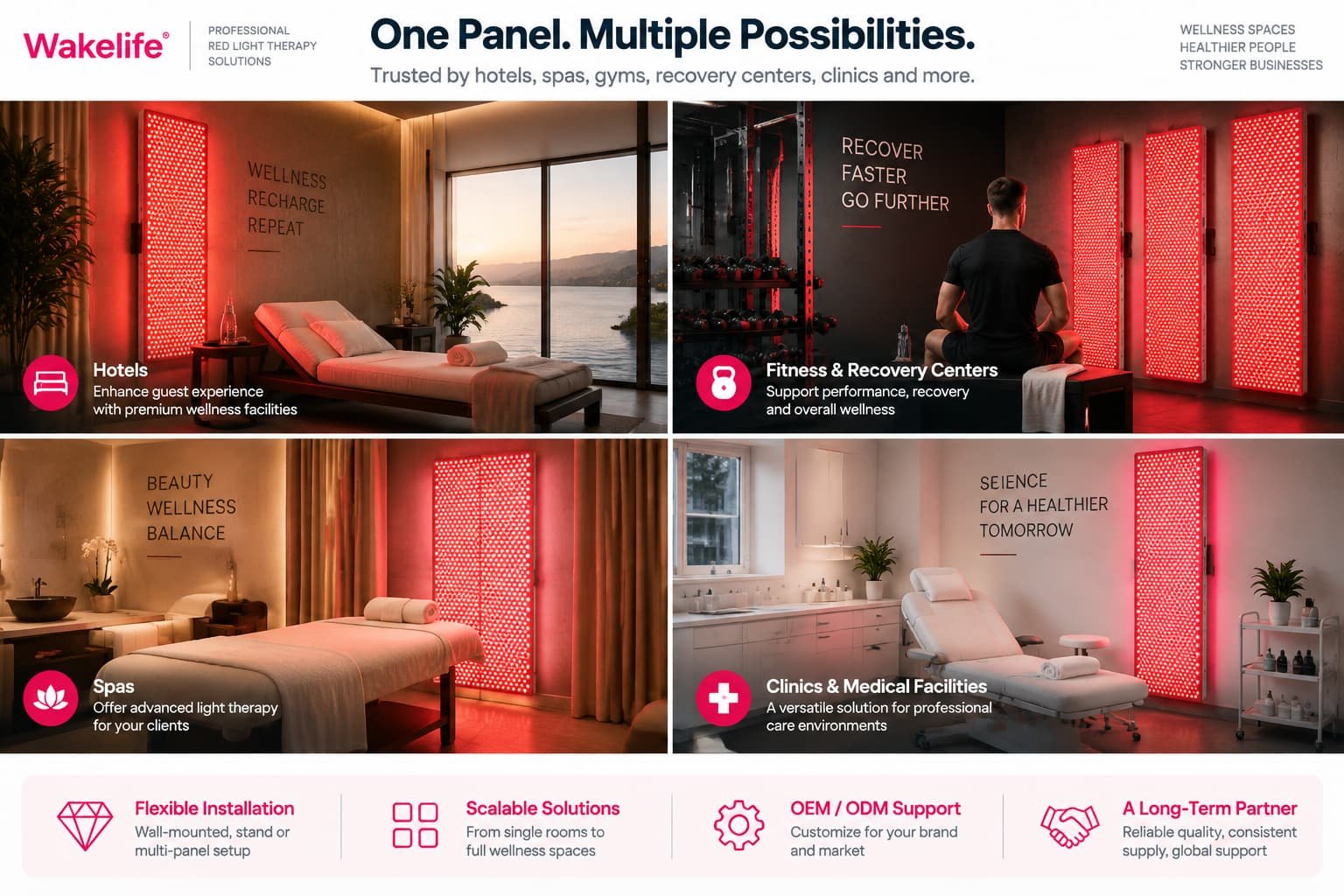
Neem contact op met Wakelife met de hierboven ingevulde offerteaanvraagvelden om een standaardvoorbeeld te bespreken, private-label configuratie of dieper OEM/ODM-project. Enige prestatie, etikettering of conclusie over marktgereedheid blijft gebonden aan de uiteindelijke configuratie en voltooide beoordeling van bewijsmateriaal.
Veelgestelde vragen
Betekent een door de FDA geregistreerde fabriek dat een UVB-bruiningspaneel door de FDA is goedgekeurd??
Nee. Vestigingsregistratie en exact apparaat 510(k) goedkeuring zijn verschillende wettelijke gegevens. Voor een Amerikaanse. bruiningsproduct, verifieer het exacte model, houder, bedoeld gebruik, 510(k) dossier, etikettering en de afzonderlijke eisen inzake elektronische straling.
Zijn BK300, BK900 en BK1800 FDA goedgekeurd?
Vanaf augustus 12, 2026, Wakelife bevestigt dat er geen modelspecifieke FDA is 510(k) is beschikbaar voor BK300, BK900 of BK1800. Kopers moeten het laatste FDA-record en elk geclaimd K-nummer verifiëren. De modellen mogen niet worden gepresenteerd als goedgekeurd door de VS. bruiningsapparaten, maar kopers kunnen ze evalueren als ontwikkelingsplatforms terwijl ze de toepasselijke regelgeving definiëren en voltooien, test- en etiketteringswerkzaamheden.
Is een CE-certificaat voldoende voor een EU private label project??
Nee. Identificeer eerst alle toepasselijke EU-wetgeving en de verantwoordelijke marktdeelnemers. Onder de laagspanningsrichtlijn, een importeur of distributeur die apparatuur onder zijn eigen naam of handelsmerk op de markt brengt – of deze wijzigt op een manier die de conformiteit kan beïnvloeden – wordt behandeld als de fabrikant. Als dat jouw rol is, een door de fabriek uitgegeven certificaat vervangt niet uw verantwoordelijkheid om de toepasselijke conformiteitsbeoordeling te voltooien, de EU-conformiteitsverklaring afgeven voor het uiteindelijke private-labelmodel en de uiteindelijke configuratie, en onderhoudt de ondersteunende technische documentatie, normen en testrapporten. Op grond van de richtlijn, de fabrikant moet de verklaring en de technische documentatie ter beschikking houden van de markttoezichtautoriteiten 10 jaar nadat de apparatuur op de markt is gebracht. CE-markering is de conformiteitsverklaring van de fabrikant, niet de productveiligheidsgoedkeuring van een EU-autoriteit. Of conformiteitsbeoordeling door derden vereist is, hangt af van de toepasselijke wetgeving; uit een generiek CE-certificaat kan dit niet worden afgeleid.
Welke optische gegevens moet een koper vragen??
Vraag het volledige spectrum aan, golflengte toleranties, actieve kanalen en bedieningsinstellingen, bestralingskaarten met gedefinieerde afstanden, instrument-/kalibratiedetails, onzekerheid, ruimtelijke acceptatielimieten en eenheids-/batchvariatie. Onverzwaard houden en gevaar opleveren- of erytheem-gewogen waarden gescheiden.
Maakt een timer of afstandssensor een UVB-paneel veilig??
Nee. Dit kunnen nuttige technische controles zijn, maar ze vereisen een exacte modelverificatie van triggers, antwoord, opnieuw opstarten, omzeilen, foutgedrag en instructies. Ze nemen de gevestigde risico's van UV-uitstralende bruiningsapparatuur niet weg en bewijzen op zichzelf niet dat ze voldoen aan de regelgeving.
Kan een UVB-bruiningspaneel op de markt worden gebracht als fototherapieapparaat??
Niet automatisch. Voor een medisch bedoeld gebruik is eigen bewijs nodig, productclassificatie, vergunning voor het in de handel brengen, labels en kwaliteits-/regelgevingstraject. Een golflengte zoals 311 nm of onderzoek op andere NB-UVB-apparaten draagt dat medische gebruik niet over aan het betrokken panel.
Referenties
- 1
-
2
ONS. FDA — Productclassificatie: Productcode REF
-
3
ONS. FDA — Productclassificatie: Productcode REH
-
4
ONS. FDA — Productclassificatie: Productcode SGZ
- 5
- 6
- 7
-
8
IARC — Zonnebanken en UV-straling
- 9
-
10
Europese Commissie — CE -markering
-
11
Europese Commissie — Importeurs en distributeurs
- 12
-
13
IEC — IEC 60335-2-27:2024
- 14
- 15
- 16
-
17
ONS. FDA — 510(k) K250830: LED-lichttherapiemasker