TL;DR voor kopers
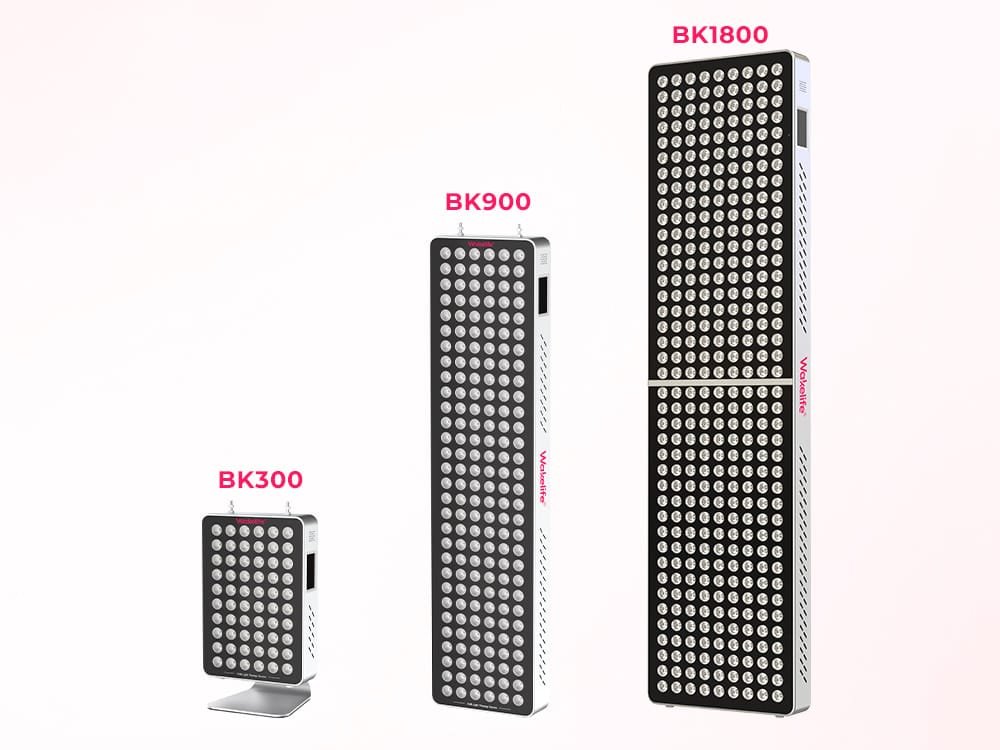
- BK300 is de compacte optie voor productconcepten voor specifieke gebieden, demonstraties en projecten waarbij een kleinere voetafdruk van de apparatuur ertoe doet.
- BK900 is het middenformaat voor kopers die een langere behuizing nodig hebben zonder onafhankelijke zonecontrole en die de vereiste dekking op een monster zullen valideren.
- BK1800 is de optie voor grote oppervlakken voor projecten die volledige, bovenste- of selectie in een lagere zone en meer installatiekeuzes.
- Gepubliceerde stralingswaarden mogen niet worden gebruikt om de drie modellen te rangschikken totdat ze onder dezelfde modus zijn gemeten, spectraal bereik, afstand, vlak en middelingsmethode.
- De BK-modellen beschikken momenteel niet over een modelspecifieke FDA 510(k), en UV-uitstralende bruiningsapparaten brengen gevestigde gezondheidsrisico's met zich mee. Voor de VS. projecten, registratie of notering vervangt niet de toepasselijke pre-market- en stralingsvereisten; waarschuwingen, etikettering, brillen en blootstellingscontroles horen thuis in de productdefinitie.
Snel antwoord: Hoe verschillen de drie BK-modellen?
De belangrijkste keuze is niet alleen klein, middelgroot of groot. Het is het bedrijfsformaat dat de koper moet valideren.
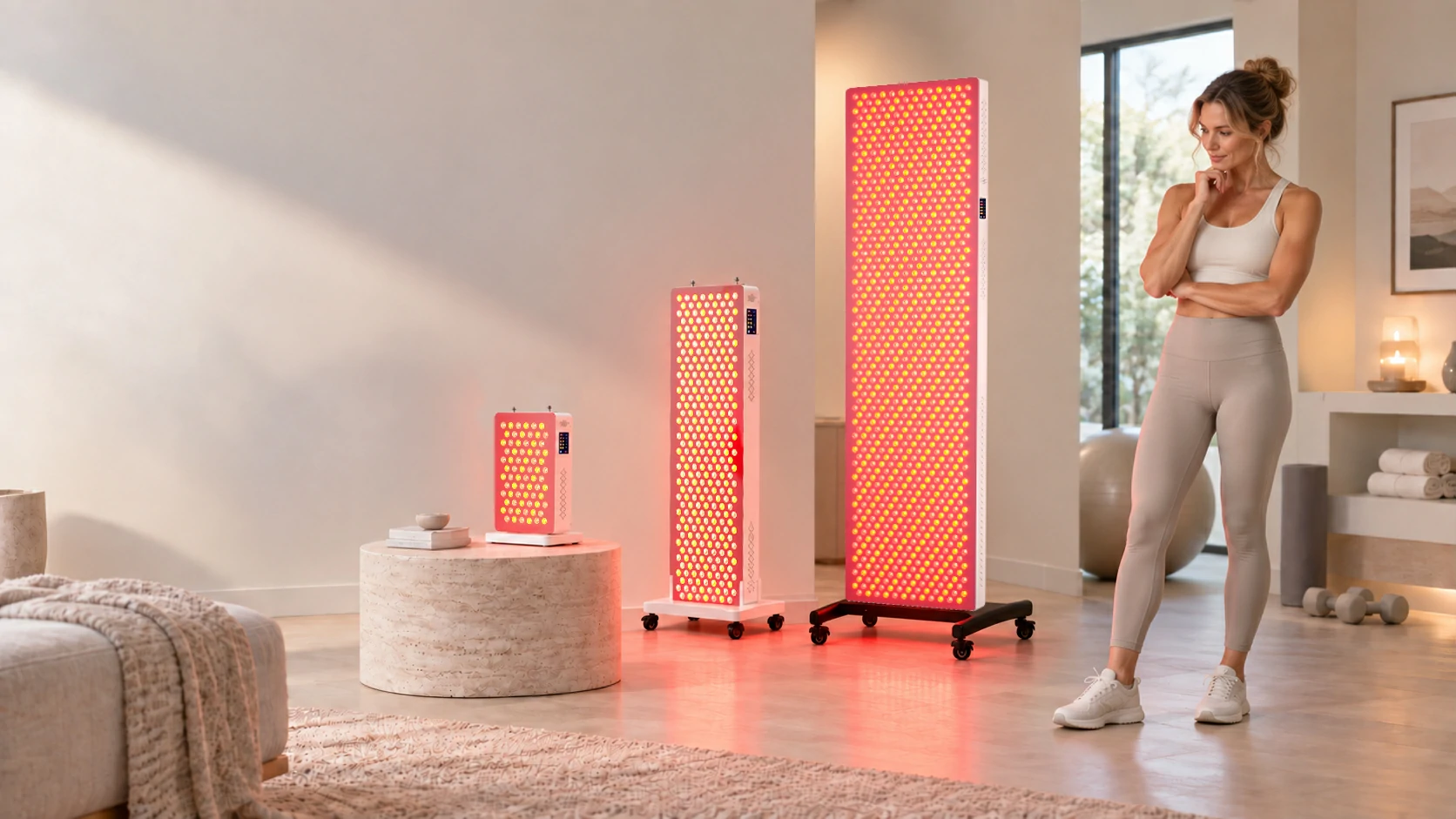
BK300 is een compact desktop- of hangpaneel. BK900 verlengt de paneellengte en voegt gebruik op een vloerstandaard toe, maar het werkt nog steeds zonder onafhankelijke zones. BK1800 voegt de grootste behuizing toe, drie selecteerbare emissiegebieden en wandmontage als extra installatieroute.
Dat maakt de initiële inkoopbeslissing relatief eenvoudig:
| Koper vereiste | Model om eerst te evalueren | Reden |
|---|---|---|
| Compact product, gerichte positionering of een lagere vraag naar ruimte | BK300 | Kleinste behuizing en desktop/hangende installatie |
| Langer paneel zonder vereisten voor zonebeheer | BK900 | Tussenpaneellengte en vloerstandaard/ophangopties |
| Grootformaatformaat met selecteerbare boven-/onderbediening | BK1800 | Vol, bovenste en onderste zonebediening plus verdieping, ophang- en wandmontage |
Dit is slechts een shortlist, geen prestatieconclusie. Fysieke grootte, Het aantal LED's en het elektrisch vermogen bepalen de UV-dosis niet, uniformiteit van de dekking, bruiningsresultaat of veiligheid. Deze vragen vereisen vergelijkbare tests met exacte modellen.
Naast elkaar BK300, Specificaties BK900 en BK1800
De volgende cijfers zijn door de leverancier aangegeven specificaties van de huidige Wakelife-productpagina's. Ze zijn handig voor het definiëren van een monster en een offerteaanvraag, maar ze zijn geen vervanging voor gecontroleerd optisch, elektrisch, thermische of wettelijke gegevens.
Voordat u modellen vergelijkt, bekijk de Handleiding voor het kopen van UVB-bruiningspanelen om het beoogde gebruik te definiëren, bestemmingsmarkt, exacte configuratie en vereist bewijsmateriaal.
| Specificatie | BK300 | BK900 | BK1800 |
|---|---|---|---|
| LED-pakketten | 60 | 180 | 360 |
| Nominaal elektrisch vermogen | 108 W | 355 W | 514 W |
| Nominale golflengten | 295 / 311 / 415 / 630 / 660 / 810 / 830 / 850 / 1060 nm | Dezelfde configuratie | Dezelfde configuratie |
| Grootte behuizing | 320 × 220 × 65 mm | 890 × 220 × 65 mm | 1190 × 310 × 65 mm |
| Geschat gewicht | Niet gepubliceerd op de huidige productpagina | Niet gepubliceerd op de huidige productpagina | 15.8 kg |
| Opgegeven stralingshoek | Niet gepubliceerd op de huidige productpagina | Niet gepubliceerd op de huidige productpagina | 30° |
| Aangegeven bestralingssterkte op 3 inch (≈76 mm) | 130–150 mW/cm² | 160–180 mW/cm² | 116 MW/cm² |
| Timerbedieningsbereik | 5–20 min | 5–20 min | 5–30 min |
| Helderheidsregeling | 0–100% | 0–100% | 0–100% |
| Pulsinstellingen | 0–40 Hz | 0–40 Hz | 10 / 20 / 30 / 40 Hz in aangepaste modus |
| Onafhankelijke zonecontrole | Nee | Nee | Vol / bovenste / lager |
| Installatie | Bureaublad / hangen | Vloerstandaard / hangen | Vloerstandaard / hangen / wandmontage |
| IP-classificatie | IP20 | IP20 | IP20 |
Not published betekent dat de waarde afwezig is op de huidige openbare modelpagina; het is geen nulwaarde of bevestiging dat de modellen verschillen. Vraag de gedateerde specificatie op voor de exact opgegeven configuratie voordat u gewicht of stralingshoek gebruikt in een commerciële vergelijking.
Bij het lezen van de tabel zijn twee kwalificaties essentieel.
Eerst, het nominale wattage is de elektrische input, geen optische uitgang. Een hoger wattage of een groter aantal LED's bewijst op zichzelf niet dat er meer UVB de huid bereikt, dat de dekking uniformer is of dat het apparaat sneller resultaat oplevert.
Seconde, de gepubliceerd mW/cm² cijfers geven nog niet aan of de meting alle golflengten bestrijkt of alleen UVB, welk programma en helderheid actief waren, of dat het getal een middelpunt is, piek of gebiedsgemiddelde. De gepubliceerde 3-inch-waarde van de BK1800 is lager dan die van de BK900, ook al heeft de BK1800 meer LED-pakketten en een hoger nominaal vermogen. Dat is niet noodzakelijkerwijs een fout; het laat zien waarom de huidige cijfers niet moeten worden omgezet in een outputranglijst.
Wanneer is BK300 zinvol??
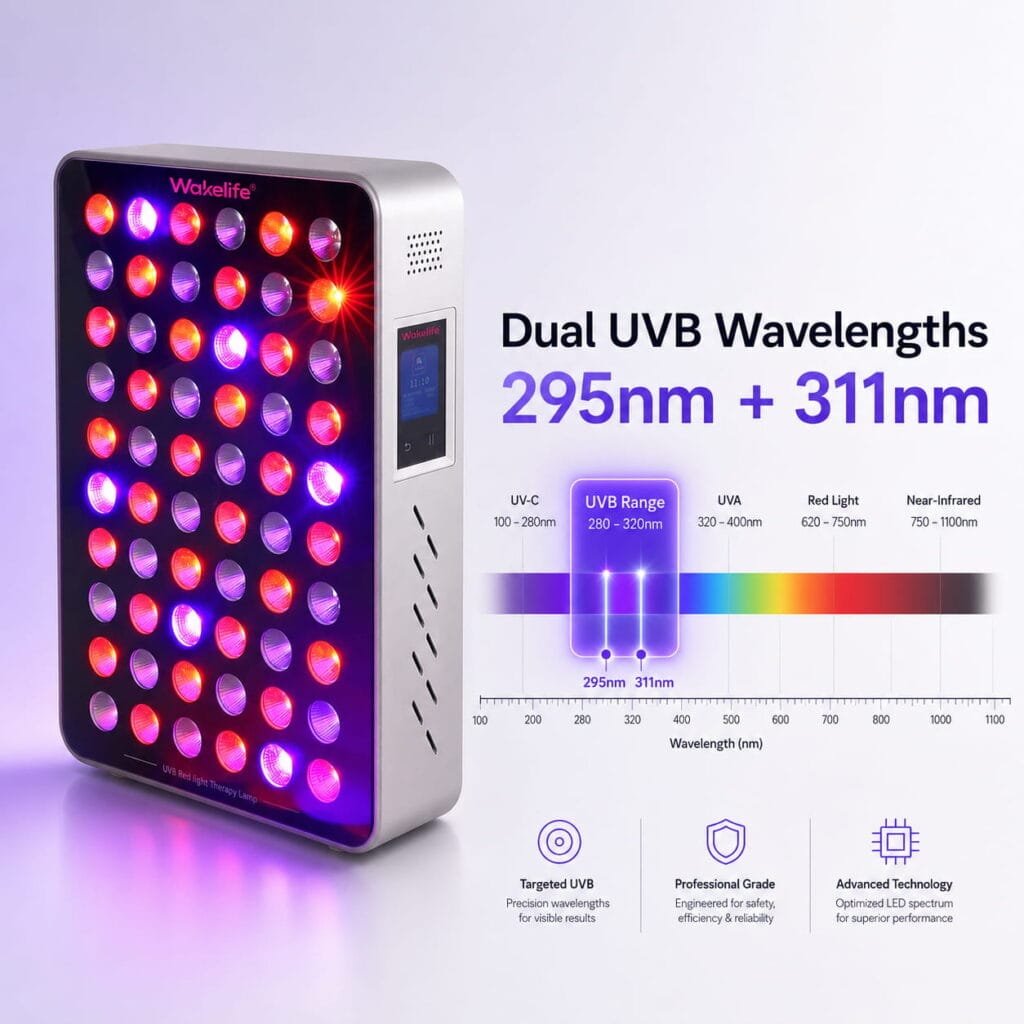
De BK300 is het meest praktische startpunt wanneer compactheid en positionering van het doelgebied belangrijker zijn dan een brede gelijktijdige dekking.
De huidige leverancierspagina vermeldt a 320 × 220 × 65 mm behuizing met bureaublad- en hangende installatie. Dat kan geschikt zijn voor distributeurs of huismerkmerken die een product in een kleiner formaat testen, evenals studio's die een demonstratie of een gerichte opstelling willen met een beperkte voetafdruk van de apparatuur.
BK300 kan geschikt zijn wanneer:
- een compact verzend- en displayformaat is commercieel belangrijk;
- het geplande gebruiksconcept vereist geen selectie van de bovenste/onderste zone;
- de koper wil beginnen met een kleiner monster voordat hij een grotere installatie evalueert;
- In de operatieruimte is geen plaats voor een lang vloerpaneel.
De kleinere behuizing mag niet worden omschreven als een optie met een lager risico of een lagere dosis zonder vergelijkbare tests. Kopers hebben nog steeds het spectrale rapport nodig, meetkaart, waarschuwingsetiketten, brilspecificatie en doelgroepbeoordeling voor de exacte configuratie.
Wanneer is BK900 zinvol??
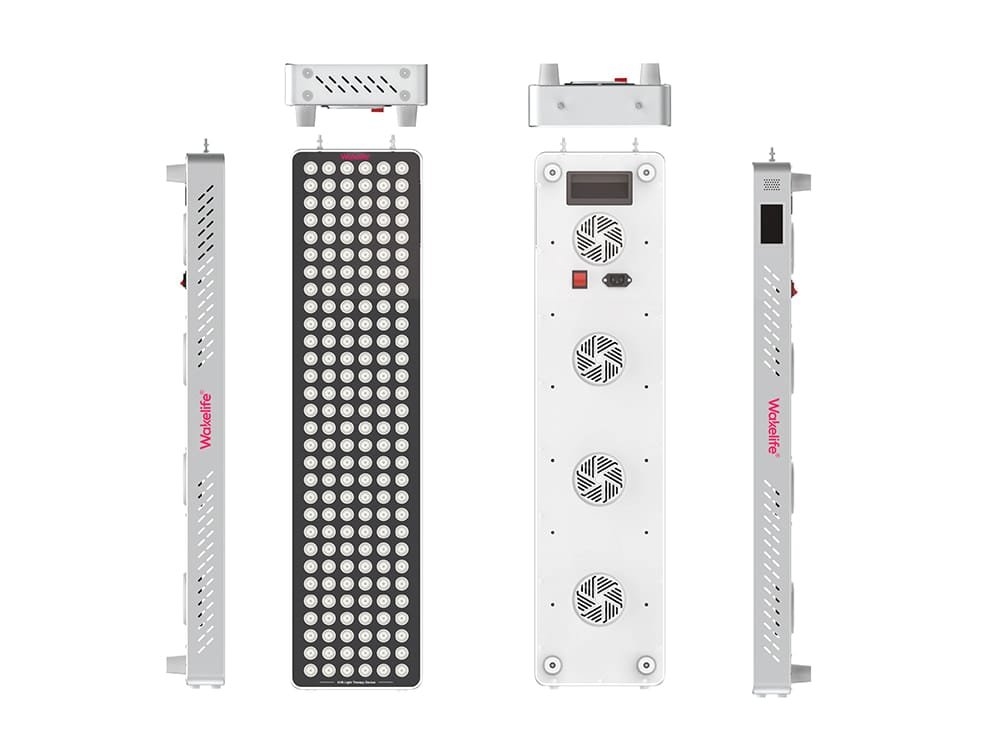
De BK900 is geschikt voor projecten die een langer paneel- en vloerstaandergebruik vereisen, maar waarvoor geen onafhankelijk selecteerbare zones nodig zijn.
Op de huidige leverancierspagina staat een 890 × 220 × 65 mm behuizing en 180 LED-pakketten. De langere behuizing creëert een ander fysiek formaat om te valideren dan de BK300, terwijl de bediening eenvoudiger blijft dan de gezoneerde architectuur van de BK1800.
BK900 is mogelijk het efficiëntere model om te evalueren wanneer:
- de koper wil een langer formaat dan BK300;
- vloerstaande of hangende installatie past in het geplande bedrijfsgebied;
- onafhankelijke boven-/ondercontrole maakt geen deel uit van het bedrijfsconcept;
- het project heeft een product uit het middensegment nodig tussen een compact apparaat en het grootste gezoneerde model.
Vertaal het aangegeven niet 160–180 mW/cm² at 3 inches in een sessieadvies. Een nuttig voorbeeldrapport moet het gemeten spectrale bereik identificeren, bedrijfsmodus, helderheid, puls staat, opwarmconditie, instrument, kalibratie, meetrooster en onzekerheid.
Wanneer is BK1800 zinvol??
BK1800 is het model om te evalueren wanneer hardware met een groot oppervlak wordt gebruikt, Selecteerbare zones en installatieflexibiliteit zijn kernvereisten voor het project.
De huidige leverancierspagina vermeldt a 1190 × 310 × 65 mm behuizing, 360 LED-pakketten en een aangegeven stralingshoek van 30 graden. Het beschrijft ook volledige, bovenste- en selectie op het onderste paneel, plus vloerstandaard, ophang- en wandmontagemogelijkheden.
BK1800 past mogelijk bij kopers die dat nodig hebben:
- een productplatform met een groot oppervlak;
- bovenste- en selectie van lagere zones als een operationeel kenmerk;
- meerdere installatiepaden voor verschillende studio- of distributeurprojecten;
- een private-labelproduct in vlaggenschipformaat met complexere controlevereisten.
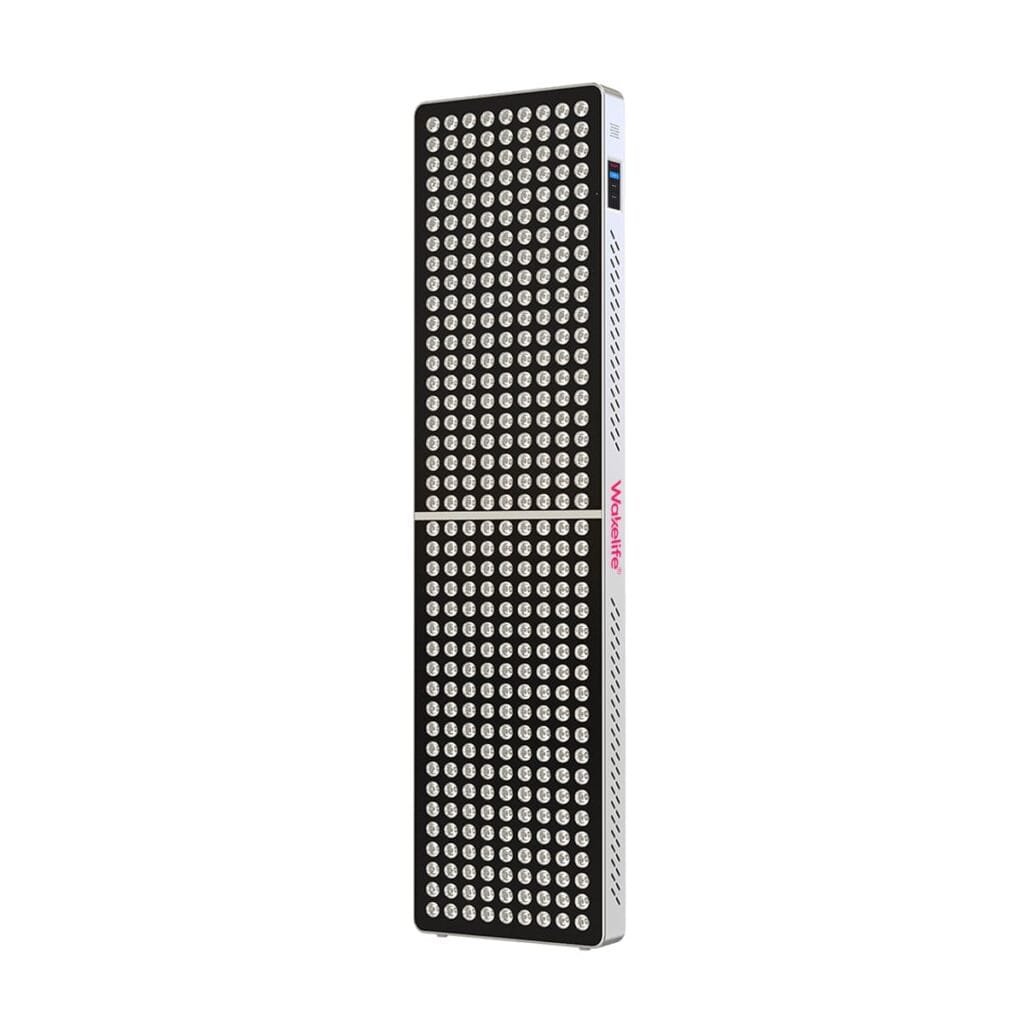
Zoneselectie zorgt ook voor extra validatiewerk. Vóór goedkeuring, vraag uitvoerkaarten voor het volledige bestand aan, bovenste en onderste instellingen, inclusief zonegrenzen, lekkage in het inactieve gebied, sensorinteractie, herstartgedrag en foutcondities. De aanwezigheid van zonecontrole bewijst niet dat elke modus een uniforme of gevalideerde blootstelling oplevert.
Wat betekenen de golflengten en voorkeuzenamen feitelijk??
Ze stellen de nominale hardware- en interfaceconfiguratie vast, en niet een reeks bewezen resultaten.
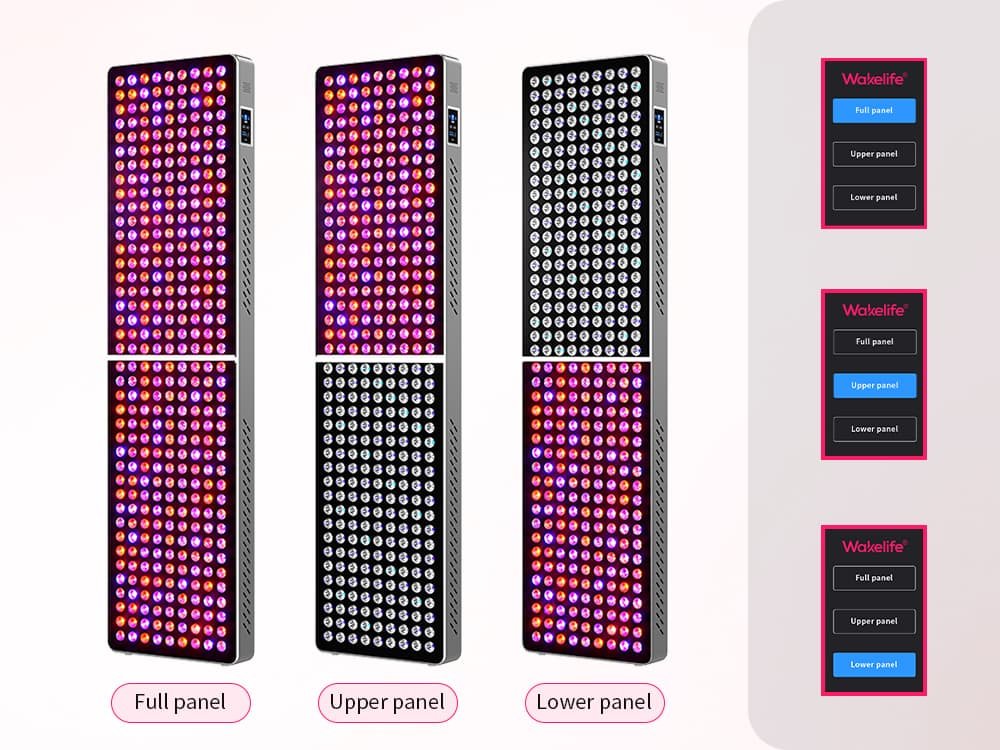
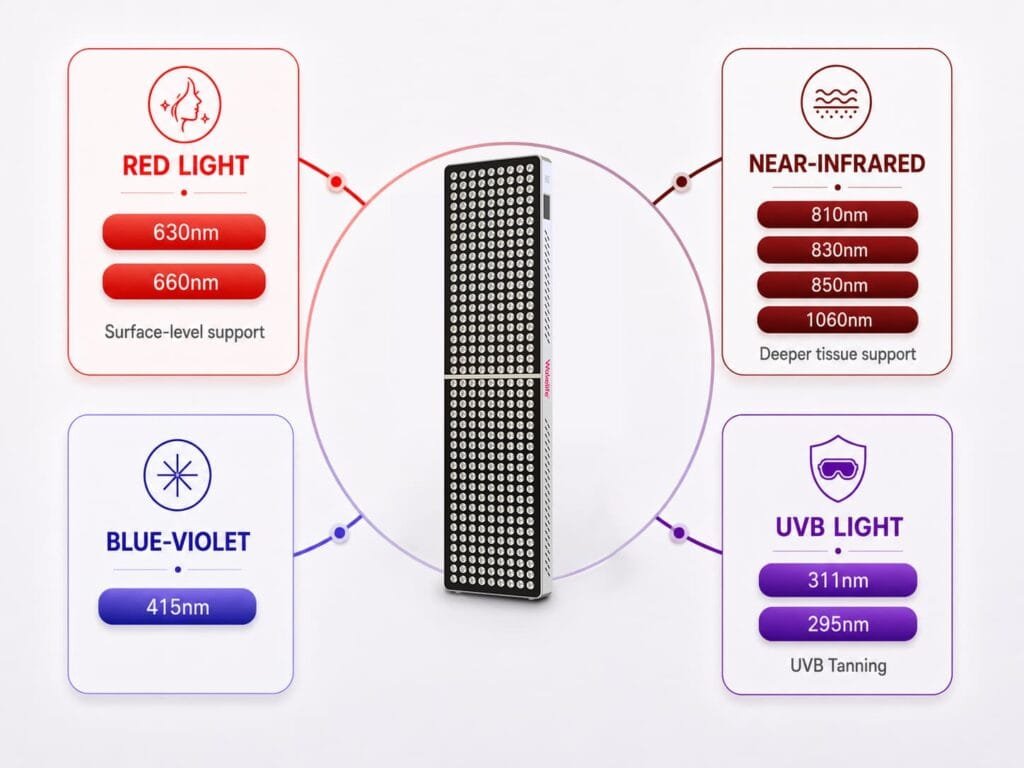
De huidige BK-pagina's vermelden nominale golflengten van 295, 311, 415, 630, 660, 810, 830, 850 En 1060 nm. De twee UV-golflengten vallen binnen het UVB-gebied; de Wereldgezondheidsorganisatie definieert UVB in het algemeen als 280–315 nm. De resterende golflengten omvatten zichtbaar blauw, rode en nabij-infrarode gebieden.
Een lijst met meerdere golflengten onthult niets:
- het optische vermogen dat aan elke golflengte is toegewezen;
- golflengtetolerantie of spectrale bandbreedte;
- welke kanalen in elke preset actief zijn;
- bestralingssterkte op het relevante gebruiksvlak;
- ruimtelijke uniformiteit over het behandelgebied;
- het biologische effect van het voltooide apparaat.
De huidige interface bevat ook vooraf ingestelde namen zoals “Bruinen,” “Huidcollageen,” “Spierherstel," "Afname,” “Acnezorg” en “Botgezondheid,” plus een aangepaste modus. Deze moeten worden behandeld als UI-labels. Zonder exact apparaatbewijs en marktspecifieke claimbeoordeling, ze mogen niet als bewezen huid worden gepresenteerd, spier, acne, vitamine D of voordelen voor de botgezondheid. “Verlagen” is overgenomen van de huidige BK-productpagina’s, maar het woord is semantisch onvolledig; kopers moeten het definitieve firmwarelabel bevestigen of vervangen door neutraal, beschrijvende bewoordingen voordat de gebruikersinterface wordt goedgekeurd.
Waarom instraling nog niet kan worden gebruikt om de modellen te rangschikken
De bestralingssterkte wordt alleen vergelijkbaar als de spectrale en meetomstandigheden vergelijkbaar zijn.
Voor elk model, vraag of de gepubliceerde waarde dat is:
- Alleen UVB-straling of gecombineerde breedbandstraling;
- gemeten in een specifieke preset of met alle kanalen actief;
- gemeten bij 100% helderheid en continue output;
- een piek, middelpunt, minimum of ruimtelijk gemiddelde;
- gemeten bij de behuizing, LED-oppervlak of bedoeld belichtingsvlak;
- ondersteund door een gekalibreerde detector die geschikt is voor het gerapporteerde spectrale bereik.
Vraag ook een meetrooster aan, detectordetails, kalibratie datum, onzekerheid en de optische toestand na opwarming. Voor BK1800, de volledige, bovenste en onderste instellingen hebben afzonderlijke kaarten nodig.
Dit is van belang omdat bestraling niet hetzelfde is als blootstelling aan straling. Blootstelling aan straling is afhankelijk van de bestraling in de loop van de tijd, terwijl een geldige UV-risicobeoordeling ook golflengteweging kan vereisen. De huidige controlebereiken mogen daarom niet alleen op basis van de cijfers op de productpagina worden omgezet in een op de koper gerichte UV-dosis of blootstellingsschema.
Waarom UV-risico zichtbaar moet blijven in een inkoopvergelijking
Technische maatregelen kunnen specifieke gevaren verminderen, maar ze maken van UV-bruinen geen risicovrije productcategorie.
De Internationaal Agentschap voor Kankeronderzoek classificeert UV-uitstralende bruiningsapparaten als kankerverwekkend voor de mens. Die van de Europese Commissie Wetenschappelijk advies van SCHEER concludeerde dat UV-straling van zonnebanken huidmelanoom en plaveiselcelcarcinoom veroorzaakt en dat er geen veilige blootstellingslimiet bestaat voor de kankerverwekkende effecten van UV-straling van zonnebanken.
Dit zijn risicoconclusies op categorieniveau. Ze bewijzen niet dat de drie BK-modellen een identiek spectraal rendement of risico hebben, en ze kunnen niet worden gebruikt om een individueel blootstellingsplan te berekenen. Ze betekenen wel dat een B2B-vergelijking nooit gelijk mag staan aan een timer, sensor, selecteerbare zone of veiligheidsbrilaccessoire met een algemene veiligheidsgarantie. Productontwerp, etikettering, bedieningselementen, gebruikersbeperkingen en de beoordeling van de bestemmingsmarkt moeten samen worden beoordeeld.
Welke veiligheidscontroles vereisen een exacte modelverificatie?
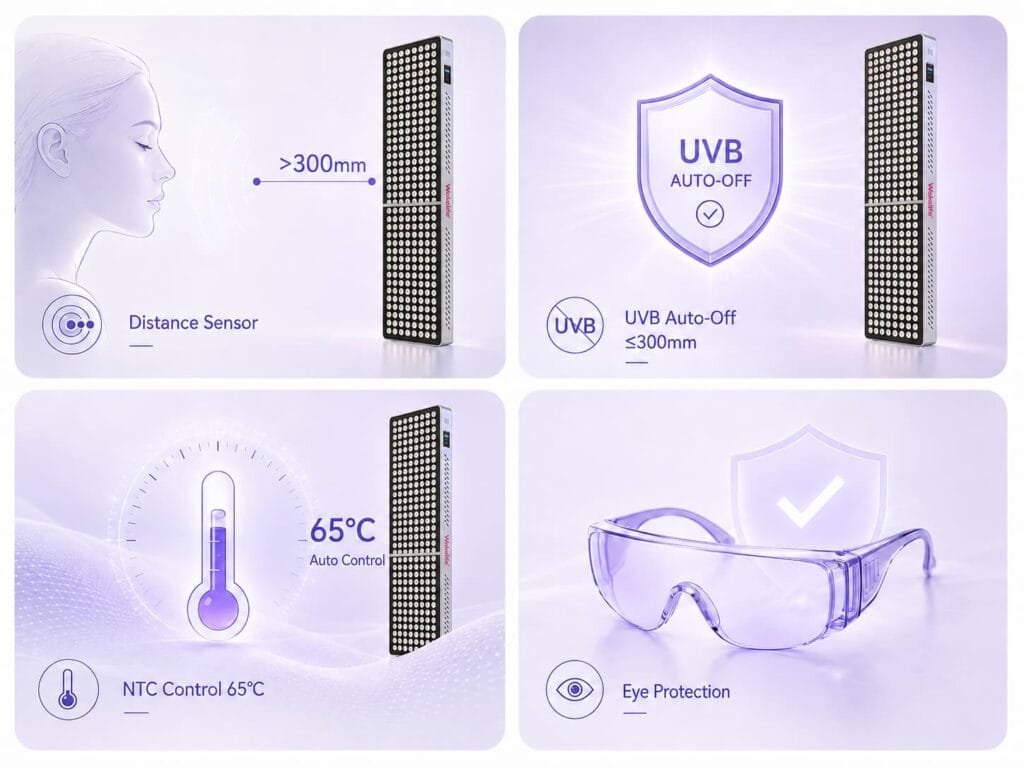
Op de productpagina's worden verschillende technische bedieningselementen beschreven: een geluidssignaal en UVB-uitschakeling wanneer een gebruiker binnen wordt gedetecteerd 300 mm, vermogensreductie boven een aangegeven interne temperatuurdrempel van 65°C, timer/handmatige bediening en veiligheidsbril.
Dit zijn relevante ontwerpkenmerken, Maar hun aanwezigheid bewijst niet dat het eindproduct veilig of conform is. Exacte modelverificatie moet betrekking hebben op:
- Detectie van nabijheid: sensorveld, detectie betrouwbaarheid, reactietijd, logica opnieuw opstarten, voorwerpen of lichaamshoudingen die mogelijk niet worden gedetecteerd, bypass- en enkelvoudige foutcondities.
- Thermisch gedrag: maximale instelling, langst toegestane werking, herhaalde bediening, ventilatieopeningen, installatieoriëntatie en abnormale omstandigheden.
- Timer en bediening: nauwkeurigheid van de timer, handmatige beëindiging, stroomonderbreking, opnieuw opstarten, bedieningsblokkering en voorzienbaar misbruik.
- Beschermende brillen: exacte brilmodel, spectrale transmissie over de productuitvoer, hoeveelheid, montage-instructies, inspectie- en vervangingscriteria.
- Mechanische installatie: stabiliteit van de stand, omvallen testen, vereisten voor ophanging en wandbelasting, bevestigingsmiddelen en onderhoudsspelingen.
- Etiketten en instructies: waarschuwende taal, blootstelling positie, doelgroeptaal, operationele beperkingen en configuratiespecifieke instructies.
Voor toepasselijke niet-medische apparaten voor huidblootstelling, IEC 60335-2-27:2024 werd gepubliceerd in 2024 als de zevende internationale editie, ter vervanging van de zesde editie gepubliceerd in 2019; in januari is een gecorrigeerde versie uitgebracht 2026. Kopers mogen er niet van uitgaan dat de publicatie van een nieuwe IEC-editie automatisch de nationale of geharmoniseerde EN-editie verandert die op elke bestemmingsmarkt wordt gebruikt; de toepasselijke adoptie, afwijkingen en transitiedata moeten voor het project worden gecontroleerd.
Voor EU-projecten, de huidige geconsolideerde lijst met geharmoniseerde normen beschikbaar in augustus 12, 2026 lijsten NL 60335-2-27:2013 met A1:2020, A2:2020 en AC:2021-11 met een beperking. Onder Uitvoeringsbesluit van de Commissie (EU) 2025/1457, de gespecificeerde opmerkingen in de clausule 6 en bijlage BB vestigen geen vermoeden van overeenstemming met de relevante veiligheidsdoelstellingen van de Laagspanningsrichtlijn. De Zonnebanksamenvatting van de Europese Commissie beschrijft een 0.3 W/m²-limiet voor totale erytheem-gewogen UV-straling onder deze standaardfamilie. Deze gewogen limiet is niet direct vergelijkbaar met de ongewogen limiet van de productpagina's mW/cm² cijfers. Een spectrale meting en de voorgeschreven erytheemweging zijn nodig voordat het exacte model daaraan kan worden getoetst.
Alle drie de modellen worden momenteel vermeld als IP20. Ze moeten daarom worden gepland voor het binnenmilieu en de schoonmaakbeperkingen zoals gedefinieerd in de definitieve instructies; IP20 is geen claim op waterbestendigheid.
Wat betekent het ontbreken van een modelspecifiek 510(k) Betekenen voor de VS. Kopers?
BK300, BK900 en BK1800 hebben momenteel geen modelspecifieke FDA 510(k), dus kopers mogen ze niet behandelen als goedgekeurd voor de VS. marketing van bruiningsapparaten.
De FDA beschrijft zonnelampproducten die bedoeld zijn om het lichaam te bestralen met ultraviolette straling in het bereik van 200–400 nm om bruining te veroorzaken, als zowel medische apparaten als elektronische producten. De huidige FDA-classificatierecord voor zonnelampproducten identificeert ze als Klasse II-apparaten onder 21 CFR 878.4635 met een 510(k) soort inzending.
Afzonderlijk, 21 CFR 1040.20 bevat eisen op het gebied van elektronische straling, waarbij zaken als timers aan de orde komen, handmatige beëindiging, beschermende brillen, etiketten, blootstellingsschema's, instructies en testomstandigheden.
De huidige 21 CFR 878.4635 speciale controles vereisen ook een prominente black-box-productwaarschuwing waarin staat dat een zonnelampproduct niet mag worden gebruikt op personen onder de zon 18. De 2014 Laatste bestelling van de FDA specificeert het labelformaat en de tekst, terwijl de FDA’s overzicht van bruiningsproducten vat de etiketteringsvereiste voor kinderen onder de 18 jaar samen. Staats- en exploitantbeperkingen blijven een afzonderlijke jurisdictiespecifieke controle; de federale etiketteringsvereiste mag niet worden gepresenteerd als het volledige Amerikaanse etiket. analyse van leeftijdstoegang.
Voor dezelfde definitieve bestelling zijn afzonderlijk vier contra-indicaties of waarschuwingen vereist in de gebruikersinstructies en in op de consument gerichte catalogi, specificatiebladen, beschrijvende brochures en verkooppagina's: het product is gecontra-indiceerd voor personen onder 18 en wanneer huidlaesies of open wonden aanwezig zijn; het mag niet worden gebruikt door mensen met een persoonlijke of familiegeschiedenis van huidkanker; en mensen die herhaaldelijk aan UV-straling worden blootgesteld, moeten regelmatig worden gecontroleerd op huidkanker. Voor een Amerikaanse. launch, dit betekent dat het beoordelen van webpagina's en verkoopmateriaal deel uitmaakt van het etiketteringswerk en niet alleen een handmatige controle is.
Om die reden:
- een door de FDA geregistreerde productievestiging betekent niet dat de fabriek of de BK-modellen door de FDA zijn goedgekeurd of goedgekeurd;
- een verklaring over de apparaatlijst vervangt geen modelspecifiek premarket-traject;
- een timer, Een nabijheidssensor of een veiligheidsbril garandeert op zichzelf niet dat aan de toepasselijke eisen wordt voldaan;
- elke VS. project heeft een gedocumenteerde productclassificatie nodig, beoogd gebruik en beoordeling van de regelgeving vóór de lancering.
Dit weerhoudt een koper er niet van om een ontwikkelingsproject te bespreken of een monster te beoordelen. Het betekent wel dat de offerteaanvraag productontwikkeling moet scheiden van marktautorisatie, inclusief wie verantwoordelijk is voor het testen, inzendingen, etikettering en hervalidatie na maatwerk.
Wat moeten kopers vragen voordat ze een monster goedkeuren?
Gebruik één gecontroleerde checklist voor alle drie de modellen:
| Verificatie-item | Wat de leverancier moet identificeren |
|---|---|
| Configuratiecontrole | Model, Stuklijst/configuratie-ID, firmware en UI-revisie |
| Spectrale output | Volledig spectrum, 295/311 nm-tolerantie en outputbijdrage per golflengte/kanaal |
| Bestralingssterkte in kaart brengen | Modus, helderheid, pols, afstand, vliegtuig, rooster, uniformiteit, instrument, kalibratie en onzekerheid |
| Zonetesten | BK1800 volledige/bovenste/onderste output plus grens- en foutconditiegedrag |
| Veiligheidscontrole testen | Nabijheid, thermisch, timer, handmatige stop, opnieuw opstarten en voorzienbare misbruikresultaten |
| Beschermende brillen | Model, spectrale transmissie, instructies en vervangingsspecificatie |
| Mechanische installatie | Stellage, vereisten voor hangende en aan de muur gemonteerde belasting/stabiliteit, indien van toepassing |
| Etiketten en handleiding | Waarschuwingen, informatie over de belichtingspositie, operationele limieten, toepasselijke leeftijdswaarschuwing en doelgroeptaal |
| Marktdocumenten | Exact model, rapport-/certificaatnummer, houder, domein, standaardeditie en geldigheid |
| Impact van maatwerk | Welke optisch, thermisch, EMC, veiligheid, etikettering of wettelijke controles moeten worden herhaald |
Voor de VS. projecten, voeg het exacte regelgevingstraject toe en, waar van toepassing, 510(k), vestiging/lijst en elektronische stralingsregistraties. Voor andere markten, de exacte modeldocumenten opvragen die vereist zijn voor de bestemming, geen algemeen fabriekscertificaat of een rapport voor een andere configuratie.
Welk model moet in uw offerteaanvraag worden opgenomen?
Kies eerst op bedrijfsformaat, Controleer vervolgens de exacte configuratie voordat u prestatie- of nalevingsclaims maakt.
- Shortlist BK300 voor compact, concepten met een doelgebied of een kleinere voetafdruk.
- Shortlist BK900 voor een langer paneel met vloerstaand of hangend gebruik en geen behoefte aan onafhankelijke zones.
- Shortlist BK1800 voor projecten met een groot oppervlak die echt profiteren van volledige/boven/onder-selectie en meerdere installatieroutes.
In de offerteaanvraag, vermeld de markt van bestemming, bedoeld commercieel gebruik, installatie methode, toegestane claims, vereiste UI-taal, voorbeeldconfiguratie en documenten verwacht vóór goedkeuring. Dat geeft de fabrikant voldoende informatie om een gecontroleerd product te citeren in plaats van een ongedefinieerde verzameling kenmerken.
Om van modelvergelijking over te gaan naar productlijnbeoordeling, ontdek de volledige BK-serie en bekijk de huidige paneelformaten, gedeelde platformfuncties en UVB-projecttrajecten.
Neem contact op met Wakelife om de configuratie van de BK-serie te bespreken, OEM/ODM-vereisten, voorbeeldvalidatie en documentatiebereik. Elke uiteindelijke marktclaim of autorisatie blijft gebonden aan het exacte product, beoogd gebruik en vereisten op de bestemmingsmarkt.
Veelgestelde vragen
Wat het grootste model is: BK300, BK900 of BK1800?
BK1800 is de grootste van de drie qua behuizingsgrootte en aantal LED-pakketten vermeld op de huidige leverancierspagina's. De BK1800-pagina bevat een lijst 1190 × 310 × 65 mm en 360 LED-pakketten. Deze cijfers bepalen het aangegeven fysieke formaat, geen hogere UV-dosis of beter resultaat.
Heeft BK1800 een hogere instraling dan BK900??
De huidige gepubliceerde cijfers laten dat niet zien. BK1800 staat vermeld op 116 bij mW/cm² 3 inch, terwijl BK900 wordt vermeld op 160–180 mW/cm² bij 3 inch. Omdat het spectrale bereik, modus, middeling en andere testomstandigheden worden niet volledig onthuld, de cijfers mogen niet worden beschouwd als een gecontroleerde prestatievergelijking.
Wat is het belangrijkste besturingsverschil tussen de BK1800 en de kleinere modellen?
De huidige leverancierspagina's bevatten volledige, bovenste- en onderste zoneselectie voor BK1800 en geen onafhankelijke zoneregeling voor BK300 of BK900. Kopers moeten voor elke BK1800-zonestatus afzonderlijke uitvoerkaarten en veiligheidslogicatests aanvragen.
Zijn BK300, BK900 en BK1800 FDA goedgekeurd?
Geen modelspecifieke FDA 510(k) is momenteel beschikbaar voor BK300, BK900 of BK1800. Een door de FDA geregistreerde vestiging of verklaring op de lijst van apparaten staat niet gelijk aan goedkeuring of toestemming van de FDA. Een Amerikaanse. bruiningsapparaatproject vereist vóór de lancering een exacte modelbeoordeling van de regelgeving.
Bewijzen de vooraf ingestelde namen skin, spier, voordelen voor acne of botgezondheid?
Nee. De huidige vooraf ingestelde namen beschrijven interface-opties. Ze leggen geen exacte klinische resultaten of geautoriseerde claims vast. Kopers moeten de claimset bekijken, firmware-tekst, handleiding en verpakking voor de bestemmingsmarkt.
Wat moet een koper vergelijken voordat hij een BK-model kiest??
Vergelijk fysiek formaat, installatie, zonecontrole, vereisten voor monsterbehandeling en eerst de door de leverancier aangegeven configuratie. Controleer vervolgens de spectrale uitvoer, straling in kaart brengen, veiligheidscontroles, brillen, etikettering en marktdocumenten met exact model voordat prestatie- of conformiteitsclaims worden goedgekeurd.
Referenties
- 1
- 2
- 3
- 4
- 5
- 6
- 7
- 8
- 9
- 10
- 11
- 12
- 13