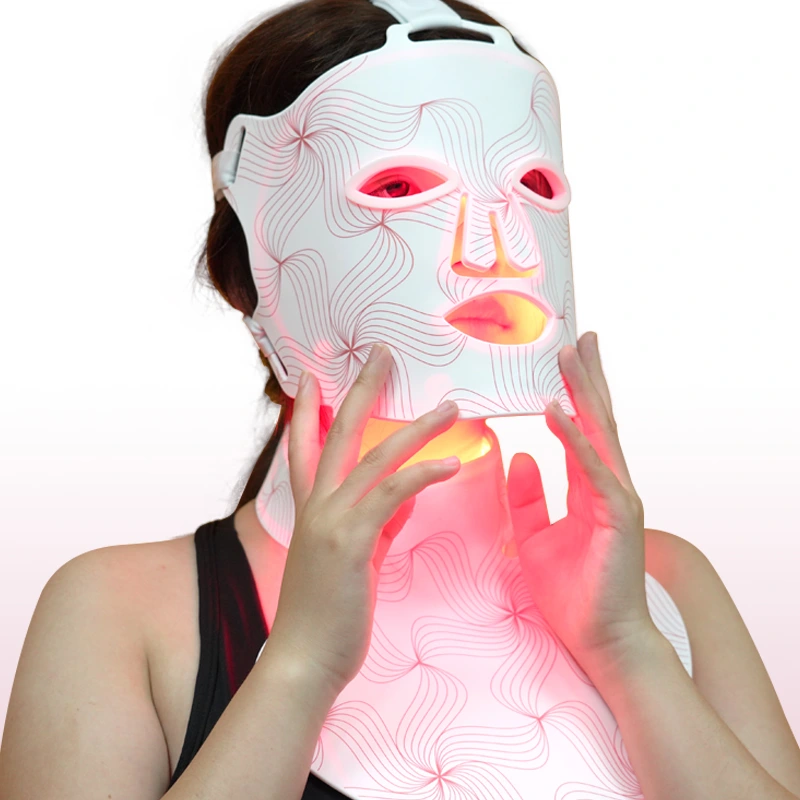
Start your first OEM LED mask project by defining the customer need and intended use. Then ask the manufacturer to separate the confirmed product baseline, available options and changes requiring engineering evaluation—and explain how each would be verified. The baseline gives you something concrete to compare with your requirements; it is not automatically the right final product.
You may already have an ideal wavelength combination, controller or finish in mind. The next task is to decide which requests have a clear purpose, which trade-offs you could accept and which questions need a sample or technical answer. OEM does not automatically mean a completely new design or new tooling. Describe what you want to retain and change before deciding the development route.

Turn customer observations into OEM requirements
Customers may trust your treatments and skincare advice without wanting to buy a home device. Start with questions they actually ask during services. “I want to look after my skin between appointments” identifies an interest, but does not establish demand for a mask or justify a particular specification.
Consider a consultation-led facial studio planning its first own-brand LED mask. In this hypothetical example, the owner begins with five wavelengths, several programs and two mask color options. Some regular customers ask about the appearance of fine lines at home. In exploratory conversations, they also ask what each program does, whether they must choose one themselves and how the device would fit their routine.
Those questions give the owner a reason to request understandable mode names and controls. They do not yet justify a particular controller design. The manufacturer should explain whether the current interface addresses the need, whether an existing option fits, or whether a change needs evaluation.
The owner now has a concrete interface question to resolve, while the five-wavelength proposal still needs justification. If customers mainly ask about blemishes instead, revisit the intended purpose and supporting evidence before retaining the same configuration.
Keep curiosity, willingness to try and willingness to purchase separate. These conversations guide requirements; they do not establish market size or clinical benefit.
Give each customization request a reason
Write a short definition of the product you want to develop. Name the customer, the concern they have expressed and the home-use experience you want to evaluate. Keep unsupported benefit promises out of it.
For the hypothetical studio above, that might be:
We want an OEM home LED mask for existing facial customers who ask about the appearance of fine lines. The proposed configuration needs a documented rationale, with controls and instructions customers can understand. Fit, handling and requested changes remain subject to evaluation.
For each request, state what the product must let the customer or your business do. Mark preferences as negotiable. In the studio example:
| Observation or preference | Requirement to discuss | What the manufacturer needs to confirm |
|---|---|---|
| Customers cannot distinguish the programs | Clear mode names, indicators and instructions | Whether the current controls or an available option address this; which changes need evaluation |
| Customers ask about fine lines; the owner proposes five wavelengths | A configuration supported for the intended use, with each additional wavelength justified | The exact baseline, proposed modes, relevant evidence and changes still awaiting assessment |
| The owner wants two mask colors | An acceptable finish for the first launch; a second color remains optional | Available finishes, sample appearance and the order/replenishment conditions for each color |
These are questions for the manufacturer, not confirmed supply categories. The studio might accept different buttons if customers can understand the modes; a matching finish would not resolve a confusing interface.
Before freezing the configuration, confirm the target market, intended use and proposed claims. Ask which product classification, documentation and limits on customer-facing claims apply to that combination of product and market. Include these answers and any open questions in the product definition; changing the wording on a carton does not replace that assessment.
What the five-wavelength proposal needs to justify
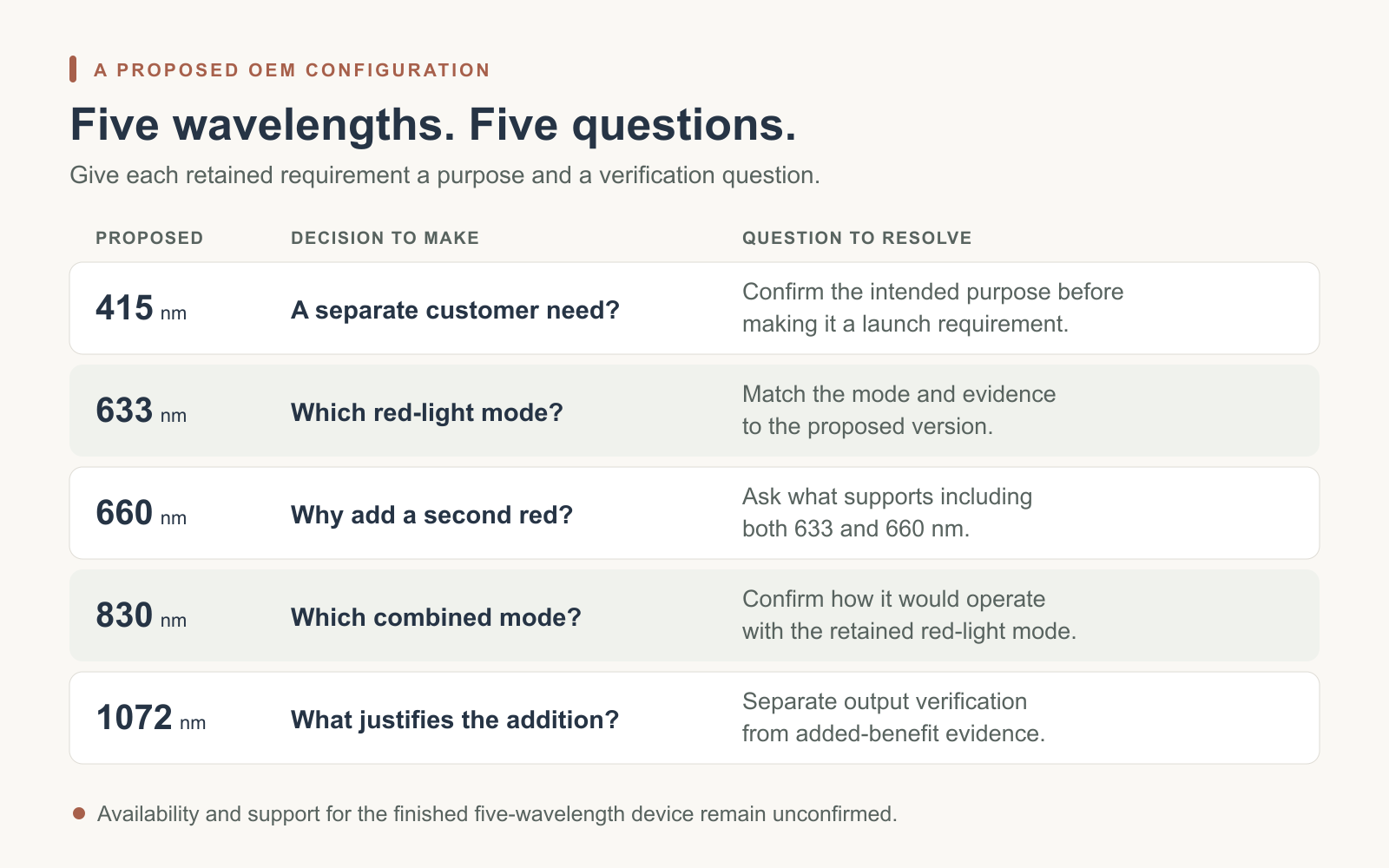
Suppose the proposed OEM specification is 415, 633, 660, 830 En 1072 nm. These numbers identify wavelengths. They do not show that this combination is available, appropriate for your intended use or supported as a finished device. The research can help frame questions:
- 415 + 633 nm: A door de fabrikant gefinancierd, ongecontroleerd 2025 home-use study reported fewer acne lesions with this combination. Participants also followed a standardized skincare routine. It cannot separate either wavelength’s contribution or the effect of the accompanying skincare. For a blemish-focused proposal, this is a reason to investigate the combination, not proof for your mask. Ask which configuration and evidence support the candidate device’s intended purpose.
- 633 En 830 nm: A randomized split-face study compared 633 nm, 830 nm, their combination and sham light for facial wrinkles. Zijn disclosures and acknowledgments identify manufacturer support through free equipment and payment for some laboratory tests. These studied configurations provide a reference when discussing red and near-infrared modes, without establishing a universal winner. Ask which modes the proposed version would provide and what evidence relates to them.
- 660 nm: A 2025 sham-controlled trial compared twice- and three-times-weekly schedules using a 660 ± 10 nm-masker. It reported improvements in some image-based wrinkle measurements and satisfaction, but no significant between-group difference in specialist-rated Wrinkle Assessment Scale scores. Before retaining a second red wavelength, ask what supports including both 633 En 660. This trial examined application frequency, not the effect of adding 660 naar 633.
- 1072 nm: A company-funded, ongecontroleerd 2026 studie evaluated masks combining 633, 830 En 1072 nm. It had no 633/830-only comparison, so it cannot isolate the extra contribution of 1072. One author worked for the funding company. If you propose 1072 as an upgrade, distinguish the evidence verifying its output from the evidence supporting any additional-benefit claim.
None of these studies tested the proposed five-wavelength combination. They do not establish that two red wavelengths are necessary, equivalent or redundant. Keep the proposal open while connecting each retained requirement to its purpose and verifiable device information.
For the studio whose customer conversations concern fine lines, 415 nm need not be a launch requirement while a separate blemish-related need remains unconfirmed. That is a decision about what to request, not a finding that 415 nm has no value or an instruction to remove it from an existing platform.
Separate the OEM baseline from requested changes
Ask the manufacturer to identify the exact baseline version: its configuration, modi, controls and relevant documentation. Then have the manufacturer classify each request against that version:
- Confirmed baseline: what is already implemented and documented in the identified version.
- Available option: what the manufacturer confirms can be selected for this project, including any conditions and documentation differences.
- Engineering evaluation required: what is not yet confirmed, what needs assessment and how the result would be verified.
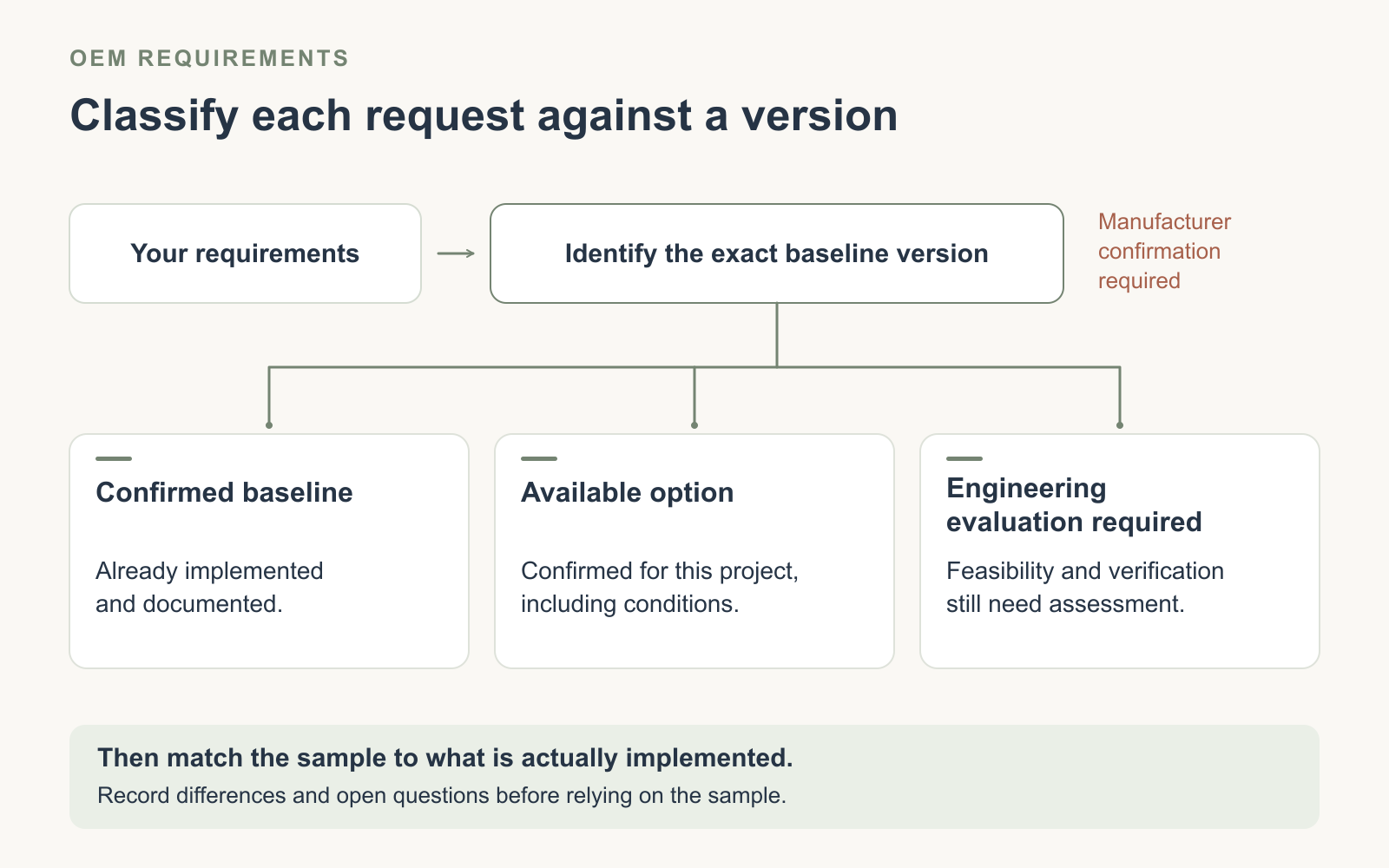
For the interface question in the table above, the answer could be the documented baseline controls, a confirmed controller option or a change requiring engineering evaluation. The manufacturer must identify the version before assigning a category. A familiar shell does not establish that the internal configuration matches your proposal.
Wakelife's OEM/ODM service is the relevant starting point for technical discussion of wavelengths, programma's, controls or architecture. The service description does not confirm that a particular request can be supplied. The five-wavelength example here remains a proposed specification, not a verified Wakelife product offer.
Compare the response with your requirements. If the current controls leave the studio’s customers confused, keep that issue open and evaluate a change or another candidate. If an existing option makes the modes understandable, assess it before requesting new hardware. Leave optional additions for a later decision.
Branding and packaging can then be discussed through the private label-service, subject to the selected platform and project scope. For the investment implications of configuration or packaging changes, use the separate kosten, MOQ and tooling guide.
Match each sample to the questions it can answer
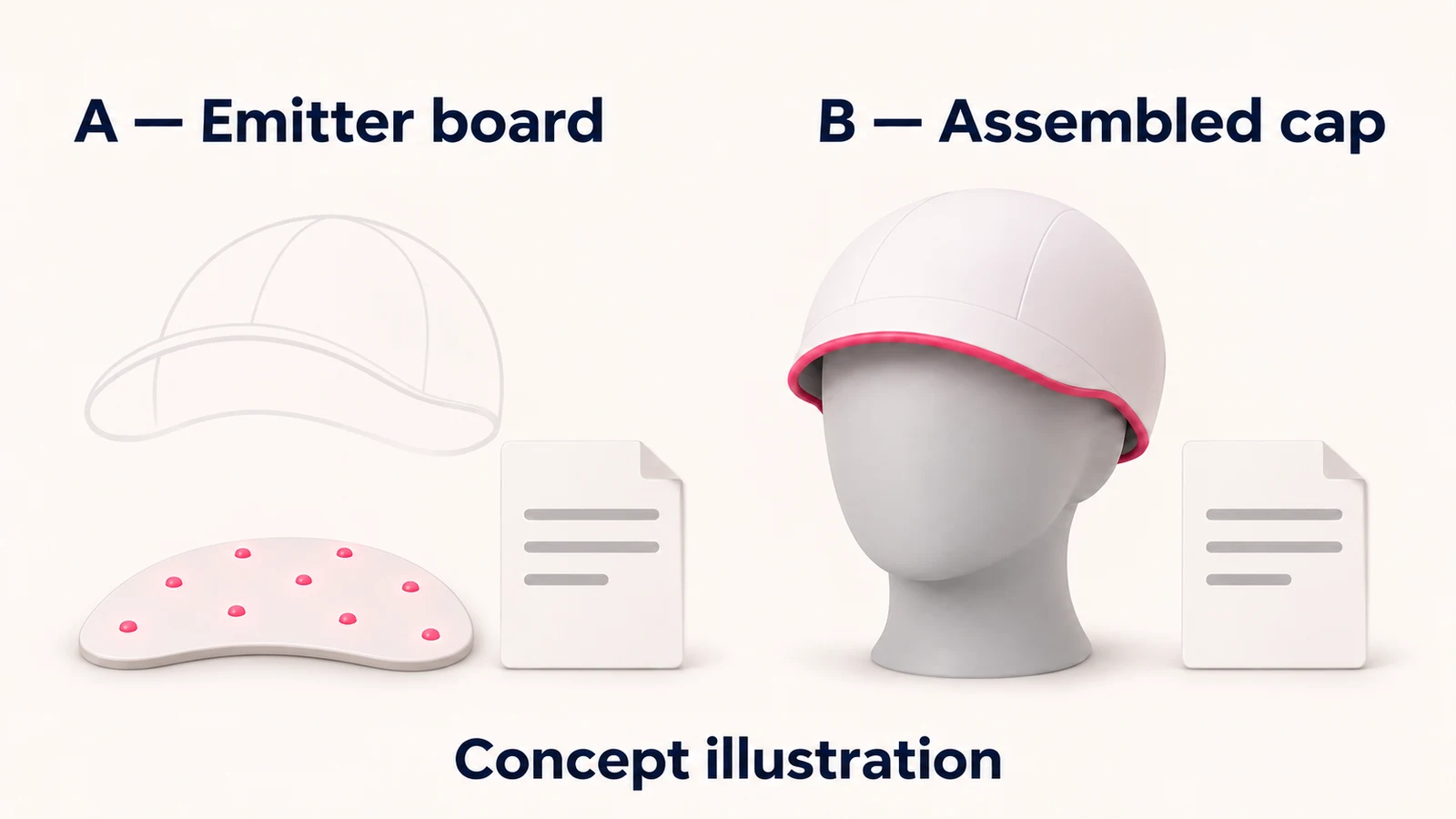
Een voorbeeld is alleen nuttig als je weet wat het vertegenwoordigt. Before requesting one, distinguish a baseline platform sample, A gewijzigd monster incorporating specified changes and a target-configuration sample intended to match the proposed product. Ask the manufacturer to identify what is implemented and what remains different.
A baseline sample may help you assess its current fit and controls. It cannot validate customizations that have not been implemented. A modified sample may resolve one question while leaving others open. Even a target-configuration sample needs its identity and supporting records checked.
Bijvoorbeeld, a modified controller sample might show revised labels while still using the baseline light configuration. It can help you assess the labels; the requested five-wavelength program remains unverified until the relevant version and records are available.
For the hypothetical studio, the review should answer four questions:
- Does the configuration match the request? Match the sample version, mode names and documentation. Request spectral and per-wavelength output records identifying the operating mode, measurement position and conditions. These help verify configuration; they do not establish efficacy or complete safety. Ask which eye-safety assessment and use restrictions apply to this version. De optical report guide covers measurement details.
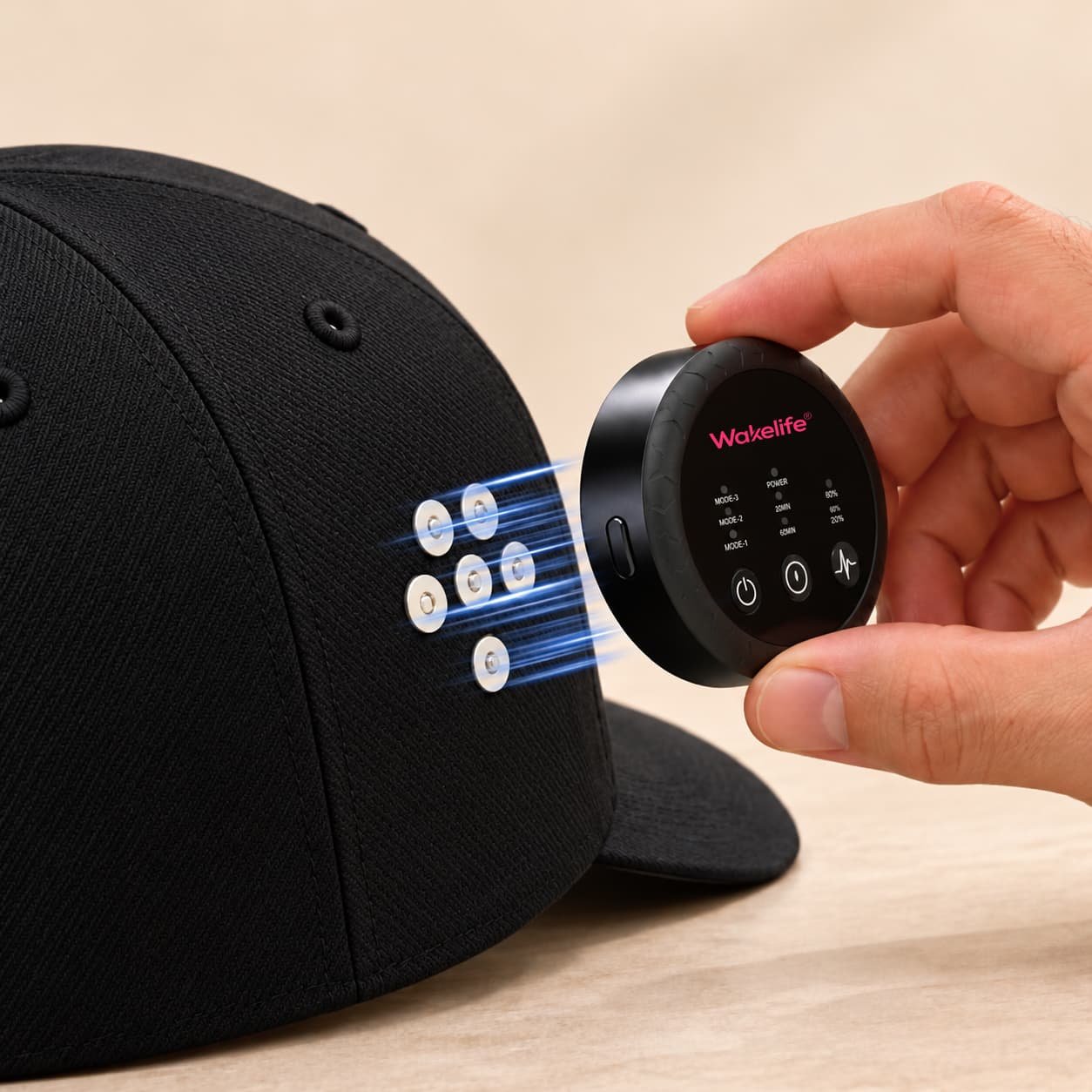
- Do the controls address the observed difficulty? Within the supplied instructions, examine fastening, fit, controller handling and indicators. Record specific problems and whether they suggest a product change, clearer instructions or another candidate. Do not infer comfort from silicone, wireless operation or appearance alone.
- Can you explain the implemented modes accurately? Review the instructions and proposed product introduction together. Keep unsupported benefits and unresolved configuration details out of customer-facing copy.
- Can you support this version? Identify questions your business could answer and those requiring supplier investigation. Confirm the project arrangements that affect your product choice.
Wakelife's after-sales support service describes batch traceability, issue investigation and corrective-action coordination. Responsibilities, returns arrangements and spare parts remain matters for the project agreement.
Record what each sample resolved and what remains open. De sample approval checklist explains how to document acceptance decisions; its flexible-pad example supplies approval logic, while the actual checks must fit your mask.
Finish with requirements you can defend
Your first OEM discussion should end with a clearer set of decisions, even if the final configuration is still open.
For the hypothetical studio, that could mean:
- Keep: the customer focus and requirement for understandable controls, with intended-purpose and evidence checks still required.
- Adjust: the proposed interface if an existing option addresses the same need; retain any essential unmet requirement for technical evaluation.
- Leave open: the five-wavelength configuration until its rationale, feasibility and verification questions have been addressed.
- Defer: making 415 nm mandatory until a separate customer need is established, and adding a second mask color until there is a reason to stock it.
When you are ready to discuss your OEM requirements with Wakelife, bring the customer need, the requirements you want to retain, acceptable trade-offs, changes awaiting confirmation and the questions each sample must answer. That gives the technical discussion a clear purpose and makes the next verification step concrete.
Referenties
Onderzoek
-
1
Ablon, 2025. Thuisgebruik 415/633 nm mask study in acne. Tijdschrift voor klinische en esthetische dermatologie, 18(10):25–32. Full text; funded by GlobalMed Technologies.
-
2
Lee et al., 2007. Randomized split-face study of 633 En 830 nm LED configurations. Tijdschrift voor fotochemie en fotobiologie B, 88(1):51–67. Abstract and publisher disclosure excerpts beoordeeld; full text not reviewed. Photo Therapeutics supplied equipment and funded some laboratory tests.
-
3
Bragato et al., 2025. Sham-controlled 660 nm facial rejuvenation trial. Lasers in de medische wetenschap, 40:170. Publisher abstract and disclosures; full text not reviewed. CAPES/CNPq funding; authors declared no conflicts of interest.
-
4
Bradbury and Langton, 2026. Uncontrolled study of 633/830/1072 nm masks. Cosmetica, 13(5):276. Publisher text reviewed; supplementary data not assessed. Funded by The Beauty Tech Group; one author was an employee.
Wakelife service descriptions
- 5
- 6
- 7