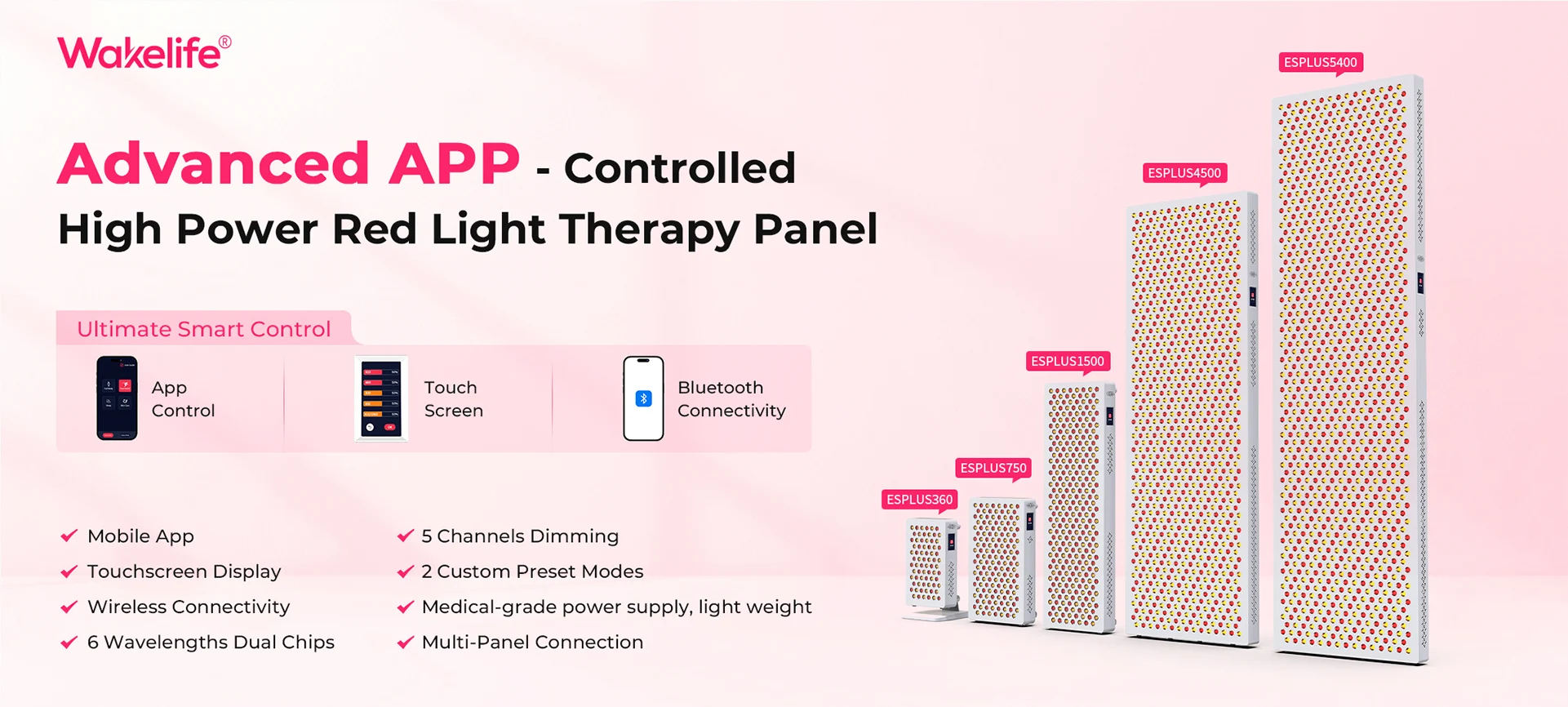
Dosimetria is the science of PBM dosing that determines treatment efficacy. The three key parameters are: Irraggiamento (power density, 30-100 MW/cm²), Densità di energia (dose, 3-10 J/cm² for skin, 10-20 J/cm² for deep tissue), E Treatment Time (calculated as Energy ÷ Irradiance). The fundamental formula is: Dose (J/cm²) = Irradiance (MW/cm²) × Time (seconds) ÷ 1000. Optimal dosing follows the risposta alla dose bifasica—too little is ineffective, too much is inhibitory. Successful PBM requires matching these parameters to treatment goals, tissue types, and device capabilities.
Introduzione
If wavelength determines where light works, dosimetry determines how well it works. Two devices with identical wavelengths can produce dramatically different outcomes based solely on dosing parameters. Understanding irradiance, densità di energia, and treatment time is essential for anyone developing, selecting, or using PBM devices.
This article provides the complete technical foundation for PBM dosing, covering:
- Parameter definitions and their biological significance
- Calculation methods for determining treatment protocols
- Optimal ranges based on tissue type and application
- Common errors and how to avoid them
- Device evaluation criteria for B2B buyers
Whether you’re engineering a new device, evaluating specifications, or optimizing treatment protocols, this guide provides the quantitative framework for effective photobiomodulation.
Fundamental Parameters
Irraggiamento (Densità di potenza)
Definizione: Irradiance is the power delivered per unit area, misurato dentro milliwatts per square centimeter (MW/cm²).
“Irradiance determines how much light energy is delivered per unit area, which directly impacts treatment efficiency.”
Example:
- Device power: 1000 MW (1W)
- Treatment area: 20 cm²
- Irraggiamento: 1000 ÷ 20 = 50 MW/cm²
Biological Significance:
- Determines photon flux (number of photons delivered per second)
- Affects rate of cellular response
- Influences tissue heating potential
- Must exceed cellular threshold for effect
Optimal Range:
- Minimum effective: ~10 mW/cm²
- Gamma ottimale: 30-100 MW/cm²
- Maximum practical: 200-300 MW/cm²
- Inhibition risk: >500 MW/cm² (risk of thermal effects)
Key Research: Chung et al. (2012) identified 50-100 mW/cm² as optimal for most applications.
H3: Densità di energia (Dose)
Definizione: Energy density is the total energy delivered per unit area, misurato dentro joule per centimetro quadrato (J/cm²).
Example:
- Irraggiamento: 50 MW/cm²
- Treatment time: 600 seconds (10 minuti)
- Densità energetica: 50 × 600 ÷ 1000 = 30 J/cm²
Biological Significance:
- Represents total photon exposure
- Determines magnitude of cellular response
- Follows risposta alla dose bifasica
- Must reach therapeutic threshold
Optimal Range by Tissue:
| Tissue Type | Optimal Dose | Rationale |
|---|---|---|
| Pelle (superficiale) | 3-6 J/cm² | High mitochondrial density |
| Pelle (deep) | 6-10 J/cm² | Dermal penetration required |
| Muscolo | 10-20 J/cm² | Greater tissue volume |
| Joints | 8-15 J/cm² | Through multiple tissue layers |
| Brain (transcranial) | 20-60 J/cm² | Skull attenuation |
| Wounds | 4-8 J/cm² | Inflammatory phase considerations |
Key Research: Aumento (1993) established foundational dose-response relationships.
Treatment Time
Definizione: Duration of light exposure, typically measured in minuti.
Formula:
Example:
- Target dose: 10 J/cm²
- Irraggiamento: 50 MW/cm²
- Tempo: (10 × 1000) ÷ 50 = 200 seconds = 3.3 minuti
Biological Significance:
- Determines rate of energy delivery
- Must allow cellular response initiation
- Balances efficacy vs. practicality
- Affects patient compliance
Practical Range:
- Minimum: 5-10 minuti
- Ottimale: 10-20 minuti
- Maximum practical: 30-60 minuti
- Compliance threshold: <30 minutes preferred
The Dosimetry Triangle
Interdependence of Parameters
Irraggiamento, densità di energia, and time form an interdependent triangle:
Key Principle: You can achieve the same energy density with different combinations:
| Irraggiamento | Tempo | Densità di energia |
|---|---|---|
| 30 MW/cm² | 20 min | 36 J/cm² |
| 50 MW/cm² | 12 min | 36 J/cm² |
| 100 MW/cm² | 6 min | 36 J/cm² |
Trade-offs:
- Lower irradiance + longer time: More comfortable, lower heat
- Higher irradiance + shorter time: Faster treatment, potential heat
- Optimal balance: 50-100 mW/cm² for 10-20 minuti
The Biphasic Constraint
All dosing must respect the risposta alla dose bifasica (see Topic 03):
Low dose may produce limited response, while excessively high dose may reduce effectiveness. A moderate dose range is often considered the optimal treatment zone.
Implications:
- Under-dosing: Sub-threshold, no effect
- Optimal dosing: Maximum therapeutic benefit
- Over-dosing: Diminishing returns, potential inhibition
Tissue-Specific Dosimetry
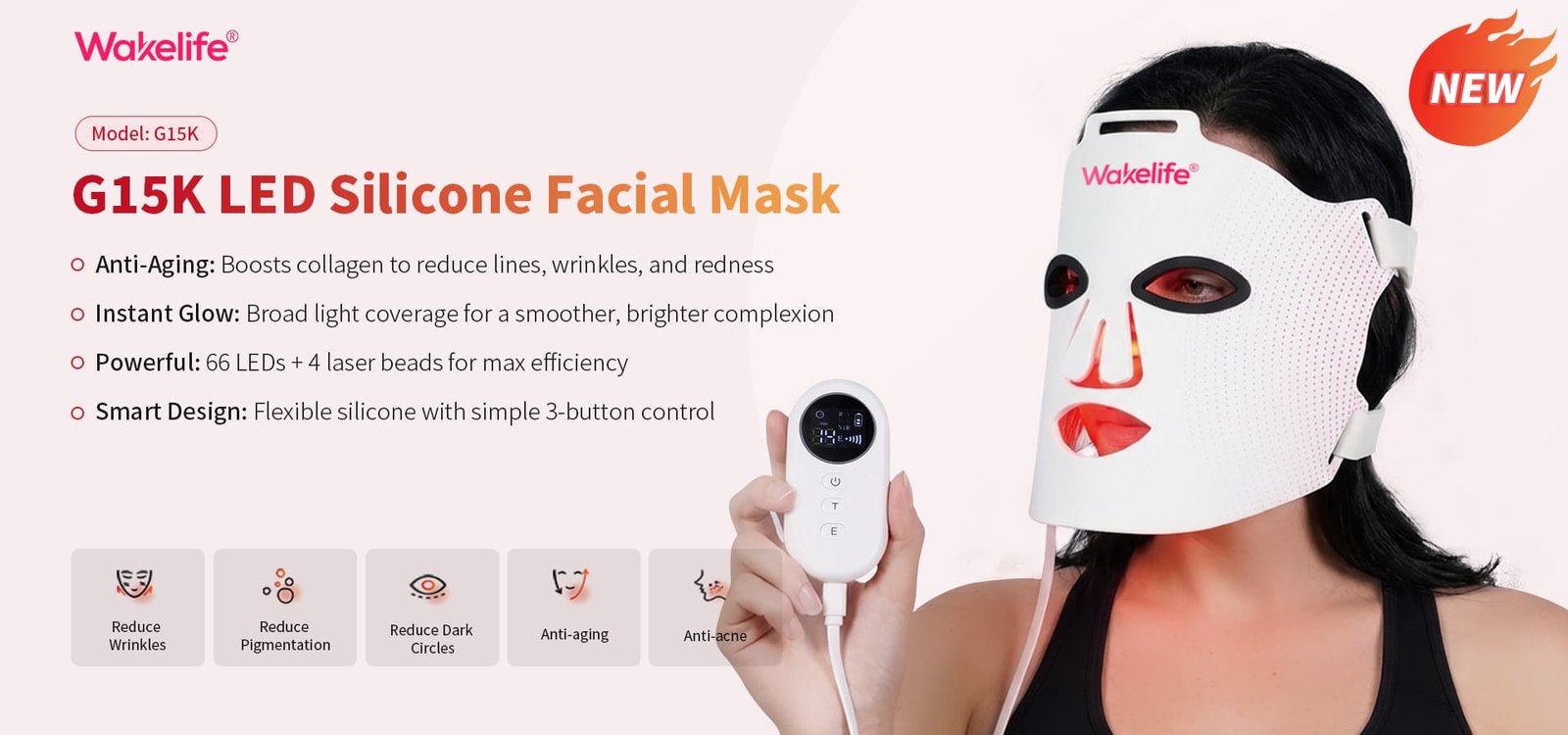
Example 1: Facial Device
Given:
- Device power: 1200 MW
- Treatment area: 20 cm² (face mask)
- Target dose: 6 J/cm²
Calculations:
- Irradiance = 1200 mW ÷ 20 cm² = 60 MW/cm²
- Time = (6 J/cm² × 1000) ÷ 60 mW/cm² = 100 seconds = 1.7 minuti
Adjustment: 1.7 minutes too short for practical use
- Solution: Reduce irradiance or increase target dose
- Revised: Target 30 J/cm² at 60 mW/cm² = 8.3 minuti ✓
Example 2: Therapy Panel
Given:
- Device irradiance: 100 MW/cm² (measured at treatment distance)
- Target tissue: Muscolo (target dose 15 J/cm²)
Calculations:
- Time = (15 J/cm² × 1000) ÷ 100 mW/cm² = 150 seconds = 2.5 minuti
Adjustment: 2.5 minutes may be insufficient for cellular response
- Solution: Extend treatment time or verify irradiance at tissue depth
- Revised: 10 minutes at 100 mW/cm² = 60 J/cm² ✓
Example 3: Spot Treatment
Given:
- Laser device: 200 mW output
- Spot size: 2 cm²
- Target dose: 8 J/cm²
Calculations:
- Irradiance = 200 mW ÷ 2 cm² = 100 MW/cm²
- Time = (8 J/cm² × 1000) ÷ 100 mW/cm² = 80 seconds = 1.3 minuti
Protocol: Multiple spots, 1.3 minuti ciascuno, total treatment time depends on area
Common Dosimetry Errors
Error 1: Confusing Power with Irradiance
Mistake: “This device has 100W power—it must be effective!"
Reality: 100W over 1000 cm² = 100 MW/cm² (efficace)
100W over 1 cm² = 100,000 MW/cm² (dangerous)
Solution: Always calculate irradiance (power ÷ area)
H3: Error 2: Ignoring Distance
Mistake: Using device specifications without accounting for treatment distance
Reality: Irradiance follows inverse square law:
Example:
- 100 a mW/cm² 10 cm
- 25 a mW/cm² 20 cm (4× reduction)
Solution: Measure or calculate irradiance at actual treatment distance
Error 3: Overdosing
Mistake: “If 10 J/cm² is good, 100 J/cm² must be better!"
Reality: Biphasic dose response means excessive dosing inhibits rather than helps
Solution: Stay within established optimal ranges
Error 4: Inconsistent Treatment
Mistake: Variable treatment times, distances, or frequencies
Reality: Cellular adaptation requires consistent dosing
Solution: Standardize protocols and track compliance
Measuring and Verifying Parameters
Irradiance Measurement
Utensili:
- Laser power meter: Gold standard for accuracy
- Irradiance meter: Purpose-built for PBM
- Spectroradiometer: Wavelength-specific measurement
Metodo:
- Position sensor at treatment distance
- Measure power at multiple points
- Calculate average irradiance
- Verify uniformity across treatment area
Energy Density Calculation
Verifica:
- Confirm irradiance measurement
- Record actual treatment time
- Calculate: Dose = Irradiance × Time ÷ 1000
- Compare to target dose
Documentazione:
- Maintain treatment logs
- Track actual vs. planned dosing
- Adjust protocols based on response
FAQ
What is the difference between irradiance and energy density?
Irradiance is power per area (MW/cm²)—the rate of delivery. Energy density is total energy per area (J/cm²)—the cumulative dose. Think of irradiance as speed, energy density as distance traveled.
How do I calculate treatment time?
Tempo (seconds) = Energy Density (J/cm²) × 1000 ÷ Irradiance (MW/cm²). Per esempio, to deliver 10 J/cm² at 50 MW/cm²: (10 × 1000) ÷ 50 = 200 seconds = 3.3 minuti.
Is higher irradiance always better?
NO. While higher irradiance reduces treatment time, excessive irradiance (>200 MW/cm²) risks thermal effects and may push into the inhibition zone of the biphasic response.
Can I achieve the same results with lower irradiance and longer time?
Generally yes, provided the total energy density is equivalent and cellular response thresholds are met. Tuttavia, very low irradiance (<10 MW/cm²) may be sub-threshold.
How do I know if my device specifications are accurate?
Independent measurement with a calibrated power meter is the only way to verify. Many consumer devices overstate specifications.
What happens if I exceed the recommended dose?
Excessive dosing can: (1) cause thermal discomfort, (2) push into biphasic inhibition zone, (3) waste energy without additional benefit, (4) potentially cause mild tissue stress.
Do different wavelengths require different dosing?
Slightly. While the general principles apply across wavelengths, specific optimal doses may vary. Luce rossa (660 nm) and NIR (830 nm) have similar optimal ranges but may require adjustment based on tissue penetration.
How important is treatment consistency?
Very important. Cellular adaptation and response accumulation require consistent dosing. Sporadic or variable treatments yield suboptimal results.
Conclusione
Dosimetry transforms photobiomodulation from guesswork into precision therapy. Understanding the relationship between irradiance, densità di energia, and treatment time enables:
For Device Manufacturers:
- Rational power and array design
- Accurate specification development
- Competitive positioning based on dosing capability
- Quality control and verification protocols
For Clinicians and Users:
- Evidence-based protocol development
- Consistent, reproducible treatments
- Troubleshooting suboptimal responses
- Maximizing therapeutic outcomes
For B2B Buyers:
- Critical evaluation of device specifications
- Comparison of dosing capabilities
- Assessment of manufacturer technical competence
- Informed purchasing decisions
The fundamental formula—Dose = Irradiance × Time—is simple, but its application requires understanding tissue-specific requirements, biphasic constraints, and practical considerations. Mastering these principles distinguishes professional-grade PBM from amateur experimentation.
As the field matures, standardized dosimetry protocols will emerge, enabling better comparison across studies and devices. Until then, the principles outlined in this guide provide the foundation for effective photobiomodulation practice.
Related Topics
Riferimenti
Chung, H., et al. (2012). I dadi e i bulloni del laser di basso livello (leggero) terapia. Annali di ingegneria biomedica, 40(2), 516-533. https://pubmed.ncbi.nlm.nih.gov/22045511/
Aumento, T. (1993). Photobiological fundamentals of low-power laser therapy. IEEE Journal of Quantum Electronics, 23(10), 1703-1717. https://pubmed.ncbi.nlm.nih.gov/7504398/
Ferraresi, C., et al. (2016). Photobiomodulation in human muscle tissue: an advantage in sports performance? Journal of Biophotonics, 9(11-12), 1273-1284. https://pubmed.ncbi.nlm.nih.gov/27583886/
Wang, X., et al. (2016). Transcranial photobiomodulation with near-infrared light from animal models to human applications. Progress in Neurobiology, 142, 1-22. https://pubmed.ncbi.nlm.nih.gov/27362728/
World Association for Laser Therapy. (2023). Dosimetry Guidelines for Photobiomodulation. https://waltza.co.za/
World Association for Laser Therapy. (2024). Recommended Doses and Treatment Protocols. https://waltza.co.za/
Jenkins, P. UN., & Carroll, J. D. (2011). How to report low-level laser therapy (Lllt) / photomedicine dose and beam parameters in clinical and laboratory studies. Fotobiomodulazione, Fotomedicina, and Laser Surgery, 29(12), 785-797. https://pubmed.ncbi.nlm.nih.gov/22077356/