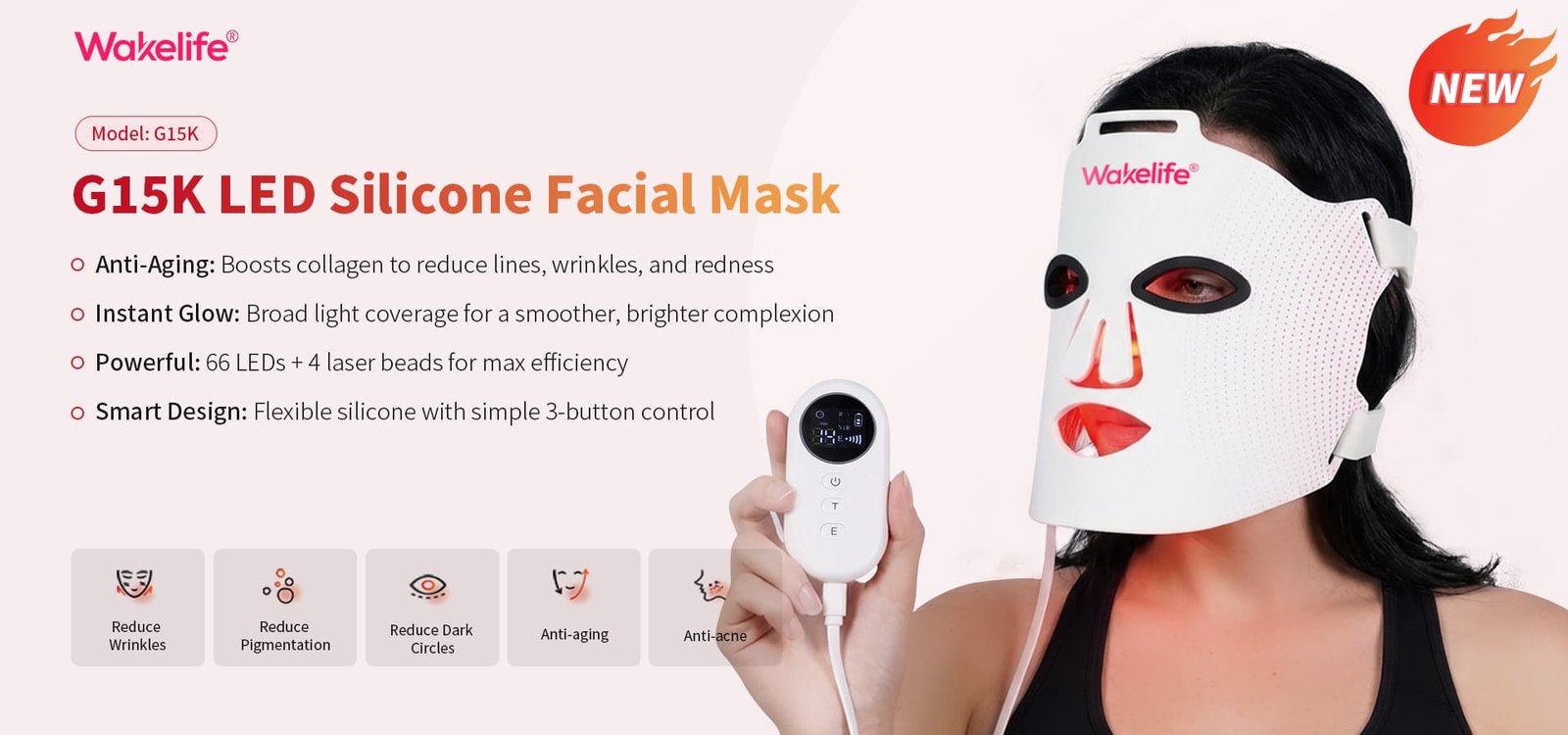
Red light therapy — also known as photobiomodulation (PBM) or low-level light therapy (Lllt) — has gone from a niche clinical treatment to one of the fastest-growing categories in beauty and wellness. Masques du visage LED, targeted eye patches, and full-body panels are now mainstream.
But with rapid growth comes a critical question that consumers, brand owners, and distributors all need answered:
Is red light therapy actually safe?
Selon Clinique de Cleveland, red light therapy is generally considered safe and painless when used as directed. Harvard Health has also profiled the therapy’s growing evidence base, noting its favorable safety record.
This guide covers everything: the clinical evidence behind its safety profile, the real (though minimal) side effects, who should avoid it, what certifications to look for, and how device design directly impacts user safety. Whether you’re a consumer considering your first LED mask or a brand sourcing devices from a manufacturer, this article gives you the facts.
The Short Answer — Yes, Red Light Therapy Has an Excellent Safety Profile
Let’s start with the reassuring headline: red light therapy is one of the safest therapeutic modalities available today.
Here’s why:
- Non-ionizing radiation. Unlike UV light or X-rays, rouge (620–700 nm) et proche infrarouge (700–1100 nm) wavelengths do not damage DNA or cause mutations.
- Non-thermal at proper doses. Well-designed LED devices deliver energy that is absorbed by cellular chromophores (primarily cytochrome c oxidase) without generating harmful heat. This mechanism is well-documented in Hamblin’s landmark 2017 review on PBM’s anti-inflammatory effects.
- Decades of clinical research. PBM has been studied in over 6,000 published papers on PubMed. Systematic reviews consistently report minimal adverse events — typically less than 1–2% of participants, almost always mild and temporary.
- FDA recognition. The U.S. Nourriture & Drug Administration has cleared numerous LED-based PBM devices for various indications, classifying most as Dispositifs médicaux de classe II — the same risk category as powered wheelchairs and pregnancy test kits.
This doesn’t mean there are zero risks. It means the risks are well-characterized, predictable, and almost entirely avoidable with proper device design and responsible use.
How Red Light Therapy Devices Work — A Safety Perspective
Understanding how these devices work helps explain why they’re safe — and where risks could arise if a device is poorly made.
LEDS, not lasers. Consumer and professional PBM devices overwhelmingly use LEDs (Light-Emitting Diodes), not lasers. LEDs produce incoherent light spread across a wider area, which means lower peak irradiance per point on the skin. UN 2018 comparative review by Heiskanen & Hamblin concluded that LEDs can achieve comparable therapeutic outcomes to lasers while presenting a significantly lower risk profile — making them the preferred technology for consumer devices.
Low-voltage operation. Quality devices run on low-voltage power — often battery-powered at well under 24V. This eliminates any risk of electrical shock during skin contact.
Timed sessions. Responsible device design includes automatic shutoff timers. Par exemple, WakeLife devices automatically shut off after their programmed treatment cycle, preventing overexposure even if the user falls asleep.
Therapeutic window. PBM operates on a biphasic dose-response curve (Huang et al., 2009 — the most cited paper on this principle). There is an optimal energy dose — typically 3–60 J/cm² depending on the target tissue. Below this range, effects are minimal. Above it, you may see diminished results or mild irritation. More is not better, and good device design ensures users stay within the effective and safe window.
Potential Side Effects of Red Light Therapy
Commonly Reported (Mild & Temporary)
The following have been reported in clinical studies and user experiences, but they are infrequent, mild, and self-resolving:
| Side Effect | Fréquence | Durée | Notes |
|---|---|---|---|
| Mild warmth or redness at treatment site | Occasional | Minutes to 1 hour | Normal photobiological response; not a burn |
| Temporary skin tightness | Occasional | 30–60 minutes | Often reported with facial devices |
| Mild headache | Rare | Heures | Sometimes reported with full-face masks at higher irradiance; usually resolves after first few sessions |
| Temporary dryness | Rare | Heures | Some users notice mild dryness; easily managed with moisturizer post-treatment |
Uncommon but Documented
| Side Effect | Context |
|---|---|
| Eye discomfort or strain | Occurs when devices are used near the eyes without proper shielding or built-in eye protection |
| Hyperpigmentation trigger | In very rare cases, individuals with melasma or certain skin types (Fitzpatrick IV–VI) may experience temporary pigment changes; research is limited |
| Overuse irritation | Users who dramatically exceed recommended session times or frequency may experience redness or irritation — reinforcing the importance of auto-shutoff features |
What the Clinical Data Actually Says
UN comprehensive review by Zein, Selting & Hamblin (2018) analyzing light parameters and safety outcomes across PBM clinical trials found:
- Adverse event rate: < 2% across all studies
- Serious adverse events attributable to PBM: essentially 0%
- Most reported events were indistinguishable from sham/placebo group events
- No long-term adverse effects documented in any peer-reviewed study to date
UN systematic review of LED use in dermatology by Jagdeo et al. (2015) further confirmed the safety of LED-based devices across multiple skin types and treatment indications.
Bottom line: The side-effect profile of LED-based red light therapy is exceptionally mild compared to virtually any pharmaceutical, injectable, or even many topical skincare interventions.
Contraindications — Who Should Avoid or Consult a Doctor First?
While red light therapy is safe for the vast majority of people, certain populations should exercise caution or seek medical advice first:
1. Photosensitizing Medications
Some medications increase skin sensitivity to light. These include:
- Antibiotiques tétracyclines (doxycycline, minocycline)
- Certain retinoids (isotrétinoïne / Accutane)
- Some NSAIDs and diuretics
- Psoralen-based drugs (used in PUVA therapy)
- St. John’s Wort (herbal supplement)
Recommendation: If you take any photosensitizing medication, consult your prescribing physician before using any light therapy device.
2. Active Skin Cancer or Lesions in the Treatment Area
PBM stimulates cellular metabolism and proliferation. While there is no evidence that red light therapy causes cancer, there is a theoretical concern about stimulating growth of existing malignant cells. Le American Cancer Society recommends that patients with active skin malignancies consult their oncologist before using any light-based therapy over affected areas.
3. Grossesse (Precautionary)
There is no clinical evidence that red/NIR light harms pregnant women or fetuses. Cependant, because no large-scale safety studies have been conducted specifically on pregnant populations, most manufacturers and clinicians recommend avoiding use during pregnancy as a precaution — particularly over the abdomen.
Facial use during pregnancy is generally considered lower risk, but consult your OB/GYN.
4. Epilepsy / Seizure Disorders
This applies specifically to devices with pulsed or flashing modes. Strobing visible light at certain frequencies (typically 3–60 Hz) can trigger photosensitive epilepsy in susceptible individuals. Le Epilepsy Foundation provides detailed guidance on photosensitivity triggers.
Point clé: Continuous-wave (non-pulsed) LED devices do not carry this risk. If you have epilepsy, choose a continuous-wave device and consult your neurologist.
5. Children Under 18
Most FDA-cleared devices are indicated for adult use. Pediatric use is not inherently dangerous, but clinical data is limited, and regulatory clearances typically do not include minors.
6. Recent Cosmetic Procedures
If you’ve recently had:
- Chemical peels
- Laser resurfacing
- Microneedling
- Injectable fillers or Botox
Wait until your practitioner advises that your skin has fully healed before introducing LED light therapy. In some protocols, low-level red light is actually used to accelerate post-procedure healing — but this should be directed by your aesthetician or dermatologist, not self-administered.
Eye Safety — The Most Under-Discussed Risk
This deserves its own section because it’s the one area where real (though still preventable) risk exists.
Why eyes matter:
- The retina has no pain receptors. You won’t feel thermal damage happening.
- Proche infrarouge (Nir) longueurs d'onde (800–1100 nm) are invisible to the human eye but can still penetrate the cornea and reach the retina.
- According to the American Academy of Ophthalmology, prolonged direct exposure to intense light sources can pose retinal risk.
How to mitigate:
IEC 62471 conformité. This is the international standard for photobiological safety of lamps and lamp systems. It classifies devices into Exempt, Risk Group 1 (low risk), Risk Group 2 (moderate risk), and Risk Group 3 (high risk). Quality consumer LED devices should test at Exempt or Risk Group 1.
Built-in eye protection. The best facial masks and eye-area devices incorporate opaque eye shields or are specifically designed so that LEDs do not directly face the open eye.
External goggles. For full-face panels or masks without built-in shielding, the manufacturer should include or recommend light-blocking goggles.
Product-specific design. WakeLife’s EP01 Eye Patches, for example, are designed specifically for the periorbital area with controlled LED placement that treats under-eye skin while accounting for eye safety.
What Makes a Device “Safe”? Certifications & Design Standards
Not all devices on the market are created equal. Certifications are the objective, third-party verified proof that a device meets safety standards.
FDA Clearance — What It Actually Means
When a device receives FDA 510(k) autorisation, it means the FDA has reviewed the manufacturer’s submission — including bench testing data, biocompatibility reports, electrical safety results, and labeling — and determined that the device is substantially equivalent to a legally marketed predicate device.
This is not a marketing claim. It is a regulatory gate.
WakeLife’s LED light therapy devices have achieved FDA 510(k) Autorisation (K250830), meaning they have been reviewed and cleared by the U.S. Nourriture & Drug Administration for their indicated use. You can verify this directly in the FDA 510(k) database by searching the K-number.
Marquage CE (UE)
CE marking indicates compliance with European health, sécurité, and environmental protection standards. For light therapy devices, this typically involves the EU Medical Device Regulation (MDR 2017/745) ou, for wellness-positioned devices, the Low Voltage Directive and EMC Directive.
IEC 62471 — Photobiological Safety
Ce standard specifically evaluates the optical radiation hazard of a device — including UV, visible, and infrared emissions. It answers the question: “Can this device damage eyes or skin through its light output?»
ISO 13485 — Quality Management System
ISO 13485:2016 certification means the manufacturer operates a quality management system specifically designed for medical devices — covering design controls, risk management, traçabilité, corrective actions, and post-market surveillance.
Electrical Safety
Certifications like UL, ETL, and compliance with IEC 60601 (medical electrical equipment) or IEC 62368 (consumer electronics) verify that the device won’t cause electrical shock, fire, or overheating.
Certification Quick-Reference Table
| Certification | What It Verifies | Pourquoi c'est important |
|---|---|---|
| FDA 510(k) | Sécurité & substantial equivalence (NOUS) | Legal market access in the US; independent review |
| CE Mark | EU safety directives compliance | Required for European market |
| IEC 62471 | Photobiological (eye & skin) sécurité | Confirms light output is safe |
| ISO 13485 | Medical-grade quality management | Ensures consistent, controlled manufacturing |
| Ul / ETL | Electrical safety | Protection against shock, fire, surchauffe |
| IEC 60601 | Medical electrical equipment standard | Gold standard for medical devices |
| BSCI | Social compliance / ethical manufacturing | Supply chain integrity |
Red Flags — How to Spot an Unsafe Device
As a consumer or as a brand sourcing products, watch for these warning signs:
❌ No certifications listed anywhere — no FDA, CE, or test reports mentioned on the product page or packaging.
❌ Exaggerated irradiance claims with no third-party test data — claiming “200 mW/cm²” without any lab report to back it up. High irradiance without proper thermal management is a burn risk.
❌ No auto-shutoff or timer function — this is a basic safety feature that should be standard on any skin-contact device.
❌ Cheap, unidentified materials in skin-contact areas — uncertified plastics or silicones can cause skin irritation, allergic reactions, or off-gas harmful chemicals. Look for medical-grade or food-grade TPU/silicone.
❌ No clear manufacturer information — if you can’t trace the device back to a real factory with real certifications, you can’t trust the safety claims.
❌ “FDA Approved” language — the FDA clears appareils; it does not “approve” them. This misnomer, while common, can indicate a seller who doesn’t actually understand (or have) regulatory status.
How WakeLife Designs for Safety from Day One
At WakeLife, safety isn’t a checkbox — it’s embedded into every stage of product development, from initial concept through post-market surveillance.
🔬 FDA 510(k) Cleared — K250830 WakeLife’s LED light therapy devices have been reviewed and cleared by the FDA, confirming that they meet U.S. safety and performance standards for their intended use.
🏭 ISO 13485 Certified Manufacturing Our parent manufacturer, Shenzhen Sungrow, operates under ISO 13485 — the international quality management standard for medical device manufacturing. This means every device is produced with full traceability, documented risk management, and validated processes.
🧪 Risk Management from Design Stage Our medical compliance team is involved from day one of product development — assessing regulatory pathways, intended use claims, risk management needs, and key safety/performance requirements before a single prototype is built.
🧴 Medical-Grade Materials WakeLife devices use TPU and liquid silicone in skin-contact areas — materials chosen for biocompatibility, confort, and easy cleaning.
⏱️ Built-In Auto-Shutoff Timers Every WakeLife device includes automatic timed treatment sessions, so users receive the optimal dose without risk of overexposure.
🔋 Low-Voltage, Battery-Powered Operation Devices like the G15K and EP01 run on rechargeable batteries, eliminating electrical safety concerns during skin contact.
📋 Full Certification Portfolio Beyond FDA, our manufacturing base holds CE, BSCI, Ul, ETL, TGA (Australie), Et IEC 62471 certifications — giving brands and consumers worldwide confidence in our devices.
Safety Tips for Users — Getting the Most Benefit with Zero Risk
Whether you’re using a WakeLife mask or any other quality LED device, follow these practical guidelines:
- Follow the recommended session time. Typically 10–20 minutes per treatment area. If your device has an auto-timer, trust it.
- Start conservatively. Begin with 3–4 sessions per week and observe how your skin responds before increasing frequency.
- Clean your device after every use. TPU and silicone surfaces can be wiped with a soft, damp cloth. This prevents bacterial buildup.
- Use eye protection when using full-face panels or masks without built-in eye shielding.
- Consult your dermatologist if you’re on photosensitizing medications or have active skin conditions.
- Store your device properly. Avoid extreme temperatures and direct sunlight.
- Don’t exceed recommended treatment times thinking “more is better.” The dose-réponse biphasique means overdosing can reduce benefits.
- Don’t use over open wounds or active infections unless directed by a healthcare provider.
- Don’t look directly into LEDs — especially NIR wavelengths that are invisible but still active.
- Don’t use immediately after sensitizing treatments (peelings chimiques, retinol, etc.) without professional guidance.
- Don’t buy uncertified devices to save money — the cost difference is small; the risk difference is significant.
Pour les marques & Distributors — Why Safety Is Your #1 Market Differentiator
If you’re reading this as a brand owner, private-label buyer, or distributor, here’s the business case for prioritizing safety:
The Regulatory Landscape Is Tightening
- Le FDA is increasing scrutiny on LED devices making therapeutic claims without clearance.
- Le EU MDR (Medical Device Regulation) has stricter requirements than the old MDD it replaced.
- Australia’s TGA and other national regulators are following similar tightening trajectories.
Brands that launch with proper certifications are future-proofed. Brands that don’t are one regulatory letter away from a market exit.
Liability and Recall Risk
An uncertified device that causes an adverse event — even a mild one — exposes your brand to:
- Product liability lawsuits
- Mandatory recall costs
- Reputational damage amplified by social media
- Loss of retail and platform partnerships (Amazone, for instance, is cracking down on uncertified health devices)
Consumer Trust = Conversion Rate
Modern consumers research before they buy. They look for:
- FDA clearance numbers they can verify
- Certifications displayed on the product page
- Clear safety information and contraindication disclosures
- Transparent manufacturing provenance
Brands that proactively display this information see higher conversion rates, lower return rates, and stronger customer lifetime value.
Partner with a Manufacturer That Builds Compliance In
When safety is engineered into the product from the design stage — not patched on after production — the result is a device that is genuinely safer, easier to certify, and cheaper to bring to market.
WakeLife’s parent manufacturer, Shenzhen Sungrow, integrates medical compliance from the earliest concept phase, covering regulatory pathway assessment, intended use claims, risk management, and safety/performance requirements. This approach reduces rework, coût, and time-to-market while delivering a product your brand can stand behind with confidence.
Frequently Asked Questions — Red Light Therapy Safety
Is red light therapy FDA approved?
The FDA clears (not “approves”) Class II medical devices through the 510(k) pathway. WakeLife’s devices have received FDA 510(k) clearance under number K250830, confirming they meet safety and performance standards.
Can red light therapy burn your skin?
LED-based red light therapy at proper parameters does not burn skin. LEDs produce significantly less heat than lasers, as confirmed by Heiskanen & Hamblin (2018). Quality devices include thermal management and auto-shutoff to prevent any risk of thermal injury.
Can you use red light therapy every day?
Most protocols recommend 3–5 sessions per week, 10–20 minutes par séance. Daily use is generally safe for most people, but following the manufacturer’s guidelines ensures you stay within the optimal dose range.
Is red light therapy safe for dark skin tones?
Oui. Unlike UV-based treatments or certain laser procedures, red and NIR wavelengths do not target melanin and are considered safe across all Fitzpatrick skin types (I–VI). UN systematic review by Jagdeo et al. (2015) confirmed safety across multiple skin types. Rarely, individuals with melasma should proceed cautiously and monitor for any pigment changes.
Can I use red light therapy while pregnant?
There is no evidence of harm, but large-scale safety studies on pregnant populations have not been conducted. Most manufacturers recommend avoiding use during pregnancy as a precaution, or at minimum avoiding treatment over the abdominal area. Consult your OB/GYN.
Do I need to wear eye protection?
For full-face masks and panels: Oui, unless the device has built-in opaque eye shielding. For targeted devices (like eye patches or lip devices), the manufacturer should design safe LED placement. En cas de doute, wear the provided goggles. See the American Academy of Ophthalmology’s guidance on LED eye safety.
Can red light therapy cause cancer?
There is no evidence that red or near-infrared light causes cancer. These wavelengths are non-ionizing and do not damage DNA. Cependant, as a precaution, do not treat directly over known malignant lesions.
What happens if I use it longer than recommended?
Overuse typically results in diminished therapeutic benefits rather than harm — this is the dose-réponse biphasique. In extreme cases, prolonged exposure could cause mild temporary redness or skin irritation. Auto-shutoff features in quality devices prevent this.
How do I know if my device is genuinely certified?
Ask for the specific clearance/certification number and verify it:
- FDA 510(k): Search the FDA 510(k) database using the K-number
- CE: Request the Declaration of Conformity and Notified Body number
- ISO 13485: Ask for the certificate from the accredited registrar
Is red light therapy safe for use on children?
Most FDA clearances are for adult use. Limited pediatric research exists. Consult a pediatrician before using any light therapy device on a child.
Sources & Further Reading
- Hamblin MR (2017). Mécanismes et applications des effets anti-inflammatoires de la photobiomodulation. AIMS Biophysics, 4(3), 337–361. PubMed
- Huang YY, Chen AC, Carroll JD, Hamblin MR (2009). Biphasic dose response in low level light therapy. Dose-réponse, 7(4), 358–383. PubMed
- Heiskanen V, Hamblin MR (2018). Photobiomodulation: lasers vs. LEDS? Photochem Photobiol Sci, 17(8), 1003–1017. PubMed
- Zein R, Selting W, Hamblin MR (2018). Examen des paramètres lumineux et de l'efficacité de la photobiomodulation. J Biomed Opt, 23(12). PubMed
- Jagdeo J et al. (2015). Light-emitting diodes in dermatology: a systematic review. Lasers Surg Med, 47(1), 95–103. PubMed
- Cleveland Clinic — Red Light Therapy: Uses, Avantages & Risques. clevelandclinic.org
- Harvard Health — Can red light therapy improve your health? harvard.edu
- FDA 510(k) Premarket Notification Database. accessdata.fda.gov
- ISO 13485:2016 — Medical devices quality management systems. iso.org
- IEC 62471 — Photobiological safety of lamps and lamp systems. iec.ch
- DermNet NZ — Drug-induced photosensitivity. dermnetnz.org
- American Academy of Ophthalmology — Are LED lights damaging to eyes? aao.org
- EU Medical Device Regulation (MDR 2017/745). eur-lex.europa.eu
- Epilepsy Foundation — Photosensitivity and seizures. epilepsy.com
Conclusion
Red light therapy is backed by decades of clinical research and has one of the safest profiles of any therapeutic modality in skincare and wellness. Side effects are rare, mild, and temporary. Serious adverse events are essentially non-existent in properly designed, certified devices.
But “safe” doesn’t happen by accident. It happens through:
- Rigorous engineering and material selection
- Third-party testing and certification
- Responsible dose design with built-in safeguards
- Transparent labeling and user education
Pour les marques & Distributeurs
Looking for a certified, safety-first manufacturing partner for your LED light therapy line? WakeLife’s parent facility holds FDA, CE, ISO 13485, TGA, Ul, and ETL certifications — with medical compliance built in from day one.
Disclaimer: This article is for educational purposes only and does not constitute medical advice. Consult a qualified healthcare professional before beginning any new treatment. WakeLife LED devices are FDA 510(k) effacé (K250830). Individual results may vary.