Seven critical specifications determine PBM device quality and efficacy: (1) Longueur d'onde (660 nm red + 830 nm NIR optimal), (2) Irradiance (30–100 mW/cm²), (3) Densité énergétique (3–60 J/cm² tissue-dependent), (4) Zone de traitement (match to application), (5) Delivery Mode (CW standard, PW optional), (6) Build Quality (certifications, matériels, warranty), et (7) Documentation (specs, essai, conformité). Verify claims through independent testing, certifications, and manufacturer transparency. Red flags include missing specifications, unrealistic claims, and lack of verification data. This framework enables systematic evaluation for confident B2B procurement decisions.
Introduction
If you’ve ever compared three red light therapy devices and ended up more confused than when you started, you’re not alone. Datasheets filled with jargon, marketing claims that sound impressive but mean nothing, and wildly different price points for seemingly identical products — it’s a frustrating landscape for any buyer.
Here’s the good news: you don’t need a photonics degree to evaluate these devices. You need a framework.
After years of designing, fabrication, and testing photobiomodulation devices at WakeLife, we’ve distilled the evaluation process into seven specifications that separate genuinely effective devices from marketing-driven ones. These are the same parameters our own R&D team uses during product development — and the same criteria our B2B partners use when comparing suppliers.
As documented in the broader PBM literature, photobiomodulation efficacy depends on delivering the right light parameters to the right tissue (Chung et al., 2012). Get those parameters wrong, and even the most expensive device becomes an expensive lamp.
This framework breaks down into two groups:
- Performance specifications (1–5): These determine whether the device actually works — wavelength, irradiance, dose, coverage area, and delivery mode.
- Quality specifications (6–7): These determine whether the device is safe, fiable, and legally sellable — build quality, certifications, and documentation.
Whether you’re a distributor sourcing inventory, a clinic owner evaluating equipment, or an OEM buyer selecting a manufacturing partner, this guide gives you a systematic, repeatable process for making confident decisions.
Let’s walk through each specification — what to look for, what to avoid, and how to verify claims.
Le 7 Critical Specifications
Spécification 1: Longueur d'onde
Pourquoi c'est important: Wavelength determines which chromophores absorb light and how deeply photons penetrate tissue. As Karu’s foundational research established, cytochrome c oxidase — the primary photoacceptor in mitochondria — has peak absorption in the red (autour 660 nm) et proche infrarouge (autour 830 nm) bandes (Augmenter, 1998). Choosing the wrong wavelength means photons never reach their biological target. For a deep dive, see Topic 06: Sélection de la longueur d'onde & Profondeur de pénétration des tissus.
Optimal Specifications:
| Application | Primary Wavelength | Secondary | Rationale |
|---|---|---|---|
| Peau / face | 660 nm | 830 nm | Heme absorption + deep dermal stimulation |
| Body / muscle | 830 nm | 660 nm | CuA center + pénétration profonde |
| Brain | 810 nm | — | Transcranial optimization |
| General wellness | 660 nm + 830 nm | — | Dual-wavelength coverage |
Red Flags:
- Single wavelength marketed for all applications
- Wavelengths outside 600–1000 nm therapeutic window
- No wavelength specification provided at all
- Unusual wavelengths (par exemple. 450 nm, 560 nm) without published evidence
How to Verify:
- Request spectroradiometer data showing peak emission wavelength
- Verify with independent testing — don’t rely on label claims alone
- Check peak wavelength, not just “red light” or “infrared”
Acceptable Range: 630–850 nm for therapeutic applications
Spécification 2: Irradiance
Pourquoi c'est important: Irradiance (MW / CM²) tells you how fast photons are being delivered to tissue. Too low and you’re below the biological activation threshold; too high and you risk thermal damage and the inhibitory phase of the dose-réponse biphasique (Huang et al., 2009). For detailed dosimetry, see Topic 07: Irradiance, Densité énergétique & Dosimétrie.
Optimal Range:
| Tissue Depth | Minimum | Optimal | Maximum |
|---|---|---|---|
| Superficial (skin, surface wounds) | 30 MW / CM² | 50 MW / CM² | 100 MW / CM² |
| Profond (muscle, articulations) | 50 MW / CM² | 75 MW / CM² | 150 MW / CM² |
Red Flags:
- Irradiance > 200 MW / CM² (thermal risk — see IEC 62471 sécurité photobiologique)
- Irradiance < 10 MW / CM² (sub-threshold for PBM)
- Power stated in watts without specifying area (meaningless without area)
- No measurement distance specified (irradiance drops with distance)
How to Verify:
- Request irradiance map across the full treatment area
- Verify measurement distance (should be at treatment surface, typically 0–6 inches)
- Check uniformity across the emitting surface (±20% is acceptable)
- Independent power meter testing is the gold standard
Key Formula: Irradiance (MW / CM²) = Power (MW) ÷ Area (cm²)
Spécification 3: Densité énergétique (Dose)
Pourquoi c'est important: Densité énergétique (J/cm²) represents the total photon dose delivered to tissue — and it’s the single most important variable in determining therapeutic outcome. Research consistently demonstrates a biphasic dose response: too little does nothing, the right amount stimulates healing, and too much actually inhibits it (Huang et al., 2009). See Topic 07 for complete dosimetry guidance.
Optimal Range by Tissue:
| Tissue Type | Optimal Dose | Treatment Time* |
|---|---|---|
| Peau (superficiel) | 3–6 J/cm² | 10–15 min |
| Peau (deep dermal) | 6–10 J/cm² | 15–20 min |
| Muscle | 10–20 J/cm² | 15–30 min |
| Joints | 8–15 J/cm² | 15–25 min |
| Brain (transcranial) | 20–60 J/cm² | 20–30 min |
*À 50 mW/cm² irradiation
Red Flags:
- Dose > 100 J/cm² (biphasic inhibition zone)
- Dose < 1 J/cm² (sub-therapeutic)
- No dose calculation or treatment time guidance provided
- Treatment times that don’t match stated irradiance (do the math yourself)
How to Verify:
- Calculate: Dose (J/cm²) = Irradiance (MW / CM²) × Time (seconds) ÷ 1000
- Verify treatment time at stated irradiance — the numbers must add up
- Cross-check against tissue-specific recommendations from WALT dosage guidelines
Spécification 4: Treatment Area Coverage
Pourquoi c'est important: Coverage area determines what applications a device can serve, how long treatments take, et l'expérience utilisateur globale. UN 50 cm² handheld treating a full back requires 20+ repositions — that’s not practical for a busy clinic. For design considerations, see Topic 09: Treatment Area Coverage & Device Design.
Coverage Categories:
| Category | Zone | Mieux pour | Limites |
|---|---|---|---|
| Spot | 5–50 cm² | Targeted treatment (acné, blessures) | Time-intensive for large areas |
| Facial | 200–400 cm² | Rajeunissement de la peau, anti-âge | Face-specific only |
| Moyen | 500–2,000 cm² | Home versatility | Partial body coverage |
| Grand | 2,000–5,000 cm² | Professional clinical use | Higher cost, space required |
| Full-body | 5,000+ cm² | Maximum treatment efficiency | Premium cost, dedicated space |
Red Flags:
- Coverage that doesn’t match stated applications (par exemple. “full body treatment” from a 200 cm² panel)
- No area specification at all
- No uniformity data across the treatment surface
- Calculated area doesn’t match physical dimensions
How to Verify:
- Request physical dimensions and calculate: Area = Length × Width
- Verify irradiance uniformity across the entire emitting surface
- Match coverage to your intended applications — don’t over-buy or under-buy
Spécification 5: Delivery Mode
Pourquoi c'est important: Delivery mode — continuous wave (CW) vs. pulsed wave (PW) — affects both the biological mechanism and implementation complexity. While pulsed modes are sometimes marketed as superior, the evidence base tells a more nuanced story (Hashmi et al., 2010). See Topic 08: Pulsed vs Continuous Wave Modes for full analysis.
Current Evidence Summary:
| Mode | Evidence Level | Recommendation |
|---|---|---|
| Continuous Wave (CW) | Strong — majority of positive PBM studies use CW | Standard for most applications |
| Pulsed Wave (PW) | Limited — promising for neurological applications | Optional; 10 Hz for brain applications only has strongest support |
Red Flags:
- Claims that pulsing is “superior” or “more advanced” without citing specific evidence
- Significant price premium solely for pulsing capability
- Complex pulsing protocols without clear biological rationale
- No CW option available (limits evidence-based applications)
How to Verify:
- Request published evidence supporting specific pulsing claims
- Compare cost vs. marginal benefit of pulsing
- If pulsed: verify frequency specifications, duty cycle, and peak irradiance
- Ensure CW option is always available as the evidence-based default
Spécification 6: Build Quality & Certifications
Pourquoi c'est important: Certifications aren’t just bureaucratic checkboxes. They represent independent verification that a device is electrically safe, doesn’t emit harmful levels of EMF, uses compliant materials, and was manufactured under quality-controlled conditions. For market-specific pathways, see Topic 13: Global Certification Pathways.
Essential Certifications by Market:
| Certification | Region | What It Verifies |
|---|---|---|
| FDA 510(k) | USA | Medical device substantial equivalence |
| CE Mark (MDR 2017/745) | UE | European medical device conformity |
| FCC | USA | Compatibilité électromagnétique |
| Rohs | Mondial | Restriction of hazardous substances |
| ISO 13485 | Mondial | Medical device quality management system |
Build Quality Indicators:
- Medical-grade materials (not consumer plastics)
- Professional construction with proper sealing
- Active or passive thermal management
- Eye safety features (shields, des lunettes, auto-shutoff)
- Warranty terms: minimum 1 année; 2+ years indicates manufacturer confidence
Red Flags:
- Missing certifications for your target market (illegal to sell)
- Consumer-grade construction marketed for professional use
- No warranty or warranty < 1 année
- No visible thermal management solution
- Missing eye safety features on high-irradiance devices
How to Verify:
- Request certification documents and verify authenticity directly with the certifying body
- Check FDA 510(k) database for clearance records
- Inspect physical samples for build quality before committing to volume
- Review warranty terms in writing
Spécification 7: Documentation & Transparency
Pourquoi c'est important: A manufacturer’s willingness to provide complete, verifiable documentation is the single best predictor of product quality. Companies with nothing to hide, hide nothing.
Required Documentation Package:
| Document | But | If Missing → |
|---|---|---|
| Specification sheet | Verify all technical claims | Cannot evaluate device |
| Test reports (third-party) | Performance verification | Specs are unverified marketing |
| Certification documents | Regulatory compliance proof | Cannot legally sell in target market |
| Manuel d'utilisation | Safe operation instructions | Safety and liability risk |
| Clinical evidence | Efficacy support | Claims are unsupported |
Transparency Indicators (Green Flags):
- Detailed specifications provided proactively, not after repeated requests
- Third-party test data available and verifiable
- Manufacturing facility information disclosed
- Quality control processes documented
- Technical support team responsive within 24–48 hours
Red Flags:
- Vague specifications (“powerful red light” instead of “50 mW/cm² at 660 nm”)
- Refusal or delay in providing test data
- No manufacturing facility information available
- Unresponsive to technical questions
- Excessive secrecy disguised as “proprietary technology”
How to Verify:
- Request the complete documentation package before placing any order
- Verify test report authenticity by contacting the testing laboratory directly
- Check certification validity dates
- Send specific technical questions and evaluate response quality and speed
Evaluation Methodology
Step-by-Step Assessment Process
This three-phase process mirrors how professional procurement teams evaluate medical and wellness devices. It’s designed to eliminate unsuitable options early before investing time in detailed comparison.
Phase 1: Initial Screening (Eliminate Unsuitable)
Check Specification 7 (Documentation)
- Request full spec sheet and test reports
- If refused or materially incomplete → Eliminate
Check Specification 6 (Certifications)
- Verify required certifications for your target market
- If missing critical certifications (par exemple. no FDA for US market) → Eliminate
Check Specification 1 (Longueur d'onde)
- Verify wavelengths fall within the 600–1000 nm therapeutic window
- If outside this range with no published evidence → Eliminate
Phase 2: Technical Evaluation (Compare Qualified Options)
Evaluate Specification 2 (Irradiance)
- Calculate from stated power and area
- Verify within optimal range for intended applications
- Check uniformity across treatment surface
Evaluate Specification 3 (Densité énergétique)
- Calculate treatment time at stated irradiance
- Verify tissue-appropriate dosing
- Confirm compliance with biphasic dose response limits
Evaluate Specification 4 (Couverture)
- Match coverage area to intended applications
- Verify uniformity
- Assess repositioning requirements for practical use
Evaluate Specification 5 (Delivery Mode)
- Confirm CW mode available as standard
- Evaluate PW cost vs. evidence-supported benefit
- Verify evidence for any pulsing claims
Phase 3: Quality Verification (Confirm Before Commitment)
- Request physical samples for hands-on evaluation
- Conduct independent testing of wavelength and irradiance
- Reference checks with existing customers
- Facility audit for significant investment partnerships
Scoring Framework
Use this weighted scorecard to objectively compare shortlisted devices:
| Spécification | Poids | Scoring Criteria |
|---|---|---|
| Longueur d'onde | 20% | Optimal dual (660+830): 20 pts · Single appropriate: 15 pts · Suboptimal: 5 pts |
| Irradiance | 20% | Portée optimale: 20 pts · Acceptable: 15 pts · Marginal: 5 pts |
| Densité énergétique | 15% | Tissue-appropriate: 15 pts · Minor mismatch: 10 pts · Major mismatch: 5 pts |
| Couverture | 15% | Perfect application match: 15 pts · Adequate: 10 pts · Mismatch: 0 pts |
| Delivery Mode | 10% | CW standard: 10 pts · PW with evidence: 8 pts · Unjustified PW only: 3 pts |
| Build Quality | 10% | Full certifications: 10 pts · Partial: 5 pts · Missing critical: 0 pts |
| Documentation | 10% | Complete package: 10 pts · Partial: 5 pts · Poor/refused: 0 pts |
Interpretation:
- 90–100 points: Excellent — strong procurement candidate
- 70–89 points: Good — viable option with minor gaps
- 50–69 points: Marginal — significant concerns require resolution
- Below 50 points: Not recommended — fundamental deficiencies
Red Flags: Warning Signs to Avoid
Critical Red Flags (Automatic Disqualification)
| Red Flag | Risk | Action |
|---|---|---|
| No wavelength specification | Cannot verify efficacy | Eliminate immediately |
| Missing required certifications | Legal and regulatory liability | Eliminate immediately |
| Refusal to provide documentation | Cannot verify any claims | Eliminate immediately |
| Irradiance > 200 MW / CM² | Thermal safety risk per IEC 62471 | Eliminate immediately |
| Dose > 100 J/cm² | Biphasic inhibition zone | Eliminate immediately |
| Wavelengths outside 600–1000 nm | No established PBM mechanism | Eliminate immediately |
Major Concerns (Require Investigation)
| Concern | Risk | Action |
|---|---|---|
| Unrealistic efficacy claims | Marketing hype, not science | Request published evidence |
| No third-party test data | Unverified specifications | Conduct independent testing |
| Poor uniformity (> ±30%) | Inconsistent treatment outcomes | Verify with irradiance mapping |
| Short warranty (< 1 année) | Manufacturer lacks confidence | Negotiate better terms or avoid |
| Vague specifications | Hidden limitations | Send detailed technical inquiry |
Minor Concerns (Negotiation Points)
| Concern | Risk | Action |
|---|---|---|
| Single wavelength only | Limited application range | Evaluate against your specific needs |
| No pulsing option | Missing optional feature | Assess whether you actually need it |
| Limited documentation | Verification difficulty | Request additional materials |
| Higher price point | Budget impact | Conduct value-per-specification analysis |
Verification Methods
Independent Testing
| Test | Méthode | Estimated Cost | Priority |
|---|---|---|---|
| Wavelength verification | Spectroradiometer measurement | $500–2,000 | Haut |
| Irradiance mapping | Calibrated power meter + measurement grid | $200–500 | Haut |
| Energy dose calculation | Formula verification (free) | $0 | Haut |
| Safety compliance testing | Certified third-party laboratory | $2,000–5,000 | Moyen |
Sample Evaluation Checklist
- Physical build quality — materials, fit, finish
- LED uniformity — visual inspection under operation
- Thermal management — temperature after 20-minute continuous operation
- User interface — intuitiveness, minuteur, mode controls
- Documentation completeness — all required documents included
- Packaging and shipping protection — adequate for international freight
Reference Verification
Questions to ask existing customers:
- How long have you used the device in your practice/business?
- Have measured specifications matched the manufacturer’s claims?
- Have you experienced any quality or reliability issues?
- How responsive is technical support when issues arise?
- Would you purchase from this manufacturer again?
How WakeLife Scores on All 7 Caractéristiques
We built this evaluation framework from the same standards we hold ourselves to. Here’s how WakeLife devices perform against each specification — with verifiable data, not marketing language.
WakeLife 7-Specification Scorecard
| Spécification | WakeLife Performance | Vérification |
|---|---|---|
| 1. Longueur d'onde | Dual-wavelength 660 nm + 830 nm across product lines (face masks, panneaux, eye devices) | Spectroradiometer test reports available on request |
| 2. Irradiance | 50–100 mW/cm² at treatment surface (product-dependent) | Third-party irradiance mapping reports available |
| 3. Densité énergétique | Pre-programmed treatment protocols delivering 3–10 J/cm² for skin applications; adjustable timers for custom dosing | Dose calculations provided in user documentation |
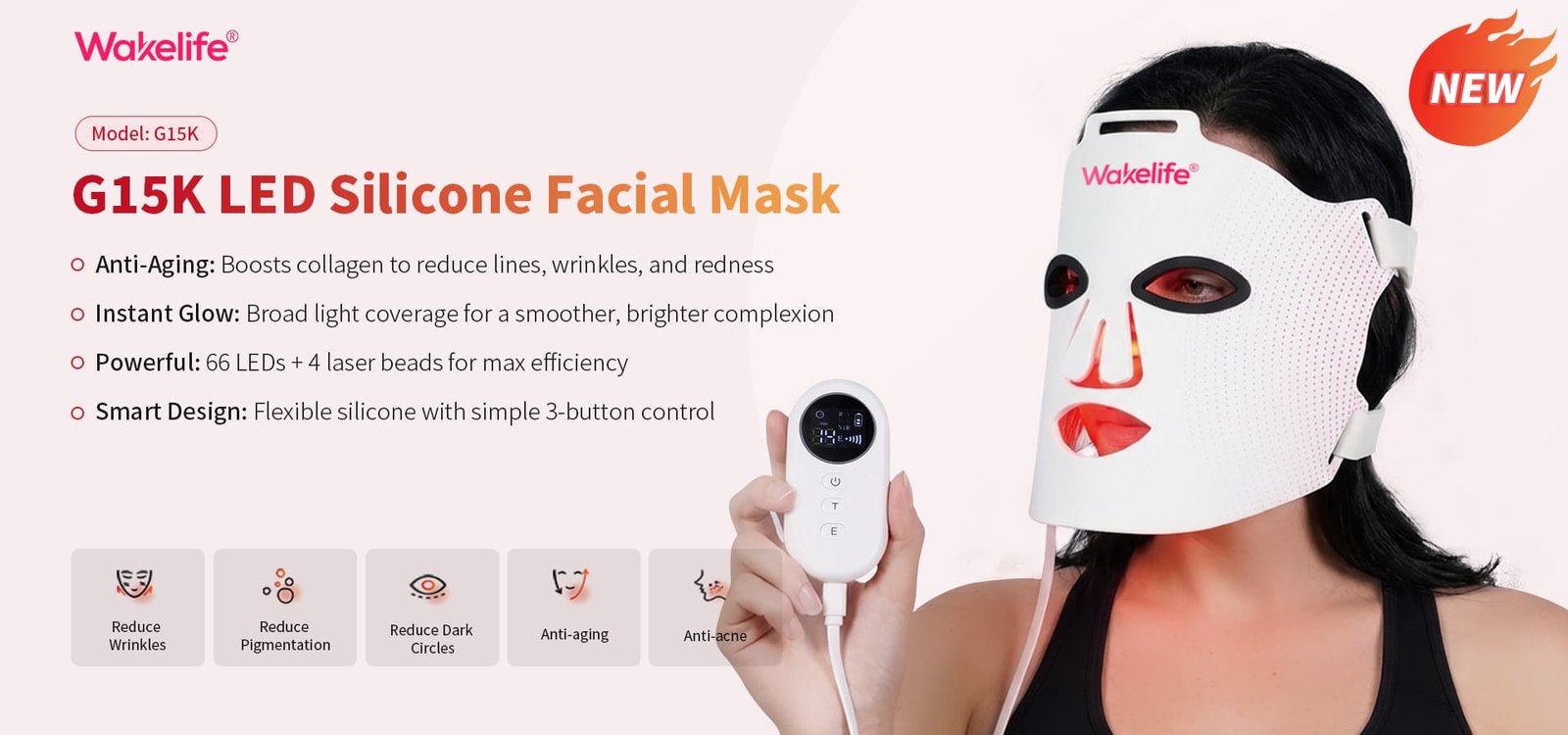
| 4. Couverture | Full product range from targeted (EP01 Eye Patch, ~30 cm²) to facial (G15K LED Face Mask, ~350 cm²) to large panel formats | Physical dimensions and coverage area on every spec sheet |
| 5. Delivery Mode | Continuous Wave standard on all devices; select models offer optional pulsing modes | CW as default ensures evidence-based treatment delivery |
| 6. Build Quality | FDA 510(k) effacé (K250830) · ISO 13485 certified manufacturing · CE Mark · FCC · RoHS compliant · 2-year standard warranty | Certification documents provided with every order; verify FDA clearance |
| 7. Documentation | Complete package: spec sheets, third-party test reports, certification documents, manuels d'utilisation, clinical evidence summaries | Full documentation package available before purchase — just ask |
Why Transparency Is Our Strategy
Many manufacturers treat specifications as marketing ammunition — inflating numbers, hiding measurement conditions, and hoping buyers won’t do the math.
We take the opposite approach. Every specification we publish is:
- Measured at stated conditions (distance, ambient temperature)
- Vérifié by third-party testing laboratories
- Disponible for your independent review before purchase
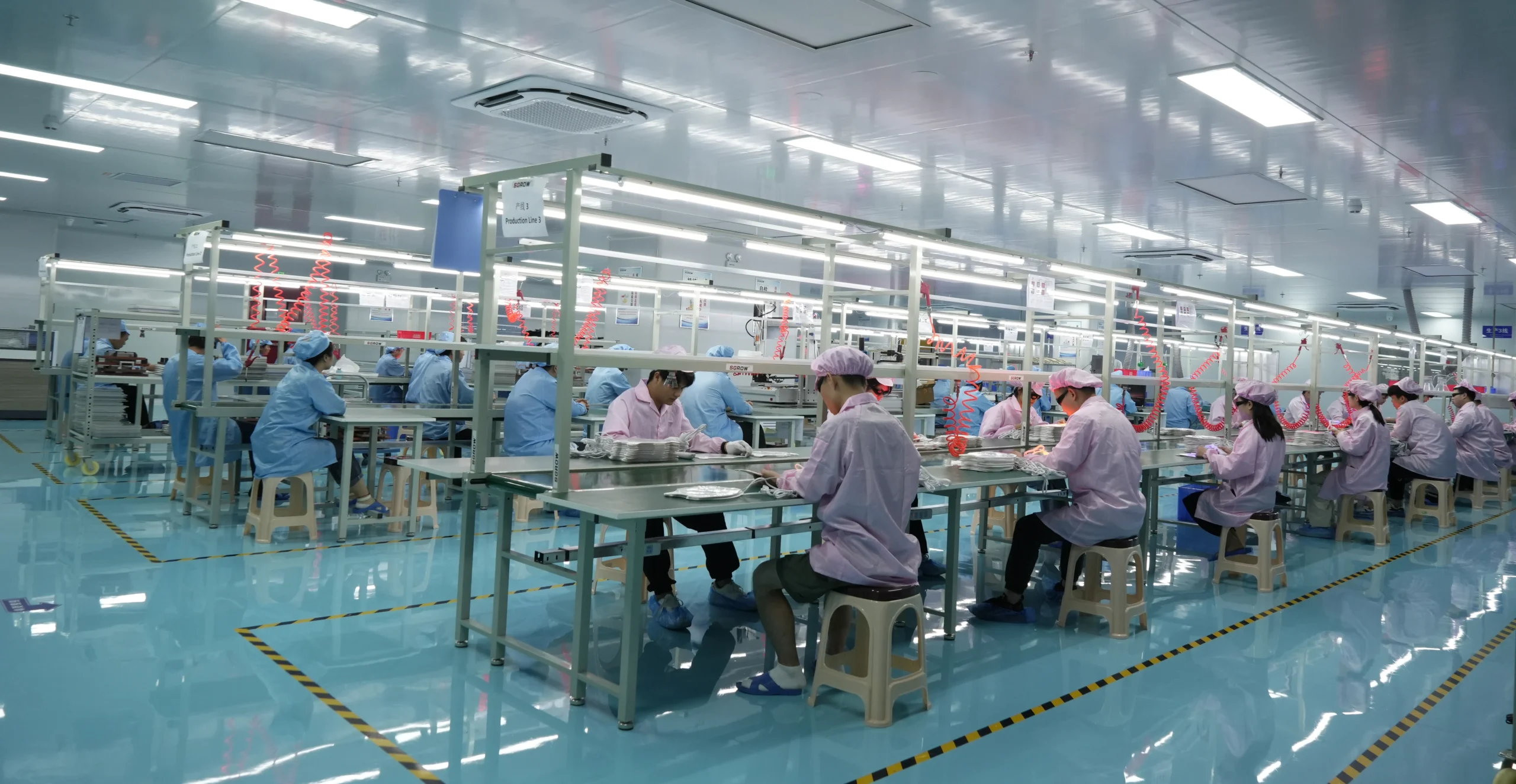
Our parent company, Technologie Cie. de Shenzhen Sungrow LED., Ltée., operates ISO 13485-certified manufacturing facilities producing LED phototherapy devices across multiple product categories and brands [[doc_2]]. WakeLife is our beauty-focused brand, purpose-built for skin rejuvenation, anti-âge, and aesthetic wellness applications [[doc_5]].
Product Highlights
| Produit | Category | Key Specifications | Primary Applications |
|---|---|---|---|
| G15K LED Face Mask | Facial (~350 cm²) | 660 nm + 830 nm dual wavelength · 50+ mW/cm² · CW mode · Medical-grade silicone | Rajeunissement de la peau, anti-âge, collagen stimulation |
| EP01 Eye Patch | Spot (~30 cm²) | 660 nm + 830 nm · Targeted periorbital delivery · Eye-safe design | Dark circles, ridules, periorbital rejuvenation |
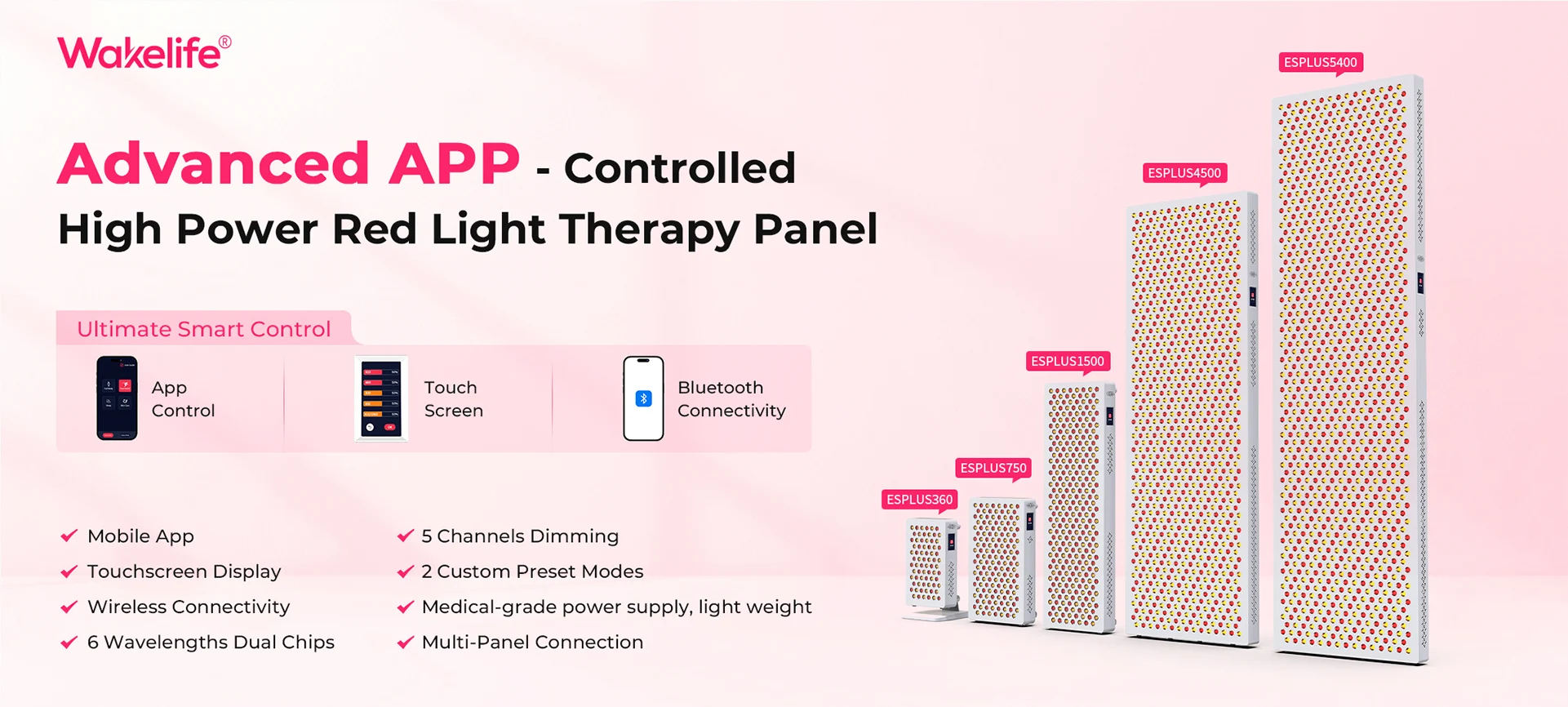
| Therapy Panels | Medium–Large | 660 nm + 830 nm · Scalable coverage · Wall-mount or stand options | Full-body wellness, récupération musculaire, professional clinic use |
Every WakeLife product ships with the complete documentation package described in Specification 7 — because if you can’t verify it, you shouldn’t buy it.
FAQ
Which specification is most important?
Wavelength and irradiance are foundational — if these values aren’t appropriate, nothing else matters. As the Cleveland Clinic’s overview of red light therapy notes, therapeutic effect depends on delivering the right wavelength at sufficient intensity. Energy density and coverage determine application suitability, while certifications and documentation ensure quality and legal compliance.
How do I verify manufacturer claims?
Follow a trust-but-verify approach: request documentation, conduct independent testing on samples, check certifications directly with issuing bodies (par exemple. search the FDA 510(k) database), and contact existing customers as references. Be skeptical of any claim presented without verification data.
What if specifications are close but not perfect?
Use the scoring framework above. Minor deviations may be perfectly acceptable if the overall score is strong. Critical parameters like wavelength and irradiance range have less room for compromise than secondary parameters like delivery mode or exact coverage dimensions.
Should I always choose the highest specifications?
Non. Match specifications to your actual needs. Over-specification wastes money; under-specification compromises efficacy. A facial skin rejuvenation practice doesn’t need a full-body panel, and a sports recovery clinic doesn’t need a 30 cm² eye device. The “best” device is the one that optimally serves your specific use case.
How important are certifications for non-medical wellness use?
Still critically important. Certifications indicate quality manufacturing processes, safety testing, and regulatory compliance — regardless of whether you market the device as “medical” or “wellness.” Even for general wellness applications, certified devices protect you legally and signal quality to your customers.
What documentation should I request before purchase?
At minimum: specification sheet, third-party test reports, certification documents, manuel d'utilisation, and warranty terms. If the manufacturer makes efficacy claims, request the supporting clinical evidence. Any reputable manufacturer should provide this package willingly.
How do I evaluate a new manufacturer without references?
Request samples for hands-on evaluation, conduct independent testing of key specifications (longueur d'onde + irradiance at minimum), verify certifications with issuing bodies, and consider starting with a small initial order. New manufacturers can offer excellent value, but they require more upfront due diligence.
Is it worth paying more for premium specifications?
Depends on your market. Professional and medical markets justify premium pricing for superior specifications, certifications, and documentation. Consumer wellness markets may prioritize cost-effectiveness. In either case, the scoring framework helps you quantify what you’re getting for your money.
Conclusion
We wrote this guide because we’ve seen too many buyers — smart, experienced professionals — make procurement decisions based on incomplete information, inflated marketing claims, or gut feelings about which device “looks more professional.”
There’s a better way.
The seven-specification framework transforms device evaluation from subjective impression into systematic, repeatable assessment. By methodically evaluating wavelength, irradiance, densité énergétique, coverage, delivery mode, build quality, and documentation, you can compare any two devices on equal footing and make decisions you’ll stand behind.
Five principles to remember:
- Verify, don’t trust. Independent testing always beats manufacturer claims. If a supplier won’t provide test data, that tells you everything you need to know.
- Match to need. The “best” specifications are the ones that match your specific application. Don’t over-buy, don’t under-buy.
- Prioritize the foundations. Wavelength and irradiance are non-negotiable. Everything else is secondary.
- Watch for red flags. Missing specifications, unrealistic claims, and poor documentation are warning signs — not negotiation points.
- Document everything. Maintain records for compliance, quality assurance, and future reference.
The PBM device market is maturing rapidly. As standards tighten and buyers become more sophisticated, manufacturers who embrace transparency and quality will earn long-term partnerships. Those who rely on marketing hype will find it increasingly difficult to compete.
At WakeLife, we welcome scrutiny. Run our devices through this framework. Check our FDA clearance (K250830). Request our test reports. Ask us the hard questions. We built this evaluation system because we’re confident in the answers.
Ready to evaluate WakeLife devices for your business?
Request product samples, complete documentation packages, and custom quotations.
Related Topics
- Topic 05: LED vs Laser Light Sources
- Topic 06: Sélection de la longueur d'onde & Profondeur de pénétration des tissus
- Topic 07: Irradiance, Densité énergétique & Dosimétrie
- Topic 12: OEM/ODM Manufacturer Selection Guide
- Topic 13: Global Certification Pathways
View all 30 topics: Complete Red Light Therapy & Photobiomodulation Guide
Références
Chung, H., et autres. (2012). Les écrous et boulons du laser de bas niveau (lumière) thérapie. Annales du génie biomédical, 40(2), 516–533. https://pubmed.ncbi.nlm.nih.gov/22045511/
Augmenter, T. je. (1998). The Science of Low-Power Laser Therapy. Gordon and Breach Science Publishers. https://pubmed.ncbi.nlm.nih.gov/9860163/
Huang, Y. Y., et autres. (2009). Biphasic dose response in low level light therapy. Dose-réponse, 7(4), 358–383. https://pubmed.ncbi.nlm.nih.gov/19995444/
Hashmi, J. T., et autres. (2010). Effect of pulsing in low-level light therapy. Lasers in Surgery and Medicine, 42(6), 450–466. https://pubmed.ncbi.nlm.nih.gov/20662021/
Zein, R., Selting, W., & Hamblin, M. R. (2018). Examen des paramètres lumineux et de l'efficacité de la photobiomodulation: plonger dans la complexité. Journal of Biomedical Optics, 23(12), 120901. https://pubmed.ncbi.nlm.nih.gov/30550048/
Heiskanen, V., & Hamblin, M. R. (2018). Photobiomodulation: lasers vs. Diodes émettrices légères? Photochemical & Photobiological Sciences, 17(8), 1003–1017. https://pubmed.ncbi.nlm.nih.gov/30044464/
Jagdeo, J., et autres. (2015). Light-emitting diodes in dermatology: a systematic review. Journal britannique de dermatologie, 177(4), 357–366. https://pubmed.ncbi.nlm.nih.gov/25656436/
World Association for Laser Therapy. (2024). Dosage Recommendations & Device Evaluation Guidelines. https://waltza.co.za/
NOUS. Nourriture & Administration des médicaments. (2024). 510(k) Premarket Notification Database. https://www.accessdata.fda.gov/scripts/cdrh/cfdocs/cfpmn/pmn.cfm
International Electrotechnical Commission. (2023). IEC 62471: Photobiological safety of lamps and lamp systems. https://webstore.iec.ch/en/publication/7076
International Organization for Standardization. (2016). ISO 13485: Medical devices — Quality management systems. https://www.iso.org/standard/59752.html
Clinique de Cleveland. (2024). Thérapie par lumière rouge: Uses, Benefits and Risks. https://my.clevelandclinic.org/health/articles/22114-red-light-therapy