For brands building a red light therapy panel product line, a flagship model serves three strategic functions that no mid-range product can replicate:
- It anchors the pricing ladder — giving the entire product line a reference point that makes mid-range products look accessible rather than expensive
- It lifts average order value — a segment of buyers will always choose the best available option; without a flagship, that revenue goes to a competitor
- It signals brand seriousness — distribution partners, retail buyers, and sophisticated consumers evaluate a brand’s credibility partly by whether its product line has a credible top-tier offering
The specifications that make a flagship panel credible in the current market: 1,000+ LEDs, 200+ mW/cm² irradiance at 9 inches, genuine full-body scale (1,800mm+), six wavelengths including 1060nm, multi-method smart control, commercial-grade warranty, and OEM customization depth that supports full brand identity.
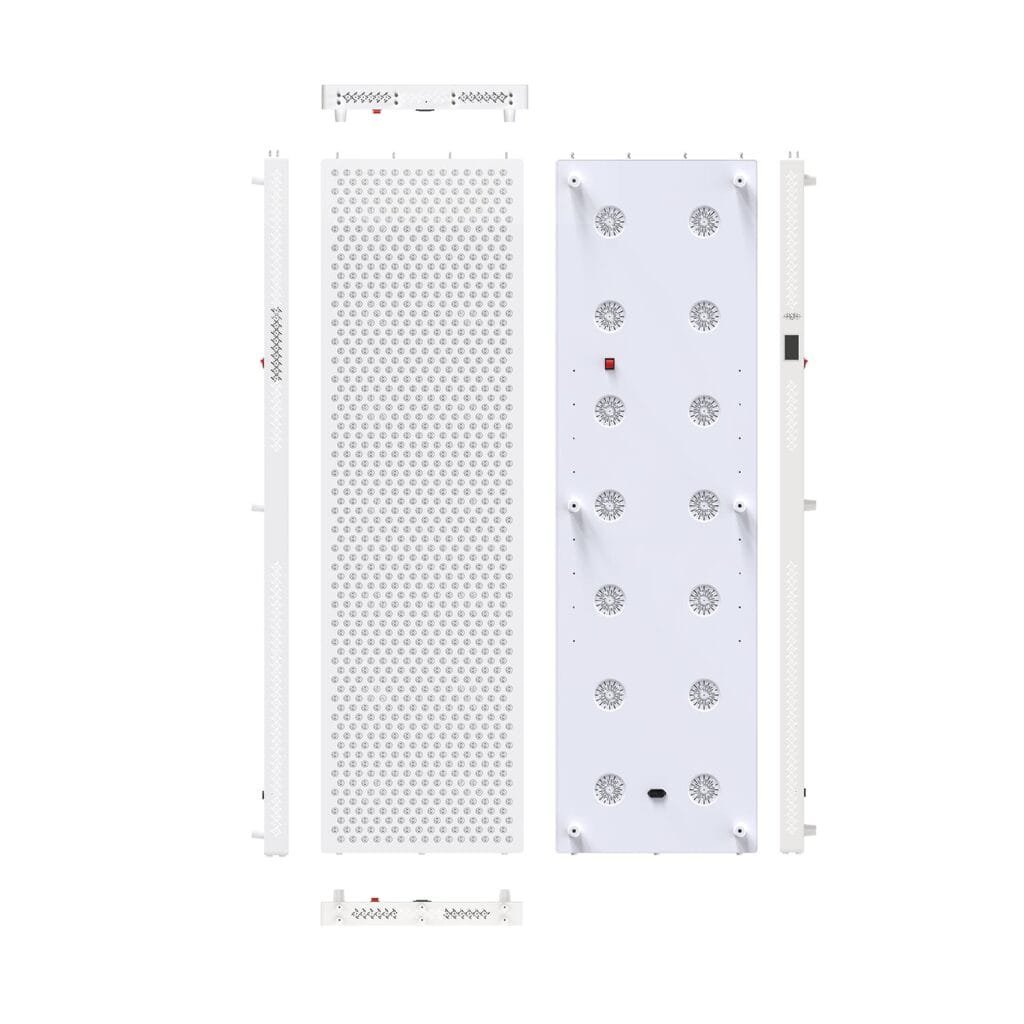
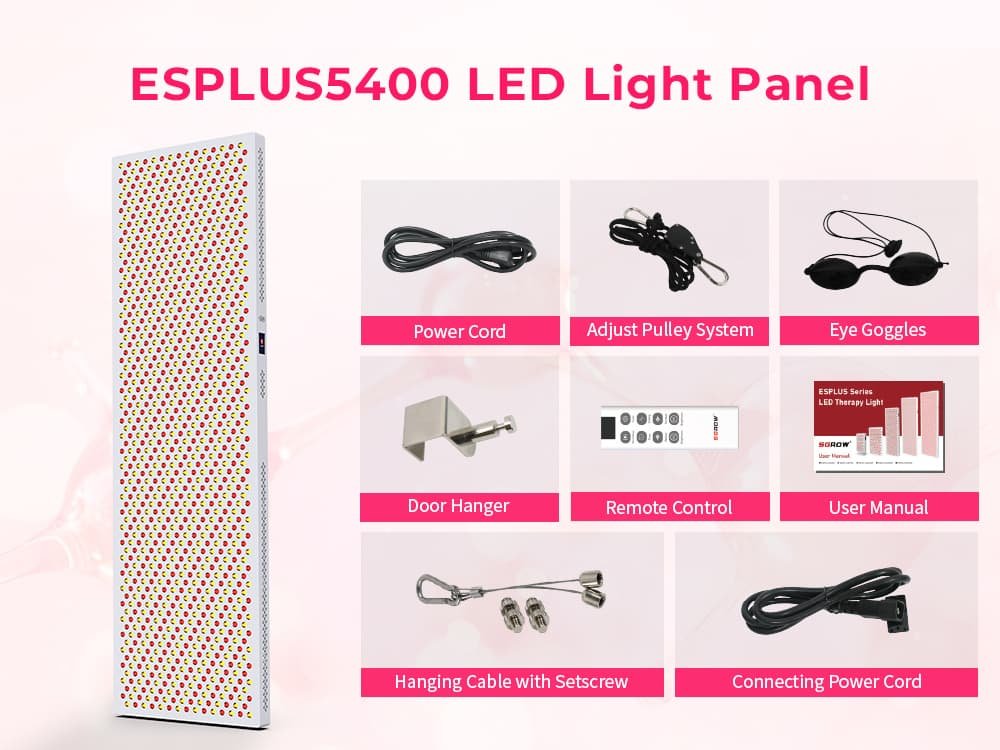
The ESPLUS5400 — 1,080 dual-chip LEDs, 1850mm largest panel in the series, 260 mW/cm² at 3 inches and 210 mW/cm² at 9 inches, triple control (APP + touchscreen + remote), 5-year commercial warranty, and full OEM/ODM customization — is designed as the flagship platform for brands building at the top of the market.
Introduction: Why the Product Line Architecture Decision Matters More Than the Product
Most brands entering the red light therapy panel category focus their initial energy on the product itself: which specifications, which price point, which supplier. These are important decisions. But the decision that has the greatest long-term impact on revenue and market position is one that most brands make implicitly rather than deliberately:
How does this product fit into a product line?
A brand that launches a single mid-range panel has made a product decision. A brand that launches a mid-range panel with a clear upgrade path to a flagship — and a clear step-down to an entry model — has made a business architecture decision. The difference in outcome, over a two-to-three-year horizon, is significant.
At Wakelife Beauty, after supporting 1,000+ global brand partners across the US, EU, UK, Australia, and Japan, the brands that build durable market positions share one consistent structural feature: they have a product line with a credible top. A flagship that justifies the existence of everything below it. A product that tells the market — and the brand’s own distribution partners — that this brand is serious.
This article explains how flagship red light therapy panels function in a product line strategy, what specifications a flagship needs to credibly anchor a premium brand position, and how the ESPLUS5400 is designed to serve that role.
Part 1 — The Economics of a Flagship Product
How a Flagship Anchors the Pricing Ladder
Price anchoring is one of the most well-documented phenomena in consumer and B2B purchasing behavior. When buyers evaluate a product line, the highest-priced option sets the reference frame within which all other options are judged.
A brand that offers panels at $800, $1,200, and $2,000 creates a different buying context than a brand that offers panels at $800, $1,200, $2,000, and $4,500. In the second scenario, the $2,000 panel looks like the balanced choice — not the premium one. The presence of the $4,500 flagship makes the mid-range product more accessible by comparison.
This is not a theoretical marketing concept. It is the mechanism by which brands with flagships consistently generate higher average transaction values than brands without them — even when the majority of sales volume sits in the mid-range.
For red light therapy panel brands specifically, the pricing ladder effect is particularly pronounced because buyers in this category are increasingly sophisticated. A brand that maxes out at ESPLUS1500-equivalent specifications signals to experienced buyers that it is a mid-tier supplier. A brand that includes an ESPLUS5400-equivalent flagship signals that it operates at the full range of the market.
How a Flagship Lifts Average Order Value
The distribution of buyer willingness-to-pay in any product category follows a consistent pattern: the majority of buyers cluster in the mid-range, but a meaningful minority — typically 10–20% by volume, often 30–40% by revenue — will choose the highest available quality option if one is credibly offered.
Without a flagship, those buyers either purchase a mid-range product under their natural preference, or they go to a competitor that has the flagship they are looking for.
A brand that adds a credible flagship to an existing mid-range line typically sees:
- Average order value increase across the entire line, due to anchoring effects on mid-range products
- Incremental revenue from the segment that was previously converting to competitors
- Improved distributor engagement, because distributors prefer to represent brands with a full product range rather than a partial offering
The cost of developing and stocking a flagship is real. But the revenue impact of not having one is also real — it is simply distributed across missed sales rather than consolidated in a visible line item.
How a Flagship Signals Brand Seriousness
Distribution partners — the wholesale buyers, regional distributors, and retail chain buyers who determine which brands get shelf space and catalog inclusion — evaluate suppliers through a lens that individual consumers do not use.
A distributor asks: does this brand have a product I can represent to my premium accounts? Does this line have enough range that I can serve multiple buyer segments from a single supplier relationship? Is this brand building toward a lasting market position, or is it a catalog of mid-range products with no clear ambition?
A brand that includes a flagship panel in its lineup answers all three of these questions differently than one that does not. The flagship is not just a product — it is a signal about the brand’s market intentions.
The red light therapy panel market has matured to the point where “flagship” cannot be claimed with a specification sheet that looks like everyone else’s. Buyers — both B2C and B2B — are more sophisticated than they were three years ago. A flagship needs to be credibly differentiated at the specification level, not just marketed as premium.
The six specifications that currently define credible flagship positioning:
1. LED Count Above 1,000
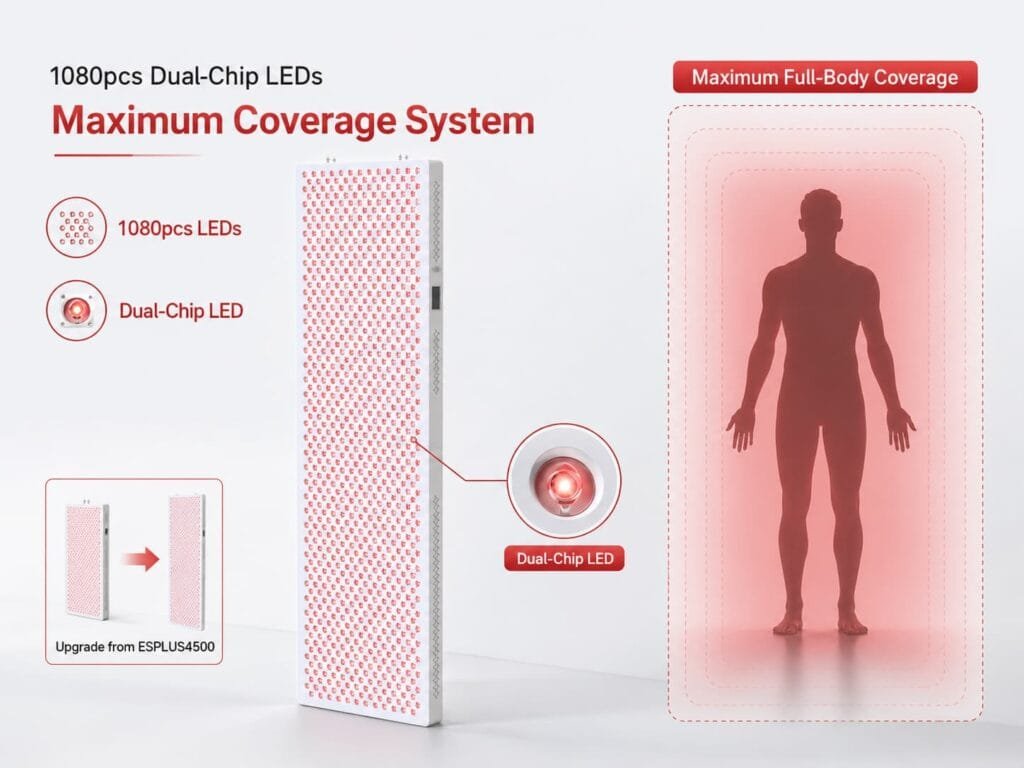
LED count is not the most important specification for evaluating panel performance — but it is the most visible signal of scale in the category. A flagship panel with fewer than 1,000 LEDs faces an immediate credibility challenge in buyer comparison: it looks smaller than the premium positioning suggests.
ESPLUS5400 uses 1,080 dual-chip LEDs — the highest count in the ESPLUS series and in the upper tier of the professional panel category. Each LED is a 5W dual-chip unit with two different wavelengths in a single package, meaning the effective photon output per LED is higher than standard single-chip alternatives.
2. Irradiance Above 200 mW/cm² at 9 Inches
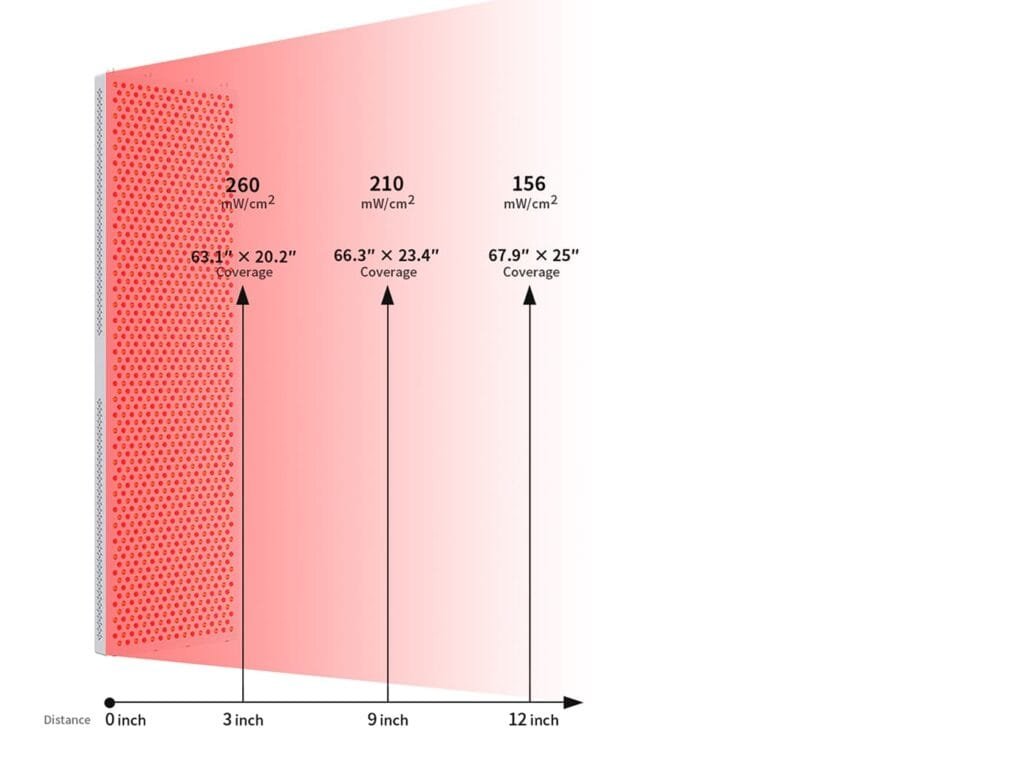
As covered in our full-body panel sourcing guide, peak irradiance at 0 inches is a marketing number. The irradiance figure that matters commercially is output at the distances customers actually use — 9 and 12 inches for most full-body treatment sessions.
A flagship panel needs to deliver 200+ mW/cm² at 9 inches to credibly support premium pricing in today’s market. This is the threshold above which panels can sustain a “highest irradiance” claim without significant qualification.
ESPLUS5400 delivers 210 mW/cm² at 9 inches — and 156 mW/cm² at 12 inches, where the coverage area expands to 67.9″ × 25″. At 3 inches, peak output is 260 mW/cm².
3. Genuine Full-Body Scale (1,800mm+)
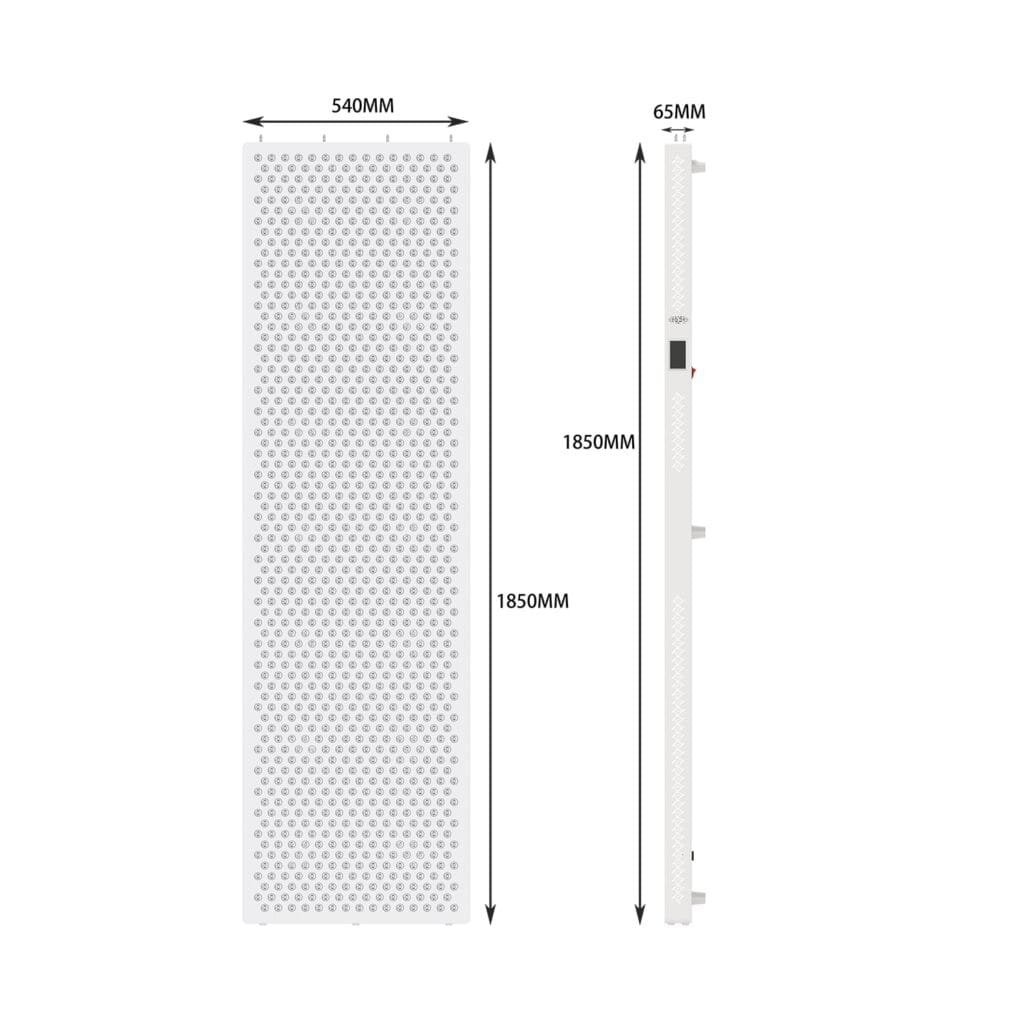
A flagship full-body panel needs to be large enough to deliver full-body coverage without compromise. For most adult users in a standing position, this requires a panel height of at least 1,600–1,800mm.
ESPLUS5400 at 1,850mm × 540mm is the largest panel in the ESPLUS series and one of the largest in the professional category. At 12 inches treatment distance, it covers 67.9″ × 25″ — genuine full-body coverage from head to knee for most adult users in a single standing position.
4. Six Wavelengths Including 1060nm
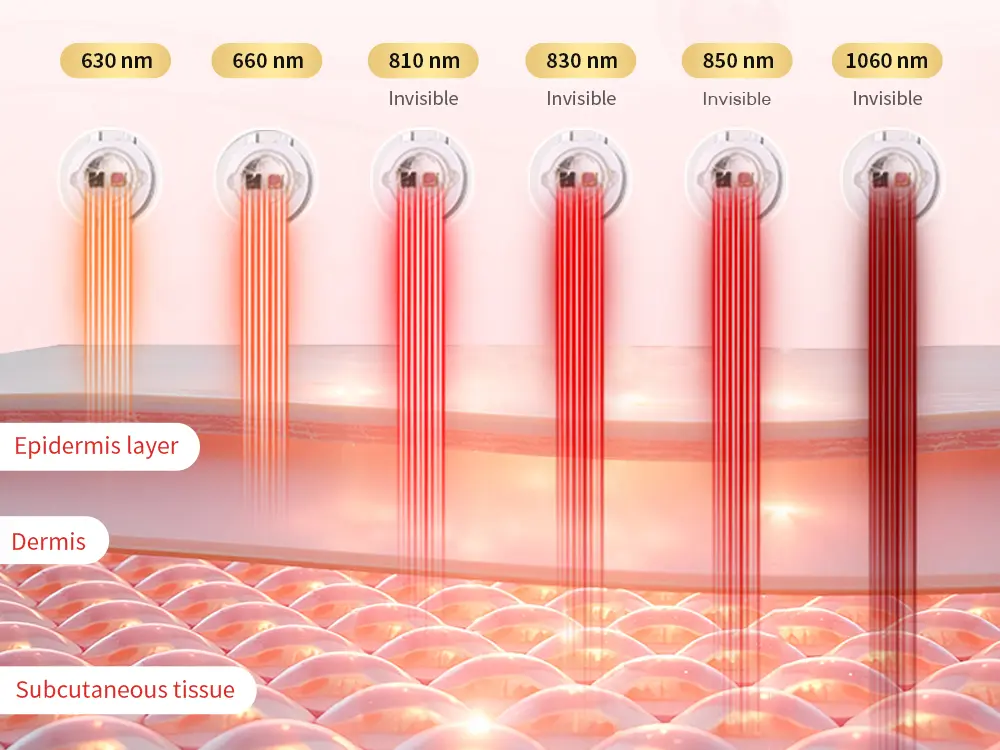
As the market has matured, the 660nm + 850nm dual-wavelength configuration has become the commodity baseline. A flagship needs a wavelength architecture that goes meaningfully further.
ESPLUS5400 uses a six-wavelength configuration: 630nm + 660nm + 810nm + 830nm + 850nm + 1060nm. The inclusion of 1060nm deep near-infrared is the most significant technical differentiator from the standard dual-wavelength stack — and increasingly the specification that sophisticated buyers look for when distinguishing genuine premium panels from mid-range products with premium pricing.
5. Multi-Method Smart Control
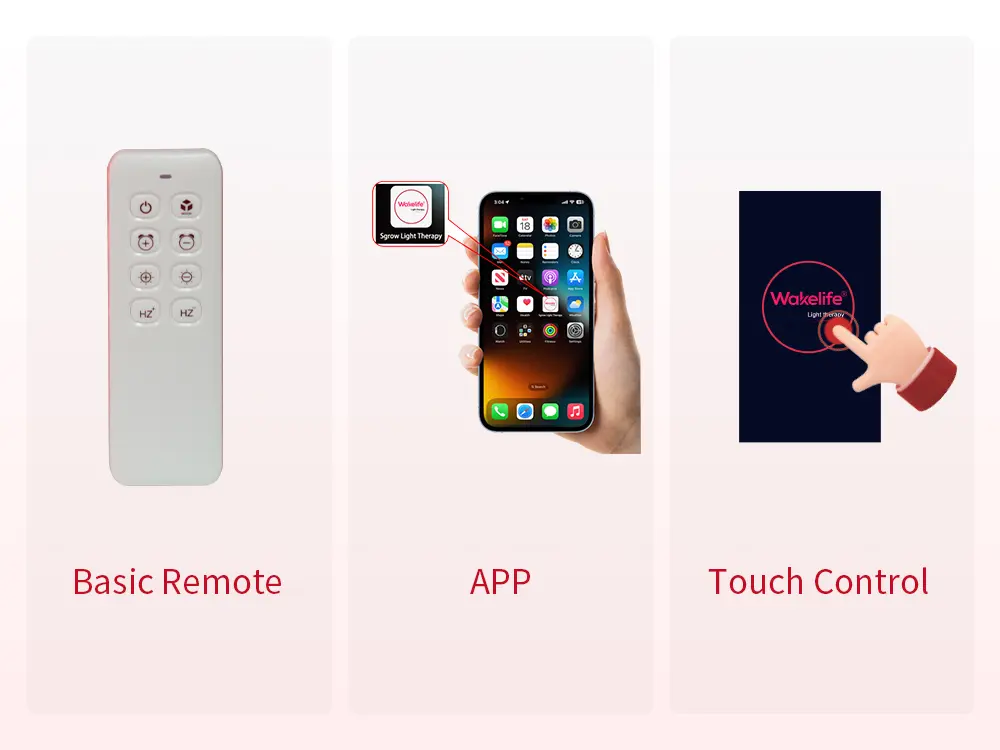
A flagship panel at the $3,500–$5,000+ price tier cannot offer remote-only control. The control system needs to match the premium positioning.
ESPLUS5400 offers three control methods simultaneously: a built-in LCD touchscreen for direct operation, a wireless remote for hands-free session management, and Bluetooth APP control (iOS + Android) for advanced protocol management and multi-device daisy-chain synchronization.
The three-method approach matters not just for user experience, but for market breadth: tech-forward buyers prioritize the APP; older users and clinical operators prefer the remote; professional facility managers use the touchscreen for staff-operated sessions. One product serves all three buyer personas without requiring SKU splits.
6. Commercial-Grade Warranty
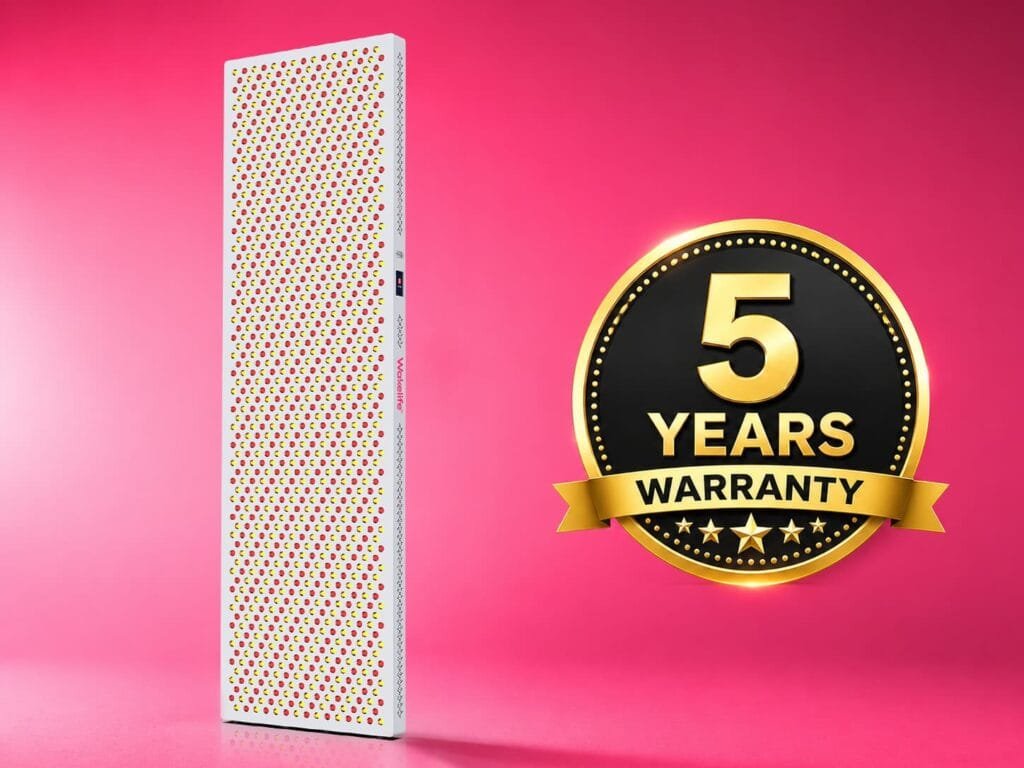
A 1-year warranty on a $4,500 product is a credibility problem, not a feature. Buyers at the flagship price tier expect warranty terms that match the investment they are making.
ESPLUS5400 carries a 5-year commercial warranty — significantly exceeding the 1–3 year warranty standard across the category. For commercial buyers and high-end direct-to-consumer purchases, the 5-year warranty is frequently the closing factor in a purchase decision at this price tier. It removes the risk objection that prevents otherwise-qualified buyers from committing.
Part 3 — The ESPLUS Series Product Line Architecture
The ESPLUS series is designed to function as a complete product line — not as a collection of independent products. Understanding how the five models relate to each other is essential for brands evaluating how to use them as the foundation of their own product line.
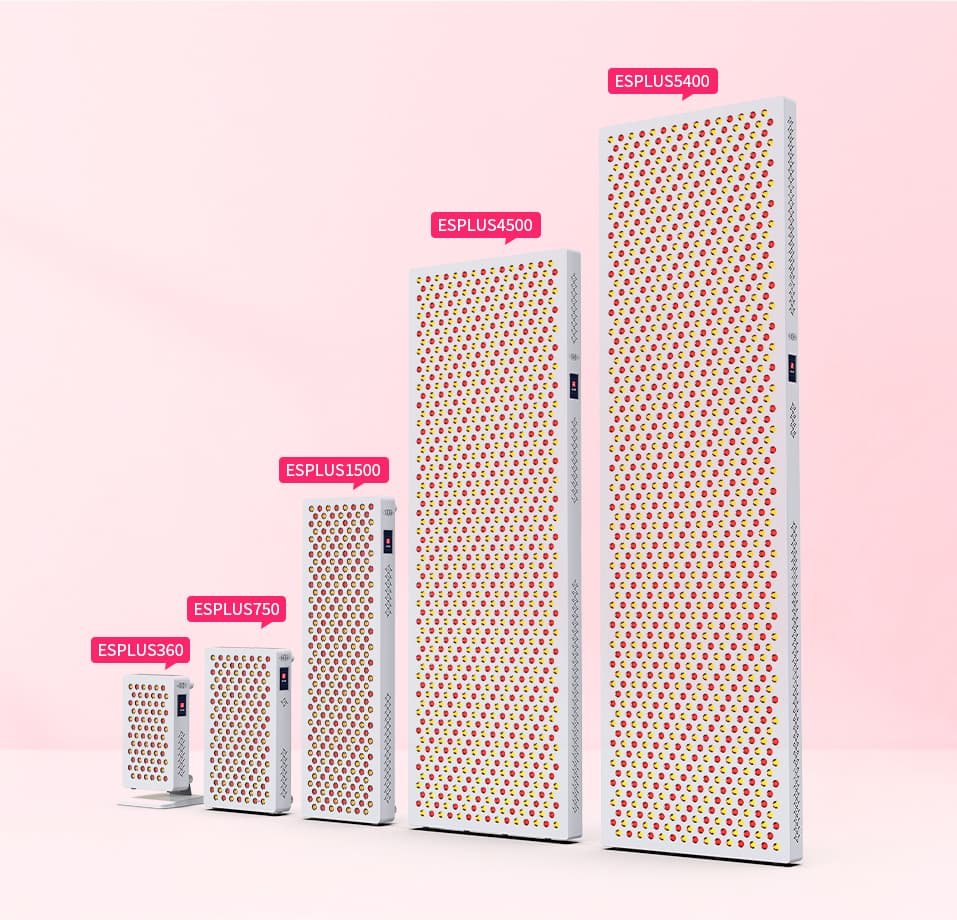
| Model | LEDs | Irradiance @ 9" | Height | Primary Positioning | Action |
|---|---|---|---|---|---|
| ESPLUS360 | 72 | 110 mW/cm² | 350mm | Targeted treatment, entry category | VIEW DETAILS |
| ESPLUS750 | 150 | 130 mW/cm² | 480mm | Full-body starter, home wellness | VIEW DETAILS |
| ESPLUS1500 | 300 | 130 mW/cm² | 920mm | Premium full-body home, entry commercial | VIEW DETAILS |
| ESPLUS4500 | 900 | 162 mW/cm² | 1,625mm | Commercial flagship, spa/clinic/gym | VIEW DETAILS |
| ESPLUS5400 | 1,080 | 210 mW/cm² | 1,850mm | Series flagship, premium brand anchor | VIEW DETAILS |
Building a Brand Product Line on the ESPLUS Platform
A brand does not need to carry all five models to build an effective product line. The most common configurations we see among OEM brand partners:
Three-model home wellness line: ESPLUS360 (targeted treatment entry) + ESPLUS750 (full-body starter) + ESPLUS1500 (premium full-body flagship)
Three-model professional/commercial line: ESPLUS750 (home/entry) + ESPLUS1500 (professional entry) + ESPLUS4500 (commercial flagship)
Premium two-model line: ESPLUS1500 (accessible premium) + ESPLUS5400 (flagship)
Full five-model brand line: All five models, covering every price point from targeted entry treatment to maximum-coverage professional flagship — with clear upgrade logic between each tier
For brands at the earlier stages of building their red light therapy panel category, starting with a three-model line and adding the flagship as the category grows is a lower-risk path. The important principle is that the flagship is planned from the start — even if it is launched later — so the brand’s positioning and messaging are consistent with eventually having a full-spectrum product line.
Part 4 — How the 5-Year Warranty Becomes a Sales Tool
The ESPLUS5400’s 5-year commercial warranty is worth examining separately because it functions differently than a standard product warranty — it is as much a sales asset as it is a product protection commitment.
At the Distribution Level
When brands present ESPLUS5400 to wholesale distributors and regional distribution partners, the 5-year warranty changes the conversation. Instead of managing buyer risk objections about long-term product reliability, the warranty eliminates the objection category entirely.
A distributor who carries a panel with a 5-year warranty can tell their retail and commercial accounts that the product is covered. This is a meaningful difference in how distributors pitch the product — and a meaningful difference in conversion rates at the end-buyer level.
At the Commercial Facility Level
For commercial facility buyers — spa chains, clinic operators, hotel wellness programs — equipment warranties are procurement requirements, not optional features. A facility operator who buys equipment for professional use needs to know their investment is protected for the operating horizon of the installation.
A 5-year commercial warranty meets this requirement directly. A 1-year or 2-year warranty does not — it creates a procurement risk that many facility buyers will not accept without significant discount.
At the Premium Direct-to-Consumer Level
For individual consumers purchasing a flagship panel at $3,500–$5,000+, the warranty represents risk management for a significant financial commitment. The presence of a 5-year warranty allows them to commit with confidence. Its absence creates hesitation that often translates to either a downgrade purchase or a competitor conversion.
In each of these three scenarios, the 5-year warranty is not a cost — it is a revenue enabler. Brands that understand this position the warranty as a sales feature, not a support obligation.
Part 5 — OEM Customization: Building Your Brand Identity on the ESPLUS5400 Platform
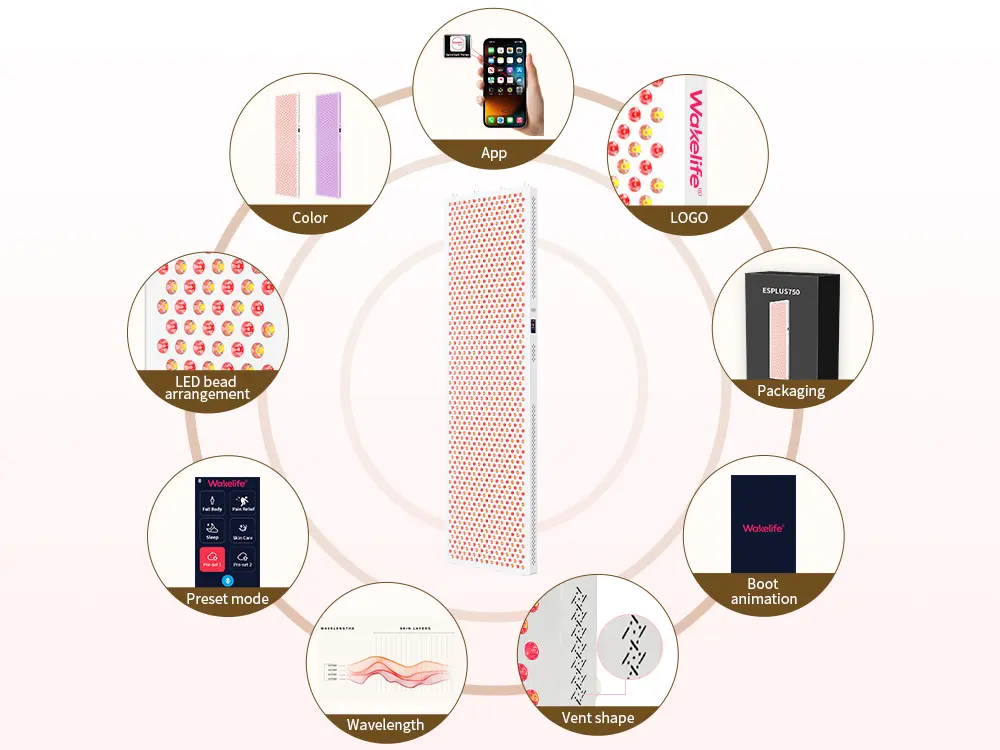
A flagship panel that carries a manufacturer’s brand is a wholesale relationship. A flagship panel that carries your brand’s identity — with your logo, your APP, your mode names, your packaging — is an OEM relationship. The difference in brand equity created over time is significant.
ESPLUS5400 supports full OEM customization across four layers:
Branding Layer
The foundation of any OEM program — making the product visibly your brand:
- Custom logo (laser-engraved, silk-printed, or metal badge)
- Custom retail packaging (full-color printed gift box)
- Custom user manual, quick-start guide, and warranty card
- Custom protective eyewear and branded accessories
- Multi-language documentation for international programs
Hardware Layer
For brands that want physical product differentiation beyond logo and packaging:
- Custom housing color with Pantone color matching
- Custom faceplate finish (matte / glossy / textured)
- Custom vent pattern and bracket design
- Custom control panel layout and remote control
- Region-specific power cables (US / EU / UK / AU / JP)
- Custom floor stand or wall-mount bracket options
Optical Layer (MOQ 50+)
For brands with clear technical requirements that need defensible product IP:
- Custom wavelength combinations
- Custom LED count and total irradiance output
- Custom panel size via full ODM tooling
- Custom pulse algorithms and preset treatment mode protocols
- Bespoke PCB design for technical IP protection
Software Layer
The layer that creates the most durable brand differentiation — a connected product ecosystem:
- Branded Bluetooth APP (iOS + Android, your developer account)
- Custom APP interface, splash screen, and brand identity
- Custom preset treatment modes with your brand’s mode names
- Your brand name embedded in device firmware
- Multi-device pairing (panels + masks + belts under one brand APP)
The software layer is where flagship products create the most long-term competitive protection. A panel that connects to your brand’s APP — with your treatment protocols, your user guidance, your brand experience — is significantly harder to copy than a product whose only differentiation is logo and color.
For brands building at the flagship tier, the APP customization program is the capability that separates an OEM product from a private label product.
Part 6 — ESPLUS5400 vs ESPLUS4500: When the Flagship Is the Right Choice
Both ESPLUS4500 and ESPLUS5400 are positioned at the top of the ESPLUS series. The distinction between them is important for brands building product lines.
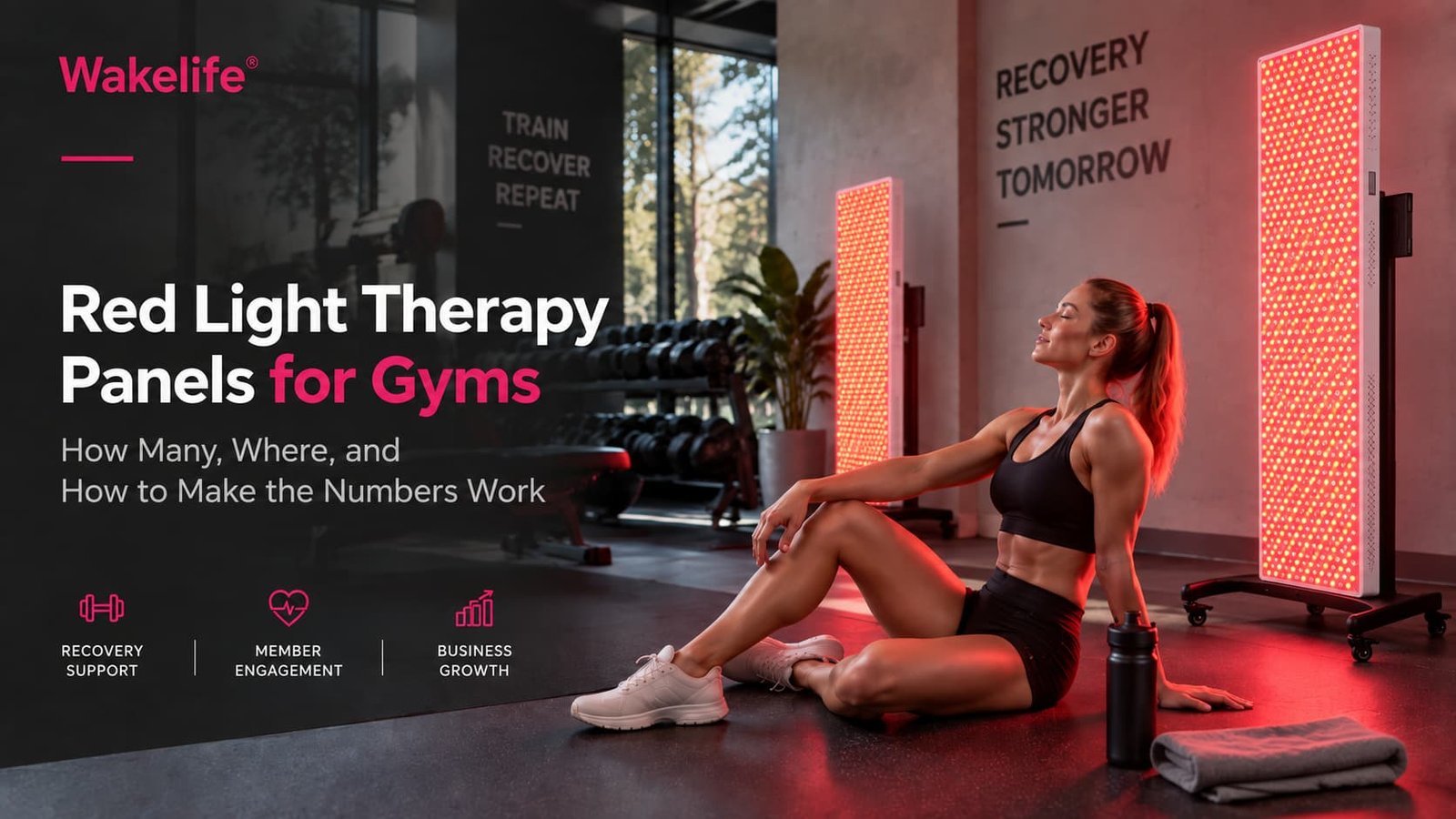
- Your primary commercial channel is spa, clinic, gym, or recovery facility — where the horizontal/vertical dual-position capability is essential for lying-down protocols
- Your flagship needs to serve commercial operator buyers who prioritize session flexibility over maximum panel size
- Your product line architecture positions the 4500 as the commercial flagship, with the 1500 as the professional entry model
- Your brand needs the absolute top of the specification range — highest LED count, highest irradiance, largest panel size in the category
- Your flagship positioning is built on maximum coverage and premium specifications rather than commercial operational flexibility
- You are building a brand product line anchor where the 5400 sits visibly above everything else in your catalog
- Your distribution program includes premium direct-to-consumer channels where the 5-year warranty and $4,500+ price point need to be supported by unambiguous flagship specifications
- You are targeting exclusive distribution partnerships at the brand or regional level, where the flagship needs to be defensible as the best available option
The Combined Approach
For brands with the capacity to carry both, ESPLUS4500 and ESPLUS5400 serve different roles in the same product line:
ESPLUS4500 — the commercial workhorse: horizontal/vertical capability, commercial certification, designed for facility equipment programs and commercial operator buyers
ESPLUS5400 — the brand flagship: maximum specifications, 5-year warranty, designed for premium positioning, direct-to-consumer, and distribution partnership programs
Together, they cover the full premium tier — commercial and consumer — without competing with each other.
Conclusion: The Flagship Is a Business Decision, Not Just a Product Decision
The decision to include a flagship red light therapy panel in your product line is not primarily a product specification decision. It is a business architecture decision that affects pricing power, distributor engagement, average order value, and long-term brand positioning.
Brands that plan for a flagship from the beginning — even if they launch it later — build their entire product line with a clearer positioning logic. The mid-range products have an aspirational upgrade target. The entry products have a credible context. The brand has a complete story to tell distribution partners and sophisticated buyers.
ESPLUS5400 is designed to serve that role: 1,080 dual-chip LEDs, 1850mm flagship scale, 260 mW/cm² at 3 inches and 210 mW/cm² at 9 inches, six wavelengths including 1060nm, triple smart control, 5-year commercial warranty, and full OEM customization across branding, hardware, optical, and software layers.
The platform exists. The question is whether your brand’s product line includes a flagship that can anchor it.
Related Reading
- Commercial Red Light Therapy Panels for Spas, Clinics, and Recovery Facilities — How ESPLUS4500 serves professional commercial channels
- Full-Body Red Light Therapy Panels for Brands: OEM/ODM Guide — How ESPLUS1500 serves the premium full-body home and entry commercial segment
- How to Choose a Red Light Therapy Panel for Your Brand: 6 Criteria That Actually Matter — The complete B2B panel sourcing framework
Ready to Discuss Your Flagship Product Line Program?
If you are building or expanding a red light therapy panel product line and want to evaluate ESPLUS5400 as the flagship platform, Wakelife Beauty’s OEM team can help you:
- Define the right product line architecture for your brand stage and target market
- Confirm ESPLUS5400 specifications and how they support your flagship positioning
- Review OEM customization options across branding, hardware, optical, and software layers
- Discuss exclusive distribution program requirements and MOQ thresholds
- Provide certification documentation for your target market
- Request samples and a flagship program quotation
Please share the following when you reach out:
- Current product line (if any) and the gap you are filling with a flagship
- Target market and sales channels
- Estimated flagship program volume
- OEM customization requirements
- Brand positioning and price point target
👉 View ESPLUS5400 full specifications: https://wakelifebeauty.com/product/esplus5400-largest-full-body-red-light-therapy-panel/
👉 View ESPLUS4500 for commercial channel programs: https://wakelifebeauty.com/product/wholesale-esplus4500-commercial-red-light-therapy-panel/
👉 Explore our complete ESPLUS series: https://wakelifebeauty.com/led-light-therapy-panel/
👉 Explore our OEM/ODM services: https://wakelifebeauty.com/oem-odm/