Silicona de grado alimenticio
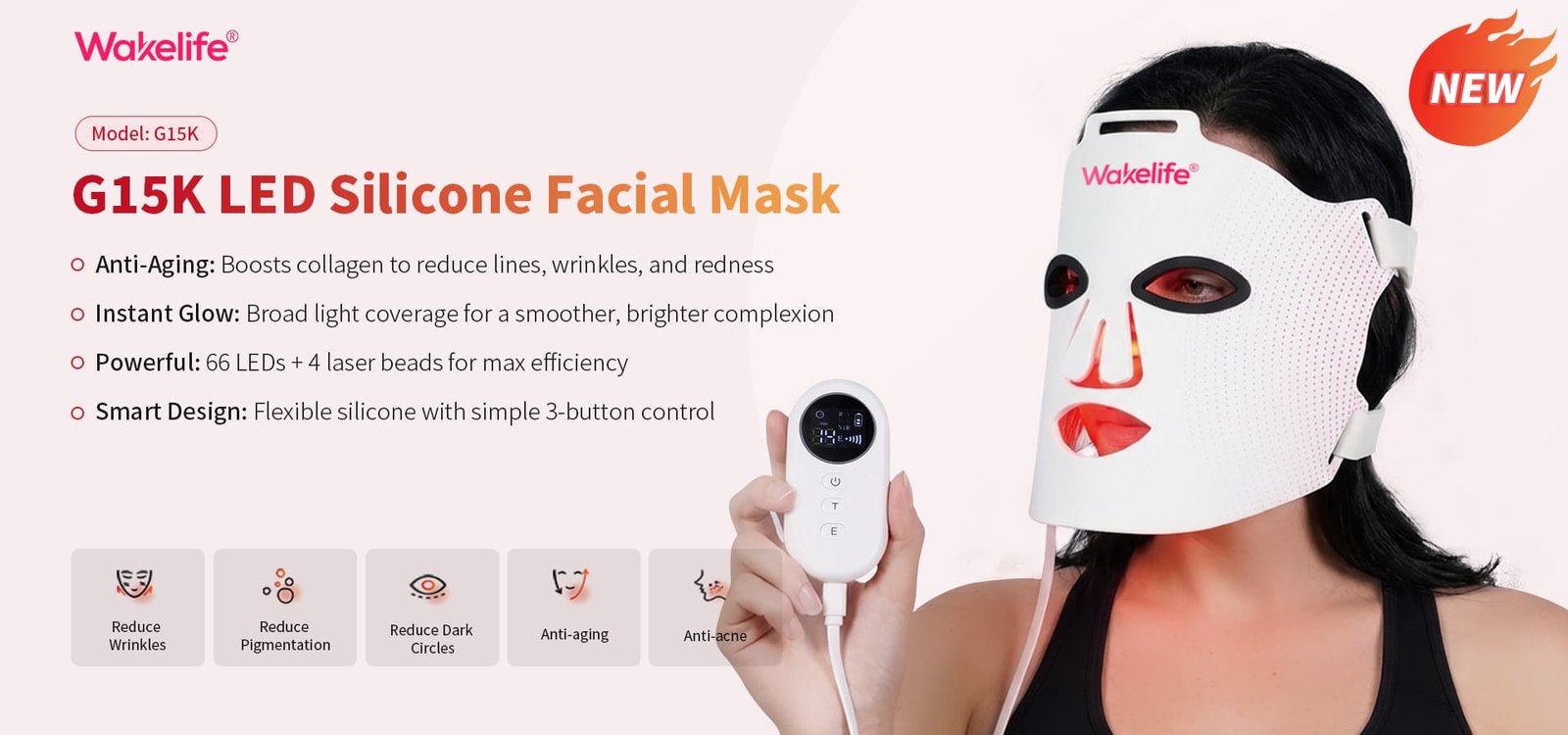
Wakelife’s LED beauty mask is made with food-grade silicone, offering skin-safe, hipoalergénico, and comfortable wear—even for sensitive skin. The product has also obtained FDA 510(k) autorización, demonstrating compliance with U.S. medical device regulations. This ensures users can enjoy safe, eficaz, and professional-grade LED light therapy in the comfort of their own homes.
What Is Food-Grade Silicone?
Food-grade silicone refers to silicone material that is safe for use in contact with food. It is commonly used in baby pacifiers, tableware, straws, food containers, and other household products. This type of silicone does not release harmful substances during production or use and meets international food safety standards, making it suitable for prolonged contact with the human body or food.
En contraste, industrial-grade silicone is intended for non-contact applications, such as mechanical seals and electronic components, and does not meet the safety requirements for food-related or personal care products. When choosing materials for products that touch the skin or mouth, food-grade silicone is the safer and more reliable option.

Composition and Properties of Food-Grade Silicone
Food-grade silicone is an inorganic polymer material formed by the polycondensation of silicic acid. It is odorless, tasteless, chemically stable, and non-toxic. Under normal conditions, it does not react with other substances, except for strong alkalis and hydrofluoric acid. It can withstand high temperatures up to 220°C, making it suitable for use in microwaves, sterilizers, and other heat-intensive environments without breaking down or releasing harmful compounds.
Compared to other plastic or rubber materials, La silicona de calidad alimentaria ofrece una mayor suavidad., durabilidad, resistencia al envejecimiento, y seguridad general, lo que lo hace ideal para usar en el hogar, cuidado del bebe, médico, y productos de belleza.
Certificaciones y Cumplimiento Normativo
Los productos de silicona de calidad alimentaria deben cumplir varias normas internacionales de seguridad y medioambientales., incluido:
FDA (A NOSOTROS. Administración de Alimentos y Medicamentos)
Ceñudo (Conformidad europea)
ROHS (Restricción de sustancias peligrosas)
ALCANZAR (Registro, Evaluación, Autorización y Restricción de Productos Químicos)
Estas certificaciones confirman que el material es seguro., ecológico, y adecuado para los mercados internacionales.