Cytochrome c oxidase (CcO)—also known as Complex IV—is the primary photoacceptor in red and near-infrared light therapy. Located in the mitochondrial inner membrane, this enzyme absorbs photons (primarily 600-900 Nuevo Méjico), which triggers three key effects: increased ATP production (up to 150-200%), release of nitric oxide (improving blood flow), y reduced oxidative stress (mejorar la función celular). This mechanism explains the therapeutic benefits of photobiomodulation (Pbm) across diverse tissues and conditions.
Introducción
If photobiomodulation were a car, cytochrome c oxidase would be the ignition switch. Without this specific molecular target absorbing light energy, the cascade of beneficial cellular effects simply wouldn’t occur. Understanding CcO is essential for anyone developing, fabricación, or selecting LED therapy devices.
Discovered as the primary photoacceptor through the pioneering work of Karu et al. (2005), cytochrome c oxidase has been validated through decades of biochemical and clinical research. Yet many device manufacturers and users remain unaware of why specific wavelengths work—and why others don’t.
This article explains the molecular mechanism that makes red light therapy possible, from photon absorption to downstream biological effects. For B2B clients, this knowledge informs device design decisions. Para los consumidores, it provides confidence in the science behind the products they use.
En WakeLife Beauty, our device engineering is guided by this fundamental science, ensuring optimal wavelength selection and irradiance parameters that effectively target CcO.
What is Cytochrome c Oxidase?
The Mitochondrial Powerhouse
Cytochrome c oxidase is the fourth and final enzyme complex of the electron transport chain (ETC), located in the inner mitochondrial membrane. Its critical functions include:
- Catalyzing the final step of cellular respiration: transferring electrons to molecular oxygen
- Pumping protons across the mitochondrial membrane to create the proton gradient
- Generating approximately 90% of cellular ATP through oxidative phosphorylation
- Containing chromophores that absorb light in the red and near-infrared spectrum
H3: Structure and Chromophores
CcO is a large transmembrane protein complex containing multiple metal centers that serve as chromophores (light-absorbing molecules):
| Chromophore | Location | Light Absorption | Función |
|---|---|---|---|
| Heme a | Subunit I | ~600 nm | Electron transfer |
| Heme a3 | Subunit I | ~605 nm | Oxygen binding site |
| CuA center | Subunit II | ~830 nm | Initial electron acceptor |
| CuB center | Subunit I | ~605 nm | Coupled to heme a3 |
These metal centers—particularly the copper and heme groups—are responsible for absorbing photons and initiating the photobiomodulation response.
How Does CcO Absorb Light?
The Photochemical Mechanism
When red or near-infrared light reaches the mitochondria, the following sequence occurs:
1. Photon Absorption
- Photons (600-900 nm wavelength) penetrate tissue and reach mitochondrial membranes
- CcO chromophores absorb specific wavelengths based on their electronic structure
- Peak absorption occurs around 660 Nuevo Méjico (rojo) y 830 Nuevo Méjico (infrarrojo cercano)
2. Electronic Excitation
- Absorbed photons excite electrons in the metal centers
- This changes the redox state of the enzyme complex
- The excited state has altered affinity for nitric oxide (NO)
3. Nitric Oxide Release
- NO is normally bound to CcO, inhibiting its activity
- Light excitation causes NO dissociation from the enzyme
- Released NO acts as a signaling molecule (vasodilation, blood flow)
4. Enhanced Enzyme Activity
- With NO removed, CcO operates more efficiently
- Electron transport rate increases
- Proton pumping accelerates
- ATP synthesis increases significantly
Wavelength Specificity
Not all wavelengths are equally effective. Research by Aumentar (2005) and others has identified optimal wavelengths:
| Rango de longitud de onda | Target Chromophore | Tissue Penetration | Primary Effect |
|---|---|---|---|
| 630-660 Nuevo Méjico | Heme centers | 1-2 mm (superficial) | Piel, surface tissues |
| 810-850 Nuevo Méjico | CuA center | 5-10 mm (deep) | Músculo, bone, brain |
| 900-1000 Nuevo Méjico | CuA center | 10+ mm (very deep) | tejido profundo, articulaciones |
This biphasic absorption pattern explains why combination devices using both red and near-infrared wavelengths are often most effective.
The Downstream Effects
Immediate Cellular Responses
Within seconds to minutes of light exposure, cells experience:
ATP Production Increase
- Studies show 150-200% increase in cellular ATP
- Enhanced energy availability for all cellular processes
- Improved cell viability and function
Reactive Oxygen Species (Rosa) Modulation
- Transient increase in ROS (signaling molecules)
- Activation of antioxidant defense systems
- Long-term reduction in oxidative stress
Calcium Signaling
- Increased intracellular calcium
- Activation of transcription factors
- Gene expression changes
Secondary Signaling Pathways
Over hours to days, the initial CcO activation triggers multiple signaling cascades:
1. NF-κB Pathway
- Nuclear factor kappa-light-chain-enhancer of activated B cells
- Regulates inflammation and immune response
- PBM typically reduces NF-κB activation (antiinflamatorio)
2. MAPK/ERK Pathway
- Mitogen-activated protein kinase pathway
- Controls cell proliferation and differentiation
- Enhanced by PBM for tissue repair
3. PI3K/Akt Pathway
- Phosphoinositide 3-kinase pathway
- Regulates cell survival and metabolism
- Activated by PBM for cytoprotection
4. Nrf2 Pathway
- Nuclear factor erythroid 2-related factor 2
- Master regulator of antioxidant response
- Upregulated by PBM for oxidative stress defense
Clinical Evidence for CcO as Photoacceptor
Key Research Studies
Karu et al. (2005) – The Definitive Study
- Demonstrated that CcO is the primary photoacceptor for red-NIR light
- Showed wavelength-specific absorption by enzyme chromophores
- Established the foundation for modern PBM science
- PubMed Link
Hou et al. (2016) – NO Release Mechanism
- Confirmed light-induced NO dissociation from CcO
- Demonstrated vasodilation and improved blood flow
- Explained the vascular benefits of PBM
- PubMed Link
Poyton & Ball (2011) – Oxygen Sensing
- Reviewed CcO’s role as a cellular oxygen sensor
- Explained how light modulates oxygen metabolism
- Connected PBM to hypoxia response pathways
- PubMed Link
Wang et al. (2016) – Brain Applications
- Demonstrated transcranial PBM effects via CcO mechanism
- Showed improved cognitive function through mitochondrial stimulation
- Validated near-infrared (810 Nuevo Méjico) for brain photobiomodulation
- PubMed Link
Mochizuki-Oda et al. (2002) – Blood Flow Effects
- Measured increased cerebral blood flow following PBM
- Correlated blood flow with NO release from CcO
- Established vascular mechanism of light therapy
- PubMed Link
Implications for Device Design
Selección de longitud de onda
Understanding CcO absorption spectra directly informs optimal device parameters:
Dual-Wavelength Strategy
- 660 Nuevo Méjico (Rojo): Targets heme centers, ideal for superficial tissues
- 830-850 Nuevo Méjico (Nir): Targets CuA center, penetrates deeper tissues
- Combined: Provides comprehensive coverage across tissue depths
Irradiance Considerations
CcO activation follows a respuesta a la dosis bifásica (see Topic 03):
| Parámetro | Optimal Range | Rationale |
|---|---|---|
| Irradiancia | 30-100 MW/cm² | Sufficient photon flux for CcO activation |
| Densidad de energía | 3-10 J/cm² | Balance between efficacy and saturation |
| Treatment Time | 10-20 minutos | Allows cellular response initiation |
| Frecuencia | Daily or every other day | Maintains elevated ATP levels |
WakeLife Beauty Engineering Standards
Our devices are engineered based on CcO science:
- Máscara facial LED G15: 660 Nuevo Méjico + 850 nm dual wavelengths
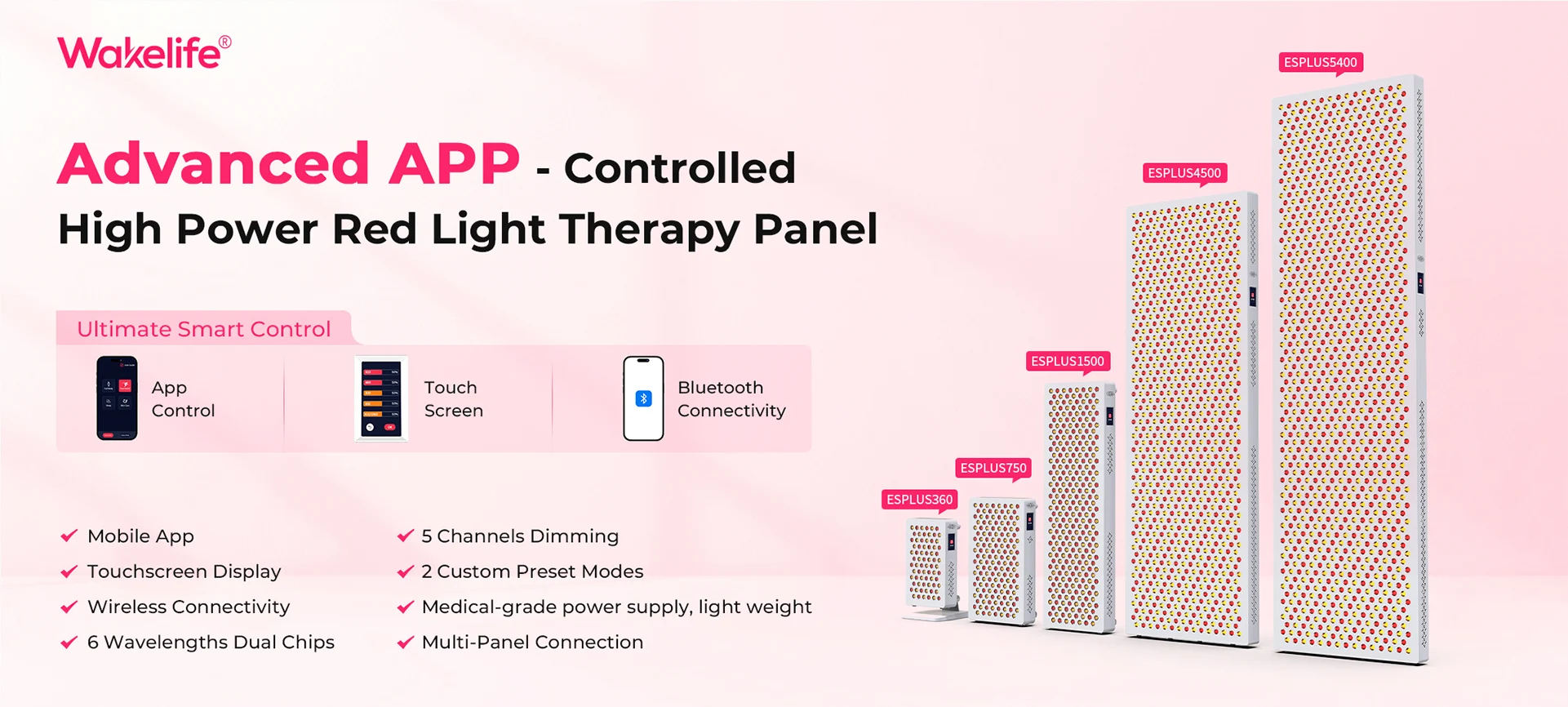
- Therapy Panels: Optimized 660/830 nm ratio for CcO targeting
- Irradiancia: 65 mW/cm² at treatment surface
- Validación clínica: Parameters tested for CcO activation
Common Misconceptions
Myth: Any Red Light Works
Reality: Only specific wavelengths (600-900 Nuevo Méjico) effectively activate CcO. UV light damages DNA. Luz azul (400-480 Nuevo Méjico) targets different chromophores (flavins). Green/yellow light has minimal CcO absorption.
Myth: Brighter is Better
Reality: CcO follows biphasic dose response. Excessive irradiance can inhibit rather than stimulate. More photons ≠ better results beyond optimal threshold.
Myth: All Devices Are Equivalent
Reality: Wavelength accuracy, spectral purity, and irradiance consistency vary significantly. Cheap devices may emit off-target wavelengths that don’t effectively activate CcO.
Preguntas frecuentes
What is cytochrome c oxidase?
Cytochrome c oxidase (Complex IV) is the fourth enzyme complex of the mitochondrial electron transport chain. It absorbs red and near-infrared light (600-900 Nuevo Méjico), triggering increased ATP production, nitric oxide release, and cellular signaling cascades.
Why is CcO called the “primary photoacceptor”?
Research by Karu et al. (2005) definitively identified CcO as the main molecule that absorbs therapeutic light in photobiomodulation. While other chromophores exist, CcO is the primary initiator of PBM’s beneficial effects.
Which wavelengths best activate CcO?
Peak absorption occurs at approximately 660 Nuevo Méjico (luz roja) y 830-850 Nuevo Méjico (infrarrojo cercano). These wavelengths target different chromophores within the CcO complex for comprehensive activation.
How quickly does CcO respond to light?
CcO responds within seconds of light exposure. ATP increases are measurable within minutes, while downstream effects (gene expression, protein synthesis) develop over hours to days.
Can CcO be over-activated?
Sí. CcO follows a biphasic dose response where excessive light can inhibit rather than stimulate. This is why proper dosing (irradiance × time) is critical for optimal results.
Does CcO activation explain all PBM benefits?
CcO is the primary mechanism, but not the only one. Other chromophores (P.EJ., flavins, opsins) may contribute to specific effects. Sin embargo, CcO explains the majority of PBM’s therapeutic benefits.
How does NO release from CcO improve health?
Nitric oxide released from CcO acts as a signaling molecule, causing vasodilation (widening blood vessels), improving blood flow, reducing blood pressure, and enhancing oxygen/nutrient delivery to tissues.
Is CcO the same in all cell types?
While the core structure is conserved, CcO expression and activity vary by cell type. Muscle cells, neurons, and skin cells all contain CcO but may respond differently to PBM based on metabolic demands and mitochondrial density.
Conclusión
Cytochrome c oxidase is the molecular gateway through which photobiomodulation exerts its therapeutic effects. Understanding this mechanism—from photon absorption to ATP synthesis to nitric oxide release—provides the scientific foundation for effective device design and treatment protocols.
For B2B clients, CcO science informs:
- Wavelength selection (660 Nuevo Méjico + 830-850 nm optimal)
- Irradiance parameters (30-100 mW/cm² effective range)
- Quality standards (wavelength accuracy and spectral purity)
- Marketing claims (evidence-based positioning)
For researchers and clinicians, CcO provides a measurable biomarker for PBM efficacy and a mechanistic framework for understanding treatment outcomes.
A medida que continúa la investigación, our understanding of CcO’s role in PBM will only deepen—potentially revealing new therapeutic applications and optimization strategies. What remains clear is that this remarkable enzyme, evolved over billions of years for cellular respiration, has an unexpected second function: absorbing light to heal.
Related Topics
- Topic 01: Fotobiomodulación (Pbm): Definición, Mecanismo & Historia
- Topic 03: Respuesta a la dosis bifásica en PBM: Por qué más luz no siempre es mejor
- Topic 04: Efectos posteriores del PBM: atp, Inflamación & Defensa antioxidante
- Topic 06: Selección de longitud de onda & Profundidad de penetración del tejido en dispositivos PBM
View all 30 topics: Complete Red Light Therapy Guide
Referencias
Aumentar, T., Pyatibrat, l., & Kalendo, G. (2005). Photobiological modulation of cell attachment via cytochrome c oxidase. Photochemical & Photobiological Sciences, 4(5), 421-428. https://pubmed.ncbi.nlm.nih.gov/16848227/
Hou, S. T., et al. (2016). Nitric oxide as a regulatory molecule in the photobiomodulation of cytochrome c oxidase. Fotoquímica y Fotobiología, 92(4), 605-612. https://pubmed.ncbi.nlm.nih.gov/26758837/
Poyton, Riñonal. O., & Ball, K. A. (2011). Therapeutic photobiomodulation: nitric oxide and a transcriptional model of photoactivation. Fotoquímica y Fotobiología, 87(5), 1009-1019. https://pubmed.ncbi.nlm.nih.gov/21092348/
Wang, X., et al. (2016). Transcranial photobiomodulation with near-infrared light from animal models to human applications. Progress in Neurobiology, 142, 1-22. https://pubmed.ncbi.nlm.nih.gov/27362728/
Mochizuki-Oda, N., et al. (2002). Effects of near-infrared laser irradiation on adenosine triphosphate production by mitochondria and cerebral blood flow. Lasers in Surgery and Medicine, 31(3), 183-188. https://pubmed.ncbi.nlm.nih.gov/12445290/
Ferraresi, C., et al. (2016). Photobiomodulation in human muscle tissue: an advantage in sports performance? Journal of Biophotonics, 9(11-12), 1273-1284. https://pubmed.ncbi.nlm.nih.gov/27583886/