De relatie tussen afstand en behandelingsefficiëntie bij LED-lichttherapie
LED-lichttherapie, ook wel bekend als fotobiomodulatie—gebruikt specifieke golflengten van rood en nabij-infrarood licht om cellulaire activiteit te stimuleren, ondersteunen weefselherstel, en ontstekingen verminderen.
Het is een kluis, niet-invasieve behandeling gebruikt in huidverzorging, spierherstel, en algemeen welzijn.
Terwijl veel mensen zich concentreren op de golflengte of de behandeltijd, een factor die vaak over het hoofd wordt gezien, kan de resultaten dramatisch beïnvloeden: de afstand tussen de lichtbron en de huid.
In dit artikel wordt uitgelegd hoe afstand de straling beïnvloedt (lichtintensiteit), energie levering, en algehele behandelingsefficiëntie.
De wetenschap achter LED-lichttherapie
LED-lichttherapie werkt via een proces dat wordt genoemd fotobiomodulatie– een cellulaire reactie die wordt geactiveerd wanneer lichtfotonen worden geabsorbeerd door de mitochondriën. Deze absorptie verhoogt ATP (energie) productie, verbetert de bloedsomloop, en bevordert de weefselregeneratie.
Twee belangrijke parameters bepalen de effectiviteit van elke LED-lichtbehandeling:
Bestraling (MW/cm²): De kracht van het ontvangen licht per oppervlakte-eenheid.
Vloeiendheid (J/cm²): De totale geleverde energie: de bestralingssterkte vermenigvuldigd met de belichtingstijd.
Samen, deze factoren bepalen de lichte dosis uw huid of weefsel daadwerkelijk ontvangt.
Hoe afstand de bestraling beïnvloedt
De lichtintensiteit neemt snel af naarmate de afstand groter wordt, naar aanleiding van de omgekeerde kwadratenwet: E∝1/d²
In eenvoudige bewoordingen, wanneer de afstand verdubbelt – van 5 cm tot 10 cm – de lichtintensiteit daalt tot ongeveer een kwart van de oorspronkelijke waarde.
Hoewel LED-licht zich niet als een perfecte puntbron gedraagt (het is semi-verspreid), de algemene regel geldt nog steeds: hoe verder het licht, hoe zwakker de energie die je huid bereikt.
Verschillende apparaatontwerpen kunnen ook de manier waarop deze energie zich verspreidt veranderen:
Gecollimeerde LED's (gerichte stralen): Afstand heeft een kleiner effect op de intensiteit.
Diffuus LED-panelen: De energie neemt merkbaar af naarmate de afstand groter wordt.
Prestaties op verschillende afstanden
Te dichtbij (<5 cm)
Pluspunten: Hoge intensiteit, snelle energieaccumulatie.
Nadelen: Warmteopbouw en mogelijke huidirritatie bij langdurige blootstelling.
Optimaal bereik (5–15 cm)
Zorgt voor een evenwichtige energieverdeling en comfortabele warmte.
Aanbevolen voor zowel professionele als thuisbehandelingen.
Te ver (>20 cm)
De instraling neemt sterk af.
Het licht levert mogelijk niet meer voldoende energie (invloed) om een biologisch effect teweeg te brengen, resulterend in verminderd of geen therapeutisch voordeel.
Waarom LED-maskers een lager vermogen hebben dan lichtpanelen
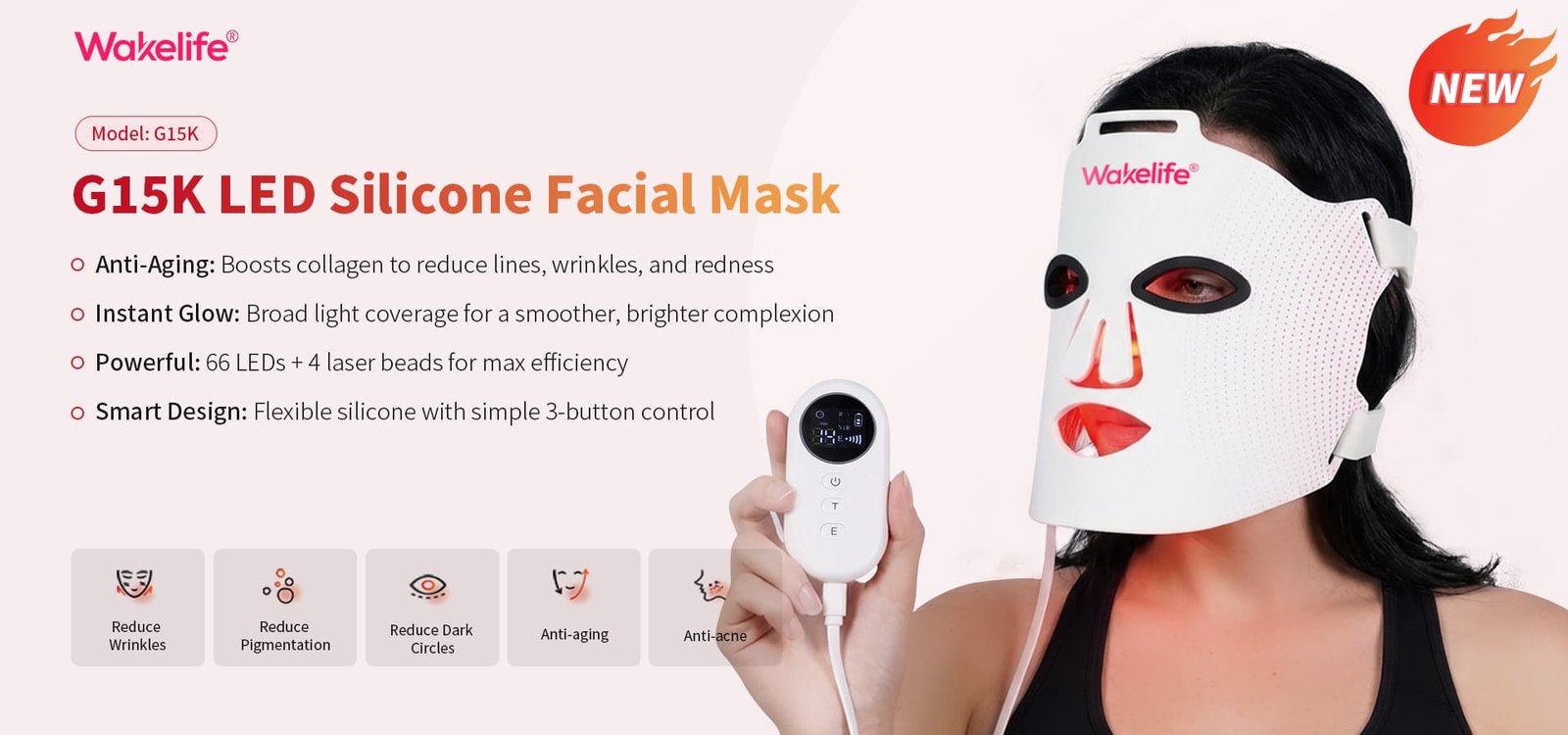
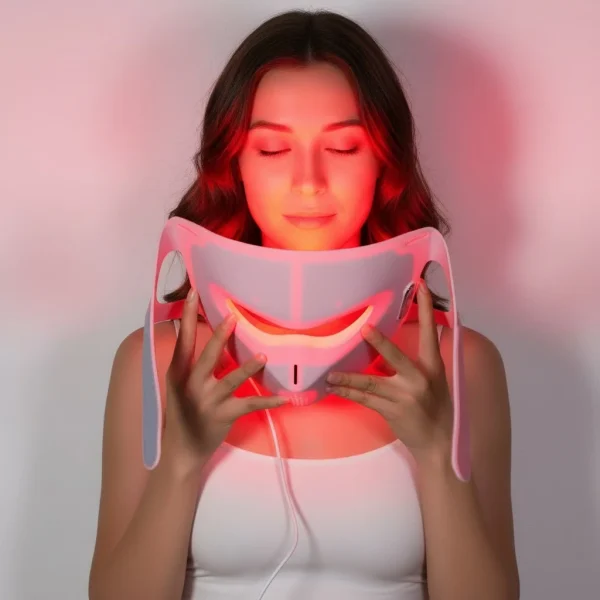
Dat merk je misschien LED-gezichtsmaskers hebben doorgaans een stralingssterkte van 20–40 MW/cm², terwijl LED-lichtpanelen variëren vaak van 150–200 mW/cm².
Dit betekent niet dat maskers zwak zijn – het komt simpelweg door afstands- en veiligheidsontwerp.
LED -maskers zit heel dicht bij het gezicht – vaak binnen 1 à 2 cm. In zo'n nabijheid, Een hoger vermogen kan warmteophoping of ongemak veroorzaken, dus de intensiteit wordt opzettelijk verminderd om de huid te beschermen en comfort te garanderen.
LED-panelen, anderzijds, worden meestal op 10-20 cm afstand van het lichaam geplaatst. Omdat energie snel afneemt over afstand, deze apparaten hebben een hoger uitgangsvermogen nodig om dezelfde effectieve dosis aan de huid af te geven.
Kortom, Een lager vermogen in een masker staat gelijk aan veiliger gebruik op korte afstand, geen zwakkere prestaties.
Het vinden van de juiste afstand
Het doel is om het juiste te leveren energie dosis (J/cm²)– genoeg om cellen te stimuleren, maar niet zozeer dat het oververhitting veroorzaakt.
Voor oppervlaktebehandelingen (acne, teint, collageen): gebruik rood licht, 5–10 cm afstand.
Voor diepere weefsels (spierherstel, gewrichtspijn): gebruik nabij-infraroodlicht, 3–8 cm afstand voor betere penetratie.
Als uw apparaat stralingsgegevens verstrekt, u kunt de blootstellingstijd berekenen om uw beoogde energiedosis nauwkeurig te bereiken.
Praktische tips voor de beste resultaten
Volg de afstands- en tijdaanbevelingen van de fabrikant.
Houd het licht 5–15 cm (2–6 inch) weg van de huid voor evenwichtige prestaties.
Typische sessies duren 5–20 minuten, afhankelijk van het doelgebied.
Vermijd overmatige blootstelling; te veel licht kan de cellulaire activiteit tijdelijk remmen (bekend als de bifasische dosisrespons).
Consistentie is belangrijk: merkbare resultaten verschijnen doorgaans na enkele weken regelmatig gebruik.
Conclusie
Bij LED-lichttherapie, afstand is net zo belangrijk als golflengte of duur.
Naarmate de afstand groter wordt, energielevering daalt, en de efficiëntie van de behandeling neemt af. Te dichtbij, en de huid kan hittestress ervaren.
Het vermogensverschil tussen LED-maskers en panelen weerspiegelt hetzelfde principe afstand-energiebalans.
Door deze factoren te begrijpen en aan te passen, u kunt de optimale balans bereiken van veilig, comfortabel, en effectief resultaten van lichttherapie.
Kortom: De beste afstand is niet de dichtstbijzijnde of de verste afstand; het is de afstand die op een veilige manier voldoende energie levert.