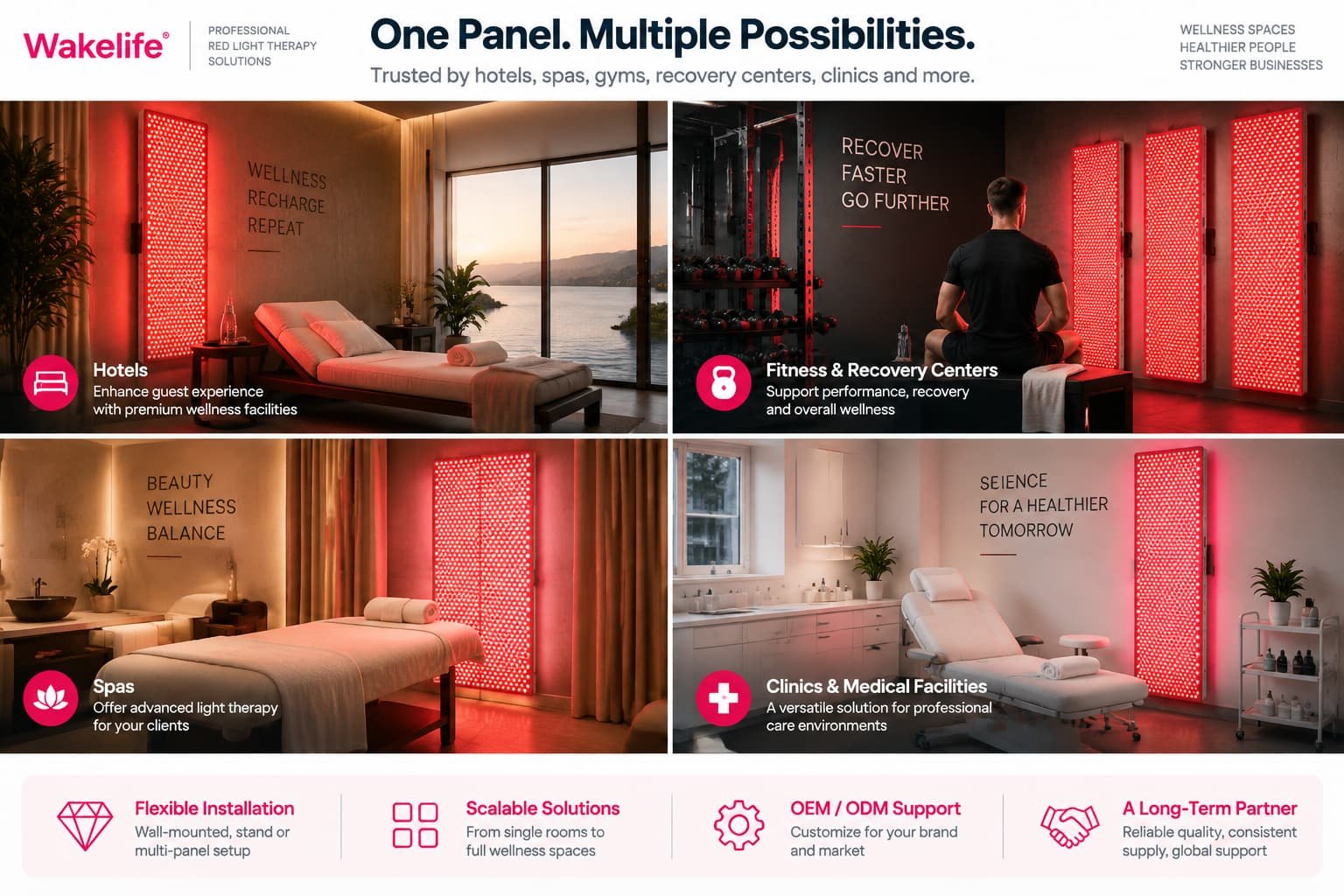
Kies een professionele LED-lichttherapiemachine op basis van de workflow die uw team kan herhalen, en niet op basis van het hoogste wattage, de langste golflengtelijst of het woord ‘professioneel’ in een catalogus.
The right device should fit your service, room and staff workflow. Its documentation should cover the exact model and configuration, doelmarkt en geplande claims. A high specification on one line of a brochure does not resolve gaps in that evidence.
For a clinic buying its first sample, settle three questions before paying. Can the supplied hardware hold the required position? Do the documents address the intended use and test conditions? Does the quotation include the complete setup? A single stock unit can answer a defined evaluation question without a private-label or volume-order commitment.
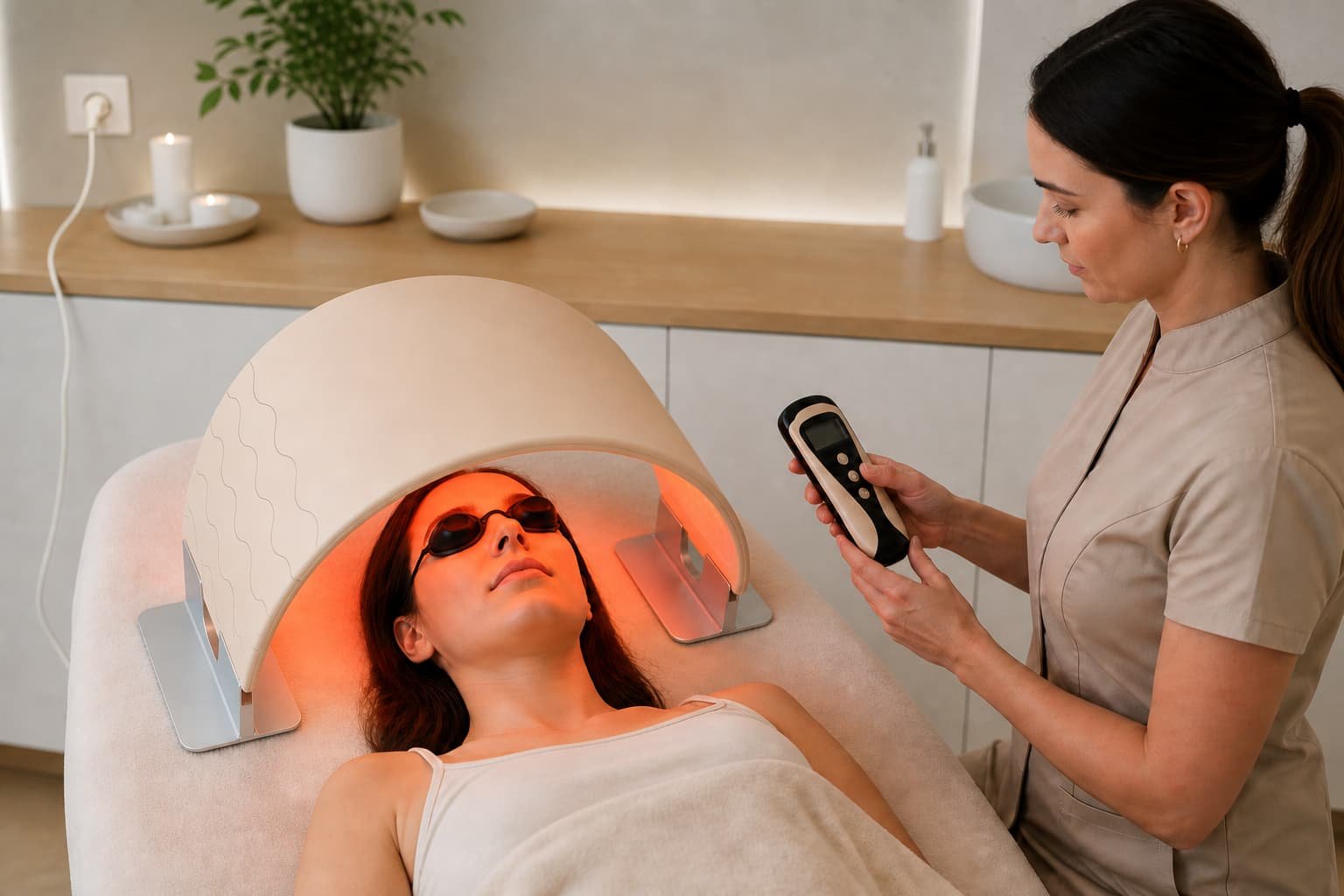
Een praktische shortlist begint met vijf regels:
- Bevries het beoogde gebruik, doelmarkt- en publieke claims voordat u documenten vergelijkt.
- Evalueer de volledige afspraakcyclus: opstelling, positionering, operatie, schoonmaak, resetten en opslaan.
- Test het exacte exemplaar met de medewerkers die het zullen bedienen.
- Vergelijk optische gegevens alleen in de modus, afstand, meetvlak en -methode worden vermeld.
- Behandel marktrecords, certificaten van kwaliteitssystemen, veiligheidsrapporten en outputrapporten als verschillende bewijslagen.
Dit is een handleiding voor het aanschaffen van professionele apparatuur, geen behandelprotocol. Het rangschikt geen golflengten, een universeel belichtingsschema aanbevelen of vaststellen dat één LED-vormfactor betere klinische resultaten oplevert.
Begin with document review and non-patient setup checks. Any patient-use evaluation needs a separate clinical and regulatory assessment by the facility; a successful fit check does not authorize clinical use.
Wat moet u beslissen voordat u LED-machines vergelijkt??
Schrijf een serviceoverzicht van één pagina voordat u een leveranciersvergelijkingsblad opent. Anders, elke verkoopvertegenwoordiger definieert ‘professioneel’ op een manier die de voorkeur geeft aan een ander product.
Uw brief zou moeten antwoorden:
- Wie gaat het apparaat bedienen? Een opgeleide medewerker, de cliënt onder toezicht, of bij de cliënt thuis na de afspraak?
- Wordt het gedeeld?? Een gedeeld apparaat zorgt voor een andere schoonmaak, vragen over de doorlooptijd en verantwoordelijkheid van een apparaat dat aan één klant is verkocht.
- In welk gebied moet het apparaat rondom of vóór worden geplaatst? Alleen gezicht, gelokaliseerde lichaamsgebieden en bredere contactloze blootstelling creëren verschillende geometrie- en ruimtevereisten.
- Wat is de geplande servicetaal? Schoonheid, uiterlijk en algemene welzijnsbewoordingen mogen niet terloops met ziekte worden vermengd, behandeling of medische claims.
- Waar zal het op de markt worden gebracht en gebruikt? De VS., De EU en andere markten gebruiken niet één universeel bewijspakket.
- Wat is het commerciële model? Eén bewaakte eenheid, meerdere kamers, een combinatie van kliniek en detailhandel, of een productlijn die via distributeurs wordt verkocht?
Voor een Amerikaanse. project, de FDA zegt dat de bepaling van het apparaat begint met het definiëren van het product bedoeld gebruik en indicaties voor gebruik. Die van de FDA Januari 2026 algemene welzijnsbegeleiding richt zich op een beleid voor producten voor algemeen welzijn met een laag risico; het mag niet worden behandeld als een automatische status voor elk LED-apparaat. In de EU, Verordening (EU) 2017/745 verbindt het beoogde doel met het label van de fabrikant, instructies, promotie- of verkoopmateriaal, en klinische evaluatie. De operationele les is eenvoudig: kies niet eerst de hardware en bedenk daarna de claimstrategie.
De term “professioneel LED-lichttherapieapparaat” is handig bij het zoeken en kopen, maar het is geen universele reguleringsklasse. Een product dat in een salon wordt gebruikt, is niet automatisch een medisch hulpmiddel, en een product dat wordt omschreven als “klinische kwaliteit” wordt niet automatisch ondersteund door autorisatie voor medische apparatuur of medisch-elektrische testen.
Welk LED-apparaatformaat past bij de serviceworkflow?
Maak een shortlist van de vormfactor op basis van positionering en kamerworkflow, vergelijk vervolgens de exacte monsters.
| Formaat | Denk er eens over na wanneer | Wat het monster moet bewijzen | Veel voorkomende slechte pasvorm |
|---|---|---|---|
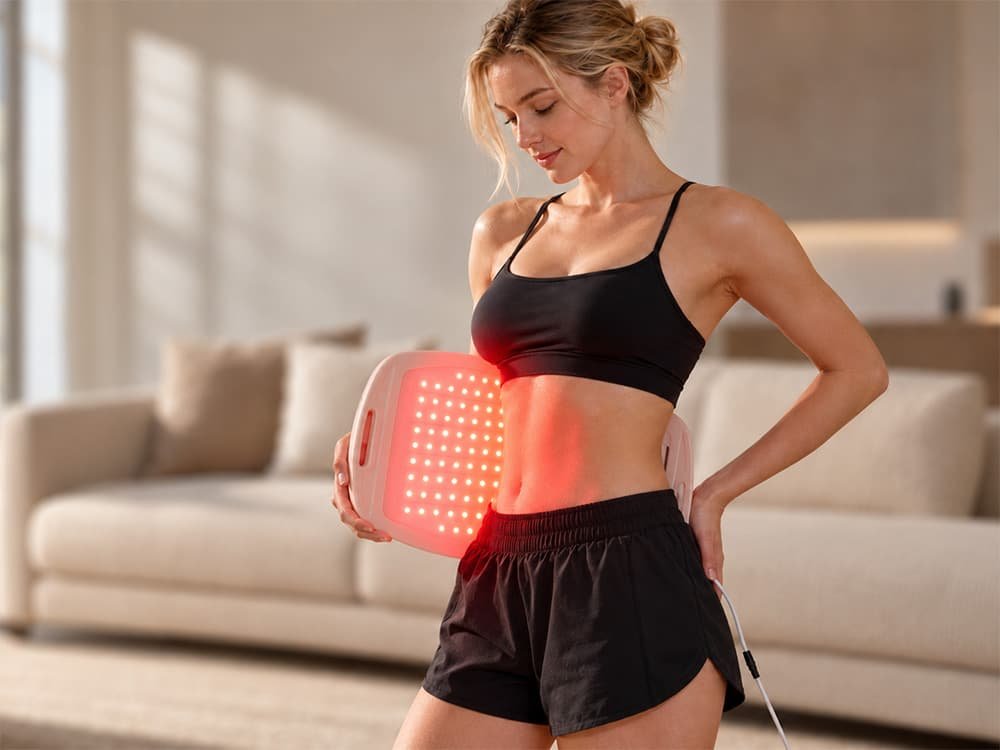
| Flexibele LED-pad | Het servies heeft een buigbaar formaat nodig dat in een boog of rond geselecteerde gebieden kan worden geplaatst | Stabiele positionering, aanvaardbaar contact of afstand, kabelgeleiding, reinigbaarheid, herhaalde flex-duurzaamheid en consistentie van de opstelling van het personeel | De dienst heeft een groot contactloos veld nodig of een vaste positioneringsafstand met minimale aanpassingen |
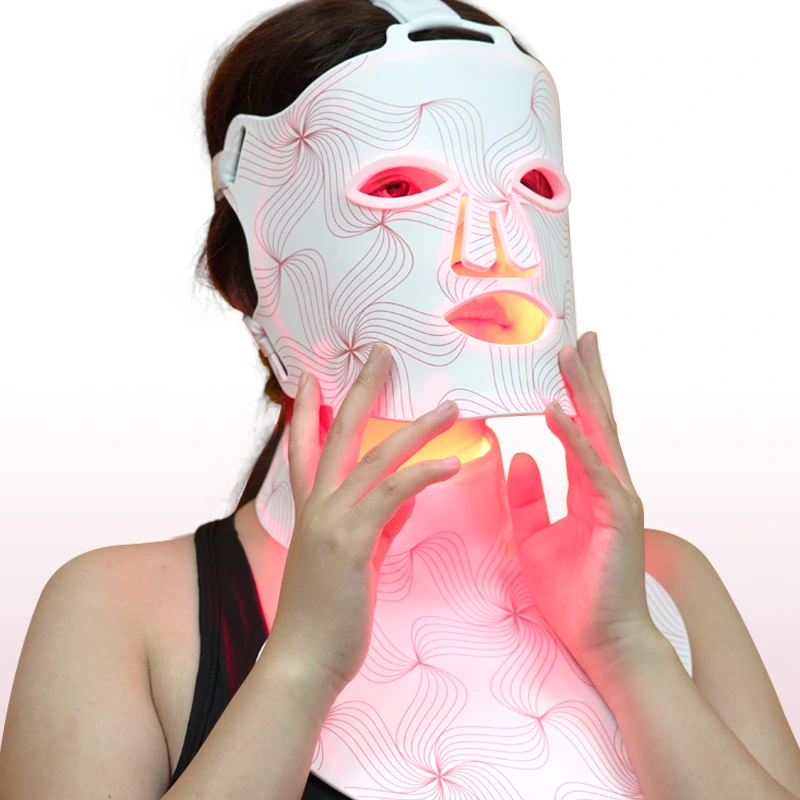
| Gezichtsmasker | De taak is gezichtsspecifiek en een draagbaar formaat past bij de gebruikersreis | Passend bij de beoogde gebruikers, ontwerp rond de ogen, workflow voor bandjes/voering, controles, schoonmaaklimieten voor gedeeld gebruik en oplaad-/resettijd | Frequent medegebruik is gepland, maar de materialen, bandjes en spleten kunnen niet binnen de afspraakcyclus opnieuw worden verwerkt |
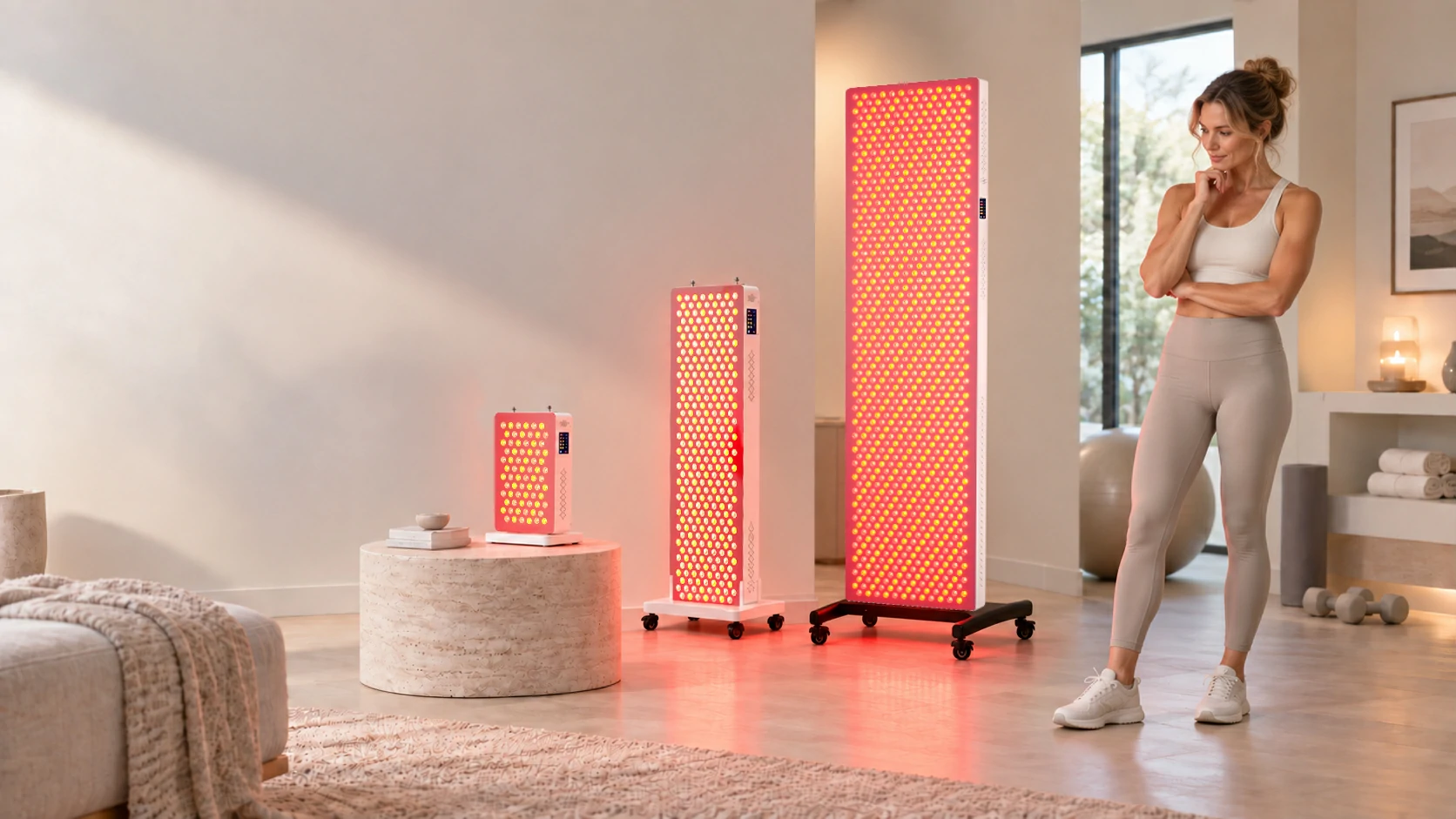
| Paneel of lamp | De dienst geeft de voorkeur aan contactloze positionering en een groter belichtingsveld | Staande stabiliteit, werkafstand, hoek, voetafdruk van de kamer, kabelbeheer, warmtegedrag en herhaalbaarheid van posities | De ruimte is beperkt of het personeel kan de vereiste positie tussen afspraken niet reproduceren |
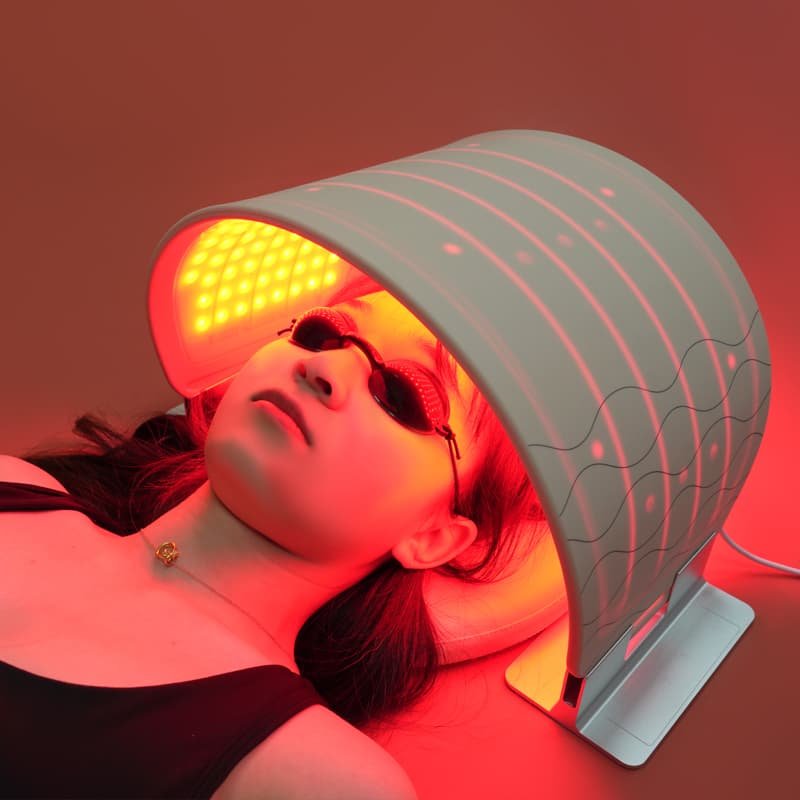
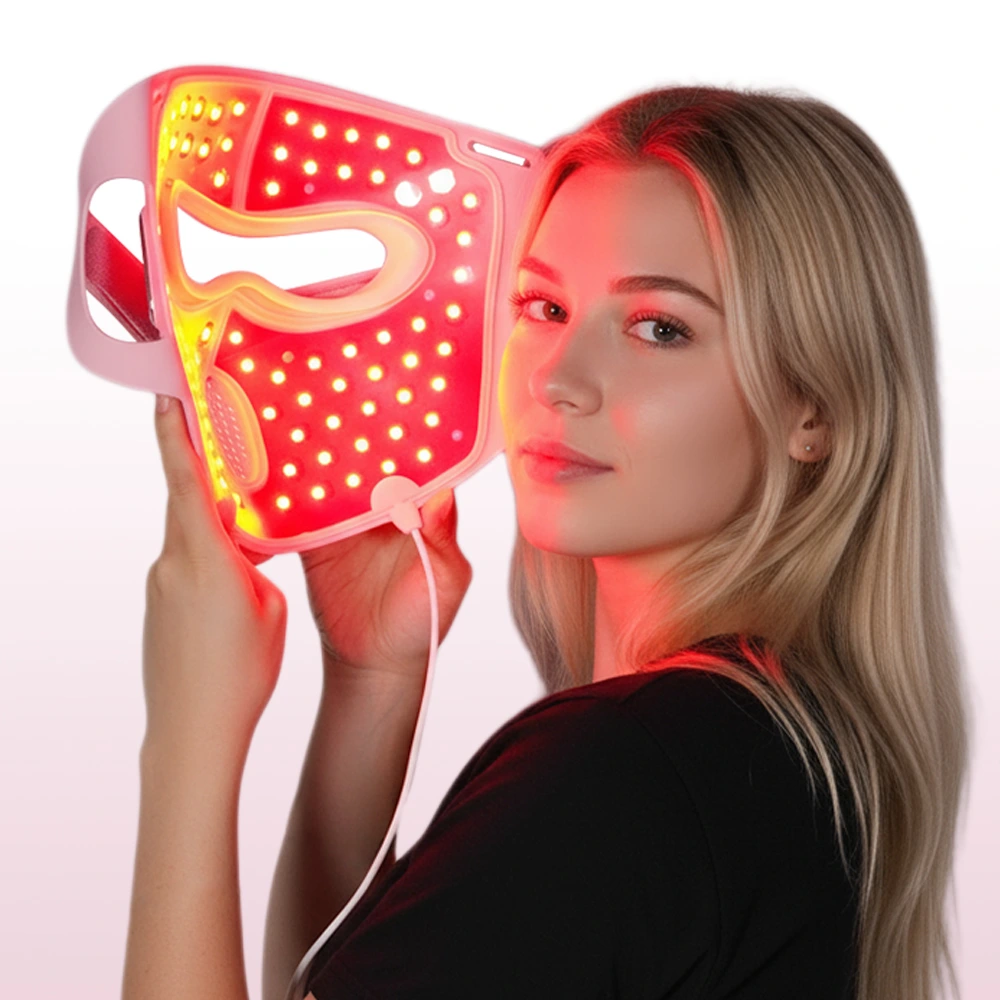
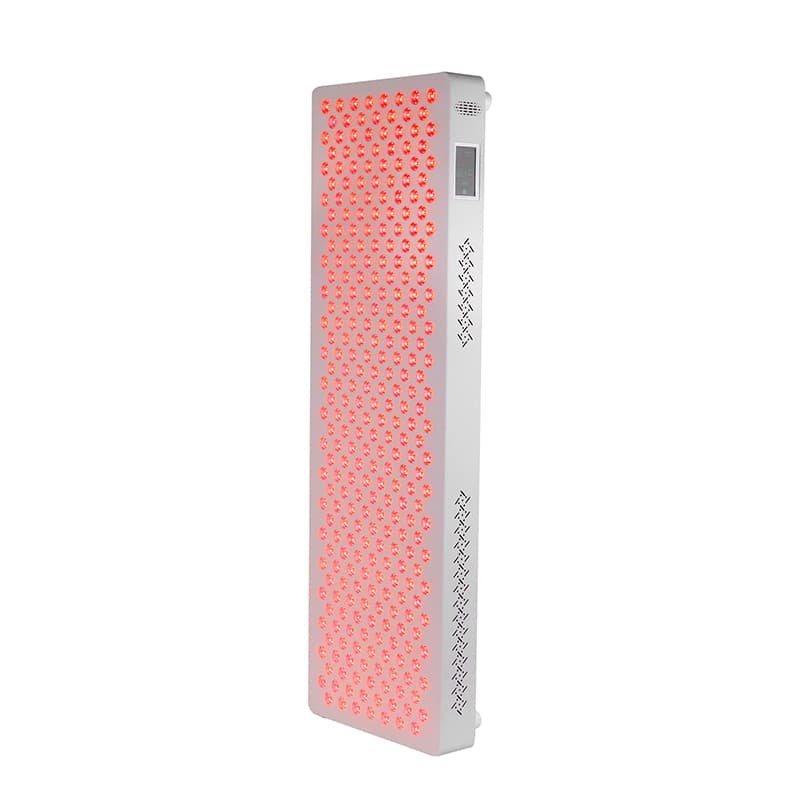
Een flexibele pad kan de voetafdruk in de ene opstelling verkleinen, maar in een andere opstelling positionerings- en reinigingsstappen toevoegen. Een paneel kan contactloos gebruik vereenvoudigen, maar vereist meer ruimte en een gedocumenteerde positioneringsmethode. Een masker kan het doelgebied duidelijk maken en tegelijkertijd meer fit- en gedeelde contactvragen creëren.
Als twee formaten plausibel blijven, bewaar beide in de monsterronde.
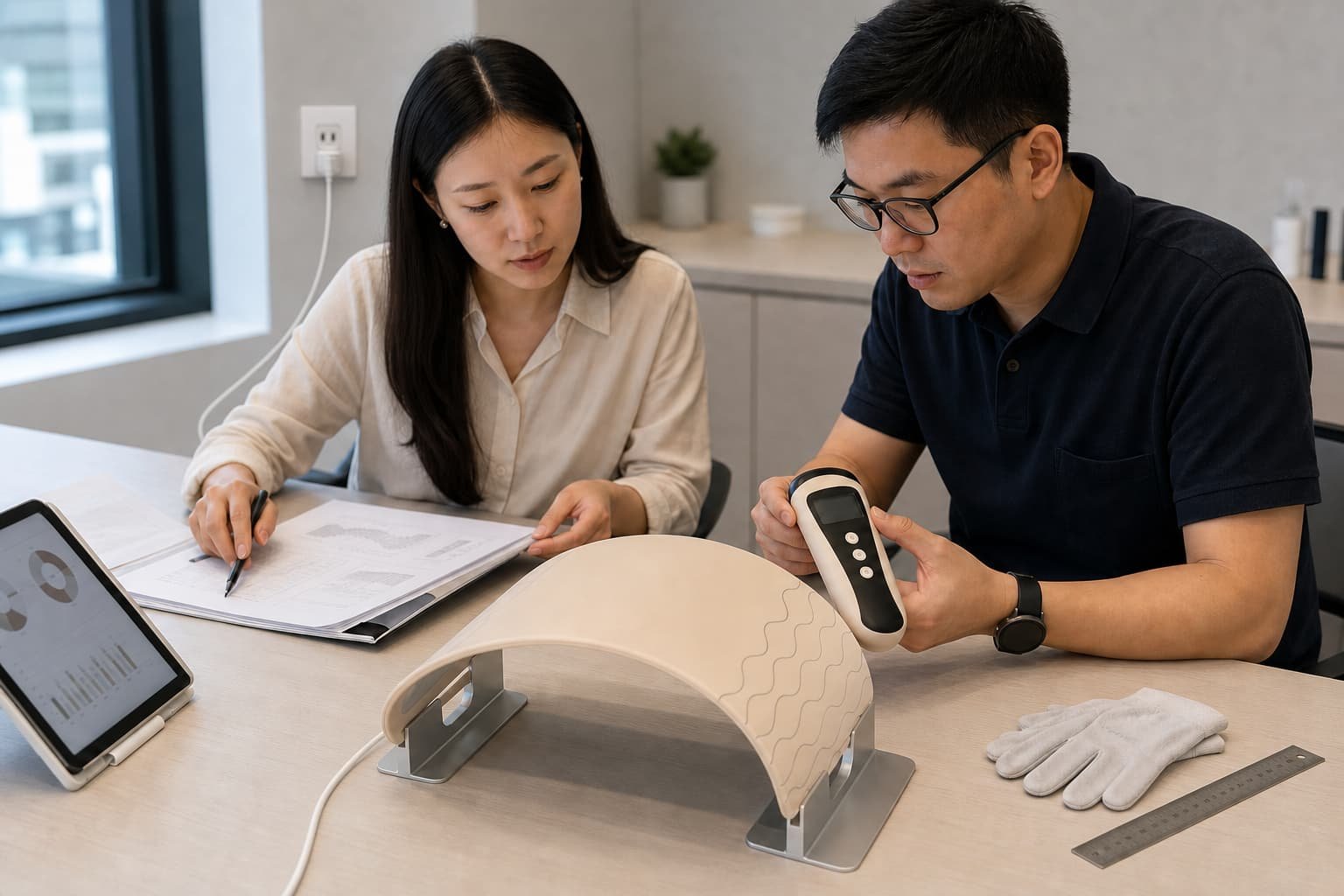
What if the sample needs a curved or unusual position?
Request a dimensioned setup drawing and the support specification before treating “flexible” as a fit confirmation. Use these fields in the supplier discussion:
| Setup detail | What to establish before ordering |
|---|---|
| Space and clearance | Target width or diameter, hoogte, surrounding obstructions and access openings; distinguish the overall envelope from the surface the device must curve around |
| Permitted bend | Manufacturer-specified minimum bend radius, allowed bend direction and restrictions on repeated flexing; do not derive these from a product photo |
| Shape retention | Which stand, frame or supports hold the position, whether they are included, and whether the assembly remains stable with its cables connected |
| Emitting area | Dimensions of the active light-emitting region, separately from the full pad or housing dimensions; coverage at the target needs its own assessment |
Bijvoorbeeld, a fixture’s widest dimension may include a handle or connector. That width tells you about clearance, but it is not necessarily the diameter around which a pad must bend. Agree on the geometry first; a different support or orientation may change the candidate configuration.
If the intended setup is outside the manufacturer’s documented use, pause the clinical purchasing decision for technical, clinical and regulatory review. Ordering a sample for a defined non-patient fit check is a different decision from accepting that setup for patient care.
Hoe berekent u de echte afspraakcyclus??
Meet de volledige cyclus in de beoogde ruimte; gebruik niet de geprogrammeerde lichttijd als afspraakcapaciteitsnummer.
Leg deze fasen vast tijdens de monsterevaluatie:
| Cyclus fase | Wat te timen of te observeren |
|---|---|
| Voorbereiden | Haal het apparaat en de accessoires op, inspecteer het, sluit de stroom aan of bevestig de lading, en bereid eventuele toegestane barrières voor |
| Positie | Pas de standaard aan, masker, boog, riem of kussen; kabels leiden; bevestig het juiste gebied en de juiste richting van het apparaat |
| Bedienen en monitoren | Selecteer de goedgekeurde modus, intensiteit en timer; bevestig het display of de indicatoren; registreer wat het personeel tijdens de operatie moet controleren en hoe zij reageren op ongemakken, een verbindingsverlies of een andere foutstatus |
| Schoon | Volg de exacte apparaatinstructies, compatibele productlijst, vereiste contacttijd en componentspecifiek proces |
| Opnieuw instellen | Stuur de besturingselementen terug naar de goedgekeurde staat, accessoires inspecteren en het apparaat voorbereiden op de volgende afspraak |
| Opbergen of opladen | Plaats het apparaat op de toegewezen locatie, beheer kabels en accessoires, en herstel de vereiste energiestatus |
Gebruik het waargenomen resultaat (niet een schatting van de leverancier) om de capaciteit te berekenen:
Eén apparaat, verstreken cyclus in één kamer = voorbereiden + positie + bedienen/bewaken + schoon + opnieuw instellen + elke opslag- of oplaadstap die het volgende gebruik blokkeert
Niet-overlappende theoretische bovengrens = beschikbare kamerminuten ÷ verstreken cyclus van één kamer, naar beneden afgerond
Gebruik die snelkoppeling slechts voor één apparaat in één kamer wanneer de cycli elkaar niet overlappen en elke fase dezelfde verstreken tijd gebruikt. Als schoonmaken, kosten of personeelsactiviteiten kunnen parallel plaatsvinden, neem drie klokken afzonderlijk op: apparaatbezette tijd, de tijd die in de kamer wordt besteed en de hands-on tijd van het personeel. Het echte knelpunt – en niet één verdeelsleutel – bepaalt de operationele limiet. Geen van deze berekeningen legt de behandelfrequentie vast, klinische geschiktheid of verwachte omzet. Uw goedgekeurde protocol, personeelsbeleid en lokale vereisten kunnen stappen toevoegen of de planning verder beperken.
Voor een meerkamerindeling, bepaal of elke kamer onafhankelijke bediening nodig heeft. Ga er niet van uit dat de functie voor het koppelen van meerdere apparaten van een controller een gesynchroniseerde werking of onafhankelijke ruimteregeling mogelijk maakt. Behandel het pas als een workflow-kandidaat nadat de exacte controllerdocumentatie en het monster de identificatie van het apparaat hebben bevestigd, start/stop-gedrag, timer- en moduslogica, opnieuw verbinden en foutisolatie. Test de selectie van verkeerde eenheden en de overdracht van personeel voordat u 'beheer van meerdere apparaten' als een operationeel voordeel beschouwt.
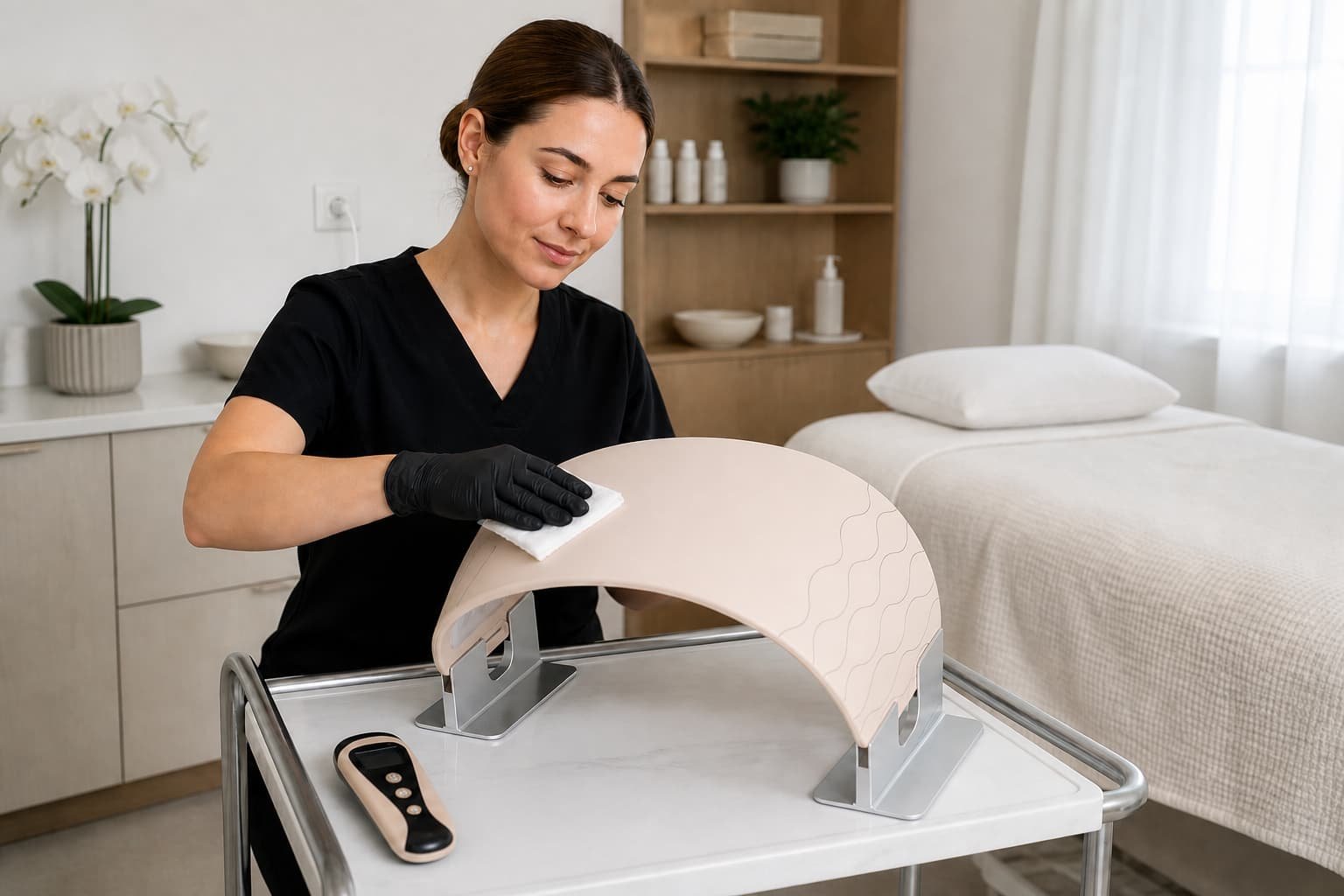
Kan het apparaat tussen clients worden schoongemaakt??
Keur een LED-apparaat voor gedeeld gebruik niet goed met de zinsnede ‘veeg schoon’. Vraag om een schriftelijke, materiaalvriendelijk proces voor elk klantcontactonderdeel.
Voor instellingen in de gezondheidszorg en patiëntenzorg, de CDC’s richtlijnen voor milieureiniging adviseert kopers apparatuur te selecteren die kan worden gereinigd en gedesinfecteerd, gedetailleerde instructies van de fabrikant verkrijgen, definieer de verantwoordelijkheid van het personeel en train de mensen die het proces uitvoeren. Het raadt ook aan om bij de fabrikant een lijst met compatibele reinigings- en desinfectieproducten op te vragen. Deze gezondheidszorgaanbevelingen mogen niet worden behandeld als een universele salonwet, maar ze laten zien waarom reinigbaarheid eerder een aankoopbeslissing is dan een bijzaak.
Vraag de leverancier om zich te identificeren:
- welke oppervlakken contact opnemen met de klant;
- welke onderdelen zijn verwijderbaar, wasbaar, wegwerpbaar of niet bedoeld om nat te worden;
- de toegestane categorieën reinigings- of desinfectiemiddelen en verboden chemicaliën;
- applicatie methode, natte contacttijd en eventuele vereiste spoel- of droogstap;
- of riemen, kussens, voeringen, bril, kabels en controllers volgen verschillende processen;
- hoe herhaaldelijk reinigen siliconen aantast, lijmen, coatings, bedrukte labels en optische oppervlakken;
- welk inspectieresultaat vereist dat een accessoire of apparaat moet worden vervangen.
Vergelijk het schriftelijke proces vervolgens met de regels die voor uw instelling en locatie gelden. Een medische of poliklinische omgeving heeft mogelijk een andere beoordeling van de infectiebeheersing nodig dan een schoonheidssalon. In beide gevallen, improviseer geen sterker chemisch of onderdompelingsproces dat de instructies van het apparaat niet ondersteunen.
Een nuttige voorbeeldtest omvat de volledige reinigings- en droogcyclus. Als het apparaat technisch reinigbaar is, maar niet betrouwbaar opnieuw kan worden verwerkt binnen uw personeels- en afsprakenplan, het past nog steeds niet goed in de workflow.
Welke optische specificaties en veiligheidsbestanden moet u vergelijken??
Vergelijk bewijspakketten, geen geïsoleerde cijfers. Golflengte, bestraling, fotobiologische veiligheid en elektrische veiligheid beantwoorden verschillende vragen.
Golflengterapport
Vraag een gemeten spectrum- of golflengterapport aan voor de uiteindelijke bronconfiguratie en bedrijfsmodi. Het zou het exacte model moeten identificeren, monster- of seriereferentie, actieve modus, instrument, meetopstelling, piekwaarden of banden, en relevante toleranties. Een lijst met nominale componentgolflengten laat niet zien wat het voltooide apparaat onder elke modus uitzendt.
Bestralingsrapport
NIST beschrijft bestraling als invallend stralingsvermogen per oppervlakte-eenheid. Een waarde in mW/cm² heeft daarom een meetcontext nodig voordat deze kan worden vergeleken. Vraag ernaar:
- exact model en bronconfiguratie;
- actieve modus en intensiteitsinstelling;
- meetvlak en afstand;
- instrument- en kalibratiestatus;
- aantal en locatie van testpunten;
- centrum, minimum, maximale of gemiddelde waarden, waarbij de middelingsmethode duidelijk geïdentificeerd is;
- opwarmen, energie- en omgevingsomstandigheden, indien relevant.
Converteer een oppervlaktemeting niet naar een werkafstandswaarde of een klinische dosis. Rangschik geen twee producten wanneer het ene getal wordt gemeten op het emitterende oppervlak en het andere wordt gemeten op een gebruikerspositie.
For a curved setup, ask whether the report covers that shape, support and measurement position. A flat-device report leaves a verification gap if your decision depends on output in another arrangement. If a cover or other material sits between the light and the target, request relevant measurements rather than assuming that the original reading applies beyond it.
Temperature-rise records
Request the tested configuration, modus, intensiteit, duur, ambient conditions, sensor locations, starting temperatures and temperature changes over time. Match each reading to its sensor location: a housing-temperature result cannot stand in for a target-temperature measurement. Have the responsible team assess whether the report conditions represent the intended setup and define any further testing needed.
Fotobiologische veiligheid
IEC 62471 biedt een raamwerk voor het evalueren van fotobiologische gevaren van elektrisch aangedreven incoherente optische breedbandbronnen, inclusief LED's maar exclusief lasers. Een IEC 62471 rapport kan een beoordeling van de optische veiligheid ondersteunen wanneer het exacte model wordt gebruikt, configuratie, bedrijfsomstandigheden en rapportscope match. Het bewijst geen klinische werkzaamheid, nauwkeurigheid van de golflengte, uitvoeruniformiteit of een geschikt serviceprotocol.
Elektrisch en marktbewijs
De huidige geconsolideerde editie, IEC 60601-1:2005+AMD1:2012+AMD2:2020, behandelt de basisveiligheid en essentiële prestaties voor medische elektrische apparatuur. Het is geen algemene badge voor elk aangedreven salonproduct, en voor sommige medische elektrische apparatuur zijn ook toepasselijke onderpanden of specifieke normen nodig. Een elektrisch schoonheids-/wellnessapparaat kan een andere marktconformiteits- en elektrische veiligheidsroute volgen.
Voordat u een rapport of certificaat accepteert, passen bij het bedrijf, model, adapter, controleur, accessoires, bronconfiguratie, bedoeld gebruik, standaardeditie en doelgroep. Je zit op Wakelife Certificeringsgids voor LED-therapieapparaten voor de volledige marktautorisatie, QMS, Bewijskaart voor elektrische veiligheid en producttesten. Voor details over optische rapporten, ga verder met de IEC 62471, Bestralings- en golflengterapportgids.
Kan het personeel het exacte monster consistent gebruiken??
Een professioneel apparaat moet een gebruikstest door het personeel doorstaan, niet zomaar een productdemonstratie onder leiding van de leverancier.
Geef het ontwerp van de werkwijze en het exacte monster aan meer dan één beoogde operator. Kijk of iedereen dat kan:
- identificeer het juiste apparaat en de juiste accessoireset;
- plaats het op dezelfde gedefinieerde manier;
- selecteer de goedgekeurde modus, intensiteit en timer;
- lees de bedrijfsstatus zonder te raden;
- kabels voorkomen, standaards of riemen de werkstroom in de kamer niet verstoren;
- een verbindingsverlies herkennen, stroomonderbreking of onjuiste instelling;
- stop en reset het apparaat volgens de procedure;
- volledige reiniging, inspectie en opslag zonder ongedocumenteerde snelkoppelingen.
Leg vast waar operators uiteenlopen. Als dezelfde fout herhaaldelijk verschijnt, beslissen of het een trainingsprobleem is, een instructieprobleem of een productinterfaceprobleem. Los een zwak controleontwerp niet op door ervan uit te gaan dat elk toekomstig personeelslid zich een ongeschreven oplossing zal herinneren.
Voor aangesloten apparaten of apparaten met meerdere units, koppeling testen, identificatie van het apparaat, heraansluiting en herstel na stroomuitval. Vraag ook welke controller, wijzigingen in de firmware en de gebruikersinterface zijn bevroren voor productie. Een monster dat zich correct gedraagt, is niet voldoende als de massaproductieconfiguratie niet is gedefinieerd.
Welke documentatie moet een salon of kliniek vragen voordat ze bestellen??
Vraag één bijpassend documentpakket aan voor de exacte configuratie, niet een map met niet-gerelateerde logo's en certificaten.
Minimaal, de pre-orderbeoordeling zou betrekking moeten hebben:
| Bewijslaag | Wat te vragen | Waar het niet mee verward mag worden |
|---|---|---|
| Productidentiteit | Model, hardware- en firmwareversie, bronconfiguratie, controleur, adapter en accessoires | Een catalogusfamilienaam bewijst niet dat elke configuratie hetzelfde is |
| Beoogd gebruik en claims | Label, DE WOLK, waarschuwingen, contra-indicaties, gebruikersgroep en geplande marketingtaal | Professioneel gebruik betekent niet automatisch een medische toestemming |
| Optisch bewijs | Golflengte/spectrum, bestralingsmethode en fotobiologisch veiligheidsrapport, indien van toepassing | Een golflengtelijst of één mW/cm²-waarde is geen klinisch bewijs |
| Elektrisch/EMC-bewijs | Toepasselijke norm, rapport-/certificaatnummer, getest model, adapter en configuratie | Een elektrisch of EMC-rapport is geen bewijs voor marktautorisatie of werkzaamheid |
| Bewijs uit de markt | Toepasselijke registratie, vermelding, goedkeuring, licentie, conformiteits- of verantwoordelijke partijregistraties | Eén marktrecord geeft niet elk model toestemming, bewering of land |
| Kwaliteit en productie | Toepasselijk toepassingsgebied van het kwaliteitssysteem, goedgekeurde specificatie, inkomende/in behandeling zijnde/eindcontroles en orderregistratie | Fabrieks- of systeembewijs is geen testresultaat op productniveau of marktautorisatie |
| Reiniging en service | Instructies voor compatibele agenten, vervangende onderdelen, garantieomvang, foutafhandeling en serviceverantwoordelijkheden | “Gemakkelijk schoon te maken” of “één jaar garantie” is geen volledig operationeel plan |
Include eye protection in the accessory review. Ask the supplier to identify the exact device’s requirements for clients and operators, the specified protective accessories and whether they are included in the sample price. For any supplied eyewear, confirm whether it is single-user or shareable, its cleaning instructions and replacement criteria. Record these answers alongside the device instructions before approving the accessory set.
Als uw publieke taal kan overgaan van schoonheid of welzijn naar acne, pijn, wond, behandeling of ander medisch terrein, stop en bekijk het beoogde gebruik en het bewijstraject voordat u de verpakking goedkeurt, servicemenu's of advertenties. De Claimgids voor LED Beauty-apparaten legt uit hoe bewoordingen de verificatietaak veranderen.
Wanneer hoort een flexibele LED-pad op de shortlist??
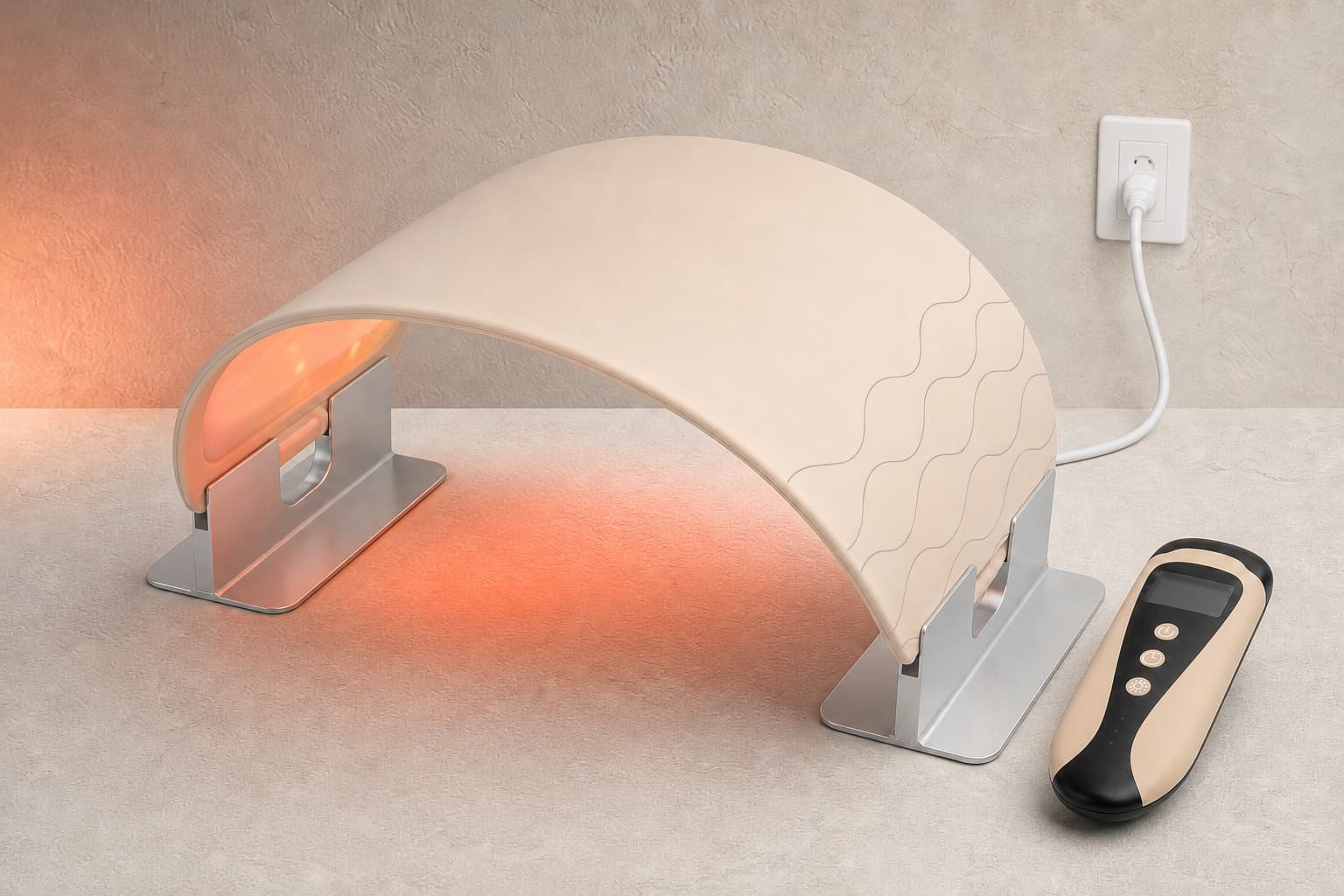
Bij buigbare positionering hoort een flexibele pad op de shortlist, gelokaliseerd gebruik en compacte opslag passen bij de serviceopdracht, maar alleen als het exacte monster de positionering doorstaat, reinigings- en controletests.
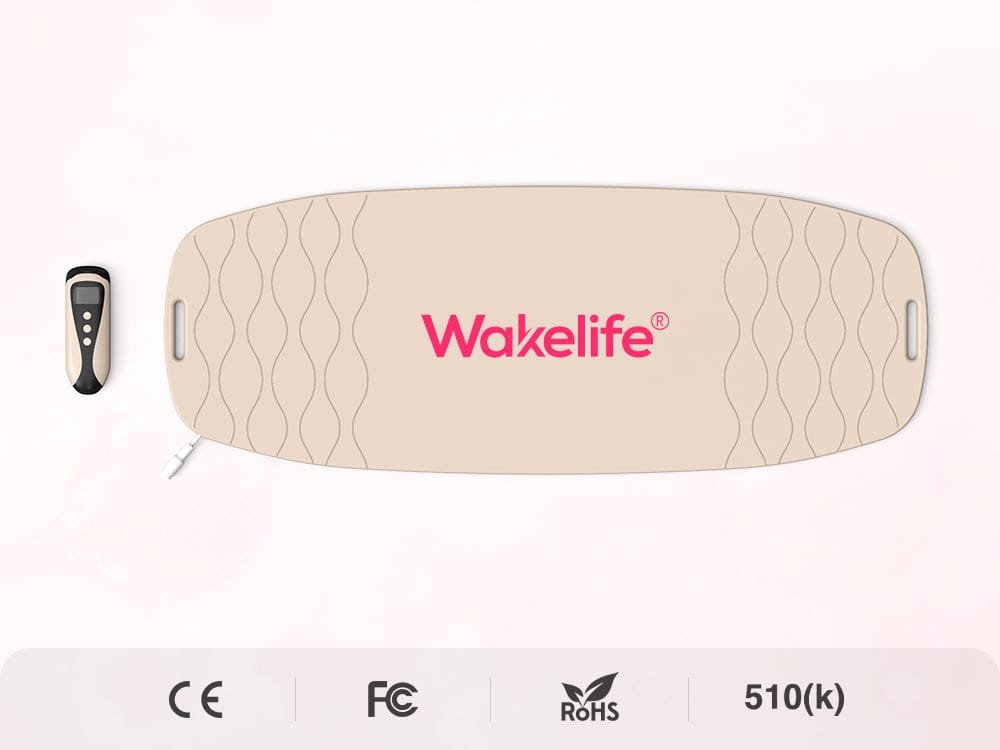
De stroom van Wakelife flexibele LED-categorie met meerdere golflengten gebruikt de marktterm “PDT LED-lichtfotontherapiemachine” voor niet-medicamenteuze LED-schoonheids- en welzijnsapparaten, geen medische fotodynamische therapiesystemen.
De onderstaande G240-feiten zijn in augustus opnieuw gecontroleerd 31, 2026; bevestig de huidige offerte en monster omdat configuraties kunnen veranderen. Het afgebeelde G240-platform kan in een boog of rond geselecteerde lichaamsgebieden worden geplaatst. Het heeft vier bevestigde combinatiemodi 415, 590, 633 En 850 nm, with adjustable intensity and timer settings. Een aparte 12 V / 5 A adapter powers the main unit from a wall outlet. Its wireless Bluetooth controller can operate up to 12 gekoppelde G240-eenheden; the controller’s charging cable is not an operating connection to the main unit.
Request the exact mode mapping and use the staff-operation checklist to test pairing, device identification and recovery. Multi-unit pairing does not establish synchronized operation, independent room control or appointment capacity.
The NFY-2030, NFY-3040 and NFY-3060 series provides additional flexible sizes. If size is the reason for considering NFY, request the exact model, controller details, configuration and applicable documents rather than treating the three models as one specification.
For an unusual G240 arrangement, request the permitted bend radius, active emitting dimensions, support drawing and relevant optical and temperature records. The platform features above do not establish those setup-specific results or clinical suitability.
A flexible platform is a weak first choice when the service requires a broad non-contact field, a fixed working distance with minimal repositioning, or a cleaning protocol the material and construction cannot support. In those cases, compare a panel or another format instead of forcing the category to fit.
What Should Go Into the RFQ and Sample Request?
Send the supplier the service brief you used to make the shortlist. A useful first request contains:
- Target country or market.
- Facility type: salon, aesthetic clinic, medical clinic, wellness studio or another setting.
- Planned service and public claims, written without placeholder medical promises.
- Intended operator and whether the device will be shared.
- Target area and preferred positioning: draagbaar, flexible/contact, arched or non-contact.
- Room count, expected independent or synchronized controls, and power constraints.
- Required cleaning/disinfection process and prohibited materials or agents.
- Requested optical, veiligheid, elektrisch, market and quality documents.
- Branding, verpakking, handmatig, plug, UI or engineering changes.
- Monsterhoeveelheid, estimated production quantity and target launch date.
Ask the supplier to identify which facts are standard-platform facts, which are options, which require engineering review and which documents would need re-testing after customization. That answer is more useful than a fast quotation built around an undefined “professional machine.”
Compare the complete sample offer
Before comparing totals, check that each offer identifies the same unit, controleur, local power adapter, ondersteunt, kabels, manuals and packaging. Ask for the delivery location and postal code to be recorded, with shipping, taxes or duties, uitsluitingen, quotation validity, availability and lead time stated. Confirm the warranty’s covered configuration, exclusions and responsibility for return shipping. A lower unit price may leave a necessary support or delivery charge outside the comparison.
For each requirement, dossier confirmed, missing evidence of does not meet the requirement, with the document or observation behind the result. A missing item needs an owner and next action. Purchase a sample when the evaluation question, supplied configuration and unresolved items are explicit; do not record “ready for clinical use” merely because the package is complete or the hardware fits.
Make the Sample Decision
The best professional LED light therapy machine is the exact device your team can position, opereren, schoon, document and support consistently within the intended service.
Start with the service brief. Shortlist the form factor. Measure the full appointment cycle. Test the sample with multiple operators. Match every report to the exact configuration, market and claim scope. Only then should price, branding and production quantity decide between the remaining candidates.
If a flexible LED platform matches that brief, bekijk de Wakelife PDT LED category and send the target market, service setting, positioneringsvereiste, sample needs and required documents with your inquiry.
Referenties
-
1
ONS. Food and Drug Administration. Hoe u kunt bepalen of uw product een medisch hulpmiddel is
-
2
ONS. Food and Drug Administration. Algemeen welzijn: Beleid voor apparaten met een laag risico, Laatste begeleiding, Januari 2026
- 3
-
4
Internationale Elektrotechnische Commissie. IEC 62471:2006, Fotobiologische veiligheid van lampen en lampsystemen
-
5
Internationale Elektrotechnische Commissie. IEC 60601-1:2005+AMD1:2012+AMD2:2020, Medical electrical equipment—Part 1: Algemene eisen voor basisveiligheid en essentiële prestaties
-
6
ONS. Centra voor ziektebestrijding en -preventie. Environmental Cleaning Procedures—guidance for global healthcare facilities with limited resources
-
7
Nationaal Instituut voor Standaarden en Technologie. Radiometrie en fotometrie: Recensie voor Vision Optics
-
8
ONS. Centra voor ziektebestrijding en -preventie. Recommendations for Disinfection and Sterilization in Healthcare Facilities, sections 2 En 11
-
9
Wakelife. Flexible LED platform and supplier information — manufacturer information, not independent clinical evidence; confirm the current model specifications and instructions for the supplied sample.