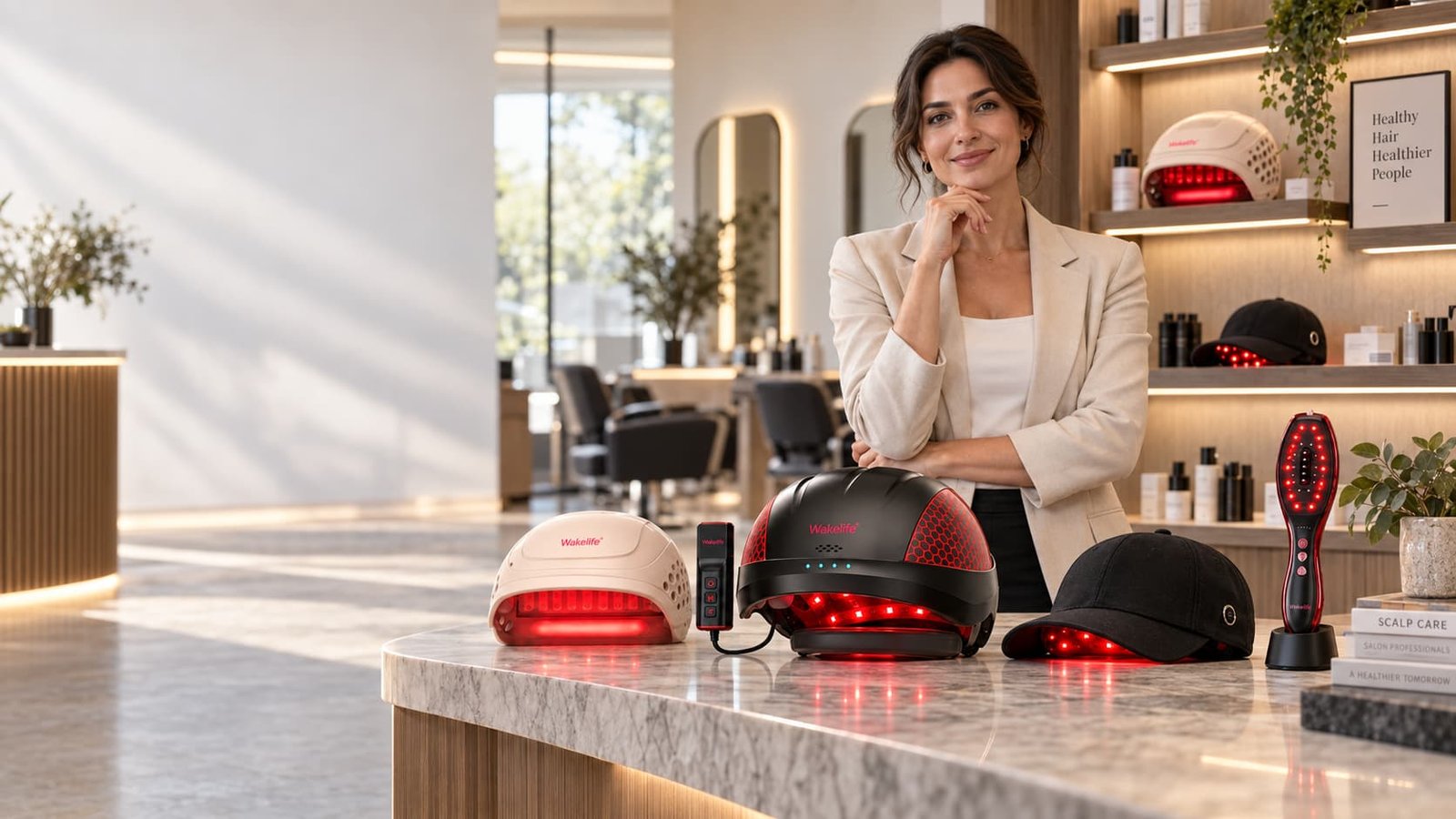
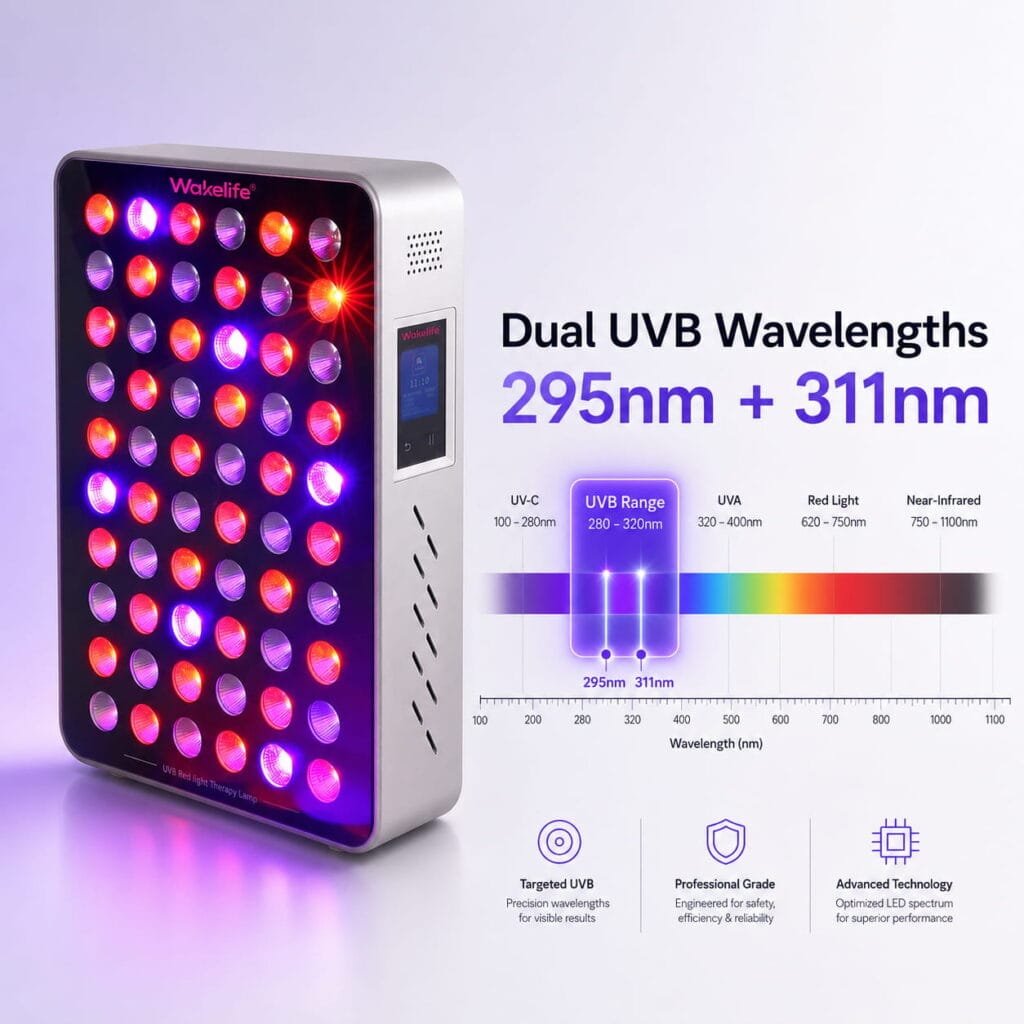
TL;DR (voor kopers) BK300 is een compacte consumenten-UVB-bruining & lichtblootstellingspaneel - geen medisch apparaat. De voorsprong is niet het aantal van 60 LED's. Het is dat BK300 het enige deel van het spectrum gebruikt dat de meeste panelen vermijden: UVB (295nm + 311nm) – en bouwt het uit tot een product dat dat ook is meetbaar, op afstand bestuurd, en eerlijk uit te leggen aan uw eindklant. Voor jou, dat is een plankverhaal dat concurrenten niet snel kunnen kopiëren, plus een kant-en-klare contentengine: 9 golflengten en 7 modi.
1. Laten we duidelijk zijn over wat dit apparaat is – en wat niet
BK300 is een UVB-bruiner voor consumenten / lichtbelichtingspaneel. Er wordt geen diagnose gesteld, traktatie, genezing, of een ziekte voorkomen, en mag nooit op die manier op de markt worden gebracht.
De nalevingsstatus: de BK-serie is CE geslaagd, FCC, en RoHS-testen, het is vervaardigd onder ISO 13485 + MDSAP systemen, En BK300 is opgenomen in de FDA-informatie over apparaten van een FDA-geregistreerde vestiging.
Eén onderscheid zullen we niet vervagen, en dat zou jij ook niet moeten doen: A apparaatlijst is registratie van het apparaat bij de FDA. Het is niet een FDA-‘goedkeuring’ of ‘goedkeuring’. De FDA zelf is expliciet op dit punt – zie de eigen richtlijnen van de FDA hierover Apparaatregistratie en -lijst En 510(k) Premarket-melding. (Onze faciliteit heeft een aparte 510(k) goedkeuring – K250830 – maar die goedkeuring behoort tot een specifiek LED-gezichtsmasker, niet tot BK300. U kunt elke goedkeuring zelf verifiëren in het publiek van de FDA 510(k) database. We laten die twee niet samensmelten, en we raden u aan ze ook op uw eigen pagina's gescheiden te houden.)
Waarom hiermee openen?? Omdat we kopers een opgeblazen specificatieblad op Amazon of een DTC-winkel hebben zien plakken en meteen een probleem met de naleving van het platform tegenkwamen. Wij zeggen liever één zin minder dan dat u aansprakelijk bent voor onze bewoordingen.
2. Het echte verhaal achter 311nm: Leen de kennis, Niet de goedkeuring
311nm – smalband UVB – heeft een lange, gedocumenteerde geschiedenis in de dermatologie, waar smalband-UVB-eenheden worden gereguleerd als medische apparaten. Dit is geen marketingfolklore; het is goed geïndexeerde klinische literatuur. De Overzicht van fototherapie van de American Academy of Dermatology is een nuttig uitgangspunt; voor diepte, een peer-reviewed systematische review – zoals Almutawa et al., “Werkzaamheid van gelokaliseerde fototherapie en fotodynamische therapie voor psoriasis” (PubMed PMC3047947) – illustreert hoe uitgebreid deze golflengte is onderzocht in gecontroleerde klinische omgevingen.
Het eerlijke onderscheid: wat wordt opgehelderd zijn die specifieke medische apparaten – niet ‘de 311 nm-golflengte’. BK300 zendt 311 nm uit, maar dat doet het wel niet de goedkeuring van een medisch apparaat erven. We noemen deze achtergrond om één reden: om dat te laten zien 311nm is een diep bestudeerde, voorspelbare golflengte – en daarom hebben we er alle vertrouwen in om er een consumentenproduct van te maken. Het is niet een bewering dat BK300 therapeutische effecten heeft.
De waarde voor jou: je kunt klanten eerlijk vertellen dat dit “een golflengte is die serieus is onderzocht” – een geloofwaardige, op feiten gebaseerd verhaal heeft nooit overdrijving van de werkzaamheid nodig om te landen.
3. U verdient pas het recht om ‘gracht’ te zeggen nadat u eerlijk bent geweest over het risico
De meeste panelen vermijden UVB omdat, ongecontroleerd, het brandt – en chronische overmatige blootstelling brengt een reëel risico op huidkanker met zich mee. Wij zullen niet anders doen. IARC (het kankeronderzoeksbureau van de WHO) classificeert UV-uitstralende bruiningsapparaten als Groep 1 kankerverwekkende stoffen — de categorie met het hoogste risico — gedocumenteerd in IARC-monografieën Deel 100D: Straling. De UV-straling van de WHO Q&A stelt dit duidelijk voor een algemeen publiek.
Onze logica: Risico’s worden niet weggenomen door vermijding, maar door technische controle. Zoals een medische röntgenfoto: schadelijk ongecontroleerd, een routinematig hulpmiddel wanneer gecontroleerd. De lijn is altijd gecontroleerd versus. ongecontroleerd.
Maar ‘gecontroleerd’ kan geen slogan zijn, dus hier is precies hoe BK300 het afdwingt:
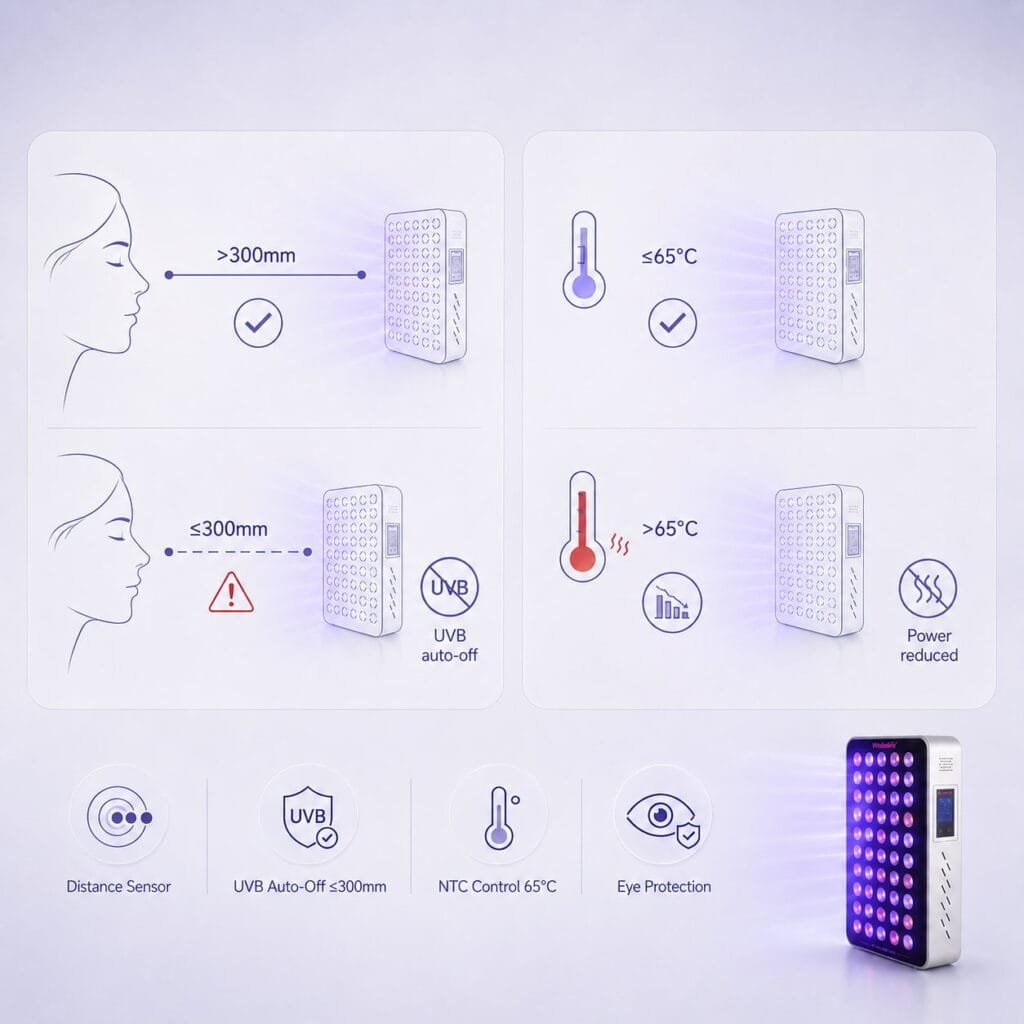
- Afstandssensor + automatische UVB-uitschakeling: als de gebruiker binnen is ≤300 mm (30cm), er klinkt een zoemer en het UVB-kanaal schakelt automatisch uit. UVB overschrijdt alleen de veilige drempel.
- NTC-temperatuurregeling: boven 65°C, het apparaat vermindert automatisch het stroomverbruik.
- Inclusief veiligheidsbril — in overeenstemming met de fotobiologische veiligheidsprincipes zoals uiteengezet in ICNIRP-richtlijnen over de grenzen van blootstelling aan ultraviolette straling, de internationaal erkende, vrij toegankelijke referentie voor grenswaarden voor UV-blootstelling.
Dit is wat ‘techniek de controle draagt – niet de handleiding’ feitelijk betekent.
4. Een opmerking over het eerlijk lezen van de stralingstabel
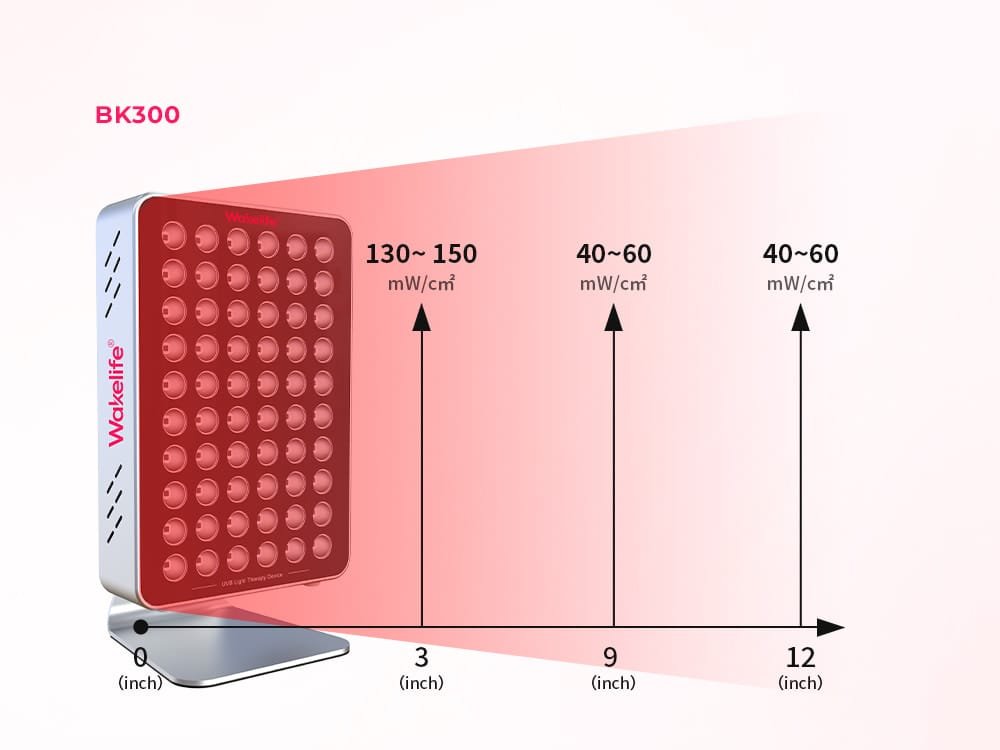
| Afstand | Bestraling |
|---|---|
| 3 inch (~76 mm) | 130–150 mW/cm² |
| 9 inch (~230 mm) | 40–60 mW/cm² |
| 12 inch (~300 mm) | 40–60 mW/cm² |
Hier is een punt dat de meeste fabriekskopieën zouden verbergen, en wij brengen het voor u naar boven: het 3-inch cijfer is een meetreferentie, geen UVB-gebruiksadvies. Omdat de afstandssensor UVB bij ≤300 mm afsnijdt, echt UVB-bruiningsgebruik vindt plaats bij een bereik van meer dan 30 cm – d.w.z., de 40–60 mW/cm²-zone. Als de marketing van een koper ‘stand 3 centimeter afstand voor snel bruinen,Dat is in tegenspraak met de eigen veiligheidslogica van het apparaat. Vertel uw eindgebruikers de veilige gebruiksafstand, en de dosimetrie blijft eerlijk.
5. 9 Golflengten = meerdere verhalen; 7 Modi = een inhoudskalender
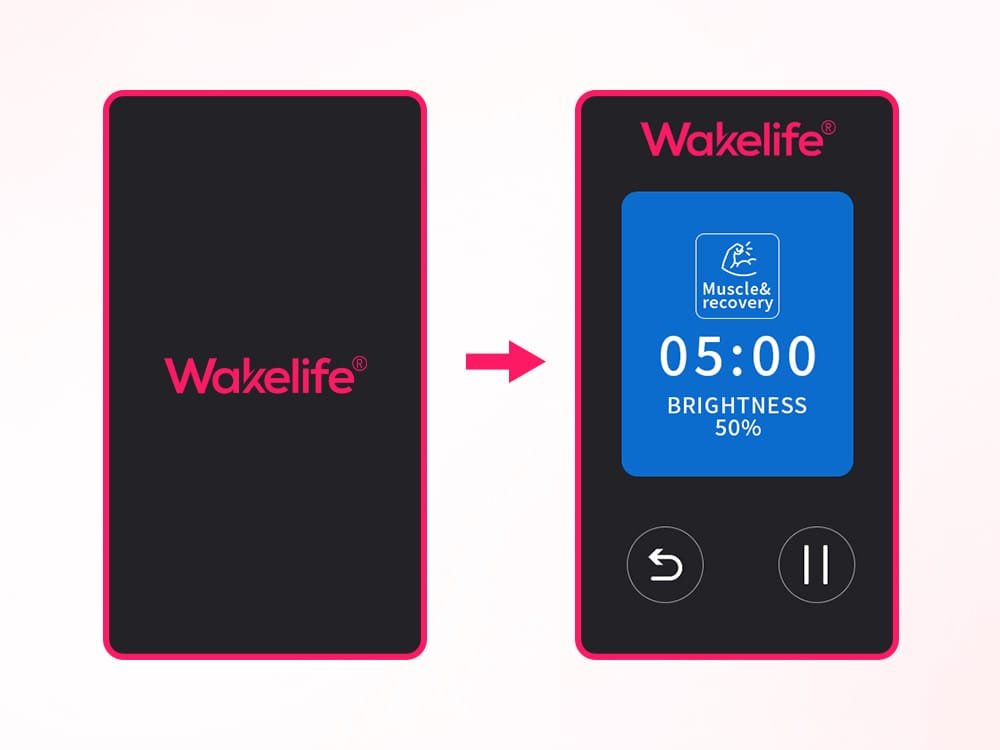
BK300's 9 golflengten Zijn 9 onafhankelijke inhoudshoeken; zijn 6 voorinstelling + 1 aangepaste modi zijn een kant-en-klaar publicatieritme. “Niets meer te posten” na de lancering is een echte DTC-angst – we hebben de munitie op voorraad.
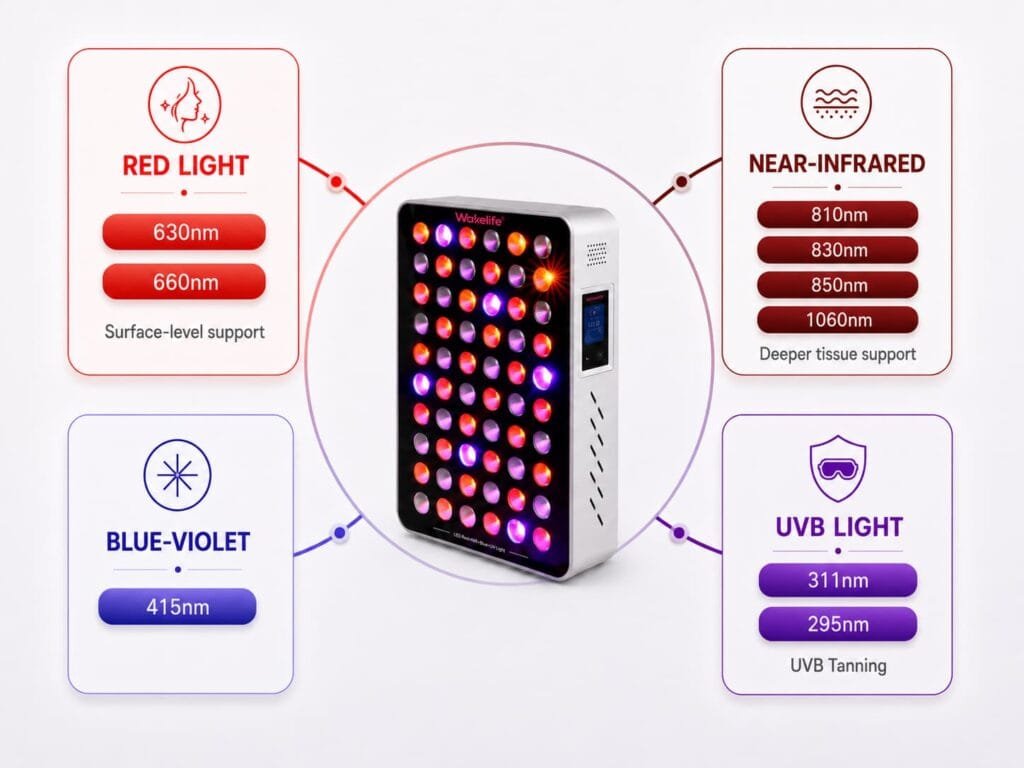
Een correctie die de moeite waard is om in uw berichten aan te brengen: De bruining van de BK300 is UVA-vrij. De 9 golflengten zijn 295/311 nm (UVB), 415nm (blauwviolet), 630/660nm (rood), en 810/830/850/1060nm (NIR/IR) — Geen druif. Dit is van belang omdat UVA de band is die het sterkst geassocieerd wordt met fotoveroudering en DNA-schade, zoals gedetailleerd door de UVA/UVB-uitleg van de Skin Cancer Foundation. Dus “UVB-gedreven, UVA-vrij” is eigenlijk een schoner onderscheidend vermogen dan typische zonnebanken. Verdun het niet door UVA te impliceren.
Naamgeving van de modus, één eerlijke aanbeveling: de huidige lijst met voorinstellingen bevat “M6 Botgezondheid” (295+311nm) En “M4-afname.” De keten van UVB → vitamine D → calcium → bot bestaat uit meerdere stappen en is individueel afhankelijk; het comprimeren ervan in een modusnaam genaamd ‘Bone Health’ doet een fysiologische belofte die noch jij noch wij kunnen waarmaken – en het reist stroomafwaarts als jouw nalevingsrisico. Wij raden aan neutrale, beschrijvend namen:
| Modus | Golflengten | Voorgestelde neutrale naam | Wat u moet vermijden om te claimen |
|---|---|---|---|
| M1 | 295/311 + 630/660 + 810/830/850/1060 | “Bruinen (UVB-aangedreven)” | “veilig bruinen, nul risico” |
| M2 | 630/660 | "Huid / Collageenroutine” | “gaat veroudering tegen” |
| M3 | 810/830/850/1060 | "Herstel / NIR-routine” | “Behandelt spierblessures” |
| M4 | 630/660 + 295 | “Rustgevende lichte routine” | “vermindert ontstekingen” (hernoemen van "Verlagen") |
| M5 | 630/660 + 415 | “Verzorgingsroutine voor puistjes” | “behandelt acne” |
| M6 | 295/311 | “UVB-blootstellingsroutine” | “Botgezondheid” |
| M7 | Aangepast | "Aangepast (OEM / ODM)” | — |
Dezelfde modi, dezelfde verkoopkracht – gewoon op eerlijke grond staan.
6. Over “Bruinen” en “Vitamine D,Wij beweren alleen wat het bewijsmateriaal ondersteunt
Bruinen: UVB-geïnduceerde melanogenese is een gevestigde fotobiologie. De biochemische route – UVB-absorptie die de melaninesynthese veroorzaakt – is gedocumenteerd in peer-reviewed literatuur; zie Brenner & Gehoor, “De beschermende rol van melanine tegen UV-schade in de menselijke huid” (PubMed PMC2671032). Zonnen dus als functie het is legitiem om te adverteren. Maar de resultaten variëren per huidtype, afstand, en sessieduur – daarom is het voor/na-beeld correct gelabeld met ‘alleen ter visuele referentie’; resultaten kunnen variëren.” Bewaar die disclaimer; het doet echt werk.
Vitamine D: de UVB-band rond 290–315 nm is het deel van het zonnespectrum dat verantwoordelijk is voor de vitamine D-synthese in de huid, zoals gedocumenteerd door de NIH Office of Dietary Supplements Vitamine D-informatieblad. Maar let op de grens: “deze golflengteband stimuleert de synthese in principe" is niet “Dit apparaat produceert op veilige afstand en gedurende een veilige tijdsduur een betekenisvolle hoeveelheid vitamine D.” Onze formulering luidt dus: “levert blootstelling aan de 295 nm-band,” niet “vult vitamine D aan.” Het verschil in één woord is een verschil in de orde van grootte in compliancerisico.
7. Snelle specificatiereferentie
| Item | BK300 |
|---|---|
| Type | Compact UVB-bruiningspaneel (gericht lichaam) |
| LED's | 60 pc's (SMD 3535) |
| Golflengten | 295, 311, 415, 630, 660, 810, 830, 850, 1060nm (UVA-vrij) |
| Modi | 6 voorinstelling + 1 aangepast |
| Weergave | 3.0″ TFT LCD-aanraakscherm |
| Helderheid / Puls / Timer | 0–100% / 0–40 Hz / 5–20 min |
| Bestraling | 130-150 @3in; 40–60 @9–12in (MW/cm²) |
| Veiligheid | afstandssensor (UVB automatische uitschakeling ≤300 mm), NTC ≤65°C, bril inbegrepen |
| Maat | 320 × 220 × 65 mm |
| Spanning / IP | 100–240 V wisselstroom / IP20 |
| Naleving | CE, FCC, ROHS; ISO 13485 + MDSAP; FDA-apparaat vermelding |
8. Compact is een afweging – en wij vertellen u wat het kost
Het compacte formaat van de BK300 betekent minder vracht, vriendelijkere MOQ, en een lage proefbarrière – goed voor het openen van markten en het testen van de vraag.
Maar de wisselwerking, duidelijk vermeld, zodat een scherpe koper u niet kan betrappen: BK300 bedekt een gericht lichaamsgebied, en de instraling is lager dan BK900 (130–150 versus 160–180 mW/cm² @3in; 40–60 versus 60–80 @9–12in; 60 versus 180 LED's; 320 versus 890mm lang). Als uw klant dat nodig heeft dekking van het halve lichaam of studio-grade positionering, BK300 is niet het antwoord – BK900 wel. De precieze pasvorm van de BK300: instapniveau, gebruik in één zone, kleinere ruimtes, en kanalen die gevoelig zijn voor prijs en logistiek.
Not sure whether the compact BK300 format is the right starting point? View all BK Series UVB tanning panels to compare compact, professional and large-area formats before choosing a model.
9. Volgende stap voor kopers
Vertel ons drie dingen: uw doelgroep, de gewenste positionering (schoonheid? bruinen? levensstijl welzijn?), en uw verwachte volume. Wij matchen het juiste BK-model, nalevingsrichtlijnen geven, en u een inzetbaar contentframework aanreiken. Wij reageren binnen 24 uren.
Referentielijst
- ONS. FDA — Apparaatregistratie en -lijst
- ONS. FDA — Premarket-melding 510(k)
- ONS. FDA — 510(k) Database met premarket-meldingen
- Amerikaanse Academie voor Dermatologie — Fototherapie overzicht
- Almutawa et al. — Werkzaamheid van gelokaliseerde fototherapie voor psoriasis, PMC3047947
- IARC — Monografieën Deel 100D: Straling (UV-bruiningsapparaten, Groep 1)
- WHO - UV-straling Q&A
- ICNIRP — Richtlijnen voor de grenzen van blootstelling aan ultraviolette straling
- Stichting Huidkanker — UV-straling (UVA/UVB)
- Brenner & Horen — Beschermende rol van melanine tegen UV-schade, PMC2671032
- NIH Bureau voor Voedingssupplementen — Vitamine D (Informatieblad voor gezondheidsprofessionals)