For a clinic or medical spa, buying LED face masks starts with a business decision: will staff use them during services, will the clinic sell an existing branded product, or will it introduce a product under its own name?
Choose the route before comparing appearance or branding. It changes the documents, operating work, costs and continuing responsibilities to review. These are purchasing routes, not regulatory classifications. A clinic can pursue several, but each needs its own requirements and approval record.
Start with the task the purchase must support, rather than a preferred mask shape or a certificate image. The useful outcome is a route the clinic can operate, a documented candidate and a clear list of conditions to resolve before committing money.
Compare the three purchasing routes
| Route | Business task | Work the clinic must plan | Decision gate |
|---|---|---|---|
| In-clinic use | Equip staff for a defined service | Staff instruction, supported client-use pattern, handling and issue reporting | Does the device’s documented purpose and use conditions fit the service? |
| Existing-brand retail | Stock an available brand for take-home sales | Resale permissions, customer marketing, fulfilment, support and returns | Can the clinic sell and support this sale unit in its market and channel? |
| Own-brand / private label | Sell an existing platform under the clinic’s brand | Brand materials, legal-role review, release approvals, traceability and continuing support | Does the platform fit, and are the brand owner’s responsibilities understood and resourced? |
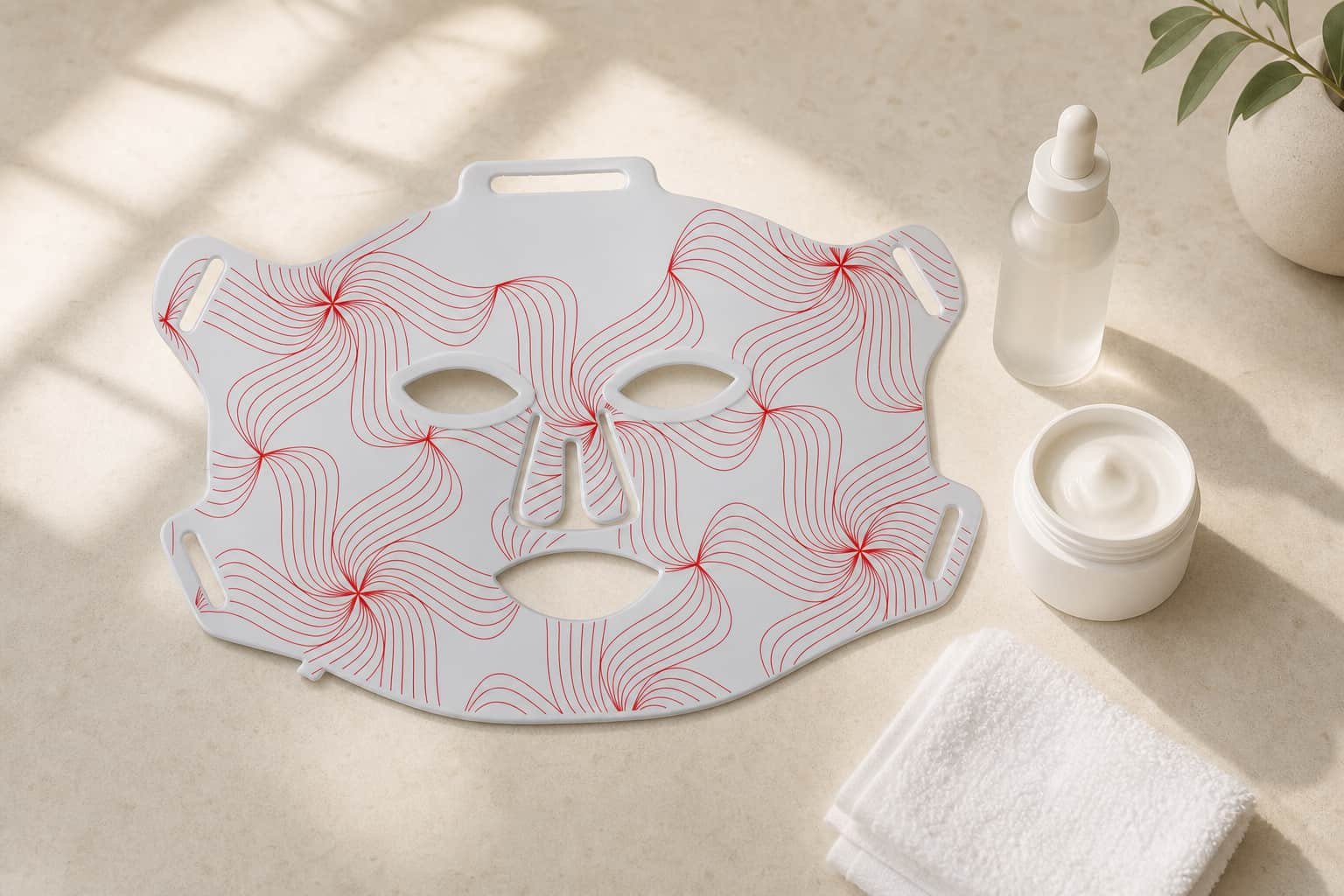
For parallel service and retail plans, keep separate records. Retail packaging does not establish suitability for repeated use across clinic clients. Do not assume private label means a better margin, a larger minimum order or a longer lead time; compare the actual proposals.
Build a product and document record early
Request the following records as applicable to the candidate, intended use and destination. This is a procurement framework, not a globally mandatory document list. Agree which gaps must close for evaluation, ordering or launch; every item need not be complete before every evaluation sample ships.
| Record to request | What it helps establish | Applicability or coverage to check |
|---|---|---|
| Product identity and configuration | Model, version, controller, power supply, accessories and identities shown on the label | Match the sample and intended order. Product-family records can be useful when a clear mapping explains coverage of this configuration. |
| Market status and permitted purpose | Intended market, product identity, allowed use and applicable authorization or conformity documentation | Review what applies to that product and market; a company registration alone does not resolve product status. |
| Current instructions for use (IFU) | Intended users, contraindications, eye-related requirements, cleaning and, where applicable, reuse across clients | Check the version, supplied accessories and supported use pattern. Record any unanswered clinic-use questions. |
| Safety assessment and test reports | Photobiological assessment, including the report if IEC 62471 is used, plus applicable electrical-safety and EMC reports | Record standards and editions, tested configuration, conditions and the manufacturer’s explanation of applicability. A different model name needs a coverage explanation, not automatic rejection. |
| Spectral and output records | What was measured and under which mode, position and measurement conditions | Relate the records to the supplied configuration. Output measurements are not a treatment protocol. |
| Lithium-battery transport records, if relevant | UN 38.3 test summary for the applicable lithium battery | Ask for access to the applicable summary and check this shipment’s requirements with the carrier. An SDS does not replace the summary. |
When a report covers a product family, retain the mapping with the report. It should connect the candidate and its relevant components to the tested configuration, explaining differences and their coverage. If that link remains unclear, record a document gap rather than treating a matching logo or similar housing as proof.
IEC 62471 provides a photobiological-safety assessment framework; its existence does not make it universally mandatory. Use the optical verification guide and electrical-safety guide for deeper checks. Ask why the selected standards apply rather than choosing them from a consumer or professional label. The battery distinction above follows PHMSA’s test-summary guidance.
In the United States, FDA’s general device labeling overview covers manufacturer or distributor identification and directions related to intended use. FDA also states that establishment registration and device listing do not denote approval, clearance or authorization, and it does not issue medical-device facility registration certificates. Review the registration and listing reminders before relying on a registration claim.
Check other countries separately. For the EU, non-binding MDCG 2023-5 guidance addresses qualification before classification: an LED-mask description or low irradiance alone does not decide Annex XVI coverage, and a non-medical purpose does not automatically exclude MDR applicability.
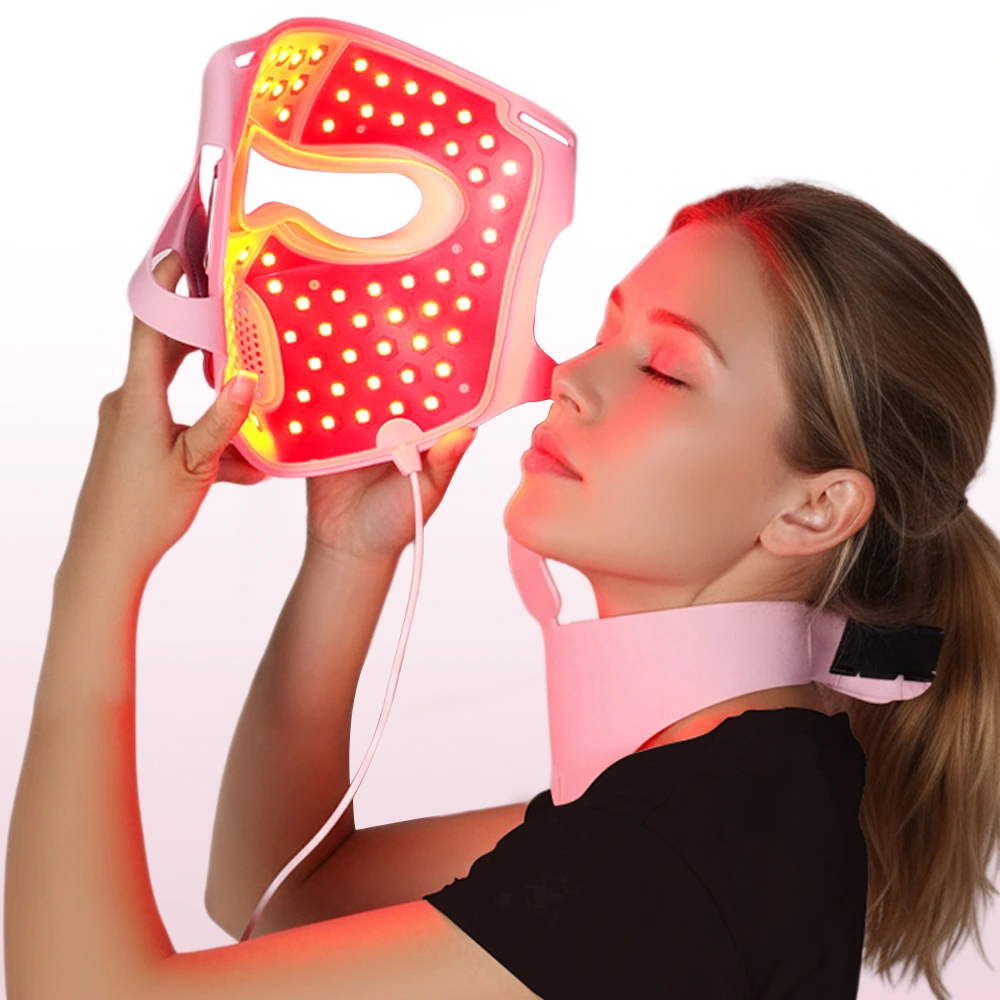
Route 1: Evaluate a mask for in-clinic use
Identify who will operate the mask, who will wear it and whether one unit would serve different clients. Ask the manufacturer:
- Is reuse across clients permitted, and which validated instructions support it?
- Are the specified methods compatible with the mask’s contact materials?
- Are any proposed interfaces or accessories permitted and validated for that use?
Do not substitute a clinic’s usual cleaning routine for missing manufacturer instructions. For reusable medical devices in the United States, FDA describes manufacturers providing adequate, understandable and proven reprocessing instructions in its reprocessing information. That scope should not be extended to every wearable mask.
Follow the current IFU’s eye-related requirements; a photobiological risk-group result alone does not establish safety for every eye exposure or operating arrangement.
Internally, assign responsibility for staff learning the current IFU, operating training and checking insurance coverage for the planned service. Record who will retain instructions, identify units and escalate incidents. These are purchasing and operational assignments to settle, not services to assume the supplier provides.
Use the sample to check the documented configuration and practical handling questions. Separate observed usability from unresolved suitability: staff finding a mask convenient does not establish that its instructions support the clinic’s intended service.
Route 2: Stock an existing branded product for retail
Define the sale unit: version, accessories, packaging and customer instructions. Obtain permission for resale and branded materials in the intended market and channel. Review the clinic’s own product descriptions and promotions; using an existing brand does not remove reseller responsibilities.
In the US, the FTC’s Health Products Compliance Guidance explains that retailers and distributors participating in health-product marketing can also be responsible for claims; the clinic’s advertising must be truthful and supported.
Before US medical-device imports, confirm import responsibilities and which party, if any, is the FDA initial importer. Non-exempt initial importers must register annually and meet the applicable establishment-fee requirements; those that do not initiate or develop specifications, repackage or relabel may fulfil their listing obligation by identifying the manufacturer. Actual activities and applicable retail or service exemptions matter; delivery to a clinic or fulfilment centre does not by itself determine the FDA role.
Assign payment, delivery, customer questions, returns and technical escalation before ordering. Agree how warranty cases, RMA, parts and product identifiers will be handled.
Check what materials the clinic may use, who maintains current customer instructions and how a complaint reaches the right party. A retailer or distributor needs an operating arrangement that still works after the initial stock has been delivered.
Wakelife’s wholesale route covers existing configurations supplied in bulk to the buyer’s warehouse or fulfilment centre, with stock or production arrangements settled for the project. Wakelife does not provide individual direct-to-consumer fulfilment, so plan who handles customer orders. Evaluation-sample type and availability are separate questions to resolve for the candidate.
Route 3: Build an own-brand offer on an existing platform
Wakelife’s private-label route starts with an existing platform; logo, packaging and manual scope require project review. Define the branding work and approvals before requesting a branded sample. Changes to architecture, wavelengths, controls or programs require engineering review through Customization / OEM / ODM; a request does not establish availability.
Before committing, check the legal role created by the clinic’s actual activities. In the US, review specification development, relabeling, repackaging and importing against FDA’s establishment activity definitions, together with applicable registration and listing exemptions, including relevant retail or service provisions. Merely adding the clinic’s name does not automatically make it an FDA relabeler. A private-label description alone cannot determine whether this clinic must register or qualifies for an exemption.
In the EU, where MDR applies, supplying a device under one’s own name can trigger manufacturer obligations. The Article 16(1)(a) exception applies to a distributor or importer with an agreement under which the manufacturer is identified as such on the label and remains responsible for meeting manufacturer requirements; see the non-binding MDCG 2022-7 guidance, page 5, B2. Keep a written purchasing record of the applicable roles and continuing duties, then assign owners before approving launch materials.
Connect approved labels, instructions, packaging and configuration in one release record. Assign content preparation, market review and final approval. Set a process for future changes, complaints, traceability and support; a logo approval cannot settle those continuing tasks. Check with the clinic’s insurer whether planned own-brand sales are within cover.
Build a comparable cost record
Ask for itemized proposals. For existing-brand and private-label retail, compare like-for-like quantities and delivery destinations, then add the operating costs of each route. For service use, budget for the required equipment and staff workflow separately from retail inventory:
- Product and preparation: device unit cost, plus branding, packaging, artwork, translation and setup charges. Separate one-time fees from per-unit costs.
- Getting stock to customers: freight, duty, receiving and fulfilment costs for the clinic’s actual channel.
- Continuing support: an allowance for returns, customer support and agreed warranty or RMA handling.
Enter the quoted amounts and your own operating estimates, marking assumptions. This shows what each route requires without assuming that private label produces a higher margin. MOQ and lead time depend on the platform, packaging, branding, supply, quantity and any testing or development work; request project terms rather than applying a generic range.
Give samples, first orders and replenishment different jobs
| Stage | What it should resolve | Record to retain |
|---|---|---|
| Evaluation sample | Whether the candidate merits further evaluation; which product or document questions remain | Sample configuration, current documents, observations, gaps and gates before ordering |
| First order | The supply arrangement and readiness to operate or sell | Approved specification and materials, quantity, charges, delivery plan, terms and responsibility owners |
| Replenishment | Whether the approved arrangement still fits current needs | Quantity and timing, availability, issue history, and approval of configuration or document changes |
For each stage, name the person who can close open questions. Wakelife’s after-sales support arrangements, including warranty, RMA and parts, depend on the agreement; retain the identifiers and case information needed for the agreed process.
For detailed specification and supplier comparisons, continue to the LED face mask sourcing guide.
Wakelife is a B2B OEM/ODM light-therapy device manufacturer. To discuss supply, share your purchasing brief: route, market, users and purpose, candidate configuration, sample questions, expected first batch and branding scope. Use it to establish the available platform, supporting records, project costs and unresolved gates before committing to an order.
References
- 1
- 2
- 3
- 4
- 5
-
6
eCFR: 21 CFR 807.65 — Exemptions.
- 7
-
8
Medical Device Coordination Group (MDCG): MDCG 2022-7, page 5, B2; MDCG 2023-5, pages 4, 8 and 13. Non-binding guidance.
- 9
- 10
-
11
PHMSA: Lithium Battery Test Summary.
- 12