TL;DR for Australian buyers
- ARTG is Australia’s public register for therapeutic goods. For LED therapy devices, buyers should verify the ARTG ID, sponsor, manufacturer, product name, licence class, and product type.
- For medical devices, use “included in the ARTG under ARTG ID [number]” when accurate. Do not use “TGA approved,” “TGA registered,” or “TGA certified” to imply government endorsement.
- The sponsor and manufacturer are not always the same entity. The sponsor is the Australian responsible party; the manufacturer is the company shown as manufacturing the device.
- Do not mix face-mask ARTG records with red / infrared therapy-light records. Product type and intended purpose matter.
- ARTG is Australia-specific. It is not FDA 510(k), Health Canada MDL, ISO 13485, MDSAP, CE, or UL.
Australian distributors and brand owners often ask a simple question:
Do you have TGA?
For LED face masks and red light therapy devices, the more useful question is:
Which ARTG ID applies to this exact product, who is the sponsor, who is the manufacturer, what is the product name, and what class is shown in the TGA record?
This guide explains how B2B buyers can read TGA ARTG records before importing, distributing, private-labeling, or marketing LED therapy devices in Australia.
For the full compliance evidence map across FDA, Health Canada, TGA, ISO, MDSAP, UL, IEC 60601, IEC 62471, and optical reports, start with the LED Therapy Device Certification Guide. This article is the Australia-specific ARTG layer of that topic hub.
What Does ARTG Inclusion Mean?
ARTG stands for Australian Register of Therapeutic Goods. The register is managed by Australia’s Therapeutic Goods Administration (TGA).
For B2B sourcing, an ARTG record is important because it gives buyers a public place to verify:
- ARTG ID
- Product name
- ARTG date
- Registration type
- Therapeutic good type
- Sponsor
- Manufacturer
- Licence category
- Licence status
- Licence class
- Public-summary product type, GMDN term, intended purpose, and conditions
TGA detail pages may display the codes INC for licence category and A for licence status. The corresponding Public Summary describes these fields as Medical Device Included and Status Active. Buyers should still confirm the live entry because ARTG records may be amended, suspended, or cancelled.
This is stronger than a logo on a sales deck. But it still needs to be read by scope.
An ARTG record does not automatically prove:
- FDA 510(k) clearance in the United States
- Health Canada MDL licensing
- ISO 13485 or MDSAP quality-system certification
- Electrical safety certification
- Photobiological safety data
- Batch-level wavelength or irradiance consistency
- Coverage for unrelated product categories
ARTG is a market-specific Australian record. Treat it as one layer in the evidence stack.
Why Is Sponsor vs Manufacturer the Most Important ARTG Distinction?
In Australia, the sponsor and manufacturer can be different entities.
| ARTG role | What it means for buyers |
|---|---|
| Sponsor | The Australian entity responsible for the product in Australia |
| Manufacturer | The company shown as manufacturing the device |
In the public ARTG records verified on July 13, 2026, the sponsor shown is Apexmed Service Pty Ltd, while the manufacturer shown in the verified device entries is Shenzhen Sungrow LED Technology Co Ltd.
Wakelife is a B2B brand of Shenzhen Sungrow LED Technology Co., Ltd., the manufacturer named in the verified ARTG records discussed below. Apexmed Service Pty Ltd is the Australian sponsor named in those records. These public roles do not, by themselves, prove that every Wakelife product, private-label version, claim, or configuration is covered by the same ARTG entry.
This distinction matters for private-label buyers. A Chinese manufacturer may make the device, but the Australian sponsor is the local responsible party on the ARTG record. If a buyer wants to use their own Australian sponsor, brand, claims, or product configuration, that may require separate review.
Do not write as if the sponsor and manufacturer are the same company unless the ARTG record says so.
Which ARTG Records Should Buyers Check?
The following publicly verifiable records are used as worked examples in this guide:
| ARTG ID | Public record name | ARTG date | Verification note |
|---|---|---|---|
| 510468 | Apexmed Service Pty Ltd – Cosmetic phototherapy system, home-use | 27 August 2025 | Detail page and Public Summary checked |
| 525268 | Apexmed Service Pty Ltd – Cosmetic phototherapy system, home-use | 2 April 2026 | Detail page and Public Summary checked |
Before publication or launch use, buyers should click through the live TGA page for each ARTG ID and confirm the current public record. Public registers can change, and a screenshot is not enough for a compliance file.
How Should Buyers Read ARTG 510468 for LED Face Masks?
The public TGA page for ARTG 510468 shows:
| Field | Value shown in the TGA record |
|---|---|
| ARTG ID | 510468 |
| ARTG name | Apexmed Service Pty Ltd – Cosmetic phototherapy system, home-use |
| Product name | Cosmetic phototherapy system, home-use |
| ARTG date | 27 August 2025 |
| Registration type | Device |
| Therapeutic good type | Medical devices |
| Sponsor | Apexmed Service Pty Ltd |
| Manufacturer | Shenzhen Sungrow LED Technology Co Ltd |
| Licence category | INC — Included |
| Licence status | A — Active |
| Licence class | Class IIa |
| Public-summary product type | Single Device |
| GMDN | 47704 — Cosmetic phototherapy system, home-use |
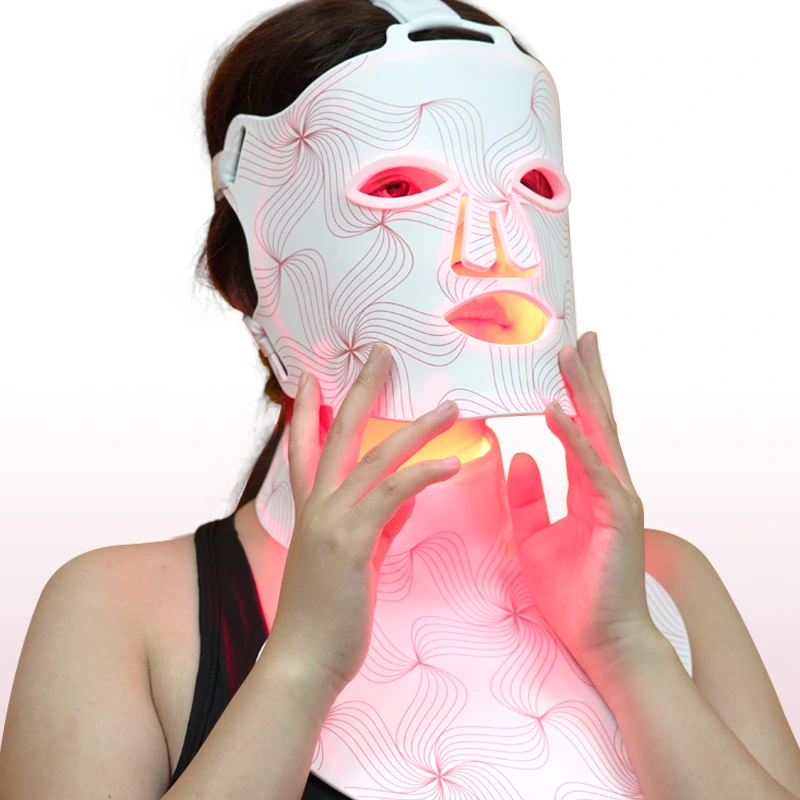
| Intended purpose | OTC LED Light Therapy Mask for the treatment of wrinkles and mild to moderate acne |
For buyers, the practical reading is:
ARTG 510468 is an Australian ARTG record for a Class IIa cosmetic phototherapy system, home-use, sponsored by Apexmed Service Pty Ltd and manufactured by Shenzhen Sungrow LED Technology Co Ltd.
The practical boundary is just as important:
Do not use this face-mask style ARTG record as proof for a red / infrared therapy-light product, a U.S. FDA claim, or an unrelated device category.
How Should Buyers Review ARTG Records for Red / Infrared Therapy Lights?
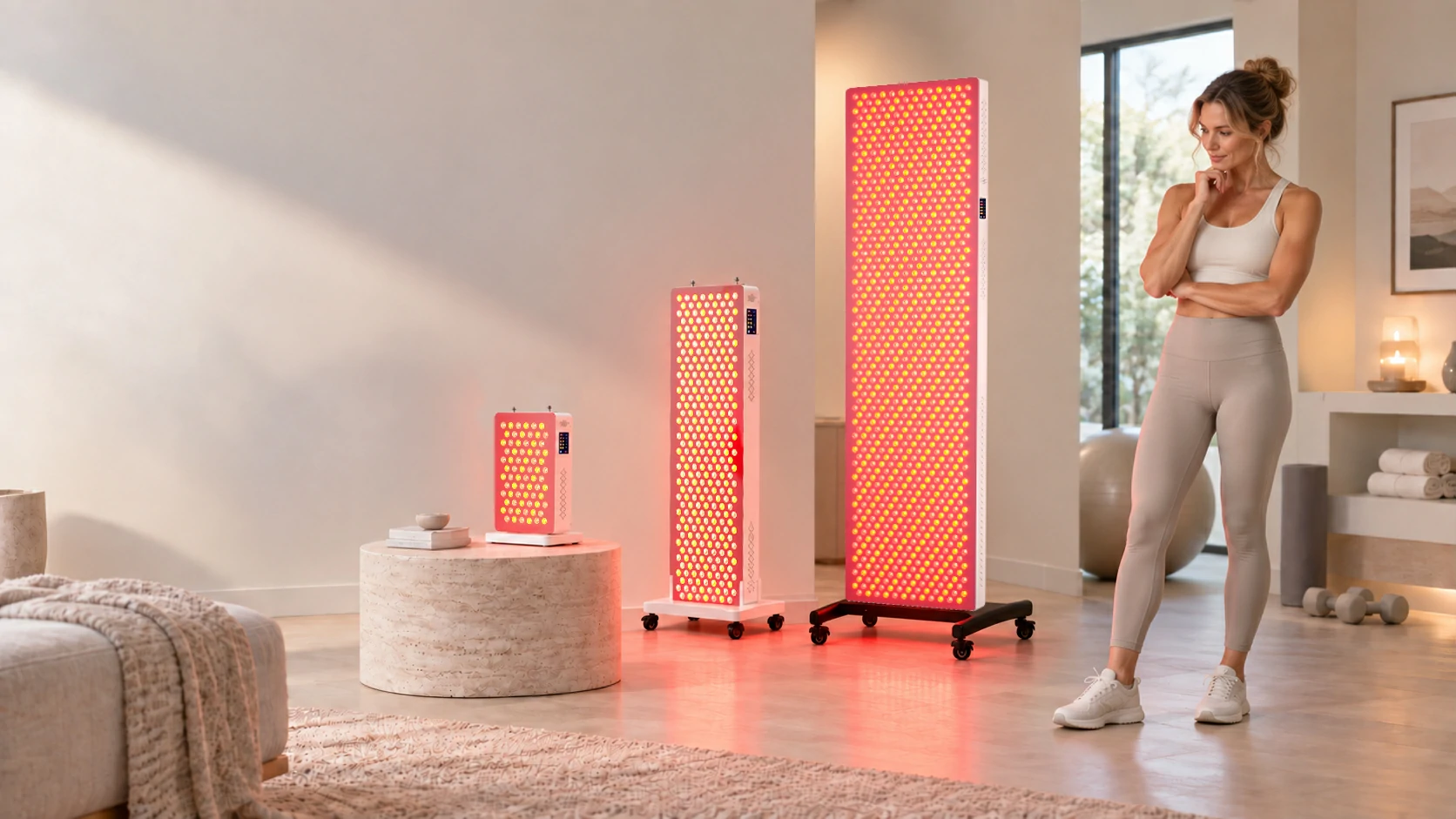
A red / infrared therapy-light record should be reviewed separately from a cosmetic phototherapy mask record. Buyers should request the ARTG ID that applies to the exact therapy-light product, then verify the live detail page and Public Summary.
The minimum review should cover:
- ARTG ID and current status
- Sponsor and manufacturer
- Product name and device class
- Public-summary product type and GMDN term
- Intended purpose and permitted claim direction
- Exact model or product-family scope
- Labeling, IFU, warnings, accessories, and private-label setup
Do not use a face-mask ARTG entry as evidence for a panel or therapy light. Likewise, do not use a therapy-light entry as blanket evidence for other models from the same manufacturer. If the exact product-to-record mapping cannot be confirmed, request the applicable sponsor/manufacturer documentation before using the ARTG claim.
How Should Buyers Handle Additional Home-Use Record 525268?
The public ARTG entry for 525268 uses the record name “Cosmetic phototherapy system, home-use”:
- ARTG 525268, dated 2 April 2026. Its detail page and Public Summary show a Class IIa, Included and Active Single Device entry, GMDN 47704, manufactured by Shenzhen Sungrow LED Technology Co Ltd. The stated intended purpose is an OTC LED Light Therapy Mask for the treatment of wrinkles and mild to moderate acne.
The shared generic record name does not make 510468 and 525268 interchangeable. Buyers should request the applicable Public Summary and sponsor/manufacturer scope documents for the exact model rather than infer coverage from the title alone.
Because buyers may use these records for distributor review, packaging, and launch claims, every ARTG ID should be checked on the live TGA page before customer-facing use. If the live record differs from an internal sales sheet, use the live TGA record and update the content.
How Do Face Mask Entries Differ from Therapy-Light Entries?
The main compliance risk is mixing records across product categories.
Use this simple separation:
| Product context | Relevant ARTG direction | Buyer caution |
|---|---|---|
| LED face mask / cosmetic phototherapy system | Check the applicable cosmetic phototherapy system, home-use record, such as 510468 or 525268 | Confirm the exact product, intended purpose, brand plan, and sponsor setup; do not infer model scope from the generic public name |
| Red / infrared therapy light or panel-style product | Request and verify the ARTG ID for the exact therapy-light product | Do not use a mask record to support therapy-light claims or assume that one therapy-light entry covers every model |
| U.S. launch | Check FDA 510(k), registration/listing, and U.S. claim rules separately | ARTG does not equal FDA clearance |
| Canada launch | Check Health Canada MDL separately | ARTG does not equal MDL |
For example, an LED face mask ARTG record should not be used to support a red light therapy panel claim in Australia. Similarly, an ARTG record for Australia should not be used to imply FDA clearance in the United States.
Which ARTG Documents Should Australian OEM Buyers Request?
Before importing, distributing, or private-labeling an LED therapy device in Australia, ask the supplier for:
| Document or information | Why it matters |
|---|---|
| ARTG ID | Lets your team verify the public TGA record |
| Sponsor name | Confirms the Australian responsible party |
| Manufacturer name | Confirms the manufacturing entity |
| Product name | Helps match the record to the device category |
| Licence class | Confirms the risk classification shown in the record |
| Intended-purpose or indications documentation | Helps prevent mismatched marketing claims |
| Product specification sheet | Connects the commercial model to the ARTG product scope |
| Labeling and IFU | Needed for Australian launch review |
| Private-label process | Clarifies whether brand, manual, or packaging changes need sponsor review |
| Supporting reports | Electrical safety, EMC, IEC 62471, wavelength, irradiance, and other files |
If the supplier cannot connect the ARTG ID to the exact device and claim direction, ask for clarification before using the record in distributor or marketplace materials.
What Are the Red Flags in TGA / ARTG Claims?
Slow down if you see any of these patterns:
- The supplier says “TGA certified” but cannot provide an ARTG ID.
- The ARTG ID exists, but the product name does not match the device being sold.
- The supplier treats the sponsor and manufacturer as the same entity without checking the record.
- A face-mask ARTG record is used for panels, therapy lights, hair-growth devices, or unrelated products.
- An ARTG record is used to imply FDA clearance, Health Canada MDL, ISO 13485, or MDSAP.
- The supplier cannot provide labeling, IFU, intended-purpose wording, or model-scope documents.
- Private-label changes are treated as automatic, without sponsor or regulatory review.
- The supplier uses “TGA approved,” “TGA registered,” or similar wording that implies TGA endorsement.
TGA states that inclusion in the ARTG is not an endorsement and that terms such as “TGA approved” or “TGA registered” must not be used in therapeutic-goods advertising. For a medical device, use a precise factual statement such as “included in the ARTG under ARTG ID 510468” only when the product and record match. Avoid “ARTG-listed” as the primary regulatory wording for a medical device, because “listed” has a distinct use for certain medicine categories.
Which RFQ Questions Should Australian Buyers Ask?
Use these questions when comparing LED therapy device OEM suppliers:
| RFQ question | What a useful answer should include |
|---|---|
| Which ARTG ID applies to this exact product? | ARTG ID, product name, class, sponsor, and manufacturer |
| Who is the Australian sponsor? | Sponsor name and role |
| Who is the manufacturer shown in the ARTG record? | Manufacturer name as shown by TGA |
| Is this record for a face mask, cosmetic phototherapy system, or therapy light? | Product-name match and scope explanation |
| What claims or intended purpose does the Australian file support? | Claim wording and boundaries |
| Can this be sold under our brand? | Private-label or sponsor review process |
| Does the ARTG record cover accessories, controller, adapter, and packaging changes? | Scope and change-control explanation |
| Which supporting reports are available? | Electrical safety, EMC, IEC 62471, wavelength, irradiance, labeling, IFU |
| How does this differ from FDA or Health Canada records? | Clear market-specific explanation |
Good suppliers answer with record numbers, names, and boundaries. Weak suppliers answer with a badge and no context.
How Does ARTG Fit Into the Bigger Certification Cluster?
TGA ARTG verification is one part of a larger B2B sourcing decision.
For multi-market LED therapy device projects, buyers should separate:
- Australia: TGA ARTG ID, sponsor, manufacturer, product name, class.
- United States: FDA 510(k), establishment registration / listing context, labeling and claim review.
- Canada: Health Canada MDL record, licence number, device class, identifiers.
- Quality system: ISO 13485 and MDSAP certificates.
- Electrical safety: UL / IEC 60601, EMC, adapter and charger files where relevant.
- Light-output evidence: IEC 62471, wavelength, irradiance, and batch-level optical data.
For U.S. comparison, read FDA Registered vs FDA 510(k) Cleared LED Face Masks. For Canada, read Health Canada MDL Verification for LED Therapy Devices. For model and supplier selection, use the LED Face Mask OEM Sourcing Guide.
Frequently Asked Questions
What is ARTG?
ARTG stands for Australian Register of Therapeutic Goods. It is the register used by Australia’s Therapeutic Goods Administration for therapeutic goods, including medical devices.
Is ARTG the same as TGA approval?
No. Inclusion in the ARTG is not TGA endorsement. For a medical device, state that the matching product is included in the ARTG under its specific ARTG ID, then verify the product name, sponsor, manufacturer, class, status, intended purpose, and scope. Do not describe the entry as “TGA approved” or “TGA registered.”
Is the sponsor the same as the manufacturer?
Not always. The sponsor is the Australian responsible party. The manufacturer is the company shown as manufacturing the product. In the records discussed here, Apexmed Service Pty Ltd is the sponsor and Shenzhen Sungrow LED Technology Co Ltd is the manufacturer.
Does ARTG 510468 cover red light therapy panels?
Do not assume that. ARTG 510468 is shown as “Cosmetic phototherapy system, home-use.” For a red / infrared therapy light or panel, request the applicable ARTG ID and confirm its product name, intended purpose, model scope, sponsor, and manufacturer separately.
Does ARTG mean the device is FDA 510(k)-cleared?
No. ARTG is Australia-specific. FDA 510(k) is a U.S. pathway and must be verified separately through the FDA database.
What should Australian buyers ask for besides the ARTG ID?
Ask for the sponsor name, manufacturer name, product name, class, intended-purpose documentation, product specification sheet, labeling, IFU, private-label review process, and supporting reports such as IEC 62471, EMC, electrical safety, wavelength, and irradiance data.
What Should Australian Buyers Do Next?
If you are preparing an Australian launch for an LED face mask or red / infrared therapy light, first confirm the live ARTG ID, Included / Active status, sponsor, manufacturer, product name, class, Public Summary, intended purpose, and exact product scope. Then match the commercial product, brand, labeling, IFU, claims, accessories, and distributor materials to that record.
For private-label projects, confirm whether the existing sponsor will remain responsible and how the brand, packaging, IFU, and claims will be reviewed. If a different sponsor arrangement is planned, obtain qualified Australian regulatory advice on whether a new inclusion, transfer, or other process is required.
Ask Wakelife for the applicable ARTG record, product-scope explanation, label / IFU files, and supporting electrical-safety, EMC, IEC 62471, wavelength, and irradiance reports before distributor review. For multi-market launches, verify FDA and Health Canada records separately rather than treating ARTG inclusion as transferable evidence.
Summary
For Australian LED therapy device sourcing, do not stop at “Do you have TGA?” Ask which ARTG ID applies to the exact product, who the sponsor is, who the manufacturer is, what the product name says, and what claims the Australian file supports.
ARTG is useful because it gives buyers a public verification path. It is risky only when one record is stretched across unrelated products, markets, or claims.
For the full certification evidence path, continue with the LED Therapy Device Certification Guide.
Regulatory note: This article is provided for B2B education and sourcing due diligence. It does not replace TGA guidance or review by qualified Australian regulatory counsel for a specific product, sponsor arrangement, private-label project, label, claim, advertisement, or launch plan.
References
| No. | Official Source |
|---|---|
| 01 | TGA ARTG 510468 |
| 02 | TGA ARTG 525268 |
| 03 | TGA ARTG search |
| 04 | TGA Advertising Considerations |
| 05 | TGA Advertising Legal Framework |
| 06 | TGA Searching the ARTG |