TL;DR for B2B buyers
- “FDA registered” is not the same as FDA 510(k) clearance.
- Device listing and establishment registration are administrative records. They do not mean the FDA has cleared, approved, tested, or endorsed a product.
- A 510(k)-cleared LED face mask should have a verifiable K number, decision date, device name, applicant, product code, and model scope.
- 510(k) clearance should be described as FDA-cleared or 510(k)-cleared, not “FDA-approved.”
- Before placing an OEM or private-label order, match the clearance to the exact model, intended use, claims, labeling, accessories, and target market.
For LED face mask buyers, the word “FDA” can sound simple. In real sourcing conversations, it is not simple at all.
A supplier may say “FDA registered.” Another may say “FDA approved.” A third may show a 510(k) number. All three phrases can lead to very different compliance situations for a brand owner, distributor, clinic-channel buyer, or Amazon seller.
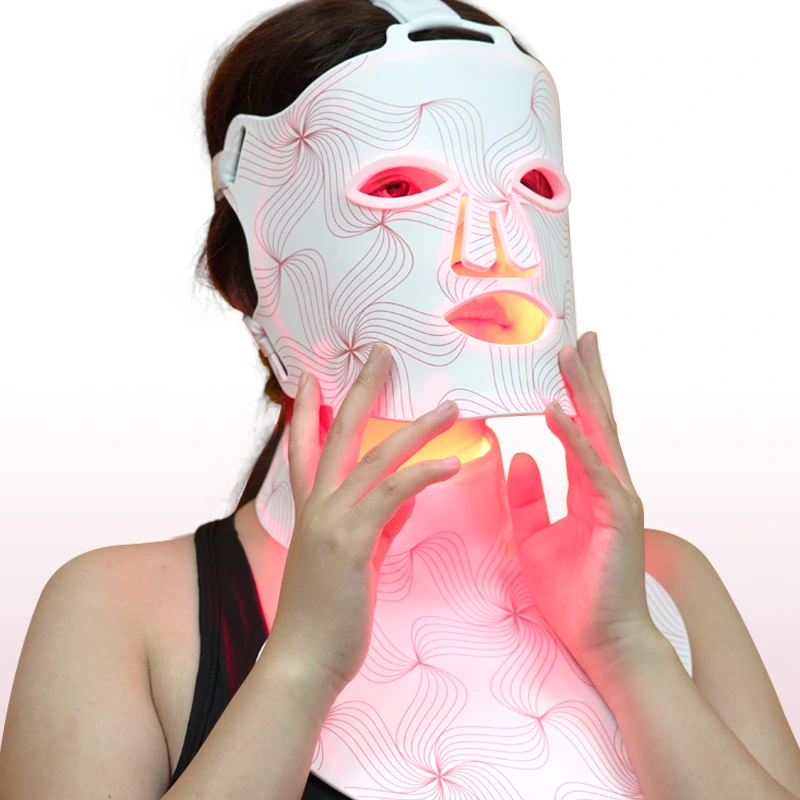
This guide explains the difference between FDA establishment registration, device listing, FDA 510(k) clearance, and FDA approval. It also shows how B2B buyers can verify an LED face mask K number before choosing an OEM / ODM manufacturer.
If you are comparing the full certification package for LED therapy devices, start with the broader LED Therapy Device Certification Guide. This article is the FDA-specific layer of that topic hub.
Why Is “FDA” Not One Single Status for LED Face Masks?
In LED beauty device sourcing, “FDA” is often used as a shortcut. That shortcut creates risk.
For a buyer, the first question should not be:
Do you have FDA?
The better question is:
Which FDA status applies to this exact device, and what number can I verify?
There are several different FDA-related concepts that buyers often mix together:
| Phrase used in sourcing | What it may actually mean | Buyer risk if misunderstood |
|---|---|---|
| FDA registered | The establishment is registered with FDA | Buyer may wrongly assume product-level clearance |
| FDA listed | A device is listed in FDA’s registration and listing system | Buyer may wrongly assume FDA reviewed the device |
| FDA 510(k) cleared | FDA found the device substantially equivalent to a legally marketed predicate device | Buyer still needs to check model scope, claims, and labeling |
| FDA approved | Usually associated with PMA or other approval pathways, not ordinary 510(k) clearance | Buyer may make an overclaim if using this wording for a 510(k) device |
For LED face masks, the safest commercial language is precise. If a device has 510(k) clearance, call it FDA 510(k)-cleared or FDA-cleared, and provide the K number. Do not turn that into “FDA-approved” unless the device truly has FDA approval through the correct pathway.
What Do FDA Registration and Device Listing Show?
FDA establishment registration is an annual administrative requirement for many medical device establishments involved in producing or distributing devices for the U.S. market. Device listing provides FDA with information about the devices associated with those establishments.
That matters, but it is not the same as a product being cleared.
The FDA’s own device registration and listing page explains that establishments generally need to register and list devices, and that if a device requires marketing authorization, the owner or operator should provide the premarket submission number, such as a 510(k), De Novo, PMA, PDP, or HDE.
For an OEM buyer, this means:
- An establishment registration number is not a 510(k) number.
- A device listing is not proof that the FDA reviewed safety and effectiveness data.
- A supplier can be FDA-registered while a specific product is not 510(k)-cleared.
- If a medical-device marketing authorization is claimed, the buyer should ask for the K number or other relevant submission number.
So when a supplier says “FDA registered,” ask a follow-up question:
Is the LED face mask only registered / listed, or is it covered by a 510(k) clearance? If it is 510(k)-cleared, what is the K number?
That one question prevents many sourcing mistakes.
What Does FDA 510(k) Clearance Mean?
A 510(k) is a premarket notification submitted to the FDA to demonstrate that a device is substantially equivalent to a legally marketed predicate device.
The FDA’s 510(k) page explains that, before marketing a device that requires 510(k), the submitter must receive an FDA order finding the device substantially equivalent. That order clears the device for commercial distribution. FDA also explains that substantial equivalence generally compares intended use and technological characteristics with a predicate device.
In plain sourcing language:
510(k) clearance means the FDA reviewed the submitted comparison and found the device substantially equivalent for the submitted indications and device characteristics.
It does not mean:
- FDA tested or inspected every production unit.
- FDA endorsed the brand.
- Every private-label version is automatically covered.
- The product can be marketed with any claim the seller wants.
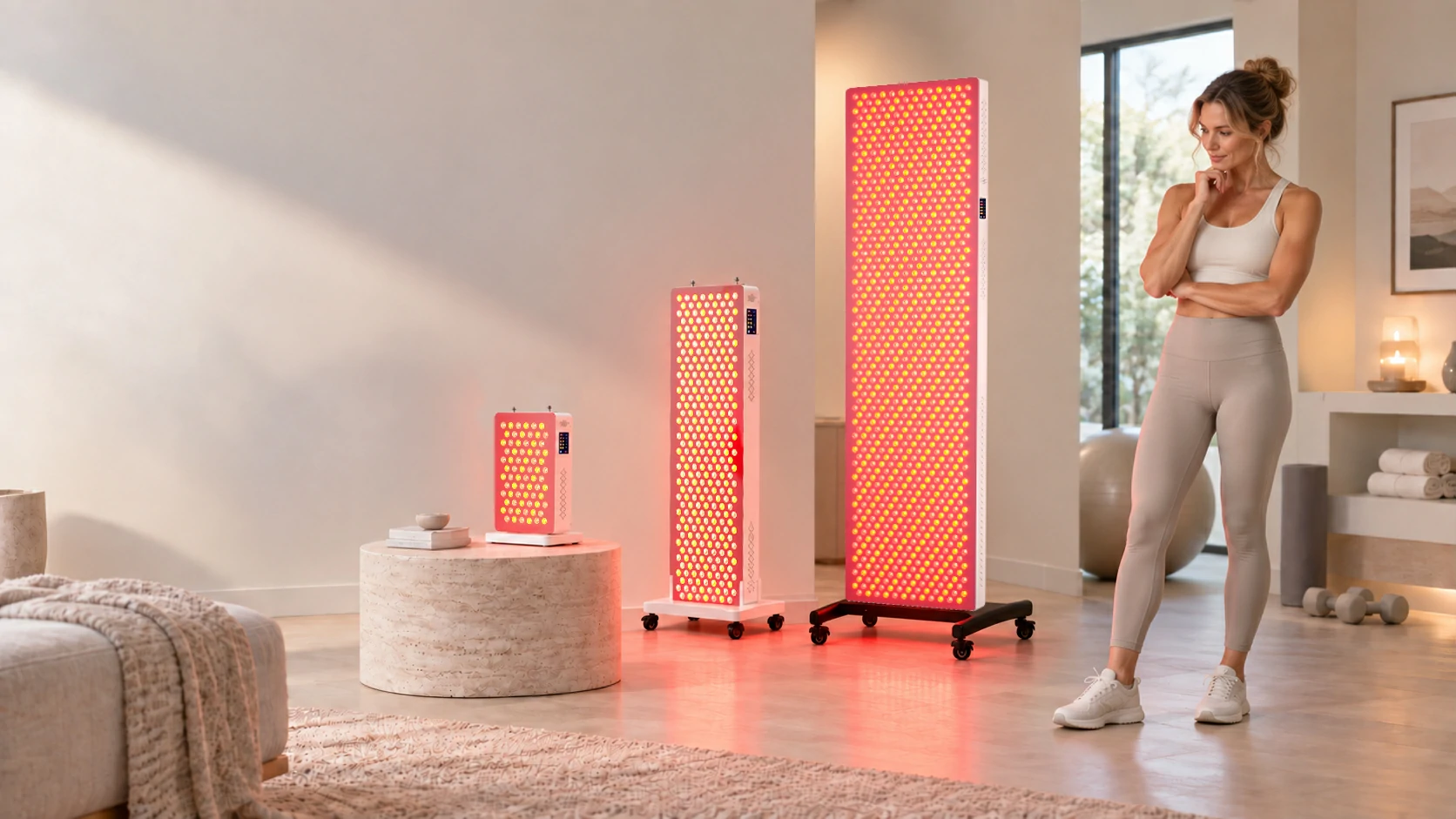
- The clearance applies to unrelated product categories such as panels, hair-growth helmets, or pain-relief devices.
For a B2B buyer, 510(k) clearance is strong evidence, but it still needs to be read by scope.
What Is the Difference Between FDA Registered, Listed, Cleared, and Approved?
This is the practical comparison buyers should use when reviewing LED face mask suppliers:
| FDA term | Simple meaning | What to ask for |
|---|---|---|
| Establishment registered | The company / establishment is registered with FDA | Establishment registration context, company name, and whether the exact device has separate marketing authorization |
| Device listed | Device information is listed with FDA under an establishment | Listing context and whether the device requires or has 510(k) clearance |
| 510(k)-cleared | FDA found the device substantially equivalent to a predicate device for the submitted use | K number, device name, applicant, decision date, product code, clearance letter / summary, model scope |
| FDA-approved | Usually a different pathway from ordinary 510(k), often associated with PMA | Do not use this wording for a 510(k)-cleared LED face mask unless a real approval pathway applies |
The most common supplier overclaim is turning “registered” or “listed” into “approved.” The second most common is turning one product’s clearance into a factory-wide certificate.
Neither is safe for B2B buyers.
How Do You Verify an LED Face Mask 510(k) Number?
If a supplier claims FDA 510(k) clearance, ask for the K number. Then check it in the FDA 510(k) Premarket Notification database.
When reviewing a 510(k) entry, confirm:
- 510(k) number: Does the K number exist?
- Applicant: Does the applicant match the manufacturer or supplier being discussed?
- Device name: Is the device category relevant to your product?
- Product code: Does it match the type of claim and device?
- Decision date: Has a substantially equivalent decision been issued?
- Device models: Are the exact models you plan to buy included?
- Summary or clearance documentation: Does the scope align with the supplier’s sales claim?
Do not stop at a screenshot. Screenshots can be old, cropped, or reused without context. Use the public FDA database link and request the underlying clearance documentation for your project file.
How Should OEM Buyers Read K250830?
The FDA 510(k) database lists K250830 with the following public fields:
| Field | FDA database value |
|---|---|
| 510(k) number | K250830 |
| Device name | LED Light Therapy Mask (G15, G15P, G15K, G11P, G11, G10, G13, G14, G17, VISO, PRANA, Chin2Chest, BBL-FACEMASK) |
| Applicant | Shenzhen Sungrow Led Technology Co., Ltd. |
| Regulation number | 878.4810 |
| Classification product code | OHS |
| Subsequent product code | OLP |
| Date received | 03/19/2025 |
| Decision date | 06/09/2025 |
| Decision | Substantially Equivalent |
| Type | Traditional |
| Reviewed by third party | No |
This is useful because it gives buyers a public record to verify. It is also where careful wording matters.
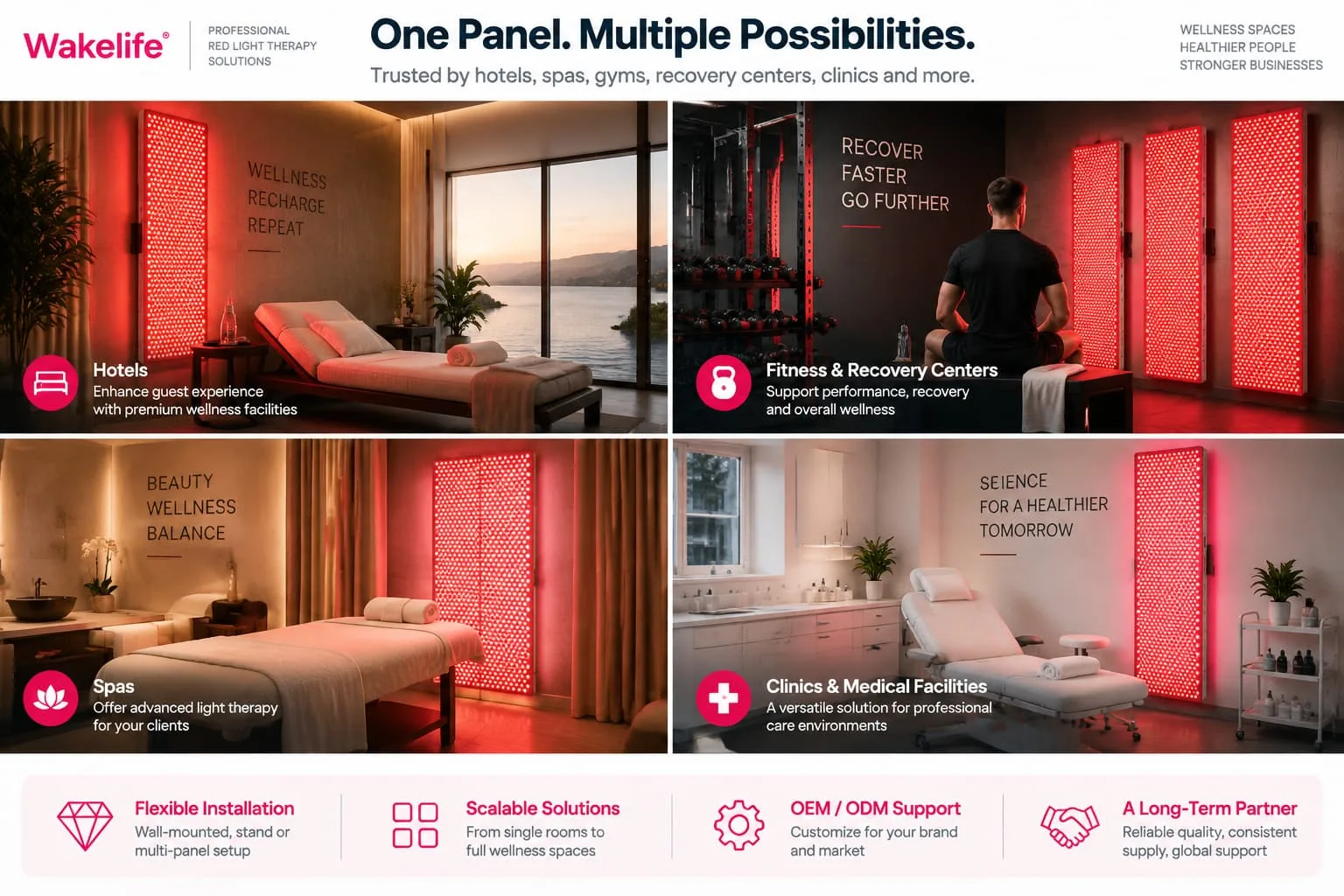
Wakelife is a B2B brand of Shenzhen Sungrow LED Technology Co., Ltd., the applicant named in FDA 510(k) K250830. This relationship explains why Wakelife can provide the corresponding model-scope and technical-document package. It does not mean that every Wakelife product is covered by K250830.
The FDA’s official clearance letter and Indications for Use specify the following OTC indications for the cleared LED Light Therapy Mask models:
| Light mode | Cleared indication |
|---|---|
| Red light | Treatment of full-face wrinkles |
| Yellow light | Treatment of full-face wrinkles |
| Red + infrared light | Treatment of full-face wrinkles |
| Blue light | Treatment of mild to moderate inflammatory acne |
| Mixed light: red + blue + infrared | Treatment of mild to moderate inflammatory acne |
These indications should be treated as scope boundaries. They do not automatically support pain relief, wound healing, rosacea, scar treatment, hair growth, or other claims.
The safe interpretation is:
The FDA database shows K250830 for Shenzhen Sungrow Led Technology Co., Ltd., device name LED Light Therapy Mask, with a substantially equivalent decision dated June 9, 2025.
The unsafe interpretation would be:
Every LED product from the factory is FDA-approved.
That second statement overclaims the record. K250830 should be read by device name, model list, intended use, product code, labeling, and clearance documentation. It should not be used as a blanket claim for unrelated device categories.
What Does the 13-Model Scope Mean for Private-Label Buyers?
K250830 is especially relevant for buyers comparing LED face mask OEM suppliers because the FDA database entry itself names multiple models:
G15, G15P, G15K, G11P, G11, G10, G13, G14, G17, VISO, PRANA, Chin2Chest, and BBL-FACEMASK.
For a private-label buyer, this can be valuable. It may support a broader face-mask product-line discussion than a clearance tied to only one SKU.
But it does not remove the need for project-specific review.
Before relying on any 510(k) clearance for a private-label launch, confirm:
- The exact model you plan to buy is included in the cleared model scope.
- The indications for use match the claims you plan to make.
- The labeling, manual, warnings, and contraindications are consistent with the cleared documentation.
- Private-label branding, packaging, and distributor information do not introduce new claims.
- Accessories, controller, charger, neck piece, or treatment areas are covered where relevant.
- Any material change, design change, software change, or claim change is reviewed before launch.
If your brand plans to sell a face mask with claims beyond the cleared indications, such as pain relief, rosacea treatment, scar treatment, collagen regeneration, wound healing, or hair growth, do not assume the existing mask clearance covers those claims.
For model selection and sourcing questions beyond FDA status, use the LED Face Mask OEM Sourcing Guide together with this FDA checklist.
Which FDA Documents Should Buyers Request?
A public database record is the starting point, not the whole file.
Before placing an OEM order for an FDA 510(k)-cleared LED face mask, ask the supplier for:
| Document or information | Why it matters |
|---|---|
| 510(k) number | Lets your team verify the public FDA record |
| Clearance letter and 510(k) summary, where available | Helps confirm device scope, indications, and submitted context |
| Model list covered by the clearance | Prevents using one model’s evidence for another model |
| Indications for use | Defines what claims can be considered |
| Product code and regulation number | Helps compare device classification and claim type |
| Labeling and instruction manual | Shows how the cleared device is presented to users |
| Warnings, contraindications, and treatment instructions | Needed for packaging, IFU, distributor review, and platform listings |
| Private-label review process | Clarifies what changes need supplier or regulatory review |
| Supporting test reports | Electrical safety, EMC, photobiological safety, optical data, biocompatibility where relevant |
For multi-market launches, FDA is only one part of the evidence package. Canada, Australia, the EU, the UK, and other markets may require separate documentation or market-specific review.
That is why FDA evidence should be reviewed alongside the full certification picture rather than in isolation.
What Are the Red Flags in Supplier FDA Claims?
Slow down if you see any of these patterns:
- The supplier says “FDA approved” but only provides an establishment registration screenshot.
- The supplier provides an owner / operator number instead of a K number.
- The K number exists, but the device name does not match your product category.
- The clearance is for a face mask, but the supplier uses it to sell panels, hair-growth helmets, or pain-relief devices.
- The supplier cannot explain which models are covered.
- The supplier claims “in process” as if it were already cleared.
- The supplier cannot provide labeling, indications, warnings, or model-scope documents.
- The supplier says private-label branding means you can make any claim you want.
- The supplier mixes “registered,” “listed,” “cleared,” and “approved” in the same sentence.
None of these automatically proves bad intent. But they do mean the buyer should request documents before paying for molds, packaging, influencer content, Amazon listings, or distributor materials.
Which RFQ Questions Should You Send an LED Face Mask Supplier?
Use these questions when comparing LED face mask OEM suppliers:
| RFQ question | What a useful answer should include |
|---|---|
| Is this exact LED face mask FDA 510(k)-cleared, or only FDA registered / listed? | Clear distinction between registration, listing, and 510(k) clearance |
| What is the 510(k) number? | A verifiable K number, not only a logo or screenshot |
| Which company is the applicant? | Applicant name matching the FDA database record |
| Which models are covered? | Exact model list and whether your selected model is included |
| What indications for use are covered? | Claims that match clearance documentation |
| Can we use our own brand name and packaging? | Private-label boundaries and review steps |
| Which claims should we avoid? | Clear warning against unsupported medical or therapeutic claims |
| Are the manual, warning labels, and treatment instructions available? | Files needed for launch review |
| Do you have related safety and optical reports? | IEC 62471, electrical safety, EMC, wavelength, irradiance, and other relevant files |
| What changes would require additional regulatory review? | Design, software, accessory, labeling, intended-use, or claim changes |
Good suppliers answer with numbers, file names, model scope, and boundaries. Weak suppliers answer only with badges.
How Does FDA Evidence Fit Into the Bigger Certification Picture?
FDA 510(k) clearance is a high-value evidence layer for LED face masks, but it is not the only layer.
For B2B buyers, the clean way to evaluate an LED therapy device manufacturer is to separate evidence types:
- Market authorization: FDA 510(k), Health Canada MDL, TGA ARTG, CE/MDR route where applicable.
- Quality-system evidence: ISO 13485 and MDSAP.
- Electrical and safety evidence: UL / IEC 60601, EMC, adapter and charger files where applicable.
- Photobiological and optical evidence: IEC 62471, wavelength reports, irradiance reports, and batch-level optical data.
- Commercial sourcing evidence: MOQ, lead time, warranty, packaging, customization scope, and after-sales support.
If you are checking Canada, read the Health Canada MDL verification guide. If you are checking Australia, read the TGA ARTG verification guide. If you are reviewing factory quality systems, compare ISO 13485 vs MDSAP for LED therapy device manufacturers.
The goal is not to collect the longest badge list. The goal is to match the right document to the right product, claim, market, and launch plan.
Frequently Asked Questions
Is FDA registration the same as FDA 510(k) clearance?
No. FDA establishment registration and device listing are administrative records. FDA 510(k) clearance is a premarket decision showing that a device was found substantially equivalent to a legally marketed predicate device for the submitted use.
Does FDA 510(k) clearance mean FDA approval?
No. The correct wording for a 510(k) device is usually “FDA-cleared” or “510(k)-cleared.” Do not call a 510(k)-cleared LED face mask “FDA-approved” unless a real FDA approval pathway applies.
Can an LED face mask supplier be FDA registered but not 510(k)-cleared?
Yes. Registration and listing are separate from 510(k) clearance. Buyers should ask whether the exact device is covered by a 510(k), and if so, request the K number.
How do I verify an LED face mask K number?
Search the FDA 510(k) Premarket Notification database by K number. Confirm the applicant, device name, product code, decision date, decision result, and model scope. Then request the clearance letter or summary for your project file.
What does K250830 cover?
The FDA database lists K250830 for Shenzhen Sungrow Led Technology Co., Ltd., device name LED Light Therapy Mask, with the models G15, G15P, G15K, G11P, G11, G10, G13, G14, G17, VISO, PRANA, Chin2Chest, and BBL-FACEMASK. Buyers should still verify indications, labeling, and private-label scope before launch.
Does one LED face mask 510(k) cover red light panels or hair-growth helmets?
No. A 510(k) should be read by device scope. A clearance for an LED face mask should not be used as proof for unrelated product categories such as panels, hair-growth devices, pet therapy devices, or pain-relief devices.
Can a private-label brand use a manufacturer’s 510(k)?
It depends on the model, labeling, distribution setup, claims, and regulatory responsibilities. A manufacturer-held 510(k) can be valuable, but private-label use should be reviewed with the supplier and regulatory counsel before launch.
What should buyers ask for besides the K number?
Ask for the clearance letter or summary, model list, indications for use, labeling, warnings, contraindications, IFU, private-label review process, and supporting test reports such as EMC, electrical safety, IEC 62471, wavelength, and irradiance data.
What Should Buyers Do Next?
If you are comparing FDA-cleared LED face mask OEM suppliers, start with the K number and model-scope evidence. Then ask for the clearance letter, Indications for Use, labeling / IFU files, warnings, contraindications, private-label review process, optical test records, and current product specification before paying for samples or approving packaging.
For K250830 projects, ask Wakelife to map the selected model, brand artwork, intended claims, controller, accessories, and labeling against the cleared documentation before finalizing the launch configuration.
Summary
For LED face mask sourcing, “FDA” is not enough information. Buyers need to know whether a supplier is talking about establishment registration, device listing, 510(k) clearance, or approval.
The practical rule is simple:
If 510(k) clearance is claimed, ask for the K number and verify the exact model, device name, applicant, decision date, indications, and labeling scope.
A strong OEM supplier should be able to explain what the FDA record proves, what it does not prove, and how the clearance fits into your target market and private-label launch plan.
For the full evidence map across FDA, Health Canada MDL, TGA ARTG, ISO 13485, MDSAP, IEC 62471, UL / IEC 60601, and optical reports, continue with the LED Therapy Device Certification Guide.
Regulatory note: This article is provided for B2B education and sourcing due diligence. It does not replace FDA advice, a formal device determination, or review by qualified regulatory counsel for a specific product, label, claim, or private-label arrangement.